Saluting rangers protecting wildlife and conserving nature
By Eleanor Momberg
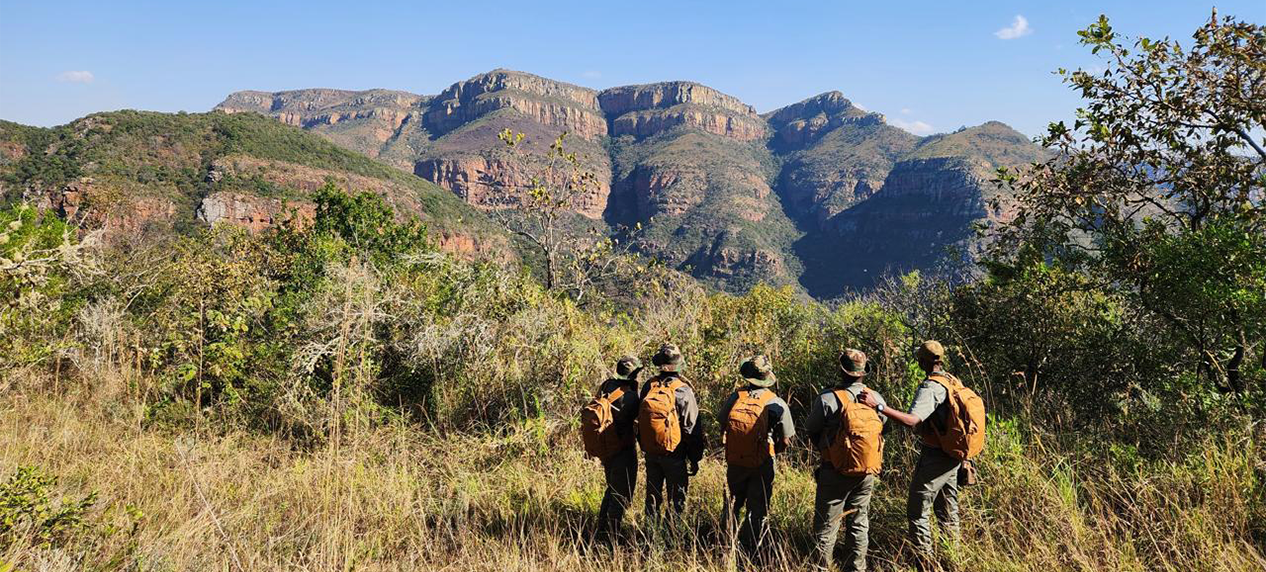
As nature’s guardians, most rangers are not only the first line of defence against wildlife crime, but also protectors of a fragile and changing environment.
Working at the forefront of conservation of species and habitats, these passionate individuals often give up valuable personal time to ensure wildlife is protected from criminals, be they poachers or illegal harvesters of threatened plant species. They also spend critical hours removing invasive alien species, burning firebreaks to safeguard infrastructure, assisting with management burns to achieve specific ecological goals, and guiding guests to ensure an absolutely unforgettable visit to nature, among a multitude of other tasks.
On 31 July, the Endangered Wildlife Trust (EWT) joined rangers across the globe to mark World Ranger Day; a day on which rangers worldwide remember honour colleagues who have lost their lives in the line of duty. This year’s theme A Legacy of Protection, Courage, and Service recognised that rangers are working in a world defined by climate extremes and biodiversity loss, increasing human-wildlife conflict, organised wildlife crime, and shifting social and political landscapes. Amid these challenges, rangers continue to safeguard the future of our natural world. On the 20th anniversary of World Ranger Day, the EWT honoured its newly-appointed Threat Protection Rangers and Restoration Rangers, alongside the team of rangers at the Medike Nature Reserve.
While one team of rangers is focused on addressing, and preventing, wildlife crime, their colleagues are focused on improving the habitats in which people, plants and animals, live and prosper.
Threat Reduction Rangers
Illegal wildlife-related activities are placing mounting pressure on already vulnerable wildlife populations while simultaneously posing significant security risks to people living and working within affected landscapes.
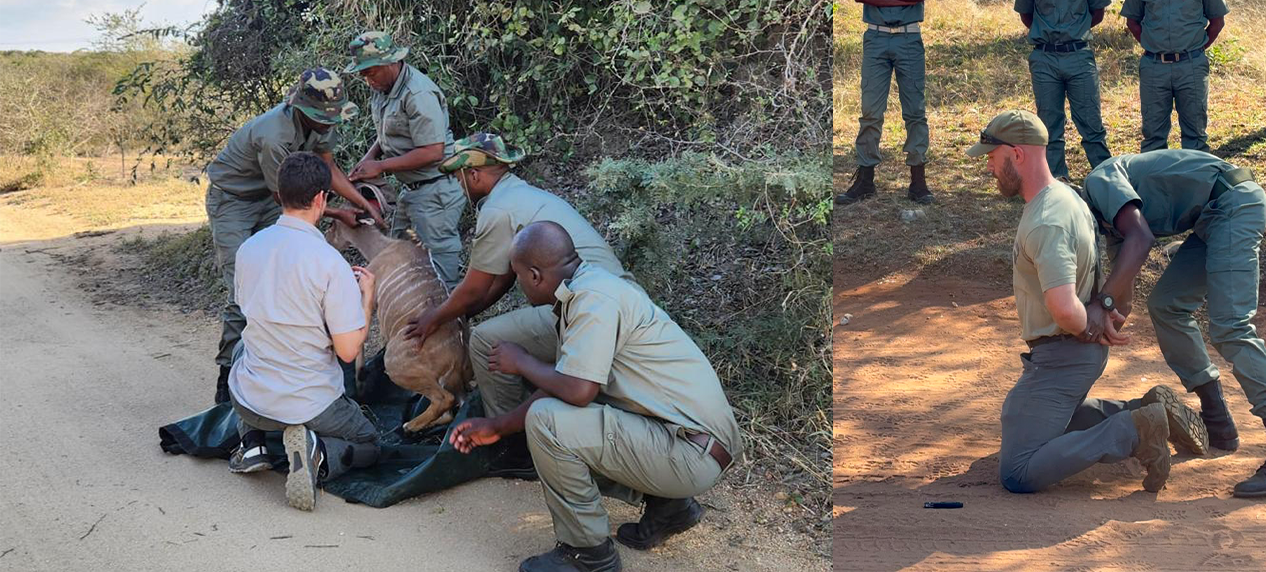
To mitigate wildlife crime within the Greater Kruger area of Limpopo, the Endangered Wildlife Trust has appointed five Threat Reduction Rangers to reduce illegal wildlife activities. This includes snaring in the Greater Kruger area in northern Limpopo – a buffer zone to the west of the Kruger National Park, and Great Limpopo Transfrontier Conservation Area.
The team, comprising a head ranger and four rangers, undertake regular patrols, remove snares, record illegal activity, monitor high-risk areas using camera traps and share information with landowners and conservation partners so that threats can be timeously detection and addressed immediately.
Thus Unit helps protect both wildlife and people. By removing snares and reducing illegal activities, endangered animals are saved, healthier ecosystems are supported, and wildlife crime is prevented from spreading into protected areas. At the same time, it improves safety for landowners and local communities through better monitoring, coordination, and a stronger presence on the ground.
In the Greater Kruger area, snaring for bushmeat represents one of the most pervasive and persistent threats. This indiscriminate and illegal hunting method has intensified in recent years, reaching unsustainable levels across southern Africa.
To address this, the EWT’s Threat Reduction Unit now delivers a coordinated, intelligence-driven response across property boundaries in an effort to halt the escalation of snaring, safeguard threatened wildlife populations, ensure human safety and reinforce the integrity of the Greater Kruger conservation system.
The project being undertaken in potentially high-risk areas prioritises community and privately-owned land where enforcement capacity is limited, and thus vulnerable to illegal wildlife activities. The present focus is encourage these landowners and communities to participate in the initiative.
To achieve our conservation goals, we have partnered with the Kevin Richardson Foundation. Soldiers for Wildlife and Van Niekerk Wildlife have provided ranger traising, with additional support being received from the Scales Conservation Fund, Phalaborwa Natural Heritage Foundation and Kendra Carano.
Restoration Rangers
In the heart of the Soutpansberg is a team of Restoration Rangers protecting the landscape and restoring it back to health, one tree at a time.
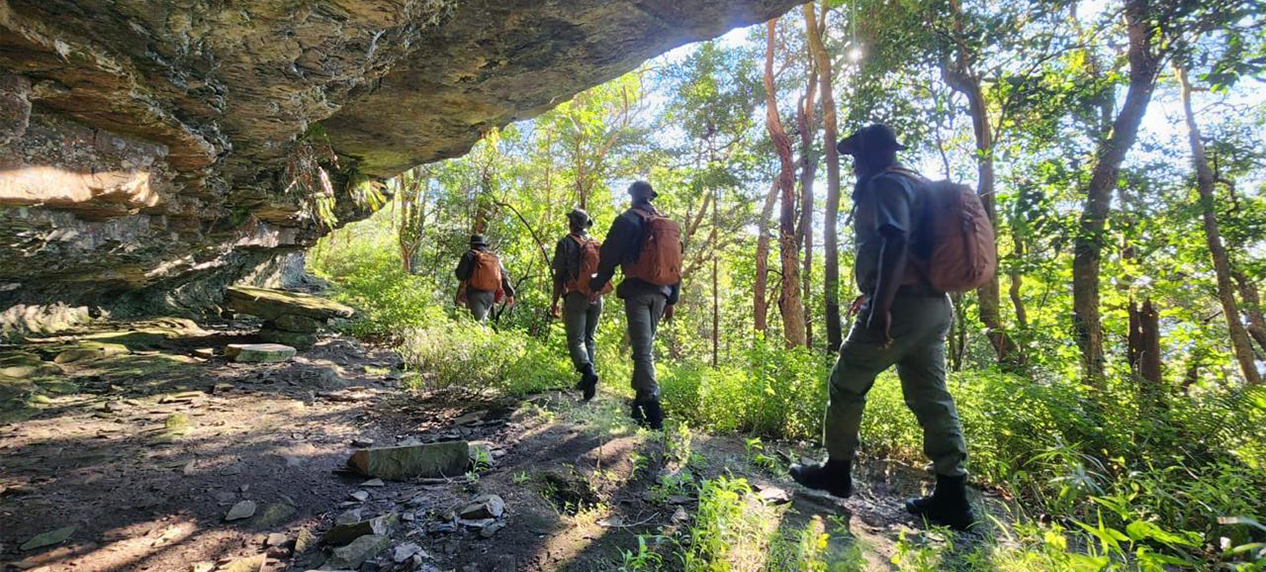
The EWT’s Restoration Rangers are working to reverse decades of environmental degradation caused by invasive alien plants. Their daily work often includes hiking on steep, inaccessible, remote mountain slopes carrying all their equipment and safety gear up to 8 kg per person. The specialised team focuses on removing invasive trees and plants that threaten one of South Africa’s most biologically diverse landscapes.
The Soutpansberg is recognised as one of the country’s unexplored biodiversity hotspots, supporting an extraordinary diversity of plants and animals, many of which occur nowhere else on Earth. However, invasive alien plants, particularly water-thirsty eucalyptus trees that take up to 260 litres per day, reduce streamflow, outcompete indigenous vegetation, increase wildfire intensity, and degrade vital habitats.
The Restoration Rangers are helping to change this trajectory. Through strategic invasive plant control, follow-up clearing, wetland restoration, road and trail maintenance, and ongoing monitoring, they are restoring ecological processes that allow indigenous ecosystems to recover naturally. Their work contributes to healthier catchments, improved water security, greater resilience to climate change, and stronger habitat connectivity for wildlife.
This team consists of young people from neighbouring communities who receive practical ecological restoration training while gaining valuable work experience and developing skills that contribute to South Africa’s growing restoration economy.
Over the past year alone, the team has removed thousands of invasive plants across priority conservation areas, restored ecologically sensitive wetlands, maintained critical access routes for landowners and conservation partners, and supported collaborative restoration efforts across the Western Soutpansberg Nature Reserve. Every invasive tree removed represents more water remaining in the landscape, improved habitat for indigenous species, and another step towards restoring ecosystem health.
As the impacts of climate change intensify, ecological restoration has become one of the most effective nature-based solutions available. Investing in restoration rangers means investing in water security, biodiversity conservation, disaster resilience and sustainable rural livelihoods.
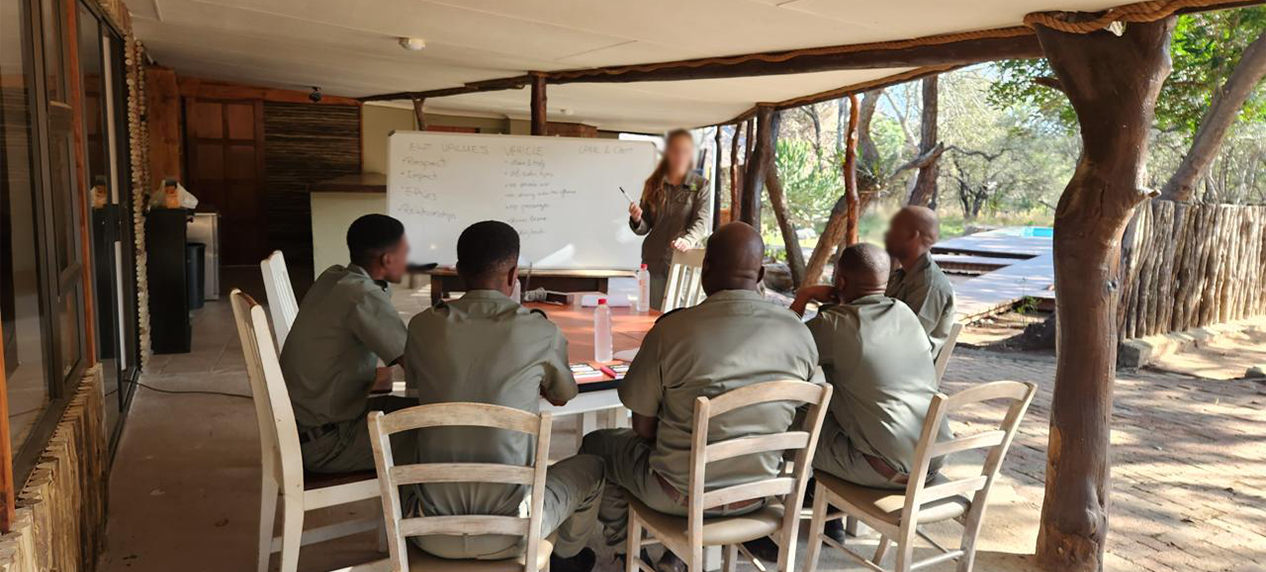
Medike Rangers
At the EWT’s Medike Reserve in the Soutpansberg, three rangers and four conservation interns are engaged in work that rangers from de=snaring and anti-poaching patrols, to monitoring, invasive alien species removal, road and accommodation development and maintenance, guest hospitality and guiding.
While many rangers are recognised for protecting wildlife on the frontlines against poaching, this group of conservation champions is quietly restoring ecosystems that sustain both biodiversity and people.
Rangers are the custodians of our natural heritage. Whether protecting endangered wildlife or restoring degraded ecosystems, their work is essential to safeguarding South Africa’s biodiversity and supporting the communities that depend on healthy landscapes.
This World Ranger Day, the EWT celebrates not only the bravery of rangers protecting wildlife but also the determination of those restoring ecosystems from the ground up. Their work reminds us that conservation is about more than protecting what remains – it is about restoring what has been lost and ensuring healthy landscapes for future generations.
The EWT extends its sincere gratitude to its funding partners, landowners, community members and conservation collaborators whose continued support makes this work possible.
Who are the EWT’s Restoration Rangers?
The Restoration Rangers have as their focus habitat restoration in the heart of the Soutpansberg Mountains in Limpopo, there they are working to reverse decades of environmental degradation caused by invasive alien plants. Their daily work often includes hiking on steep, inaccessible, remote mountain slopes carrying all their equipment and safety gear up to 8 kg per person. The specialised team focuses on removing invasive trees and plants that threaten one of South Africa’s most biologically diverse landscapes. Their work contributes to healthier catchments, improved water security, greater resilience to climate change, and stronger habitat connectivity for wildlife.
Richard Ndou is from Elim Varry Village in Limpopo. Speaking to Conservation Matters, Richard said he had chosen a job in restoration to help eliminate invasive alien species from the area around his village. His involvement in the EWT’s habitat restoration initiative in the Soutpansberg has not only benefited his family financially, but also raised awareness within his community about the threats of invasive alien species.
“l chose a restoration job, because all around the Soutpersberg area villages are struggling with water because of alien plants such as massive tall trees like Blue Gums. They are highly intrusive and are disturbing the water table, because it can absorb around 260 litters per day.”
Besides saving water, Richard is also committed to saving wildlife from the “high amount of poaching all over the world”.
Since being employed by the EWT, he has learnt to identify invasive alien plants and how to control these, how to protect wildlife.
“Plants are important for feeding and trees are important for medicine. The importance of restoration saves life because we are also sharing information in the community so that they know more about restoration,” he said.
Willington Mavhandu from Kutama Village joined the Restoration Rangers because of the struggle faced by villages across the Soutpansberg to access water resources limited by alien invasive species.
“These trees are highly water intensive and they are disrupting local water tables…so that is why I chose to be a ranger to save animals and water,” he said. “I learned that animals and plants are very important and have a right to live”.
Willington believes that because of his work and learning, he is able to share information with his community of “the importance of restoration to save life”.
“I believe there is more future for Restoration Rangers as there is a lot of work to be done all around the world. Everyone is impressed with the work we are doing. My family and I are benefitting a lot with support, knowledge and training from EWT and we are willing to work harder and harder,” said Willington.
Michael Sithagathaga is from Khavhambe village. He joined the Soutpansberg Restoration Rangers to learn new skills in conservation and to use his energy to fight things like erosion, bushfires and invasive plants.
“I want to protect our heritage,” he said.
“Since I joining the ranger team, I learnt lot about conservation, how to identify invasive plants, control bushfires, do anti-poaching patrol and also work as team spirit, take care of equipment. My is important because we are protecting the Soutpansberg mountains. This area gives us clean water, fresh air and home for wildlife,” he said.
Michael believes there is a future for Restoration Rangers in South Africa, and around the world. “Yes there is a future. South Africa is dealing with drought, floods and erosion, so restoration of land and rivers is one of the main ways we can fix for next generation”.
His employment by the EWT team, he said, has a number of benefits for him, and his family.
“As a restoration ranger, it has helped my family a lot. I’m able to provide food, pay transport for school and also supply my family with skills and knowledge about how to take care of nature and water,” said Michael.
Sengani Ramalamula also hails from Khavhambe Village and joined the Restoration Rangers because wants to conserve wildlife.
During his time in the ranger unit, he has learnt to “solve problems continuously”.
Sengani believes his new role as a Restoration Ranger is important because it helps rebuild native habitat and “helps support households through community development and land rehabilitation”.
“There is a powerful, essential future for Restoration Rangers because nature always needs repair. Through this project I am able to understand conservation, wildlife and support my family financially,” said Sengani.
The EWT’s Field Rangers at Medike reserve
The Medike Reserve in the Soutpansberg boasts three full-time field rangers and four conservation interns. The team has a variety of responsibilities as field rangers, such as law enforcement & monitoring which includes patrols, snare removal, and anti-poaching, hiking trail support on the Old Salt Trail, veld fire control, invasive alien plant removal and infrastructure maintenance that includes plumbing, building and road revamps. This team also does environment awareness in the local community and among tourists, ensure the accommodation is ready for visitors, interpretive guiding and dealing with guests.
The full-time team are:
Oscar Musevhula is one of the longest serving staff members at Medike. He has been working in the Medike East area for 14 years, and is an active member of the anti-poaching team. Oscar is handy man, he helps the reserve with plumbing and building.
Khathutshelo Mukhumeni has been trained as a law enforcement field ranger. He is also handy man. He has been active in conservation guardianship and law enforcement. He recently developed an interest in field guiding and is supporting our hikes. Khathutshelo is also capacitating conservation interns on anti-poaching, snare removal and the basic skills of field guiding .
Micheal Modimana has been involve in alien plant removals and snare removal. He is the main Kubota TLB driver during roads maintenance. He is also our slackpacked driver during the old Salt Trail.