
Painted Wolf Wines Lion Collaring Campaign passes halfway mark
By Eleanor Momberg
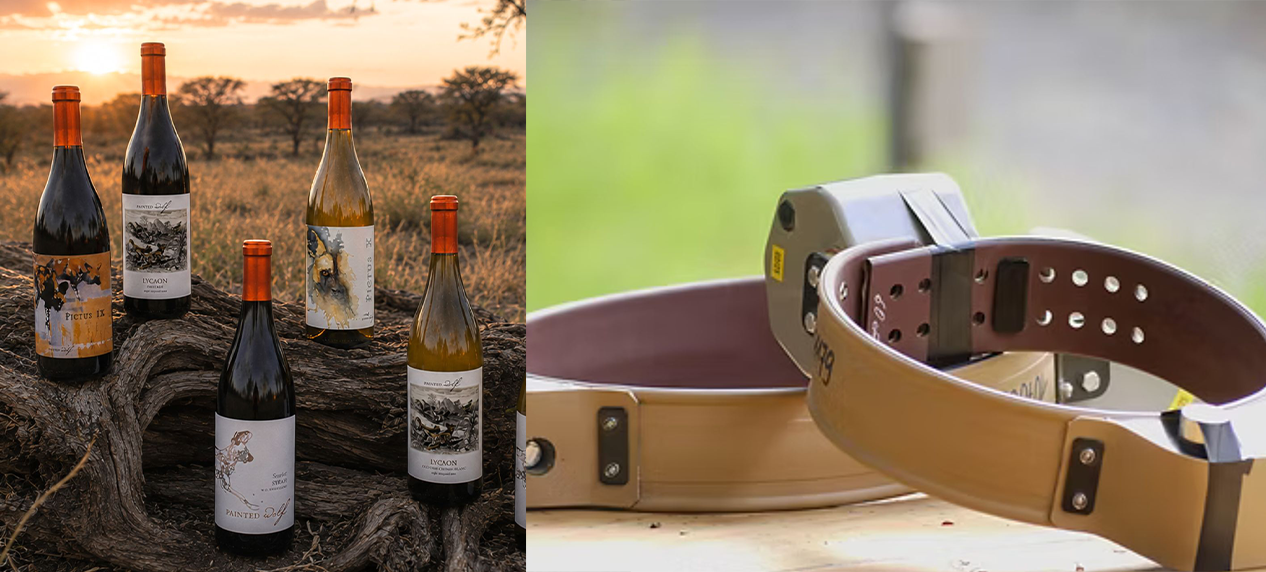
The Kruger Carnivore Funraiser, a six-month national campaign to rase R700.000 for carnivore conservation in and around the Kruger National Park has surpassed its halfway mark.
The campaign, launched in June by Painted Wolf Wines in partnership with the Endangered Wildlife Trust and the SANParks Honorary Rangers, had raised R355,344.00 by mid-August, for 11 collars for lion through the sale of 488 cases of wine, and two very generous cash donations.
The campaign responds to a stark reality: the lion population in the northern Kruger has declined by 63% since 2005, driven largely by targeted poaching for body parts; cheetahs have lost 90% of their historic range across Africa; and fewer than 6,600 African Wild Dogs remain on Earth.
Painted Wolf Wines, marking its 20th harvest this year, has hand-selected and donated 6,000 bottles of its award-winning wines to the cause. Supporters purchase a limited-edition Kruger Carnivore Case of six premium wines (Platter’s 4–4.5 star / Tim Atkin 90+) for R995, against a retail value of more than R1,800. Of every case sold, R600 is donated directly to the SANParks Honorary Rangers for carnivore conservation, administered in partnership with the EWT. The balance of the R995 is purely for fulfillment costs with Painted Wolf Wines taking no profit or margin on these cases.
Funds will close a critical gap: 30 GPS collars are needed to monitor lions in the highest-risk areas of the northern Kruger National Park. 10 have been funded; the campaign aims to fund the remaining 20. Each collar costs R35,500 and provides two years of satellite monitoring, enabling rangers to track pride movements in real time and respond before poaching incidents occur. A single collared lion provides indirect protection to its entire pride.
The EWT’s Carnivore Conservation Unit manager, Derek van der Merwe, says satellite collars are an essential conservation and law enforcement tool, providing far more than simple location data.
“They enable conservation teams to detect abnormal movement patterns or mortality signals that may indicate a lion has been caught in a snare, poisoned, or otherwise injured. This allows rapid deployment of field teams and veterinarians, significantly increasing the likelihood of rescuing injured animals before they succumb to their injuries”.
In cases of poisoning, he says, collars provide an early warning that enables teams to respond before additional wildlife is affected. Poisoned carcasses often attract scavengers, including vultures, hyenas, jackals, and other carnivores, resulting in devastating secondary mortalities.
Derek says rapid detection and removal of poisoned carcasses can therefore prevent the loss of dozens or even hundreds of additional animals, particularly threatened vulture species.
Satellite collars also play a critical role in supporting law enforcement.
“By enabling conservation teams to reach incident sites quickly, they improve the chances of identifying evidence, securing crime scenes, and working with law enforcement authorities to apprehend those responsible for illegal activities such as snaring and poisoning. Prompt responses not only increase the likelihood of successful prosecutions but also act as a deterrent to future wildlife crime,” he says.
Beyond emergency response, collar data informs proactive conservation management by identifying areas where lions are at greatest risk of human-caused mortality. This information allows managers to target anti-poaching patrols, engage with neighbouring communities, mitigate emerging conflict hotspots, and implement preventative interventions before further incidents occur.
For these reasons, the collaring remains one of the most effective tools available for reducing anthropogenic lion mortality, protecting associated biodiversity, and improving the effectiveness of both conservation management and wildlife law enforcement.
“Satellite collars also play a vital role in preventing human-lion conflict,” says Derek. “Real-time movement data enables conservation teams to identify when lions leave protected areas or begin moving towards neighbouring communities, livestock grazing areas, or other high-risk conflict zones. This allows rapid intervention through aversive conditioning, herding lions back into protected areas, or, where necessary, physically relocating animals before conflict occurs”.
These proactive responses substantially reduce livestock losses, improve human safety, minimise retaliatory killing of lions, and foster greater tolerance for large carnivores among affected communities. By preventing conflict before it escalates, satellite collaring is an important tool for promoting long-term coexistence between people and lions while reducing the need for reactive management interventions.
Painted Wolf Wines’ Madison Keyser says every case purchased earns the buyer automatic entry into monthly prize draws, featuring safari stays, culinary experiences, art and merchandise donated by campaign prize partners — culminating in a Grand Prize Draw in December 2026.
The campaign carries a particular symbolic weight: it unites the Kruger National Park’s 100th anniversary, the SANParks Honorary Rangers’ 60 years of volunteer service, and Painted Wolf’s 20th harvest.
Jeremy Borg, Painted Wolf Wines founder, says: “Twenty years ago we founded Painted Wolf on the belief that exceptional wine could keep wilderness wild. In the Kruger’s centenary year, with its great carnivores under real pressure, this is the most important campaign we have ever run. Every case sold puts R600 directly into protecting our carnivores and we are asking South Africa’s wine lovers to join the cause.”
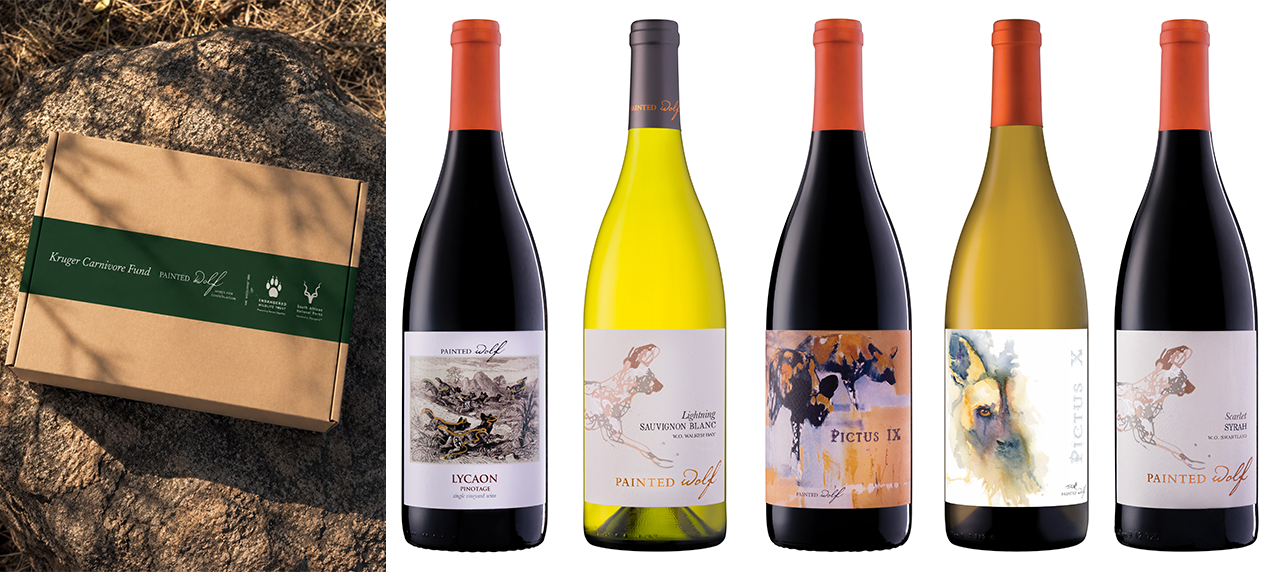
Availability
The Kruger Carnivore Case is available from 1 July 2026 (domestic delivery included, use Kruger2026 to activate in the coupon code box; international shipping at additional cost).
The campaign runs to December 2026, with prize draws at the end of each month and the Grand Prize Draw on 16 December 2026.
Campaign at a glance:
- Goal: R700,000 for carnivore conservation in and around Kruger National Park
- Mechanic: 6,000 donated bottles; six-bottle case at R995 (retail value R1,800+)
- Donation: R600 per case (R100 per bottle) to the SANParks Honorary Rangers, administered with the EWT
- Purpose: fund 20 GPS lion collars at R35,500 each (two years of satellite monitoring per collar)
- Dates: 1 July – December 2026; monthly prize draws; Grand Prize Draw 16 December 2026
- Partners: SANParks Honorary Rangers, Endangered Wildlife Trust and thanks to all our prize Partners.