
Every Spot Counts: The Greater Kruger Cheetah Census 2026/27
By Olivia Sievert, manager of the EWT’s Cheetah Conservation Project
Everyone loves seeing a Cheetah in the wild, but did you know that behind every sighting lies an important scientific opportunity? A simple photograph can help us identify an individual, track its movements, and, when combined with thousands of other records, build a picture of an entire population.
This is the idea behind the Greater Kruger Cheetah Photographic Census, a collaborative initiative between the Endangered Wildlife Trust and SANParks, to improve our understanding of Cheetahs across the Greater Kruger landscape.
Building on decades of photographic monitoring
Photographic censuses of large carnivores have a long history in the Kruger. Citizen-science photographic surveys for African Wild Dogs began in 1988/89, with Cheetahs being first included in 1990. Further Cheetah censuses followed in 2004/05 and 2009/10, before the most recent, in 2021–2022.
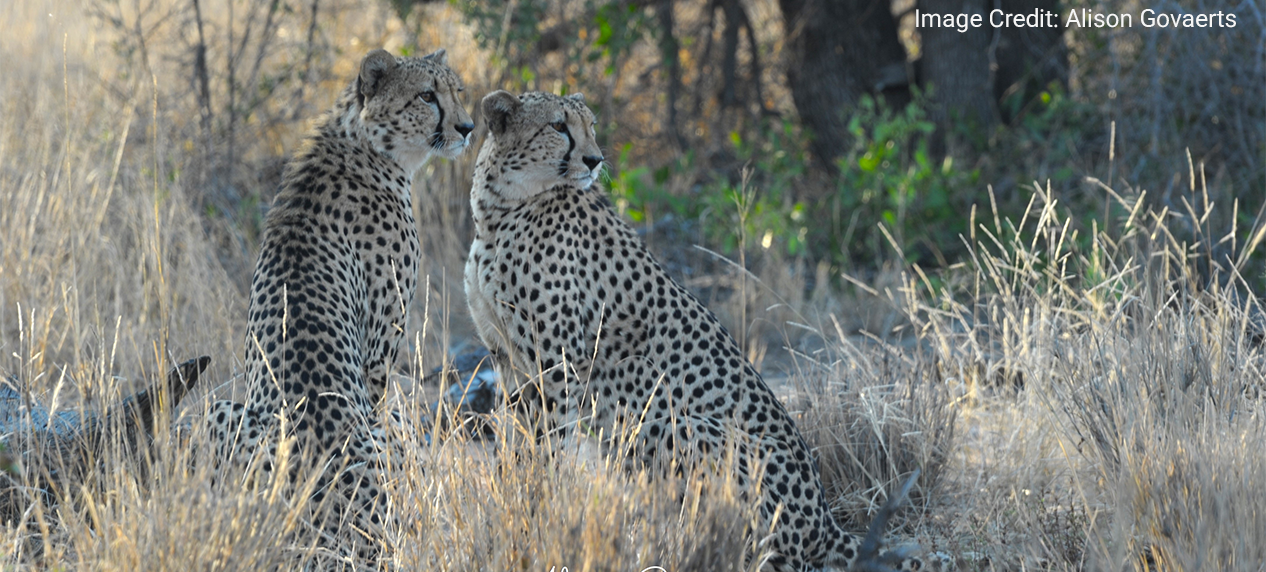
The principle is simple: Cheetahs have individually distinctive coat patterns, allowing researchers to recognise the same animal from photographs taken at different times and places. Tourists, guides, staff, and other members of the public can therefore become part of the monitoring effort simply by submitting photographs of the cheetahs they encounter.
The last census in 2021–2022 received 196 Cheetah submissions, of which 151 were suitable for individual identification. From these photographs researchers were able to identify 86 individuals, while statistical modelling estimated approximately 116 Cheetahs across the national park. These numbers, however, also highlight why the next census is so important. This population estimate was the lowest recorded to date, yet this apparent decline cannot simply be interpreted as a decline in the Cheetah population. The 2021–2022 census had fewer submissions, reduced tourism during the COVID-19 pandemic and introduced AI-assisted identification. Meaning a mixture of low reporting and a change in methods likely also contributed to our recorded population decline.
In other words, we have valuable information, but we still have important questions to answer.
Why Greater Kruger matters
The Greater Kruger landscape is one of the most important remaining strongholds for Cheetahs in southern Africa. As part of the wider Greater Limpopo Transfrontier Conservation Area (GLTFCA), which includes the Kruger National Park, the Associated Private Nature Reserves, and adjoining conservation areas in Mozambique and Zimbabwe, it forms part of a vast connected conservation landscape spanning nearly 100,000 km². Large, connected landscapes are essential for maintaining viable wildlife populations as they allow animals to move between suitable habitats and host large enough populations to maintain genetic diversity without intervention.
The GLTFCA represents roughly three percent of the Cheetah’s remaining global range and contains some of the largest protected areas available to the species in southern Africa. Within South Africa, the Greater Kruger landscape is particularly significant, encompassing approximately 47% of the country’s protected Cheetah habitat. Yet the most recent population estimate suggests that it supports only around 17% of South Africa’s remaining wild Cheetah population.
Large, connected protected areas are critical for the long-term conservation of Cheetahs. The species naturally occurs at low densities, requires extensive areas over which to hunt, disperse, establish territories and avoid competing predators. Additionally, Cheetah are vulnerable to increasing human pressures beyond protected areas where we have seen some of the most drastic population declines in the last 15 years. Therefore, ensuring that protected landscapes such as the Greater Kruger continue to support healthy Cheetah populations will require informed and targeted conservation action.
But, effective management depends on reliable information. We need to understand how many Cheetahs occur across the landscape, where they are found, how they move between areas, and which threats may be limiting their population growth. The Greater Kruger Cheetah Census aims to provide this knowledge, creating the foundation for evidence-based conservation and helping to guide management decisions for one of South Africa’s most important wild Cheetah populations.
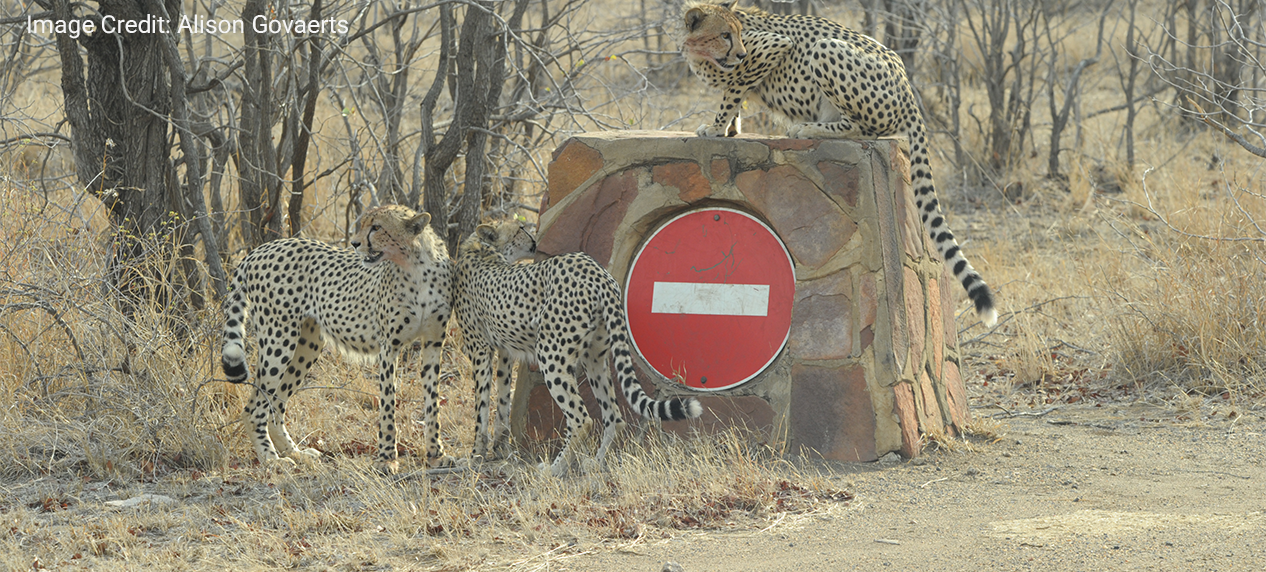
What do we know, and what don’t we know?
We know that Cheetahs generally occur at low densities, have large ranges and can move considerable distances. During the 2021–2022 census, one individual was recorded as having a potential range of more than 810 km² and moving more than 90 km between sightings.
We also know that photographic monitoring works. But we do not yet have a sufficiently consistent, landscape-scale baseline to answer some of the most fundamental conservation questions confidently. How many Cheetahs are there? Is the population stable, increasing or declining? How many cubs are surviving? How long do individuals live? Are Cheetahs making use of the wider landscape? And what threats are impacting the population? All these questions are imperative to answer if we want to properly conserve the Cheetah across the Greater Kruger.
Turning photographs into conservation action
The 2026/27 census aims to build on this history by bringing together new photographic submissions with historical photographs, camera-trap images, ranger records, existing monitoring data, and other available information. Individual Cheetahs will be identified using AI-assisted coat-pattern recognition, with manual verification where necessary.
The goal is not simply to produce another population estimate. We want to establish a reliable baseline for the Greater Kruger Cheetah population, understand how individuals move and survive across the landscape, identify important core population areas and potential connectivity routes, and improve our understanding of threats. This information can ultimately support more targeted threat reduction, better coordination between conservation areas, and adaptive management.
You can help
If you are visiting Greater Kruger landscape between 1 September 2026 and 31 August 2027, you can take part in the census.
If you see a Cheetah, take photographs from a safe and respectful distance. Where possible, photographs of both the left and right sides of the animal are especially valuable because they help us distinguish individuals accurately.
When submitting your sighting, please include:
- The photographs of the Cheetah(s);
- The date of the sighting;
- The approximate location, GPS coordinates, road number, or nearest landmark;
- The number of Cheetahs observed; and
- Any additional observation.
Every photograph adds another piece to the puzzle. A single image may help identify an individual; repeated sightings can reveal movements and survival; and thousands of photographs collected over time can help us understand the population as a whole.
Your next cheetah sighting could help shape the future of Cheetah conservation in Greater Kruger: Every Spot Counts.
** This work is being done in partnership with SANParks. Funding is provided by DERTOUR Foundation and SANParks Honorary Rangers Fund with support from Ford Wildlife Foundation, SANParks Honorary Rangers and Tech4Conservation.