In the Field
Following the Vultures of Badingilo
By Kyle Walker, field officer, Birds of Prey and Carnivore Conservation Units
There are few places that make you feel quite as small as the vast landscapes of South Sudan. Endless horizons stretch across open savannas, floodplains, and scattered acacia trees, creating a wilderness that feels untouched by time.
It was here in African Parks’ Badingilo National Park, that the EWT’s Gareth Tate and Kyle Walker embarked on an adventure with a simple goal: to catch and fit satellite tracking units to vultures and learn more about their secret lives.
The plan sounded straightforward enough. By tagging 15 vultures, we hoped to gain valuable insights into their movements, breeding behaviour, habitat use, and the challenges they face. As with most field expeditions, however, the journey quickly became about much more than the original objective.
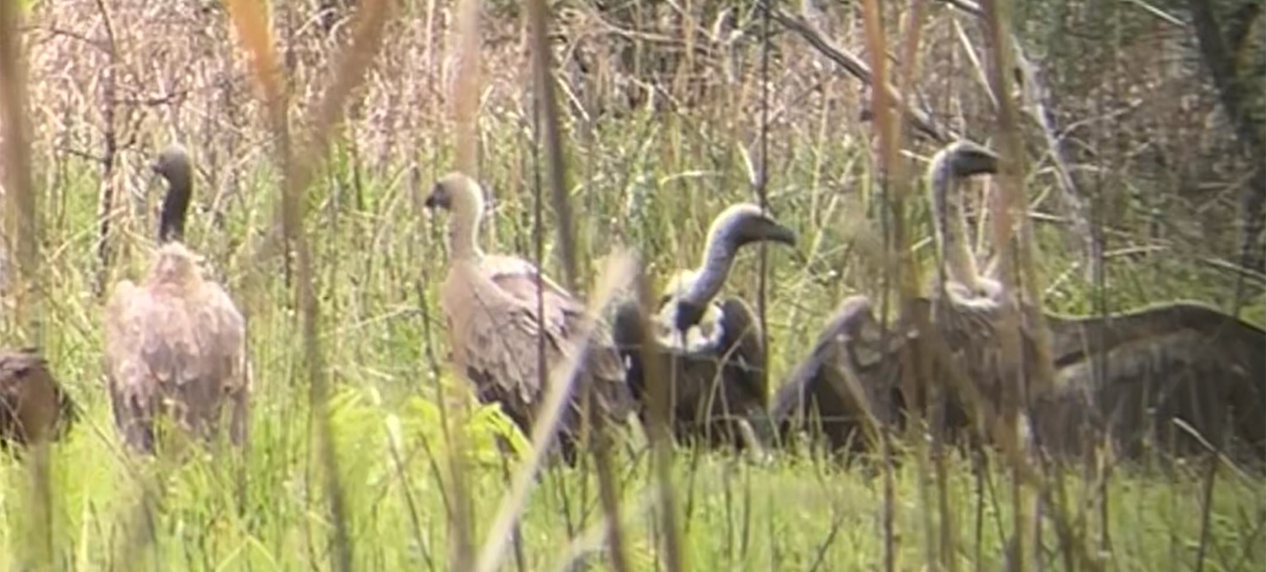
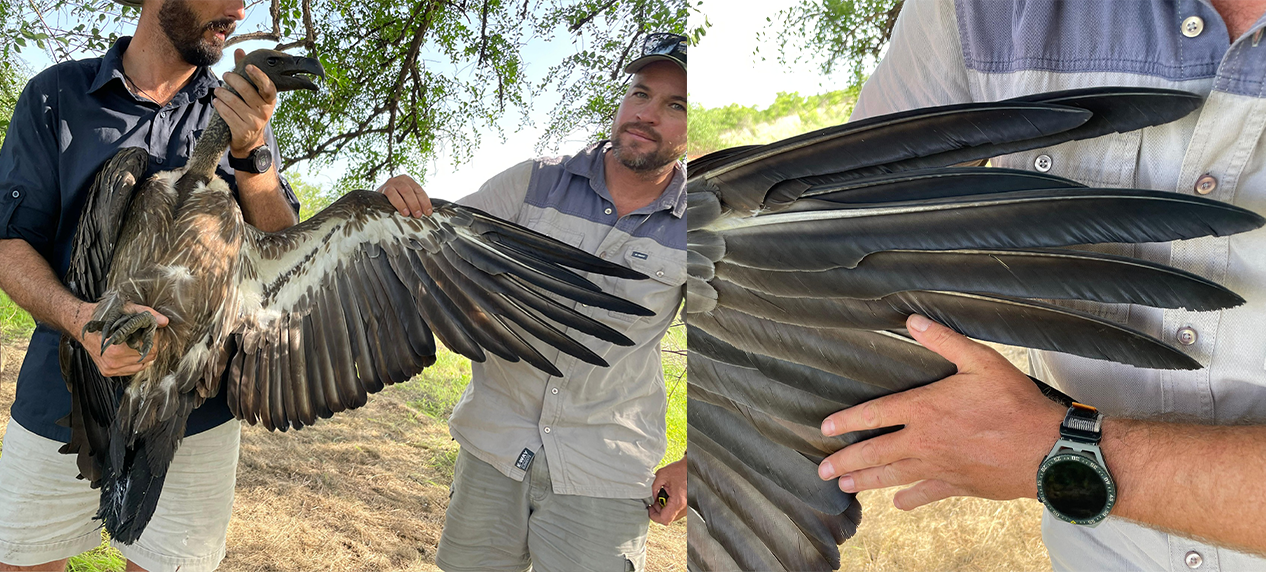
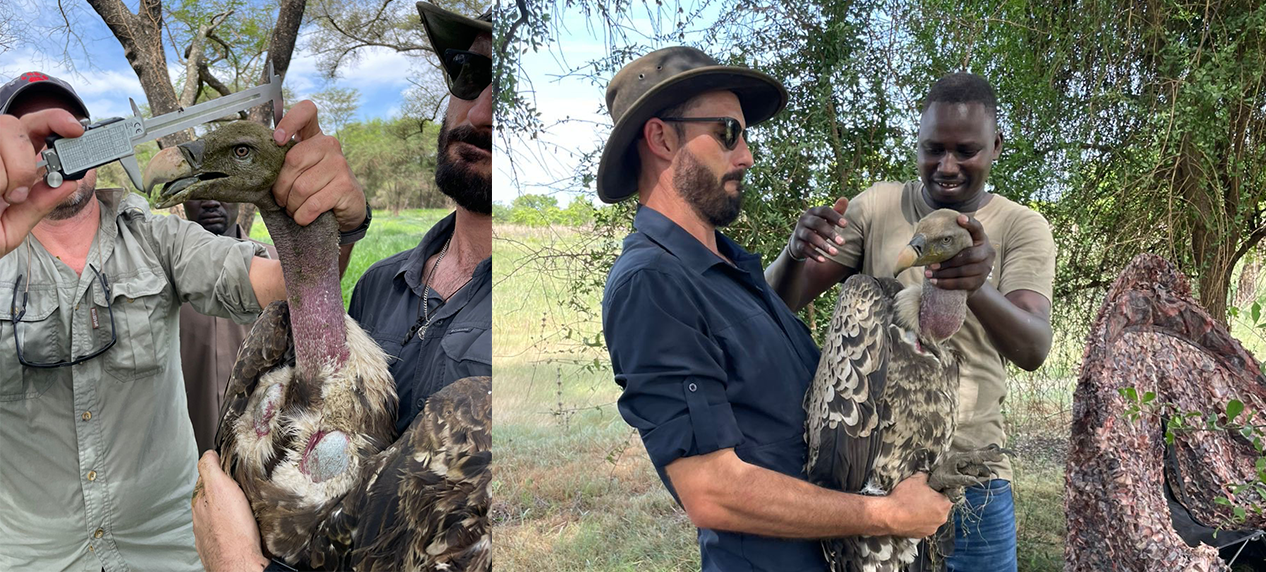
Over the course of the mission, we successfully tagged 15 vultures of three species: four Rüppell’s Vultures, two White-headed Vultures, and nine White-backed Vultures, all of which are listed as Critically Endangered on the IUCN Red List of Threatened Species. Every bird was handled with care, ensuring minimal stress before being released back into the skies. Watching a newly-tagged vulture disappear over the horizon is a moment that never loses its magic.
Of course, fieldwork rarely follows a script.
One of our ambitions was to extend the expedition into Boma National Park, but poor weather had other plans. After a brief flight, it became clear that conditions would not allow a safe landing. We turned back to Badingilo and focused on catching the remaining five vultures. It was another reminder that flexibility is just as important as preparation.
Operating in Badingilo also highlighted the realities of conservation in one of Africa’s most remote protected areas. With few roads crossing the landscape, travel often relies on fixed-wing aircraft and helicopters. Distances that appear manageable on a map can become major logistical challenges on the ground.
Those challenges were brought into sharp focus by our aging Unimog. After faithfully carrying us across rough tracks along the White Nile River, it finally broke down far from camp. We found ourselves sitting beside the road waiting for assistance, surrounded by an immense wilderness that seemed to stretch forever. Out here, schedules are suggestions and patience becomes an essential field skill.
Adding to the adventure was a heightened security alert during our stay, a reminder that conservation work in remote regions often involves navigating far more than wildlife management.
Yet some of the most memorable moments had little to do with vultures.
Among the camp’s residents were a young Sitatunga and a Tiang calf, both eagerly awaiting their evening milk feeds. After long days in the field, these small routines became highlights, reminding us of the individual animals whose futures depend on healthy ecosystems.
One evening, we spent the night beside a village on the Nile River, gathered around a fire with community members beneath a sky filled with stars. Stories, laughter, and a shared dislike for mosquitoes, quickly turned strangers into friends.
The next day, the villagers came to see the vultures up close as we processed them. Although Hooded Vultures are a common sight around many communities, few people had ever seen some of the larger vultures at arm’s length. Curiosity turned into fascination as people asked questions and learned about the birds’ remarkable lives.
Through conversations with local communities and rangers, we also gained a deeper appreciation for the region’s cultural heritage. We learned about the Dinka and Murle people and their historic cattle-herding routes across these vast grasslands. Long before satellite tags and GPS units arrived, people had been reading and navigating this landscape for generations.
Now, with the fieldwork complete, the next chapter begins. The trackers are already revealing how these vultures move across South Sudan’s wilderness. As the data accumulates, it will help identify important habitats, movement corridors, and conservation priorities for the species.
But beyond the maps and data, this expedition left us with something equally valuable: a renewed appreciation for the people who make conservation possible. The African Parks rangers who guided us, the communities who welcomed us, the partners who supported the journey, and the birds that inspired it all, are part of the same story.
Looking back, Badingilo was far more than a tagging expedition. It was an adventure shaped by unexpected challenges, extraordinary landscapes, campfire conversations, breakdowns in the middle of nowhere, orphaned antelope waiting for their evening milk, and unforgettable encounters with wildlife.
As the vultures continue their journeys across the skies of South Sudan, their trackers will help us follow along, revealing stories that were previously hidden from view.
For now, we leave Badingilo with gratitude – for the birds, for the people, and for the privilege of being part of their story.