
Focus on Wildlife in Nature
As Africa’s energy needs increase, and the continent embraces the growth and implementation of green energy, a number of innovative methods have had to be developed to reduce the negative interactions between wildlife and infrastructure.
The Endangered Wildlife Trust’s Wildlife and Infrastructure  Unit, has developed numerous innovative methods to reduce these interactions, work to positively influence utilities’ wildlife management policies, and ultimately phase out problematic processes and hardware. Through adaptive management and the development of pioneering and innovative techniques, South Africa is now recognised as a world leader in managing the burden of wildlife damage on electrical infrastructure while addressing the threats to wildlife.
This article is the first in a series of three about the work being done by the EWT to mitigate the effect of power lines on wildlife, particular birds.
Planning for Flight Paths: Bird Monitoring at Energy Infrastructure
By the Wildlife and Infrastructure team
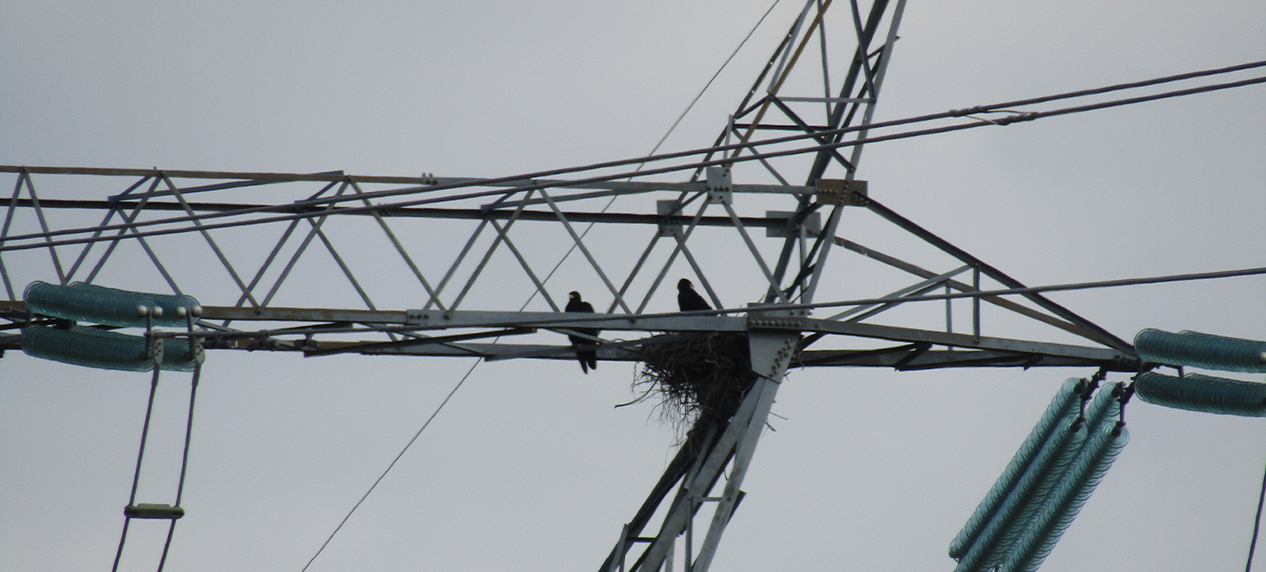
Before a single wind turbine or power line is built in South Africa, there is a crucial window in the pre-construction process to prevent bird mortalities. This ranges from infrastructure design to mitigation measures, such as the installation of devices on power lines to reduce bird collisions.Â
Among the measures incorporated in South Africa’s renewable energy expansion us ensuring that infrastructure is designed with biodiversity in mind. At the heart of this approach is pre-construction monitoring, which informs infrastructure design based on how birds use the landscape, rather than treating it as a simple regulatory requirement.
This article explains the pre-construction process, the relevant regulatory framework, and the field surveys used to map bird activity. It also explores how these insights are translated into practical design changes that minimise collision risks and protect vulnerable species.
BirdLife South Africa states in its 2025 review that of the 2,444 unique bird fatality incidents recorded at 33 Wind Energy Facilities, losses were attributed turbine collisions, power lines and other impacts. These incidents involved 202 species, of which 198 were recorded as turbine collisions.
Understanding how pre-construction monitoring and regulatory pathways shape infrastructure design is critical to preventing these losses. Notable Species of Conservation Concern include the Cape Vulture, White-backed Vulture, Verreaux’s Eagle, Martial Eagle, Black Harrier, Secretary Bird, Blue Crane, Greater Flamingo, Lesser Flamingo, Denham’s Bustard and Ludwig Bustard.
Understanding the Environmental Impact Assessment process
Wind Energy Facilities (WEF) and overhead power lines (both transmission and distribution voltage) pose collision and electrocution risks to birds. All follow different regulatory pathways depending on project scale and environmental sensitivity.
Energy projects may require an Environmental Impact Assessment (EIA) before construction is authorised. This depends on the threshold triggered. An EIA evaluates environmental, social and economic effects through screening, scoping, baseline studies and impact assessments, using surveys and models. The findings are compiled in a report, reviewed by the public, specialists and regulators, and may be approved with conditions or declined.
Approved projects then follow an Environmental Management Programme (EMPr), a legally-binding process that dictates how a project is managed. For wind energy facilities, operational avifaunal monitoring is a standard condition of an Environmental Authorisation (EA), ensuring bird collision risks are tracked and mitigated adaptively. For transmission power lines, monitoring requirements vary based on route sensitivity and specialist recommendations, though incident reporting is typically required. Distribution lines approved through registration for exclusion, however, face no such operational oversight — a regulatory gap explored later in this article.
Desktop screening
Desktop screening begins with the Department of Forestry, Fisheries and the Environment’s Environmental Screening Tool (https://screening.environment.gov.za/screeningtool/#/pages/welcome), which assesses avifaunal sensitivity and determines whether projects require a full EIA. Distribution lines in low- to medium-sensitivity areas can proceed through registration for exclusion. Avifaunal specialists then review spatial data on raptor nests, vulture colonies, Important Bird Biodiversity Areas, collision hotspots and migration routes. This identifies where development may harm key species. For wind farms, this flags priority species and thermal lift zones. For power lines, it maps wetland crossings, bustard corridors and raptor breeding areas.
Pre-construction surveys
For wind energy facilities, once risks have been identified to avifauna during the screening process, 12-month pre-construction surveys are legally required as a standard EA condition. This extended monitoring ensures breeding seasons, migration pulses and seasonal weather patterns are captured, requiring observation across all four seasons. Surveys record species presence, migration and breeding, noting flight heights and behaviours, such as whether vultures soar at turbine-elevated heights or eagles hunt near the ground. This data informs collision-risk models that predict turbine threats.
Power line pre-construction surveys follow a different approach. Rather than continuous monthly monitoring, specialists conduct seasonal site visits (typically 2 – 4 surveys across seasons) focused on documenting raptor nests, identifying perching structures, mapping bustard and flamingo flight corridors, and assessing electrocution and collision risks at specific high-risk spans. Distribution lines approved through registration for exclusion require only desktop assessment and site verification, with no extended seasonal monitoring. This is a regulatory gap that means seasonal flight patterns may go undetected until mortalities occur.
Design changes that work
Turbine layouts are redrawn based on survey results. Verreaux’s Eagle nests earn buffer zones of at least 3.7 kilometres, the minimum distance recommended in BirdLife South Africa’s guidelines, though actual fatalities have occurred up to 7.5 kilometres from known nests. Areas where Cape Vultures soar become no-go zones, regardless of wind resource. Collision risk modelling identifies high-risk positions, which are relocated or removed. Turbines are micro-sited to avoid hotspots such as ridge edges or thermal lift zones. Environmental Authorisation conditions require these changes before construction, making bird protection legally binding.
Power line routes avoid bustard and flamingo corridors, wetlands and raptor breeding areas. Engineers specify raptor-safe poles/tower designs, with adequate separation between energised and grounded components to prevent electrocution. Poles in raptor perching areas are insulated, and bird flight diverters mark high-risk are used where routing cannot eliminate collisions. Within wind farms, underground medium-voltage collector lines are increasingly standard practice, avoiding the electrocution trap of overhead networks. In the Northern Cape, two wind farms were installed with over-head collector lines. Over five years, these lines killed 12 Verreaux’s Eagles and three Martial Eagles through electrocution, a design flaw newer projects have corrected. For high-voltage transmission lines, however, underground cabling remains expensive, leaving mitigation reliant on routing, insulation and diverters rather than burial. These design changes prevent mortalities we will never see, the birds that would have died, but were not counted. When routes avoid wetlands, cranes and flamingos will not collide with wires. When poles are designed correctly and/or insulated, raptors will not be electrocuted.
The distribution line blind spot
“Registration for exclusion†is a streamlined National Environmental Management Act (NEMA) pathway that allows certain listed activities in low- to medium-sensitivity areas to proceed without full Competent Authority review. For distribution power lines (typically below 132kV, including municipal and Eskom Distribution infrastructure), this means projects can self-certify compliance rather than having to obtain an EA with enforceable conditions. Transmission lines (132kV and above) are excluded from this pathway and must follow full EA processes regardless of sensitivity.
While the exclusion route requires upfront specialist assessment, site verification and public participation, no operational monitoring is mandated. Distribution lines need not report bird collisions, audit mitigation effectiveness, or adapt when initial predictions prove inadequate. Critically, collector lines within wind farms undergo full EIA scrutiny of pole design, insulation and routing, while Eskom and municipal distribution lines below 132 kV bypass this oversight entirely through exclusion. Mitigation measures are not enforceable, leaving implementation to the utility’s discretion. The critical gap is that infrastructure can create risks that desktop assessments never anticipated. Poles provide perching opportunities in open landscapes, attracting raptors and corvids to areas previously flagged as low risk. Without operational monitoring, these emergent threats go undetected until mortalities accumulate.
Bird mortalities continue to occur on distribution lines below 132kV, with raptors electrocuted on poles and bustards and flamingos colliding with unmarked spans. Without operational monitoring requirements, these impacts go undocumented and unaddressed. The ongoing oversight that characterises full EAs disappears once construction begins, leaving responsibility with utilities, but no legal obligations to mitigate. This is particularly problematic for lines crossing seasonal flight paths, where post-construction bird use may differ dramatically from desktop predictions.
The Prevention Principle
The best collision is the one that never happens. Pre-construction monitoring embodies this prevention principle—design infrastructure that coexists with birds instead of threatening their survival. Yet when infrastructure proceeds through registration for exclusion, we gamble with species that cannot afford losses: Cape Vultures whose populations are declining, Verreaux’s Eagles rearing chicks near future collision zones and bustards crossing landscapes where unmarked wires cause mortalities. Smart planning is not red tape; it’s the difference between infrastructure designed around birds and infrastructure built blind to consequences.
Where full Environmental Authorisations require operational monitoring, systematic tracking reveals whether predictions prove accurate and mitigation works as intended. Sometimes monitoring uncovers surprises – species more vulnerable than anticipated or seasonal patterns missed in desktop assessments.
Article 2 explores how this adaptive management deploys targeted interventions that prevent mortalities. These safeguards apply where full EA processes are in place. For excluded infrastructure, birds pay the price of our regulatory blind spot.
Â
Further reading
- BirdLife South Africa 2025. Summary Bird Monitoring Reports from Operational Wind Energy Facilities in South Africa. BirdLife South Africa Occasional Report Series No. 3. BirdLife South Africa, Johannesburg, South Africa. Summary-of-Bird-Monitoring-Reports-Final-Version.pdf
- Jenkins, A.R., van Rooyen, C.S., Smallie, J.J., Harrison, J.A., Diamond, M., Smit-Robinson, H.A., and Ralston, S. 2015. Birds and Wind-energy Best-practice Guidelines. 3rd BirdLife South Africa and Endangered Wildlife Trust. Microsoft Word – Birds and Wind BestPractice guidelines_2015_final.docx
- Sowler, S., MacEwan, K., Aronson, J., and Lötter, C. 2020. South African Best Practice Guidelines for Pre-construction Monitoring of Bats at Wind Energy Facilities: Edition 5. South African Bat Assessment Association.  Microsoft Word – 202004_SA Best Practice Guidelines for Pre-construction Bat Monitoring at WEFs_Edition 5_Draft 1.docx
- World Bank. Post-Construction Bird and Bat Fatality Monitoring for Onshore Wind Energy Facilities in Emerging Markets Countries – Good Practice Handbook and Decision Support Tool (English). Washington, D.C.: World Bank Group. http://documents.worldbank.org/curated/en/099646309222331631