The Soccer World Cup
South Africa’s Threatened Species XI: A World Cup Starting Lineup You Can’t Afford to Lose
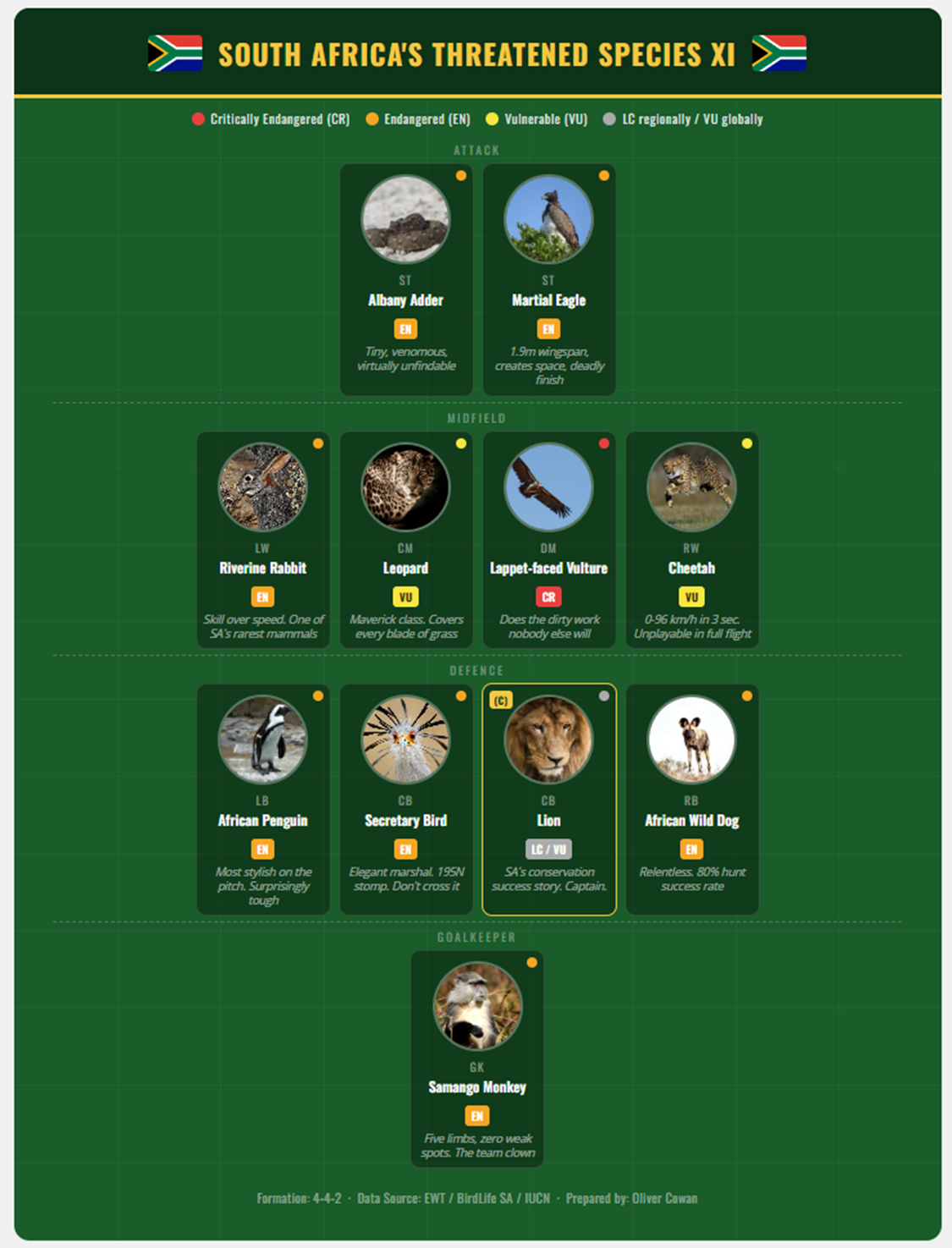
Formation:Â 4-4-2Â |Â Manager:Â Mother Nature |Â Status:Â Urgently needs your support
Announcer:Â Oliver Cowan, Conservation and Data Scientist (and keen Bafana Bafana supporter)
The FIFA World Cup has given us no shortage of dream teams, fantasy XIs, and heated debates about who deserves to wear the shirt. But, as football fever grips the globe, we’d like to propose a starting lineup that makes the Messi vs Ronaldo debate look trivial by comparison (it’s Messi, by the way). This is South Africa’s Threatened Species XI - eleven species that represent some of the most extraordinary wildlife on the planet, all of them fighting for survival against a very unforgiving opposition.
All eleven feature on South Africa’s Regional Red List of Threatened Species. The squad includes one Critically Endangered, seven Endangered, and two Vulnerable players, and is captained by one lion-hearted wildcard who leads the team by example. The bad news? Unlike a football team, there are no substitutes waiting in the wings; however, with your support the Endangered Wildlife Trust is actively working towards safeguarding their futures.
The LineupÂ
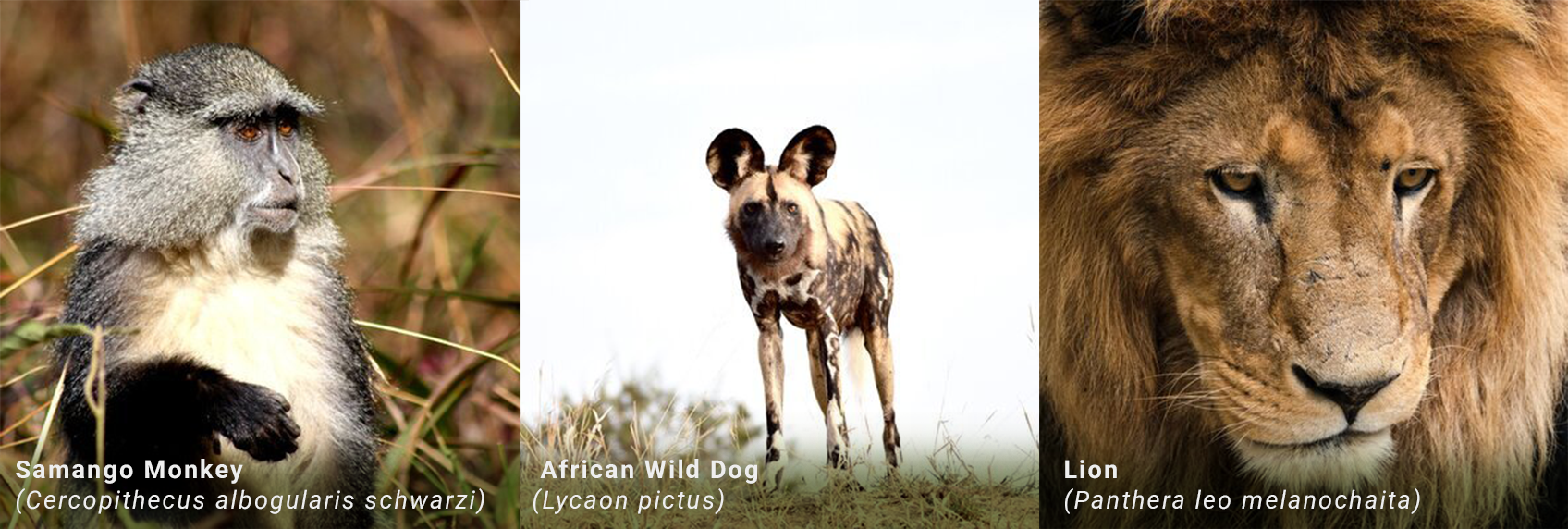
Goalkeeper: Samango Monkey (Cercopithecus albogularis schwarzi) - Endangered
Every great team needs a goalkeeper who makes the impossible look routine, and the Samango Monkey delivers in spades. Five effective limbs - four plus a tail a third of its total body length - give this forest-dwelling primate a range and agility that makes the goal look very, very small from the opposition’s perspective. A communicator of rare skill, the Samango reads danger before anyone else sees it coming and lets the whole team know about it loudly. The team clown between the sticks, and absolutely indispensable.
Right Back:Â African Wild Dog (Lycaon pictus)Â -Â Endangered
Energy. Loyalty. An 80% hunt success rate that puts every other predator on the continent to shame. The African Wild Dog is the perfect right back: relentless in covering ground, utterly committed to the team cause, and possessed of a work rate that simply does not stop. Painted Wolves, as they are also known, are Africa’s second most endangered carnivore, having disappeared from 25 of the 39 countries they once roamed. Fewer than 1,400 breeding individuals remain. The EWT’s own African Wild Dog programme has secured over 1.5 million hectares of safe space for the species across southern Africa - proof that conservation investment pays dividends.
Centre Back (Captain): Lion (Panthera leo melanochaita) – Least Concern (SA) / Vulnerable (global)
Not every captain needs to be the most embattled player in the dressing room. Sometimes the armband belongs to the one who has been to the brink and come back – the one who knows what the fight costs and what it looks like to win it. South Africa’s Lion population, decimated by hunting and habitat loss through the 19th and 20th centuries, has been managed so effectively that it now stands at around 2,007 mature wild individuals and is classified as Least Concern on South Africa’s Regional Red List of Threatened Species. That is a conservation achievement of genuine significance, and it earns the Lion its captaincy.
But the captain does not let the team forget the wider picture. Globally, the Southern Lion (P. l. melanochaita) is Vulnerable, its range having contracted by 33% over three generations. Emerging threats – the lion bone trade, poaching, retaliatory killing – require continued vigilance. This is not a species that has been saved. It is a species that is being saved, one protected area and one community engagement at a time. The armband is a reminder of both how far we have come and how much further there is to go.
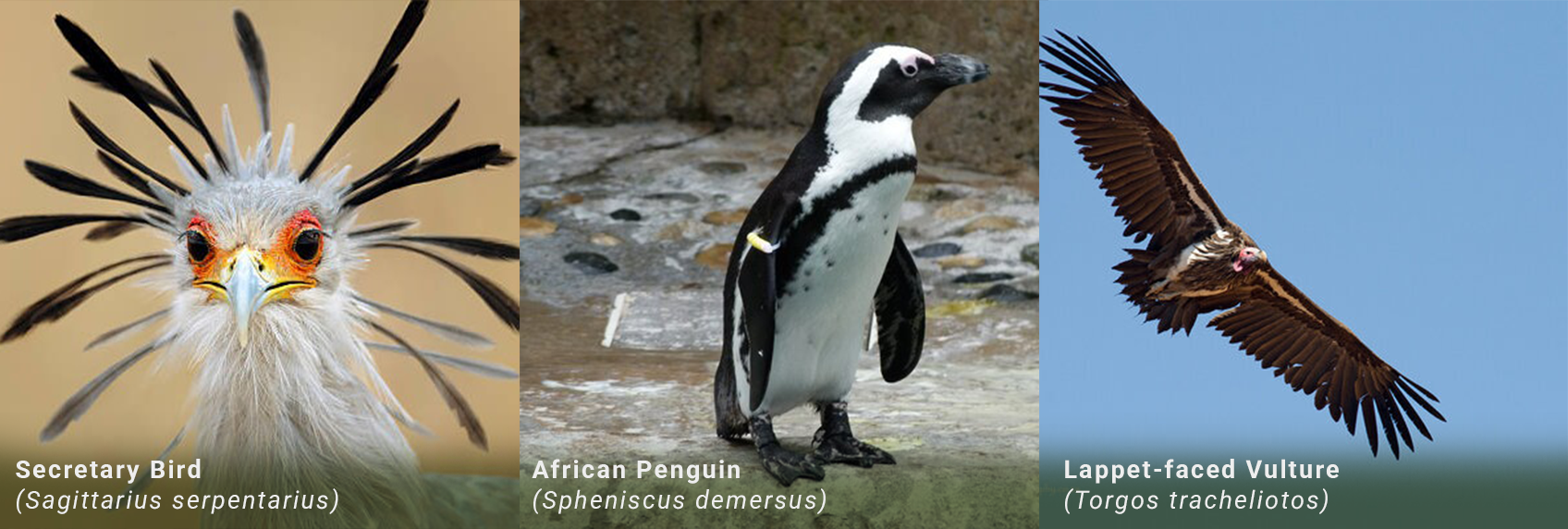
Centre Back: Secretary Bird (Sagittarius serpentarius)Â -Â Endangered
The Secretary Bird strides the pitch on impossibly long legs with an authority that brooks no dissent, organising the defensive line with quiet, imperious calm. But cross it, and you discover that those elegant legs can deliver a stomp carrying up to 195 Newtons of force - enough to kill a cobra in a single strike. Uplisted from Vulnerable to Endangered in the 2025 BirdLife South Africa Red Data Book, this iconic raptor is declining across its range.
Left Back: African Penguin (Spheniscus demersus)Â -Â Endangered (regional) / Critically Endangered (global)
The most stylish player on the pitch, and that tuxedo is absolutely non-negotiable. What the African Penguin offers beyond impeccable dress sense is surprising toughness - capable of swimming at 20 km/h and covering enormous distances in pursuit of sardines and anchovies. Regionally Endangered in South Africa thanks to focused local conservation efforts, but uplisted to Critically Endangered globally by the IUCN in October 2024, with fewer than 10,000 breeding pairs remaining. A landmark High Court ruling in March 2025 secured 10-year fishing exclusion zones around six key breeding colonies. A rare piece of good news for a species that badly needed it.
Defensive Midfielder: Lappet-faced Vulture (Torgos tracheliotos) - Critically Endangered (SA) / Endangered (global)
Every great team has a player who does the jobs nobody else wants. The Lappet-faced Vulture is Africa’s largest vulture and the enforcer of this midfield - cleaning up, breaking up play, and doing the filthy, essential work that keeps the whole ecosystem functioning. There is no glamour in what it does. There is also no team without it. Uplisted to Critically Endangered in the 2025 BirdLife South Africa Red Data Book, decimated by poisoning, collisions with energy infrastructure, and habitat loss. Vultures are irreplaceable. So is this player.
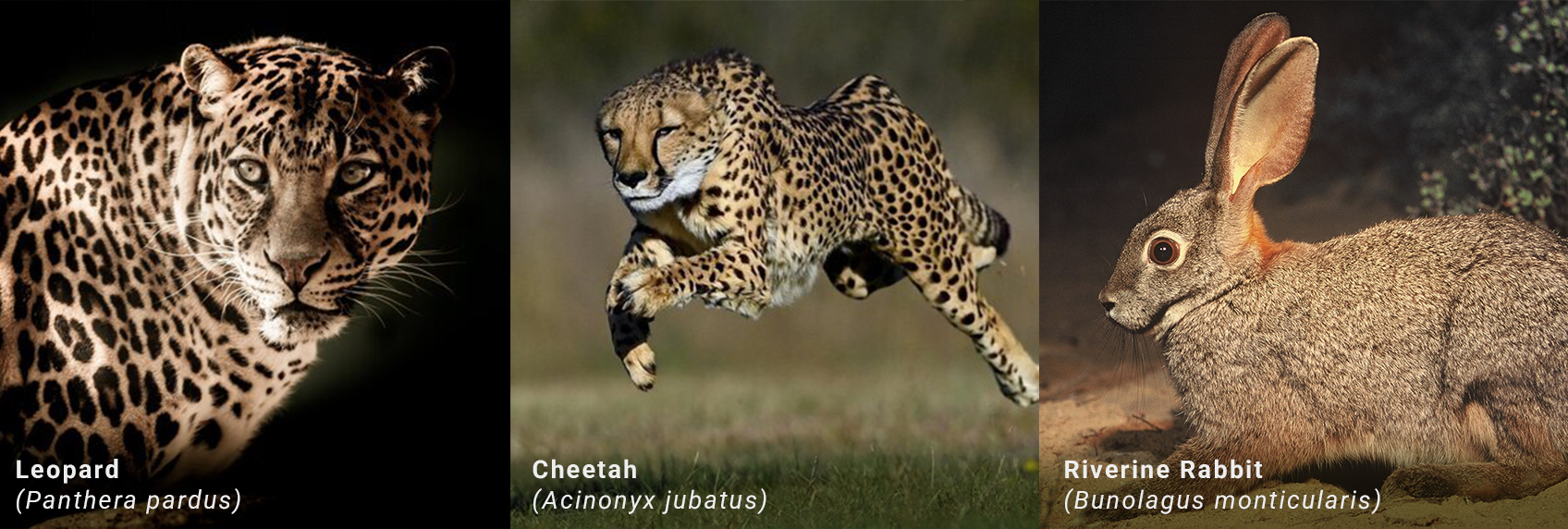
Centre Midfielder: Leopard (Panthera pardus) - Vulnerable
The maverick you simply cannot drop, no matter how many team meetings he skips. Famously solitary - don’t expect him at the post-match dinner - but the quality on the ball is undeniable. The Leopard is the most adaptable of the big cats, equally at home in dense bush, open savanna, rocky koppies, or suburban fringes; day or night; alone or outgunned. Regionally Vulnerable, with 68% of suitable habitat falling outside protected areas and ongoing pressure from retaliatory killing and illegal harvest for cultural regalia.
Right Wing:Â Cheetah (Acinonyx jubatus)Â -Â Vulnerable
There is nothing subtle about what the Cheetah brings to this team. Zero to 96 km/h in under three seconds. No defensive line on Earth handles that. The trade-off - it offers very little tracking back - is one the manager has long since accepted, because when the Cheetah gets the ball in behind, it is simply over. Regionally Vulnerable and under sustained pressure from habitat fragmentation, human-wildlife conflict, and loss of prey. A luxury player in the truest sense: irreplaceable, spectacular, and frighteningly easy to take for granted.
Left Wing: Riverine Rabbit (Bunolagus monticularis)Â -Â Endangered
Where the Cheetah relies on blistering pace, its winger counterpart on the opposite flank is all about skill. The Riverine Rabbit is elusive, deceptively explosive from a standing start, and almost impossible to pin down in tight spaces. A flagship species of the Karoo, threatened by habitat degradation and climate change. Every time the Riverine Rabbit gets the ball and ghosts past a defender, it is worth savouring. There may not be many more chances.
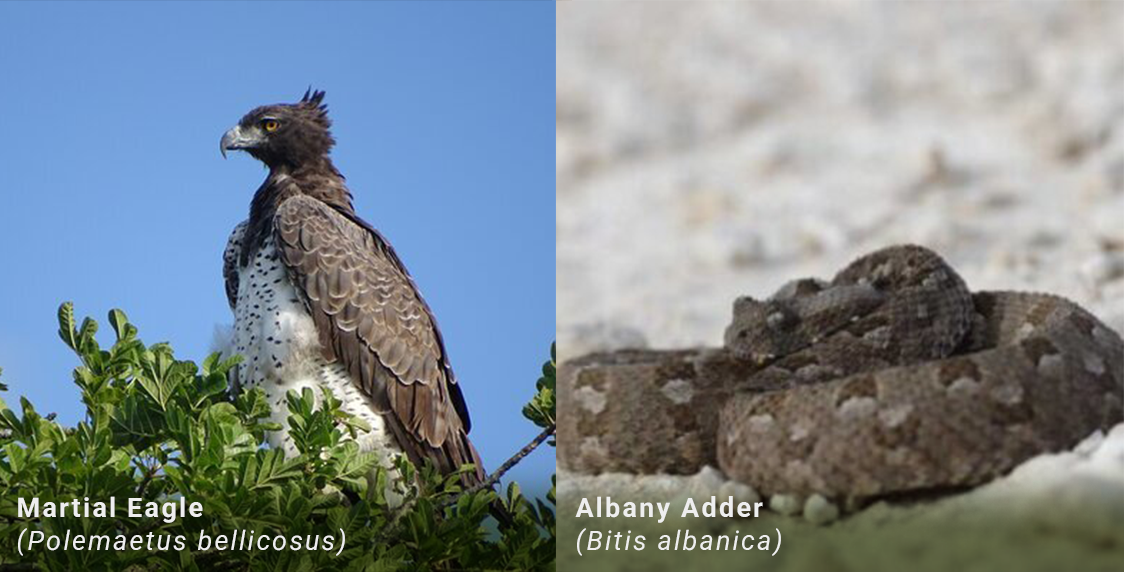
Striker:Â Albany Adder (Bitis albanica) – Endangered
We’ve gone with the classic ‘big man, little man’ formation up front. If the Martial Eagle is the target man who fills the box, the Albany Adder is the striker who nobody sees coming – until it is far too late. South Africa’s most endangered snake and one of the rarest reptiles on Earth, the Albany Adder has an entire known range within the Algoa Bay area of the Eastern Cape. Less than 20 individuals have ever been recorded in the wild since the species was first described in 1937. It is virtually unfindable, and when it does strike, it does so with a precision that leaves no doubt. The EWT has led active conservation efforts for this species for years, just don’t bother asking for a photo – there are almost none.
Striker: Martial Eagle (Polemaetus bellicosus) - Endangered
The ideal striking partner for its diminutive front-line companion. A 1.9-metre wingspan keeps defenders occupied and goalkeepers permanently unsettled, creating the space that allows the Albany Adder to do what it does best. Deadly when given a sniff of goal. Occupies vast territories bud sadly declining even inside South Africa’s largest protected areas, with reporting rates in Kruger National Park having dropped by over 50% in the past two decades. Uplisted to Endangered in the 2025 BirdLife South Africa Red Data Book.
The Final Whistle
This team has everything: pace, power, elegance, industry, genius, and grit. It also has something no football team should ever have - a genuine risk of not making it to the next tournament.
South Africa’s 2025 mammal and bird Red Lists of Threatened Species make sobering reading. Twenty percent of the region’s mammals are now threatened with extinction. Thirty-nine bird species were uplisted in this year’s assessment alone. The threats are well understood: habitat loss, climate change, poisoning, persecution, and the relentless pressure of a growing human footprint on a finite natural world.
But the same science that documents the decline also points the way forward. The African Penguin’s court victory. The African Wild Dog population’s recovery. The Hartmann’s Mountain Zebra’s downlisting after genuine population gains. Conservation works - when it is funded, when it is evidence-based, and when people care enough to demand it.
These 11 species are worth caring about. Not just because they are extraordinary animals, but because the health of South Africa’s biodiversity - and ultimately the health of the ecosystems that sustain all of us - depends on keeping them in the game.
Support the squad. Learn the names and tell the story.
- Â