In the Field
Hearing from our interns
Karen Chiro was a Conservation Intern with the Endangered Wildlife Trust (EWT), having recently completed her MSc in Conservation Biology at the University of Cape Town.
As an avid conservationist, I have always admired the Endangered Wildlife Trust through its work on social media, so becoming part of the organisation was a dream come true.
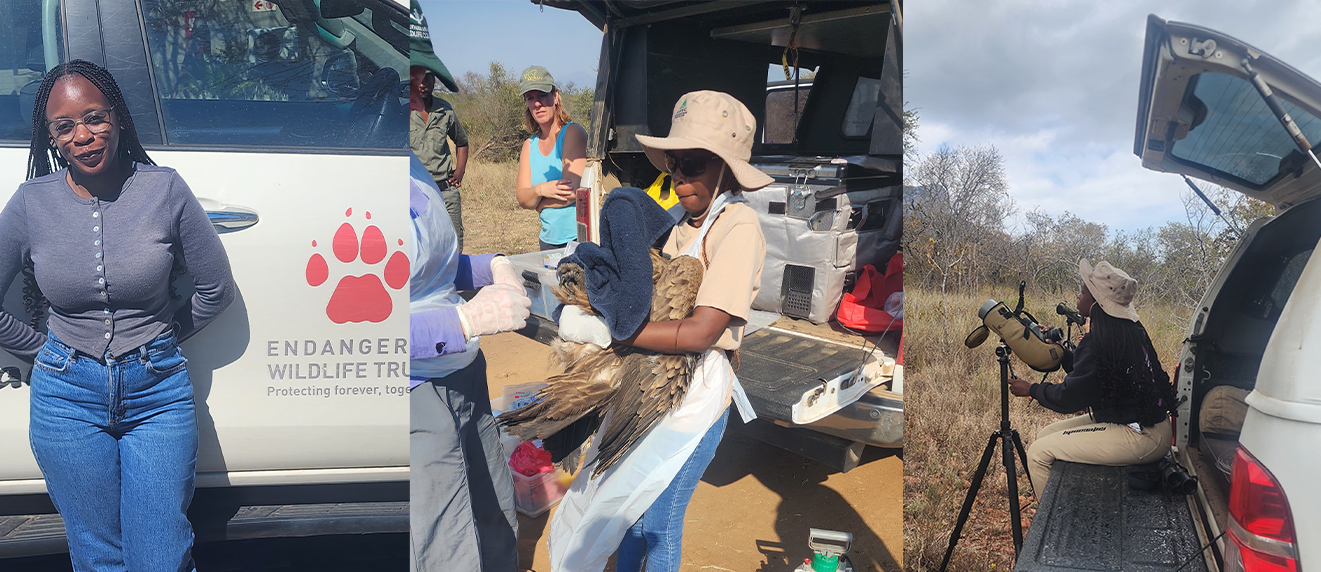
During my internship with EWT’s Birds of Prey Unit, I developed a deep appreciation for vultures and the vital role they play in our ecosystems. I was involved in several activities, including vulture nest checks and monitoring. When I started my internship, I could identify vultures, but I had never really paid attention to their breeding ecology, where they nest, or the factors that influence their populations.
Taking part in nest checks gave me the opportunity to determine whether nests that had previously been detected and recorded were active during the current breeding season. I also gained a greater appreciation for the differences between White-backed and Hooded Vulture nests, particularly in terms of their size and location.
I also joined the Cape Vulture nest monitoring team, where I had the opportunity to use a telescope to observe and count nests on the cliffs. This experience helped me appreciate the scale and challenges involved in monitoring these species in the wild.
The highlight of my internship was undoubtedly vulture trapping. Having the opportunity to hold and release vultures was a truly surreal experience. Holding these magnificent birds made me realise just how large and powerful they are, while also giving me a deeper understanding of the conservation challenges contributing to their declining numbers.
I left the EWT with far more knowledge about vultures than I had when I arrived. More importantly, I left with a renewed appreciation for these remarkable birds and the work required to conserve them.
I am incredibly grateful to the EWT for welcoming me and providing such a wonderful learning experience, and to the Briandez Legacy Trust for making this internship opportunity possible.
“My technical and professional skills have been strengthened”
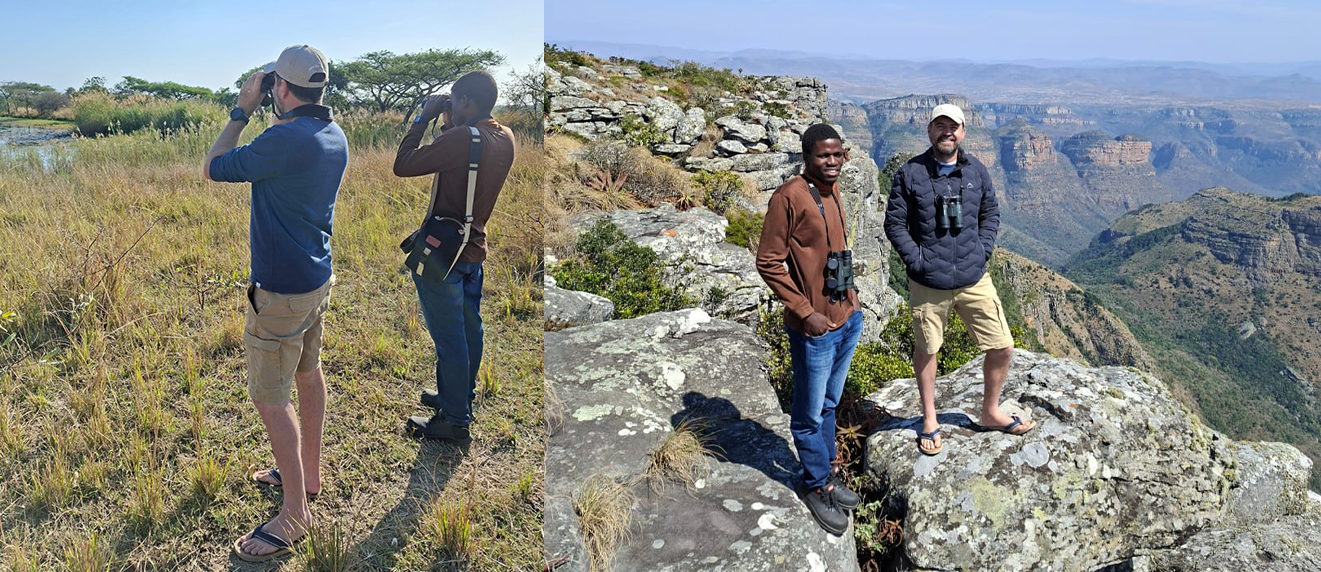
Yasalde Massingue is a conservation officer for Limpilichi Wilderness, a company that has established a long-term management partnership of the protected areas in Niassa, northern Mozambique. He recently spent time with the EWT’s Birds of Prey Unit to enhance his skills.
My time with the EWT team in Hoedspruit provided me with an important opportunity to strengthen my technical and professional skills in wildlife monitoring, with a particular focus on vulture conservation. Vultures play an essential role in ecosystem health by removing carcasses and helping to reduce the risk of disease transmission.
During my time in South Africa, I developed skills in identifying and monitoring nests of different raptor species. The work included observing nest structure, their location within tree canopies, preferred tree species for nesting, and the precautions required to minimise disturbance while collecting field data.
We monitored more than 300 raptor nests during field expeditions. I also took part on the patrols aimed at identifying potential snaring areas, checking feeding events, and investigating sites at risk of poisoning, which is one of the main threats facing vultures and other carnivores.
One of the most significant outcomes of my experience was participating in fitting tracking collars to 22 vultures from four species, as well as assembling 29 rings. This work provided me with practical experience in taking biometric measurements, including the foot, head, beak, wing and tail; determining the age of individual birds; and assessing their reproductive condition. The data collected will contribute to a better understanding of vulture movements, behaviour and conservation needs.
The programme also included the release of 15 vultures that had been rehabilitated following a poisoning incident. More than 250 children from Hoedspruit attended the release, creating an important opportunity for environmental education and encouraging a new generation to value and protect these birds.
During my participation in a training course on vulture poisoning and rapid response, which was attended by conservation managers, veterinarians, researchers and wildlife-crime professionals, I learned about the importance of cooperation among sectors in responding effectively to threats to biodiversity.
The knowledge and experience I gained will be valuable for implementing a biodiversity conservation and monitoring program in Chipanje Chetu, the community where I work in the Limpilichi Wilderness area in Niassa, Mozambique. There, our goal is to help establish the area as a model for wildlife conservation, scientific research, environmental monitoring and community engagement.