
Protecting South Africa’s unique Lizard species from human-induced threats
Carina Bruwer, manager of the EWT Wildlife in Trade Unit
South Africa is a megadiverse country, with many of our species occurring nowhere else on Earth. It is also home to many weird and wonderful reptile species, including snakes, lizards and tortoises. These species have evolved to adapt to their unique habitats, with many occurring in only small pockets within the country.
These include the Armadillo Girdled Lizard (Ouroborus cataphractus) and the Giant Girdled Lizard, commonly known as the Sungazer Lizard (Smaug giganteus).
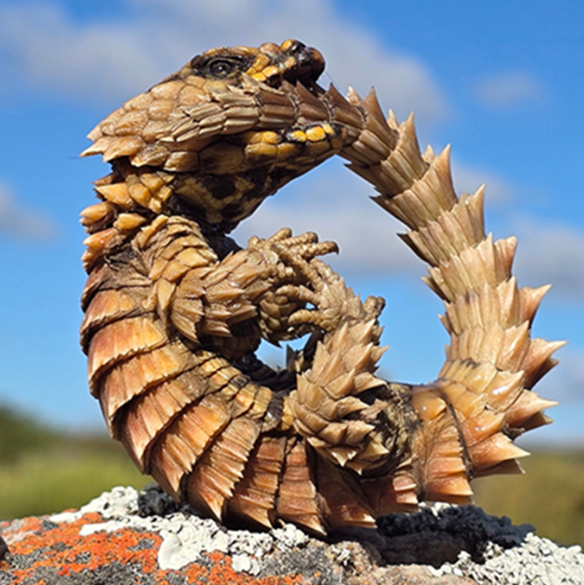
Figure 1: Source: EWT
Both members of the Cordylidae family, these lookalike, social lizards resemble little dragons and are covered in hard spiny scales, acting as armour against natural predators. The Armadillo Girdled Lizard is listed as Near Threatened by the International Union for the Conservation of Nature (IUCN), which assesses species based on their risk of extinction. Sungazers are listed as vulnerable, with the population currently decreasing. It is therefore imperative that we protect them and their precious habitats.
Armadillo Girdled Lizard
Armadillo Girdled lizards are social animals, living together in family groups in rocky outcrops in the Western and Northern Cape provinces. They feast primarily on insects, communicate through body language and can reach up to 16 cm in length. They can live up to 25 years and have low fecundity (a low reproduction rate). Females give birth to one or two offspring, which she may even feed, a behaviour quite uncommon for lizards. When threatened, they curl up into a ball, biting their tail to protect their soft bellies. This behaviour inspired their scientific name, which refers to the devouring of their tail. They can also drop their tails to distract predators, just like the geckos with whom many of us share our homes.
Sungazer Lizard
Sungazer lizards occupy the highveld grasslands of Mpumalanga and the Free State, with some recorded in KwaZulu-Natal. Unlike most other reptiles, they are oviparous. They reproduce only every second or third year and give birth to one to three live young. Averaging a length of about 22cm, they are the largest of the girdled lizard species in the Cordylidae family. They can live up to about 21 years of age in the wild. Their common name is derived from their basking behaviour with their heads turned to the sky. Like Armadillo Girdled Lizards, Sungazers are also social animals, living in groups in their underground burrows.
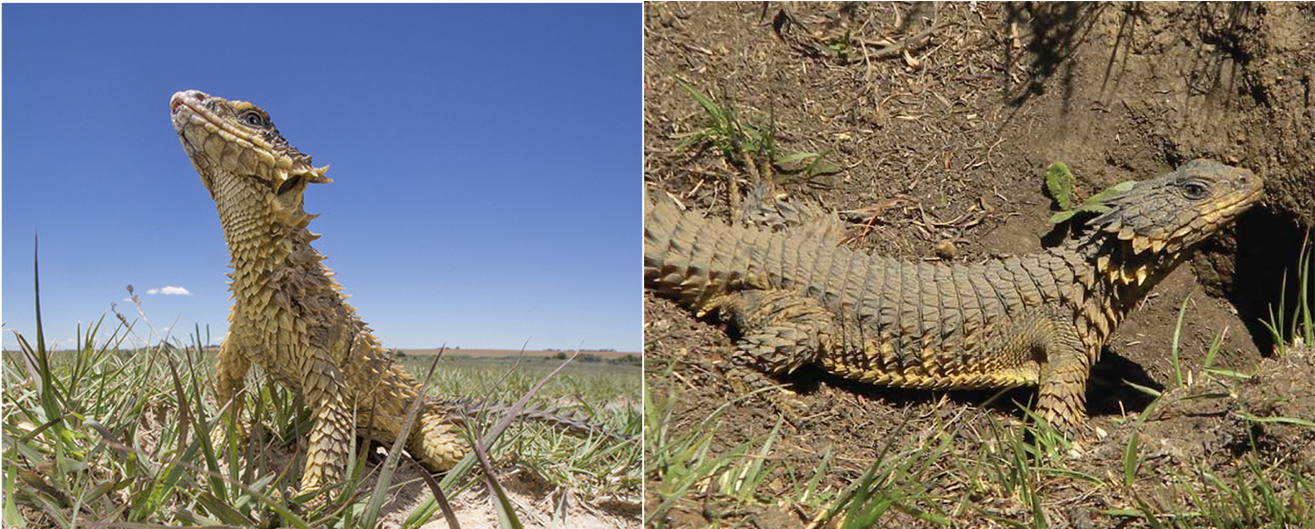
Left: Figure 2: Source: Shivan Parusnath. Right: Figure 3: Source: EWT
National and international legal protection
Based on their unique contribution to the biodiversity of South Africa and their precarious conservation status, both species are listed on the National Environmental Management: Biodiversity Act (NEMBA) Threatened or Protected Species (ToPS) List. Activities like harvesting, killing, buying, selling or exporting of the species are therefore strictly regulated nationally and require a permit. Violating NEMBA can result in a R10 million fine, 10 years imprisonment, or both. The species are also protected in provincial legislation. Because both species occur in the international pet trade, they are also listed on Appendix II of the Convention on International Trade in Endangered Species of Wild Fauna and Flora (CITES), requiring strict controls and export permits before the species can be traded internationally.
Their natural armour cannot withstand human threats
Most reptiles are shy creatures, and this is no different for Armadillo Girdled and Sungazer lizards. Unlike agama lizards who happily illustrate their push-up abilities to appreciative human observers, Armadillo Girdled Lizards and Sungazer Lizards keep to themselves, sheltering in rock crevices and burrows out of harm’s way. While startled Sungazers make a beeline to their underground burrows, making you question whether you ever truly saw them, Armadillo Girdled Lizards curl up into a tight ball when feeling threatened, attempting to protect their soft bellies. Unfortunately, these defences against their natural predators have not kept them safe from human interference.
Both species face significant threat from the illegal harvesting of wild individuals for the international pet trade, while Sungazers are also harvested for traditional use. Sungazers’ grassland habitats are also shrinking at worrying speed as a result of agricultural practices, mining and development. This habitat transformation has caused the Sungazer population to decline by an estimated 48%.
Because of their slow reproduction rates, both species struggle to recover from these human impacts. Bar a handful of exceptions, Sungazers are also not known to breed in captivity. Coupled with their weak ability to adapt to new environments after being removed from illegal trade or translocated due to development, their capacity to recover population losses is weak.
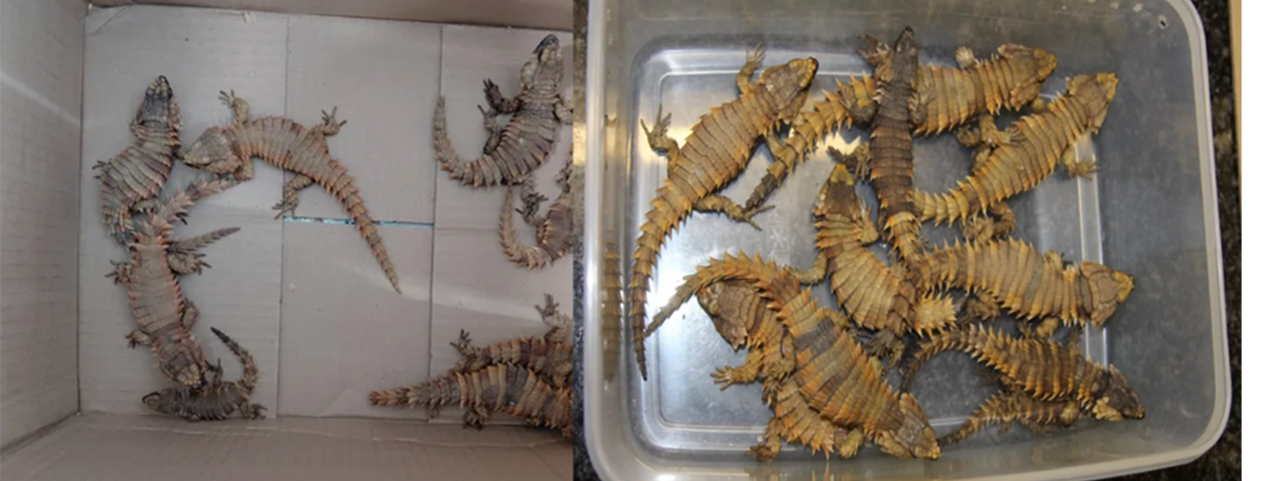
Left: Figure 4: Armadillo Girdled lizards seized from a Spanish citizen in Vredendal in 2025. Source: Cape Argus. Right: Figure 5: Armadillo Girdled Lizards intercepted by CapeNature (source CapeNature)
Illegal harvesting and trade
Their unique characteristics make both the Armadillo Girdled Lizards and Sungazer Lizards a sought after species in the international reptile market, with reptile enthusiasts vying to own them as pets or for display purposes. Only legally obtained individuals may be traded internationally and only if authorised after a finding that trade in the species will not be detrimental. The harvesting and trade of wild individuals is therefore prohibited. Because of the negative impact of illegal trade on Sungazers, and the fact that successful breeding in captivity remains to be proven, no trade in Sungazers, wild or captive-bred, is currently allowed.
While legal wildlife trade is regulated by permits, illegal trade takes place outside formal structures and is intentionally obscured. Quantifying illegal trade is therefore more challenging, but is anecdotally assumed when colonies disappear from previously recorded locations without any other known reason or proven mortality, or when lizards are offered for sale at reptile fairs or online marketplaces, with no evidence of being captive-bred. The legal trade has also been used to launder wild-harvested specimens under the guise of being captive-bred. This is why proving parentage in captive-bred specimens is vital to prove that an animal was not wild-harvested.
Both Sungazer and Armadillo Girdled Lizards are included in the South African Sensitive Species List, highlighting the need to restrict access to species data and information on wild populations that could cause them to be removed from the wild.
Habitat transformation
Armadillo Girdled Lizards’ rocky habitats are not currently considered under significant threat, although challenges like climate change, habitat fragmentation and invasive alien plants do negatively impact them. The situation is much more dire for the Sungazer, as 50% of its grassland habitat has been transformed and continues to shrink due to agricultural development, urbanisation and surging mining.
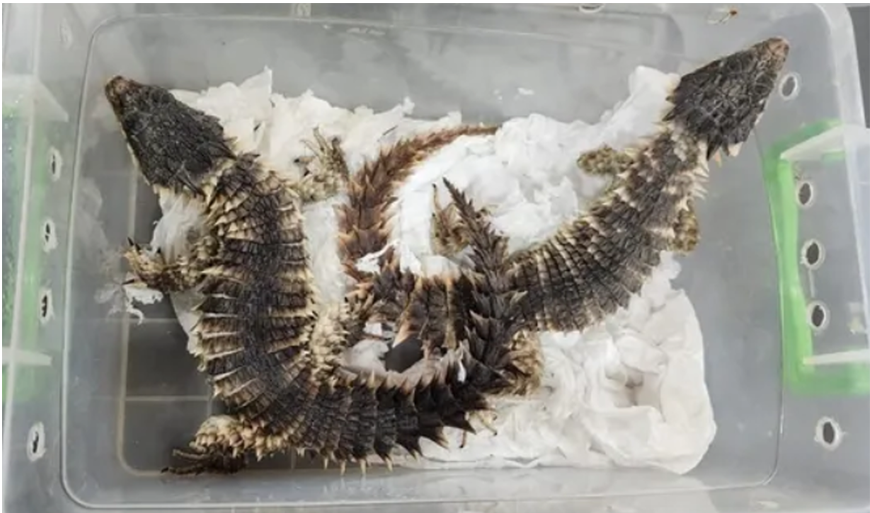
Figure 6: Sungazer lizards seized at a PostNet. Source: IOL
Traditional use
Sungazers are also used in Africa Traditional Medicine. This use is regulated through permits, but if harvesting takes place illegally or unsustainably, the impact of this use will further contribute to the species’ decline.
Looking ahead at species conservation goals
A Biodiversity Management Plan is currently being drafted for Sungazers. It is hoped that once this plan is finalised and approved, it will act as the guideline for conservation of the species to ensure their longterm survival in the wild. But urgent funding is needed to improve our understanding of both species, including how to increase their chance of survival when human interference has already removed them from their habitats. Whether this is translocation to a new grassland due to a mining application being granted in prime Sungazer habitat, or finding a new rocky home for illegally harvested Armadillo Girdled Lizards seized from the trade. Funding is also needed to care for seized individuals, allowing them the best possible opportunity to be returned to their wild habitats. Imagine the impact of a dedicated reptile refuge where seized or injured individuals can recover before going back home!
What can you do to protect South Africa’s unique reptiles?
- Educate yourself and teach others about South Africa’s wild and wonderful reptiles.
- Appreciate reptiles in their natural habitat and do not post their exact locations online.
- Wild reptiles are not pets. Never buy a reptile unless you can establish its legal origin, and even then, consider if it is in the best interest of the animal to be kept in captivity.
- Protect their habitats by participating in land use applications during public participation processes.
- Report any suspicious activity to the police, provincial conservation authorities or the EWT.