
In the Field
A Race to Rescue Limpopo’s Vultures
Dr Lindy Thompson, Birds of Prey Unit Research and Monitoring Coordinator
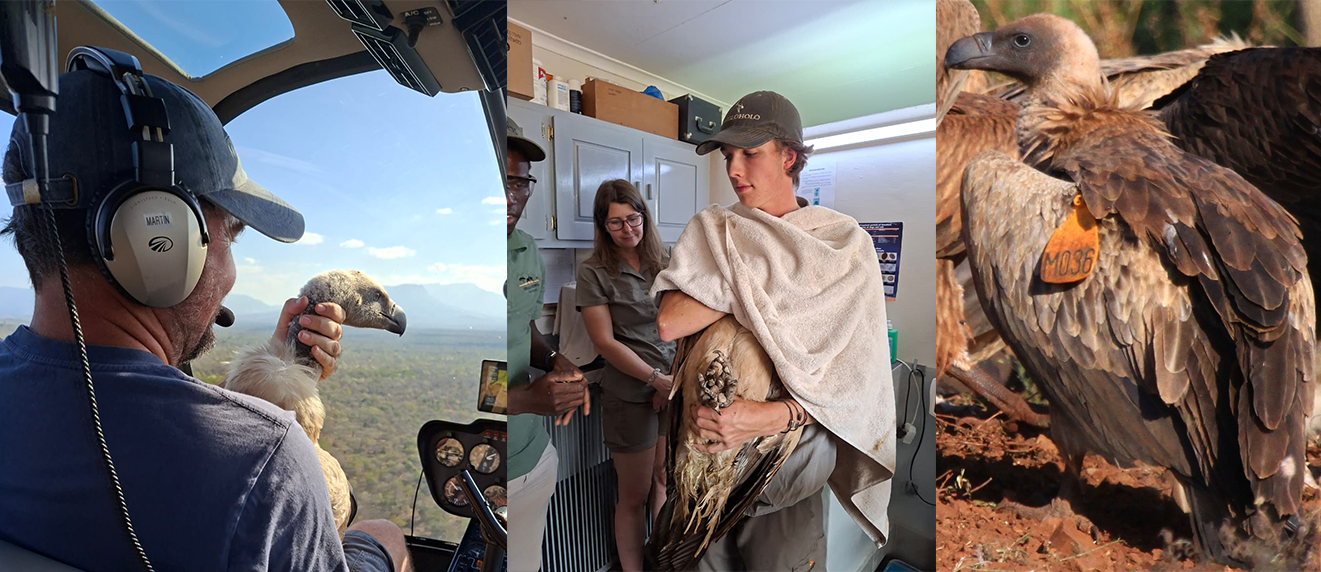
Left: A Cape Vulture being transported to Moholoholo Rehab Centre by helicopter. Center: Moholoholo clinic team treated the vultures.
On 28 August 2026, the EWT Birds of Prey Unit received an urgent notification that a number of vultures had been found unable to fly on a property in Limpopo.
With the assistance of the Hoedspruit Endangered Species Centre, these birds were quickly collected and transported to Moholoholo Wildlife Rehabilitation Centre.
Pilot Jana Meyer from Hope for Wildlife also joined the rescue effort, flying us in her helicopter to search the surrounding area for any other grounded vultures.
In total, 18 vultures were taken to Moholoholo, where they received first aid and expert care from the clinic team. Rehabilitating vultures is intensive work, requiring round-the-clock care during the first 48 hours while the birds are stabilised, until they are out of the woods. We have the greatest respect for the Moholoholo team, whose experience and dedication gave these birds the best possible chance of recovery. Sadly, one bird died on arrival and another died that night, but the remaining 16 recovered well and were ready to return to the wild about a week later.
The timing of their release could not have been more fitting: the 16 survivors (three Critically Endangered Hooded Vultures, 12 Critically Endangered White-backed Vultures, and one Vulnerable Cape Vulture) were released at Moholoholo on 5 September – International Vulture Awareness Day.
To make the occasion even more special, the EWT supported 250 learners to visit the Cape Vulture Nature Reserve before travelling to Moholoholo to witness the release. For these young people, seeing the vultures take to the skies was a powerful opportunity to connect with these remarkable and highly threatened birds.
It was also particularly important that the adult vultures got home quickly, as winter is the breeding season and most of the rescued birds had brood patches, indicating that they had chicks waiting for them in their nests. Both male and female vultures share responsibility for incubating and raising their young, so every day away from their chicks mattered. Thankfully, the tracked birds gave us the best news possible: they returned to their nests straight away.
What began as an urgent rescue ended with 16 vultures back in the wild, their chicks waiting for them, and 250 young conservationists watching them take flight; a wonderful reminder of why every vulture matters.
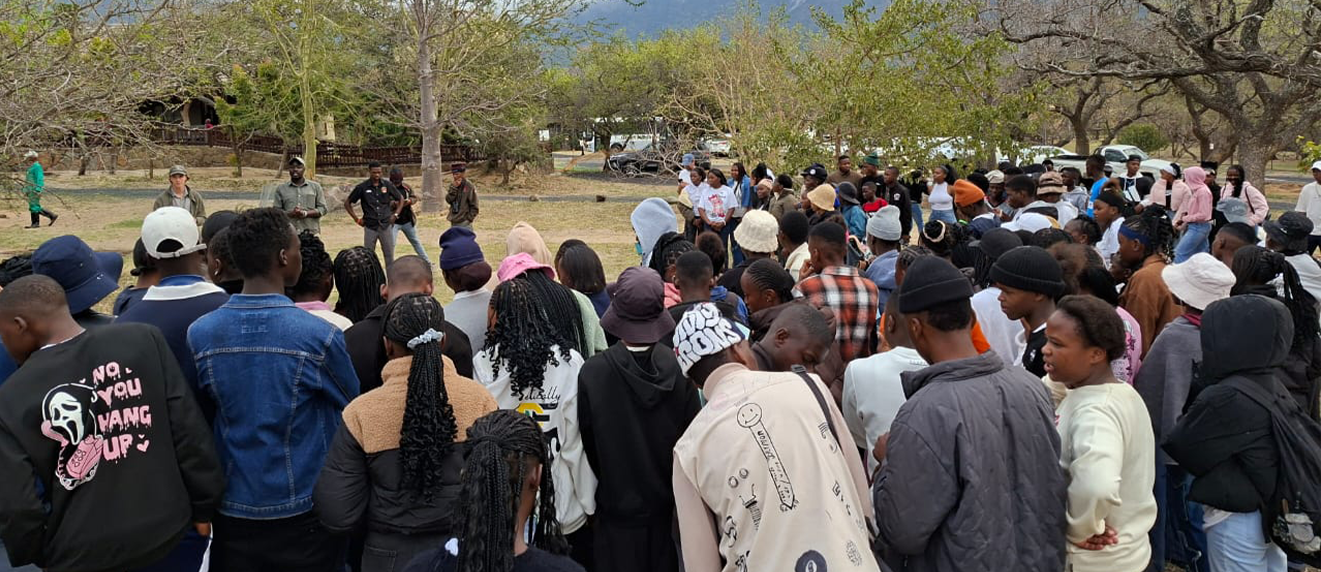
The vultures were released at Moholoholo on International Vulture Awareness Day
** This work is made possible by Critical Ecosystems Partnership Fund (CEPF) Rapid Response to Conservation Crises (R2C2).