
Lioness Leadership Camp: Finding Strength in Nature and in Ourselves
Lesego Mthethwa, field officer in the Carnivore Conservation Unit
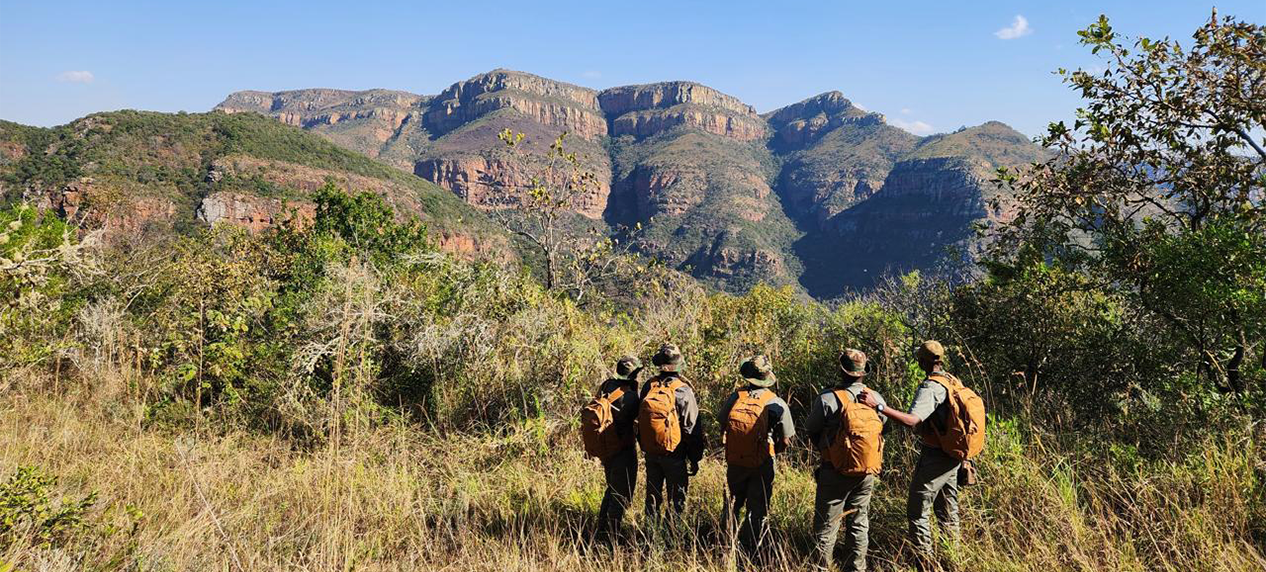
In August, a month in which we celebrate women in South Africa and mark World Lion Day, I had the privilege of hosting the first-ever Lioness Leadership Camp for girls living in communities along the western boundary of the Kruger National Park.
These girls empowerment camps are part of the Carnivore Culture programme – a collaboration between the Endangered Wildlife Trust (EWT), Conservation South Africa (CSA) and Scouts South Africa. The aim is to empower young women living in communities neighbouring protected areas so they can become changemakers within their communities.
All participants in the camps hosted during August haled from the communities of Utah, Dixie, Thorndale, Seville “B” and Hluvukani which border the Manyeleti Game Reserve, Sabi Sands Nature Reserve and the Kruger National Park, all which fall within the Greater Limpopo Transfrontier Conservation Area. These communities are incredibly close to some of Africa’s most important wildlife areas, yet proximity to conservation does not always mean proximity to opportunity.
Many young people, particularly girls, have limited access to leadership development, mentorship, career exposure and personal growth opportunities. Social and economic barriers can also affect their confidence, aspirations and ability to see themselves in spaces such as conservation.
The Lioness Leadership Camp was created to help change that. Developed in partnership with Conservation South Africa and Koru Camp, the camps aimed to empower young women through leadership development, mentorship, personal growth and conservation awareness — while creating a safe space where they could learn, express themselves, build confidence and begin imagining the women they want to become.
But for me, this camp was also deeply personal. It was a full circle moment.
A Full-Circle Moment
My mom is from Acornhoek, and I spent much of my childhood at my grandmother’s house in the area. Some of my earliest memories are connected to this community and to the natural world around it. I always imagined that one day I would be able to give back to the same community that played such an important role in shaping my love for nature and conservation. I just never thought it would happen so soon. At 25, standing in front of young girls from a community that was part of own childhood, and having the opportunity to create a space where they could learn, dream and grow, felt extremely special. In many ways, I was looking at younger versions of myself.
Starting With a Dream
The camp began with a simple question:
What is your dream for this camp?
Each girl introduced herself, shared her deepest fear and told us what she hoped to take away from the experience. It was the beginning of watching a group of girls who arrived as strangers slowly become a community.
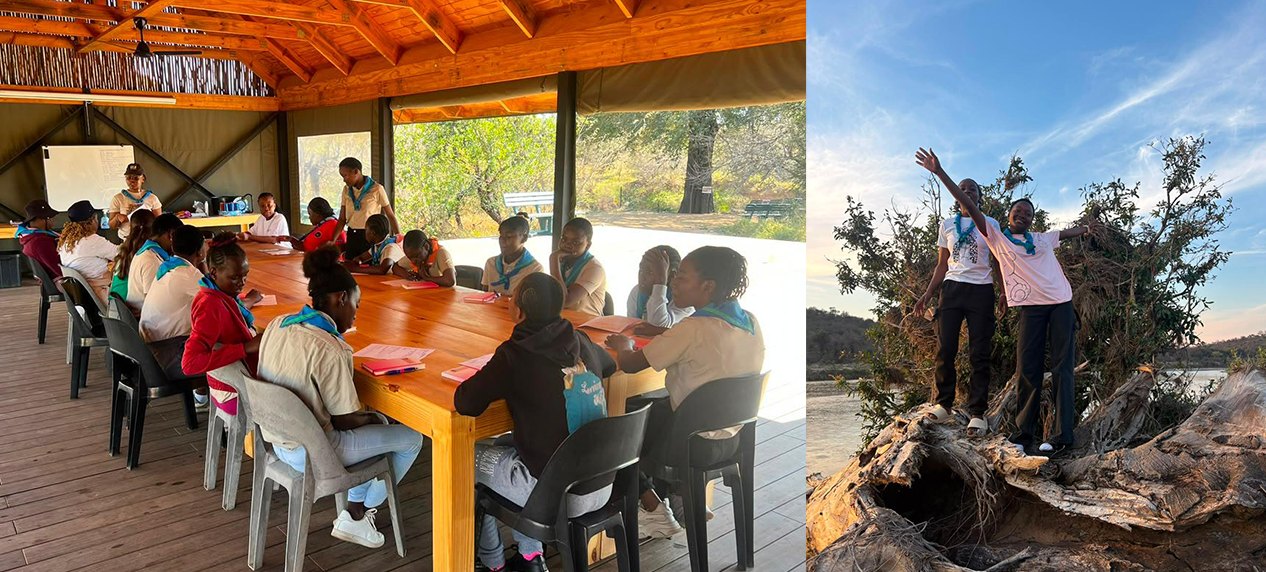
On the first afternoon, we headed out on our first game drive before gathering at a viewpoint for our opening ceremony. The girls received journals, chose their own power animals and created a camp flag. It was a small but meaningful beginning. Each girl had the opportunity to identify something that represented her own strength while also becoming part of a team.
In the evening, we gathered around the campfire for the Carnivore Charades Game – a fun way of introducing the girls to carnivores and later, our journalling and gratitude circle moved the conversation from wildlife to something much closer to home: being able to speak honestly about their lives, listen to one another and realise that they were not alone in the challenges they faced.
Learning From Nature
The second day started before sunrise. We began with yoga and morning affirmations before heading out on a game drive and taking part in a nature sit spot, encouraging the girls to slow down and simply observe the world around them.
For me, this captured something important about conservation. Our work is often about monitoring, data, research and protecting species, but our connection to nature starts with something much simpler: being present enough to notice it.
We explored carnivore conservation through an interactive session and a carnivore relay race. The girls learned about the carnivores that share these landscapes and the fascinating behaviours that make each species unique.
We then created strength bracelets, with each girl choosing qualities she felt she needed to follow her dreams. These included confidence, courage, resilience and focus. The bracelets are small reminders that the qualities needed to achieve our dreams are often qualities we already carry within ourselves.
Learning About Ourselves
The camp was intentionally about more than conservation. It was also a space for conversations around menstruation, reproductive health, contraception and relationships; conversations that young women deserve to have in safe, supportive environments.
Through interactive activities, demonstrations and a pregnancy and sex myth-busting game, the girls were encouraged to ask questions and learn more about their bodies and well-being. Empowerment is not simply telling young women to “be strong”. It is giving them knowledge, creating safe spaces for them to ask questions and helping them develop the confidence to make informed decisions about their own lives.
Lessons From the Lioness
Throughout the camp, I kept coming back to the lessons we can learn from female carnivores. The lioness became the heart of the camp. Lionesses are courageous, protective and deeply connected to their pride. They care for one another and play an essential role in the survival of their families and communities.
The Cheetah reminds us of independence, speed and focus. The leopard teaches us resilience, adaptability and the ability to navigate challenging environments, and the hyaena challenges many of the assumptions we have about leadership. In hyaena societies, females hold significant social power and occupy important leadership roles. Nature constantly reminds us that strength and leadership do not have one particular shape.
As a young Black woman working in a traditionally male-dominated industry, I know that finding your place and believing in yourself can be difficult. I was fortunate to grow up with a mother who supported me despite the negative things people sometimes said about my ambitions. That support made a difference in my life, and it is the kind of support I believe we should be giving one another.
I believe that like lionesses, we should protect each other, love each other and take care of each other.
This mantra felt particularly important during Women’s Month and within the broader context of gender-based violence affecting women and girls in South Africa. Creating spaces where young women can recognise their value, understand their boundaries and support one another is incredibly important.
A Promise to Their Future Selves
On the final morning, the girls were asked to write a letter to their future selves.
The question was simple: Where would you like to be in 10 years?
After three days of conversations, wildlife encounters, laughter, learning and moments of vulnerability, they had the opportunity to imagine the women they wanted to become. During the pledge and departure ceremony, each girl made a promise to herself, and that, for me, was the heart of the entire experience. The girls arrived with fears, dreams and questions. They left having spent three days discovering that they are capable of more than they may have realised.
Creating Space for the Next Generation
The Lioness Leadership Camp reminded me that conservation is about so much more than protecting wildlife, it is also about people and the communities who live alongside these landscapes. If we want young people to see conservation as something they can be part of, we have to create opportunities for them to experience it, understand it and see themselves within it, but the camp was never about telling these girls that they all have to become conservationists. It was about showing them that they have choices, conservation needs scientists, field officers and ecologists, but it also needs educators, lawyers, accountants, communicators, marketers, photographers, entrepreneurs and community leaders. Sometimes all a young person needs is someone to tell them: “There is a place for you here.”
I hope the Lioness Leadership Camp gave these girls that feeling.
I am incredibly grateful to Koru Camp for their support, and belief, in this project.
To return to a community that shaped my childhood and give back through something I love so deeply is a privilege I will never take for granted, and perhaps the greatest lesson of all is that sometimes, when we create space for young girls to dream, we don’t just empower the next generation of women. We help them realise that they were powerful all along.