
Unexpected Barn Owl tenants successfully moved to safety
Jenny Botha, the EWT’s community specialist
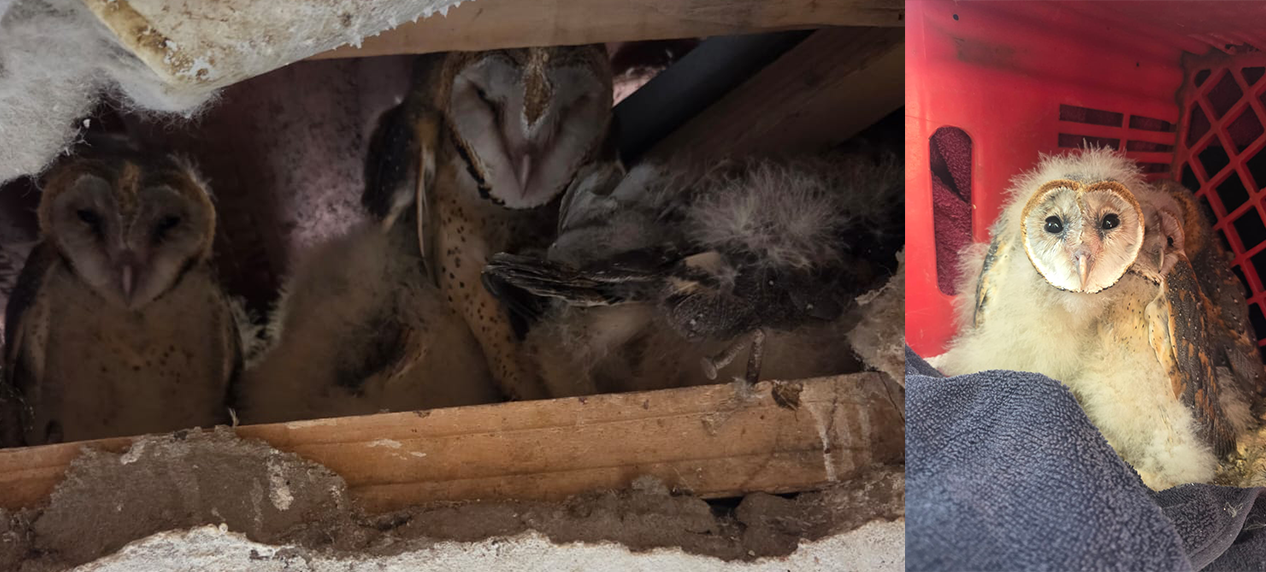
On Monday, 11 May 2026, the Endangered Wildlife Trust (EWT) received a call from a community member requesting assistance with some rather unexpected tenants who had taken up residence in the ceiling of a home in the Western Soutpansberg, Limpopo.
The family of Barn Owls was discovered during a pre-building inspection. Unfortunately. the five chicks were too young to be released into nearby natural habitat, which would have been our preferred approach. Instead, they were carefully relocated to the Moholoholo Wildlife Rehabilitation Centre, where they will be cared for until they are old enough to be safely released back into the wild.
We are extremely grateful to the community member who reached out for assistance. Too often, well-meaning attempts to “rescue†young owls can unintentionally reduce their chances of survival. For example, finding a young owl on the ground does not necessarily mean it has been abandoned. Usually, it is best to leave it where it is, ensuring only that it is safe from threats such as domestic dogs and cats.
Young Barn Owls and Eagle Owls typically leave the nest before they can fly and before they are fully independent. During this stage, they spend time in vegetation around the nest and on the ground as they explore their surroundings and build strength in their legs and wings. At this “toddler-stageâ€, their early efforts at flying are often brief and unsteady, and it is important that they are protected from disturbance as far as possible.
Importantly, their parents usually stay nearby and continue to feed and care for the chicks throughout this period. As the juveniles develop their flying and hunting skills, parental support is gradually reduced until the young birds are able to catch their own prey.
It can take up to 2–3 months for juvenile owls to become fully independent and it is essential to minimise disturbance during this critical stage.
It is only necessary to intervene if a bird is injured or exposed to danger from pets, predators, or traffic. If you find a young owl on the ground, please observe them from a distance and disturb them as little as possible. Check that their parents are around and tending to them, and that the birds are safe. When in doubt, it is always best to contact a conservation organisation or vet for guidance before attempting to move the bird. They may look cute and cuddly, but it as far as possible, it is best to leave them where they are so that they have the best chance of survival.