Donate today: support our k9's 
 mission

Birds in Decline: Comparing Road Surveys and Citizen Science Data in South Africa

Birds in Decline: Comparing Road Surveys and Citizen Science Data in South Africa

Birds in Decline: Comparing Road Surveys and Citizen Science Data in South Africa

By: Erin Adams and Lizanne Roxburgh, Conservation Planning and Science Unit


Researchers conducting roadside bird surveys to monitor raptor populations in South Africa.

Monitoring animal populations is a crucial part of conservation, but it can be very expensive and time-consuming. As a result, researchers are increasingly turning to citizen science platforms, which provide valuable data, especially in areas where information is limited.

While well-established citizen science programmes exist in the Global North, many biodiversity-rich regions in the Global South remain underrepresented. South Africa, for example, has some of the highest levels of bird species richness in the world, but it is also experiencing significant declines in bird populations.

To help address this gap, the Southern African Bird Atlas Project 2 (SABAP2) was launched in 2007 and has been running ever since. SABAP2 uses a checklist approach, where participants record whether species are present or absent during surveys. This makes it useful for tracking changes in where species occur. In addition, repeated surveys over time allow researchers to estimate changes in how often species are reported, which can provide insights into their abundance. However, checklist-based data may not always be reliable for measuring changes in population size across large areas or for multiple species. To investigate this further, a recent study co-authored by EWT scientists* tested how accurate this type of citizen science data really is.

The researchers examined population trends for 26 bird species in South Africa, including 18 raptors and eight large terrestrial bird species. They conducted road counts along 752 transects, covering nearly 400,000 km across different biomes (Nama-Karoo, Savanna, and Grassland) in central South Africa between 2009 and 2025. The average transect was 521 km long, with some as short as 80 km and others up to 2,300 km.

During these surveys, one of the researchers drove at 80 km/h on unpaved roads and 120 km/h on paved roads. All raptors and large terrestrial bird species seen (whether flying or perched) were counted along each transect. Birds were identified visually, or, when necessary, by stopping to use binoculars. A GPS device was used to record the exact location of each sighting, along with the number of individuals observed. The data collected from these road counts were then compared with SABAP2 data for 24 of the 26 species, focusing on the same area and time period.

The researchers found that the road count data showed that half of the species (13 out of 26) declined significantly over the study period, while only three species (12%) showed significant increases. The remaining ten species (38%) showed no clear trend.

In contrast, the SABAP2 data suggested a very different picture. Only 3 out of 24 species (13%) showed significant declines, while 11 species (46%) appeared to be increasing. The remaining ten species again showed no clear trend.

When the researchers compared whether trends were increasing or decreasing (regardless of whether they were statistically significant), they found that the two methods agreed only about half the time. In most cases where the results differed, road counts showed declines, while SABAP2 suggested increases.

These findings indicate that many raptors and large terrestrial bird species in South Africa have been declining at worrying rates over the past 16 years, with only a few species showing increases. The exact causes of these declines are not fully understood, but elsewhere in Africa they have been linked to pressures associated with growing human populations, such as expanding agriculture and poaching.

Importantly, this study shows that a checklist-based citizen science programme like SABAP2 may fail to detect population declines in around half of cases. Despite this limitation, SABAP2 and similar atlas projects across Africa remain some of the best tools currently available for monitoring biodiversity.

With some improvements in how the data are collected or analysed, these programmes could become even more accurate and valuable for conservation.

* Zuluaga, S., Murgatroyd, M., Visagie, R., Tate, G., & Amar, A. (2026). Road counts expose widespread declines in South African raptors underestimated by atlas data. Biological Conservation, 111764. https://doi.org/10.1016/j.biocon.2026.111764

Planning for Flight Paths: Bird Monitoring at Energy Infrastructure

Planning for Flight Paths: Bird Monitoring at Energy Infrastructure

Focus on Wildlife in Nature

As Africa’s energy needs increase, and the continent embraces the growth and implementation of green energy, a number of innovative methods have had to be developed to reduce the negative interactions between wildlife and infrastructure.

The Endangered Wildlife Trust’s Wildlife and Infrastructure  Unit, has developed numerous innovative methods to reduce these interactions, work to positively influence utilities’ wildlife management policies, and ultimately phase out problematic processes and hardware. Through adaptive management and the development of pioneering and innovative techniques, South Africa is now recognised as a world leader in managing the burden of wildlife damage on electrical infrastructure while addressing the threats to wildlife.

In the second article in a series of three about the work being done by the EWT to mitigate the effect of power lines on wildlife, particular birds.

Planning for Flight Paths: Bird Monitoring at Energy Infrastructure

By Hennie de Beer, Tamanna Patel, Matt Pretorius, Oscar Mohale, Kish Chetty


Conservation scientists inspecting power lines for evidence of bird collisions.

Pre-construction monitoring cannot predict everything. Once infrastructure is operating, post-construction monitoring tracks what happens and adaptive management responds. Addressing problems during operation is almost always more costly than getting the planning right from the start, but some risks only become visible during operation. This article looks at what South African monitoring reveals, how adaptive management responds when problems emerge, and the interventions that are saving birds’ lives as a result.

What post-construction monitoring involves

Trained observers conduct regular carcass searches beneath turbines and along power lines, with results adjusted for scavenger removal (the proportion of collision fatalities removed by scavengers before carcass searchers can detect them) and searcher efficiency (the proportion of fatalities found versus missed by carcass searchers). Where overhead power lines are part of a wind farm, the same specialist teams extend their searches to those lines. Beyond a wind energy facility (WEF)’s footprint, no structured monitoring programme exists for power lines.

Monitoring relies on incident-based reporting through the Eskom and Endangered Wildlife Trust Central Incident Register, and on incidental discovery and ad hoc annual power line patrols. For power lines in sensitive areas, a structured monitoring and adaptive management plan must be part of the Environmental Management Programme (EMPr), something to extend and learn from the wind energy sector. Monitoring results feed into formal reports submitted to regulators every six months. This work is not simply counting; it is a verification process that compares actual outcomes with predictions, identifies what was missed, and triggers mitigation before losses accumulate.

What monitoring reveals

A recent analysis of post-construction data by BirdLife South Africa from 33 South African wind farms has produced results that challenged pre-construction predictions. Pre-construction surveys missed raptors nesting very close to turbines; this only became clear once carcasses were found.

Verreaux’s Eagle deaths peak between April and August, driven by the demands of the breeding season. Dassie colonies have also played a role, drawing hunting eagles toward turbines at some sites. New above-ground power lines brought a secondary hazard: in open landscapes where perching structures were scarce, freshly installed pylons attracted raptors to infrastructure that posed electrocution risks.

Success stories: when monitoring drives results

Landowner engagement for vulture-friendly farming has roots in power line conservation work that predates the wind energy sector. Wind farm operators have since adopted and expanded this approach through vulture food management programmes, using dedicated patrol teams to remove any dead animals promptly and reduce the food-related draw on turbine areas.

At one Eastern Cape wind farm, this reduced the Cape Vulture fatality rate from 0.07 to 0.02 vultures per turbine per year, a reduction of more than 70 percent sustained over six years. The same principle continues to be extended to power lines, pairing vulture-friendly farming practices with diverter installation on high-risk spans.

Shutdown on Demand places trained observers (Observer-led SDoD) at vantage points to watch for priority species approaching turbines, halting the relevant turbines within seconds of detection. By mid-2024, Observer-led SDoD programmes had been established at five South African wind farms: Dorper, Excelsior, Jeffreys Bay, Golden Valley and Roggeveld.

At a Western Cape site near the Potberg Cape Vulture colony, this prevented an estimated 7 to 19 Cape Vulture and one to four Black Harrier fatalities in a single year. The Black Harrier faces a zero-fatality threshold: the species cannot sustain any further mortality at all, making every fatality avoided critical at the population level. Weather, human error, and communication delays constrain its reliability. At Excelsior Wind Farm near Swellendam, Observer-led SDoD caused just over 56 hours of downtime in almost three years of operation, equating to less than one per cent of revenue lost, directly addressing concerns about implementation cost. Automated detection systems (technology-driven SDoD) combining cameras and artificial intelligence must be more widely tested as a complement to human observers if Shutdown on Demand is to scale effectively across the sector.

Blade patterning works by painting one blade to break the motion smear that makes rotating turbines effectively invisible to approaching birds. In Smøla, Norway, a single black blade reduced eagle fatalities by 100 % relative to unpainted controls over 10 years. At Umoya Wind Farm near Hopefield, South Africa, a trial using single red-striped blades on four turbines produced preliminary but promising results, recording zero raptor fatalities in the 16 months following patterning, compared with seven in the equivalent pre-treatment period. From at least two experiments conducted globally to date, further testing across different species and environments remains critical.

Securing approval to paint turbines blades a colour other than white required a coordinated push from South African Wind Energy Association (SAWEA), BirdLife SA and the Birds and Renewable Energy Specialist Group (BARESG) to obtain a Civil Aviation Authority blanket permit in January 2024, as existing regulations required blades to be white. Avifaunal specialists recommending this mitigation should consult the SAWEA/BirdLife SA/BARESG Blade Patterning Guidelines 2024 to ensure optimal design, colour and treatment coverage.

Post-construction monitoring at two Northern Cape wind farms over five years identified 12 Verreaux’s Eagles and 3 Martial Eagles electrocuted on above-ground collector lines. Wooden perches were installed to draw birds away from energised components, and insulation of the most dangerous structures was recommended. Underground burial of collector lines should be standard practice at all new wind farms where site conditions allow.

Getting mitigation selection right

Proving whether a measure is effective requires more than watching fatalities fall after it is introduced, since rates vary naturally from year to year. The most reliable evidence comes from Before-After-Control-Impact (BACI) designs that retain a comparison group.

This is not without controversy: the idea of deliberately leaving some turbines unpainted or some spans unmarked while bird fatalities continue is difficult to defend on conservation grounds alone. But without controls, background fatality rates are difficult to determine, and any observed improvement cannot be confidently attributed to the intervention. The practical solution is deliberate zoning: designating certain turbines or line sections as study controls while fully marking those nearest to sensitive areas or known breeding sites.

Bird flight diverters (BFDs) are devices attached to power line cables at regular intervals to increase their visibility to birds in flight, reducing collision risk. The choice of diverter design matters as much as the decision to mark a line. Most diverters are designed around daytime-active species, but cranes, bustards, and flamingos are also active in low-light conditions, and a diverter without features suited to be effective during periods of reduced visibility offers little practical protection. Recommending that every span (line section between two towers) be marked from the outset, while well-intentioned, can also preclude measuring whether the chosen design works for the relevant species. Proving BFD effectiveness through BACI studies requires that collision rates are comparable across treatment and control spans before marking begins, a condition that is more complex to meet on power lines than at turbines and demands careful study design from the outset. Article 3 examines this in more detail.

A long-term commitment

Monitoring and mitigation continue for as long as a facility operates. Wind farms have an operational life of approximately 20 years; power lines can remain in service for 50 years or more. These are operating costs, not construction costs, and should be planned and budgeted from the outset, not treated as afterthoughts once infrastructure is commissioned. For power lines, the difficult question is whether mitigation implementation is built into asset management plans that span half a century, or whether it disappears once construction is complete. Developers, regulators, avifaunal specialists, and the governments and development banks financing South Africa’s energy expansion all have a role in ensuring this commitment is sustained.

When knowledge saves lives

Post-construction monitoring creates a learning loop: every discovery feeds into adaptive management and improves how future projects are designed. Vulture food management, Shutdown on Demand, blade patterning, and infrastructure retrofits all demonstrate what that loop achieves. But it only works for infrastructure that is being watched.

The Endangered Wildlife Trust is in the early stages of developing guidelines for power line bird mitigation in South Africa, a development that will give practitioners the standardised framework the sector currently lacks. Article 3 turns to the power lines with no scheduled monitoring, the species whose behaviour we still do not fully understand, and the path to closing these gaps.


Further reading
  • BirdLife South Africa 2025. Summary Bird Monitoring Reports from Operational Wind Energy Facilities in South Africa. BirdLife South Africa Occasional Report Series No. 3. BirdLife South Africa, Johannesburg, South Africa. https://www.birdlife.org.za/wp-content/uploads/2025/02/Summary-of-Bird-Monitoring-Reports-Final-Version.pdf
  • SAWEA, BirdLife South Africa and Birds and Renewable Energy Specialist Group (BARESG). 2024. Blade Patterning Guidelines for Avian Specialists. South African Wind Energy Association and BirdLife South Africa. https://www.birdlife.org.za/wp-content/uploads/2024/10/SAWEA-BLSA-Blade-Patterning-Guidelines-2024.pdf
  • May, R., Nygård, T., Falkdalen, U., Åström, J., Hamre, Ø., and Stokke, B.G. 2020. Paint it black: Efficacy of increased wind turbine rotor blade visibility to reduce avian fatalities. Ecology and Evolution. 2020:1–9. https://doi.org/10.1002/ece3.6592
  • Stokke, B.G., Nygård, T., Hamre, Ø., and May, R. 2024. NINA Report 2333. Norwegian Institute for Nature Research, Norway.
  • Smallie, J., Froneman, A., Smith, D.L., and Mulvaney, J.M. 2024. Shutdown on Demand for the mitigation of bird collision risk at onshore wind farms in South Africa. BirdLife South Africa, Johannesburg, South Africa.
Securing the Future of Medicinal Plants Through Community Action

Securing the Future of Medicinal Plants Through Community Action

Securing the Future of Medicinal Plants Through Community Action

By Jenny Botha, Phomelelo Malatji, and Lufuno Konanani


For millions of South Africans, traditional medicine is not an alternative form of healthcare — it is a trusted source of healing and wellness, and is often practiced alongside conventional medicine. Nearly 60% of South Africa’s population depend on traditional healing practices, many of which depend on medicinal plants that have been used for generations.

Historically, these plants were harvested within systems of customary law that protected both the species and the knowledge associated with them. Seasonal restrictions, spiritual protocols, and community oversight helped ensure that harvesting remained sustainable. Trees such as the Baobab, Marula, and Leadwood, were regarded as sacred and could only be cut after permission was granted and cultural rituals performed. In many areas, sacred groves were protected so strictly that only designated spiritual leaders could enter them.

Today, medicinal plants face unprecedented pressure due to high demand, limited access to land and natural resources, the loss of natural vegetation, and constrained enforcement capacity. Many traditional harvesting areas have effectively become open-access sites, increasing the risk of overharvesting and resource depletion. At the same time, areas that support wild medicinal plant populations continue to be transformed by urban expansion, agriculture, mining, and other development activities. These challenges are compounded by historical socio-political and economic inequalities that led to loss of access to land and natural resources, placing growing pressure on the remaining wild medicinal plant resources and the communities that depend on them.

The consequences are becoming increasingly apparent. Approximately 178 South African medicinal plant species are listed on the IUCN Red List of Threatened species. The potential loss of these species not only threatens biodiversity; it also undermines a vital health care system, livelihoods, and our biocultural heritage. Conservationists increasingly recognise that medicinal plant conservation cannot succeed through law enforcement alone. Traditional Health Practitioners (THPs), traders, harvesters, local leaders, and communities are essential partners in safeguarding these species.

Lasting impact also requires coordinated action that protects wild plant populations while sustaining access to these healthcare resources. Since the late 1980s, various conservation organisations have implemented cultivation initiatives to support THPs access sustainable sources of medicinal plants, in certain instances with the support of private sector partners.

To contribute to these efforts, the Endangered Wildlife Trust (EWT) is collaborating with the South African Biodiversity Institute (SANBI) and the University of Venda as well as THPs, communities, and other stakeholders to develop practical, long-term solutions that support both sustainable use and the conservation of medicinal plants.

Our approach incorporates four main pillars:

  • Creating reliable, legal sources of medicinal plants through the scaling of cultivation and other culturally appropriate measures
  • Monitoring and improving the management of wild plant populations
  • Supporting local leaders and communities to strengthen harvesting controls and governance
  • Facilitating the sharing of knowledge of biodiversity and wildlife legislation
 
Scaling cultivation 

Following extensive engagement with THPs and other stakeholders, the EWT co-developed a medicinal plant cultivation training course with horticulturalists from SANBI. Since its launch, we have co-hosted seven workshops in Gauteng, Limpopo, and KwaZulu-Natal, often in partnership with regional conservation officials.

Participants learn site preparation, propagation techniques, soil and water management, and the basics of wildlife legislation. Each receives a starter pack containing tools and seedlings, followed by ongoing mentorship through field visits and social media support groups. Additional seedlings are provided in follow up visits. Our goal is to provide each participant with a diverse selection of species to enable them to start cultivating as many of the plants they need as possible.

Feedback has been extremely positive, with THPs and other community members sharing photos and feedback of their plants’ growth through social media, as well as any challenges that they might be experiencing.

In the words of a Gauteng participant,

“Siyafunda ukutshala ukuze izingane zethu zingasahlali zithatha yonke into ehlathini”

(“We are learning to cultivate so that our children will no longer need to take everything from the forest.”)

Traditional Health Practitioners learning to cultivate indigenous medicinal plants during an EWT and SANBI training workshop.

Rhofiwa Netshituni and Rhofiwa Radzilani from SANBI provide participants with guidance during a practical session in a three-day medicinal plant cultivation training course

Left: Lufuno Konanani from the EWT providing theoretical training to a group in Limpopo. Right: Collecting seed during a cultivation training course.

Since many consumers rely on traditional medicine as an affordable and accessible healthcare option, cultivation efforts must not lead to major price increases. This can be challenging as conventional cultivation costs can be high. To avoid this, we encourage growers to plant through low cost, organic agroforestry approaches at their homesteads wherever possible, rather than establishing expensive nursery-based production systems. This reduces cultivation costs, aligns with cultural practices, and promotes natural integrated pest management and other approaches that reduce the need for synthetic pesticides or inorganic fertilisers.

A THP from KwaZulu-Natal summed up the approach:

“Uma sikwazi ukuzikhulisela lezi zitshalo emakhaya ethu, siyakwazi ukuvikela imvelo futhi sisize imindeni yethu ngesikhathi esifanayo.”

(“If we can grow these plants at our homes, we can protect the environment while supporting our families at the same time.”)

While cultivation contributes to the protection of species an ongoing access to plants, it will take time to grow sufficient volumes of the wide range of species that are used in traditional medicine. This means that plants will continue to be harvested in areas that they occur naturally. If species at risk are to survive into the future, we need to reduce the impacts of harvesting on natural populations and, in many areas, improve the management of their habitats.


Improving the management of naturally occurring medicinal plants

In Limpopo, the EWT is working with harvesters, two students and their supervisors from the University of Venda to assess the impacts of harvesting on medicinal plant populations growing near a village on a major transport route. The area is vulnerable to regional and cross-border trade, making this an important conservation priority.

Traditional medicine and biodiversity conservation brought together through medicinal plant cultivation initiatives.

Assessing the impact of harvesting on medicinal plants growing in Limpopo


Preliminary findings offer cause for both concern and opportunity. On some sites, clear efforts have been made to harvest responsibly by cutting limited amounts of bark or root from individual trees. On a neighbouring site, however, trees have been heavily harvested leading to several mortalities.

So far, twelve medicinal plant species have been assessed, four of which are legally protected.  These are Mountain aloe, Bushveld saffron, Tamboti and Transvaal red milkwood. The Bush Saffron is listed as Near Threatened on South Africa’s Red Data List.

Over the next two months, we will expand our assessments to harvested sites on two reserves, including a community-owned reserve in Limpopo, where local leaders have requested support in managing unsustainable harvesting occurring on their land.


Rebuilding local stewardship

Legal harvesting requires permission from the landowner and, where protected species are involved, the appropriate permits. Permit requirements may apply to the collection of plants, plant material, seeds, and other propagation material, and certain activities may be regulated to ensure sustainable use and conservation.

Although harvesters still often seek permission from local leaders before accessing natural resources, this does not always occur. Many community leaders face considerable challenges in managing harvesting pressures, not only for medicinal plants but also for fuelwood, building materials, and other natural resources. In the past, conservation and forestry officials played a more active role in supporting sustainable resource use through regular patrols, monitoring, and compliance measures. Today, state agencies are severely under-resourced, short staffed, and responsible for extensive geographic areas, reducing their capacity for support. At the same time, many THPs and other community members are simply unaware that certain species are protected or that particular harvesting practices may be unlawful.

To help bridge this gap, the EWT is facilitating discussions with local leaders, THPs, communities, police officials, and conservation authorities in several highly biodiverse areas. In March 2026, a workshop aiming to explore the impact of wildlife offences and raise awareness of legislation in Limpopo brought together community members and law enforcement officials to identify practical ways of improving compliance without eroding livelihoods.

The active involvement of local leaders and communities is essential to the success of this approach. Equally important is building a shared understanding of the threats facing medicinal plants and other natural resources, while raising awareness of relevant legislation and the broader social and environmental impacts of wildlife offences. Achieving lasting change requires a creative and collaborative approach that strengthens stewardship and resource management, supports effective local controls, and promotes fair and accountable systems of governance.


A shared responsibility

Conserving medicinal plants is about more than preventing the decline of species. It is about rebuilding and safeguarding the connections between people, culture, health, and the natural world, and ensuring that these relationships continue to benefit future generations.

Addressing the threats facing medicinal plants requires a multi-faceted approach, grounded in an understanding of the sociocultural and market dynamics that influence their use and trade, and a commitment to balancing conservation with the needs of the people who depend on these resources. This longstanding, complex conservation challenge cannot be addressed by a single organisation acting alone. Lasting success depends on collaboration, shared stewardship, and a commitment to ensuring that medicinal plants remain available to support health, livelihoods, cultural practices, and biodiversity for future generations.

“Medicinal plants connect biodiversity to daily life in a very direct way.

When a species disappears, we lose more than a plant.

We lose knowledge, livelihoods, and part of our cultural heritage”

– Lungisani Zondi, SANBI


Bringing Cheetah Back to the Greater Luangwa Ecosystem: A Landmark Step for Conservation in Africa

Bringing Cheetah Back to the Greater Luangwa Ecosystem: A Landmark Step for Conservation in Africa

Bringing Cheetah Back to the Greater Luangwa Ecosystem: A Landmark Step for Conservation in Africa

By Olivia Sievert, manager of the EWT’s Cheetah Conservation Project


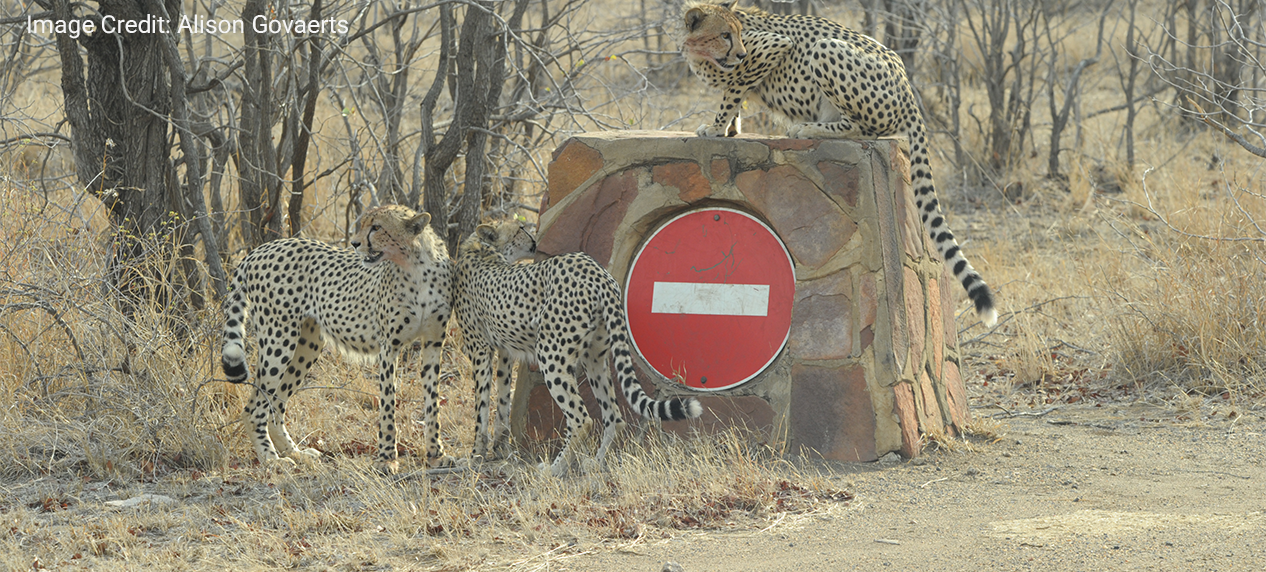
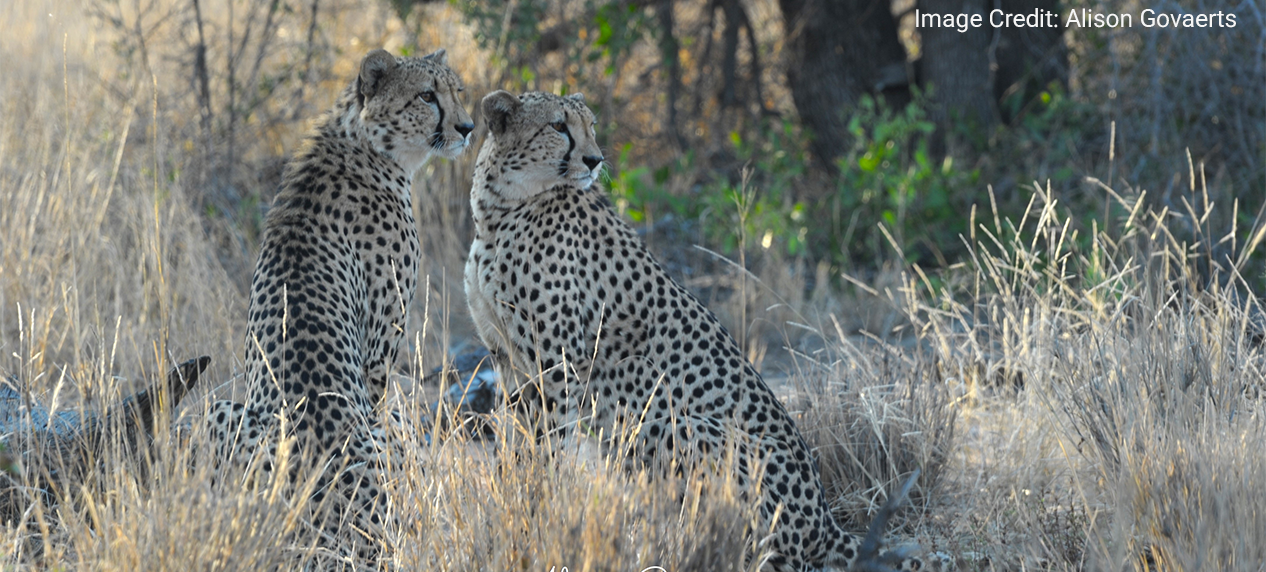
One of the first cheetahs released into Zambia's Greater Luangwa Ecosystem.

Before dawn breaks over Mbombela, a small team gathers in the winter cold. There is a quiet sense of anticipation as final preparations get underway. There is little conversation as everyone focuses on the task ahead. Veterinarians prepare darting equipment, tracking collars undergo final tests, and government officials organise permits and documentation.

For the people gathered here, this is more than a translocation. It is the culmination of over a decade of planning and collaboration aimed at returning cheetah to Zambia’s Greater Luangwa Ecosystem. Today, six Cheetah will begin a journey to restore a species to a landscape from which it has been absent for decades.

The reintroduction represents one of the most ambitious large carnivore restoration projects currently underway in Africa. Led by Zambia’s Department of National Parks and Wildlife (DNPW) and funded by Howard G. Buffett Foundation, the initiative brings together an exceptional coalition of partners, including the African Range Wide Cheetah Conservation Initiative under the Zoological Society of London, the North Luangwa Conservation Programme under the Frankfurt Zoological Society, the Zambian Carnivore Programme, Conservation South Luangwa, and the Endangered Wildlife Trust. Operating under the leadership of DNPW, planning and implementation have combined expertise in species recovery, carnivore ecology, protected area management, community engagement, and cheetah translocation.

Their efforts are focused on the Greater Luangwa Ecosystem, one of southern Africa’s most important remaining connected conservation landscapes. Spanning approximately seven million hectares, the ecosystem encompasses North and South Luangwa National Parks, Luambe National Park, Lukusuzi National Park, and surrounding Game Management Areas. The scale and ecological integrity of this landscape make it uniquely suited to supporting wide-ranging wildlife and provide a rare opportunity for cheetah restoration at a meaningful scale.

The reintroduction has only become possible because of more than four decades of conservation investment across the landscape. These efforts have restored wildlife populations, strengthened protected area management, and maintained connectivity between protected areas and surrounding Game Management Areas. As a result, populations of lions, African Wild Dogs and other large carnivores now thrive across the ecosystem. The return of Cheetahs will restore the final missing member of this historic carnivore guild. Although Cheetah persisted in the landscape until the late 1990s, the species disappeared. While the exact cause of their extirpation is unknown, it followed a combination of ecological pressures, including disease outbreaks and prolonged disturbance. Today, the nearest viable populations are too distant for natural recolonisation, making active reintroduction the only realistic pathway for their return.

The significance of this opportunity becomes even clearer when viewed against the broader conservation challenges facing Cheetah. Once widespread across Africa and parts of Asia, Cheetah have disappeared from much of their historical range. The last public estimates believe only about 6,500 mature individuals remain globally, and the species continues to decline, driven by habitat loss, declining prey populations, human-wildlife conflict, and illegal wildlife trade. As a result, Cheetah are currently listed as Vulnerable on the IUCN Red List.

Southern Africa remains the species’ most important stronghold, but even here populations are increasingly fragmented and isolated. As suitable habitat continues to shrink, opportunities to restore cheetah at a meaningful scale are becoming increasingly rare. The Greater Luangwa Ecosystem offers one of those opportunities.

As the first darts are administered, the countdown truly begins. Under the watchful eye of veterinarians and government officials, each Cheetah is carefully processed according to strict international requirements. Every individual is scanned to verify its unique identifying microchip, ensuring compliance with CITES regulations. Detailed health assessments are conducted, vaccines are administered, and satellite collars are fitted. Throughout the procedure, the animals receive supportive care, including oxygen and fluids, to ensure their well-being. Once all checks are complete, each Cheetah is carefully loaded into its transport crate and prepared for the next stage of the journey.

Conservation team conducting health checks on a cheetah before international translocation.

These six founding animals, comprising three males and three females, were carefully selected by the project team from South Africa’s managed Cheetah metapopulation. The Cheetah originated from Thanda Private Game Reserve, Manyoni Game Reserve, Nkomazi Game Reserve, and Dinokeng Game Reserve. Their selection was based on genetics, demographics, and familiarity with the prey species and competing predators they are likely to encounter in their new home. Together, these considerations were made to maximise the likelihood of establishing a healthy, self-sustaining breeding population in Zambia.

The source population itself represents an important conservation success story. Established in 2012, South Africa’s managed Cheetah metapopulation has grown by an average of 8.8% annually, making it one of the few growing Cheetah populations remaining anywhere in the world. This achievement is the result of more than a decade of collaboration between the EWT, private reserve owners, conservation practitioners, and provincial and national governments. Importantly, the success of the metapopulation means conservationists can move beyond simply preventing decline. Instead, they can utilise the population’s growth to source suitable Cheetah for restoration initiatives such as the Greater Luangwa reintroduction, helping restore the species to landscapes where it has been lost.

Following processing, the Cheetah are transported to Kruger Mpumalanga International Airport, where African Parks assists with the next leg of the operation using their Pilatus PC-12. From there, the animals are flown north to Mfuwe International Airport in Zambia. With the support of DNPW and CSL teams, the Cheetah are cleared for entry before continuing onward to a remote area of North Luangwa National Park.

The release site was selected following extensive habitat suitability modelling, prey assessments, and carnivore surveys. These studies identified the area as one of the most suitable locations within the ecosystem for re-establishing cheetah. The objective is not simply to release animals into the wild, but to provide them with the greatest possible opportunity to survive, reproduce, and ultimately establish territories across the wider landscape.

Upon arrival, all six Cheetah are safely offloaded into temporary holding enclosures. Here they spent several weeks acclimatising to the sights, sounds, and scents of their new environment before progressing through a carefully planned release process.

A key component of this reintroduction is a 2,000-hectare predator-proof sanctuary. The sanctuary has been specifically designed to help the Cheetah establish familiarity with the release area before entering the wider ecosystem. By temporarily concentrating animals within a defined space, it encourages interactions between males and females while promoting scent-marking and territory establishment. This is particularly important for males, whose scent-marking locations form a critical part of Cheetah social structure. By allowing these networks to develop before access to the broader landscape is provided, conservationists hope to improve settlement, breeding success, and long-term population establishment.

While the successful arrival of the first six Cheetah is significant, it marks only the beginning of a much longer conservation journey. Additional Cheetah are scheduled to join the founder population later this year, with a total of at least 18 individuals planned over the first two years of the programme. Every released individual will be monitored closely through satellite collars and dedicated field teams. These monitoring efforts will provide vital information on movement patterns, survival, behaviour, habitat use, and ecological interactions, allowing management approaches to be adapted as needed.

Importantly, success in a reintroduction project is measured in stages. The safe translocation of the Cheetah is the first milestone, but it is only the beginning. Their successful adaptation to the landscape is equally critical. The birth of the first litter will represent an encouraging sign that the population is establishing itself. However, the true measure of success will be the development of a self-sustaining population capable of persisting independently into the future. Ultimately, it is the survival and reproduction of second and third generations of cheetah born and raised entirely within the Luangwa landscape that will determine whether this vision has been realised.

For the EWT, this project reflects the organisation’s commitment to restoring threatened species and rebuilding ecological processes. It demonstrates how science-led conservation, long-term planning, and meaningful cross-border collaboration can reverse local extinctions and create new opportunities for species recovery. Equally important is the recognition that conservation success depends on people. Community engagement has been central to the project from its earliest planning stages, with consultations by the project leads taking place across the Munyamadzi Game Management Area and support secured from local leadership, including Chief Nabwalya.

The project has already generated significant employment opportunities in this remote area and forms part of wider efforts to strengthen local livelihoods through conservation-linked development initiatives. Human-wildlife coexistence remains a major focus of the project, although Cheetahs are generally considered a low-conflict carnivore that poses little threat to people.

The journey that began in the early morning darkness outside Mbombela is far from over. Yet with the successful arrival of the first six Cheetah and their release into the sanctuary, an exciting new chapter has begun. Across seven million hectares of wilderness, a species absent for decades has taken its first steps toward recovery. If successful, this ambitious undertaking will not only restore Cheetah to one of Africa’s most important conservation landscapes but also contribute meaningfully to securing the future of one of the continent’s most threatened large carnivores. More importantly, it will demonstrate what is possible when governments, conservation organisations, scientists, landowners, donors, and local communities work together towards a shared vision for wildlife recovery.

The project’s vision extends beyond restoring a single species. It aims to leave a lasting legacy of healthier ecosystems, strengthened conservation partnerships, improved opportunities for local communities, and a safer future for wildlife across the Greater Luangwa Ecosystem.

Six cheetahs being prepared for reintroduction into Zambia's Greater Luangwa Ecosystem.

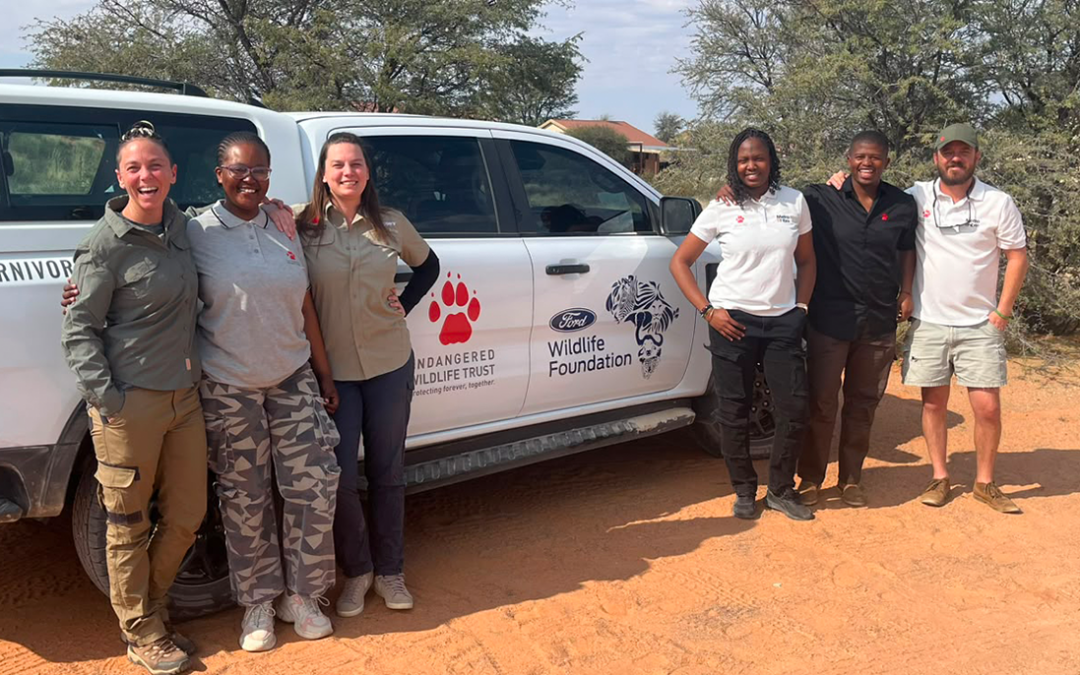
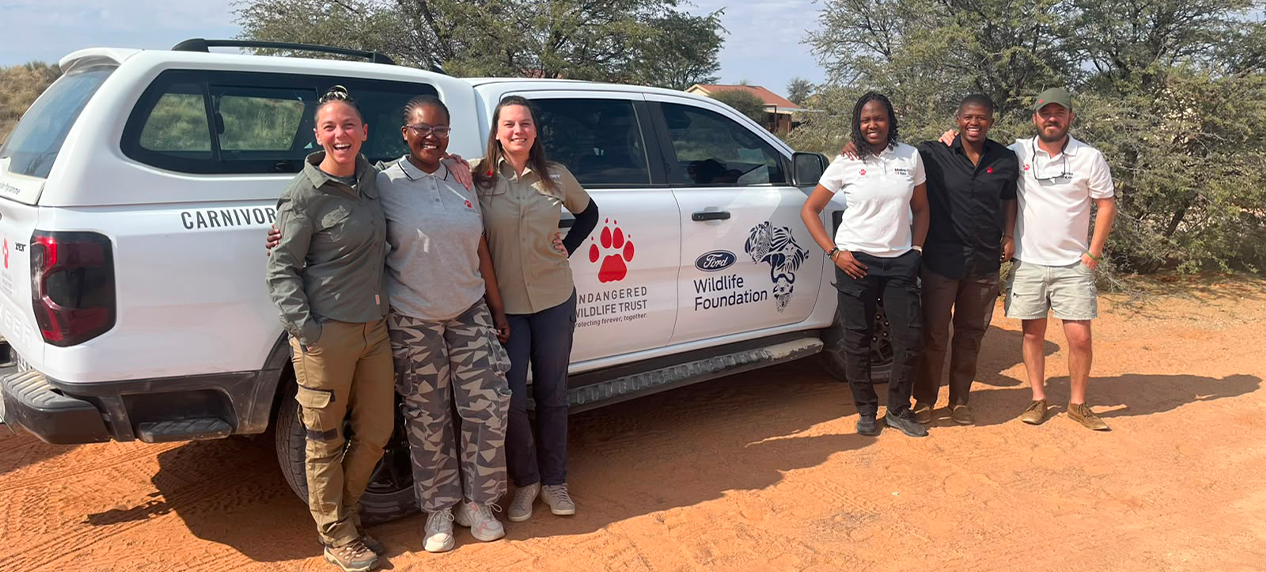
This project is funded by the Howard G. Buffett Foundation. The Endangered Wildlife Trust’s cheetah conservation work is supported by the Ford Wildlife Foundation and MetroFibre.

DNA HAS ITS SAY:  COLOPHON BEETLE POPULATIONS MORE WIDESPREAD

DNA HAS ITS SAY: COLOPHON BEETLE POPULATIONS MORE WIDESPREAD

DNA HAS ITS SAY:  COLOPHON BEETLE POPULATIONS MORE WIDESPREAD

By Samantha Theron, Conservation Researcher at the EWT


Colophon nagai beetle fragments collected for DNA analysis

Left: Intact Colophon beetle remains found on the second survey. Center: Colophon fragments found on the third survey. Right: Live Colophon larvae found on the first survey.

Good news for a Critically Endangered Cape Stag Beetle: Recent DNA analyses of specimens from our high-altitude surveys of Cape Stag Beetles reveal that Nagai’s Cape Stag Beetle (Colophon nagai), is more widespread than we previously thought. This means that the threat of extinction may not be quite as imminent for this species as we had feared.

Over the past two years (2025 and 2026), the EWT’s Drylands Conservation team has conducted multiple field surveys across several mountain peaks in search of two species of Cape Stag Beetles (Colophon eastmani and C. nagaii) that are threatened by climate change, wildfires, and illegal collection. Cape Stag Beetles are high-altitude specialists and can serve as flagship species for high-altitude ecosystems, highlighting the challenges faced by organisms that have been driven upslope in response to changing environmental conditions. As climate change continues to alter these environments, mountaintop habitats – or “islands in the sky” – may shrink even further, increasing the risk of extinction for these high-altitude specialists. Furthermore, hotter, drier conditions resulting from climate change have resulted in an overall increase in the frequency and intensity of wildfires.

As soil dwellers, Colophon beetles are able, in some instances, to survive devastating fires. But, altered fire regimes, such as climate change- and human-induced changes in the frequency and intensity of fires, may pose significant threats to their existence.  This year, our project aimed to investigate the impact of altered fire regimes on Cape Stag Beetles, while extending our search for Colophon nagai eastwards from the historical site. Ultimately, our aim has been to improve fire management plans and response protocols to protect Colophon habitat by mitigating the threat of human-induced changes in fire regimes.

Our 2025 surveys revealed multiple new sites for Colophon eastmani, and we were able to update the distribution of the species and conduct a threat assessment for the IUCN Red List, listing this species as Endangered. However, for Colophon nagaii we found nothing but a few beetle remains at the historical site, also known as the type locality – the only location from which the species is known. Thus, we feared the species may already be extinct, with one plausible explanation being that a 2017 wildfire may have wiped out this population. We drafted the first IUCN Red List assessment for Colophon nagaii, listing it as Critically Endangered.

Last year, our surveys included two helicopter-assisted survey expeditions, in which Ross Air flew us to various previously unsurveyed and otherwise inaccessible mountain peaks to search for these beetles. We found the use of the helicopter extremely beneficial to the efficiency and feasibility of the surveys.  Thus the reason for ensuring the use of the helicopter again this year.

Cape Stag Beetle conservation survey on remote mountain peaks

The expedition team camped at the top of the mountain range.

We conducted three field surveys. The first was a five-day expedition, in which three members of our team went up in a helicopter, along with food and camping gear, and continued on foot to survey five mountain peaks along a 20km stretch of the mountain range throughout the five-day period. These peaks represented five of the eight peaks we had set out to survey this year. The helicopter further assisted with moving us and our camping gear to a new camping spot on the third day, collecting us again on the last day. During this trip, we found evidence of Colophon in the form of beetle remains/fragments at multiple sites, as well as live Colophon larvae at two sites, indicating that the population is still viable.

On the second survey, we visited two peaks, one of which represents the historical C. nagai site. We had aimed to visit this site in the beetle’s active season (November – March), as our previous survey did not take place during this period, which could explain why we had previously failed to detect recent signs of Colophon at the historical site. This time we found multiple Colophon beetle fragments, at least one of which was still perfectly intact and exposed on the surface of the ground. We suspect that we arrived just at the tail-end of the beetles’ active season, as we did not encounter any live beetles. We also found beetle fragments on the second peak, which is adjacent to the type locality and approximately 2 km further along the mountain range.

A third survey was conducted at the last of the eight peaks we had set out to survey this year. We had initially planned to survey this peak during the first helicopter-assisted survey, but were unable to due to poor weather conditions on the last day. This final survey also revealed evidence of Colophon presence in the form of beetle remains near the peak.

During this survey, we collected beetle fragments from two sites for genetic-based species identification. In addition, Colophon fragments that were collected last year, on a peak that lies roughly midway between the two species’ (C. nagai and C. eastmani) known distributions, and for which the species’ identity was unknown, were also genetically analysed for species identification.

The results revealed that the fragments from both sites to the east of the historical C. nagai site, as well as those from the unknown site to the west (midway between the two species), represent C. nagai. This is an indication that the species is in fact more widespread than we previously thought.

In May this year, we hosted a workshop in Montagu, inviting landowners and representatives of the local Fire Protection Agency to discuss Cape Stag Beetle conservation and stewardship options and assess fire management plans and response protocols.  Looking ahead, we will be distributing new fire management guidelines, specifically focussed on safeguarding key habitats for the species, to all relevant stakeholders. Two of the landowners have indicated their willingness to declare formal protection of Cape Stag Beetles on their properties, and we will be initiating these processes in due course. Protecting these remarkable and elusive insects and the habitats they depend on is essential, not only for their long-term survival, but also for advancing research on the impacts of climate change on species across the Karoo and Fynbos biomes.

The EWT thanks the Mohamed Bin Zayed Species Conservation Fund, Mapula Trust, Ross Air and the landowners for their support in this project.