
Birds in Decline: Comparing Road Surveys and Citizen Science Data in South Africa
By: Erin Adams and Lizanne Roxburgh, Conservation Planning and Science Unit
Monitoring animal populations is a crucial part of conservation, but it can be very expensive and time-consuming. As a result, researchers are increasingly turning to citizen science platforms, which provide valuable data, especially in areas where information is limited.
While well-established citizen science programmes exist in the Global North, many biodiversity-rich regions in the Global South remain underrepresented. South Africa, for example, has some of the highest levels of bird species richness in the world, but it is also experiencing significant declines in bird populations.
To help address this gap, the Southern African Bird Atlas Project 2 (SABAP2) was launched in 2007 and has been running ever since. SABAP2 uses a checklist approach, where participants record whether species are present or absent during surveys. This makes it useful for tracking changes in where species occur. In addition, repeated surveys over time allow researchers to estimate changes in how often species are reported, which can provide insights into their abundance. However, checklist-based data may not always be reliable for measuring changes in population size across large areas or for multiple species. To investigate this further, a recent study co-authored by EWT scientists* tested how accurate this type of citizen science data really is.
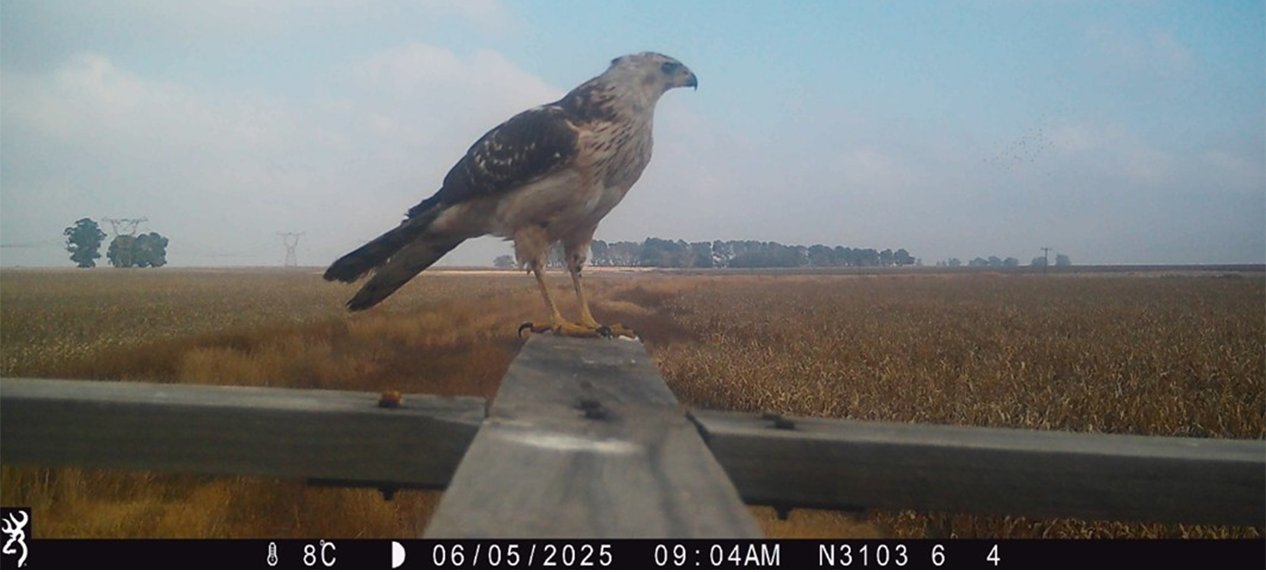
The researchers examined population trends for 26 bird species in South Africa, including 18 raptors and eight large terrestrial bird species. They conducted road counts along 752 transects, covering nearly 400,000 km across different biomes (Nama-Karoo, Savanna, and Grassland) in central South Africa between 2009 and 2025. The average transect was 521 km long, with some as short as 80 km and others up to 2,300 km.
During these surveys, one of the researchers drove at 80 km/h on unpaved roads and 120 km/h on paved roads. All raptors and large terrestrial bird species seen (whether flying or perched) were counted along each transect. Birds were identified visually, or, when necessary, by stopping to use binoculars. A GPS device was used to record the exact location of each sighting, along with the number of individuals observed. The data collected from these road counts were then compared with SABAP2 data for 24 of the 26 species, focusing on the same area and time period.
The researchers found that the road count data showed that half of the species (13 out of 26) declined significantly over the study period, while only three species (12%) showed significant increases. The remaining ten species (38%) showed no clear trend.
In contrast, the SABAP2 data suggested a very different picture. Only 3 out of 24 species (13%) showed significant declines, while 11 species (46%) appeared to be increasing. The remaining ten species again showed no clear trend.
When the researchers compared whether trends were increasing or decreasing (regardless of whether they were statistically significant), they found that the two methods agreed only about half the time. In most cases where the results differed, road counts showed declines, while SABAP2 suggested increases.
These findings indicate that many raptors and large terrestrial bird species in South Africa have been declining at worrying rates over the past 16 years, with only a few species showing increases. The exact causes of these declines are not fully understood, but elsewhere in Africa they have been linked to pressures associated with growing human populations, such as expanding agriculture and poaching.
Importantly, this study shows that a checklist-based citizen science programme like SABAP2 may fail to detect population declines in around half of cases. Despite this limitation, SABAP2 and similar atlas projects across Africa remain some of the best tools currently available for monitoring biodiversity.
With some improvements in how the data are collected or analysed, these programmes could become even more accurate and valuable for conservation.
* Zuluaga, S., Murgatroyd, M., Visagie, R., Tate, G., & Amar, A. (2026). Road counts expose widespread declines in South African raptors underestimated by atlas data. Biological Conservation, 111764. https://doi.org/10.1016/j.biocon.2026.111764