Securing the Future of Medicinal Plants Through Community Action
By Jenny Botha, Phomelelo Malatji, and Lufuno Konanani
For millions of South Africans, traditional medicine is not an alternative form of healthcare — it is a trusted source of healing and wellness, and is often practiced alongside conventional medicine. Nearly 60% of South Africa’s population depend on traditional healing practices, many of which depend on medicinal plants that have been used for generations.
Historically, these plants were harvested within systems of customary law that protected both the species and the knowledge associated with them. Seasonal restrictions, spiritual protocols, and community oversight helped ensure that harvesting remained sustainable. Trees such as the Baobab, Marula, and Leadwood, were regarded as sacred and could only be cut after permission was granted and cultural rituals performed. In many areas, sacred groves were protected so strictly that only designated spiritual leaders could enter them.
Today, medicinal plants face unprecedented pressure due to high demand, limited access to land and natural resources, the loss of natural vegetation, and constrained enforcement capacity. Many traditional harvesting areas have effectively become open-access sites, increasing the risk of overharvesting and resource depletion. At the same time, areas that support wild medicinal plant populations continue to be transformed by urban expansion, agriculture, mining, and other development activities. These challenges are compounded by historical socio-political and economic inequalities that led to loss of access to land and natural resources, placing growing pressure on the remaining wild medicinal plant resources and the communities that depend on them.
The consequences are becoming increasingly apparent. Approximately 178 South African medicinal plant species are listed on the IUCN Red List of Threatened species. The potential loss of these species not only threatens biodiversity; it also undermines a vital health care system, livelihoods, and our biocultural heritage. Conservationists increasingly recognise that medicinal plant conservation cannot succeed through law enforcement alone. Traditional Health Practitioners (THPs), traders, harvesters, local leaders, and communities are essential partners in safeguarding these species.
Lasting impact also requires coordinated action that protects wild plant populations while sustaining access to these healthcare resources. Since the late 1980s, various conservation organisations have implemented cultivation initiatives to support THPs access sustainable sources of medicinal plants, in certain instances with the support of private sector partners.
To contribute to these efforts, the Endangered Wildlife Trust (EWT) is collaborating with the South African Biodiversity Institute (SANBI) and the University of Venda as well as THPs, communities, and other stakeholders to develop practical, long-term solutions that support both sustainable use and the conservation of medicinal plants.
Our approach incorporates four main pillars:
- Creating reliable, legal sources of medicinal plants through the scaling of cultivation and other culturally appropriate measures
- Monitoring and improving the management of wild plant populations
- Supporting local leaders and communities to strengthen harvesting controls and governance
- Facilitating the sharing of knowledge of biodiversity and wildlife legislation
Â
Scaling cultivationÂ
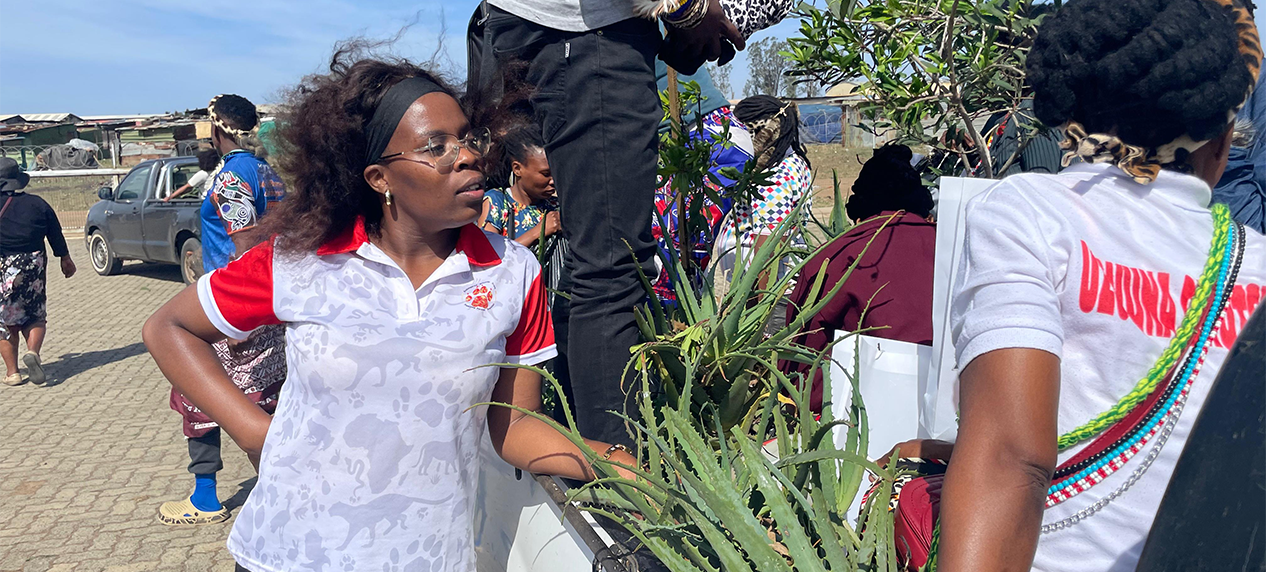
Following extensive engagement with THPs and other stakeholders, the EWT co-developed a medicinal plant cultivation training course with horticulturalists from SANBI. Since its launch, we have co-hosted seven workshops in Gauteng, Limpopo, and KwaZulu-Natal, often in partnership with regional conservation officials.
Participants learn site preparation, propagation techniques, soil and water management, and the basics of wildlife legislation. Each receives a starter pack containing tools and seedlings, followed by ongoing mentorship through field visits and social media support groups. Additional seedlings are provided in follow up visits. Our goal is to provide each participant with a diverse selection of species to enable them to start cultivating as many of the plants they need as possible.
Feedback has been extremely positive, with THPs and other community members sharing photos and feedback of their plants’ growth through social media, as well as any challenges that they might be experiencing.
In the words of a Gauteng participant,
“Siyafunda ukutshala ukuze izingane zethu zingasahlali zithatha yonke into ehlathiniâ€
(“We are learning to cultivate so that our children will no longer need to take everything from the forest.â€)
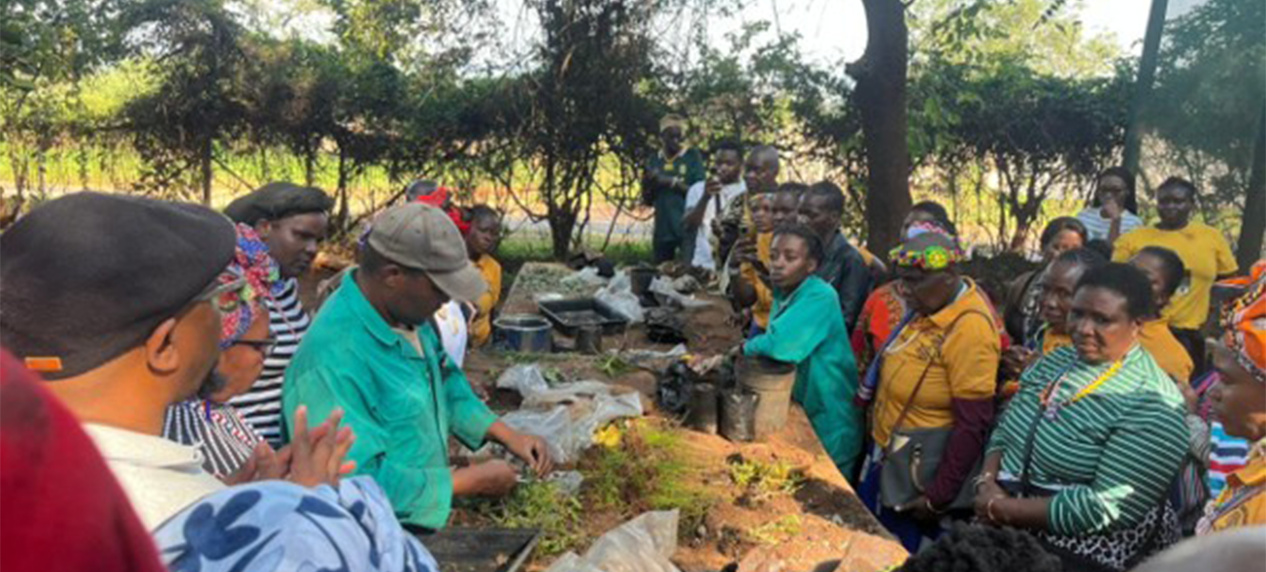
Rhofiwa Netshituni and Rhofiwa Radzilani from SANBI provide participants with guidance during a practical session in a three-day medicinal plant cultivation training course
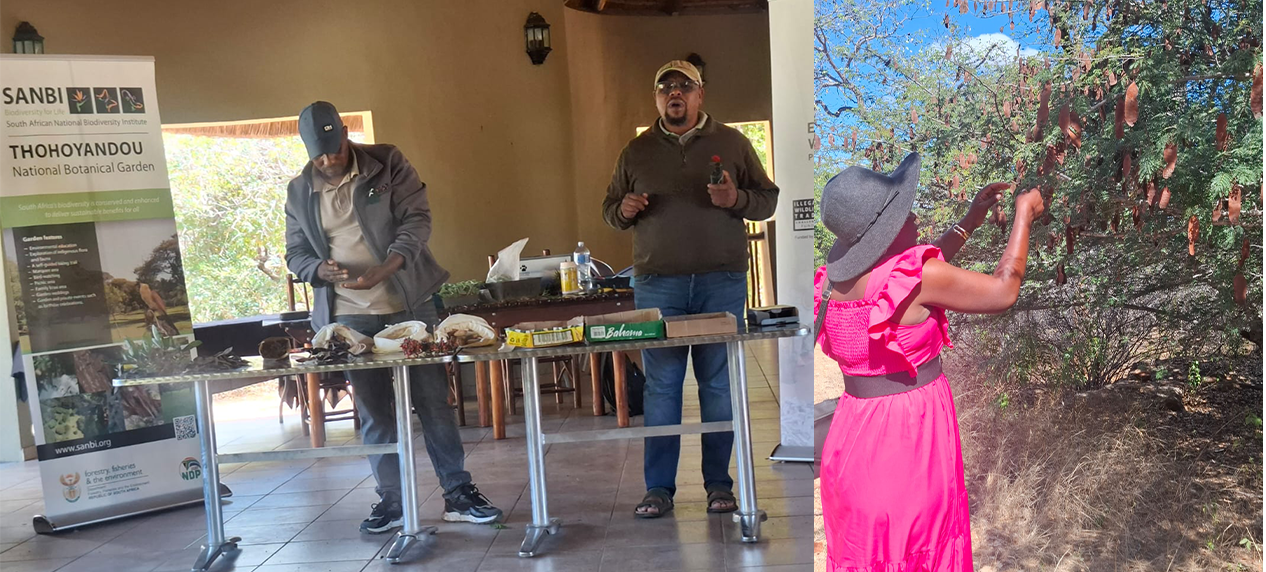
Left: Lufuno Konanani from the EWT providing theoretical training to a group in Limpopo. Right: Collecting seed during a cultivation training course.
Since many consumers rely on traditional medicine as an affordable and accessible healthcare option, cultivation efforts must not lead to major price increases. This can be challenging as conventional cultivation costs can be high. To avoid this, we encourage growers to plant through low cost, organic agroforestry approaches at their homesteads wherever possible, rather than establishing expensive nursery-based production systems. This reduces cultivation costs, aligns with cultural practices, and promotes natural integrated pest management and other approaches that reduce the need for synthetic pesticides or inorganic fertilisers.
A THP from KwaZulu-Natal summed up the approach:
“Uma sikwazi ukuzikhulisela lezi zitshalo emakhaya ethu, siyakwazi ukuvikela imvelo futhi sisize imindeni yethu ngesikhathi esifanayo.â€
(“If we can grow these plants at our homes, we can protect the environment while supporting our families at the same time.â€)
While cultivation contributes to the protection of species an ongoing access to plants, it will take time to grow sufficient volumes of the wide range of species that are used in traditional medicine. This means that plants will continue to be harvested in areas that they occur naturally. If species at risk are to survive into the future, we need to reduce the impacts of harvesting on natural populations and, in many areas, improve the management of their habitats.
Improving the management of naturally occurring medicinal plants
In Limpopo, the EWT is working with harvesters, two students and their supervisors from the University of Venda to assess the impacts of harvesting on medicinal plant populations growing near a village on a major transport route. The area is vulnerable to regional and cross-border trade, making this an important conservation priority.
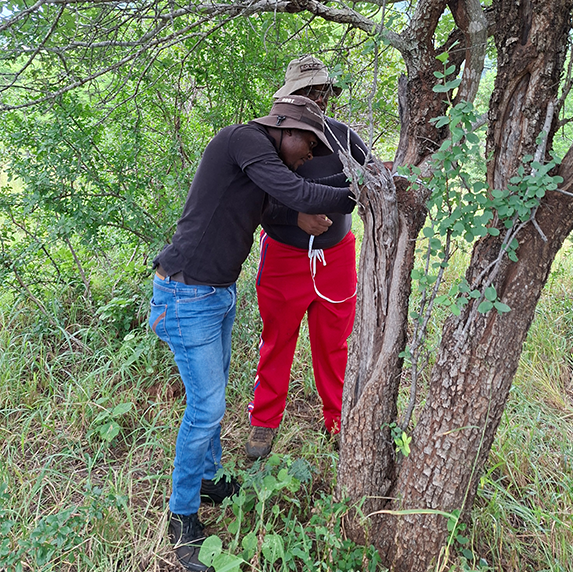
Assessing the impact of harvesting on medicinal plants growing in Limpopo
Preliminary findings offer cause for both concern and opportunity. On some sites, clear efforts have been made to harvest responsibly by cutting limited amounts of bark or root from individual trees. On a neighbouring site, however, trees have been heavily harvested leading to several mortalities.
So far, twelve medicinal plant species have been assessed, four of which are legally protected. These are Mountain aloe, Bushveld saffron, Tamboti and Transvaal red milkwood. The Bush Saffron is listed as Near Threatened on South Africa’s Red Data List.
Over the next two months, we will expand our assessments to harvested sites on two reserves, including a community-owned reserve in Limpopo, where local leaders have requested support in managing unsustainable harvesting occurring on their land.
Rebuilding local stewardship
Legal harvesting requires permission from the landowner and, where protected species are involved, the appropriate permits. Permit requirements may apply to the collection of plants, plant material, seeds, and other propagation material, and certain activities may be regulated to ensure sustainable use and conservation.
Although harvesters still often seek permission from local leaders before accessing natural resources, this does not always occur. Many community leaders face considerable challenges in managing harvesting pressures, not only for medicinal plants but also for fuelwood, building materials, and other natural resources. In the past, conservation and forestry officials played a more active role in supporting sustainable resource use through regular patrols, monitoring, and compliance measures. Today, state agencies are severely under-resourced, short staffed, and responsible for extensive geographic areas, reducing their capacity for support. At the same time, many THPs and other community members are simply unaware that certain species are protected or that particular harvesting practices may be unlawful.
To help bridge this gap, the EWT is facilitating discussions with local leaders, THPs, communities, police officials, and conservation authorities in several highly biodiverse areas. In March 2026, a workshop aiming to explore the impact of wildlife offences and raise awareness of legislation in Limpopo brought together community members and law enforcement officials to identify practical ways of improving compliance without eroding livelihoods.
The active involvement of local leaders and communities is essential to the success of this approach. Equally important is building a shared understanding of the threats facing medicinal plants and other natural resources, while raising awareness of relevant legislation and the broader social and environmental impacts of wildlife offences. Achieving lasting change requires a creative and collaborative approach that strengthens stewardship and resource management, supports effective local controls, and promotes fair and accountable systems of governance.
A shared responsibility
Conserving medicinal plants is about more than preventing the decline of species. It is about rebuilding and safeguarding the connections between people, culture, health, and the natural world, and ensuring that these relationships continue to benefit future generations.
Addressing the threats facing medicinal plants requires a multi-faceted approach, grounded in an understanding of the sociocultural and market dynamics that influence their use and trade, and a commitment to balancing conservation with the needs of the people who depend on these resources. This longstanding, complex conservation challenge cannot be addressed by a single organisation acting alone. Lasting success depends on collaboration, shared stewardship, and a commitment to ensuring that medicinal plants remain available to support health, livelihoods, cultural practices, and biodiversity for future generations.
“Medicinal plants connect biodiversity to daily life in a very direct way.
When a species disappears, we lose more than a plant.
We lose knowledge, livelihoods, and part of our cultural heritageâ€
– Lungisani Zondi, SANBI