
Battle of the Bullets returns to Graaff-Reinet with a bang!
Danielle du Toit, Field Officer: Birds of Prey Unit
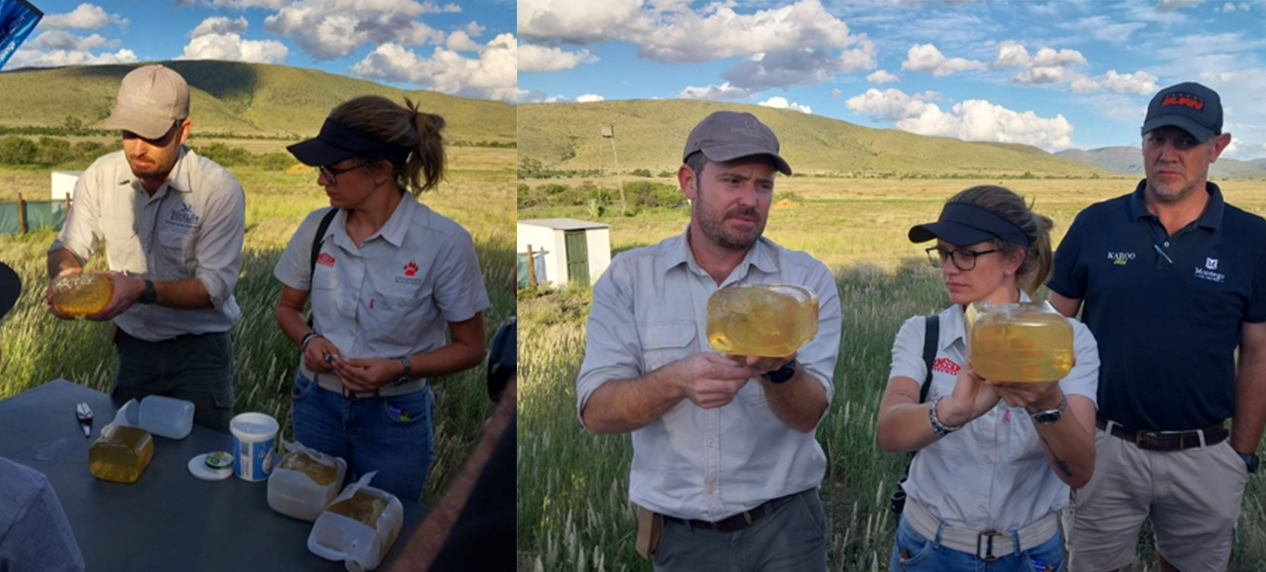
On a sunny Friday afternoon in mid April, conservationists, landowners, hunters, and shooting enthusiasts gathered at the Graaff-Reinet Gun Club for the latest Battle of the Bullets event — a collaborative awareness campaign aimed at addressing one of the lesser-known but significant threats facing South Africa’s vultures: lead poisoning from spent ammunition.
Hosted as part of the Endangered Wildlife Trust’s ongoing Karoo Vulture Safe Zone Project, the event is a collaborative effort with BirdLife South Africa, demonstrating once again that meaningful conservation solutions are built through open dialogue, shared knowledge, and practical collaboration across sectors.
Battle of the Bullets was created to bring together all stakeholders in the lead ammunition conversation — from conservation organisations and scientists to hunters, ballistic experts, and manufacturers — to foster constructive engagement around the transition toward lead-free ammunition alternatives.
Rather than approaching the issue through conflict or criticism, the campaign creates space for transparent discussion around the latest science, emerging technologies, practical field experiences, and developments within the lead-free ammunition industry. This approach ensures that participants are equipped with the information needed to make informed decisions while contributing meaningfully to the conservation of our critically endangered vulture species.
The hidden threat: How vultures are poisoned by lead
Lead poisoning is often described as a silent killer. Unlike visible threats such as power line collisions or poisoning events, lead toxicity can affect vultures gradually and often goes unnoticed until severe physiological damage has occurred. As obligate scavengers, vultures feed almost exclusively on carcasses of dead animals.
When an animal is harvested using traditional lead-based ammunition, microscopic fragments of lead can disperse throughout tissue far beyond the visible wound channel caused by the projectile. When carcasses, entrails, or gut piles are left in the veld, scavenging vultures ingest these fragments while feeding. Once consumed, lead is absorbed into the bloodstream and accumulates in vital organs and bones, causing neurological impairment, organ damage, reduced reproductive success, weakened immunity, and ultimately death in severe cases. Research by Dr Linda van den Heever of BirdLife South Africa has shown elevated blood lead levels in southern Africa’s vultures, with exposure strongly linked to fragments from spent ammunition, not other contributors such as leaded fuel contamination in soil or air particles near mines.
This is why creating lead-free landscapes is such a critical component of the Vulture Safe Zone model: reducing lead exposure at source offers one of the most effective long-term interventions for protecting scavenger populations. “Lead poisoning is a totally preventable threat to vultures,†said Dr van den Heever.
A safer environment for wildlife — and for people
The move toward lead-free ammunition is not only beneficial for vultures and other wildlife.
Lead is a highly toxic heavy metal with no known biological function in humans. Repeated exposure, including through consumption of game meat contaminated with bullet fragments, has been associated with neurological damage, developmental delays in children, cardiovascular complications, and other serious health impacts. Research globally continues to reinforce the public health advantages of reducing environmental lead exposure wherever possible.
By encouraging the adoption of lead-free alternatives, Battle of the Bullets supports healthier ecosystems, healthier wildlife, and healthier communities.
Science, collaboration, and practical solutions
A highlight of the Graaff-Reinet event was the invaluable contribution of Justin Henry and Dr Linda van den Heever of BirdLife South Africa, whose work continues to drive South Africa’s understanding of lead exposure in vultures and other terrestrial bird species.
Dr van den Heever, who leads BirdLife South Africa’s lead research initiatives, shared critical scientific insights into how lead enters scavenger food chains and the growing body of evidence linking ammunition-derived lead to vulture poisoning across southern Africa. Her ability to translate complex science into practical, accessible information once again proved instrumental in bridging the gap between research and on-the-ground implementation.
Justin Henry’s participation further strengthened the day’s collaborative focus, contributing to discussions around species conservation, stakeholder engagement, and the practical pathways toward expanding lead-free uptake within South Africa’s hunting and wildlife management sectors.
Using gelatin targets as a medium to capture the bullet and show energy distribution and impact as the bullet would in animal tissue, Justin demonstrated the effectiveness and reliability of lead–free bullets in comparison to lead bullets.
Together, their contributions — alongside those of industry representatives, ammunition experts, and local stakeholders — reinforced the campaign’s central message: effective conservation depends on partnerships, not polarisation.
Shifting the conversation, shaping the future
The success of Battle of the Bullets in Graaff-Reinet, as it has done in the other places we have held it, reflects a growing willingness across South Africa’s hunting and conservation communities to engage constructively around solutions that benefit both biodiversity and people.
Within the Karoo Vulture Safe Zone, the transition toward lead-free ammunition represents more than a technical adjustment — it is a tangible commitment to creating landscapes where vultures can feed safely, landowners can operate sustainably, and future generations can inherit healthier ecosystems.
As the campaign continues to grow, one thing is becoming increasingly clear: when science, industry, and conservation come together around shared purpose, meaningful change is not only possible — it is already underway.
** See Dr van den Heevers presentation on Lead Poisoning in South Africa’s Gyps vultures here: PowerPoint Presentation
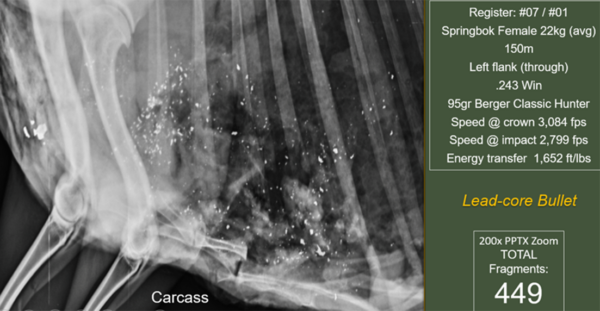
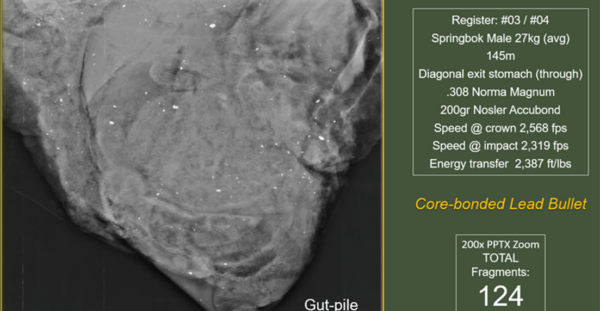
Image Credit: NATSHOOT & CHASA, Searching for mitigations to Minimise Incidents of Secondary Lead Poisoning in South African Vultures. Els & Palos (2020). Available at: 20200701-v05_FIN_VULTURE_LEAD_POISONING_REPORT
References:
- Pain DJ, Cromie RL, Newth J, Brown MJ, Crutcher E, Hardman P, Hurst L, Mateo R, Meharg AA, Moran AC, Raab A, Taggart MA, Green RE. Potential hazard to human health from exposure to fragments of lead bullets and shot in the tissues of game animals. PLoS One. 2010 Apr 26;5(4):e10315. doi: 10.1371/journal.pone.0010315. PMID: 20436670; PMCID: PMC2859935.
- Eric J. Buenz, Gareth J. Parry. 2018. Chronic Lead Intoxication From Eating Wild-Harvested Game. The American Journal of Medicine,Volume 131, Issue 5,2018,Pages e181-e184,ISSN 0002-9343, https://doi.org/10.1016/j.amjmed.2017.11.031.
- Linda van den Heever, Hanneline Smit-Robinson, Vinny Naidoo, Andrew E. McKechnie. 2019. Blood and bone lead levels in South Africa’s Gyps vultures: Risk to nest-bound chicks and comparison with other avian taxa. Science of The Total Environment, Volume 669, Pages 471-480, ISSN 0048-9697, https://doi.org/10.1016/j.scitotenv.2019.03.123.