Tales From the Field
Rooted in resilience: Mud, muscle and making plans.
By Ludi Kern, field officer in the Savanna Strategic Conservation Landscape
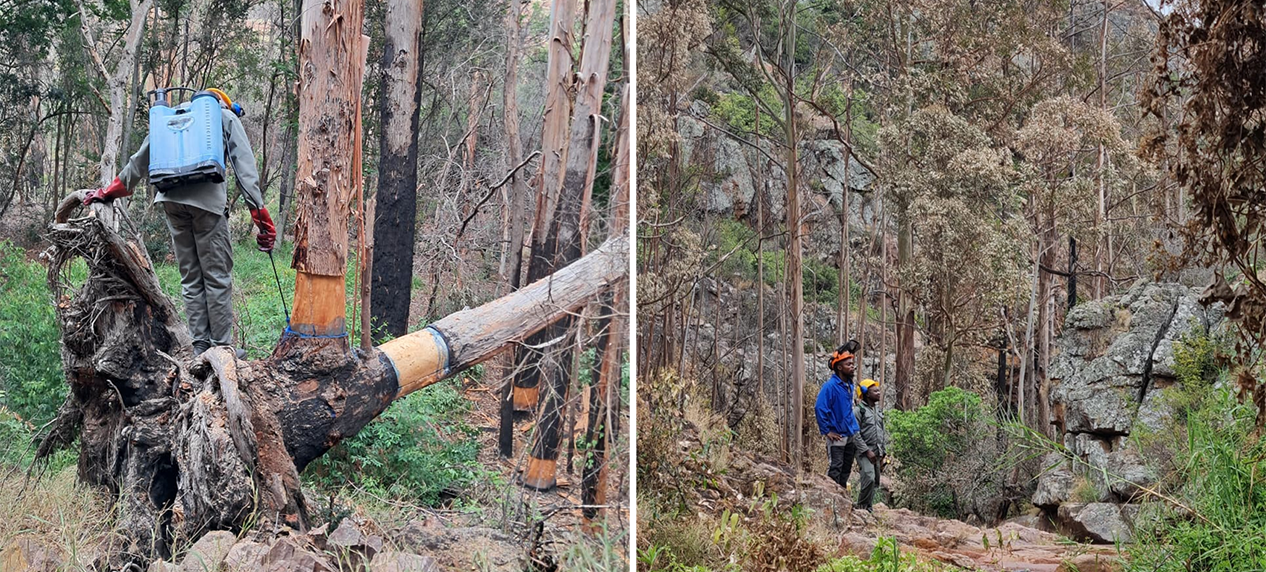
 In the remote and rugged landscapes of the Soutpansberg, restoration work rarely follows a predictable plan.
For the Restoration Ranger team, the first quarter of the year has been defined by less than ideal conditions, but by the team’s ability to adapt, persevere, and continue delivering meaningful conservation outcomes under pressure.
From the outset, heavy January rains reshaped operational plans. Access to key sites became impossible, with swollen rivers cutting off routes to higher-lying properties. Rather than lose momentum, the team pivoted quickly, identifying lower-altitude areas where work could continue. Even reaching these sites required effort, with rangers undertaking minor road repairs before operations could begin. The same rains that blocked access, however, offered an unexpected advantage: softened soils made manual removal of invasive plants more effective. Through determination and adaptability, the team successfully cleared 391 invasive plants over just three weeks.
By February, the Rangers had returned to Andover Farm, resuming the critical task of removing invasive Eucalyptus along a strategically important river system. This river threads through multiple properties, including protected areas and future conservation zones before feeding into the Sand River, making its ecological integrity vital at a landscape scale.
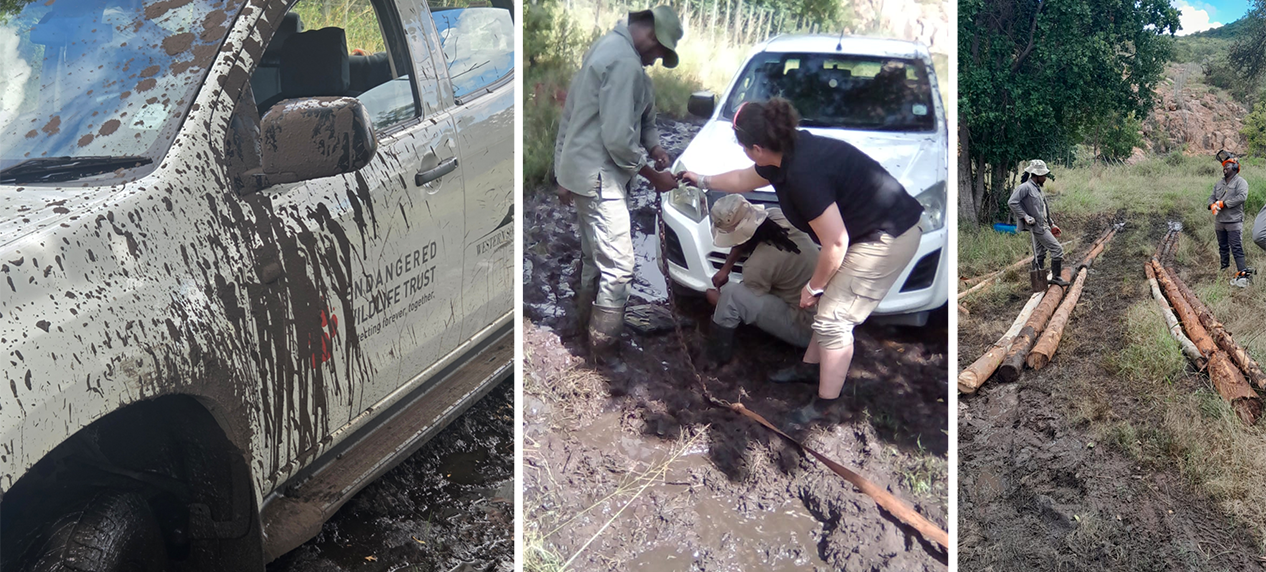
But, conditions remained far from easy. Waterlogged soil, high river levels, and unstable terrain forced the team into constant problem-solving mode. Routes had to be reassessed, alternative access points identified, and on several occasions, vehicles recovered from difficult conditions. Road maintenance became an essential part of daily operations, ensuring both safety and continuity of work.
Despite these challenges, the team’s output was remarkable. Over the course of the month, 1,117 Eucalyptus trees were controlled using a combination of manual, mechanical and chemical methods. This effort represents more than just numbers; it is a significant step toward restoring the health of the riparian corridor. By removing these water-intensive invasive trees, the rangers are directly improving water availability, supporting indigenous biodiversity, and strengthening the resilience of the broader ecosystem.
March brought no reprieve from the rains. Persistent wet conditions continued to hinder access, culminating in an incident where the team’s vehicle became stuck in deep mud and required assistance from neighbouring landowners for recovery. Yet, even in these moments, the rangers’ resourcefulness stood out. To maintain safe passage between their accommodation and work sites, they constructed a temporary access route using cleared eucalyptus trees, turning the very problem they are addressing into part of the solution.
What emerges from these months isn’t just a record of numbers, though they’re impressive. It’s a portrait of a team that refuses to stall, even when their vehicles do.
The Restoration Rangers aren’t just clearing invasive trees; they’re navigating uncertainty, adapting in real time, and occasionally building roads out of the very challenges they’re tackling.
In a landscape as unpredictable as the Soutpansberg, progress isn’t about perfect conditions. It’s about muddy boots, quick thinking, and the quiet determination to keep moving no matter how deep things get.