
Multispecies Action Plan to conserve Bustards adopted for implementation
By Matt Pretorius, project manager in the Wildlife and Infrastructure Unit
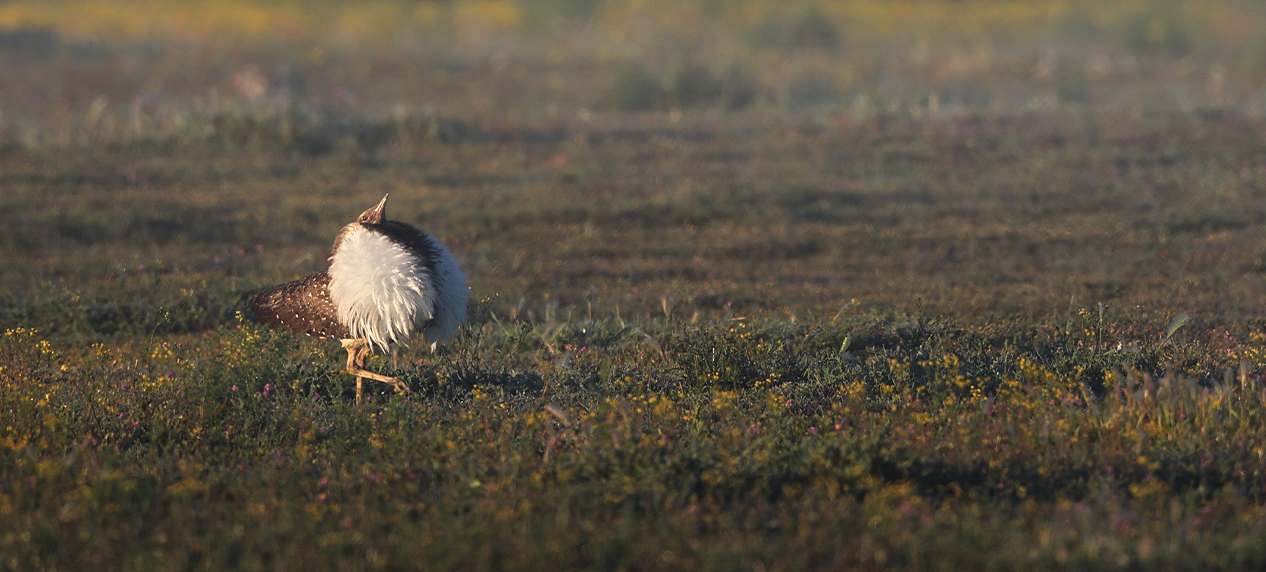
A global team of bustard experts and conservationists have developed a Multispecies Action Plan to Conserve African, Eurasian, and Australian Bustards to conserve a terrestrial species that includes one of the world’s heaviest flying birds – the Kori Bustard.
The Bustard MsAP, as it is commonly known, was recently adopted at the 15th Conference of the Parties to the Convention on the Conservation of Migratory Species of Wild Animals in Brazil – less than a year after it was workshopped in Pakistan.
With the adoption of the blueprint, the real work now starts to conserve a species threatened with extinction.
The actions proposed in the Bustard MsAP will be executed within a period of 11 years (2026 – 2037). There are several key milestones, and a mid-term progress review is planned for 2031 – one year ahead of the 17th Conference of the Parties – marking the halfway point of the Bustard MsAP’s implementation period.
Bustards Without Borders (BWB) conceptualised and developed the Bustard MsAP, with the primary mission of “catalysing actions for the sustainable conservation of bustards and their habitats, to include on-the-ground conservation activities, training, awareness, population monitoring and research as outlined in the Bustard MsAP”.
BWB is a consortium of individuals, organisations, government institutions and other stakeholders working towards sustainable bustard conservation.
We are now in the first triennium during which a draft workplan is to be finalised and implemented. The Bustard MsAP will be executed within regional subdivisions. The southern African region (region 1) includes 10 countries: Angola, Botswana, Eswatini, Lesotho, Malawi, Mozambique, Namibia, South Africa, Zambia, and Zimbabwe. In general, bustard species richness in southern Africa is high compared to the other regions across Africa, Asia, Europe and Australia, with South Africa having the highest species count (10) of any country within the global range of the family Otididae.
The southern African region boasts 11 bustard species, of which the Ludwig’s Bustard (Neotis ludwigii), classified as globally Endangered by the International Union for Conservation of Nature’s (IUCN) Red List of Threatened Species, is the most severely threatened. A recent publication summarising long-term bird road counts cites a decline of 94.3% for the Ludwig’s Bustard within the study area, the highest negative trend among the species recorded by researchers.
The primary threats to bustards include agricultural intensification, collisions with overhead cabling such as power lines, fences, wind turbines, and vehicles, habitat loss, degradation and fragmentation. These birds are also threatened by the illegal trade, mortality from anthropogenically increased predator species, human disturbance, genetic threats, climate change, and legal obstacles. Including missing or ineffective policies, laws and enforcement. A significant challenge is a lack of awareness about bustards and the threats they face. The Bustard MsAP will launch global awareness campaigns, while regional coordinators and in-country participants will promote the work of the MsAP locally.
** Matt Pretorius is a member of BWB, and is the southern African regional coordinator of the Bustard MsAP. Matt works for the EWT’s Wildlife and Infrastructure Unit (WIN), bringing more than a decade’s worth of experience in research related to bustard movements, bustard collisions with power lines and how best to mitigate this threat. In the coming months, he will work to find and recruit suitable in-country partners in each of the different southern African range states to collectively work towards achieving the goals of the MsAP.
Link to download the Bustard MsAP: https://www.cms.int/document/multi-species-action-plan-bustards