
Book Review
Clive Walker’s Tuli Block memoir a tribute to titans
By Eleanor Momberg
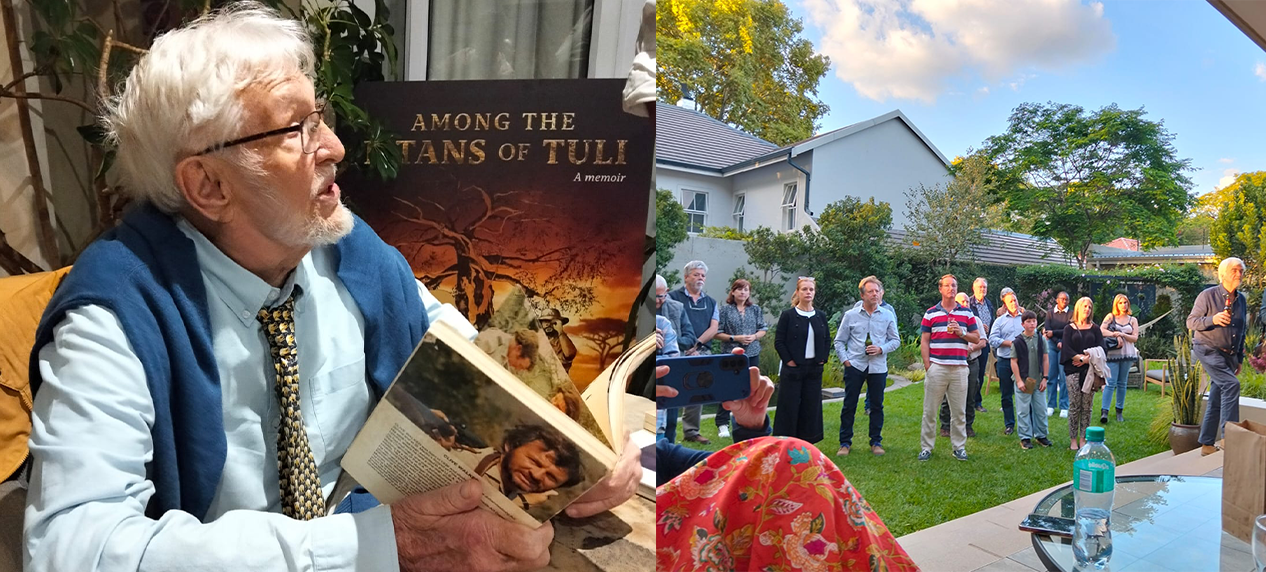
It took almost 60 years to write a memoir about the extensive work Clive Walker did in the Tuli Block as a trail guide, conservationist and mentor.Â
Among the Titans of Tuli is a book which he says could not have been published 20 or 25 years ago. And, he is correct.Â
Clive, a founder of the Endangered Wildlife Trust, describes Among the Titans of Tuli as a memoir. His friend, fellow conservationist and former EWT CEO John Ledger described it as an autobiography. Either way, it is a remarkable study of the history of the area known for its elephants and varied biodiversity, the work done to ensure the area is conserved, and a call to action to ensure the species found in this wonderous part of southern Africa is saved for generations to come.
It is memoir in which Clive pays tribute to “all those titans whose efforts, both professionally and as land developers and conservationist, rangers and trail guides, have contributed to making the Tuli the iconic and marvelous place it remains, despite the many challenges confronting itâ€.
The opening chapters provide a fascinating insight into the events that saw the creation of the Tuli Block in the late 19th century, the Rhodesian conflicts and the Anglo-Boer Wars, all which contributed to changes in the elephant populations in this area, noting that probably the first detailed report of the status of elephant between the Shashe and Limpopo Rivers in the Tuli was undertaken in 1973 by conservationist Jim Freely. In his report Freely had stated that changes in plant and animal life could be attributed to human activity.  Â
Three years later, Clive, as Chair of the EWT Board, approached the Botswana government with an offer to assist with further research into the elephant situation in the Tuli to support the development of a sound management policy.
He writes that he “came with no demands but rather an offer to assist†and that he had provided the assurance that the EWT would fund the necessary recommendations.
“At least I hoped it would, because a number of my board felt my sympathies lay with the elephant who were certainly not endangered, whereas my true intentions were mainly about the habitat,†he said adding this led to the appointment of an EWT-funded botanist to study both elephant and their habitat. This project examined the dynamics and stability of the vegetation in relation to elephant use, making recommendations in regard to carrying capacity. At the time almost nothing was known about the population dynamics of trees that were elephant food, or about the influence of elephants on these dynamics, the book states,  This was supported by aerial surveys conducted by the EWT and Educational Wildlife Expeditions, an organisation running wildlife trails in the area to determine how many elephants lived in the system.
Clive’s not only provides a glimpse into the lives of the people, and characters, of the Tuli, but also offers a glimpse into the adventures and experiences of those he led on the Ivory Trail. This includes a number of close encounters with elephant and lion.Â
Besides imparting detailed information about elephant behaviour, their habitat, and their role within that environment, the reader is given a glance at how the environment has changed, notably the decline of the riverine forest lining the banks of the Limpopo and other rivers within the system, the damage caused by inappropriate land use, uncontrolled water extractions, the impacts of climate change, and the damage caused to flora by elephant, giraffe and other species of wildlife.
The final chapters offer a sombre reminder of the challenges faced within the region, touching on the complexities and sensitivities around elephant management, the approval of developments in Limpopo that will impact ancient Baobab forests and water systems contributing to continued environmental damage, and the Greater Mapungubwe Transfrontier Conservation Area, incorporating parts of South Africa, Botswana and Zimbabwe which remains “a work in progressâ€Â 20 years after its proclamation. Â
Speaking at the launch of Among the Titans of Tuli, Clive said the Tuli “is a remarkable place and an area that I have a deep passion forâ€. Â
But, there are pressures there. “The water extraction is one of probably the most serious factors and if we were to lose most of that riverine it would be tragic, because the only other area comparable to this is the Pafuri region (of the Kruger National Park),†he says in reference to the loss of habitat for the Pel’s Fishing Owl.Â
John Ledger pointed to the legacy created by Clive who had started the EWT in 1973 with James Clarke and Neville Anderson.
“Clive has left a really significant footprint and this book is one of the most significant because it is an autobiography – he calls it a memoir – but it documents 60 years of his involvement up in that wonderful corner of the world, the Thuli where the Limpopo, the Sashe and Motloutse Rivers come together, said John.
“What I really liked about the book is the way that Clive has woven the history of the area and the different characters that live in Thuli – the farmers, the poachers, and shares his great love of his game scouts that worked on the trails with him. It is all woven into the book,†he added.
Clive and John pointed out that had the Dongola nature reserve, a transfrontier conservation initiative around the confluence of the Limpopo and Shashe rivers and initiated by General Jan Smuts in the 1940s not been deproclaimed by Hendrik Verwoerd to settle farmers along the river, it would have been an “incredible transfrontier park of note.â€Â  Â
But, as Clive warns in the final chapter – the approaching storm is upon us.
“In a world of deepening self-interest and greed at the expense of everyone and everything else, (the conservation) community’s role in the protection of the nature world for tomorrow’s children has never been more critical,†Clive concludes.