
Bringing Cheetah Back to the Greater Luangwa Ecosystem: A Landmark Step for Conservation in Africa
By Olivia Sievert, manager of the EWT’s Cheetah Conservation Project
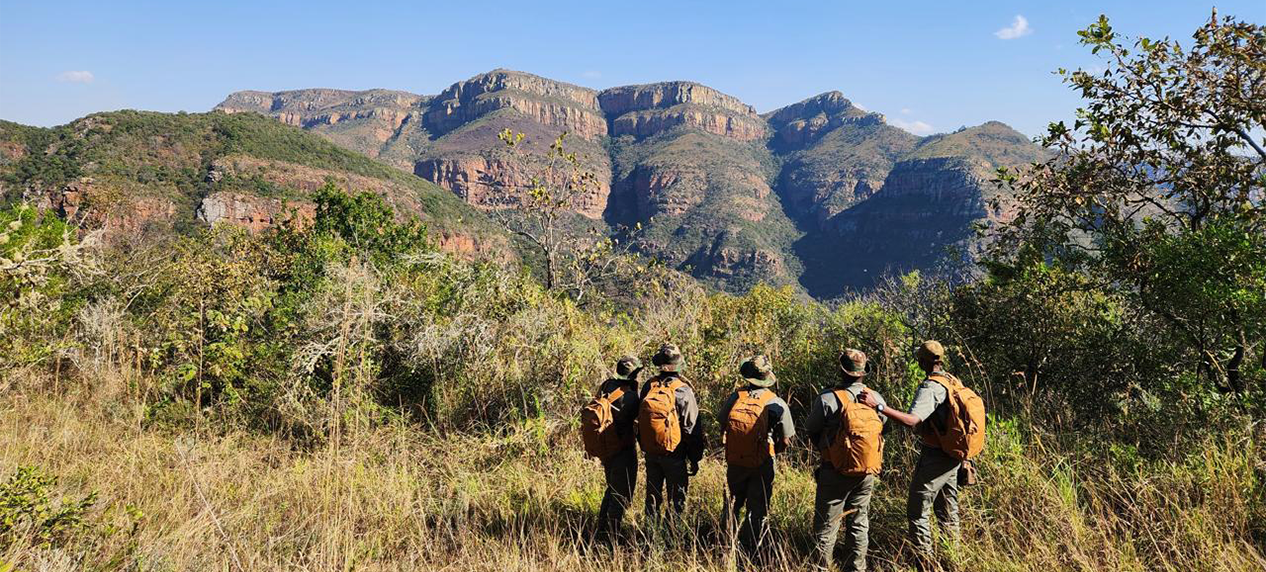
Before dawn breaks over Mbombela, a small team gathers in the winter cold. There is a quiet sense of anticipation as final preparations get underway. There is little conversation as everyone focuses on the task ahead. Veterinarians prepare darting equipment, tracking collars undergo final tests, and government officials organise permits and documentation.
For the people gathered here, this is more than a translocation. It is the culmination of over a decade of planning and collaboration aimed at returning cheetah to Zambia’s Greater Luangwa Ecosystem. Today, six Cheetah will begin a journey to restore a species to a landscape from which it has been absent for decades.
The reintroduction represents one of the most ambitious large carnivore restoration projects currently underway in Africa. Led by Zambia’s Department of National Parks and Wildlife (DNPW) and funded by Howard G. Buffett Foundation, the initiative brings together an exceptional coalition of partners, including the African Range Wide Cheetah Conservation Initiative under the Zoological Society of London, the North Luangwa Conservation Programme under the Frankfurt Zoological Society, the Zambian Carnivore Programme, Conservation South Luangwa, and the Endangered Wildlife Trust. Operating under the leadership of DNPW, planning and implementation have combined expertise in species recovery, carnivore ecology, protected area management, community engagement, and cheetah translocation.
Their efforts are focused on the Greater Luangwa Ecosystem, one of southern Africa’s most important remaining connected conservation landscapes. Spanning approximately seven million hectares, the ecosystem encompasses North and South Luangwa National Parks, Luambe National Park, Lukusuzi National Park, and surrounding Game Management Areas. The scale and ecological integrity of this landscape make it uniquely suited to supporting wide-ranging wildlife and provide a rare opportunity for cheetah restoration at a meaningful scale.
The reintroduction has only become possible because of more than four decades of conservation investment across the landscape. These efforts have restored wildlife populations, strengthened protected area management, and maintained connectivity between protected areas and surrounding Game Management Areas. As a result, populations of lions, African Wild Dogs and other large carnivores now thrive across the ecosystem. The return of Cheetahs will restore the final missing member of this historic carnivore guild. Although Cheetah persisted in the landscape until the late 1990s, the species disappeared. While the exact cause of their extirpation is unknown, it followed a combination of ecological pressures, including disease outbreaks and prolonged disturbance. Today, the nearest viable populations are too distant for natural recolonisation, making active reintroduction the only realistic pathway for their return.
The significance of this opportunity becomes even clearer when viewed against the broader conservation challenges facing Cheetah. Once widespread across Africa and parts of Asia, Cheetah have disappeared from much of their historical range. The last public estimates believe only about 6,500 mature individuals remain globally, and the species continues to decline, driven by habitat loss, declining prey populations, human-wildlife conflict, and illegal wildlife trade. As a result, Cheetah are currently listed as Vulnerable on the IUCN Red List.
Southern Africa remains the species’ most important stronghold, but even here populations are increasingly fragmented and isolated. As suitable habitat continues to shrink, opportunities to restore cheetah at a meaningful scale are becoming increasingly rare. The Greater Luangwa Ecosystem offers one of those opportunities.
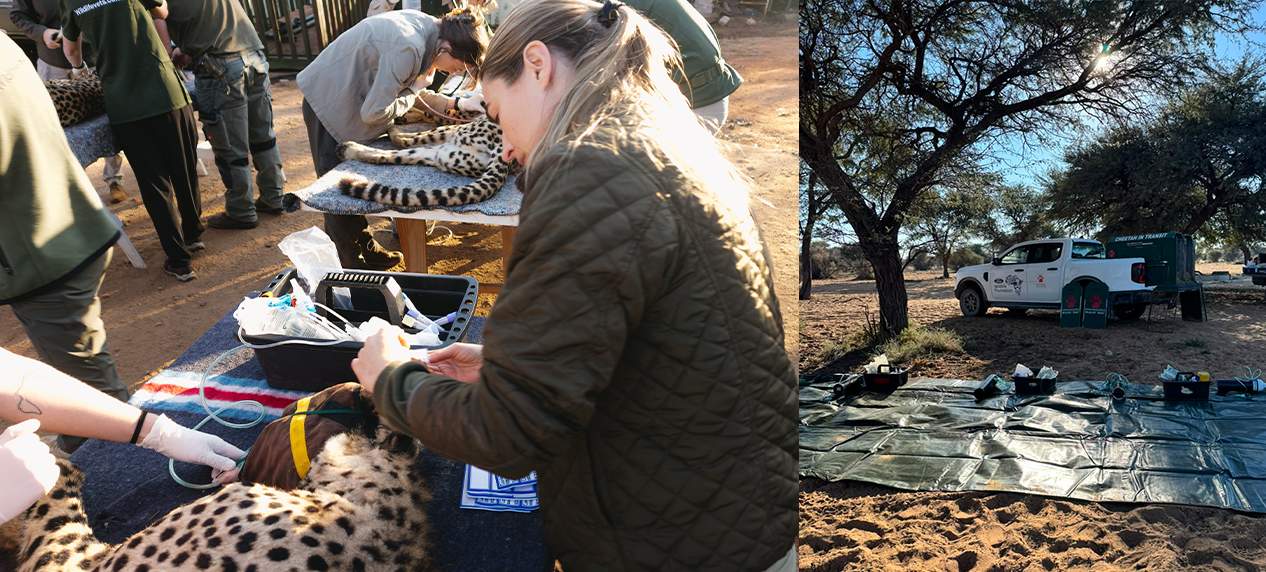
As the first darts are administered, the countdown truly begins. Under the watchful eye of veterinarians and government officials, each Cheetah is carefully processed according to strict international requirements. Every individual is scanned to verify its unique identifying microchip, ensuring compliance with CITES regulations. Detailed health assessments are conducted, vaccines are administered, and satellite collars are fitted. Throughout the procedure, the animals receive supportive care, including oxygen and fluids, to ensure their well-being. Once all checks are complete, each Cheetah is carefully loaded into its transport crate and prepared for the next stage of the journey.
These six founding animals, comprising three males and three females, were carefully selected by the project team from South Africa’s managed Cheetah metapopulation. The Cheetah originated from Thanda Private Game Reserve, Manyoni Game Reserve, Nkomazi Game Reserve, and Dinokeng Game Reserve. Their selection was based on genetics, demographics, and familiarity with the prey species and competing predators they are likely to encounter in their new home. Together, these considerations were made to maximise the likelihood of establishing a healthy, self-sustaining breeding population in Zambia.
The source population itself represents an important conservation success story. Established in 2012, South Africa’s managed Cheetah metapopulation has grown by an average of 8.8% annually, making it one of the few growing Cheetah populations remaining anywhere in the world. This achievement is the result of more than a decade of collaboration between the EWT, private reserve owners, conservation practitioners, and provincial and national governments. Importantly, the success of the metapopulation means conservationists can move beyond simply preventing decline. Instead, they can utilise the population’s growth to source suitable Cheetah for restoration initiatives such as the Greater Luangwa reintroduction, helping restore the species to landscapes where it has been lost.
Following processing, the Cheetah are transported to Kruger Mpumalanga International Airport, where African Parks assists with the next leg of the operation using their Pilatus PC-12. From there, the animals are flown north to Mfuwe International Airport in Zambia. With the support of DNPW and CSL teams, the Cheetah are cleared for entry before continuing onward to a remote area of North Luangwa National Park.
The release site was selected following extensive habitat suitability modelling, prey assessments, and carnivore surveys. These studies identified the area as one of the most suitable locations within the ecosystem for re-establishing cheetah. The objective is not simply to release animals into the wild, but to provide them with the greatest possible opportunity to survive, reproduce, and ultimately establish territories across the wider landscape.
Upon arrival, all six Cheetah are safely offloaded into temporary holding enclosures. Here they spent several weeks acclimatising to the sights, sounds, and scents of their new environment before progressing through a carefully planned release process.
A key component of this reintroduction is a 2,000-hectare predator-proof sanctuary. The sanctuary has been specifically designed to help the Cheetah establish familiarity with the release area before entering the wider ecosystem. By temporarily concentrating animals within a defined space, it encourages interactions between males and females while promoting scent-marking and territory establishment. This is particularly important for males, whose scent-marking locations form a critical part of Cheetah social structure. By allowing these networks to develop before access to the broader landscape is provided, conservationists hope to improve settlement, breeding success, and long-term population establishment.
While the successful arrival of the first six Cheetah is significant, it marks only the beginning of a much longer conservation journey. Additional Cheetah are scheduled to join the founder population later this year, with a total of at least 18 individuals planned over the first two years of the programme. Every released individual will be monitored closely through satellite collars and dedicated field teams. These monitoring efforts will provide vital information on movement patterns, survival, behaviour, habitat use, and ecological interactions, allowing management approaches to be adapted as needed.
Importantly, success in a reintroduction project is measured in stages. The safe translocation of the Cheetah is the first milestone, but it is only the beginning. Their successful adaptation to the landscape is equally critical. The birth of the first litter will represent an encouraging sign that the population is establishing itself. However, the true measure of success will be the development of a self-sustaining population capable of persisting independently into the future. Ultimately, it is the survival and reproduction of second and third generations of cheetah born and raised entirely within the Luangwa landscape that will determine whether this vision has been realised.
For the EWT, this project reflects the organisation’s commitment to restoring threatened species and rebuilding ecological processes. It demonstrates how science-led conservation, long-term planning, and meaningful cross-border collaboration can reverse local extinctions and create new opportunities for species recovery. Equally important is the recognition that conservation success depends on people. Community engagement has been central to the project from its earliest planning stages, with consultations by the project leads taking place across the Munyamadzi Game Management Area and support secured from local leadership, including Chief Nabwalya.
The project has already generated significant employment opportunities in this remote area and forms part of wider efforts to strengthen local livelihoods through conservation-linked development initiatives. Human-wildlife coexistence remains a major focus of the project, although Cheetahs are generally considered a low-conflict carnivore that poses little threat to people.
The journey that began in the early morning darkness outside Mbombela is far from over. Yet with the successful arrival of the first six Cheetah and their release into the sanctuary, an exciting new chapter has begun. Across seven million hectares of wilderness, a species absent for decades has taken its first steps toward recovery. If successful, this ambitious undertaking will not only restore Cheetah to one of Africa’s most important conservation landscapes but also contribute meaningfully to securing the future of one of the continent’s most threatened large carnivores. More importantly, it will demonstrate what is possible when governments, conservation organisations, scientists, landowners, donors, and local communities work together towards a shared vision for wildlife recovery.
The project’s vision extends beyond restoring a single species. It aims to leave a lasting legacy of healthier ecosystems, strengthened conservation partnerships, improved opportunities for local communities, and a safer future for wildlife across the Greater Luangwa Ecosystem.
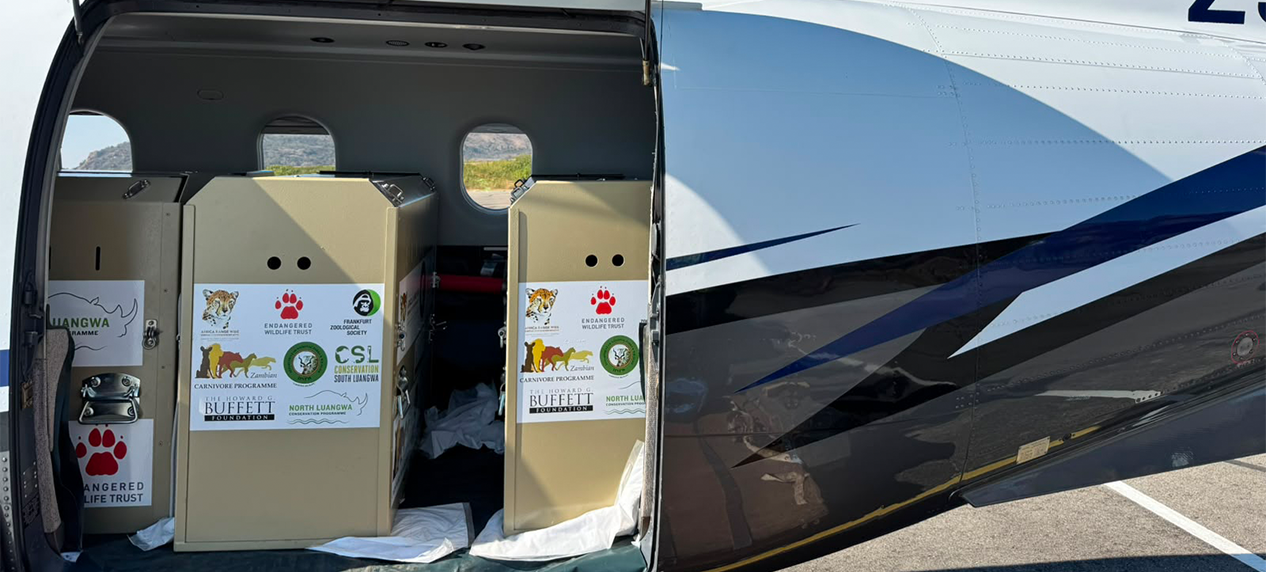
This project is funded by the Howard G. Buffett Foundation. The Endangered Wildlife Trust’s cheetah conservation work is supported by the Ford Wildlife Foundation and MetroFibre.