Donate today: support our k9's 
 mission

Careers in Conservation – Luvuyo Kani

Careers in Conservation – Luvuyo Kani

CAREERS IN CONSERVATION – Luvuyo Kani

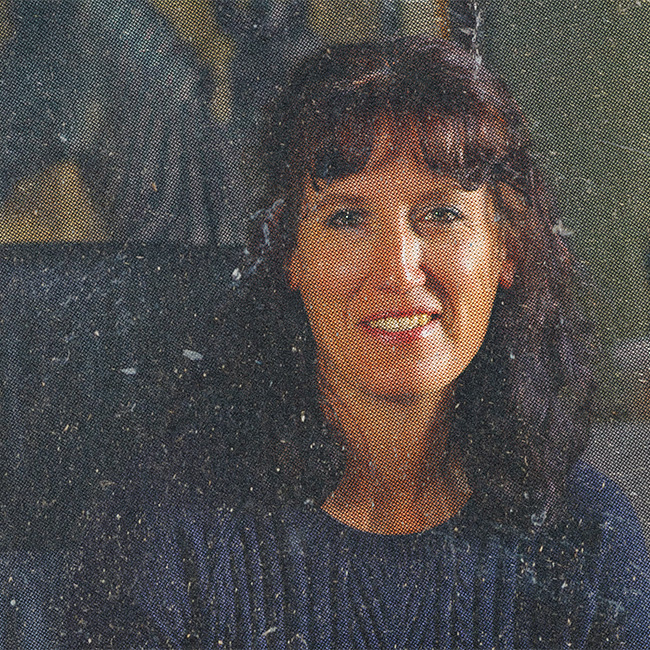
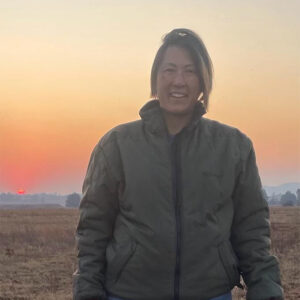
Luvuyo is a GIS Specialist with the EWT’s National Biodiversity and Business Network. Here is a little bit about Luvuyo’s journey to a career in conservation.

Job Title: GIS Specialist

Location:Midrand Johannesburg EWT Conservation Campus

Where did you grow up? ? Gqeberha (formerly known as Port Elizabeth)

What are your hobbies/things you like to do in your spare time? I generally enjoy gaming and long walks on the beach but, as you might imagine, I haven’t been doing much of that since moving to GP.

Any pets? No, but I am definitely a dog lover. I’m hoping to get one as soon as I have a good space for it to live comfortably.

Favourite animal and why: Definitely leopards, because of their majestic beauty and strength. I am also always intrigued by their much less social lifestyle (relative to other big cats). I guess the fact that it so difficult to spot them makes me appreciate them more.

Favourite food? I don’t have a strong favourite, but a strong contender is any meal I have with loved ones.

Pet peeve? I don’t have a particularly strong one, but I’d say inconsiderate behaviour.

Why did you want to work for the EWT? I’ve always seen EWT as one of the few organisations that have a good balance between environmental science and research and solid practical implementation on the ground. I’ve always wanted to be part of such an organisation.

What are you passionate about? I am passionate about the environment and the multitude of services it provides to us as humans. I am also very passionate about turning steadfast, often theoretical, environmental science and research into meaningful practical solutions on the ground for both people and the environment.

What’s the best advice you’ve ever received, and who did it come from? Fail fast, fail forward. Learn by doing.

What is your go-to feel-good song? Bank on it by Burna Boy

A word from the CEO December 2023

A word from the CEO December 2023

Word from the CEO

Yolan Friedmann, CEO


From the earliest documented history of human life on Earth, mankind has interacted with nature through a variety of systems and relationships. Though not formalised in its practice by early man, one could contend that our use of, and engagement with nature for food, cover, tools and cultural or religious practice over millennia, form the underpinnings of what would lead to what we could call conservation today.

As hunters and gatherers, humans who depended directly on natural resources for their survival, controlled and managed access to natural resources through systems of religious beliefs and the use of resources by traditional healers. In Africa, there were superstitions against killing certain species like hyena, hammerkop or chameleon and people were prohibited from hunting or eating their totem animals. Scarce or valuable products were given to their leaders as gifts. Areas were demarcated for specific purposes, like religious or tribal gatherings and these included sacred forests, burial sites and hills for ceremonies and rituals. Human beings have therefore been assigning restrictions to the use of various animals, plants and areas for all sorts of reasons since the dawn of time.

But humans have also been increasingly exploiting the planet’s resources, and as human populations have grown, so have our use – and overuse – of many thousands of species, and our depletion of natural systems, globally. To the point where rates of extinction on the planet have been escalating and now threaten to unravel the very fabric of this gloriously diverse, richly wild planet of ours. In response, what has now become known as the Environmental Movement has become a planetary force of its own.

Around the start of the last century, environmental discourse became more formalised and was characterised by issues which map the storyline, such as soil erosion in the 1930s, urban smog in the 1950s, chemicals in the 1960s, resource depletion in the early 1970s, nuclear power in the late 1970s, acid rain in the early 1980s, and the recognition of global ecological issues like ozone depletion and climate change today, documenting a shift in identifying environmental issues from those with local dimensions and impacts to those that form a picture of a planet in peril. It is largely recognised that the Stockholm Conference (United Nations Conference on the Human Environment) held in 1972 was the catalyst of formal environmental protection activities globally, and the 1970s were a busy time with a slew of multilateral environmental agreements entering into force, such as wetland conservation (Convention on Wetlands of International Importance/Ramsar, 1971), wildlife trade (Convention on the International Trade in Endangered Species of Wild Fauna and Flora/CITES, 1973) and migratory species (Convention on the Conservation of Migratory Species/CMS, 1979).

Signifying increasing internationalisation of environmental issues and a growing realisation that resources are limited and require controlled utilisation and compliance mechanisms to ensure their sustainability. It is against this backdrop that, back on African soils, an intrepid trio of conservation visionaries recognised the plight of Africa’s iconic wildlife and in 1973, embarked on a journey to raise some money, and direct it all into saving perhaps one of the most iconic of all wild animals, the African Cheetah. Little did Clive Walker, James Clarke and Neville Anderson know then, that their desire to safeguard the future of the world’s fastest land mammal would evolve into the establishment of one the most effective bastions of the conservation of Africa’s wild spaces, wild animals and the communities that depend on both, over the following half a century.

Towards the end of 2023, the Endangered Wildlife Trust will celebrate 50 years of Conservation in Action. In the fifty odd years that have passed since the world kickstarted the environmental movement, countries have signed more and more environmental agreements and millions of community and civil society organisations have been established to empower people and rally society to save our planet – ironically, from ourselves.

However, our planet is not better off for much of what has been done in the past fifty years and many hundreds of thousands of species have been declared extinct during this time. Before we assume that this cannot be possible, consider just this: researchers have identified that it is possible that 15% of the world’s 1.25 million mite species had been lost by the year 2020, so for this one taxon alone, we’re talking tens to hundreds of thousands of extinctions, a number that researchers predict will continue to rise. Add this to the numerous species of orchids, freshwater fish, amphibians, bats, insects, succulents, trees, reptiles, lichens, mammals and birds that have also been declared extinct in recent times, and one can understand why the race against extinction is not just a catchy phrase.

Turning the tide on extinction is what the EWT has been dedicated to doing, since its inception. For many species our work will perhaps never be done, and they may rely on the relentless focus of the future generations of EWTeam members for The Next Fifty and beyond. But their persistence in their natural habitats, as critical components of the ecosystems that give us all life, is cause for celebration that trumps the EWT just turning half a century old. In fact, 50 years is barely a blip on the screen when one considers for how many millennia these species, that humans have doomed to oblivion, took to evolve, and how their essential role in shaping all lifegiving systems on earth, will now be lost forever. Fifty years is really nothing when it comes to nature, so instead of looking back when we celebrate this milestone, the EWT will be focussing on the Next Fifty and The Next Fifty and beyond. We need to be both future fit as an organisation, with the right skills, capacity, resources and ideas to ensure our own survival, and prosperity; and we need to be keeping a watchful eye on what the future may hold and what that means for the wildlife and wild places, that may need us in decades to come. Many species and ecosystems may be quite common or intact today but with a changing climate, increased pollution, ongoing habitat transformation, deforestation and desertification, over-harvesting and let’s face it: increasing human population size which means more and more resource consumption and landuse change, who knows what the future holds for Mother Nature.

Some man-made threats to wildlife, like overharvesting, human-wildlife conflict and land transformation have not changed for centuries, they have just escalated in terms of scope, scale and speed. Futurists, quoted in New Scientist, suggest that we consider threats like genetically engineered viruses, mass offshore power production, demand for the biomass to make biofuel, synthetic bacteria and biomimetic robots, and when we add this to the loss of pollinators, escalating violence and wars, climate refugees, the possibility of nuclear warfare and ramped up climate-related natural disasters, the future world becomes a tricky place for bees, butterflies and bats.

Fortunately, in the past 50 years the EWT has transitioned from working on large mammals only. to addressing the threats facing all of these species, and more. We are proudly working to save the most expansive and diverse list of species and ecosystems in Africa and to be working among the most diverse variety of communities and stakeholders, from big business and rural farmers to traditional healers and school children. What has not changed in 50 years is our responsiveness to change and those in need. Being future fit is also about resilience internally and the EWT is addressing this by nurturing younger talent, modernising our operating systems, and securing our own persistence, through our Fund for the Future. This will ensure that the EWT will be around for many more celebrations like this, and to provide a lifeline for the species, communities and natural systems that need our help.

Please take a moment to page through the 2023 version of the EWT’s Integrated Report. You will come across many examples of how the EWT’s approach to conservation has successfully secured the future of numerous species from frogs and golden moles brought back from the edge of extinction to increasing populations of cheetah, cranes and Wild Dogs in South Africa. You will note our robust framework for measuring impact and our continual use of innovation to push knowledge boundaries and generate better results. We hope that you take pride in our growth in both budget and funding spent on projects. We trust that you will celebrate with us, the highs and lows of a year in which global turmoil escalated, and humanity clawed its way back from pandemics and socio-economic instability. But also, a year in which those with passion, commitment, and a calling to safeguard our planet for generations not yet born, were rewarded with results that pack these pages and give us hope.

It has been my privilege and honour to serve at the helm of the EWT as one of only four CEOs in 50 years, for the past 17 years. Prior to this, the EWT was led by great names in conservation like Dr Nick King (2003- 2006), Dr John Ledger (1985 – 2002) and of course Clive Walker (1973-1985). Together, with many wonderful people who have gone on to become legends in their own right, we have all had a chance to co-mingle our own life stories into that of the EWT and conservation in Africa. For the generations that will still come, and those who will next pick up the baton. May you write a narrative for The Next Fifty that brings back more life to this planet, keeps our African night skies clear and our savannahs bustling with life.

The EWT began as a flicker of light from a small match struck 50 years ago and today, we burn brightly through the torches carried by all our staff, our trustees, our partners, our associates, our invaluable donors, our communities, our fans and our friends. Without you all, we can only look back, but with you, we embrace the future, robots and all, and stride onward to #TheNextFifty.

Yolan Friedmann,

CEO, Endangered Wildlife Trust

 

Synergies and Trade-Offs in the effort to save our natural world: the Global Biodiversity Framework, the Sustainable Development Goals and the Climate Action Goals

Synergies and Trade-Offs in the effort to save our natural world: the Global Biodiversity Framework, the Sustainable Development Goals and the Climate Action Goals

Synergies and Trade-Offs in the effort to save our natural world: the Global Biodiversity Framework, the Sustainable Development Goals and the Climate Action Goals

Namita Vanmali and Ian Little

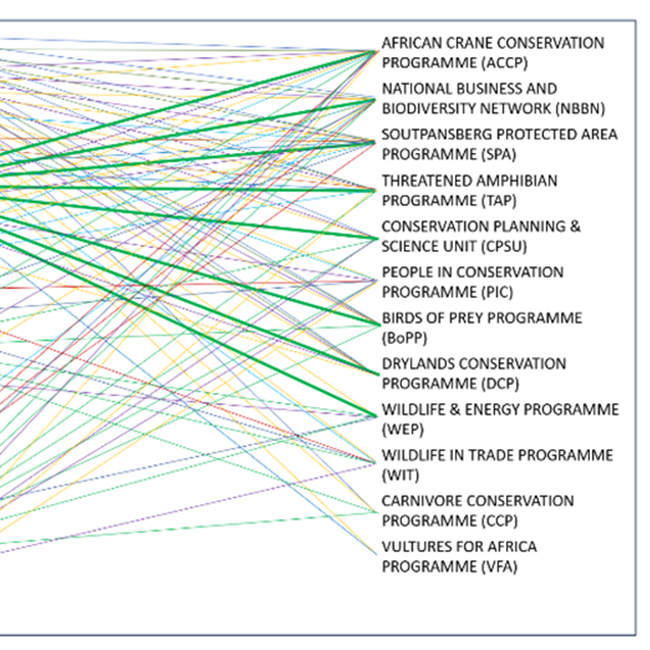
An illustration of the multiple linkages and alignment between the EWTs programmes and the Global Biodiversity Framework targets, with the specifically climate change relevant links in bold green.

Climate change is now widely recognised as a key driver of biodiversity loss, and although they are inextricably linked, historical approaches to policies addressing biodiversity loss and climate change have often treated these challenges separately. This divergence traces back to the independent conventions established during the 1992 Rio Earth Summit—namely, the Convention on Biological Diversity (CBD) and the United Nations Framework Convention on Climate Change (UNFCCC). Over time, an increasing alignment of mechanisms within these frameworks and recognition of the impacts of climate change on biodiversity has allowed for better integration of strategies and enabled a more holistic approach to addressing these associated challenges. A significant milestone in this integration occurred recently at COP27 in Sharm el-Sheikh, where specific sections were dedicated to oceans, forests, and agriculture for the first time. This cross-pollination of strategies is paramount in achieving the objectives of climate mitigation and biodiversity conservation. “Nature-based solutions” (NbS) have been put forward as a unifying mechanism for achieving conservation and climate goals, underscoring the importance of safeguarding both environmental and social interests. The IUCN defines NbS as “actions to protect, sustainably manage, and restore natural and modified ecosystems that address societal challenges effectively and adaptively, simultaneously benefiting people and nature. They target major challenges like climate change, disaster risk reduction, food and water security, biodiversity loss and human health, and are critical to sustainable economic development”.

The Global Biodiversity Framework (GBF – 2022) provides a comprehensive roadmap for biodiversity conservation for the coming decade, outlining actions to halt biodiversity loss and promote sustainable ecosystem management. Comprising 23 action-oriented global targets to be achieved by 2030, it serves as a critical milestone on the journey toward overarching biodiversity conservation goals. Targets 1-8 focus on reducing threats to biodiversity, 9-13 emphasise meeting people’s needs through sustainable use and benefit sharing, and targets 14-23 focus on providing tools and solutions necessary to implement the GBF effectively. By addressing threats to biodiversity and boosting ecosystem resilience, GBF Targets 1-8 strongly align with goals for climate change adaptation, with target eight specifically focussed on minimising the impacts of climate change on biodiversity. There is an emphasis on expanding protected areas, halting species losses and managing invasive species impacts using holistic climate strategies. GBF Targets 2, 10, 11, 15 and 16 all align with climate change adaptation goals by emphasising sustainable resource use, ecosystem restoration and improving ecosystem service provision. While GBF Targets 13-23 emphasise the integration of biodiversity considerations into various sectors, policies, and resource mobilisation efforts, which aligns with climate change mitigation and adaptation goals.

How you can help our cause:
DONATE VIA EFT:

The Endangered Wildlife Trust

FNB Rosebank (Branch code: 253305)

Account number: 50371564219

Use Reference: Climate Action

An illustration of the multiple linkages and alignment between the EWTs programmes and the Global Biodiversity Framework targets, with the specifically climate change relevant links in bold green.

While there is obvious synergy between the targets of biodiversity conservation and climate change mitigation and adaptation, there can be misalignments and tensions between the two. Conflicting land use priorities may cause trade-offs between GBF Targets and climate goals. While GBF Targets 1, 2 and 3 concentrate on spatial planning and ecosystem restoration, achieving climate goals may require land for renewable energy infrastructure and bioenergy with carbon capture and storage (BECCS) projects requiring large-scale land use, which can and does conflict with biodiversity conservation efforts. The EWT has developed a number of resources to guide and streamline decision-making to minimise these biodiversity conflicts, and strongly supports renewable energy as opposed to the continued use and extraction of fossil fuels. Further, since climate action goals prioritise carbon sequestration to meet emission reduction goals, current reforestation and afforestation practices can negatively impact biodiversity if restored ecosystems serve climate mitigation instead of biodiversity conservation. Targets 8–13, which concentrate on sustainable resource use for people, can be at odds with critical Sustainable Development Goals (SDGs). Restricting access to resources in protected areas, for instance, may impede Poverty Reduction and Zero Hunger SDGs in some communities that rely on the land for agriculture or resource extraction. This conflict is also seen within the GBF targets 5 (Ensure the sustainable use and trade of wild species) and 9 (Protect & encourage customary sustainable use), where traditional use of wildlife resources is very often difficult to manage sustainably as a result of high demand for threatened resources and socio-economic pressures on rural communities.

While GBF Targets 14-23 theoretically align with implementation methods for climate change adaptation, challenges arise in practice where socio-economic pressures and needs conflict with conservation priorities and resource allocations. These challenges include potential competition for resource allocation, funding, land use and opposing interests within various sectors. Balancing short-term economic gains with long-term environmental benefits remains a complex and nuanced task. Integrated strategies that control possible conflicts are required to navigate these trade-offs successfully. The GBF targets and climate action goals both seek a just transition towards sustainability. However, misalignment between the GBF targets, climate adaptation, and SDGs often stems from divergent priorities between emission reduction, environmental preservation and broader development objectives.

Globally the financial cost of the transition to renewable energy dwarfs the funding required for biodiversity conservation. While it is imperative that the world prioritises a move away from reliance on fossil fuels, it is equally important that we recognise the parallel importance of conserving our biodiversity assets. The global narrative around the protection of our environment and commonly used terms like “Nature-based Solutions” should not allow the energy transition agenda to overshadow the biodiversity conservation crisis in terms of financial resource allocation and ongoing global dialogue


FOUND: Iridescent blind mole with super-hearing powers rediscovered ‘swimming’ through sand dunes of South Africa

FOUND: Iridescent blind mole with super-hearing powers rediscovered ‘swimming’ through sand dunes of South Africa

FOUND: Iridescent blind mole with super-hearing powers rediscovered ‘swimming’ through sand dunes of South Africa

e-DNA helped confirm De Winton’s golden mole still lives on beaches in Port Nolloth

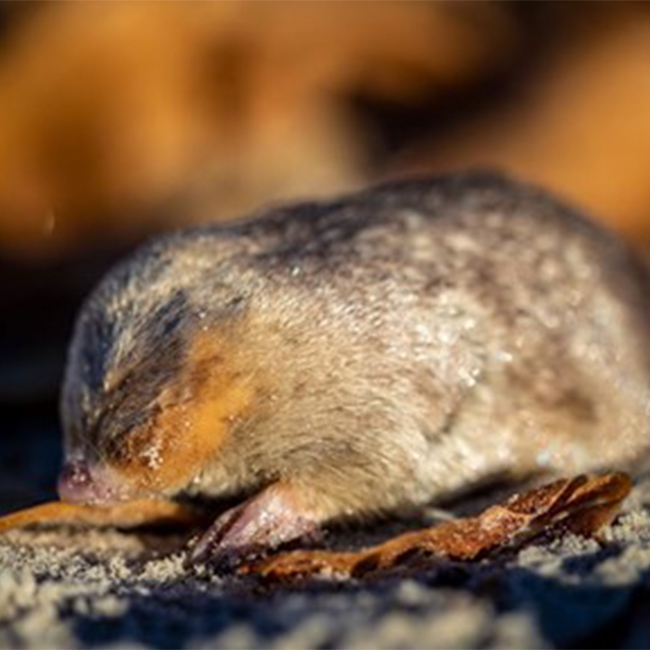
A blind mole with an iridescent coat sheen that ‘swims’ through sand and has been lost to science since 1936 is lost no longer, thanks to a team of conservationists and geneticists from the Endangered Wildlife Trust (EWT) and the University of Pretoria. The rediscovered De Winton’s golden mole–which is from South Africa–is the 11th of the world’s most wanted lost species to be rediscovered since the Search for Lost Species launched in 2017. A research paper, “Environmental DNA from soil reveals the presence of a ‘lost’ Afrotherian species,” published Nov. 24, in the scientific journal Biodiversity and Conservation, describes the incredible lengths the team went to in order to rediscover the species.

“It was a very exciting project with many challenges,” said Esther Matthew, senior field officer with Endangered Wildlife Trust. “Luckily we had a fantastic team full of enthusiasm and innovative ideas. Which is exactly what you need when you have to survey up to 18 kilometers [11.2 miles] of dune habitat in a day.”

The EWT-led team used a burgeoning technique never used before to detect golden moles: environmental DNA (eDNA), which is the DNA that animals shed as they move through the environment, typically in the form of skin cells, hair and bodily excretions. In addition to living in largely inaccessible burrows, golden moles have extremely sensitive hearing and can detect vibrations from movement above ground, which helps them avoid being seen from the surface. They also rarely leave tunnels behind that are visible from the surface as they move under the sand.

“Extracting DNA from soil is not without its challenges, but we have been honing our skills and refining our techniques—even before this project—and we were fairly confident that if De Winton’s golden mole was in the environment, we would be able to detect it by finding and sequencing its DNA,” said Samantha Mynhardt, conservation geneticist with the Endangered Wildlife Trust and Stellenbosch University.

After collecting more than 100 soil samples in June 2021 from beaches and dunes on the northwest coast of South Africa—including Port Nolloth beach, the only place where De Winton’s golden mole had ever been found—and conducting a complex and comprehensive genetic analysis of each sample, the team determined that there were several species of golden mole living in the sand along the stretch of coast.

Two more common species—Cape golden mole and Grant’s golden mole—were found, as well as a third species, Van Zyl’s golden mole, which is endangered and rare. The fourth species the team found was De Winton’s golden mole, but it took almost another year to definitively prove that. Since De Winton’s golden mole is genetically very similar to Van Zyl’s golden mole, the team needed more genetic information about De Winton’s golden mole to confidently identify it using eDNA.

At the time, there was only one De Winton’s golden mole reference DNA sequence available. That DNA sequence represents a nuclear gene that has limited variation between De Winton’s and Van Zyl’s golden mole, meaning the team couldn’t confidently assign the fourth species to De Winton’s at that time.

Nearly a year later, the search team found exactly the information they needed to finally solve the case. A second gene sequence for a De Winton’s golden mole specimen (now housed at the Iziko South African Museum in Cape Town) became publicly available in January 2022. It was a mitochondrial gene—from a much more variable part of the genome that has much higher levels of variation between De Winton’s and Van Zyl’s. When the team compared their eDNA sequences from Port Nolloth beach to the new reference sequence, it was a clear match to De Winton’s golden mole.

“Though many people doubted that De Winton’s golden mole was still out there, I had good faith that the species had not yet gone extinct,” said Cobus Theron, senior conservation manager for EWT and a member of the search team. “I was convinced it would just take the right detection method, the proper timing, and a team passionate about finding it. Now not only have we solved the riddle, but we have tapped into this eDNA frontier where there is a huge amount of opportunity not only for moles, but for other lost or imperiled species.” [Read more about the exciting rediscovery of De Winton’s Golden Mole.]

The Endangered Wildlife Trust has been working to rediscover De Winton’s golden mole for more than two years. They began by identifying areas in South Africa where it was possible the species was living undetected and by interviewing people from local communities.

At each search site they used several different tools to locate golden moles and traces of them. A scent-detection border collie specially trained to sniff out golden moles, accompanied the team and helped lead them to trails left behind by the animals.

When the team arrived on the beach in Port Nolloth there were fresh golden mole trails in the sand, made more visible by recent rain. However, it can be very difficult to identify a species of golden mole from its physical characteristics alone, so despite seeing golden moles, they also collected soil samples for eDNA analysis to accurately determine the species that left the trails.

Since the expedition in 2021, EWT has identified four additional De Winton’s golden mole populations. They are working to protect the moles and learn more about the species with the support of the National Research Foundation’s Foundational Biodiversity Information Programme (FBIP) in South Africa, Rainforest Trust, and Prince Bernhard Nature Fund.

In addition to the De Winton’s golden mole, Re:wild, working with partners across the globe, has confirmed the rediscovery of Jackson’s climbing salamander in Guatemala, both Wallace’s giant bee and the velvet pitcher plant in Indonesia, the silver-backed chevrotain in Vietnam, the Somali sengi in Djibouti, the Voeltzkow’s chameleon in Madagascar, Fernandina giant tortoise in the Galápagos, Sierra Leone crab in Sierra Leone, the Pernambuco holly tree in Brazil and Attenborough’s long-beaked echidna in Indonesia.

Christina Biggs, manager for the Search for Lost Species, Re:wild

“The search for De Winton’s golden mole was not easy by any means, and it really speaks to how persistent, thorough and resourceful the EWT team was in the field. They left no sandhill unturned and now it’s possible to protect the areas where these threatened and rare moles live. The successful use of the eDNA technique is now a case study on how such forward-thinking technologies can be utilized to find other lost species.”


Closing the Loop: Transforming textile waste into opportunities for people with disabilities and support for Early Childhood Development

Closing the Loop: Transforming textile waste into opportunities for people with disabilities and support for Early Childhood Development

Closing the Loop: Transforming textile waste into opportunities for people with disabilities and support for Early Childhood Development

Did you know that it takes 2,700 litres of water to produce a single cotton tee shirt?[i]

And that the fast fashion is one of the highest polluting industries globally, contributing 2 – 8% (about 1,2 billion tons) of greenhouse gases annually – higher than international flight and maritime shipping emissions combined[ii].

In addition to the widespread loss of biodiversity and habitats during the production of raw materials, the industry:

  • Produces about 20% of the world’s wastewater[iii],
  • 24% of the insecticides and 11% of pesticides that are used globally[iv],
  • And is a major contributor to plastic pollution in oceans[v].

At the same time, the average number of times clothes are worn before being thrown away has dropped by 36% over the past 15 years in the United States, China, and other relatively affluent countries. Only 13% of these largely under-utilised clothes are recycled globally leading to an estimated 21 billion tonnes of textiles being sent to landfill each year[vi].

The fast fashion industry is booming and is likely to treble in size by 2050. Clearly, we need to rethink the largely “take – make – and waste” linear business model that is currently typical of this and many other industries. One way to do this is to start supporting the circular economy.

What are we doing?

The Endangered Wildlife Trust implements a range of innovative projects to reduce human impacts on biodiversity and habitats, whilst also benefitting the people who live in areas of high conservation value. As part of our 50th celebration, we teamed up with a partner NPO, Clothes to Good, to contribute to the reduction of textile waste generated while empowering people with disabilities and supporting Early Childhood Development (ECD) in Kutama, Limpopo Province. The EWT works extensively with people in this area as they live adjacent to our Medike Nature Reserve in the Western Soutpansberg.

This integrated project incorporates three legs, each of which addresses a key need in rural and peri-urban areas across South Africa, with textile waste being the common thread linking the different activities. Firstly, we aimed to build the capacity of the staff of a centre that provides daycare for children and young people with disabilities called Muthu Ndi Nnyi through training and an opportunity to supplement their financial resources through the sale of high-quality second-hand clothes. Secondly, we provided ECD training and a toy making workshop for staff from ten creches and Muthu Ndi Nnyi. The third leg of the project is to contribute to a reduction of textile waste and encourage upcycling and recycling of these and other materials, both in Kutama and further afield.

Muthu Ndi Nnyi Centre for People with Disabilities

As with many schools and facilities catering for the needs of people with disabilities across South Africa, Muthu Ndi Nnyi lacks many basic resources and regularly experiences financial shortfalls. Many parents cannot afford fees or transport to enable their children to attend the Centre. Food inflation and other costs regularly lead to financial shortfalls, which the staff make up from their own small stipends.

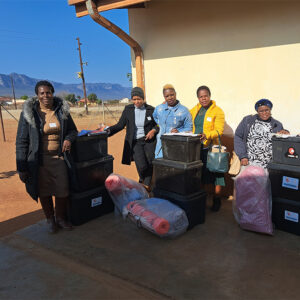
From 28 September – 3 October 2023, Clothes to Good led training and introductory workshops that were attended by 6 – 8 Muthu Ndi Nnyi staff and over 25 teachers and caregivers from creches. Jesse Naidoo from Clothes To Good provided Muthu Ndi Nnyi with basic training in the marketing and sales of clothes which, combined with the bales that were donated, will enable them to test the market and the potential viability of a micro-enterprise in this sector.

To improve the well-being and quality of lives of the young people with disabilities, Tammy Greyling, an occupational therapist from Clothes To Good, met with staff and parents to draw up personal plans for each person in their care to improve their quality of life through improved communication, physical exercise, and specific activities tailored to each of their needs and abilities.


Through this,

  • A wheelchair-bound young man with limited mobility in only one arm and a severe speech and learning disability was able to let his caregivers know that he was hot and needed his jersey removed through a simple gesture. If he is encouraged to continue this and learn additional simple signs, his ability to communicate with others could be vastly improved.


  • It was discovered that a second young man with a severe speech impairment and learning disability was able to understand English. His caregivers previously thought he could only understand Tshivenda and were unaware of his self-taught proficiency in English which he gained through watching television and interacting with others.


Early childhood development

The first three years are one of the most important developmental phases of a child’s life. In South Africa, there are still wide disparities in the quality of pre-school education provided to young children across socio-economic classes, exacerbating the learning difficulties that children face when they reach school going age.

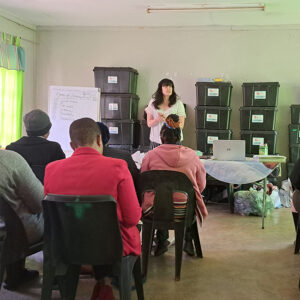
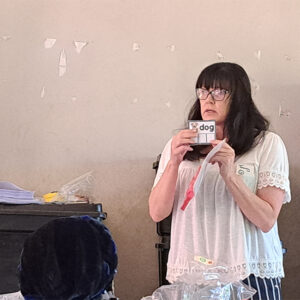
As part of this project, we held a two-day workshop for over 30 participants from Muthu Ndi Nnyi, ten local creches, and a centre providing after-school care for vulnerable children. On the first day, Tammy Greyling, Clothes To Good’s occupational therapist, introduced an ECD kit comprising over 50 activities designed to stimulate fine and gross motor skills, perceptual skills, numeracy, and literacy. Each creche and centre received one of these demonstration kits and a training manual which will enable them to reproduce the activities for the 100 – 150 children in each of their care.

On the second day, we held a toy-making workshop to demonstrate making educational toys from recycled materials such as plastic bottle caps, cardboard, old bottles and other containers, old clothes, and other materials. The nursery schools were urged to ‘play-it-forward’ by inviting parents to toy making workshops and ensuring that their colleagues also receive training in the activity kits and toy making.


Where to from here?

This project is an exciting start to a collaborative recycling and environmental awareness outreach initiative in Kutama, building on our existing projects to develop relationships and contribute to environmental and human health beyond the borders of protected areas.

In addition to potentially improving the lives of people with disabilities and those who care for them people from Kutama will benefit through access to high quality clothing at affordable prices, as well as innovative ECD strategies that build the capacity of teachers while preparing young children for school. We are already implementing our innovative, curriculum-aligned Education for Sustainable Development project, the Guardians of the Future, in seven schools in Kutama. Through this, we are working with educators to develop curriculum-aligned interactive teaching aids and resources to stimulate a love of learning and improved understandings of topics that young learners often struggle to understand through textbook-teaching alone. Contributing to literacy, numeracy, and other ECD skills will is a valuable contribution to their future schooling and potential growth.


What can you do?

  • Choose fashion items that will last and ensure that good quality clothes are not thrown away.
  • Care for your clothes so that they last longer.
  • Support fashion brands that are reducing harmful environmental and social impacts.
  • Support fashion brands that are reducing harmful environmental and social impacts.

Patagonia, for example, recently took an almost unprecedented step by committing to channel all its excess profits into a trust dedicated to the protection of the environment and support for communities[vii].

In addition, 200 brands have signed the Fashion Pact, which commits to restoring biodiversity loss, reducing global emissions, and safeguarding oceans[viii].

  • Drop off clothes you no longer wear at H&M, who are supporting Clothes To Good collect clothes to support the above project as well as numerous others.


[i] By the Numbers: The Economic, Social and Environmental Impacts of “Fast Fashion” | World Resources Institute (wri.org)

[ii] Ellen MacArthur Foundation, A new textiles economy: Redesigning fashion’s future (2017)

[iii] UNECE 2018

[iv] https://www.unep.org/news-and-stories/press-release/un-alliance-sustainable-fashion-addresses-damage-fast-fashion

[v] Ellen MacArthur Foundation, A new textiles economy: Redesigning fashion’s future (2017)

[vi] Silvestrii 2021

[vii] https://www.patagonia.com/ownership/

[viii] https://www.cbd.int/article/sustainability-always-in-style#:~:text=End%20of%20life%3A%20Disposal%20of,pollutants%20into%20the%20surrounding%20landscape.


Earthly Eating: Honey – roasted vegetables with hazelnut and goat’s cheese

Earthly Eating: Honey – roasted vegetables with hazelnut and goat’s cheese

EARTHLY EATING


We all know we should be doing our part to save the planet. But what does that mean when it comes to food? It can be easy to get overwhelmed with all the different eco-friendly choices. Each month, we bring you delicious, nutritious, and eco-friendly recipes that our staff members or followers love! This month’s recipe is Honey – roasted vegetables with hazelnut and goat’s cheese brought to you by our very own canine handler Shay.

Honey – roasted vegetables with hazelnut and goat’s cheese

20m prep time ·  40m cook ·  Serves 8

These honey-roasted vegetables are the perfect accompaniment for your festive meal.

Ingredients
  • 1/3 cup honey
  • 1/4 cup dry sherry
  • 4 small parsnips, peeled, halved lengthways
  • 2 bunches baby carrots, trimmed, scrubbed
  • 2 bunches small beetroot, peeled, halved
  • 1 tbsp extra virgin olive oil
  • 1/2 cup roughly chopped skinless hazelnuts, toasted
  • 50g goat’s cheese, crumbled
  • 1/2 tsp sumac
  • 1/4 cup chopped fresh parsley leaves
Instructions

Preheat oven to 200C. Line a baking tray with baking paper.

Place honey and sherry in a small bowl. Stir until honey has dissolved. Pour into a large roasting pan. Add parsnip and carrot. Turn to coat. Place beetroot on prepared baking tray. Drizzle beetroot with oil and season with salt and pepper. Roast vegetables, turning halfway through, for 40 minutes or until parsnip is golden and sticky.

Transfer vegetables to a serving platter. Sprinkle with hazelnuts,  goat’s cheesesumac and parsley. Season with salt and pepper.

Serve and Enjoy!

Careers in Conservation – Eugene Greyling

Careers in Conservation – Eugene Greyling

CAREERS IN CONSERVATION – Eugene Greyling

Eugene is a Field Officer with the EWT’s Carnivore Conservation Programme. Here is a little bit about Eugene’s journey to a career in conservation with the EWT.

Job Title: Carnivore Conservation Field Officer

What do you do in your day-day work? No day is quite the same. I am primarily assigned to the Range Expansion Project. My responsibilities vary between looking after predators in the EWT Holding Facility/Boma, community consultation and relations, assisting and advising with relocations, post-release monitoring of translocated predators, partner engagement, and a wide variety of other interesting tasks.     

Location: Welgevonden Game Reserve, Waterberg, Limpopo

Where did you grow up? I have been privileged enough to experience best of both worlds – I was raised in the farming community of Oudtshoorn in the Western Cape but moved to Dubai in the United Arab Emirates during my early high school years. 

What are your hobbies/things you like to do in your spare time? I volunteer as a wildland fire practitioner and enjoy working with snakes. I also never say no to a good road trip or hike, and travel as often as possible.

Any pets? I wish, if only I was allowed to have any. That’s the trade-off to living on a nature reserve I suppose.

Favourite animal and why:  I’ve spent the last couple of years working on leopards, so I think it is fair to say that I have developed a soft spot for them. However, I think this might be a slightly unfair question to ask any wildlife ecologist. 😃

Favourite food? There are very few things that can compete with a good butter chicken in my opinion. Of course, there is always a proper braai as well.

Pet peeve?  When people throw rubbish out of their car window, or anywhere else for that matter, with the expectation that someone else will clean up after them. Also, weak coffee.

Why did you want to work for the EWT? As a well-established organisation that sets the standard in innovation, research, and well-informed applied conservation across Southern Africa, I believe there is no better environment than the EWT to learn from, develop within, and contribute to as an early-career wildlife ecologist. With a holistic, integrated strategy that recognises not only species, but also landscapes and the people that share in those landscapes, the approach of the EWT is something I deeply resonate with. Ultimately, I believe that the EWT provides the ideal platform to be able to remain curious and to make a real collaborative difference, and that is what I am here for.

What are you passionate about?  I am convinced that every person has the ability within to influence those around them, be that by means of real, honest conversation or by virtue of exemplary actions. Often, I find myself standing in awe of the long-term impact that individual change can have on a community, and in turn on the natural environment. Therefore, I enjoy seeing people grow and develop and being part of that process, even though my first love has always been Mother Nature. During the past few years of studies and time spent volunteering with several conservation organisations, I came to realise that the biggest long-term influence we can have is by targeted education in communities where we can plant a seed that will drive local change from within – tackling problems using solutions crafted together that empower and benefit stakeholders for the greater good of the ecosystem. After all, conservation is about people. In order to ensure that we make a positive impact as conservationists, be that by means of education or effective adaptive management of landscapes that facilitate biological diversity, we need to be sure that the change we instil is accurately informed. Thus, I find myself in the realm of ecological research, with a particular passion for animal behaviour and socio-ecological dynamics, including human-wildlife coexistence and spatial ecology.

What’s the best advice you’ve ever received, and who did it come from? Listen with the intent to understand, not to respond” – I believe it is a quote by Stephen Covey, but my granddad was the one to share this wisdom with me.

What is your go-to feel-good song? Bubble Toes by Jack Johnson

What excites you about this new position? Every day out in the field brings new and exciting challenges – it never becomes monotonous. Having the privilege to be able to learn from a great group of experienced colleagues, as well as the opportunity to travel as part of my work, is also very exciting.

How Cheetahs got their spot in the EWT’s history

How Cheetahs got their spot in the EWT’s history

How Cheetahs got their spot in the EWT’s history

Emily Taylor


When Clive Walker raised funds for Cheetah conservation through the sale of his painting of two Cheetahs, he asked Koos Bothma, then associate professor of the Eugene Marais Chair of Wildlife Management at the University of Pretoria, if he would like to use the money for a Cheetah study. In 1973, the species was recognised as Endangered, both locally and internationally, and Koos quickly accepted. Clive was happy that the money could be channelled into a recognised institution.

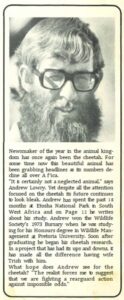
Profile of Andrew Lowry

Profile on Andrew Lowry featured on the contents page of an article about his research in African Wildlife, Volume 30, No. 6

Andrew Lowry was born and raised in Cape Town, South Africa. Having completed his BSc in Botany and Zoology at the University of Cape Town, Andrew went north to study for his Honour’s degree in Wildlife Management at Pretoria University, during which he won the Wildlife Society’s 1973 Bursary. Andrew was itching to get out into the bush and work with wildlife. He was available and in need of a research project, describing himself as a “spare” – someone without a specific project to focus on and thus available for any assignment by the department. Thus, the “spare” student was the perfect choice to be dispatched to Namibia for Cheetah research sponsored by the fledgling EWT.

At first, there was no specific location or Cheetah population to be prioritised for research. Andrew initially focused on farmland in Namibia where Cheetahs and other stock-raiding predators were being captured or killed. A game capture operator who was often called to remove Cheetahs from farms offered to share the information about where each Cheetah had come from. Andrew could then conduct Cheetah surveys in areas where Cheetahs were regularly seen. However, because farmers persecuted these predators, they were highly mobile and travelled large distances by night. It was also difficult for Andrew to cover the whole of Namibia on his own. In the three months that Andrew spent there, he saw not a single Cheetah and sought advice from James Clarke, co-founder of the EWT and wildlife expert, saying that the study was not viable, and he had nothing to show for his time and efforts. Instead, Andrew proposed a Cheetah study in Etosha National Park in Namibia. He had recently visited the park and seen Cheetahs as close as 300 metres from the gate. Etosha boasted the world’s largest free-living Cheetah population, and the then South West African (Namibian) Division of Nature Conservation and Tourism was eager to maintain this population and welcomed a formal research study in the park. Predator conservation is no easy task in a stock farming country like Namibia. Still, the awareness and concern of the authorities, coupled with information from field investigations such as this one, can help to ensure these animals’ survival. And so Andrew was tasked with conducting a census of the Cheetahs in the park, and in his words: “I rode through the gates of Etosha, and I landed in Paradise”.

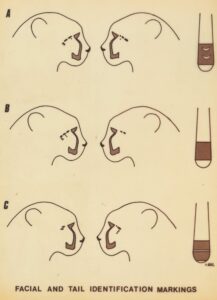
For an accurate census, the first thing to do is to develop a reliable way to ensure that, when counting individual animals, you only count them once. Fortunately, each Cheetah’s spots are unique – like a human fingerprint, and once you have a record of their coat pattern, you can avoid recounting them. It is also a good way to identify animals when studying their behaviour and genetic diversity. Once an animal’s markings had been recorded, Andrew created the identity kit featured in Figure 1 to differentiate between individual animals. The EWT and other organisations still use similar methods to identify Cheetahs today. However, photos of animals are now run through software called Wildbook, ensuring identification is even more accurate than a human eye can achieve.

A cheetah identikit

An identikit used by Andrew Lowry in his Cheetah study in Etosha in 1974-1976


Wildlife researchers are often advised not to give study animals names to maintain a level of objectivity. While this may work in theory, we often get attached to some or all of our subjects when we follow their lives so intimately. Andrew cheated a little. He did name each of the Cheetahs that he followed using a letter of the alphabet but then gave them names starting with these letters. In an article he wrote for the Wildlife Society of Southern Africa publication at the time, African Wildlife, Volume 30, No. 6, he explained: “For ease of recording in the field, I have allocated each animal a letter of the alphabet and have then given them a name meaning Cheetah, which begins with the same letter. Duma is the Swahili word for Cheetah. Others are Chita (the original Hindu word meaning “spotted one”), Etotongwe (Ovambo), Hlosi (Zulu), and Jubatus (the Latin species name). And let’s not forget Intermedius. Acinonyx intermedius is an extinct species of Cheetah which ranged in Europe and Asia during the middle Pleistocene.”.

In addition to his investigations and observations, Andrew appealed to visitors to the park to complete surveys describing any Cheetahs they came across and where in the park they were seen (Figure 2). This information supplemented his findings when he was unable to monitor the whole park. The appeal, in the form of a pamphlet visitors received at the entrance to the park, also served as an education and awareness-raising tool. The pamphlet provided some key facts about Cheetahs and sparked a new level of engagement among visitors – enriching their experience of the wildlife they came across. The use of non-scientists to collect data is more common now than it was then. Still, it has always been a valuable tool when conducting studies like Andrew’s. The Cheetah and Wild Dog Censuses that the EWT runs in the Kruger National Park, for example, are only made possible with the help of citizen scientists.

Pamphlet and survey form visitors received at the entrance to the park to provide additional data for the Cheetah study in Etosha National Park

During his two-year study of Cheetahs in Etosha, Andrew Lowry was immersed in their world, and when speaking of his time there, much of his focus, fascination, and awe was on the role of the female animal. She faces tremendous pressure alone once mating has taken place, and the male Cheetah leaves her to fend for herself and for her helpless cubs when they are born. Not only must she provide for them – she is responsible for teaching them to hunt and survive in treacherous surroundings. One female in Etosha, named Duma, impressed Andrew above others. In his article, Andrew writes:

Duma has proved to be an exemplary mother. Not only does the survival rate of her litters appear higher than the Etosha average, but her offspring are capable hunters on parting company with her. We watched Acinonyx and her two brothers from shortly after they left Duma. If one of these Cheetahs began to initiate a hunt, the other two would perform outflanking stalks on either side of the potential prey animal. A more efficient trio I have yet to watch.”

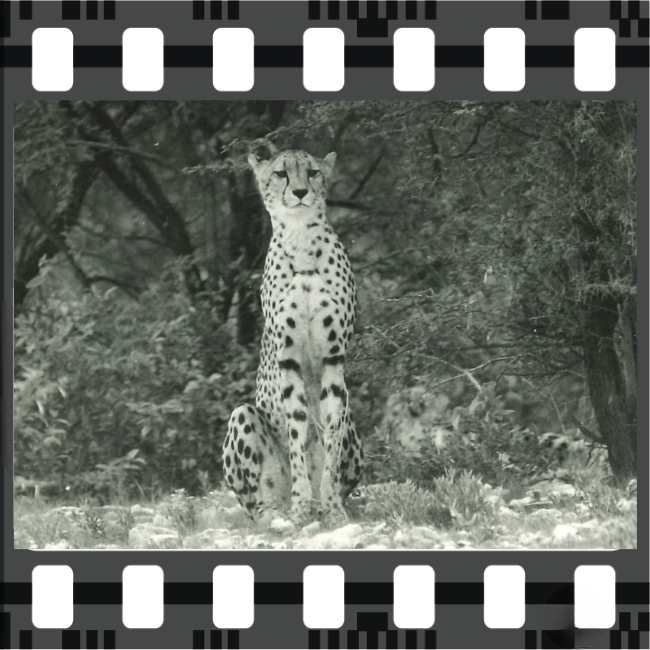
Cheetah sitting black and white

Duma, a particularly effective Cheetah mother studied by Andrew Lowry in Etosha in 1974 and 75

Read more about these cats in the full article here.

Learning much about Etosha’s Cheetahs, Andrew agrees with carnivore expert Dr R F Ewer that studies of predators are often only relevant to the time and place in which they occurred. He believes that studies of predators are usually only relevant to the time and place in which they occur and advised that the Cheetah numbers in the park were optimal at between 50 and 100 and that the low-density population would not benefit from further reintroductions – reiterating the original consensus that one of the largest remaining strongholds for Cheetahs in southern Africa should not be interfered with.

By the end of the study, the EWT had expanded. It was focused on rhino and elephant conservation while supporting other organisations also working on Cheetah conservation, such as the De Wildt Cheetah Centre. Andrew had for some time been increasingly concerned about the larger issues at play that were endangering all species, including humans. He knew where a difference needed to be made and went on to do so in the lecture halls of the Tshwane University of Technology. For 30 years, Andrew taught 21 subjects to around 3,000 students, six of whom currently work for the EWT, with many more doing so in the past. I was one of these students, inspired to work for the organisation within a month of my first year because Andrew believed in the work the EWT does so much that he included it in his coursework.

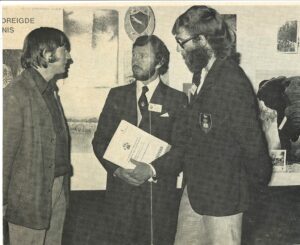
Clive Walker (centre), founder of the EWT, speaking to EWT carnivore researchers Gus Mills (left) and Andrew Lowry (right)

Now retired, Andrew makes an effort to follow the careers and personal journeys of his students, whom he considers family and fondly speaks of with pride. Refusing to have a cell phone, Andrew checks Facebook regularly, wishing students well in their personal and professional milestones. He was excited to hear from us and to visit the EWT Conservation Campus and tell us his story and catch up with those whose lives he touched so profoundly. A two-year study of a single population of Cheetahs in Etosha may not have had a significant short-term conservation impact, but it led both Andrew and the EWT to make unmeasurable and invaluable conservation impacts through their cultivation of countless conservationists who have and will still protect forever, together.


Closing the Loop: Transforming textile waste into opportunities for people with disabilities and support for Early Childhood Development

Tales from the Field: Clothes to Good

Clothes to Good

Dr Jennifer Botha, the EWT’s People In Conservation

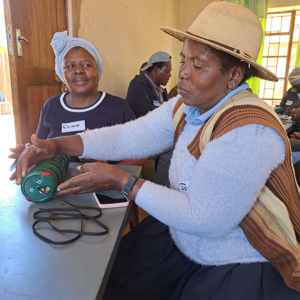
Through this project, educators from ten creches and a facility catering for vulnerable children will have the opportunity to promote Early Childhood Development through a series of fun, interactive activities.

Tammy Greyling from ClothesToGood demonstrates a game to promote literacy.

Each group received an Early Childhood Development kit consisting of over 50 activities to stimulate Early Childhood Development

  • Did you know it takes 2,700 litres of water to produce a single cotton tee-shirt?[i]And that the fast fashion most of us depend on is one of the highest polluting industries globally, contributing 2 – 8% (about 1,2 billion tons) of greenhouse gases annually – higher than international flight and maritime shipping emissions combined[ii].

    In addition to the widespread loss of biodiversity and habitats during production of raw materials, the industry:

    • Produces about 20% of the world’s wastewater[iii],
    • And 24% of insecticides and 11% of pesticides globally[iv],
    • Is a major contributor to plastic pollution in oceans[v]

    At the same time, the average number of times clothes are worn before being thrown away has fallen by 36% over the past 15 years in the United States, China, and other more affluent countries – and only 13% of these largely under-utilised clothes are recycled globally. It has been estimated that 21 billion tonnes of textiles are sent to landfill each year, the bulk of which are under-utilised [vi].

    The fast fashion industry is booming and set to treble in size by 2050. Clearly, we need to rethink the largely “take – make – and waste” linear business model that is currently typical of this and many other industries.

    What are we doing?

    As part of its 50th celebration, the Endangered Wildlife Trust is implementing a series of innovative projects to reduce human impacts on biodiversity and habitats, whilst benefitting people.

    In our most recent endeavour, we teamed up with Clothes to Good to support the circular economy of the fashion industry while contributing to the well-being and development of people with disabilities and young children in Kutama, Limpopo Province. The EWT works extensively with people from Kutama as they live adjacent to the Medike Mountain Reserve, one of our flagship projects in the Western Soutpansberg.

    Through this integrated project, we aim to empower the Muthu Ndi Nyi Centre for people with disabilities by creating an opportunity for staff and parents to raise funds for the centre through the sale of high-quality second-hand clothing. The project also includes a health and well-being component through the provision of training and occupational health support to children and young people with disabilities from the centre and ECD training for ten creches and a facility that provides after-school care for vulnerable children.

    Jesse Naidoo provided business training to enable staff and parents from Muthu Ndi Nnyi to maximise the financial and social returns through the sale of clothes. In addition, Tammy Greyling, an occupational therapist from ClothesToGood met with staff and parents to work with each of them to draw up a personal development plan for each of nine children and young adults who have disabilities to improve the quality of their lives and stimulate their personal development through improved communication, physical exercise, and specific activities tailored to each of their needs and abilities.

Early childhood development

The first three years are one of the most important developmental periods of a child’s life. In South Africa, there are still wide disparities in the quality of pre-school education provided to young children across socio-economic classes, exacerbating the learning difficulties that children face when they reach school going age.

As part of this project, we held a two-day workshop for over 30 participants from Muthu Ndi Nnyi, ten local creches, and a centre providing after-school care for vulnerable children. On the first day, Tammy Greyling, ClothesToGood’s occupational therapist, introduced an ECD kit comprising over 50 activities designed to stimulate fine and gross motor skills, perceptual skills, numeracy, and literacy. Each creche and centre received one of these demonstration kits and a training manual which will enable them to reproduce the activities for the 100 – 150 children in each of their care.

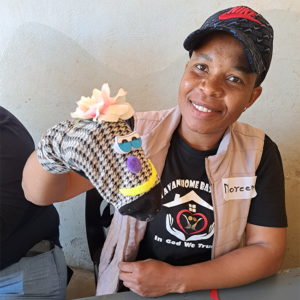
On the second day, we held a toy-making workshop to demonstrate making educational toys from recycled materials such as plastic bottle caps, cardboard, old bottles and other containers, old clothes, and other materials. The nursery schools were urged to ‘play-it-forward’ by inviting parents to toy making workshops and ensuring that their colleagues also receive training in the activity kits and toy making.

What can you do?

  • Choose fashion items that will last and ensure that good quality clothes are not thrown away.
  • Care for your clothes so that they last longer.
  • Support fashion brands that are reducing their environmental and social impacts.

For example, Patagonia recently took an almost unprecedented step by committing to channel all its excess profits into a trust dedicated to the protection of the environment and support for communities[vii].

In addition, 200 brands have signed the Fashion Pact, which commits to restoring biodiversity loss, reducing global emissions, and safeguarding oceans[viii].

  • Drop off clothes you no longer wear at H&M, who are supporting ClothesToGood collect clothes to support the above project as well as numerous others.

This project is an exciting start to a creative recycling and environmental awareness initiative in Kutama but also has the potential to contribute to substantially reducing textile waste over time. In addition, people from Kutama will benefit through access to high quality, affordable clothing as well as innovative and affordable ECD strategies that build the capacity of teachers while preparing young children for school.


Making a snake puppet from old bottle lids.

Hand glove puppets easily made from old socks can bring the magic into story telling.

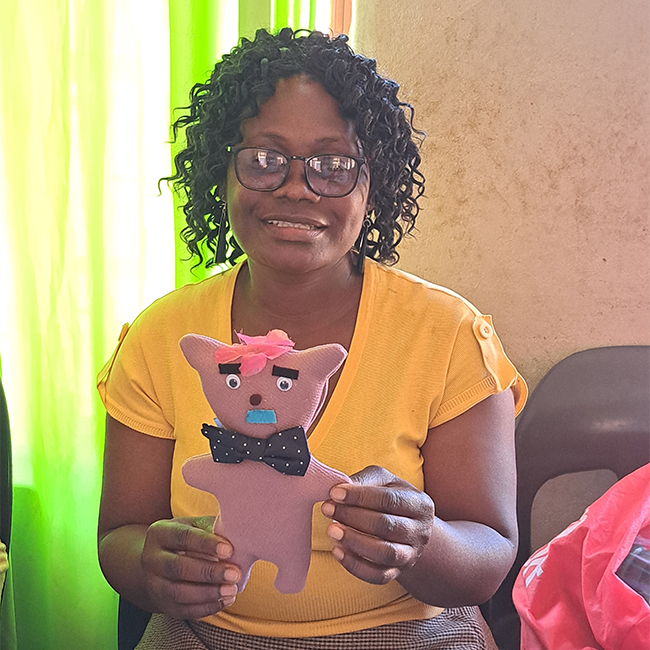
Teddy bears are expensive if you buy them but can be easily made from old fabric and fillers.

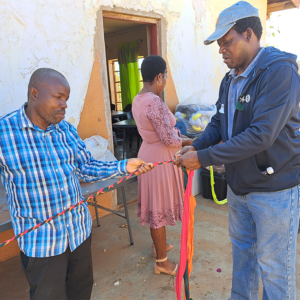
Few of the creches had skipping ropes – each group made a demonstration rope from fabric that they will be able to replicate for the children in the care and demonstrate to the parents of the school.

Careers in Conservation – Cliantha Kay

Careers in Conservation – Cliantha Kay

CAREERS IN CONSERVATION – Cliantha Kay

Cliantha is a Conservation Canine Assistant with the EWT’s Conservation Canine Unit. Here is a little bit about Cliantha’s journey to a career in conservation with the EWT.

Job title: Conservation Canine Assistant


What do you do in your day-day work?

I work hands on with our canines that are based at the head office conservation campus, assist in keeping those active minds stimulated and always ready to detect the next contraband item. We swim them, walk them, exercise them, and train them – and of course give them lots of love.

Location: Midrand Campus, but travel extensively

Where did you grow up? Johannesburg

What are your hobbies/things you like to do in your spare time? Catch up with friends and family, go walkabouts with my trusty doggos, a great day out on the lake brings me calm, reading, and hiking

Any pets? all the dogs! My beautiful German Shepherd princess Calla, and two other accomplices

Favourite animal and why:  I’d be lying if i didn’t say dog.

Pet peeve?  Rude People

Why did you want to work for the EWT? The EWT is a vibrant and dynamic organisation that provides wonderful opportunities to make meaningful differences to people’s lives and to conservation. And of course all the doggos.

What are you passionate about?  Changing the perception of the relationship between farming and conservation. I think that in the past, a few bad apples ruined it for many conservation-orientated farmers who manage their land in a way that is super beneficial to biodiversity and food security. I also really love finding different ways to approach and overcome challenges and seeing how we, as an organisation, can leave a positive and lasting impact on our environment and its people.

What’s the best advice you’ve ever received, and who did it come from? If you can’t control it – let it go. Life is short – worrying makes us old.

My parents and grandparents taught me that, and I still live by it. I always remind myself that I’m capable of anything I put my mind to, so long as I’m open to learning (and probably failing a few times) along the way! 

What is your go-to feel-good song? Robin S – Show me love

What excites you about this new position? constant learning, and the diverse and wonderful people I meet from all different walks of life. Working with Canines is a gift beyond measure.

What are you passionate about?  Being kind and genuine in everything I do – it costs nothing, yet is priceless.