A FOND FAREWELL
This month we sadly say farewell to a valued member of our pack. Belinda Glen has managed our communications unit for the last four years, creating and inspiring meaningful, eloquent, and accessible conservation content, in ever new and exciting ways. Belinda will be sorely missed, but she was offered a wonderful career opportunity and we wish her everything of the best and look forward to seeing what she gets up to next! It is going to take a few of us to fill her enormous shoes, but don’t dismay, we will still be bringing you all the great content you are used to! Conservation Matters will now be compiled by Emily Taylor and Khanya Peacock.
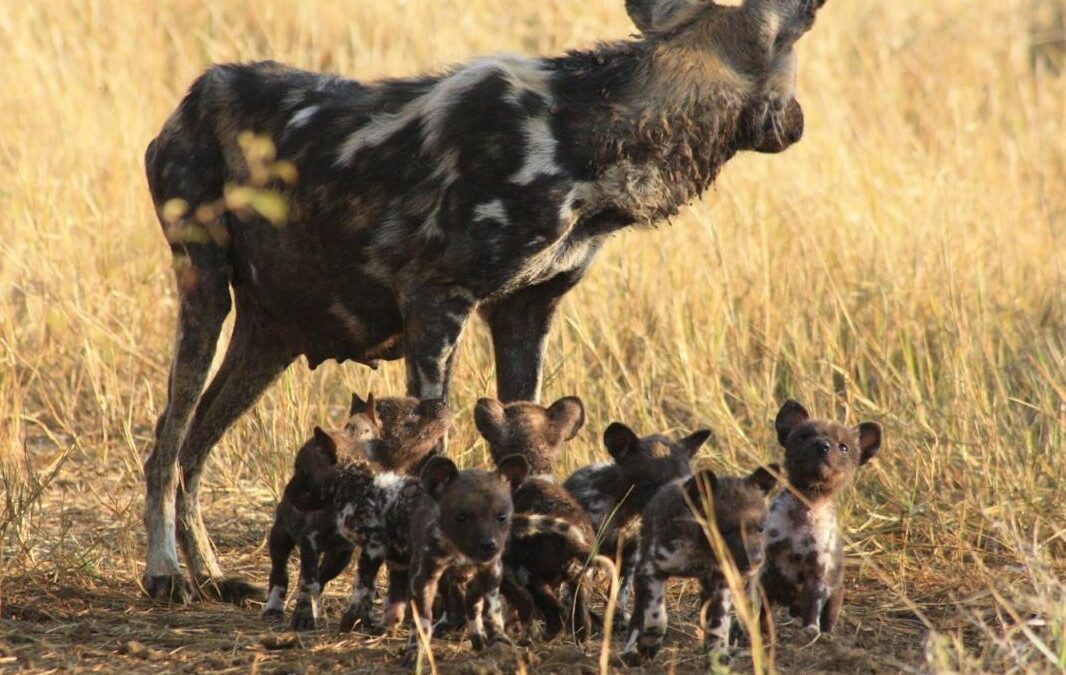
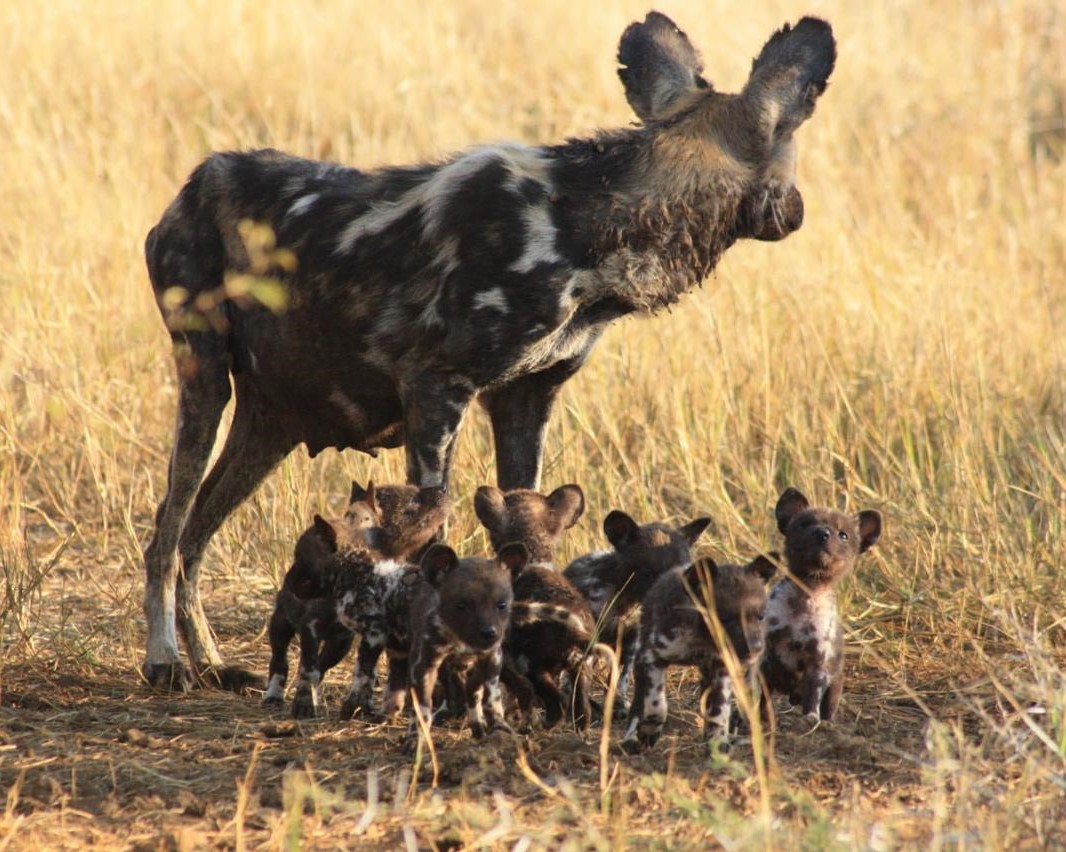
THE BRAVE JOURNEY OF SMOKE AND HER PACK OF AFRICAN WILD DOGS
Cole du Plessis, Wild Dog Range Expansion Project Coordinator & KZN Regional Carnivore Coordinator, EWT Carnivore Conservation Programme
coled@ewt.org.za
In South Africa, most of our reserves (protected areas) share boundaries with dense rural community settlements or farmers – this means that the direct threat to any wild animal significantly increases when they leave a protected area. Deliberate persecution, snaring, hunting, disease, and roadkill are some of those threats.
In 2018, the Nqolothi Wild Dog pack, led by a female named Smoke, left the protection of the Hluhluwe-iMfolozi Park and settled in nearby communal land. To the communities, , a predator like a Wild Dog can pose a threat to people or their livelihoods. The latter is far more likely. While there has never been a documented case of a Wild Dog killing a person, they do prey on livestock and large packs can do significant damage, particularly in rural subsistence farming communities.
Unfortunately, there was no functional tracking collar on the Nqolothi pack and monitoring them seemed like an impossible task. It was also almost like the pack had sensed the loss of their protection when leaving the reserve as they became highly elusive…only leaving the odd clue behind when they moved. When there was a sighting or report, we made a valiant effort to get there in time, but the pack was always long gone upon arrival. Tension was mounting in the community. Many goats had been reported dead and, whether there was evidence or not, it all pointed to Smoke and her pack. The community was losing patience and wanted to kill the pack to protect their livestock. It became a race against time to find them.
After almost a year of living in communal land, the pack finally exposed themselves. Smoke had fallen pregnant and went down to den. The weakness here was that the den site anchored them, and they started leaving traces. One day, community members used their hunting dogs to follow the scent back to the den and managed to dig out and kill two of the pups. When we arrived, just the carcasses of the pups remained. The rest of the pack had abandoned their den and took the remaining pups with them. We needed to intensify our efforts.
We immediately set up remotely triggered field cameras to monitor the area and spent nights in the field closer to where the Wild Dogs operated. A vet was on call and would be flown by chopper as soon as we received reports of sightings or discovered fresh signs. Eventually our luck changed. The pack made a brief appearance back in Hluhluwe-iMfolozi Park. The team responded immediately and for the first time the pack stuck around long enough for us to see them. One of the Wild Dogs was immobilised, and a satellite collar finally fitted. This was the game changer. We could now monitor the pack and plan their capture. We would normally call the pack in using recorded Wild Dog “hoo” calls and free dart them from a vehicle. Unfortunately, this pack had become far too skittish to use this method. Capturing this pack would involve careful planning and preparation, large capture nets, experienced game capture staff and a helicopter to guide them into the capture site. This operation needed to be perfectly executed, and it was. In one go, all the pack members were safely captured and transported to a holding facility nearby. At last, they were safe.
But the pack now needed a new home. Fortunately, Madikwe Game Reserve in the North West, was in a position to take them and the ever supportive Bateleurs offered to fly them there. Three months later, when all the permits were in place and preparations made, the pack was re-anaesthetised and driven to the Mkuze airstrip. The plane was prepped and ready on arrival. We carefully transferred the sedated Wild Dogs into the plane, and we were ready to begin our four-hour journey with our VERY SPECIAL cargo. Once we touched down, the pack was transferred to vehicles and driven to the boma. They had arrived at their new home. What we only realised on the plane was that Smoke had fallen pregnant again and only had a few weeks before she would have her pups. Normally, we use the soft-release method, where the pack stays in the boma to acclimatise to their new environment. This counteracts their instinct to return to their former territory and ensures that they will establish themselves in their new home. But Smoke needed time to explore her new territory and scout a safe den site. So, the pack was only in the boma for a brief period before they were released.
Using the satellite collar data, we were able to remotely monitor the pack as they started to explore their new home. And, after a few weeks, the collar data showed that the pack kept returning to the same point. Smoke had started denning and the rest of the pack was hunting and bringing food back to her. The pack was given their space to live in peace – they had the code to survival and didn’t need anyone checking in on them. But after weeks of eager anticipation, one of the researchers on Madikwe was given the green light to go in and check on the pack. Much to our excitement, they were all present and healthy, with the new offspring stumbling around at their feet.
As a result of an increasing human population and development, Wild Dogs no longer have the space that they need to thrive. South Africa is quickly approaching its relatively small Wild Dog carrying capacity. Many of the Wild Dog reserves are surrounded by farmland, so when Wild Dogs choose to expand their range or disperse, by default, they come under threat. In order to save our most endangered carnivore, we need to keep working at expanding safe space by reintroducing Wild Dogs into South Africa’s many fenced reserves. These reserves, in turn, serve as source populations as we work with partners such as African Parks, Peace Parks, and the Carr Foundation to recover former Wild Dog range across the continent.
It wasn’t ideal that we had to relocate Smoke’s pack, but we owed it to them to give them refuge. They can, once again, be at peace.
Thank you to our long-time partners Ezemvelo KZN Wildlife, Wildlife ACT, the Bateleurs, North West Parks Board and Madikwe Game Reserve, and donors Richard Bosman, Painted Wolf Wines, Tania Ihlenfeldt, Tata Consultancy Services, and the Relate Trust. It is a pleasure to work alongside you and share the common goal of conserving our most endangered carnivore.
CELEBRATING OUR FATHER FIGURES
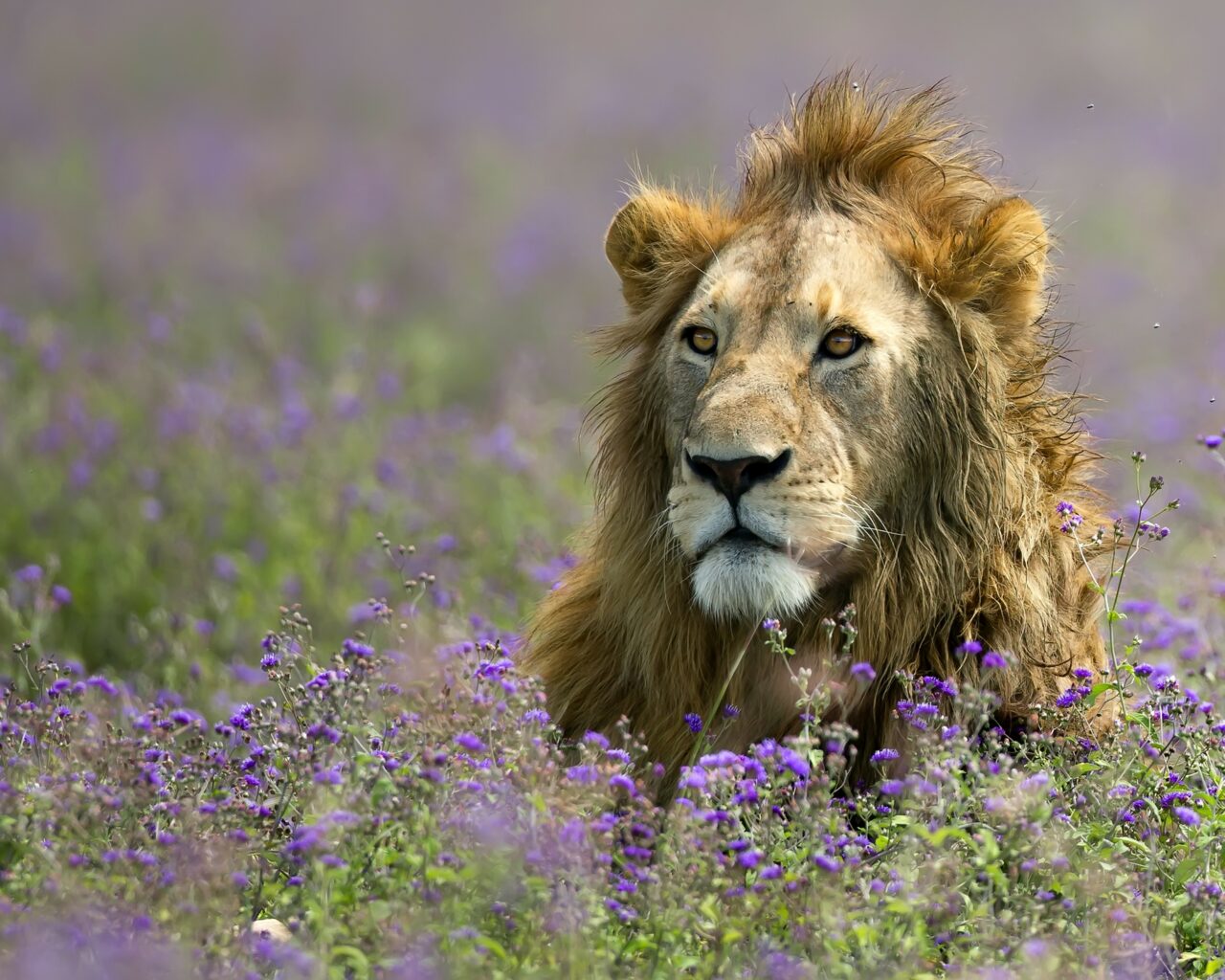
Has your dad been your lockdown hero? Whether he’s locked down at home with you, or far away, let us know if your dad deserves one of these lockdown awards
- All-round Super Dad
- Braaied every night
- Best pineapple beer brewer
- Survived without live sport
- DIY champion
- Made a mask look good
- Best lockdown haircut
- The beard has taken over…
If you’d like us to send your dad one of these special awards, it’s as simple as 1,2,3!
- Make a donation on our website or via EFT – the amount is entirely up to you – and send proof of payment to TammyB@ewt.org.za (this can be a screengrab of your donation or proof of payment from your bank). The link to donate is https://ewt.org/campaigns/ewt-donations/
EFT payments can be made to Endangered Wildlife Trust, account number: 50371564219, First National Bank, branch code: 253305, Rosebank branch 037, SWIFT code: FIRNZAJJ
- Choose your award and let us know what dad’s name is so we can personalise it.
- We’ll send the award to the email address or cell phone number of your choosing, anywhere in the world!
LOCKDOWN DOESN’T MEAN SLOW DOWN FOR THESE CONSERVATION CANINES
Shadi Henrico, Conservation Canine Project Coordinator, EWT Wildlife in Trade Programme
shadih@ewt.org.za
The lockdown has brought new challenges, but our Conservation Canines continue to work (and play) as hard as ever.
Tracking under the moon light
With the implementation of the nationwide lockdown, our tracking dogs’ efforts in reserves were increased due to the risk of increased criminal activities. In the Lowveld, EWT Conservation Canine Annie and her handler were part of an operation involving several crime prevention units. They tracked down and assisted with the capture of two suspected poachers. Annie and her handler also supported an operation in which eight suspects were caught in the possession of dried- and fresh bushmeat, knives, axes, and snares. She happily works with her handler in any conditions and adapts very quickly no matter day or night, sun, or rain.
Taking flight
Time is of the essence when tracking suspected poachers. EWT Conservation Canine Puk, based in the Lowveld, has increased his training on flying in helicopters with his handler. This is a quick way to get to work and start tracking, and reduces time available for suspects to escape. Puk is the second EWT Conservation Canine to be trained to ride in a helicopter. Once the rangers in the field discover any incursions, attempted poaching, or actual poaching in progress, they alert the canine team, which can get in the air within a very short time. Once they get closer, they can lower the handler and dog to the ground and this team can immediately track down the culprits!
Vehicle detection
It is of the utmost importance to search all vehicles entering and exiting reserves for wildlife contraband, ammunition and arms. These searches are conducted daily. In April alone, two of our EWT Conservation Canines, Spike and Fly, searched 221 vehicles at reserve entrances. Large areas and compounds are also covered by these teams. With the implementation of lockdown, certain unforeseen challenges risen. For example, Fly fell ill during this time. Thanks to excellent veterinarians, he was treated, and work resumed. Even in lockdown and with the heat of the Lowveld, we always prioritise our canines’ health and happiness!
Training during lockdown
We have two handlers, Shay Seebran and Innocent Buthelezi, staying at our Gauteng Conservation Campus in Midrand to care for our dogs and continue their training. When the lockdown was announced, we developed a plan of action that would allow for daily training to continue to take place, despite our senior handlers not being able to train in person. Our lockdown canine training involves using live video calls and regular check-ins. From her home in Pretoria, our Conservation Canine Coordinator, Shadi, video calls our handlers every day to see how both the dogs and the humans are doing in this challenging time and observe training in real time, providing instruction and feedback. Each day, these EWT Conservation Canines do open area searches, vehicle searches, building searches, and training on tyre rims. This keeps them up to date and makes sure that they do not lose their focus on the job. Just like us – they must keep their skills up to speed! Training records are completed as normal and our dogs are at their happiest when they can work.
Normal husbandry, like kennel cleaning and feeding, continues as normal. Welfare remains our top priority – we love our happy, healthy dogs – and they love long walks and getting groomed. We are very privileged to have our own dogs on our own property. Here they can still go for long walks, run free and swim. They probably have it better than most of us in lockdown!
Thanks to our funding partners, US Fish and Wildlife, Tourvest, Greeff Properties, the Tomlin family, Royal Canin, Boehringer-Ingelheim, MyPlanet Rhino Fund, Relate Trust, Platinum Life and GivenGain.
ALL ABOARD THE CONSERVATION EXPRESS
Wendy Collinson, Manager, EWT Wildlife and Transport Programme
wendyc@ewt.org.za
Prior to COVID-19, animals had, over time, adapted their ways in response to our increased transportation networks, namely railways and roads. Many avoided these corridors due to the impact on their survival – that is, a mortality caused by colliding with a train or a vehicle. With fewer people travelling and limited transportation of goods on our rail networks, it has not taken long for wildlife to notice and take advantage of this, reverting to their normal and preferred ways. They are now foraging and hunting through moving back and forth at will between various parts of their habitats, including crossing railways and roads that are now quieter. We have also seen increased animal presence in many of our towns and cities as animal confidence increases due to low human presence.
From a research perspective, this begs the question, what happens as more people return to their usual travel habits? We are presented with a unique, once-in-a-lifetime opportunity and insight into studying animal behaviour from before, during, and after the current restrictions placed on travel. The variation in transport volumes due to different phases of allowed activity for multiple species across the world will be incredibly interesting to monitor. With this in mind, the EWT’s Wildlife and Transport Programme (WTP) is launching two new projects, both supported by GreenMatter, with two Master’s students jumping on board to expand on the work already being undertaken by the programme. Research will be conducted on the Balule Nature Reserve to determine wildlife-rail mortality rates as well as animal behaviour adjacent to the railway. Wendy Collinson, the WTP’s programme manager states that, “whilst we had initially already decided on the focus of these two research projects, we had not anticipated the global pandemic and current travel restrictions. Consequently, these projects have since evolved to incorporate the current situation and will be pioneering in understanding animal behaviour. The research will provide possible answers to the potential difference that can be made to reduce railkill, simply through reducing train volumes on routes, particularly in a protected area or nature reserve”.
In Africa, the expansion of railway networks is associated with the projected rapid urbanisation and the development of mines that will produce large volumes of bulk goods. Railways are essential transportation corridors that facilitate the movement of goods and people, but railways and trains can also negatively affect wildlife through collision mortalities, habitat loss, barrier effects, and disturbances such as noise and light. The occurrence of mortalities due to train collision can contribute to the population decline of wildlife and pose a serious threat to biodiversity conservation. This has been observed in Scandinavia with Reindeer, as well as Black Bear in North America. The occurrences of wildlife mortalities as a result of collision with trains have serious implications in protected areas, such as the Balule Nature Reserve, where the railway traverses the landscape, potentially impacting conservation and wildlife management on the reserve, not to mention the potential costs to Transnet through repairs to the line and train.
Siboniso Thela and Nthabiseng Mampa are two GreenMatter Fellows who will be working in collaboration with the EWT to understand how the Phalaborwa–Hoedspruit railway line in Balule Nature Reserve affects animals. Siboniso has begun his initial fieldwork, under strict conditions, with the correct personal protective equipment and will be examining the differences between seasons and mortalities of mammals on the railway. He has been setting up camera traps adjacent to the railway line to monitor animal movements, as well as what type of animals make use of the railway line. Nthabiseng will determine whether railways act as a barrier against the movement of animals across the landscape, with the unique opportunity of monitoring this during the various stages of the lockdown periods. South Africa has the 10th longest rail network in the world, one of the most advanced in Africa. These lines are used for both passenger transport and freight and cross a variety of landscapes from urban developments to agricultural farmland and wildlife conservation areas, often bringing trains into conflict with wildlife. Almost no attention has been paid to the threat this poses to the country’s biodiversity and the people using the rail network. Therefore, the information gleaned from projects such as this are of extreme importance to conservation and economic development in the country.
Users of our transportation networks need to be mindful that wildlife has become used to our absence. They may not be expecting trains and vehicles and we therefore need to be extra cautious of wildlife activity in these areas, giving them time to adapt back to knowing we are there. Ultimately, as our transportation corridors eventually reopen, we should embrace practices that reflect human-wildlife coexistence, rather than human-wildlife conflict and take the opportunity of this lockdown to reflect and see how we can be more organised in the future to find a balance.
This project is supported by GreenMatter and is a collaborative project amongst the EWT and the Universities of Venda, Witwatersrand, the Swedish University of Agricultural Sciences, Wildlife and Ecological Investments and Transfrontier Africa-Balule. This huge team of experts is devoted to this project and hopes to gain a real understanding of the how animals behave around railways, and what preventative measures can be put in place to curb wildlife mortalities.
SNAKES ON THE PLAIN? THE SOUTHERN ADDER: SMALL, CAMOUFLAGED AND VERY VULNERABLE
Dr Oliver Cowan, Conservation Scientist, EWT Conservation Science Unit
oliverc@ewt.org.za
The Southern Adder was once found in coastal Fynbos plains throughout the Western Cape; however, due to urban development and increased agriculture it is now only found in two disjunct populations: one on the Southern Cape coast; the other along the West Coast. This cryptic, dwarf adder is classified by the IUCN as Vulnerable and its future is in peril due to predicted habitat loss. While its distribution along the Southern Cape coast is fairly well understood, the same cannot be said about the West Coast sub-population. Once considered wild and desolate, the last few decades have seen a rapid rise in coastal development and confirmed observations of the Southern Adder have been few and far between. It was in this context that members of the Conservation Science Unit, alongside collaborators from SANBI, set out at the end of last year to extensively survey suitable habitat along the West Coast as part of the ongoing project to map the distribution of species of conservation concern.
The Southern Adder does not however, want to be found. Indeed, as an ambush predator its livelihood relies on staying hidden – allowing its prey to unwittingly approach within striking range. The species is small (on average the size of a ruler) and highly camouflaged. It is adept at both lying motionless, half covered in sand, and climbing shrubs to seek refuge in the branches. During our week of active searching, trekking for kilometres through sandy soils and prickly Strandveld, we encountered numerous fascinating creatures but did not catch sight of a single Southern Adder. In the sandier areas, we could even find snake tracks, but distinguishing between species is challenging and just as we thought our search had been a success we ended up eye-to-eye with a grumpy Puff Adder, the Southern Adder’s larger and more venomous relation.
The next day we had another near miss, but this time we had something tangible to show for it: a photograph. We had arranged to meet the conservation manager of Grotto Bay Private Nature Reserve to get the lay of the land before surveying the reserve. Upon arrival he showed us a picture one of the residents had sent him from her morning dog walk – a pic of a supposed baby Puff Adder. In fact, the snake in question was clearly a Southern Adder and we rushed off to where the photo had been snapped. Despite spending the entire afternoon scouring the adjacent veld, we could not rediscover it. Nevertheless, we were heartened. The picture was irrefutable proof that the species was still present in the region and provided a valuable new occurrence record! We subsequently reckoned that active searching may not be the most efficient method of locating these serpentine Houdinis and decided to implement Plan B.
Plan B involved using the relationship we had forged with private landowners to implement a longer-term strategy and utilise citizen science. A popular residential model in the area is private nature reserves – large areas containing permanent and holiday residences within fenced-off nature reserves. We had been based at one such reserve, Jakkalsfontein, during the course of our trip and had been allowed by the reserve manager to place coverboards strategically throughout the reserve. These 1×1 metre wooden boards provide cover for reptiles from predators and, by marking their location, we could return to them each day to inspect them. With our time in the field drawing to a close we requested whether we could leave the boards in place and visit them on occasion. Not only was this request granted but the reserve manager kindly volunteered for his own rangers to inspect them when able to do so. In addition, we posted a brief note in the local newsletter explaining the purpose of our work and what residents should do if they encounter a Southern Adder.
The Southern Adder (Bitis armata) found at Jakkalsfontein (photo credit: Nick Telford, SANBI)
Early in the new year we received word that a resident at Jakkalsfontein had found a “slangetjie” (small snake) in the shrubs on his front yard and alerted a ranger who had subsequently caught it. Although I was busy at a workshop, my colleague from SANBI raced up the N7 to confirm the Southern Adder’s identification and take a DNA sample before releasing it unharmed into the reserve. The DNA sample will be used to compare this Western sub-population to its Southern counterpart, with important conservation implications. Furthermore, we have been encouraged by the interest shown by both the land managers and residents of the region for this small, but beautiful creature. So much so that we have tentatively begun exploring the potential to set up and maintain natural corridors between farms and nature reserves to increase habitat connectivity. Increasing connectivity allows for greater dispersal, hopefully preventing genetic bottlenecking which can often occur within isolated populations. If this proves viable, it will be directly attributable to motivated and conservation-minded citizens. But, from the experience of our brief stay in the region, this will be the smallest hurdle to overcome!
We are grateful to Rand Merchant Bank for funding the project; Les from Grotto Bay Private Nature; !Kwha Ttu San Cultural and Heritage Centre; Steyn Marais; Prof. Greta Geert; and Therese Hulme at Jakkalsfontein Private Nature Reserve.
