The cat’s out of the bag – understanding South Africa’s captive lion sector
Christina Hiller, EWT Wildlife in Trade Programme Consultant, tinah@ewt.org.za
South Africa is currently the only country with an extensive captive lion sector where lions in captivity significantly outnumber wild and free-roaming animals. There is an ongoing debate around the practices of keeping lions for commercial use, and captive lion hunting, the lion part trade, and human interaction such as cub-petting have been heavily criticised. However, there was a need to establish a detailed understanding of South Africa’s captive lion sector and evaluate its environmental and socio-economic impacts.

The Endangered Wildlife Trust initiated a study to close this information gap by developing an improved understanding of the sector and the trade of captive lion products and services. The research aimed to supply the South African government and the local CITES (Convention on International Trade in Endangered Species of Wild Fauna and Flora) authority with sound information to inform future policy decisions and measures to adequately address the sector’s influences on environmental, economic, and social outcomes and developments.
We conducted 51 semi-structured interviews and verified and supplemented the findings through five focus-group sessions with experts from related fields and desk review activities. Interview parties consisted of 31 captive lion facilities in four provinces, i.e., the Free State, North West, Limpopo and Gauteng and 20 key players in the sector. These actors included professional hunters of captive lions, taxidermists, lion part traders, live lion traders, veterinarians, scientists, non-governmental organisations (NGOs), and provincial environmental management inspectors (EMIs). In addition, we collected quantitative data on captive lion facilities from the South African provinces where the interviews took place to further augment the research findings.The research report describes how the sector is structured and functioning amidst influencing factors such as mainstream and social media pressure, regulatory conditions, and conflicting ideas about the meaning of sustainability and sustainable use regarding an iconic species like the lion.
We found that captive lion owners’ underlying motives and deep-seated attitudes are behind the uniqueness of every captive lion facility’s (business) model. A combination of eleven different motives underpinned the decision to establish a captive lion facility. Only four of those were income-related. It was found that facilities were seldom established primarily for financial gain, suggesting the importance of personal drivers other than income generation and profit. Furthermore, our research revealed five distinctly different sector clusters with corresponding supply chain models and typical breeding systems. Findings suggested that facilities do not specifically breed lions for their bones, so this was not considered a separate cluster. The lion bone trade rather forms part of the hunting tourism cluster.
Cluster 1: No lion revenue cluster
Cluster 2: Sanctuary cluster
Cluster 3: Guest attraction cluster
Cluster 4: Live export cluster
Cluster 5: Hunting tourism cluster (incorporating the lion part trade)
Legal trade in each cluster was organised along a distinct supply chain (except for cluster 1 without lion-related trade activities). All supply chains in the sector are separate, and research did not show an organised supply chain wherein captive lions were hunted after being used for human-lion interactions. However, a shared supply chain segment for selling lions to other South African facilities combined with a lack of traceability makes it feasible to move captive lions between clusters, especially between the guest attraction, live export, and hunting tourism clusters. It was clear that there was little transparency in the sector because of the non-existent, inefficient, or inconsistent collection, storage, and sharing of information about facilities and their trade activities.
The research data suggest that reasonable and tolerable management practices fall into five domains: financial health, legality, conservation, animal welfare, and social responsibility. Moreover, two specific areas emerged as seemingly insurmountable obstacles for managing captive lion facilities. On the one hand, the data suggest that managing a captive lion facility and animal rights are mutually exclusive. On the other hand, the interviews revealed that transformation is not happening, which is why the facilities are deemed not acceptable.
The insights of this research will support more robust decisions about the sector. We conclude that it will be critical to follow a nuanced approach to shape the sector’s future, mindful of the five clusters. Simultaneously, immediate measures ought to be taken to prevent undesired loss or harm until a clear future scenario for the sector materialises.
The report will be released soon – keep an eye on our socials and check back here in a few days for the link.
LATEST STORIES
Science Snippets:The African Vulture Crisis- what do we know?
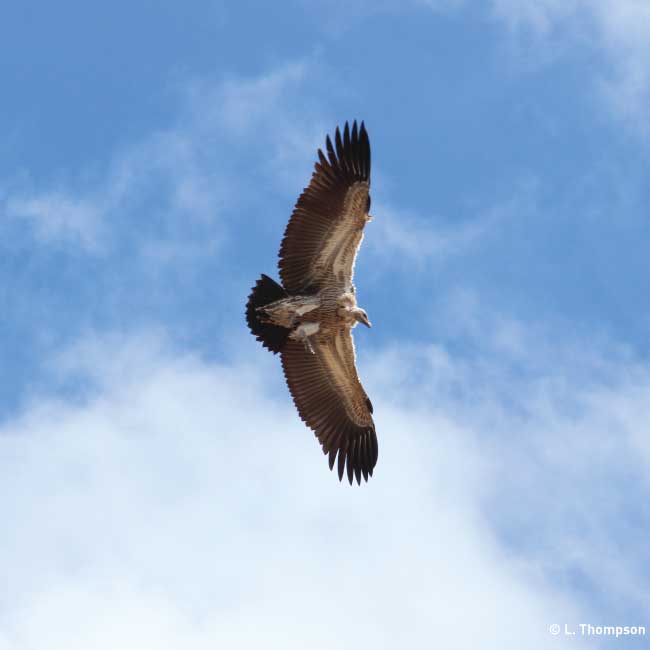
Most populations of vultures in Africa are declining rapidly, and conservationists are calling this an ‘African Vulture Crisis’1. There has been an increasing focus on the movements of vultures using tracking devices, but so far, there are very few continent-wide studies 2. To address this, a group of 35 researchers pooled their tracking data from 163 vultures to look at how vulture movements vary across Africa and how vultures are using protected areas in a new study published in Biological Conservation 3. The researchers found that breeding adult vultures had smaller ranges than non-breeding adults and immature vultures. Adult Rüppell’s Vultures had range sizes larger than 75,000 km2, while Cape Vultures and White-backed Vultures had range sizes of up to 36,000 km2. But the overlap of vultures’ ranges with protected areas was low, which poses significant challenges for conserving African vultures, particularly since the main threat to vultures, the intentional poisoning of carcasses, is widespread, and one poisoning event can kill large numbers of vultures because most species of vultures are social feeders. Successful conservation of vultures relies on reducing wildlife poisoning over vast areas, both inside and outside of protected areas, by tackling the drivers of poisoning. These drivers include human-wildlife conflict, trade in vulture parts4, and elephant poaching 5. For African vultures to survive and thrive, we need better law enforcement and anti-poaching, reduced human-wildlife conflict, and prevention of the illegal trade in vulture parts. Studies using tracked vultures should help prioritise where these interventions are needed most. Full article available here: https://doi.org/10.1016/j.biocon.2022.109516
References:
1 Ogada D. et al. (2016). Another continental vulture crisis: Africa’s vultures collapsing toward extinction. Conservation Letters 9: 89-97. https://doi.org/10.1111/conl.12182
2 Thompson L.J. et al. (2020). Variation in monthly sizes of home‐ranges of Hooded Vultures Necrosyrtes monachus in western, eastern and southern Africa. Ibis 162: 1324-1338. https://doi.org/10.1111/ibi.12836
3 Kane A. et al. (2022) Understanding continent-wide variation in vulture ranging behavior to assess feasibility of Vulture Safe Zones in Africa: Challenges and possibilities. Biological Conservation 268: 109516. https://doi.org/10.1016/j.biocon.2022.109516
4 Mashele N.M. et al. (2021). Uses of vultures in traditional medicines in the Kruger to Canyons Biosphere Region, South Africa. Journal of Raptor Research 55: 328-339. https://doi.org/10.3356/JRR-20-36
5 Mateo-Tomás P. and López-Bao J.V. (2020). Poisoning poached megafauna can boost trade in African vultures. Biological Conservation 241: 108389. https://doi.org/10.1016/j.biocon.2019.108389
LATEST STORIES
Our best-kept secret
Emily Taylor, EWT Communications and Marketing Manager, emilyt@ewt.org.za
This month’s tale from the field is a special one. It isn’t often that Support Services staff based at Head Office get to write stories about field trips, or at least ones that would be interesting! But in February, the Endangered Wildlife Trust (EWT) Communications and Marketing team was given the opportunity to get out from behind our desks and venture into the spectacular Soutpansberg mountains. And what a trip it was.
The VhaVenda call it “Tha vhani ya muno” – the Mountain of salt. Rising like an island from the surrounding bushveld flatlands, the forgotten Soutpansberg is South Africa’s best kept secret and one of the country’s most unique and unexplored natural areas. The name ‘Soutpansberg’ is derived from the large natural salt pan to the northwest of the range.

The Soutpansberg Mountains. Photo credit: Suzette Britz
|
The Medike Mountain Reserve boasts 58 butterfly species, 15 scorpion, 19 amphibian, 61 reptile, 59 mammal, 229 bird, and 237 tree species. The Vulnerable Leopard, the Near Threatened Brown Hyaena and Natal Red Duiker, and the Endangered Mountain Reedbuck are among these.
|
The Soutpansberg in Limpopo is South Africa’s northernmost mountain range and forms part of the UNESCO Vhembe Biosphere Reserve. The mountainous landscape comprises an impressive variety of habitats: forest, thick thornveld, savannah, and grassland – and is home to several iconic, rare, and Endangered species, including a plethora of endemic species of both fauna and flora (which occur nowhere else on Earth)! It is also a critical groundwater source. The EWT identified the urgent need to conserve the area, and in 2015, on behalf of the Roberts family in Australia, the EWT purchased the 1,398 ha Medike Mountain Reserve in the Soutpansberg. We subsequently received funding from the Rainforest Trust to purchase a neighbouring property, almost doubling the reserve’s size.
When the EWT began working on the mountain, we embarked on several ambitious projects to restore the integrity of the mountain by clearing large patches of alien and invasive plants that had encroached on native vegetation and affected the function of the water sources on the mountain. Check out our Forgotten Mountain video to see the benefits these projects have had for the landowners and local communities. The EWT also began to engage with neighbouring landowners about interlinking their properties and creating an opportunity for the community to unite and optimise the mountain’s value as an ecotourism destination. Many landowners welcomed the opportunity for collaboration, and 17 have already decided to join the EWT in legally declaring their properties as one large protected area spanning 22,000 ha of the Western Soutpansberg, called the Western Soutpansberg Nature Reserve (WSNR). The collective vision for the WSNR is to create and protect a connected landscape under formal conservation, covering priority species, habitats, hydrologically important areas, and cultural heritage, for the benefit of biodiversity, ecosystems, and people in perpetuity.
The Old Salt Trail is one of the first projects initiated to share the mountain and its unique and diverse landscapes and cultural heritage with others, generate income for local people, and secure a sustainable future for the WSNR and Luvhondo Nature Reserves. The long-term vision is for this project to catalyse a successful ecotourism initiative, bringing visitors to the mountain in an ecologically sensitive way. Hikers will be able to experience the exceptional beauty and biodiversity on offer while gaining knowledge from local trail guides and supporting local socio-economic development within a protected environment.

The EWT’s Communications and Marketing Team. From left to right, Kedibone Chauchau, Suzette Britz, and Emily Taylor
This particular field trip enabled the Communications and Marketing team to visit the EWT’s Medike Mountain Reserve and neighbouring properties to experience first-hand the unique mountain landscape and meet with the local landowners and communities to better understand how to market the area, and the Old Salt Trail in particular, as a unique ecotourism destination.
The Soutpansberg, and Medike in particular, is known for its astonishing diversity of landscapes and habitats , and as the geology changes, so too do the colours of the soil, the topography, the shape, size, and density of the vegetation, and the animals that occupy each habitat. And a few hundred metres later, they all change again. One minute we marvelled at the less dense thorn-veld with its brown soils, patches of golden grass, and fine-leafed thorn trees; the next, at the dense green bushveld packed with broad-leafed Bushwillows, Gardenias, Silver Cluster Leafs, and the remarkable Rock Figs that wrap themselves around and push through the mammoth rocks.
I was a field officer once upon a time, and, perhaps out of self-preservation, I often forget the utter bliss that being in the bush brings. I almost forgot that I was there for work and found so much joy just driving along, chatting to the landowners and the EWT’s Soutpansberg Rangers, and seeing first-hand what they have all achieved in the last few years. More than that, though, it was touching and inspiring to witness the connection that those living and working there have with “the mountain”, as they affectionately call it. I completely and instantly understood why they have this deep and eternal love for this land – it is undeniably one of the most enchanting places on Earth. But don’t take my word for it – you need to see it to fully comprehend its magic – contact Catherine Vise for more information on how to find the forgotten mountain.
Don’t miss out!
This spectacular range of Mountains will host the second running of the Soutpansberg Mountain Marathon. With 42 km, 21 km,10 km, and 5km courses on offer, all start and finish and Schoemansdal (30 mins from Louis Trichardt) at the base of the mountain range. The longer three courses climb up the mountain and can be considered proper challenges. To register, click here.
LATEST STORIES
Fighting landslides in Rukiga
Phionah Orishaba, EWT’s African Crane Conservation Programme/International Crane Foundation Partnership, Field Officer – Southwestern Uganda, PhionaO@ewt.org.za
April 2022
Kigezi region in southwestern Uganda has always experienced heavy rains in March-May and September–November, which are also the crop growing seasons. Human activities on the steep hillslopes in Rukiga, including bush burning, deforestation, and overgrazing, have left the soil bare and eroded. With nothing holding the soil there, runoff from the steep slopes after heavy rains has increased drastically, causing landslides that destroy people’s property and crops below. The runoff removes soil and sediment in wetlands, affecting the local populations of Grey Crowned Cranes, such as in the Rushebeya-Kanyabaha wetland. Soil erosion control in Uganda is a critical issue that needs addressing for communities to thrive.
While an important economic activity in the Rukiga District, excessive eucalyptus planting on the hillslopes has become a great environmental challenge. Eucalyptus trees don’t allow the growth of short grass under their canopies, and rainwater runs quickly down the hillslopes and into the lowlands, where it causes havoc for the communities. Under pressure from an ever-increasing population, the fragmented land of Rukiga has continued to be divided into smaller plots to cater to the many children in each family. Households in the Rukiga district have an average number of six children each, and parents struggle to provide for the basic needs of their families.
Soil and water conservation initiatives have been proposed to remedy the issue of runoff that causes soil erosion in Rukiga district. One such project, funded by The Darwin Initiative, is being implemented by the International Crane Foundation/Endangered Wildlife Trust Partnership, Margaret Pyke Trust, London School of Hygiene and Tropical Medicine, and Rugarama Hospital in Rukiga district. The project has established two Napier grass demonstration gardens in

A Napier grass garden in Rukiga
Rwamucuucu and Kashambya sub-counties, in which Napier grass will be distributed to farmers to plant on the terraces of their gardens so that, when mature, the grass will stabilise these slopes. As part of the resilient livelihoods support that has been given to 248 households, each household was given 500 stem cuttings of three nodes each to be planted along their terraces, as soil and water conservation is one of the conservation actions identified in conservation agreements between the community conservation groups and project partners.
The Rwamucuucu sub-county chief Gideon Tumwesigyire has shown appreciation for the initiative. “This project has come at a time where it is needed because we normally experience heavy rains, sometimes unexpected, which has been a challenge to our community people. We therefore think that giving this Napier grass to farmers in the communities will cause a great impact by controlling soil erosion”.

Communal trenches dug on the hillslopes in Rukiga District to control the speed of water during heavy rains
The chairperson of the local council in Kashambya sub-county embraced the initiative saying that soil erosion has always been a great challenge to their people, but with this Napier grass, we hope to make a difference in the sub-county and district at large.
Community engagement has motivated the district leadership at all local council levels to join hands with ICF/EWT to make communal trenches on the hillslopes as one of the soil and conservation activities that can help to control the speed of water caused by heavy rains that have become disastrous to peoples, crops, and property. These simple conservation actions they can take themselves provide people in the district with the hope that they can stop fighting the land they depend on.
LATEST STORIES
Sungazer Custodians
Bradley Gibbons, African Crane Conservation Programme, bradleyg@ewt.org.za
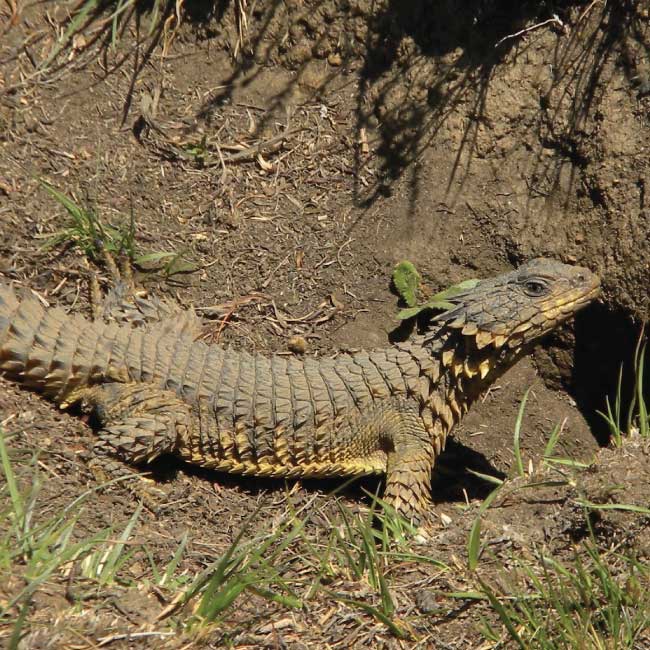
Sungazer lizards Smaug giganteus are more commonly known as Ouvolk in South Africa’s Free State province, the only place on earth where these Vulnerable charismatic lizards can be found in the wild together with a very small population located in the south of Mpumalanga.
Since 2015, the EWT has awarded Sungazer custodian boards to exactly 30 farmers, five of which were awarded during 2021.
Sungazer custodians are farmers who go the extra mile for Sungazers and assist the EWT to conserve these reptiles on their farms and act as champions for Sungazer conservation in their area. It is never difficult to select a Sungazer custodian, because they show an extra passion for Sungazers on their properties. They ensure that their farms are safe for Sungazers, by conserving the habitat used by Sungazers and minimising disturbance to them. Another example of going the extra mile is to ensure that areas where Sungazers occur are avoided and farmers won’t drive too close to their colonies. It is important to note that Sungazers are found in colonies in natural grasslands which differs from typical lizards found in rocky areas. The EWT recognises these landowners’ conservation actions through the Sungazer Custodianship Programme.
The custodian agrees to sign a short agreement to cement their commitment to protect the Sungazers for the five-year custodianship period (with the option to renew). Through this they commit to report any useful or relevant information to the EWT, such as new areas where Sungazers are found on the farm (and in some cases to send photos of baby Sungazers) and report potential or current threats to prevent further harm to Sungazers as much as possible in their respective region. We hope that other farmers from the areas will notice the board when they visit a custodian and then follow the example of the custodian. One of the five custodians in 2021 is a couple from Koppies in the Free State, Dawie and Natasha Smalberger, who have not only reported their Sungazer sightings regularly but even put up their own camera trap to keep a watchful eye on the Sungazers on their farm! There is no doubt that they deserve to be awarded a custodian board for this type of involvement, and the EWT appreciates their efforts to conserve Sungazers.
As part of conservation efforts on privately-owned farms, the EWT would like encourage farmers to further protect their farms using another form of a conservation agreement known as the ‘Biodiversity Stewardship’ approach. Not every farm can be declared a nature reserve if a landowner would like these reptiles to be protected. Therefore, conservation on privately-owned land is made possible with the use of this strategy. An example of an agreement like this is a protected environment where livestock farming and even crop farming can operate as it currently is. However, intact vegetation such as grasslands will remain intact from not further extending any cultivated fields. These farmers will in most cases also adhere to a management plan that has been compiled to further improve the habitat on the farm.
LATEST STORIES
Protecting our rich culture and biodiversity for future generations
Jenny Botha, EWT People in Conservation Programme Manager, jennyb@ewt.org.za
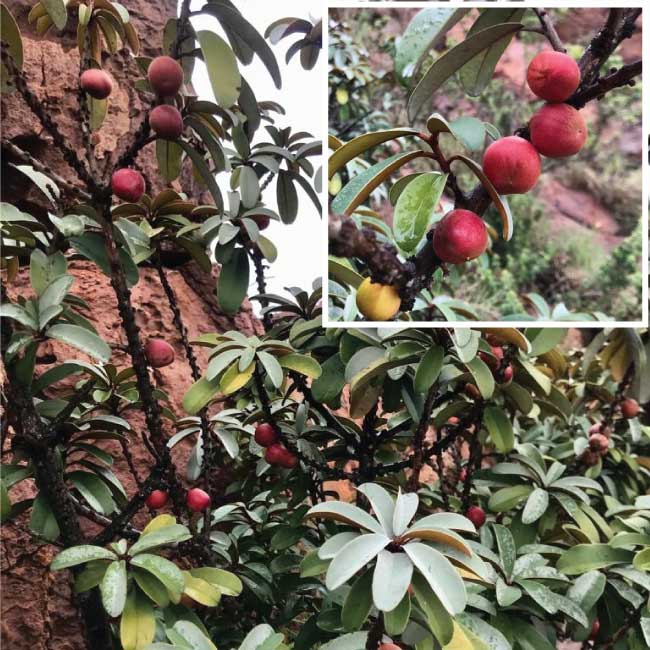
Although the leaves of the Pepper-bark Tree (Warburgia salutaris) are reportedly used in curries and to flavour other foods in Kenya, the species is more commonly known for its healing properties throughout its range in East and southern Africa. This attractive evergreen tree grows in diverse habitats, including forest, kloofs, thickets, and open woodlands. Historically, it was distributed from north-eastern KwaZulu-Natal and Swaziland to Mpumalanga, Limpopo, and Zimbabwe, extending into Mozambique and Malawi. Today though, the Pepper-bark is classified as Endangered on the IUCN’s Red List of Threatened Species, and many of its habitats are degraded and fragmented through human activities and the impacts of alien plants.
In 2020, the Endangered Wildlife Trust (EWT), with the support of the Fondation Franklinia, initiated a strategic conservation project in Limpopo to safeguard the Pepper-bark for future generations. To achieve this, we need to protect and improve the management of existing Pepper-bark Tree habitats and ensure that people who have historically depended on this tree for medicine, and continue to do so, have legal access to it.
To secure habitat for the Pepper-bark and other plant and animal species of high conservation value, the EWT has been collaborating with the Limpopo Department of Development and Tourism (LEDET) and private landowners in Limpopo to increase formal protection of these sites. It is also important to manage these habitats effectively. Over the past two years, we cleared alien vegetation from 25 hectares of Pepper-bark habitat.
Despite the Covid-19 pandemic, we were able to meet with over 100 traditional healers, community leaders, and other community members from 25 villages or towns to discuss mutual challenges arising through the loss of the Pepper-bark through overharvesting. Traditional healers, leaders, and community members welcomed donations of Pepper-bark saplings that will enable them to harvest directly from their gardens in future. Thanks to a year of high rainfall, the trees are growing well and will provide the traditional healers with a vital source of bark, roots, and root-bark in upcoming years. The traditional healers can also use the tree’s leaves now that scientists have verified that they contain the same phytochemical constituents as the bark and roots. This has the potential to substantially reduce the impacts of harvesting from the wild, as it is far easier to harvest sustainably if the leaves can be used instead of bark or roots.
We would like to thank SAPPI, the Agricultural Resource Council, and SANParks for the donation of 2,000 trees to this project and look forward to continuing this exciting journey with the many traditional healers, communities, and other conservation partners who are participating in this initiative.
LATEST STORIES