Donate today: support our k9's 
 mission

Cycads: Prehistoric plants in peril

Cycads: Prehistoric plants in peril

CYCADS: PROTECTING PREHISTORIC PLANTS IN PERIL


Dr Kerushka Pillay, the EWT’s Wildlife in Trade Programme


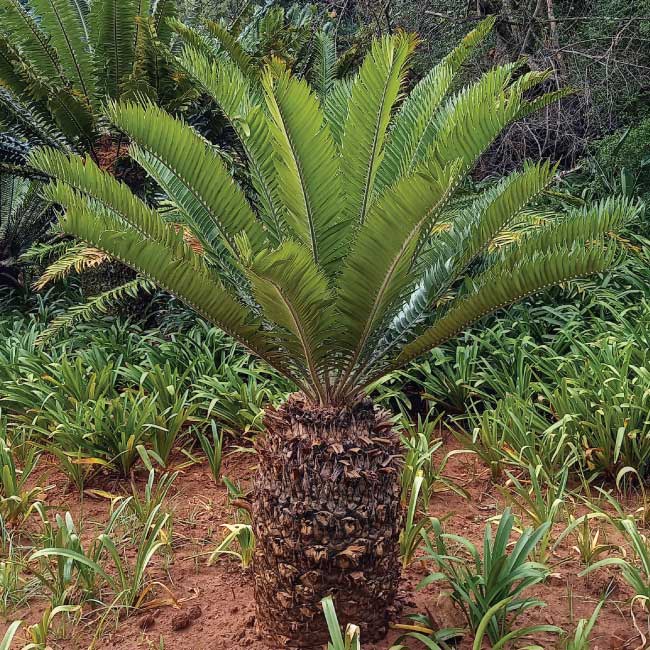
Cycads are ancient seed plants (or gymnosperms) that date back to the Jurassic period. The illegal harvesting of wild plants and habitat destruction severely threaten these prehistoric plants. Worryingly, many cycads are Critically Endangered, and others are extinct in the wild, meaning none are left within their natural range. They only occur when planted in controlled environments like botanical and private gardens. Efforts are underway to protect and conserve these plants, and a significant component of this work focuses on reducing the illegal trade in wild cycads.

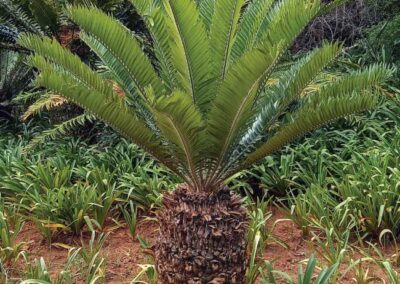
Cycads are considered long-lived and slow growing, and these traits make them vulnerable to the impacts of poaching, as adults are not quickly replaced. Cycads are characterised by being dioecious, meaning that different individual plants either have male or female reproductive parts (conspicuous large cones). Cycads are also considered prehistoric because they lack some advanced features modern plants possess, such as flowers and fruits. Cycads reproduce sexually, where a male cone produces pollen, leading to the pollination of fertile seeds produced by female cones. Cycads can also reproduce asexually without pollination by forming “suckers” on the “mother” plant. Cycads display characteristics that resemble palms, with a stout and woody trunk and a crown of large, hard, stiff, evergreen, and usually pinnate leaves. If you are unsure whether you are looking at a cycad or a different plant, here is a poster that will help you identify cycads.

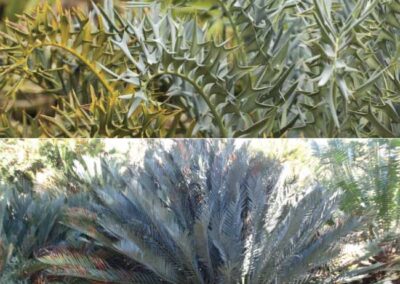
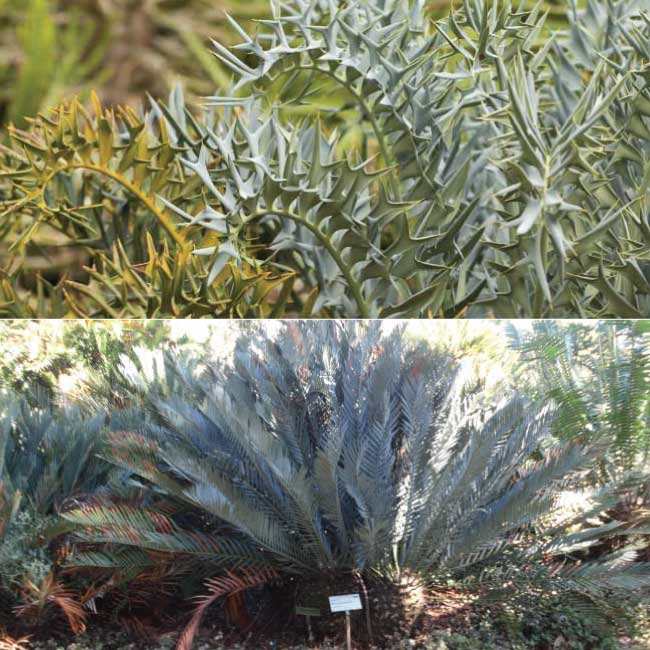
South Africa is a hotspot for cycad diversity with 38 indigenous species (37 species of Encephalartos and one species of Stangeria), which account for over 10% of the world’s cycads. Encephalartos species, each with distinct characteristics and unique appearances, are often used in landscaping and gardening. Many of these species are endemic to South Africa and play a crucial role in our ecosystems, providing habitat and food for various animals, including insects, birds, and mammals. Moreover, cycads hold cultural and historical value in South Africa, with some species used by indigenous communities for medicinal and spiritual purposes. In some South African cultures, the cycad is also considered a symbol of longevity and strength. One of the most well-known species is Encephalartos lehmannii, known for its large size and striking blue-green colour. Another species, Encephalartos natalensis, is found in the coastal regions of South Africa and is known for its ability to grow in sandy soils. Encephalartos horridus is found in the Eastern Cape and is known for its sharp, spiky leaves. These plants are a unique part of South Africa’s natural heritage, popular among collectors and enthusiasts. Overall, Encephalartos cycads are fascinating plants for anyone interested in botany or gardening.


Sadly, many cycad species are threatened in South Africa, especially the Encephalartos group, with four being classified as extinct in the wild due to poaching. One such species, Heenan’s Cycad (Encephalartos heenanii), previously listed as Critically Endangered, was reassessed as extinct in the wild in 2022 due to “persistent pressure from plant collectors”. Criminal syndicates run a highly profitable trade, connecting impoverished and desperate poachers to wealthy private collectors who value cycads as collectables. It seems the rarer the cycad, the more sought after it is.

Because of their rarity and dwindling populations, the legal sale of Encephalartos cycads is regulated nationally and internationally. In South Africa, cycad permits are regulated under the National Environmental Management: Biodiversity Act (NEMBA). Each province also has conservation laws to further protect and regulate the cycad trade. However, there are legal methods of obtaining and keeping artificially propagated cycads. If you own an indigenous cycad or plan to purchase one, you must obtain a permit. You may not need a permit for exotic cycads, but it’s always best to make sure. To find out the requirements for your area, or if you have any other queries, please visit the EWT’s cycad page or contact the Endangered Wildlife Trust’s Wildlife in Trade Programme at witinfo@ewt.org.za. It is crucial to ensure compliance with these regulations to avoid penalties and help to conserve these prehistoric plants in peril.

Thank you to US Fish and Wildlife Services for supporting this project.
 

Documenting all the Biodiversity on Papkuilsfontein

Documenting all the Biodiversity on Papkuilsfontein

Mission (im)possible: Documenting all the Biodiversity on Papkuilsfontein

Bonnie Schumann, the EWT’s Dryland Conservation Programme Senior Field Officer

The Endangered Wildlife Trust recently conducted a comprehensive biodiversity survey on the Papkuilsfontein proposed Protected Environment. Papkuilsfontein is situated near Nieuwoudtville in the Northern Cape in a region known for its rich and unique biodiversity. However, the official list of species recorded on this property contains less than 300 species, and hence our mission was to rectify this and kick-start building a list that would accurately represent the incredible biodiversity found on this property.

Papkuilsfontein, owned by the Van Wyk family, is currently being declared as a formally Protected Environment in collaboration with the EWT and the Department of Agriculture, Environment, Land Reform, and Rural Development (DAERL). Following the survey, the species list now stands at over 1,300 species, and this is just the beginning!

The Bokkeveld Plateau is an area where three biomes meet, the Fynbos, the Succulent Karoo, and the Hantam Karoo. Combined with the variation in altitude, topography, and geology, this creates ideal conditions for the incredible evolution of species and diversity in the region. Nieuwoudtville is world-famous for its bulb plant diversity and density, with over 20,000 bulbs recorded per square meter. Research on the array of invertebrates associated with plant diversity has only started to scratch the surface. So the task of recording all things great and small over approximately 7,000 ha was a formidable one and will take several years to come close to accomplishing!

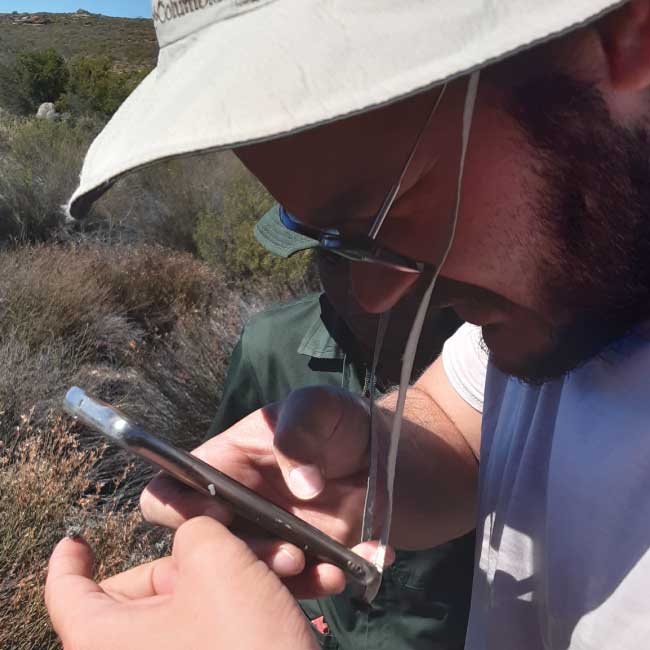
The EWT enlisted the help of a group of volunteers passionate about conservation to tackle this enormous task. The Custodians of Rare and Endangered Wildflowers, ably led by Ismail Ibrahim and comprising a team of students from the University of Stellenbosch Botanical Gardens, answered the call. Retired small mammal expert, Dr Guy Palmer, was put back to work, while Handré Basson was persuaded to abandon his studies for a few days and join us, bringing his passion for invertebrates and skill at finding them to the team. We were privileged to have had Dr Michael Kuhlmann, a world-renowned expert on solitary bees, join us for two days. Thanks to Dr Kuhlmann’s dedicated work on the plateau over the years, we know that Papkuilsfontein alone has an impressive list of over 100 species of solitary bees. Many of these are not yet described, and new species are still waiting to be discovered!

The EWT supplied the transport, and the Papkuilsfontein hospitality staff kept the team well-fed on some of the best hearty farm-style meals in the Karoo. Teams worked from dawn to dusk, scouring the rugged terrain and photographing and recording as much as possible. A camera trap survey was also conducted for six weeks, and tiny amounts of soil were collected for researchers to examine for environmental DNA later. Observation gathered from all three methodologies will contribute to a comprehensive understanding of the biodiversity present on the property.

The DAERL Stewardship Unit was instrumental in making the survey a success. A member of the unit, and ex-EWT staff member, JP le Roux, set up an iNaturalist project for the study and continues to work hard in the field to make sure the list of species keeps growing. iNaturalist is an online social network platform where people interested in biodiversity can share information. Anyone who sees an interesting plant or animal can photograph and upload the sighting to the platform, and a range of specialists are available to help identify the sighting. By setting up a project on the platform, all sightings made on the property can be collated, and species lists can be exported. The four-day survey provides just a glimpse of what is on the property. By having visitors and landowners take part in recording biodiversity using iNaturalist, we can ensure that a range of wildlife is captured, including plants and invertebrates, some of which may only make their appearance briefly every few years when conditions are just right for them. This makes recording the full spectrum of biodiversity at any location more achievable.

The region is special in terms of biodiversity and natural beauty. The EWT would like to thank all the landowners on the Bokkeveld Plateau who have a long-term vision to protect these features by declaring their properties as protected areas. This requires a high level of dedication at a very personal level in a day and age where talk is often cheap. Remember that Papkuilsfontein is not just an outstanding guest farm but is also a small commercial stock and rooibos tea producer. This conservation initiative is a great example of what can be achieved when the agricultural sector joins with the conservation sector to protect our natural resources at all levels.

The work on Papkuilsfontein was made possible with generous support from the Table Mountain Fund.


 For more information:

Hunting the hunter: for the love of Mantids

Hunting the hunter: for the love of Mantids

Hunting the hunter: for the love of Mantids

Bonnie Schuman, the EWT’s Drylands Conservation Programme and Bianca Greyvenstein, Unit for Environmental Sciences and Management, North-West University

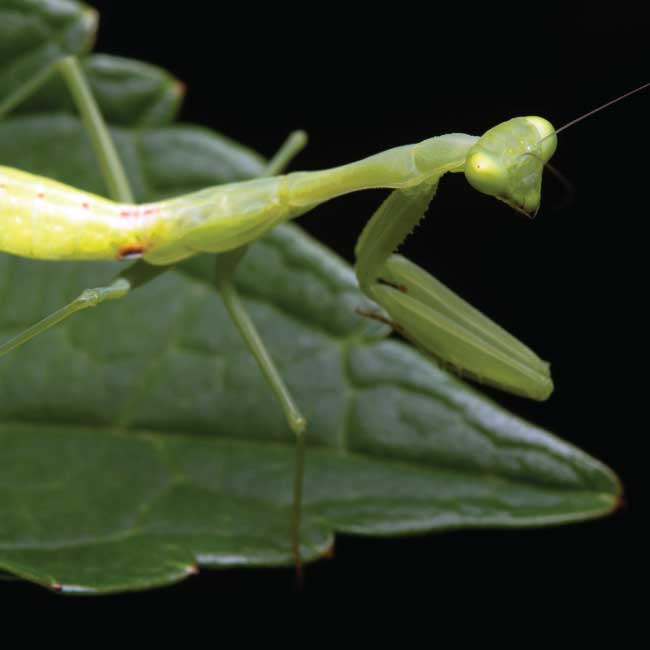
Praying mantises are weird and wonderful-looking insects that most people seem to be familiar with, with their iconic “prayer” posture and reputation for honeymoons that end badly. However, as a taxonomic group, very little is known about the Mantids regarding their ecology, behaviour, distribution or even the range of species in South Africa. Two people are working hard to change this situation and are hunting these little hunters across South Africa with a view to finding out all there is to know about these poorly understood miniature predators.

Bianca Greyvenstein, Post Doctoral Fellow, and Professor Johnnie van den Berg from the North-West University (NWU) are the leading experts in South Africa on Mantids, specialising in praying mantid (Mantodea) diversity. The Endangered Wildlife Trust (EWT) recently invited these two researchers to visit the Papkuilsfontein proposed Protected Environment on the Bokkeveld Plateau near Nieuwoudtville to document the praying mantis species on the property. The EWT, in collaboration with the landowners (the Van Wyk family) and the Department of Agriculture, Environment, Land Reform and Rural Development (DAERL), recently launched an initiative to document the incredible range of biodiversity on the property.

The Northern Cape, in particular, is extremely data deficient with regard to insect diversity, especially in the Mantodea Order, under which these charismatic mantids are grouped. For example, of the approximately 4,000 museum specimens representing 170 species that have been collected in South Africa since 1838, only 0.2% are from the Northern Cape Province. Of these 15 specimens, only one species was collected near Papkuilsfontein.

Due to the poor rainfall season experienced during the winter prior to the survey, the region was extremely dry during this visit, and the diversity of arthropods at this time of year was extremely low. However, the Bokkeveld Plateau is not known to be a biodiversity hotspot for no good reason. Despite the ongoing drought and the heatwave experienced during the survey, surprisingly high levels of mantid diversity were recorded. Sampling focussed on the Bokkeveld Sandstone Fynbos vegetation type, but the Nieuwoudtville Shale Renosterveld and the Hantam Karoo were also surveyed.

Rresearchers visit the Papkuilsfontein proposed Protected Environment near Nieuwoudtville to document the praying mantis species on the property. Photo credit: Paul Janse van Rensburg

Records reflect that eight superfamilies in the Mantodea order have been documented in South Africa so far, of which no less than six were present on Papkuilsfontein. Of the known 22 families, seven were recorded on Papkuilsfontein, which also represented ten different genera. In addition to recording the Mantids, the NWU team documented eight insect orders, 23 families and 36 species during their short visit in January 2023.

The team will return to the plateau in spring this year, and hopes are high for a good winter rainfall season. Just imagine what awaits discovery on this spectacular property following a good rainy season! The NWU team welcome sightings of Praying Mantises from across South Africa, as these can help shed light on species diversity and distribution. High-resolution photographs will go a long way in aiding the identification of any sightings.

Please share any sightings of Preying Mantises with Bianca at the Unit for Environmental Sciences and Management, North-West University, Potchefstroom, South Africa. Email: biagrey90@gmail.com

The work on Papkuilsfontein was made possible with generous support from the Table Mountain Fund

Praying Mantis

Paul Janse van Rensburg

Fun Facts about Praying Mantises

  • Praying Mantises feature prominently in mythology in many cultures, most likely due to the fact that they fold their forelegs in what appears to be a “praying” position.
  • Praying Mantises are wait-and-hunt predators. They wait patiently for prey to pass close by and then snatch the unsuspecting prey with their long, spiny forelegs.
  • Contrary to common belief, female Mantids do not always consume their male partners after breeding. If the female is well-fed, the lucky suitor will escape with his head remaining on his shoulders.
  • Turns out these little predators live on average 260 days, and some of their egg packets or ootheca can have up to 150 tiny mantids that emerge all at once! These little guys will have to shed their skin or moult between five and nine times before they become big, beautiful adult mantids.
Commemorating 50 Years – Spay Campaign in the Waterberg

Commemorating 50 Years – Spay Campaign in the Waterberg

Commemorating 50 Years of Conservation Excellence – Spay Campaign in Vaalwater

Kedibone Chauchau, EWT’s PR and Marketing Coordinator

Half a century after it was founded, the Endangered Wildlife Trust (EWT) has achieved immeasurable gains for wildlife conservation. With more than 110 staff members working across 13 African countries, the EWT is arguably one of the most effective and impactful conservation organisations working across such a diversity of species and ecosystems and collaborating with all relevant stakeholders.

Often recognised for its role in conserving charismatic species like the Wild Dog and Cheetah, the EWT was one of the first organisations to galvanise serious conservation action for vultures across the region. Just as important are the benefits of conservation to thousands of people the EWT has worked with through job creation programmes, education, resource protection and provision, and empowerment of people to take control of their environment and their futures.

The EWT’s relationship with communities in the Waterberg has been strengthened through the carnivore conservation and human-wildlife conflict mitigation work that we do in the area. The Waterberg is a key area for carnivore conservation in South Africa and is home to one of the last free-roaming Wild Dog populations in the country. The EWT works hand in hand with landowners and managers to resolve any carnivore-related issues in the area and teach them and encourage them to teach others how to deal with such issues in a non-lethal way.

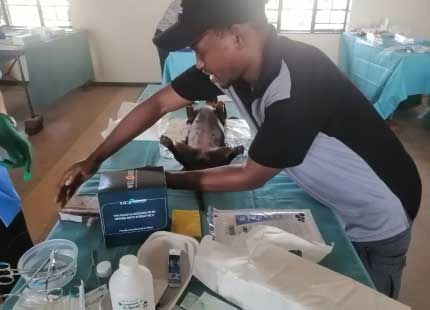
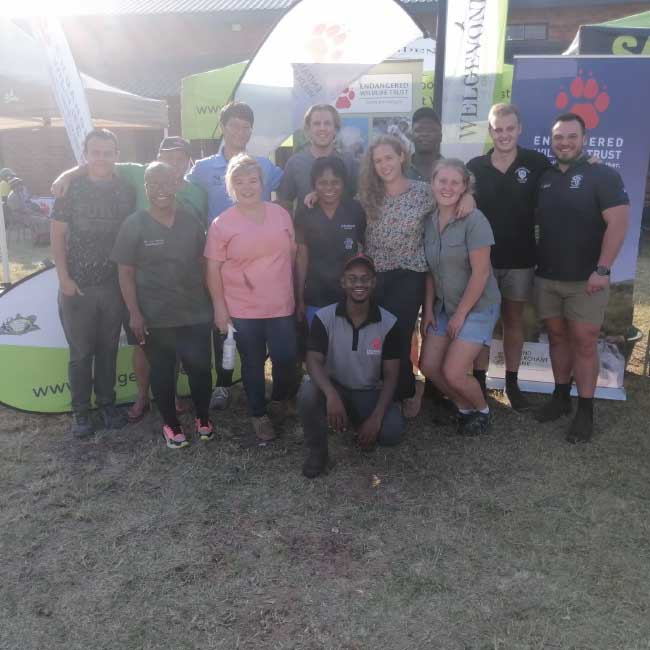
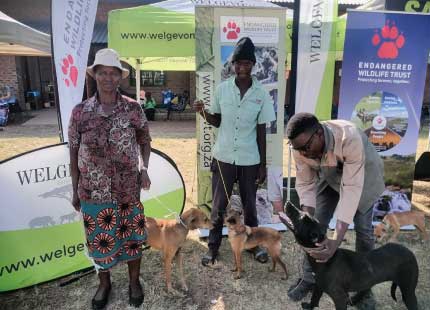
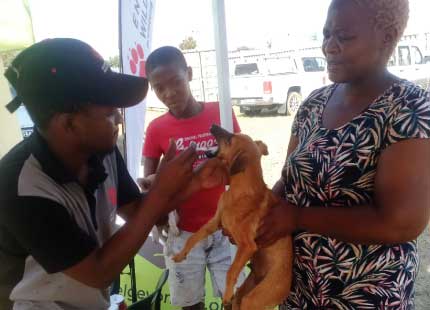
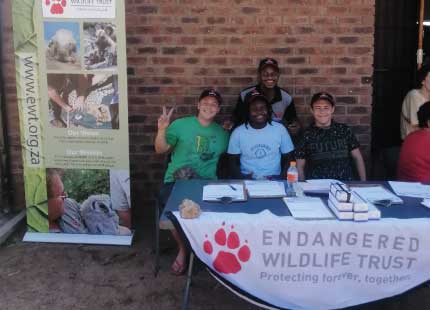
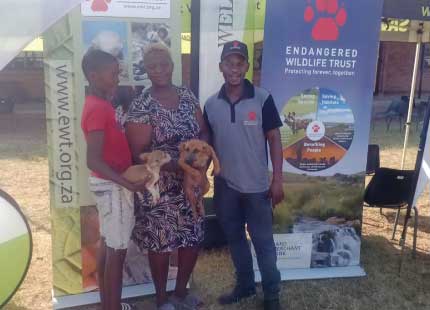
One of the ways in which the EWT benefits local communities is through spay campaigns, which are costly and often unaffordable for communities. These campaigns encourage people to bring their dogs in so the EWT and partners can facilitate sterilisation at no cost. In honour of the EWT’s 50th Anniversary, we ran a spay campaign to sterilise 50 domestic dogs and cats in the township of Vaalwater, Limpopo, on 29 and 30 April.

“Sterilising domestic dogs in communities helps to prevent the overpopulation of stray/feral dogs, which can pose a danger to humans. Reducing dog numbers in the area is also critical in preventing the spread the Transmissible Venereal Tumour (TVT) disease or any other diseases amongst domestic dogs and their wild counterparts such as Wild Dogs.” – The EWT’s Carnivore Conservation Programme’s Field Officer, Joseph Hlako.

The Endangered Wildlife Trust collaborated with Prime Crew Animal Rescue and the Welgevonden Environmental Awareness Programme to organise and run the much-needed campaign. With the help of 12 vets, the EWT went well above the target of sterilising 50 dogs and cats. Out of the 185 animals that were brought, 154 were sterilised, including 120 dogs and 34 cats. A special mention to the vets and the individuals that assisted with donations and their time.

The EWT also helps livestock farmers to reduce and prevent predation on their livestock by large carnivores like leopards through the Livestock Guarding Dog project. Game farmers are also assisted with various human-wildlife conflict mitigation strategies, environmental education, skills development, and other interventions implemented in the communities.

The real power for change lies within each of us – in our everyday engagements with people who learn from us, teach us, and join us in our timeless campaign to protect forever, together.

Update on the disease killing our rabbits: Rabbit Haemorrhagic Disease Virus

Update on the disease killing our rabbits: Rabbit Haemorrhagic Disease Virus

Update on the disease killing our rabbits:

Rabbit Haemorrhagic Disease Virus

Johan du Plessis, EWT’s Drylands Conservation Programme Manager

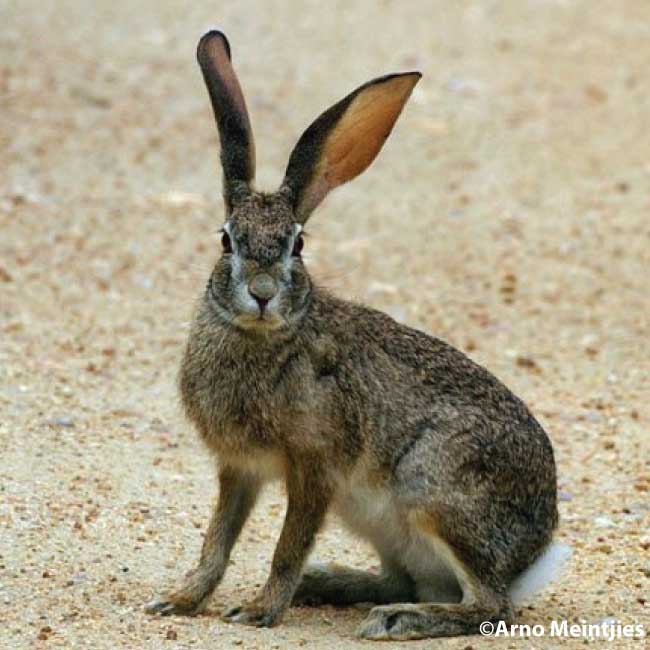
In October 2022, a report came through to the EWT of a dead Scrub Hare in the Sutherland-Middelpos area in the Northern Cape. It was not an unusual occurrence, but it was just the first of many cases of hare and rabbit (lagomorph) deaths rapidly spreading as far as Springbok and Fraserburg in the Northern Cape and the Montagu area in the Western Cape. It was clear that something was infecting and killing rabbits much faster than normal.

We knew something very worrying was out there and feared for our indigenous lagomorph species. After testing affected carcasses at the Onderstepoort Veterinary Research Laboratory, the Department of Agriculture, Land Reform and Rural Development issued a media statement on 17 November 2022 announcing what many had begun to suspect – the culprit behind the widespread mortalities of wild hares and domestic rabbits was confirmed as Rabbit Haemorrhagic Disease Virus (RHDV) – strain RHDV2. There have been more recent reports of wild hares dying in the Merweville and Beaufort West regions and domestic rabbits in Cape Town and surrounds. The presence of RHDV in South Africa, particularly in these areas, is of great concern as our indigenous Red Rock Rabbit, the Critically Endangered Riverine Rabbit, and other indigenous hare species are all susceptible to the virus, and they are far less prolific than domestic rabbits, and we cannot afford to lose too many or the populations will be under threat.

The virus originated in China in 1984 and has since spread to many countries. This virus is highly contagious but only affects lagomorphs (rabbits and hares). It spreads very easily, normally through direct contact between animals, but the virus is most likely also carried by flies and scavengers feeding on carcasses, and on clothes, shoes, and car tyres. RHDV is a controlled animal disease. We recommend contacting your nearest state veterinarian to take samples if you encounter unnaturally large numbers of dead rabbits/hares on your property. The unnecessary transport and touching of infected carcasses should be avoided as far as possible.

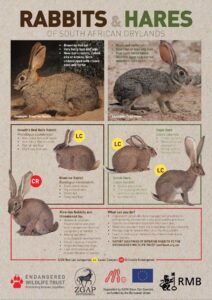
Poster identifying South African Dryland rabbits and hares

Poster identifying South African Dryland rabbits and hares

During the past few months, the EWT has tracked and mapped all known hare and rabbit deaths. While there have been many reports of dead hares and domestic rabbits, there have fortunately only been a few Red Rock Rabbit mortalities and no reported deaths of Riverine Rabbits. We continue to work closely with the department to record and map all reports and are pleased to note that the number of deaths reported has declined since December 2022.

We urge farmers to report any wild hare and rabbit deaths to ewt@ewt.org.za and include your name, farm name, cell number, and GPS location of the incidents (if possible). Please also contact your local state vet and request that necropsies be done and the specimens sent to Onderstepoort. Farmers with Riverine Rabbits on their farms are requested to monitor the riparian areas and immediately report any Riverine Rabbit deaths to the EWT.

Our Drylands Conservation Programme is also working closely with provincial and state veterinary departments to develop best practice guidelines on managing dead rabbits and hares on your property. These will be released as soon as possible. Until then, please get in touch with the local state vet for assistance with wild hares/rabbits, which can be identified with the help of the attached poster.

Western Cape contact details can be found here: https://www.elsenburg.com/veterinary-services/animal-health-and-disease-control/

Contact Dr Bertus Nel at 0273411045 or nel.bertus@yahoo.com or your closest state vet for assistance in Northern Cape.

Do you need help telling a rabbit from a hare? Here’s a quick reference on the rabbits and hares of South African Drylands

Adventurous Bateleur astounds conservationists

Adventurous Bateleur astounds conservationists

Adventurous Bateleur astounds conservationists

Andre Botha, EWT’s Vultures for Africa Programme Manager

Conservationists from the EWT and its partners, the Chuilexi Conservancy, Niassa Carnivore Project, and WCS/ANAC from the Niassa Special Reserve (NSR) in Mozambique were recently astounded when one of their tracked birds started exploring the wider Mozambique landscape.

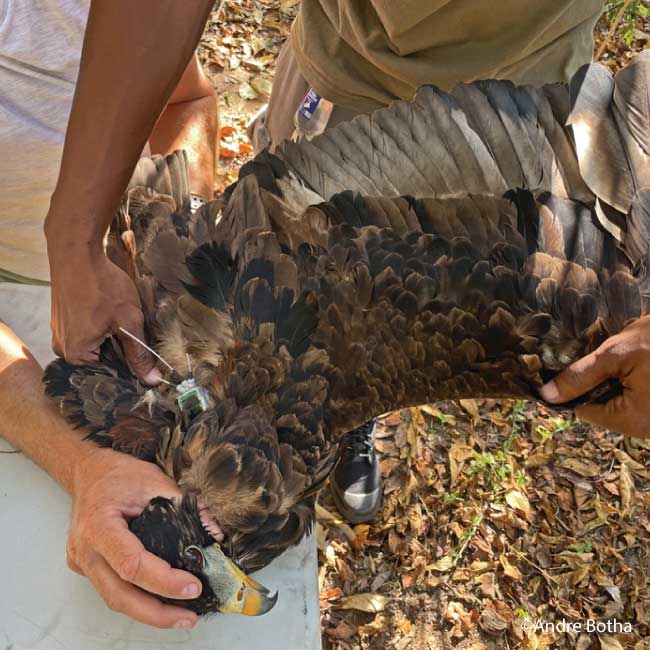
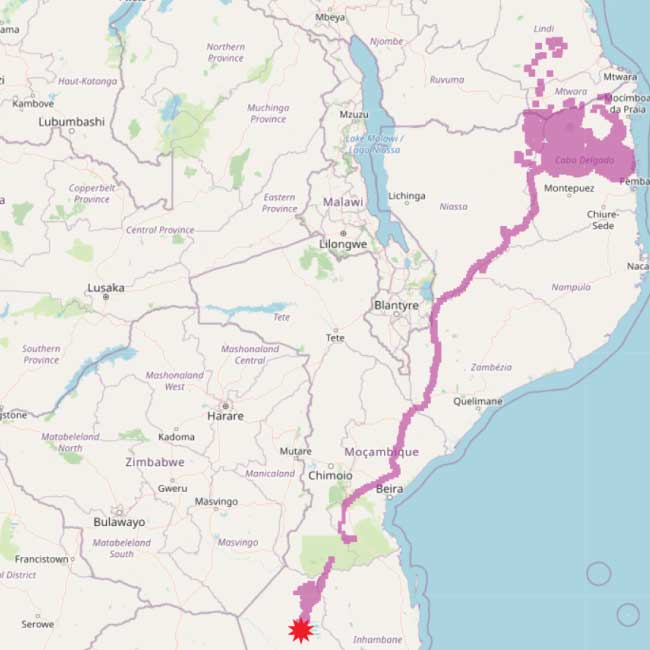
On 10 June 2022, an immature female Bateleur Eagle (Terathopius ecaudatus) was trapped and fitted with a GSM tracking unit as part of the work to establish a tracking sample of 23 vultures and other scavenging birds in this beautiful northern Mozambique landscape. Contrary to expectations that this bird would remain within the confines of the NSR, she almost immediately started venturing east from Niassa to the coast, where she spent a significant amount of time in the Quirimbas National Park northeast of the city of Pemba, and even roamed further north into southern Tanzania at times, often returning to Niassa.

In late January/early February 2023, this pattern of movement significantly altered when the bird started heading southwest, briefly skirting the Malawian border before travelling further south and passing east of Gorongosa National Park, across the Pungwe and Save rivers to where her tracking unit shows she is currently spending time in the Banhine National Park, approximately 1,200 km south of Niassa. This scale of movement is usually associated with migratory species or vultures and is rather unexpected in this less adventurous species, although adults are known to cover considerable distances within their foraging range daily.

This scale of movement emphasises how little we know about the movements of this Endangered species and the need for a more detailed study of its movement biology. As with vultures, a better understanding of Bateleur movements will enable us to identify key staging, foraging and other sites where appropriate conservation action can be focused. We will be keeping a close eye on this bold Bateleur – who knows where she may wander next?