Donate today: support our k9's 
 mission

Synergies and Trade-Offs in the effort to save our natural world: the Global Biodiversity Framework, the Sustainable Development Goals and the Climate Action Goals

Synergies and Trade-Offs in the effort to save our natural world: the Global Biodiversity Framework, the Sustainable Development Goals and the Climate Action Goals

Synergies and Trade-Offs in the effort to save our natural world: the Global Biodiversity Framework, the Sustainable Development Goals and the Climate Action Goals

Namita Vanmali and Ian Little

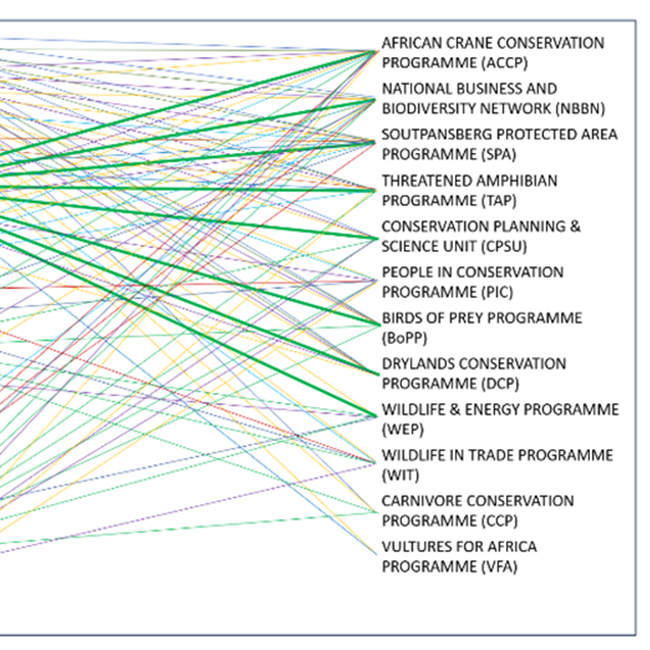
An illustration of the multiple linkages and alignment between the EWTs programmes and the Global Biodiversity Framework targets, with the specifically climate change relevant links in bold green.

Climate change is now widely recognised as a key driver of biodiversity loss, and although they are inextricably linked, historical approaches to policies addressing biodiversity loss and climate change have often treated these challenges separately. This divergence traces back to the independent conventions established during the 1992 Rio Earth Summit—namely, the Convention on Biological Diversity (CBD) and the United Nations Framework Convention on Climate Change (UNFCCC). Over time, an increasing alignment of mechanisms within these frameworks and recognition of the impacts of climate change on biodiversity has allowed for better integration of strategies and enabled a more holistic approach to addressing these associated challenges. A significant milestone in this integration occurred recently at COP27 in Sharm el-Sheikh, where specific sections were dedicated to oceans, forests, and agriculture for the first time. This cross-pollination of strategies is paramount in achieving the objectives of climate mitigation and biodiversity conservation. “Nature-based solutions” (NbS) have been put forward as a unifying mechanism for achieving conservation and climate goals, underscoring the importance of safeguarding both environmental and social interests. The IUCN defines NbS as “actions to protect, sustainably manage, and restore natural and modified ecosystems that address societal challenges effectively and adaptively, simultaneously benefiting people and nature. They target major challenges like climate change, disaster risk reduction, food and water security, biodiversity loss and human health, and are critical to sustainable economic development”.

The Global Biodiversity Framework (GBF – 2022) provides a comprehensive roadmap for biodiversity conservation for the coming decade, outlining actions to halt biodiversity loss and promote sustainable ecosystem management. Comprising 23 action-oriented global targets to be achieved by 2030, it serves as a critical milestone on the journey toward overarching biodiversity conservation goals. Targets 1-8 focus on reducing threats to biodiversity, 9-13 emphasise meeting people’s needs through sustainable use and benefit sharing, and targets 14-23 focus on providing tools and solutions necessary to implement the GBF effectively. By addressing threats to biodiversity and boosting ecosystem resilience, GBF Targets 1-8 strongly align with goals for climate change adaptation, with target eight specifically focussed on minimising the impacts of climate change on biodiversity. There is an emphasis on expanding protected areas, halting species losses and managing invasive species impacts using holistic climate strategies. GBF Targets 2, 10, 11, 15 and 16 all align with climate change adaptation goals by emphasising sustainable resource use, ecosystem restoration and improving ecosystem service provision. While GBF Targets 13-23 emphasise the integration of biodiversity considerations into various sectors, policies, and resource mobilisation efforts, which aligns with climate change mitigation and adaptation goals.

How you can help our cause:
DONATE VIA EFT:

The Endangered Wildlife Trust

FNB Rosebank (Branch code: 253305)

Account number: 50371564219

Use Reference: Climate Action

An illustration of the multiple linkages and alignment between the EWTs programmes and the Global Biodiversity Framework targets, with the specifically climate change relevant links in bold green.

While there is obvious synergy between the targets of biodiversity conservation and climate change mitigation and adaptation, there can be misalignments and tensions between the two. Conflicting land use priorities may cause trade-offs between GBF Targets and climate goals. While GBF Targets 1, 2 and 3 concentrate on spatial planning and ecosystem restoration, achieving climate goals may require land for renewable energy infrastructure and bioenergy with carbon capture and storage (BECCS) projects requiring large-scale land use, which can and does conflict with biodiversity conservation efforts. The EWT has developed a number of resources to guide and streamline decision-making to minimise these biodiversity conflicts, and strongly supports renewable energy as opposed to the continued use and extraction of fossil fuels. Further, since climate action goals prioritise carbon sequestration to meet emission reduction goals, current reforestation and afforestation practices can negatively impact biodiversity if restored ecosystems serve climate mitigation instead of biodiversity conservation. Targets 8–13, which concentrate on sustainable resource use for people, can be at odds with critical Sustainable Development Goals (SDGs). Restricting access to resources in protected areas, for instance, may impede Poverty Reduction and Zero Hunger SDGs in some communities that rely on the land for agriculture or resource extraction. This conflict is also seen within the GBF targets 5 (Ensure the sustainable use and trade of wild species) and 9 (Protect & encourage customary sustainable use), where traditional use of wildlife resources is very often difficult to manage sustainably as a result of high demand for threatened resources and socio-economic pressures on rural communities.

While GBF Targets 14-23 theoretically align with implementation methods for climate change adaptation, challenges arise in practice where socio-economic pressures and needs conflict with conservation priorities and resource allocations. These challenges include potential competition for resource allocation, funding, land use and opposing interests within various sectors. Balancing short-term economic gains with long-term environmental benefits remains a complex and nuanced task. Integrated strategies that control possible conflicts are required to navigate these trade-offs successfully. The GBF targets and climate action goals both seek a just transition towards sustainability. However, misalignment between the GBF targets, climate adaptation, and SDGs often stems from divergent priorities between emission reduction, environmental preservation and broader development objectives.

Globally the financial cost of the transition to renewable energy dwarfs the funding required for biodiversity conservation. While it is imperative that the world prioritises a move away from reliance on fossil fuels, it is equally important that we recognise the parallel importance of conserving our biodiversity assets. The global narrative around the protection of our environment and commonly used terms like “Nature-based Solutions” should not allow the energy transition agenda to overshadow the biodiversity conservation crisis in terms of financial resource allocation and ongoing global dialogue



The Unseen Threat of Pampas Grass in South Africa

The Unseen Threat of Pampas Grass in South Africa

The Unseen Threat of Pampas Grass in South Africa

Dr Kerushka Pillay, the EWT’s WILDLIFE IN TRADE PROGRAMME

Pampas Grass, celebrated for its graceful plumes and enchanting presence, has found its way into countless South African homes and events, adorning weddings, and birthday parties and featured in bespoke interior decor. Its feathery inflorescences add an air of elegance and grace that many find irresistible. Yet, lurking beneath its captivating exterior is an ecological menace that demands our attention. The threat of Pampas Grass in South Africa is highlighted below, providing you with the basic knowledge and understanding of this unseen alien invasive species.

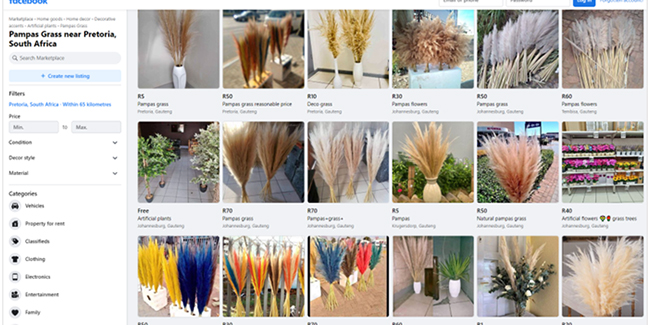
NB: Pictures used without permission from the internet


Pampas Grass: A Brief Overview

Common Name: Pampas Grass
Scientific Name: Cortaderia selloana, C. jubata (Poaceae family)
Alternative Common Names: Pampasgras; silwergras (Afrikaans)
Native range: South America – Argentina, southern Brazil, Uruguay, Paraguay, Argentina and Chile
Invasive Status in South Africa: CARA 2002 – Category 1a; NEMBA – Category 1b. Sterile cultivars or hybrids are not listed

Appearance and Origins

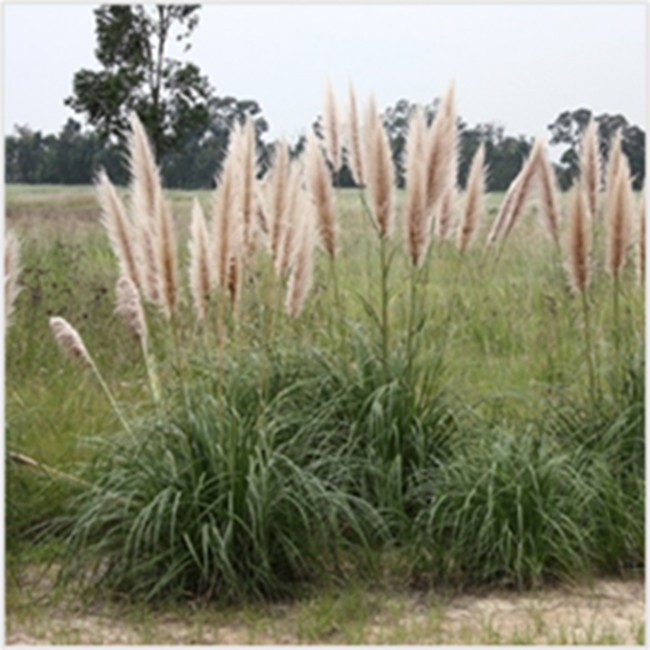
Hailing from the Pampas regions of South America, Pampas Grass is a robust tussock grass with a striking presence. Its clumps can reach impressive diameters of up to 3.5 meters, while its towering flowering stalks may soar to a height of 4 meters. The leaves of this grass are characterised by their greyish or bluish-green hues, often forming a V-shape in cross-section with rough margins. But the defining feature that captures our imagination is undoubtedly the feathery silvery-white to pink or mauve inflorescences that grace its presence from February to April.

Legislation of the Unseen Invader

In South Africa, Pampas Grass is regarded as an invasive species of serious concern. Classified as a Category 1a invasive species under the Conservation of Agricultural Resources Act (CARA) of 2002 and falling under Category 1b of the National Environmental Management: Biodiversity Act (NEMBA) National List of Invasive Species, this invasive menace has firmly established itself in the Western Cape, Eastern Cape, KwaZulu-Natal, and Gauteng provinces. According to CARA 2002, residents who fail to comply with a contravention notice could be fined R5 000 or sent to jail for up to two years, or both penalties, for a first conviction. This could be doubled at a second or subsequent conviction.

How you can help our cause:
DONATE VIA EFT:

The Endangered Wildlife Trust

FNB Rosebank (Branch code: 253305)

Account number: 50371564219

Use Reference: WIT

Historical and Present-Day Uses

In some mining areas, particularly those with soil erosion issues, Pampas Grass was employed for soil stabilisation on mine dumps. The dense root system and vigorous growth of Pampas Grass helped prevent erosion, reduce soil loss, and stabilise the soil on mining waste piles.

Pampas Grass is a highly sought-after ornamental plant with a multitude of decorative uses. Its tall stature and striking, feathery plumes make it a favourite in gardens and landscapes, where it serves as a captivating focal point, privacy screen, or windbreak. Pampas Grass plumes, prized for their beauty, are often featured in dried flower arrangements, adding elegance to interior decor and event settings, including weddings and special occasions. Additionally, its versatility extends to seasonal and holiday decor. However, while Pampas Grass is cherished for its aesthetics, it should be used responsibly, as it can be invasive in certain regions, necessitating proper management to prevent ecological harm.

Modes of Propagation and Spread

Pampas Grass employs two primary mechanisms for its relentless spread. Firstly, through seeds, the plant produces an abundance of them in an open panicle, allowing these seeds to be carried away by the wind. This ease of dispersion enables Pampas Grass to colonise new areas with astonishing efficiency. Secondly, beneath the surface, Pampas Grass extends its reach through rhizomes  (underground stems) that facilitate the formation of new clumps nearby. This subterranean network plays a vital role in its rapid expansion.

The invasive character of Pampas Grass presents a significant threat to ecosystems, causing habitat displacement as it competes vigorously with smaller indigenous grass species for vital resources such as water, sunlight, and nutrients, disturbing the delicate balance of local ecosystems. Furthermore, the sale and utilisation of Pampas Grass plumes, often laden with seeds, directly fuel the expansion of this invasive plant. This not only demonstrates environmental irresponsibility but also constitutes an illegal activity when used as decorative accessories for weddings, events, or decor.


What can you do?

  • Familiarise yourself with the legislation
  • If you manage your own land, keep it clear of Pampas Grass
  • Do not buy Pampas Grass from nurseries
  • Purchase faux, synthetic and fake Pampas for ornamental purposes
  • Report any Pampas sales to the authorities

While Pampas Grass may initially appear to be a charming addition to your home or event decor, it is imperative to recognise the potential harm it poses to South Africa’s precious natural environment. Responsible usage and a commitment to avoiding Pampas Grass are fundamental steps in safeguarding our native ecosystems. Let us make informed choices to ensure that the beauty we seek in our decorations does not come at the expense of our invaluable wildlife and habitats. Together, we can protect South Africa’s rich biodiversity from the silent threat of Pampas Grass.

Contact the EWT for more information.


Adverts featuring Pampas Grass for sale.


The Fragility of Africa’s Lions

The Fragility of Africa’s Lions

The Fragility of Africa’s Lions

Samantha Nicholson, the EWT’s Carnivore Conservation Programme


The African Lion (Panthera leo) is an iconic and culturally significant species, valued by both global public sentiment and local communities in many regions. Lions hold ecological value as apex predators, with their removal from ecosystems leading to adverse and long-lasting ecological consequences. Additionally, lions contribute to the economies of countries through tourism, attracting both photographic tourists and trophy hunters.
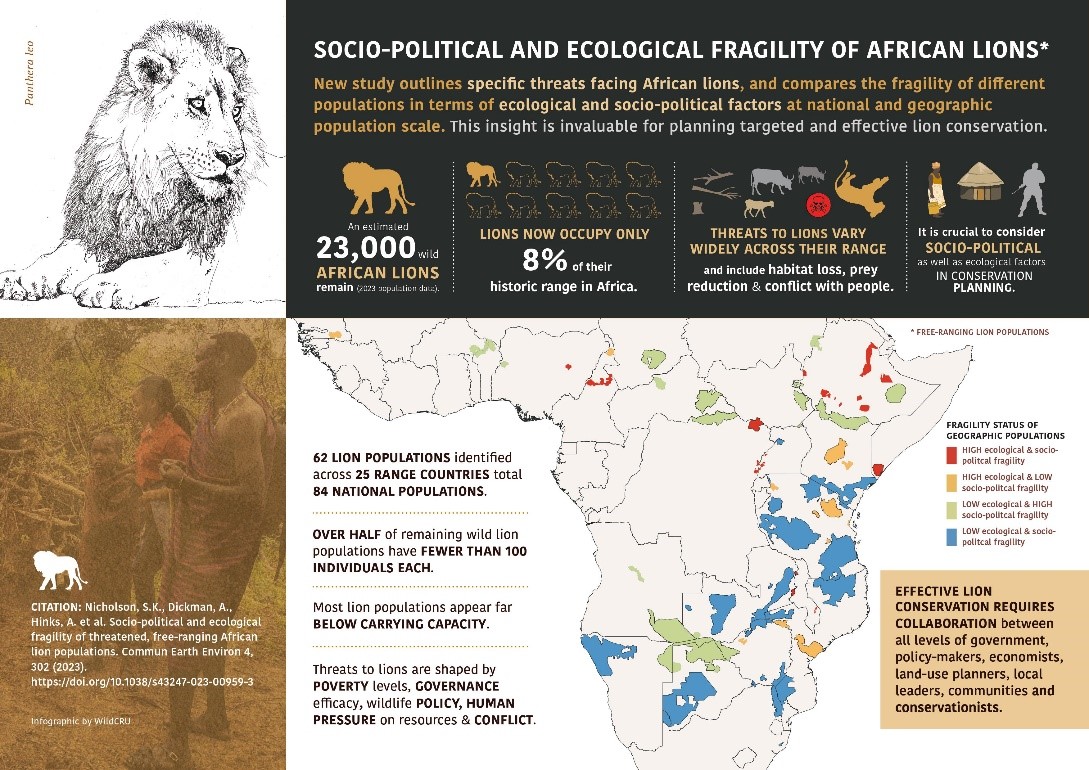
However, lion populations have dramatically declined over recent decades, with the most recent estimates suggesting 20,000 to 25,000 wild lions remaining in Africa, and they have been extirpated from 92% of their historical range. As such, effective conservation efforts are urgently needed, but the lack of comprehensive knowledge about specific threats and the socio-political contexts has hindered progress. The underlying drivers of lion threats are complex, involving socio-political factors such as poverty, governance (including corruption), wildlife policies, human pressures, and armed conflicts.
A recent study conducted a comprehensive assessment of the fragility of lion populations across their African range, considering both ecological and socio-political factors. The study first identified and mapped wild African Lion populations. The researchers then created two general categories of population fragility, ecological and socio-political, and identified factors in these two categories that may influence the survival of wild lions. For example, a smaller lion population or higher densities of people and livestock were factors contributing to higher ecological fragility, while higher corruption or lower GDP per capita would contribute to greater socio-political fragility. Once calculated, both socio-political and ecological factors were combined into a single overall fragility index, and each lion population was compared relative to all others. The fragility score does not suggest which lion populations deserve protection or funding. It does, however, highlight the varying ecological and anthropogenic pressures facing different population and which populations may require relatively more resources (financial or other) to conserve.

How you can help our cause:
DONATE VIA EFT:

The Endangered Wildlife Trust

FNB Rosebank (Branch code: 253305)

Account number: 50371564219

Use Reference: CCP LIONS


The combination of these two indices provided some interesting comparisons. Some populations may ultimately have similar fragility scores, but they are driven by different threats. Thus, while on the surface, the lone lion populations in Sudan and Benin may appear similar, they likely require different levels of investment and perhaps even different types of intervention for conservation to succeed. Pouring money into conserving Sudan’s lions may be relatively ineffective unless the socio-political factors such as the civil war are dealt with first. Thus, stakeholders, investors and conservation groups must be aware of these differences when approaching lion conservation and evaluating how much money, time or other investment may be needed to see success.
Our study revealed that Maze National Park in Ethiopia was identified as the most ecologically fragile population at both a geographic and national level. This can largely be attributed to intense edge effects from high densities of both cattle and people. When assessing at the national level, Cameroonian and Malawian lion populations were most ecologically fragile due to their small populations and isolation from other lion populations. Somalia was the most fragile lion range country from a socio-political perspective. Maze National Park and Bush-Bush (Somalia) were found to be the most fragile overall when ecological and socio-political fragility scores were combined.
Conservation is needed more than ever. Our study showed less than half of the 62 known remaining free-ranging wild African Lion populations have over 100 lions. African Lions remain in only 25 countries and nearly half of these nations have fewer than 250 individuals. Eight countries now house only a single wild lion population. Although lions are estimated at between 20,000 and 25,000 individuals, there is concern that these small populations and countries with few individuals will disappear.
These findings emphasize the need for more nuanced and precisely targeted lion conservation plans, considering both ecological and socio-political dimensions. As lions teeter on the brink of extinction, this research serves as a vital resource for informed conservation efforts. By considering ecological and socio-political factors, this model offers insights into factors affecting population persistence and successful conservation action.

Nicholson, S.K., Dickman, A., Hinks, A. et al. Socio-political and ecological fragility of threatened, free-ranging African lion populations. Commun Earth Environ 4, 302 (2023).

https://doi.org/10.1038/s43247-023-00959-3


A fond farewell from the Editor

A fond farewell from the Editor

A fond farewell from the Editor

 
Emily Taylor, Communications Manager

I have had the pleasure of compiling and editing the remarkable stories the EWT’s staff members have written over the last three years and reading and contributing to them for eight years before that. It’s a little late to introduce myself, but I am sadly leaving the EWT and wanted to say a few words about my EWT story and acknowledge those who have walked beside me.
I stumbled into conservation after being on a very different track, and the second I did, it was like the clouds were parting. The sun was shining on the vast and exciting paths I could take that would make my life meaningful and allow me to make a difference.

Despite growing up in Joburg with little first-hand experience of the bush, I have wanted to work with animals since I was old enough to want anything. Back then, it was to be a vet. Unfortunately, I was not (to put it mildly) very strong in the maths and sciences at school, and I felt like this was a hurdle too high to scale. And so, not knowing my true path, I ended up with many others in a lecture hall for Psychology 101 – where hundreds of other first-year students with the same difficulty often find themselves. While it was fascinating, and if I didn’t encounter the same obstacle I faced in school (Statistics), I might have followed that path to Post-grad, but I didn’t. However, I found myself at least somewhat taken with Media Studies and Sociology, which I ultimately completed my honours in. The one thing that must be said is that one writes their way through Sociology, with endless weekly essays and assignments for four years. You’d think I’d have grown tired of writing, but it’s the one thing I do that has always helped me make sense of the world and express myself much more articulately than when I speak. It has also led me to the career I have had, even if I took the back roads and arrived later than I ever imagined.

When I was almost halfway through my Sociology Honours, two parallel events changed – you could say corrected – my route and my destination. I was doing my Honours through coursework, and I chose and was enthralled by Environmental Sociology. The course was led by Jacklyn Cock, who authored “The war against ourselves” –worth a read! The course was intended to broaden our thinking of the natural world and how we relate to it – how it has been affected by the deep injustices of South Africa’s past – not only the social, political, and economic, but also environmental injustices that disproportionately affect the disadvantaged. It cracked my city-girl mind wide open and showed me the many paths leading back to nature – that didn’t require too many encounters with maths! I could still do something worthwhile that married my deep-seated yearning for nature and the skills and critical thinking I had developed in my study of social sciences. The other event was a trip to Limpopo a few months into that year. My sister was doing community service in Tintswalo Hospital, and my mother and I drove up to see her one weekend. While there, I visited Moholoholo Wildlife Rehabilitation Centre. I saw the path not taken and was hooked after a tour, during which Stoffels the Honeybadger decided he would join while wrapped around my legs. There was no going back.

And after a few more pitstops, I found myself in my first year of varsity again in 2010 – this time, in the Nature Conservation Department at the Tshwane University of Technology. One of my first courses was called “Conservation Development” by Mr Andrew Lowry, who was one of the first students to work on Cheetahs in Etosha with the EWT in its early years. Most of the coursework was based on the EWT’s Vision Annual. I loved the course, and after learning about the work the EWT was doing, I decided it was my next destination!

As the pattern seems to follow, my career in the EWT has also been a bouncy and zigzagging (but exciting) road. After volunteering for the EWT for nine months, there was an opening for a Conservation Science Intern. I thought it would be a hard sell until the then Head of Conservation, Harriet Davies-Mostert, gave me a writing assignment as part of the application process. And that, as they say, was that. 11 Years later, I have played many roles in the EWT – volunteer Assistant Reserve Manager of the Modderfontein Reserve, Science Intern, Project Coordinator for the former Urban Conservation and the People in Conservation programmes, Head Writer, and last but not least, the Communications Manager.

I am honoured and grateful to have been a member of the EWT pack for more than a quarter of my life, and I am humbled every day by the passion and dedication of the EWT team. I am sad to leave the organisation I have grown to love and respect. However, due to health concerns, it is necessary for me to bow out and hope that this is not the last you see of me and my EWT journey. Thank you to all the past and present staff members who have become friends and colleagues. You are all truly inspiring, and I will follow your careers in anticipation of the remarkable achievements I know are still coming your way!

Period Poverty is real. Period equity should be too

Period Poverty is real. Period equity should be too

Period Poverty is real. Period equity should be too

Dr Jenny Botha, the EWT’s People in Conservation Programme Manager


Despite the progress made in making menstrual products available to school-going girls, approximately seven million girls in South Africa still suffer from what has been coined “period poverty”, as they don’t have access to enough menstrual products each month, according to Candice Chirwa, a prominent South African gender advisor.

Sanitary pads are expensive and can be difficult to access, particularly in remote rural areas. Under these circumstances, girls often have to make do with pads made from material or cloth, tissues or toilet paper, and other materials, many of which are not hygienic and cause the girls embarrassment and a loss of dignity and confidence. Some girls may avoid attending school on days they have their periods, hampering their education and limiting future economic prospects¹. In addition, despite efforts by educators and the Dept of Basic Education to address this, many girls still also lack access to crucial information about their bodies and women’s hygiene and health, including the types of menstrual products that they could potentially choose from. Ending period poverty and ensuring girls have access to the information they need is an important step towards achieving gender equity.

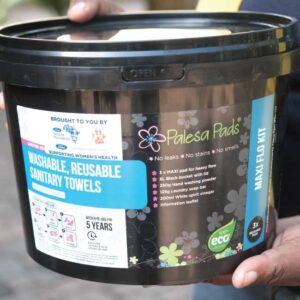
Palesa-Pads-Menstruation-Kit

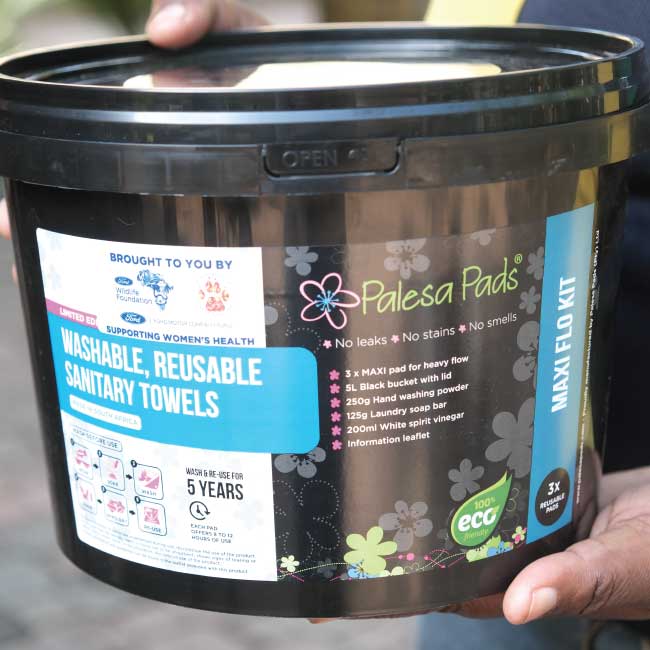
Palesa Pads Menstruation Kit containing three reusable sanitary pads, a bucket, washing powder, and other cleaning materials

In May 2023, the Endangered Wildlife Trust (EWT) held awareness sessions on women’s health together with educators from two secondary schools in Kutama, Limpopo Province and, through the generous support of the Ford Motor Company Fund and the Ford Wildlife Fund, provided 635 girls with sanitary health kits. Each kit included three reusable sanitary pads, a bucket, washing powder, and other cleaning materials. In addition, thanks to generous sponsors like EMLife and Palesa Pads, we gave twenty women working at the schools packs of three reusable sanitary pads each.

Apart from the emotional and psychological difficulties experienced by girls unable to cope with their periods, the environmental impacts of single-use sanitary products are high. In the United Kingdom, an estimated 3.3 billion single-use sanitary products (pads or tampons) are used each year, resulting in 28,114 tonnes of waste², most of which is disposed of in landfills, with the remainder being flushed into sewage systems, often causing blockages. Although there is a move towards more sustainable multi-use, organic products, most still contain plastic or rayon and use harsh chemicals during manufacturing.

In South Africa, girls often have difficulties disposing of single-use pads, and resource-poor schools frequently struggle with a lack of facilities, particularly in rural areas. If incinerators are provided, learners may be reluctant to use them, or they may not work, particularly during power outages. Disposing of sanitary products such as one-use pads and nappies in the environment has become a major cause for concern in under-served communities across South Africa, potentially increasing risks to human health and undermining the environment and biodiversity. Although the latter risk may appear relatively unimportant in light of the other substantial challenges facing South Africa and the world, the severity and impacts of biodiversity loss and potential ecosystem collapse are high and thankfully becoming increasingly recognised as a global threat. In the World Economic Forum’s 2023 Global Risk Assessment, biodiversity and ecosystem loss was ranked as the fourth most severe risk facing society over the next ten years.

Specific impacts of our recent Women’s Health project

The average woman who uses single-use sanitary products will go through between 11,000 and 17,000 sanitary pads or other disposable sanitary products in their lifetime at a cost of between R27,500 and R42,500 at current prices in South Africa. In contrast, reusable sanitary pads last 3-5 years and cost R50 each, depending on the make. The reusable sanitary pads we provided the girls in Kutama can be used up to 200 times if adequately cared for³. This means that the three pads given to each girl replace 600 single-use disposable pads that would otherwise have been disposed of in toilets, domestic waste, or the environment, equating to 471,000 single-use pads (if each of the 785 girls uses them). In addition, the girls from both schools also received two reusable pads in 2021, meaning that the majority received five pads each. In the 2021 women’s health project, over 90% of the 71 girls who gave us feedback through an anonymous and voluntary survey reported using the pads.

In August 2023, we will be providing an additional 150 girls from a third Kutama school with reusable sanitary pads, and we are going to expand the project to different areas in South Africa, including some of the most remote and under-served communities the EWT works with through our different programmes. More exciting activities are planned for the project, so keep an eye on our platforms for more on how we hope to contribute to period equity.

Thank you to the Ford Motor Company Fund, the Ford Wildlife Foundation, EMLife, and Palesa Pads for supporting the project.

[1] Crankshaw T.L., Strauss M. and Gumede B. 2020. Menstrual health management and schooling experience amongst female learners in Gauteng, South Africa: a mixed method study. Reproductive Health 17:48 p.15.

[2] Panell A.G. Blair, Y. Bajón -fernández, R. Villa. 2022. An exploratory study of the impact and potential of menstrual hygiene management waste in the U.K. Cleaner Engineering and Technology 7: p7.

[3] https://www.iol.co.za/business-report/entrepreneurs/washable-reusable-pads-keep-thousands-of-girls-in-school-14fecafb-fdc3-4ca1-937e-d72e1fcef9d4

Following a stork named Fill

Following a stork named Fill

Following a stork named Fill


Dr Lindy Thompson and John Davies (EWT Birds of Prey Programme) and Jonah Gula (University of KwaZulu-Natal)


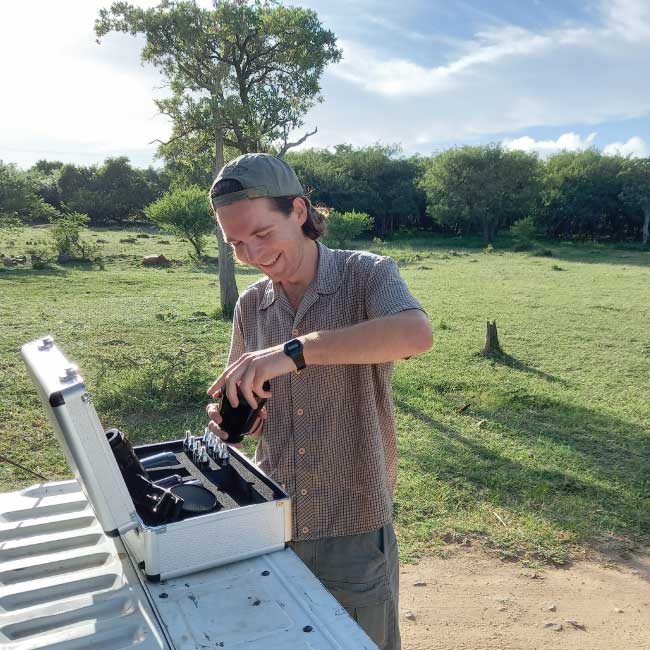
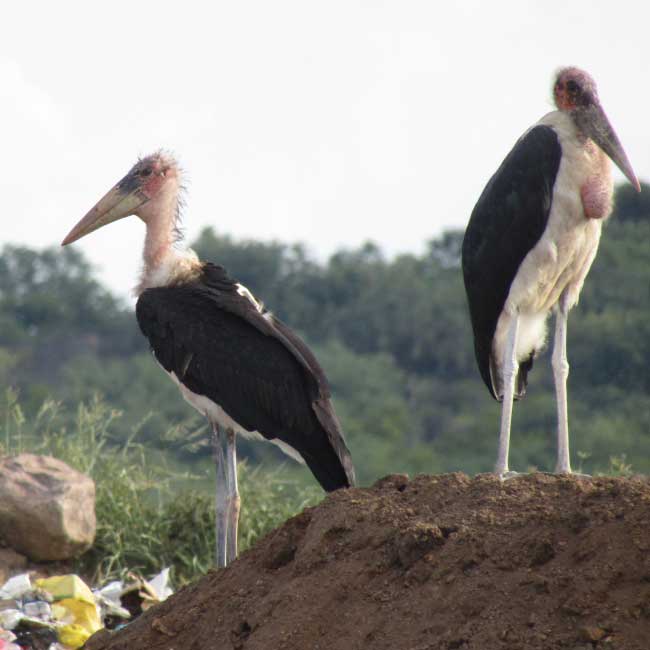
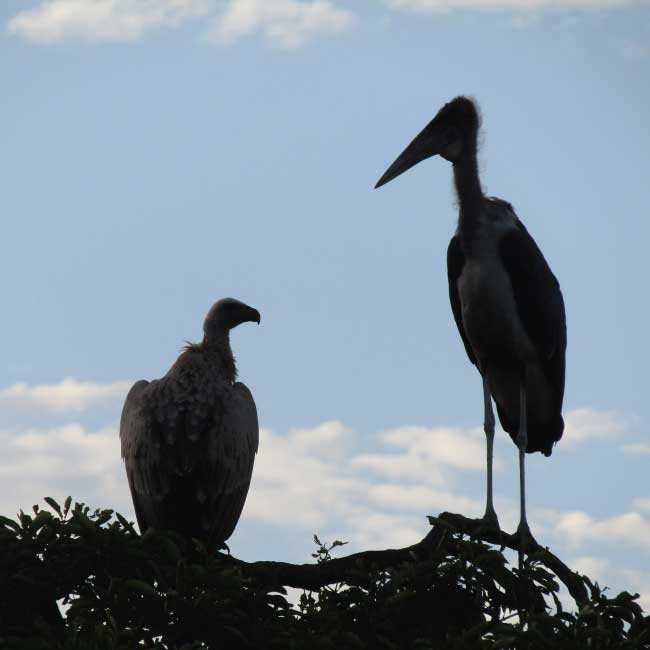
In January 2023, Lindy Thompson and John Davies (from the EWT’s Birds of Prey Programme) joined UKZN PhD student Jonah Gula for fieldwork in the Lowveld. Jonah aimed to trap four Marabou Storks and fit them with tracking devices as part of his PhD project, but first, he needed to find a site with large numbers of Marabous. We suggested he try the vulture feeding site at Moholoholo Wildlife Rehabilitation Centre, where many Marabous congregate daily. Moholoholo kindly permitted us to work on their land. We arrived early on the first morning and set our traps, with Jonah squeezed into John’s tiny hide and Lindy and John waiting nearby in a vehicle to assist when needed. And so, we waited. The Marabous proved to be much more wily birds than we initially gave them credit for. They were highly suspicious of our trap, approaching it cautiously, skirting it carefully, and rushing enthusiastically to the food on the other side. This happened repeatedly, and on one occasion, when it seemed like a Marabou might walk unwittingly into our trap, a family of warthogs would suddenly appear walking in the same direction. We could not risk catching a warthog piglet by mistake, so we would have to rush towards the trap to scare away the piglets and, in turn, the Marabous.

After a few unsuccessful days of trying to trap Marabous at Moholoholo, John suggested we try a different location. So we headed to Phalaborwa to check out a landfill site friends had told us about. We drove in and saw dozens of Marabous standing on the giant mounds of rubbish. The birds were slowly walking in amongst the garbage pickers, and everyone (people and birds alike) was bent over and slowly picking through pieces of trash. We felt the fact that these birds seemed much more tame might help us when trying to trap them. And so we set our trap, and again we waited at a respectful distance, sitting in the vehicle as the temperatures soared into the high thirties, waiting for some Marabous to walk towards our trap. After a few hours in the car, Jonah decided a little more encouragement was needed, and he hopped out of the bakkie and started trying to herd the Marabous towards our trap. Immediately these intelligent birds knew what he was up to, and most of the flock flew up, over the trap, and away. A few hours later, after more waiting and some more of Jonah’s persistent herding, a few birds flew towards the trap and landed there. I drove closer to Jonah so he could hop into the vehicle, and we edged closer to the trap. After a few minutes, Jonah leapt out and ran towards the trap. After 11 hours of waiting at the landfill that day, we had caught our first Marabou!

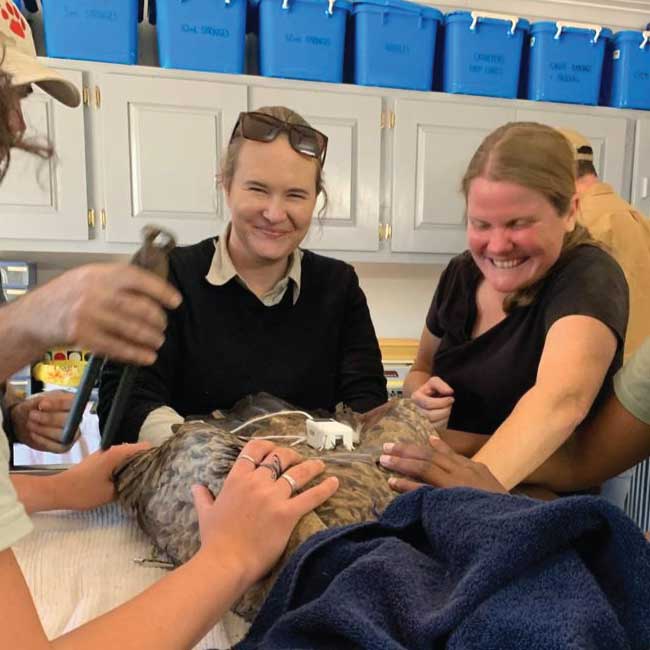
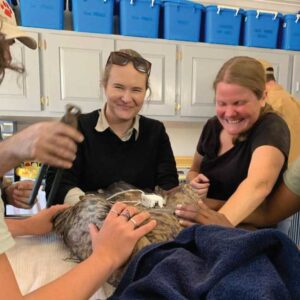
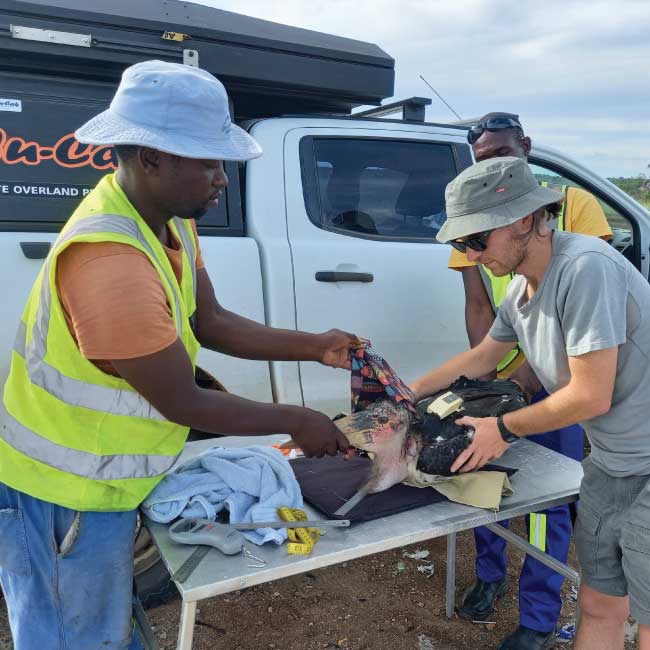
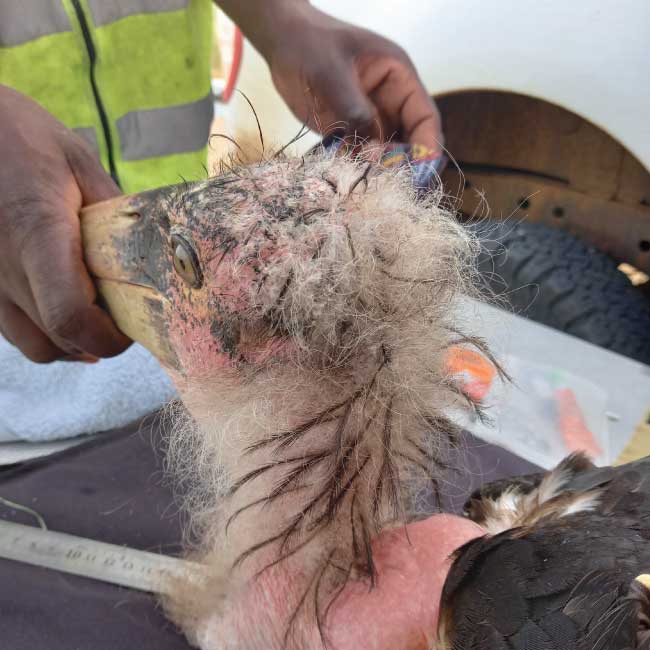
Jonah gently and firmly restrained the bird, and I asked two workers to please come and assist us as Marabous are large birds, and it takes many pairs of hands to hold them. With their help, Jonah calmly fitted the tracking device using a chest harness. A few minutes later, Jonah tucked the bird under his arm, walked a little way away from where we were working, and let the bird go. We were ecstatic to have caught our first Marabou, which Jonah named ‘Fill’ after the landfill site. We stayed at the landfill until dusk to ensure that Fill was looking comfortable and moving normally with his new tracking device, and when everything seemed fine, we finally headed off home.

Since Fill was tagged, we know he has used other waste sites, such as landfills and a slaughterhouse in Polokwane, but we hope to know more about his successes and failures rummaging in the rubbish. We look forward to following his movements and reading about Jonah’s results in the years to come.

We are extremely grateful to the staff and management of Moholoholo Wildlife Rehabilitation Centre and Phalaborwa Landfill Site for their kind support of Jonah’s work. We are thankful for our Ford Wildlife Foundation vehicle and Alu-Cab canopy, both essential to this fieldwork. This work was conducted with a Limpopo research permit from LEDET (permit no. ZA/LP/1156110).

Jonah has already published two papers on Marabou Storks, and you can find the details in the Reference List below. You can also find him on Twitter at @JonahGula. We wish him all the best with his studies.

Reference List:

Gula, J. and Barlow, C.R. 2022. Decline of the Marabou Stork (Leptoptilos crumenifer) in West Africa and the need for immediate conservation action. African Journal of Ecology 61:102-117. https://doi.org/10.1111/aje.13087

Gula, J., Clay Green, M., Fritts, S., Dean, W.R.J. and Gopi Sundar, K.S. 2022. Assessments of range-wide distribution of six African storks and their relationships with protected areas. Ostrich 93: 34-52. https://doi.org/10.2989/00306525.2022.2045642