Help African Wild Dogs 

Donate today  

Science Snippets: Half a Century of scientific discovery

Science Snippets: Half a Century of scientific discovery

Science Snippets: Half a Century of scientific discovery

How we know where we are needed.

Erin Adams and Lizanne Roxburgh, the EWT Conservation Planning and Science Unit


The Endangered Wildlife Trust (EWT) is celebrating its 50th anniversary, and we are reflecting on our contributions to scientific discovery over this period. Formed in 1973, the EWT was made up of species-focused working groups. These groups included the Vulture Study Group, the Carnivore Working Group, and the Elephant Survey and Conservation Programme (ESCP).

In the early 1980s, the EWT focused on elephant translocation into new reserves. The ESCP played a key role in relocating elephants from conflict areas in Namibia to the Pilanesberg National Park. Another study focused on the distribution and numbers of desert elephants in north-western Namibia. Towards the end of the 1980s, the EWT started working on cranes under the Highveld Crane Group. During the 90s, the EWT’s crane work expanded throughout South Africa’s important crane strongholds.
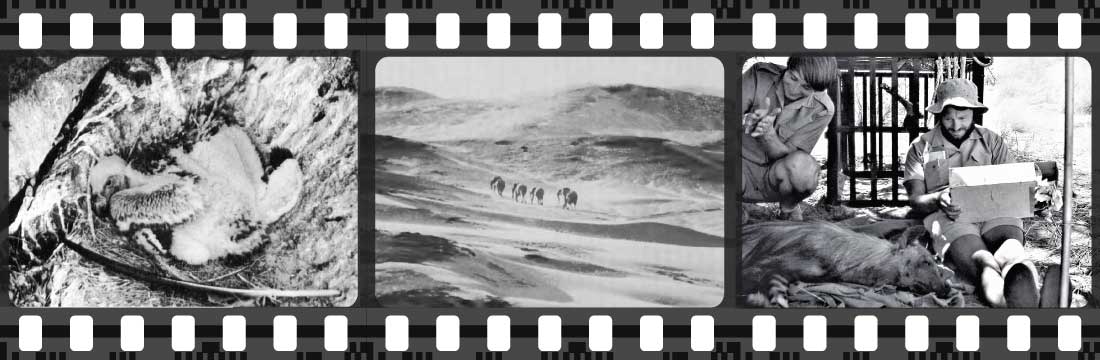
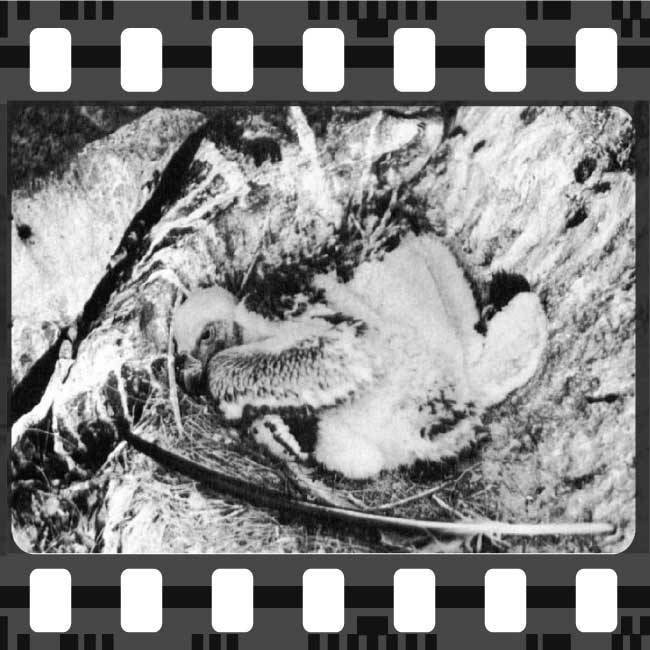
Cape Vulture-chick. Photo credit: P Richardson, P Mundy and I. Plug, 1986 (left), Desert Elephants. Photo credit: Clive Walker (center), and Gus Mills and Clive Walker conducting filed work in Kalahari National Park (right).

From the early 2000s, the EWT shifted its focus to carnivores, including Lions, Honey Badgers, Cheetahs, and Wild Dogs. Research on these species took place across southern Africa, including the Kalahari and Kruger National Parks. The EWT’s crane work has also expanded through a formal partnership with the International Crane Foundation, and the South African Crane Working Group became known as the African Crane Conservation Programme.

In the 2010s, research and publication of our results became vital for the EWT, resulting in approximately 130 publications. The species of interest expanded to include frogs, oxpeckers, Riverine Rabbits, and Ground Hornbills. The Threatened Grasslands Programme, which studied grassland ecosystems and species such as the Critically Endangered Blue Swallow and the Endangered Oribi, was also prominent during this time. Other important topics investigated were the threats to species, including road mortalities, livestock predation, wildlife poisoning, and animal-powerline collisions.

Even though it is only three years into the 2020s, the EWT has already recorded 99 publications since the start of 2020, highlighting the organisation’s commitment to conducting valuable research and ensuring the dissemination of information to our stakeholders. The focus remains on employing robust sampling techniques to benefit the survival of threatened species. The EWT provides biodiversity data for scientific research and action and reviews environmental impact assessments in South Africa. We have also studied ranchlands to understand their biodiversity and ability to sequester carbon. Furthermore, the organisation now places greater emphasis on addressing the illegal wildlife trade, the laws that protect wildlife and the environment, and the relationship between business and biodiversity. We are also expanding our focus into more cryptic but equally threatened species, such as Golden Moles, Dwarf Tortoises, Colophyton (succulents) and Colophon Beetles. Throughout its history, the EWT has consistently prioritised the conservation of vultures. These birds remain a primary focus through the Birds of Prey and the Vultures for Africa programmes.


Commemorating 50 Years – Spay Campaign in the Waterberg

Commemorating 50 Years – Spay Campaign in the Waterberg

Commemorating 50 Years of Conservation Excellence – Spay Campaign in Vaalwater

Kedibone Chauchau, EWT’s PR and Marketing Coordinator

Half a century after it was founded, the Endangered Wildlife Trust (EWT) has achieved immeasurable gains for wildlife conservation. With more than 110 staff members working across 13 African countries, the EWT is arguably one of the most effective and impactful conservation organisations working across such a diversity of species and ecosystems and collaborating with all relevant stakeholders.

Often recognised for its role in conserving charismatic species like the Wild Dog and Cheetah, the EWT was one of the first organisations to galvanise serious conservation action for vultures across the region. Just as important are the benefits of conservation to thousands of people the EWT has worked with through job creation programmes, education, resource protection and provision, and empowerment of people to take control of their environment and their futures.

The EWT’s relationship with communities in the Waterberg has been strengthened through the carnivore conservation and human-wildlife conflict mitigation work that we do in the area. The Waterberg is a key area for carnivore conservation in South Africa and is home to one of the last free-roaming Wild Dog populations in the country. The EWT works hand in hand with landowners and managers to resolve any carnivore-related issues in the area and teach them and encourage them to teach others how to deal with such issues in a non-lethal way.

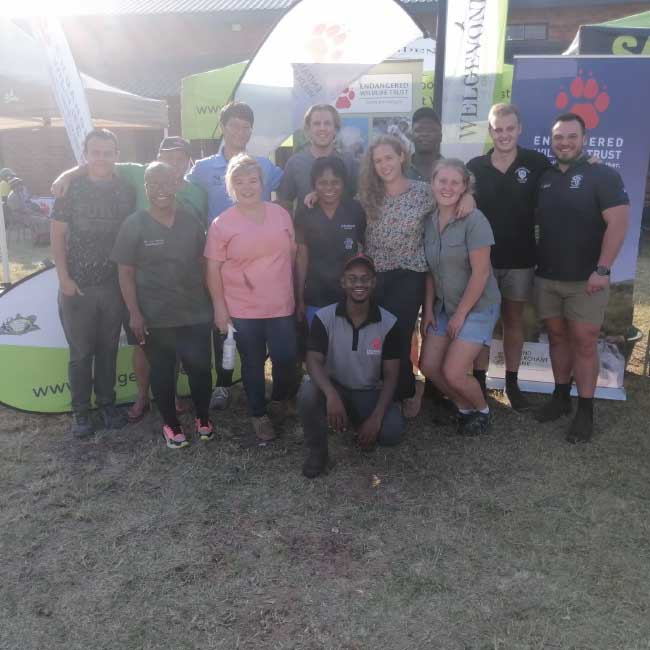
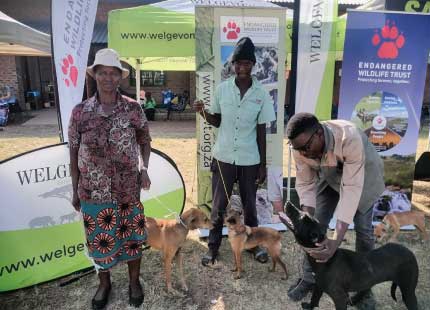
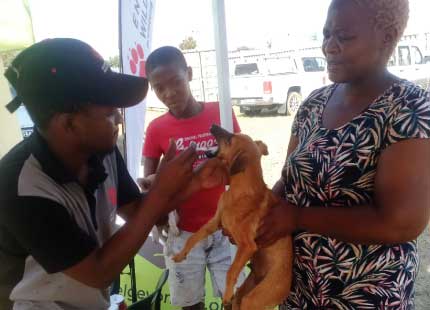
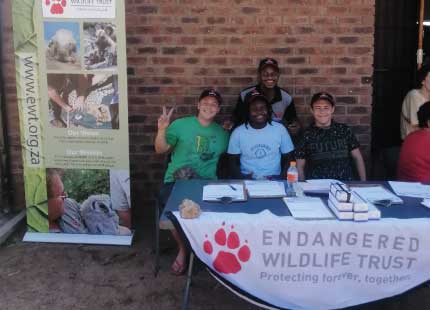
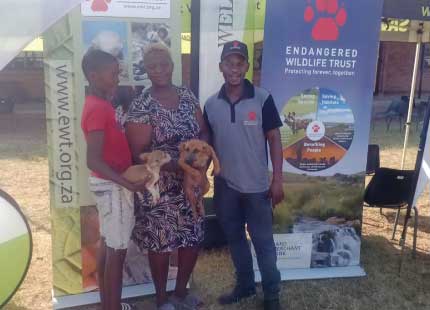
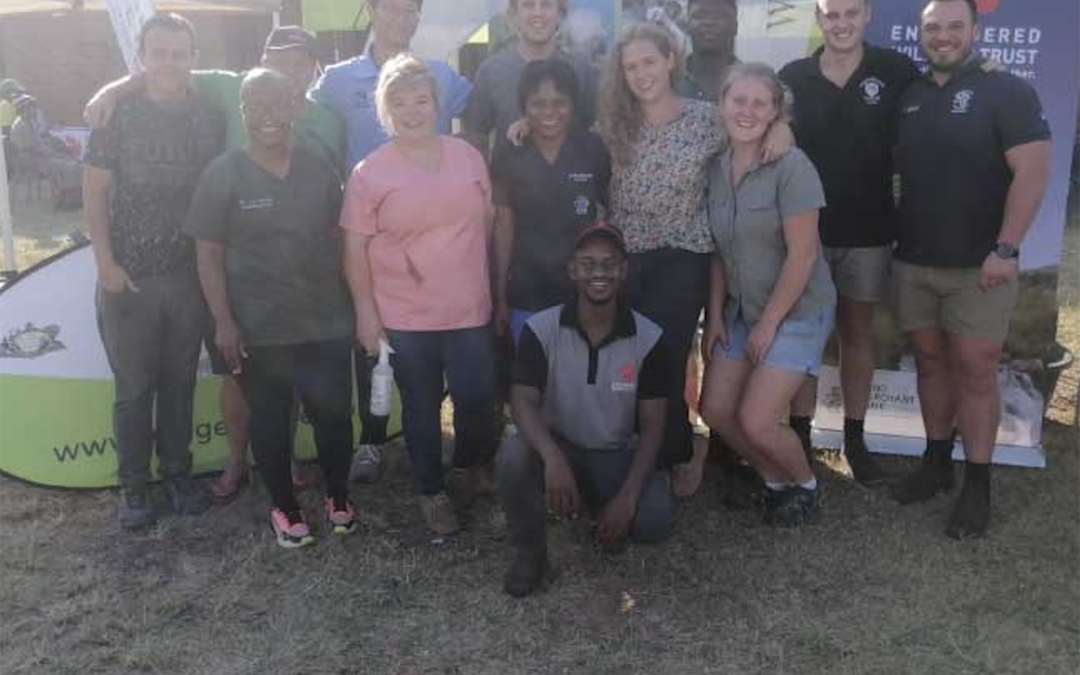
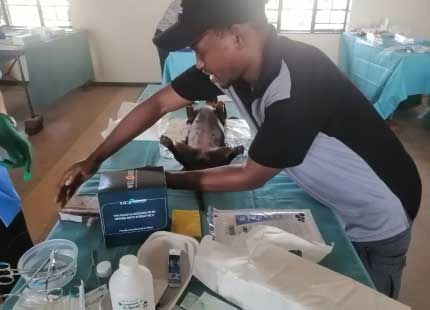
One of the ways in which the EWT benefits local communities is through spay campaigns, which are costly and often unaffordable for communities. These campaigns encourage people to bring their dogs in so the EWT and partners can facilitate sterilisation at no cost. In honour of the EWT’s 50th Anniversary, we ran a spay campaign to sterilise 50 domestic dogs and cats in the township of Vaalwater, Limpopo, on 29 and 30 April.

“Sterilising domestic dogs in communities helps to prevent the overpopulation of stray/feral dogs, which can pose a danger to humans. Reducing dog numbers in the area is also critical in preventing the spread the Transmissible Venereal Tumour (TVT) disease or any other diseases amongst domestic dogs and their wild counterparts such as Wild Dogs.” – The EWT’s Carnivore Conservation Programme’s Field Officer, Joseph Hlako.

The Endangered Wildlife Trust collaborated with Prime Crew Animal Rescue and the Welgevonden Environmental Awareness Programme to organise and run the much-needed campaign. With the help of 12 vets, the EWT went well above the target of sterilising 50 dogs and cats. Out of the 185 animals that were brought, 154 were sterilised, including 120 dogs and 34 cats. A special mention to the vets and the individuals that assisted with donations and their time.

The EWT also helps livestock farmers to reduce and prevent predation on their livestock by large carnivores like leopards through the Livestock Guarding Dog project. Game farmers are also assisted with various human-wildlife conflict mitigation strategies, environmental education, skills development, and other interventions implemented in the communities.

The real power for change lies within each of us – in our everyday engagements with people who learn from us, teach us, and join us in our timeless campaign to protect forever, together.

A word from the CEO March 2023

A word from the CEO March 2023

Word from the CEO

Yolan Friedmann


When Clive Walker, Neville Anderson, and James Clarke registered the Endangered Wildlife Trust in 1973 with the sole intention, at that time, of addressing the unsustainable trade in Cheetah skins and reversing the decline in this species. They had no idea where it would go or what it would do; they just knew they had to do something to save Cheetahs. 18,250 Days later, give or take a few, the EWT now works across southern and east Africa on more than 50 species of wild animals and plants threatened with extinction and, most important, has successfully reversed the decline in Cheetah across South Africa, which is now the ONLY country in the world with an increasing population size of Cheetah.

This year the Endangered Wildlife Trust commemorates 50 years of conservation excellence. The EWT has achieved remarkable gains for many species, where downward trends in the local populations of Wattled and Grey Crowned Cranes, Piggersgill’s Frogs, the Amathole Toad, and the Riverine Rabbit have joined the Cheetah as species on a pathway to recovery. Not satisfied with just doing this well, the EWT has further trailblazed by developing a range of technologies to safeguard powerlines against bird collisions and electrocutions, to deploy drones for safe and effective conservation-based activities, and to introduce the first wildlife detection dogs for rhino horn in many points of entry and exit in South Africa. These are just the tip of the iceberg, and throughout our Golden Anniversary year, we will share many stories of success and tales of triumph.

With more than 110 staff members working across 13 countries in Africa, the EWT is arguably one of the most effective and impactful conservation organisations in the region, and we certainly work across the widest diversity of species, habitats and issues. Often recognised for our role in safeguarding charismatic species like the Wild Dog and Cheetah, the EWT was one of the first organisations to galvanise serious conservation action for the entire range of vultures found in our region, and our 50 years of working with this group of eco-cleaning scavengers have taken a continental direction where our impact has been felt in almost every range state for African vultures and across the most significant threats such as poisoning and illegal trade. Less known to many people is the key role that the EWT played in preventing the extinction of the Brenton Blue Butterfly and safeguarding the future of one of the region’s most important centres of endemism: the Soutpansberg Mountain range. In recent years we have taken on the plight of reptiles and even some highly threatened plants. Just as important are the thousands of human lives improved by the work of the EWT through job creation, education, empowerment, resource protection and provision, livelihood creation and empowerment to take control of their environment and their futures.

There is a lot to celebrate, but no time to waste. What would you do if you were Clive, James or Neville today? What species in peril would prompt YOU to start a movement and establish a giant that will, in 2073, be saving those species and so many more? Pop us a comment below or tell us on our socials what you would do for nature!

If this is what the EWT has achieved so far, imagine what we can STILL do and how much we can still achieve. This is the theme for commemorating the EWT’s five decades of conservation in action. We will reflect on our past successes as much as we imagine the world ahead and plan for the milestones we want to achieve in future celebrations. In many ways, our work has just begun, and with the world continuing to reduce wildlife populations and destroy wild places, the Endangered Wildlife Trust is needed more than ever.

With your support, we can achieve even greater things and protect all our futures together. We cannot wait to celebrate our birthday with you, so watch the EWT socials, publications, and website for all the details and ways YOU can be part of the story we write for the next fifty…..

Happy Birthday, EWT.

Yolan Friedmann