Donate today: support our k9's 
 mission

Transporting wildlife? Here’s what you need to know!

Transporting wildlife? Here’s what you need to know!

Transporting wildlife? Here’s what you need to know!

Obeid Katumba, the EWT Wildlife in Trade Programme, Wildlife and Law Project Officer


Wildlife (including plants) faces many threats driven by human activities, including habitat loss, degradation, fragmentation, pollution, and the emerging threat posed by climate change. However, Illegal Wildlife Trade (IWT) remains one of the primary drivers of species decline. The consequences of IWT include the following:

  • The decline in species populations and species extinctions, as often rare, Endangered, threatened, and protected species are targeted and exploited, pushing them closer to extinction.
  • The spread of alien and invasive species (AIS) introduces species into habitats in which they do not naturally occur, and they threaten native species as they encroach on habitat and compete for resources.
  • Security concerns and wildlife trafficking have increasingly been linked to organised crime, corruption, money laundering activities, and the general undermining of the legal system.
  • Animal welfare concerns as the animals are often kept and transported in conditions that threaten their welfare.
  • The spread of Zoonosis, diseases that can be transmitted from animal to human, affects humans, wildlife, and agriculture.

IWT is an international concern and is known to be among the most lucrative criminal operations globally, alongside drug trafficking and human trafficking. As with other organised crime, IWT uses transport networks, both legal and illegal, for the movement of commodities, in this instance, wildlife.

Domestic pet transporters are increasingly used to transport wildlife illegally within South Africa. Sometimes these transporters do this unknowingly without understanding the relevant laws around transporting wildlife. In addition, these transporters might not verify the species of animal being transported, cannot accurately identify species, or might not know whether permits are required for possessing and transporting such species.

The Endangered Wildlife Trust’s Wildlife in Trade Programme aims to raise awareness of wildlife laws in the domestic pet transporting industry and ensure that domestic pet transporters and other operators across South Africa understand the legal requirements for transporting wildlife. To achieve this, we are launching a comprehensive online and social media awareness-raising campaign that will present quick reference guides demonstrating the legal requirements for possessing and transporting wildlife. The campaign will also provide information on the consequences of non-compliance with applicable laws and contact information for the relevant authorities for obtaining permits to possess and transport wildlife. Key information presented through the campaign will include:

  1. What are the relevant laws to become familiar with?
  2. How do you know what you are transporting?
  3. Do you need a permit to transport it?
  4. How can you get a permit?
  5. What if you don’t have a permit?

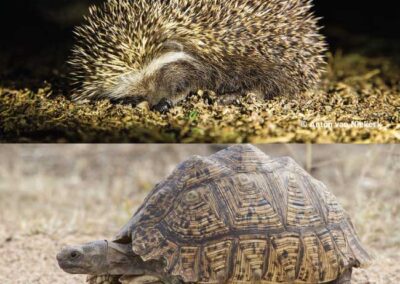
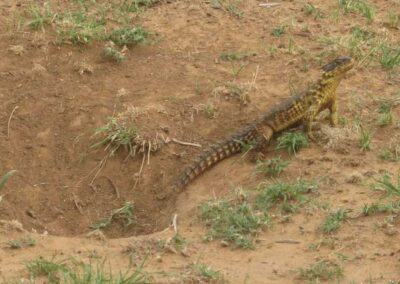
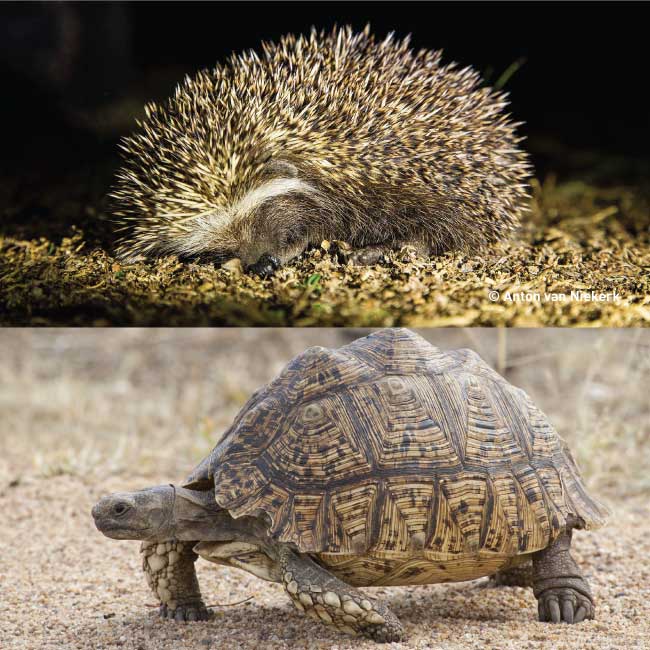
As a starting point, it is important for everyone to know that permits are needed for restricted activities involving living or dead, part or whole, legally protected indigenous species (species that occur naturally in South Africa). Examples of indigenous species include South African Hedgehogs, Leopard Tortoises, African Rock Pythons, Sungazers, and the Cape Parrot.

Examples of restricted activities involving protected species include:

  • Moving or translocating such species
  • Selling, buying, or otherwise trading in these species
  • Receiving, giving, donating, or accepting such species
  • Having in possession or exercising physical control over such species.

Permits are also required for restricted activities involving listed alien and invasive species (AIS). Examples of AIS include Burmese Python, Mallard Duck, and Rose-ringed Parakeet.

Examples of restricted activities involving Alien and Invasive species include:

  • Possessing or exercising physical control over AIS
  • Moving or otherwise translocating AIS
  • Selling, buying, or otherwise trading in AIS
  • Acquiring, receiving, giving, donating, or accepting AIS

Being involved in a restricted activity without a permit means that you have committed an offence, and if found guilty, the penalties can be up to ten years imprisonment, a fine not exceeding 10 million rand, or both per charge. In addition to fines and imprisonment, the guilty person can be held liable for costs associated with any rehabilitation and restoration of the damage to the habitat caused by the release of the AIS.

Permits can be applied for in each of the nine provinces, at designated offices or through the national office for AIS species. If you would like more information on this issue, please contact the EWT, for attention Obeid Katumba.

This campaign is made possible through the generous support of the Lewis Foundation.
Conservation Canines to Save our Species from illegal wildlife trade

Conservation Canines to Save our Species from illegal wildlife trade

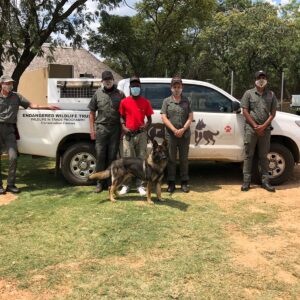
So far, we have deployed two tracking dogs in reserves and will soon be deploying a further four, including both tracking and detection dogs. We have also supported the full training of two new handlers and partial training for a third handler through our relationship with Genesis K9 Group. Furthermore, we provide ongoing support to these deployed dogs and the handlers who have recently completed their training to reinforce what they have learned.

This project is supported by IUCN Save Our Species and co-funded by the European Union. The contents of this publication are the sole responsibility of the Endangered Wildlife Trust and do not necessarily reflect the views of IUCN or the European Union.

LATEST STORIES

Thanks to this grant, the EWT supports seven reserves that have many ecologically and economically important species threatened by poaching. We are taking a three-pronged approach that includes deploying freshly trained young Conservation Canines (trained in detection or tracking), training dog handlers who will be responsible for working with and looking after these dogs and supporting these dog-handler teams in these reserves to ensure they have what they need to work effectively.

Black Rhino (Diceros bicornis) in the Eastern Cape, South Africa. The Black Rhino is threatened by the illegal trade in rhino horn products. Photo credit: the african eye

The reserves we are assisting suffered income losses during the COVID-19 pandemic due to tourist travel bans, and we aim to support them through these hard economic times. Many reserves at risk of poaching use a variety of approaches to combat it, with anti-poaching field rangers commonly the first line of defence. Certified dog-handler teams can provide invaluable support to these teams on the ground in several ways. Our dogs either track poacher incursion routes within a reserve or provide a quick and reliable method for screening vehicles for concealed firearms or wildlife contraband.

So far, we have deployed two tracking dogs in reserves and will soon be deploying a further four, including both tracking and detection dogs. We have also supported the full training of two new handlers and partial training for a third handler through our relationship with Genesis K9 Group. Furthermore, we provide ongoing support to these deployed dogs and the handlers who have recently completed their training to reinforce what they have learned.

Conservation Canine Nala, a three-year old Belgian Malinois recently deployed in the Eastern Cape. Nala is a tracking dog and works with anti-poaching teams to protect threatened species.

This project is supported by IUCN Save Our Species and co-funded by the European Union. The contents of this publication are the sole responsibility of the Endangered Wildlife Trust and do not necessarily reflect the views of IUCN or the European Union.

LATEST STORIES

Conservation Canines to Save our Species from illegal wildlife trade

Dr Andrew Taylor, EWT’s Wildlife in Trade Programme Manager, andrewt@ewt.org.za 

South Africa is blessed with exceptional wildlife and landscapes that attract tourists and boost our economy. Some of our country’s biggest drawcards, such as White and Black rhinos (which are Near Threatened and Critically Endangered, respectively on the IUCN Red List of Threatened Species), the African Savannah Elephant (Endangered), and the African Lion (Vulnerable), play vital roles in our ecosystems while also bringing in valuable ecotourism income. However, these species are threatened by the global illegal wildlife trade (IWT), which is a major cause of population declines in some countries. With funding from the IUCN Save Our Species Rapid Action Grant and the European Union, the Endangered Wildlife Trust (EWT) aims to reduce IWT by preventing wildlife poaching. We use our Conservation Canines to achieve this by training and deploying them to detect wildlife products and track poachers.

Newly qualified dog handler trained at Genesis K9 Newly qualified dog handler trained to reduce poaching as part of the project funded by the IUCN Save Our Species Rapid Action Grant and the European Union.

Thanks to this grant, the EWT supports seven reserves that have many ecologically and economically important species threatened by poaching. We are taking a three-pronged approach that includes deploying freshly trained young Conservation Canines (trained in detection or tracking), training dog handlers who will be responsible for working with and looking after these dogs and supporting these dog-handler teams in these reserves to ensure they have what they need to work effectively.

Black Rhino (Diceros bicornis) in the Eastern Cape, South Africa. The Black Rhino is threatened by the illegal trade in rhino horn products. Photo credit: the african eye

The reserves we are assisting suffered income losses during the COVID-19 pandemic due to tourist travel bans, and we aim to support them through these hard economic times. Many reserves at risk of poaching use a variety of approaches to combat it, with anti-poaching field rangers commonly the first line of defence. Certified dog-handler teams can provide invaluable support to these teams on the ground in several ways. Our dogs either track poacher incursion routes within a reserve or provide a quick and reliable method for screening vehicles for concealed firearms or wildlife contraband.

So far, we have deployed two tracking dogs in reserves and will soon be deploying a further four, including both tracking and detection dogs. We have also supported the full training of two new handlers and partial training for a third handler through our relationship with Genesis K9 Group. Furthermore, we provide ongoing support to these deployed dogs and the handlers who have recently completed their training to reinforce what they have learned.

Conservation Canine Nala, a three-year old Belgian Malinois recently deployed in the Eastern Cape. Nala is a tracking dog and works with anti-poaching teams to protect threatened species.

This project is supported by IUCN Save Our Species and co-funded by the European Union. The contents of this publication are the sole responsibility of the Endangered Wildlife Trust and do not necessarily reflect the views of IUCN or the European Union.

LATEST STORIES

Becoming a Conservation Canine

Becoming a Conservation Canine

Becoming a Conservation Canine

Mufassa, Conservation Canine Cadet

Hey guys! Thanks for all the attention – I know I’m super cute! So, I thought you might like to hear a bit about me. I joined the Endangered Wildlife Trust’s pack as a Conservation Canine Cadet in March 2022. Boy was I nervous! Here were all of my heroes and little old me – leaping after them to follow in their paw prints. But I was born to do this job! Join me on my adventure as I prove I have what it takes to become a canine defender of wildlife.

Becoming a Conservation Canine is a lot of work, takes a lot of time, and treats (and Sean’s shoes) aren’t cheap! And I can’t rush it. I think it’s because, if I skip steps, I won’t be ready for all the situations I might come across if I qualify one day (claws crossed). Well that’s what I’ve been told anyway – so far I’ve been playing and racing around meeting the staff at the EWT’s Conservation Campus – easy peasy! Apparently I don’t do any real work for the first few months. Tough life hey? I’m just supposed to go everywhere and see everything I possibly can so nothing scares me (as if!). I think I heard them say it’s also so I don’t get distracted too easily when I do start working.

Anyway, lots to see and smell but I’ll give you another update soon!

LATEST STORIES