Donate today: support our k9's 
 mission

Shop. Swipe. Support Conservation – The Power of the MySchool Card

Shop. Swipe. Support Conservation – The Power of the MySchool Card

Shop. Swipe. Support Conservation – The Power of the MySchool Card


MySchool Card donation at retail store


Imagine making a difference for endangered species every time you shop—without spending an extra cent. That’s the power of the MySchool Card, a simple yet impactful way for EWT supporters to contribute to conservation.


How does it work?

Every time you shop at participating retailers and swipe your MySchool Card, a percentage of your purchase is donated to the Endangered Wildlife Trust (EWT). The best part? These donations come from the retailer, not your pocket.


Why sign up?
  • No extra cost: Your contribution doesn’t cost you a cent.
  • Easy to use: Just swipe your card when shopping at partner stores.
  • Supports conservation: Every transaction helps fund EWT projects that protect endangered species and habitats.
  • Convenient: Accepted at major retailers nationwide, making it perfect for everyday shopping.
  •  
Collective Impact Matters

Small actions add up to big wins for conservation. Funds raised through MySchool have already supported critical EWT projects—from safeguarding cranes and wetlands to protecting threatened carnivores. Every swipe brings us closer to a future where wildlife thrives.


Ready to make a difference?

Sign up for your MySchool Card today and choose EWT as your beneficiary. Then, simply Shop. Swipe. Support Conservation. It’s that easy.


An African Wild Dog rescue mission that ignited Wild Dog Conservation in Namibia.

An African Wild Dog rescue mission that ignited Wild Dog Conservation in Namibia.

An African Wild Dog rescue mission that ignited Wild Dog Conservation in Namibia.

By Cole du Plessis, Project Manager: Carnivore Range Expansion Project
 

Wild Dog conservation mission in Namibia with veterinarians and volunteers

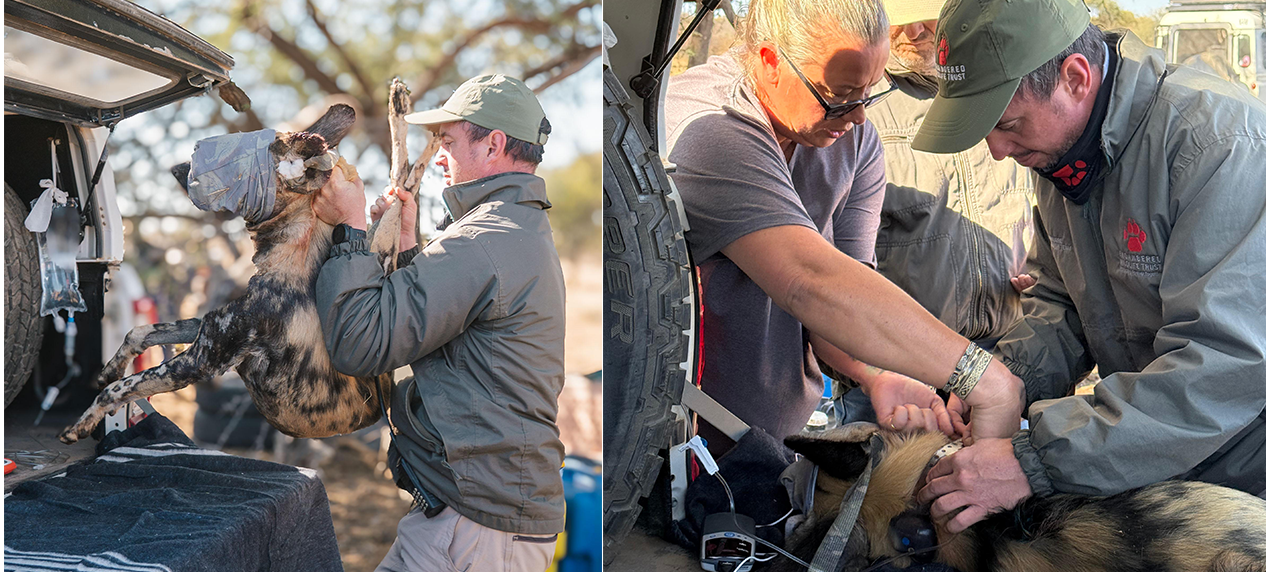
Relocating (left) and Collaring (right)


Working in the world of conservation is not easy.  Almost on a daily basis, we deal with animal welfare, multiple stakeholders, wide-ranging philosophies (and sometimes egos), legal requirements, decision-making processes, and the continuous urgency to fundraise in order to achieve high-impact results. The admin and emails slot in between these demands.

When we were travelling back from Botswana following a 24-hour African Wild Dog capture and relocation, we passed through the Martin’s Drift border post.  It had been an intensive stint that involved hours of driving. We were relieved to be back in South Africa and looking forward to some time to rest and recover, but the world of Wild Dog conservation had other plans.

In the weeks leading up to the Botswana mission, I had been in touch with the Kalahari Wild Dog Project—a new and emerging organisation working in Namibia.  They had informed me of a Wild Dog that had been captured in a gin trap  set out by a farmer. Having been alerted to the situation, the team had immediately travelled to the farm where this Wild Dog had been captured, fully expecting to have to euthanise it on arrival. But it wasn’t that simple.

Upon investigation, the team learned that the Wild Dog had, for three days, been contained in a cage outside a workshop area where there was a continuous flow of trucks and people. For a wild animal, this is nothing short of agonising.

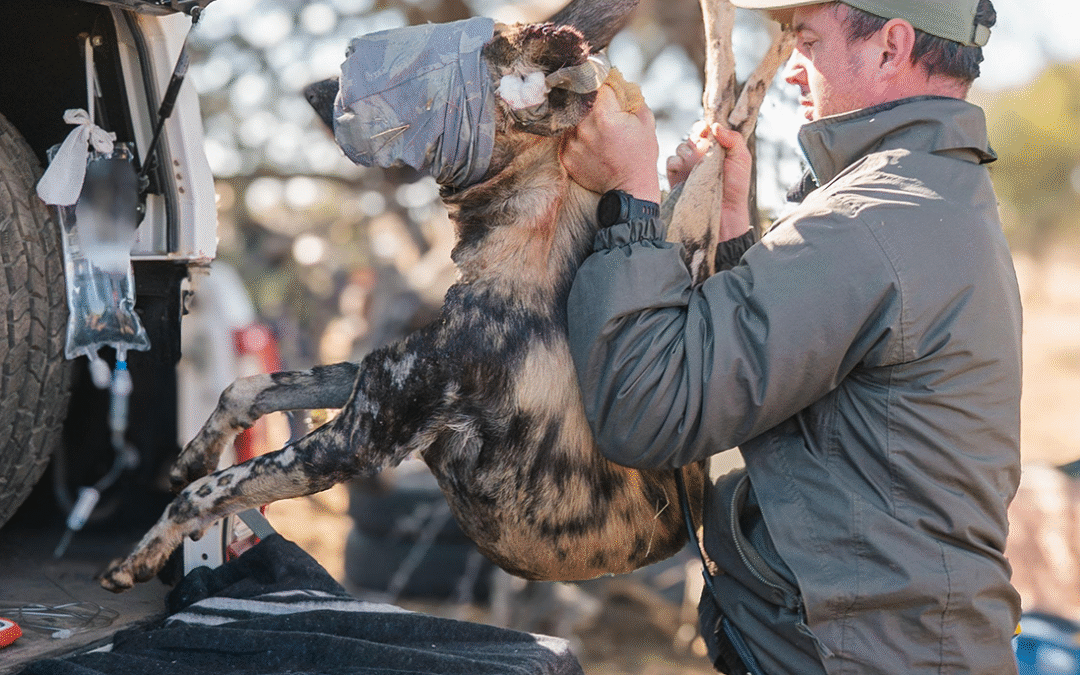
To end the suffering, the veterinarian quickly immobilised the Wild Dog. A closer inspection revealed that the captured animal was a female—and she was lactating! This drastically changed the whole scenario, requiring not only the immediate treatment and relocation of the female to a clinic a few hours away, but also finding her pups.

Nadja le Roux, the founder of the Kalahari Wild Dog Project, phoned me and provided me with an update. In my time working with Wild Dogs, I have experienced some horrific physical injuries. However, my findings have shown that it is often emotional stress that takes the greatest toll on a Wild Dog. Physically, they are tough, but separate the individual from its pack, and it becomes weak.

This socially complex species suffers from ‘broken heart syndrome’. All our conservation efforts in dealing with Wild Dogs factor in this crucial detail. This is the reason that their emotional sensitivity has been incorporated into our Standard Operating Procedures, and the findings have been documented.

The gin trap had gripped the Wild Dog on her back leg. Her cold foot and zero sensitivity between the pads indicated that she had lost the use of her leg, and infection was already setting in. The leg needed to be amputated. She also had a cracked rib.

When Nadja called me for advice, I was less concerned about the physical injuries than the dehydration and stress she was suffering. Every effort and available physical aid would be required to save this Wild Dog—fluids, antibiotics, anti-inflammatories, and warmth. It was touch-and-go, and if she did survive, the next steps would be complex. At this point, this female needed her pack to survive as much as they needed her to ensure their own survival.
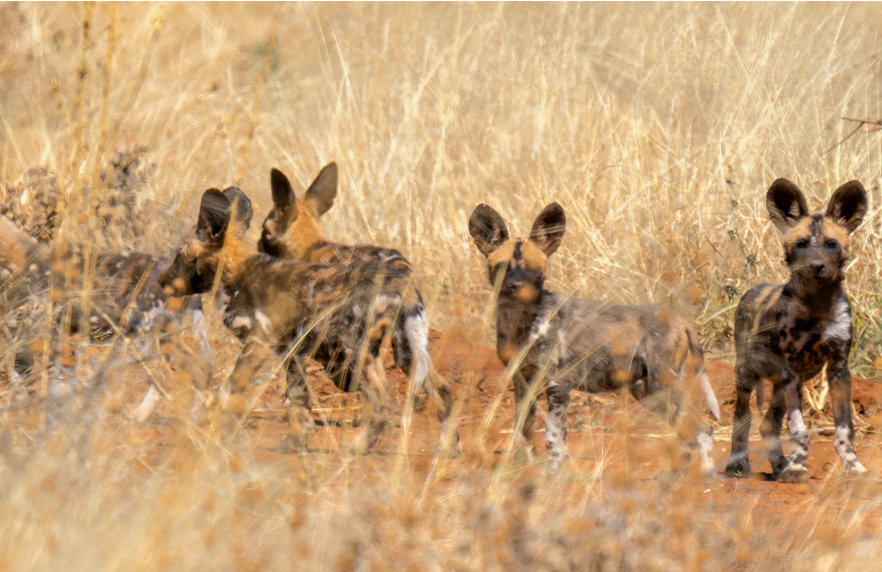
Tracking and releasing African Wild Dog pack in Namibia sanctuary

Image credit: Be Wild

Though it had by then been four days without Mom, there was a chance that the pups were still alive. Returning her to where she had been captured was also not considered wise. It was then decided that the only way forward was to release her with a tracking collar and convince the farmer that this would provide us enough intelligence so the whole pack could be captured and removed to the safety of a suitable habitat. This would be done on condition that the farmer would remove his gin traps and potential poison. He obliged and agreed to allow the Wild Dogs the freedom to roam, but only for a short period.

Following surgery, the Wild Dog was released running around two kilometres before settling down.  Everyone waited in anticipation, wondering whether she was going to die or whether she had been reunited with her pack.

When Nadja returned to the area a few days later to survey the area using a drone, she found the female alive, with two other adults and what appeared at the time to be six pups.  It was a miracle.

After two weeks, the farmer was losing patience and one of the adult Wild Dogs had disappeared.  This raised concerns that the female would have to leave her pups to go hunting with the pack.  This was when Nadja called me for assistance.

Less than 24 hours later, I was on a flight to Windhoek.  A three-hour drive later, Nadja introduced me to the team comprising Namibian Government Officials, members of the Kalahari Wild Dog Project and the Cheetah Conservation Fund, veterinarians, a wildlife helicopter pilot and several volunteers.  After a briefing, we prepared to capture and move the adults and retrieve the pups the next day.

The aim was to move this pack to safety, away from threats such as gin traps, poisoning and snaring in a cattle farming area where conflict with people was inevitable.

This particular pack had had very little exposure to humans, and their den site was inaccessible. Because of their fear of vehicles, we opted to build a hide near the den and attempt to lure them in with ‘hoo’ calls and a carcass. But, this didn’t work.  So, we decided to dart them from a helicopter.  Within an hour, the Alpha male and female had been darted and secured, loaded into crates, and taken to the selected sanctuary. We then needed to focus on the pups, which appeared to be between six and eight weeks old.

Locating the pups proved to be a challenge.  After hours of excavating at the site where we had spotted the Alpha pair the night before, we realised that the pack may have moved during the night to a spot where we had earlier darted the Alpha female.

That was when we stumbled upon several pups lying outside their new den. Frightened by our presence, they disappeared into a nearby hole. Careful excavation was once again underway. It was a slow, tiring and gruelling task which became ever more difficult and dangerous as the tunnels deepened, and darkness fell. But by 11 pm, we had retrieved all the pups, eight in total, and had immediately taken them to the boma four hours away.

When we arrived at the sanctuary, we found that the two adults were doing well.  But, given how cold it was, it was decided that the pups’ crate needed to be taken to my room until sunrise.  At daybreak, we loaded the pups and the adults and took them to the boma, where the pups were placed into an artificial den (with sand from their old den and grass from their crates) before releasing the adults. The two adults and all the pups survived the mission. A live camera at the den has confirmed that the adults are feeding and bringing food back to the pups.

A hearty development during the rescue has been the change in the farmer’s outlook about Wild Dog after he voluntarily came to help the team locate and capture the pups.

Thank you to the wonderful Kalahari Wild Dog Project team, who never gave up on that little pack. Just this one critical experience has given rise to multiple major wins for conservation.  These include:

  • The survival of a heroic female Wild Dog and the rescue of her pack, which were saved from certain death.
  • This was the first capture of its kind in Namibia. The operational team, initially quite sceptical of whether the capture would work, were left feeling very excited, and we all learned and gained from this shared experience.
  • This was a collaborative operation with multiple Namibian partners eager to learn and contribute.
  • The Namibian government has indicated that it wants to do more for Wild Dog conservation and has promised representation at the Wild Dog Advisory Group.

A workshop is being held with numerous stakeholders to discuss the conservation and management of Namibia’s Wild Dogs, with some exciting initiatives on the table.

The team sent the farmer photos of the release, and he has asked for the final video so that he can showcase it to his farming community. This is possibly the biggest win of all, as knowledge and understanding of our wildlife and the critical role that they play in our world is essential to their survival through the generations.
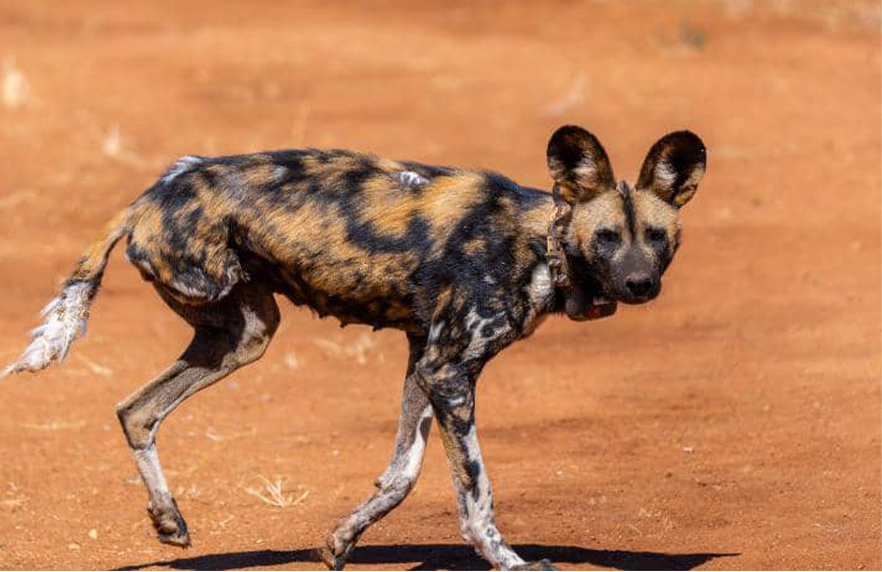
African Wild Dog rescue Namibia female and pups

**  Thank You to the Painted Wolf Foundation for your support

 

Turning Traps into Hope: Poacher’s Snares Repurposed for Conservation

Turning Traps into Hope: Poacher’s Snares Repurposed for Conservation


Turning Traps into Hope: Poacher’s Snares Repurposed for Conservation

By John Davies


Across much of Africa, snaring of wildlife is on the rise, driven by a combination of poverty, bushmeat demand, and organized wildlife crime. With economic hardships pushing more people toward illegal hunting for sustenance or profit, snares have become the weapon of choice—they are cheap, easy to set, and devastatingly effective. However, they do not discriminate, often trapping unintended species, including elephants, lions, and wild dogs. Many animals suffer prolonged, agonising deaths, while those that survive can be left with severe injuries that compromise their ability to hunt or evade predators.

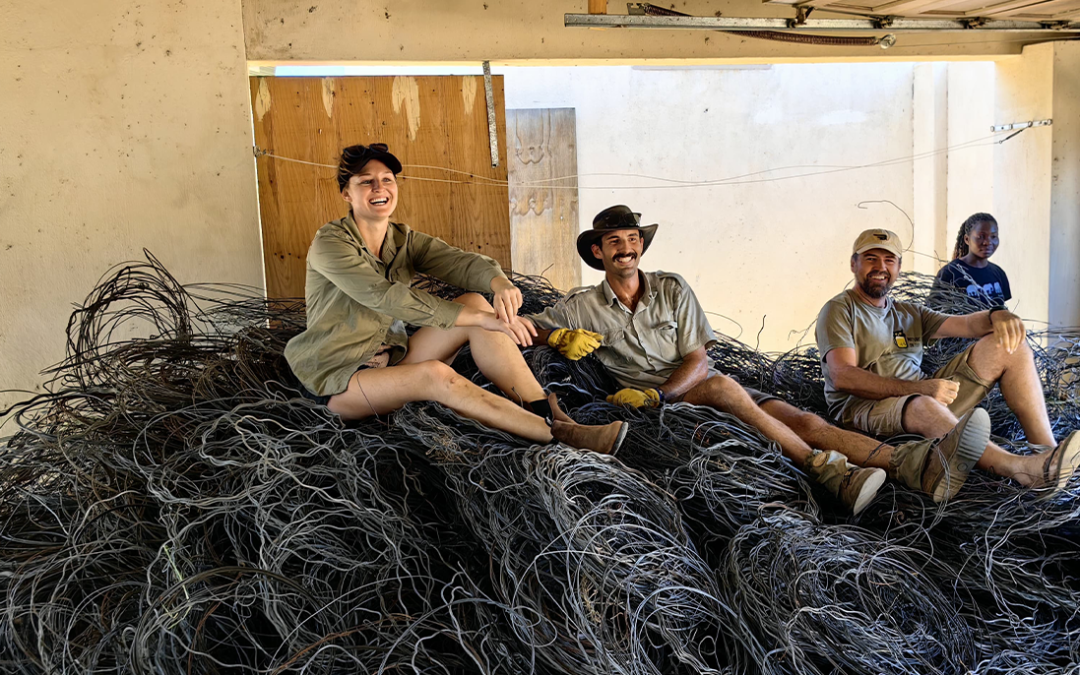
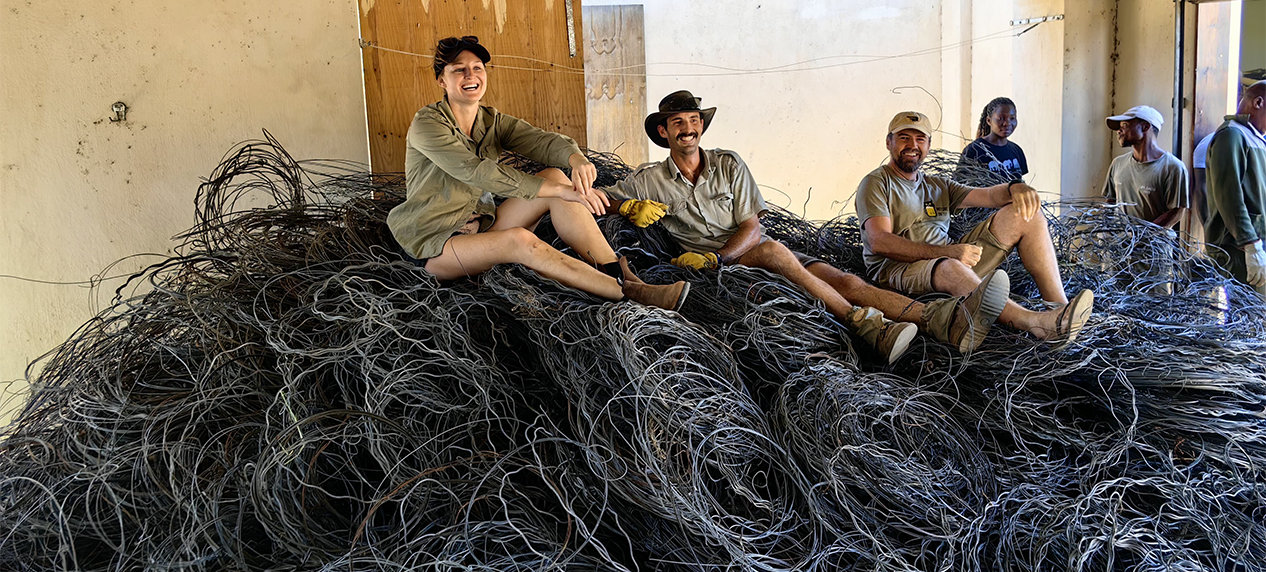
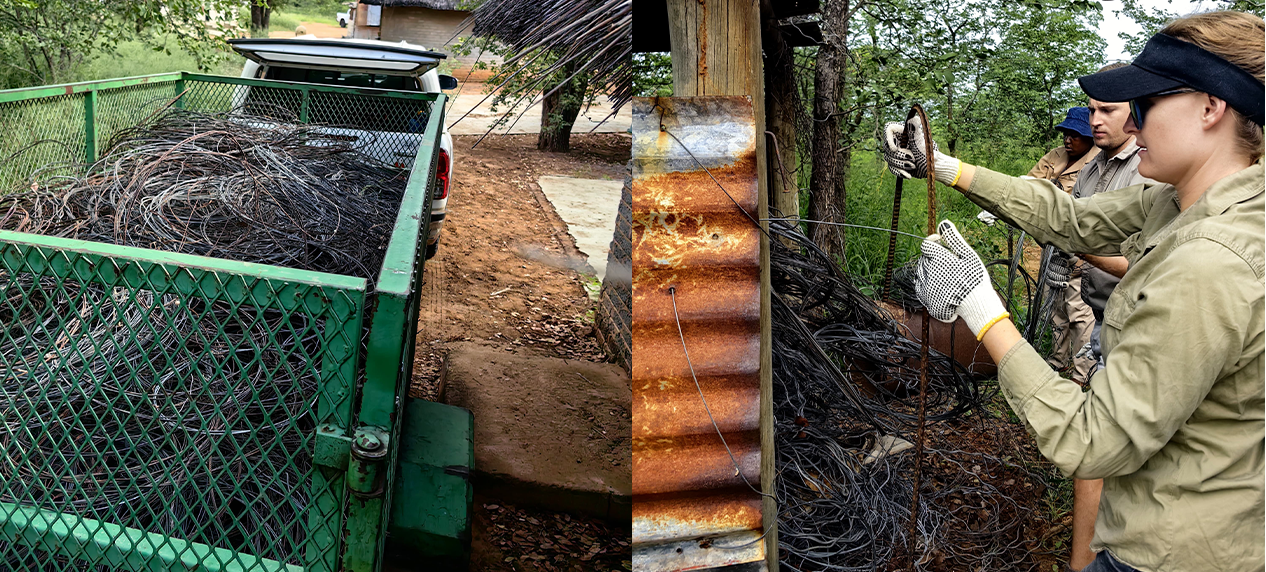
In a significant step toward protecting South Africa’s wildlife, the Endangered Wildlife Trust (EWT) recently removed 3.5 tons of wire snares from a protected area in the Lowveld region of South Africa, forming a critical buffer zone along Kruger National Park’s western boundary. These snares had been stockpiled over the last five years and had been removed during routine patrols by reserve anti-poaching teams.

Instead of being discarded, the snares have been given a second life through a partnership with Down2theWire, a local initiative that transforms confiscated poaching materials into handcrafted jewellery. This innovative project not only raises awareness about the devastating effects of snaring, but also provides funding for conservation efforts generated through the sale of jewellery and other products made from snares. Profits from the jewellery sales will be reinvested into anti-poaching initiatives, supporting rangers, education programs, and community-driven conservation efforts.

This initiative underscores the importance of sustainable solutions in wildlife conservation, proving that even the most destructive tools can be reshaped into symbols of resilience and protection.

As wildlife crime continues to challenge conservationists, creative collaborations like this offer a beacon of hope. Consumers can now play a direct role in the fight against poaching—one bracelet at a time.


Financial Support and Collaboration Key to Saving Species from Extinction

Financial Support and Collaboration Key to Saving Species from Extinction

Financial Support and Collaboration Key to Saving Species from Extinction

By Eleanor Momberg

Greater financial support and collaboration between all stakeholders is needed to save the world’s endangered species from extinction.

That was the message from participants in the first World Species Congress Satellite Event on 14 May 2024 co-hosted by the Endangered Wildlife Trust (EWT), South African National Biodiversity Institute (SANBI), Department of Forestry, Fisheries and the Environment (DFFE), the Botanical Society of South Africa (BotSoc), BirdLife SA and the Two Oceans Aquarium Foundation.

The World Species Congress is a virtual 24-hour congress hosted by Reverse the Red. It offers a forum for collaboration and the chance to develop a roadmap for success for anyone striving to create a healthier planet.

The South African event held ahead of the 24-hour World Species Congress on 15 May 2024 showcased a number of examples of species recovery. Participants in the virtual event also discussed the country’s global commitments towards species recovery, including the Kunming-Montreal Global Biodiversity Framework. For South Africa, the inputs received are an important contributor to the national targets to be set in the National Biodiversity Strategy and Action Plan.

Mukondi Matshusa of the DFFE said the South African event provided the government with an opportunity to shape and quantify its collective conservation efforts through collaboration, inclusiveness and partnership.

Collaboration between government, NGOs and communities as the people who live with the species is what was needed for conservation and recovery to make implementation of the White Paper, and the development of the GBF, workable, she said.

Target 4 of the GBF aims to Halt Species Extinction, Protect Genetic Diversity, and Manage Human-Wildlife Conflicts. This means ensuring urgent management actions to halt human induced extinction of known threatened species and for the recovery and conservation of species, in particular threatened species. The aim is to significantly reduce extinction risk, as well as to maintain and restore the genetic diversity within and between populations of native, wild and domesticated species to maintain their adaptive potential. This can be done through in situ and ex situ conservation and sustainable management practices, and effectively manage human-wildlife interactions to minimise human-wildlife conflict for coexistence.

Domitilla Raimondo, SANBI’s Programme Manager of the Threatened Species Unit, pointed out the conservation in South Africa is a whole of society approach. South Africa is unique in the number of citizens, including community members and traditional healers, that help to monitor species, assisting scientists with data on the health of species.

“We do things together and will continue to do things like that,” she said.

Raimondo stated that in South Africa a landscape approach is used to conserve species. The country has intricate spatial biodiversity planning and in that targets are set for every type of ecosystem which allows for the conservation of common and threatened species. By doing this, unchecked development can be halted to protect vulnerable and threatened species.

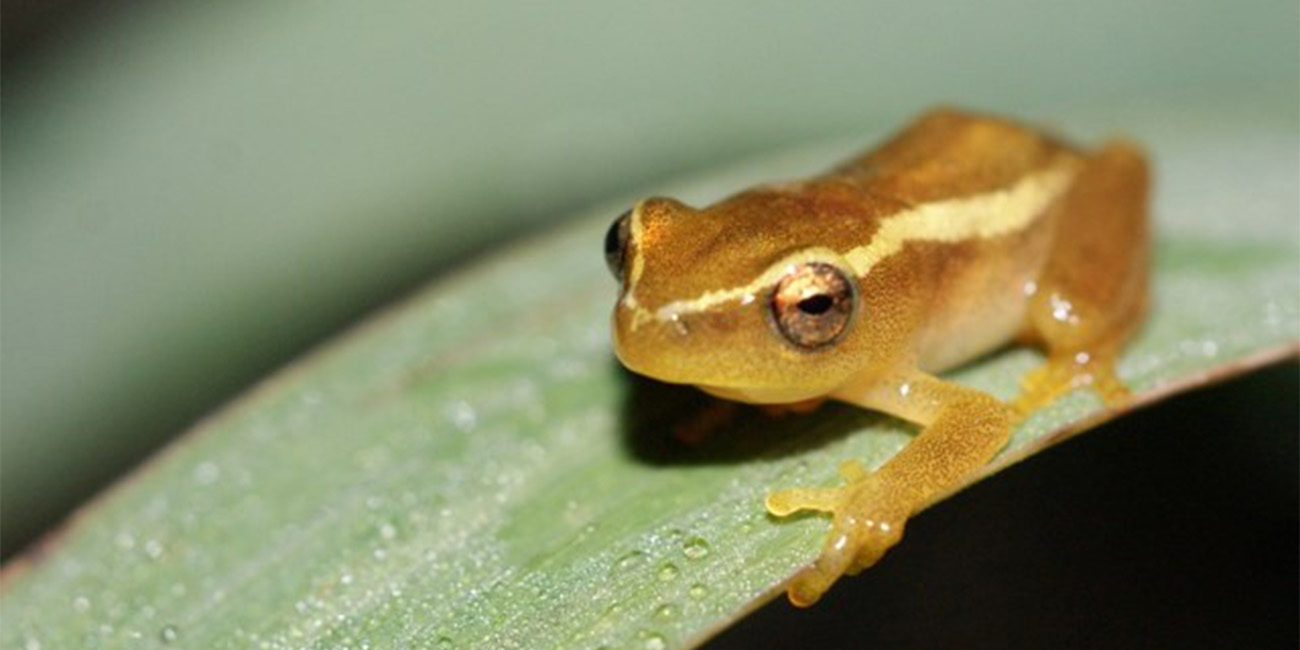
The Red List assessments done for 12 taxonomic groups in SA indicate that 25 species are faced with extinction. The highest level of threat is to 30% of freshwater fish for which a huge increase in funding is required to intervene in their conservation and management. Eleven amphibian species, including the Desert Rain Frog which is facing collapse because of climate change and mining, 14 mammal species of which 50% are small mammals, 16 bird species including the Botha’s Lark, Blue Swallows and Vultures, as well as numerous marine species and 109 plant species, are in need of urgent recovery.

“We will require significant upscaling of investment to reach Target 4. We have the know-how, we have the people, we just need the financing, said Raimondo.

The EWT’s Senior Manager Sustainable Financing and Business Partnerships Kishaylin Chetty said although the landscape approach is central to species conservation, and there is a focus on stewardship and large intact areas, the EWT remains a species-focused conservation NGO.

“We understand that funding is absolutely critical for us to take our work forward, and that collaboration is key. For us to achieve conservation impact at a national and international scale we need to collaborate with the right types of partners to make sure that we have action on the ground,” he said.

The EWT has a vision in terms of a healthy planet, and an equitable world that values and sustains the diversity of all life. It is mainly dedicated to conserving threatened species in southern and East Africa to the benefit of all. With 12 programmes and over 110 employees the EWT’s paw print has touched 21 countries within the African continent. Although species-led, the EWT equally recognises the value of conserving habitats and benefiting people.

Reaching the Global Biodiversity Framework targets of conserving 30 percent and land and water by 2030 and 50% by 2050 is still within reach. While parts of the world, the African continent and parts of South Africa have been highly impacted by environmental destruction, there are also parts that are still largely intact.


But, to achieve these goals, would require reversing species decline by determining which opportunities exist to restore what has been lost, and to focus on conserving what we have, and more specifically reversing declines. To address this, the EWT has a multitude of programmes directed at reducing habitat loss, engaging in regards to poaching, trying to adequately address the issues and concerns around disease and poison, particularly around impacts to vultures, the intersection between human-wildlife conflict and how we can actively and positively work with communities. Also being addressed pro-actively and reactively is the illegal wildlife trade.

Chetty said because developing infrastructure is a key to the development of the South African economy, the EWT works to ensure this is done responsibly through support to entities within this space.

Proactively, the EWTs Conservation and Science Planning Unit contributes towards helping and guiding South Africa minimise or mitigate the impact of development on species. This is done through the National Environmental Screening Tool which the EWT provides with information about species. This has included the development of a threatened species node mapping tool, and Red List work related to mammals. In progress is the development of a tool for the renewable energy sector linked to support for the just transition and the approach towards mitigation against climate change. By utilising a tool that looks at landscape planning and the intersection between conservation, agriculture and renewable energy will actively support renewable energy development across the country.

One of the other tools that is critical is protected area expansion. The EWT is working across the country looking at the intersection between the National Environmental Management Protected Areas Act and the opportunities that exist in terms of conservation stewardship or conservation servitudes and Other Effective Conservation Measures (OECMs). The EWT has secured large portions of protected areas and are in the process of trying to secure more land to protect species.

“A lot of our focus of late has been around buffer areas and trying to work with entities like SANParks to better help them to create those buffer areas around the national parks,” he said.

Chetty said the EWT’s selection of species for conservation and research was based on science. Besides looking at the global threat to a species, whether it is locally threatened, endemic and whether another organisation is already addressing concerns around a species, a decision to work to conserve a species also takes into account what the conservation impact for the species would be.

Collaboration, said Chetty, is “absolutely key” when it comes to species conservation.

The EWT works very closely with DFFE, the provinces, a lot of conservation agencies and a number of NGOs to ensure that it can actively contribute toward species conservation in southern Africa.

One of the greatest challenges faced by the NGO is unlocking new funding for conservation. The GBF highlighted that there is a biodiversity financing gap of close to $711 billion. The EWT supports the country’s biodiversity agenda and has been trying to contribute towards enabling the country to become a nexus between socio-economic development and conservation so that. The organisation has thus had to brush up on the green economy, the wildlife economy, sustainable use, the circular economy and the just transition to ensure that it has a good take of how these areas can be utilised to drive species conservation.

“We have also looked at conservation market-based instruments … quantity based and market friction instruments to ensure that we can be innovative in this space and really try to bring in different types of funding to stimulate the growth of our species conservation work in South Africa and throughout Africa,” he said.

In order to drive conservation around particularly Wild Dogs and Lions, the EWT is working with Rand Merchant Bank to develop Wildlife Bonds for both species with the aim of bringing in between R100 million to R150 million in funding for the conservation of Wild Dogs and Lions, including the collaborative work on Lion being done with the Peace Parks Foundation.

A Wildlife Bond is a sustainable finance instrument that enables large funding to come from asset management investment to drive outcomes-based conservation that speaks to species-related work.

“Hopefully this can be the catalyst for further Wildlife Bonds in South Africa.”