The Unseen Threat of Pampas Grass in South Africa
The Unseen Threat of Pampas Grass in South Africa
Dr Kerushka Pillay, the EWT’s WILDLIFE IN TRADE PROGRAMME
Pampas Grass, celebrated for its graceful plumes and enchanting presence, has found its way into countless South African homes and events, adorning weddings, and birthday parties and featured in bespoke interior decor. Its feathery inflorescences add an air of elegance and grace that many find irresistible. Yet, lurking beneath its captivating exterior is an ecological menace that demands our attention. The threat of Pampas Grass in South Africa is highlighted below, providing you with the basic knowledge and understanding of this unseen alien invasive species.

NB: Pictures used without permission from the internet
Pampas Grass: A Brief Overview
| Common Name: | Pampas Grass |
| Scientific Name: | Cortaderia selloana, C. jubata (Poaceae family) |
| Alternative Common Names: | Pampasgras; silwergras (Afrikaans) |
| Native range: | South America – Argentina, southern Brazil, Uruguay, Paraguay, Argentina and Chile |
| Invasive Status in South Africa: | CARA 2002 – Category 1a; NEMBA – Category 1b. Sterile cultivars or hybrids are not listed |
Appearance and Origins
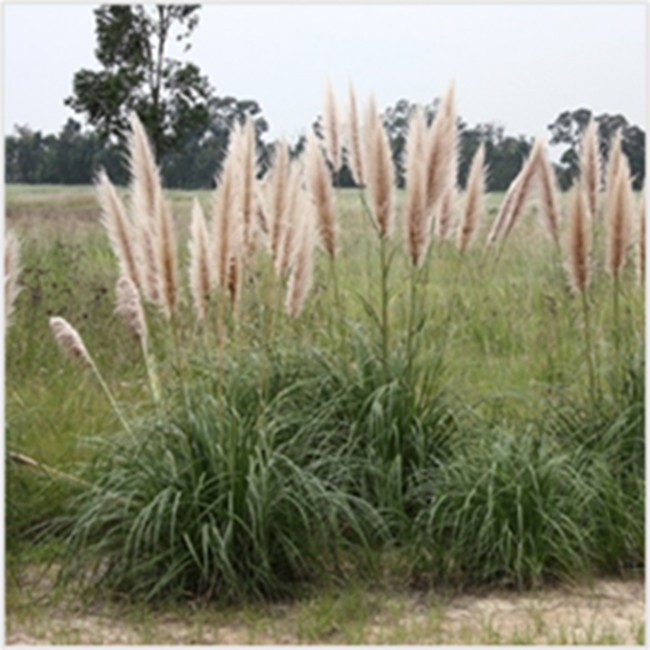
Hailing from the Pampas regions of South America, Pampas Grass is a robust tussock grass with a striking presence. Its clumps can reach impressive diameters of up to 3.5 meters, while its towering flowering stalks may soar to a height of 4 meters. The leaves of this grass are characterised by their greyish or bluish-green hues, often forming a V-shape in cross-section with rough margins. But the defining feature that captures our imagination is undoubtedly the feathery silvery-white to pink or mauve inflorescences that grace its presence from February to April.
Legislation of the Unseen Invader
In South Africa, Pampas Grass is regarded as an invasive species of serious concern. Classified as a Category 1a invasive species under the Conservation of Agricultural Resources Act (CARA) of 2002 and falling under Category 1b of the National Environmental Management: Biodiversity Act (NEMBA) National List of Invasive Species, this invasive menace has firmly established itself in the Western Cape, Eastern Cape, KwaZulu-Natal, and Gauteng provinces. According to CARA 2002, residents who fail to comply with a contravention notice could be fined R5 000 or sent to jail for up to two years, or both penalties, for a first conviction. This could be doubled at a second or subsequent conviction.
How you can help our cause:
DONATE VIA EFT:
The Endangered Wildlife Trust
FNB Rosebank (Branch code: 253305)
Account number: 50371564219
Use Reference: WIT
Historical and Present-Day Uses
In some mining areas, particularly those with soil erosion issues, Pampas Grass was employed for soil stabilisation on mine dumps. The dense root system and vigorous growth of Pampas Grass helped prevent erosion, reduce soil loss, and stabilise the soil on mining waste piles.
Pampas Grass is a highly sought-after ornamental plant with a multitude of decorative uses. Its tall stature and striking, feathery plumes make it a favourite in gardens and landscapes, where it serves as a captivating focal point, privacy screen, or windbreak. Pampas Grass plumes, prized for their beauty, are often featured in dried flower arrangements, adding elegance to interior decor and event settings, including weddings and special occasions. Additionally, its versatility extends to seasonal and holiday decor. However, while Pampas Grass is cherished for its aesthetics, it should be used responsibly, as it can be invasive in certain regions, necessitating proper management to prevent ecological harm.
Modes of Propagation and Spread
Pampas Grass employs two primary mechanisms for its relentless spread. Firstly, through seeds, the plant produces an abundance of them in an open panicle, allowing these seeds to be carried away by the wind. This ease of dispersion enables Pampas Grass to colonise new areas with astonishing efficiency. Secondly, beneath the surface, Pampas Grass extends its reach through rhizomes (underground stems) that facilitate the formation of new clumps nearby. This subterranean network plays a vital role in its rapid expansion.
The invasive character of Pampas Grass presents a significant threat to ecosystems, causing habitat displacement as it competes vigorously with smaller indigenous grass species for vital resources such as water, sunlight, and nutrients, disturbing the delicate balance of local ecosystems. Furthermore, the sale and utilisation of Pampas Grass plumes, often laden with seeds, directly fuel the expansion of this invasive plant. This not only demonstrates environmental irresponsibility but also constitutes an illegal activity when used as decorative accessories for weddings, events, or decor.
What can you do?
- Familiarise yourself with the legislation
- If you manage your own land, keep it clear of Pampas Grass
- Do not buy Pampas Grass from nurseries
- Purchase faux, synthetic and fake Pampas for ornamental purposes
- Report any Pampas sales to the authorities
While Pampas Grass may initially appear to be a charming addition to your home or event decor, it is imperative to recognise the potential harm it poses to South Africa’s precious natural environment. Responsible usage and a commitment to avoiding Pampas Grass are fundamental steps in safeguarding our native ecosystems. Let us make informed choices to ensure that the beauty we seek in our decorations does not come at the expense of our invaluable wildlife and habitats. Together, we can protect South Africa’s rich biodiversity from the silent threat of Pampas Grass.
Contact the EWT for more information.
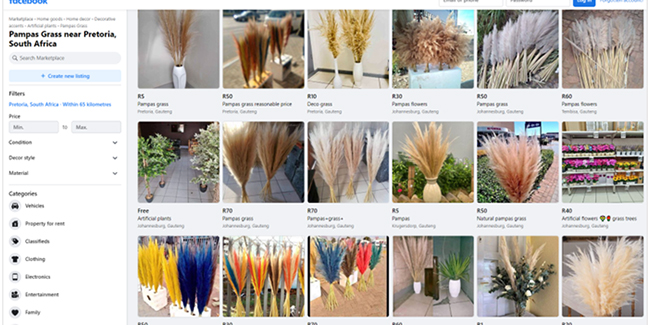
Adverts featuring Pampas Grass for sale.