Donate today: support our k9's 
 mission

Old Salt Trail Soutpansberg: Experience Nature and Biodiversity

Old Salt Trail Soutpansberg: Experience Nature and Biodiversity

Old Salt Trail Soutpansberg: Experience Nature and Biodiversity

By Eleanor Momberg
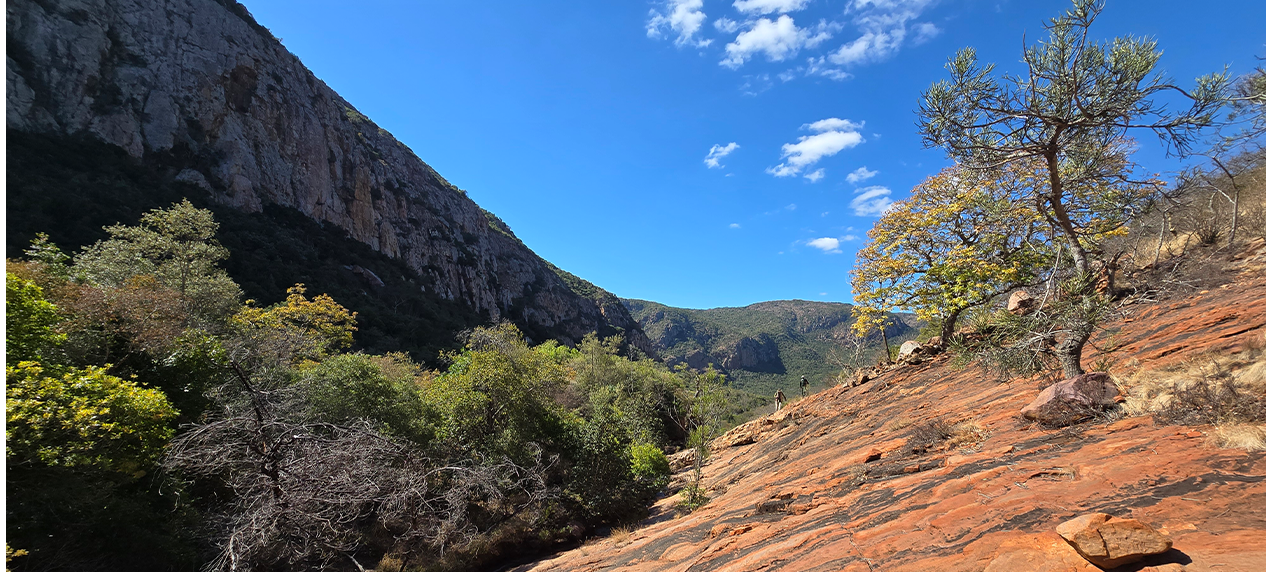


Diverse ecosystems encountered on the Old Salt Trail

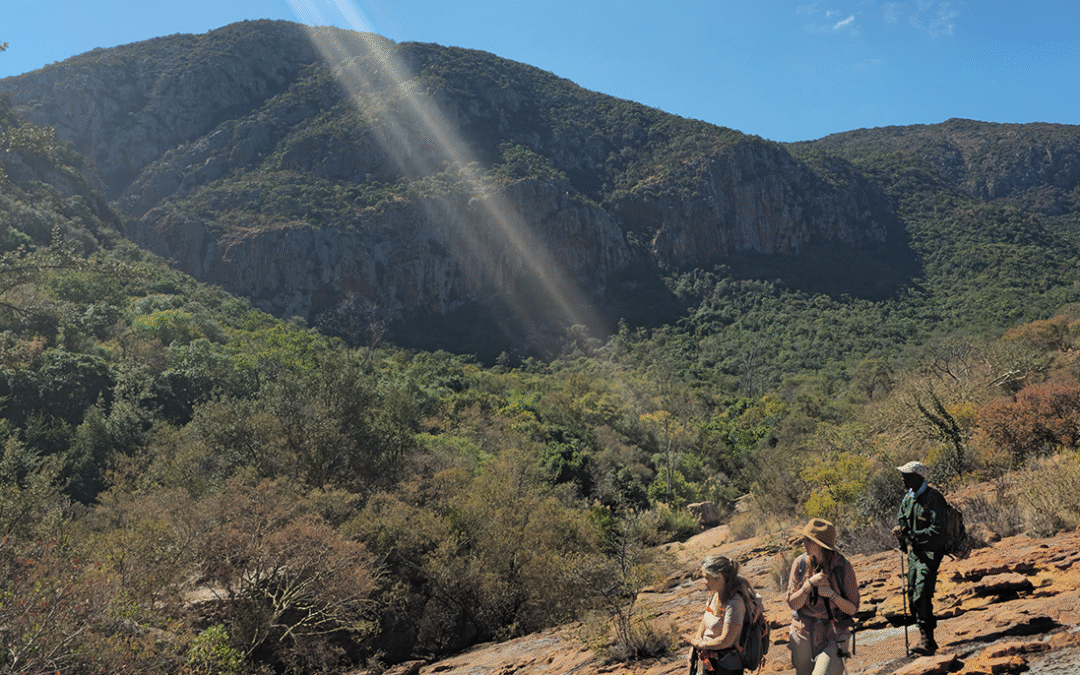
Day 2: Hamasha Gorge

Amazing.  Mind-boggling.  Beautiful.

These are among the words used by Jo Bert, the Endangered Wildlife Trust’s Senior Graphic Designer, following their five-day hike of the Old Salt Trail in the Soutpansberg.

Jo had joined a group of hikers to experience the Trail that spans the upper reaches of the Soutpansberg Mountains in Limpopo.

“I did not have context of the trail.  I had been telling the story for months and all I had to go on was the information that had been supplied and the photos I had seen. A lot of the story so far has been conservation-focused, so going on the trail enables us to tell the story better from a marketing perspective and, through that, get more people to join,”  said Jo.

For someone who is largely deskbound at the EWTs Conservation Campus in Midrand, this was an ideal opportunity to get back to nature and to collect photos and video material needed for future projects.

“It was amazing.  I honestly love getting out away from my desk. It was so beautiful.  I think the best part is that I have looked at those photos so many times, and to actually be in that space, to stand where the photo was shot, puts the whole thing into a different perspective,”  they say.

The intrepid team of four hikers were led by the EWT Medike Reserve Rangers Tharollo Mthisi and Khathutshelo Mukhumeni.  The Old Salt Trail is a 73km, five-day, four-night slackpacking adventure traversing numerous private properties in an area that now largely comprises the Western Soutpansberg Nature Reserve.

The hike starts at the Medike nature reserve, which is owned and managed by the EWT.   On Day One, you climb 11.5km to Leshiba Luvhondo Camp.  On the second day, the hikers embark on a 15.5km hike to Sigurwana Lodge, followed on the third day with a trek of about 15km to Lajuma Wilderness Camp.  On the fourth day, the hike takes about 19km you back to Leshiba Venda Village Lodge from where you return via an 11km route to Medike on Day Five where the adventure ends.

Before the hikers set off from the bottom of the Sand River Gorge, Tharollo and Khathutshelo give a safety briefing and all luggage is loaded into a vehicle to be taken to the overnight accommodation at Leshiba.  All hikers carry with them are a day pack.

“You carry a day pack with you with your lunch in, maybe a spare jersey and your water,”  said Jo. “The first day I packed way too much, because I didn’t realise that we had so much food given to us, so I brought a whole bunch of snacks with me, and a whole lot of clothes because I didn’t know how wet we were going to get or if it was going to be super hot. I also had a bird book, but then realised that Therollo and Khathu have all the apps on their phones so we just identified with that. So every single night I was taking things out of my bag and by the last day I only had my lunch and my water and a very light jersey”.

On the first two days of the Old Salt Trail hikers not only have to tend with steep and rocky slopes, but also cross bushveld, forests, grassland and savannah beside enjoying a variety of San and Khoekhoe rock art and ancient artefacts.

“The cultural heritage in that area is so amazing.  And there are so many spots where you are in the ruins of an old village where there are bits of clay or you can see the foundations of a house. And the places with the rock paintings are fascinating,” Jo explained.

For paintings that have been damaged by years of weathering, a phone APP was used to highlight the original paintings.  “A lot of people thought that the paintings were about daily activities, but they are about special occurrences and a lot of the paintings in that area are about spirits, ancestors and trances; a lot of really spiritual stuff and not just day to day things.  And there’s a lot of giants in there that you can’t really see with the naked eye, but when put through the APP you can see them and it is amazing,”  said Jo.

On Day Three hikers head straight towards a rocky cliff and a waterfall into a Fever Tree forest before climbing to the top of Mt Lajuma, the highest point of the Soutpansberg at more than 1,727m above sea level.

“It is crazy. When I got to the top of the mountain, I looked around to see everything below and realised I had forgotten that I was actually on top of the Soutpansberg. I actually only remembered we were up on the mountain when I looked out from on top of Mt Lajuma and I saw how far down everything else was,”  said Jo.

For this adventure, hikers need to be reasonably fit.

“On Day Four there is a section where you have to climb up The Chimney as they call it. I do rock climbing and I am ashamed to admit that I needed a hand in some places.  It’s not the most insane climbing, but it is fairly technical,”  said Jo.  “I think you have to be fairly fit, but I still managed even though I was a bit ill, so it’s not an impossible thing.

Hikers have to be prepared to walk long distances.  Although there is a break for lunch and several short stops in between, it is an all-day walk across sometimes flat areas, traversing unsteady and rocky terrain, rivers and other obstacles, and scrambling up some challenging cliffs.

“You do have to be fairly confident in your ability.  If you are reasonably fit, you can do it,” they said.

The main calling card for the Soutpansberg and the Old Salt Trail is the variety of ecosystems.  Jo points out that the terrain constantly changes.

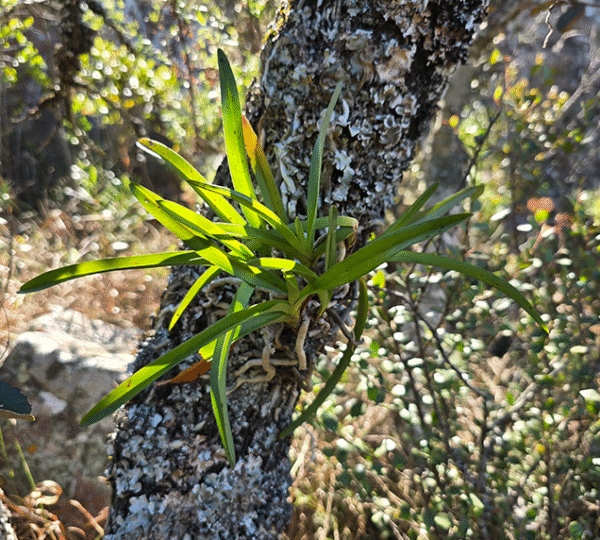
“You start on Medike where it is fairly dry … and by the time you get to Leshiba it is marshy on the side of the mountain, and on the fourth day you’re in a Yellowwood forest.  Even on the first day you start to get up into the mist belt and by Day Two you’re seeing Old Man’s Beard lichen everywhere. Some days you’re walking through grasslands or marsh and then you’re in Bracken taller than you. It changes within seconds”.

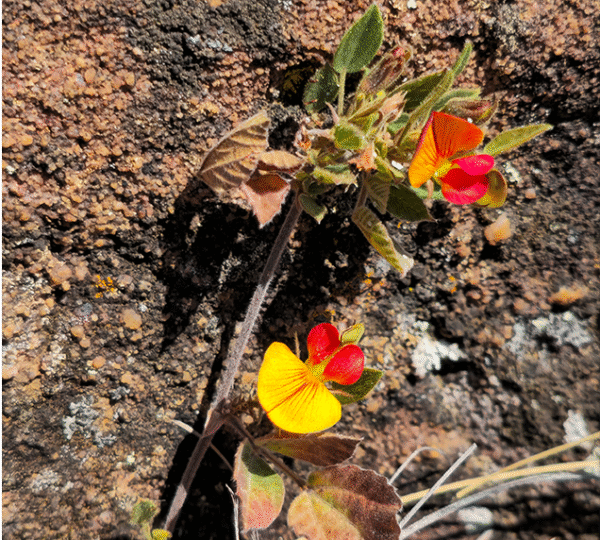
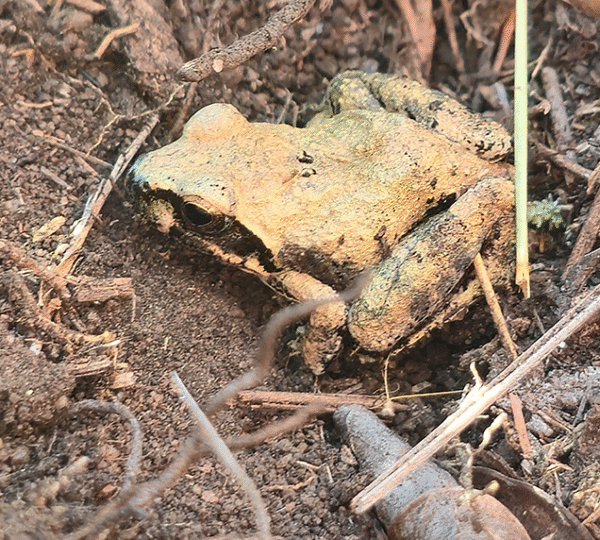
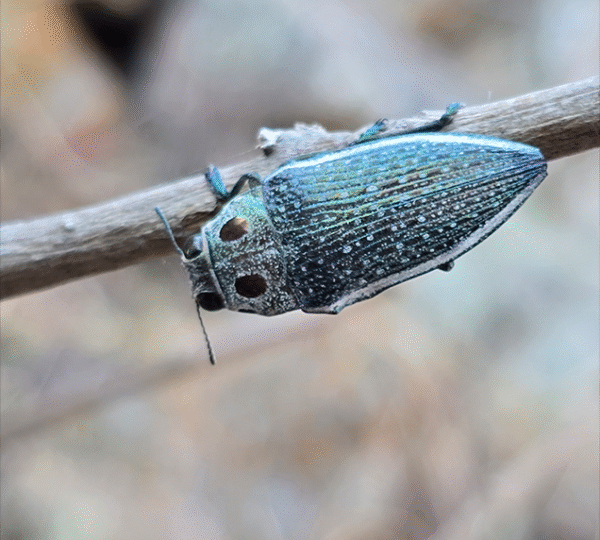
Jo added: “The amount of birds we saw was amazing.  We saw and heard birds I had never seen or heard in my life. There are so many mushrooms and there are tiny little frogs and flowers and we saw so many beautiful beetles… So many amazing things that I have never seen before, and I have seen a fair amount, but this was just blowing my mind – the amount of nature and biodiversity that I have never even seen before and it is such a small area”.

The Soutpansberg is a unique refuge.  “If you go to the Kruger National Park, you can drive for hours in the same kind of veld. Go to Soutpansberg and walk around for two hours and you have seen six different biomes, you’ve climbed a mountain, you have walked across marshy flats and it is a complete variety every five minutes.  We saw zebra and quite a couple bushbuck, klispringers, and we found several snake skins,” they said.

Jo said they did not even take much note of the iconic waterfall because there were so many butterflies and River Fever Trees.

“I was just looking at the trees and the mosses and large butterflies and the one lady that was with us knew all the species of butterfly. I learnt quite a lot.”
Accommodation

Jo has nothing but praise for the accommodation at Leshiba Luvhondo Camp and Venda Village and Sigurwana Lodge describing them as beautiful and luxurious.  Although the Lajuma Wilderness Camp was more rustic, it was comfortable, they said.

After a day of hiking, the warm facecloth at Leshiba handed to hikers and drinks and snacks served are a blessing.  Moreso the food, the comfortable huts, rondawels and tented camps with their welcoming beds—with hot water bottles—and bathrooms at the end of a day-long slog through the bush.

Jo recommends booking accommodation at Medike for the night before the start of the hike, and the last night – if you are not from nearby. This is because of the time it takes to travel there. The hike starts in the morning and ends in the afternoon.

“We stayed at the Stone Cottage at Medike, which was really nice.  If someone is coming from Joburg it is worth staying over because it is a long hike”.

Two weeks after completing the hike Jo said they were still trying to process everything seen and experienced.

“It was difficult to process in the moment and the more I think about it, I still can’t appreciate the amount we actually saw.  It was mind boggling,”  they said.
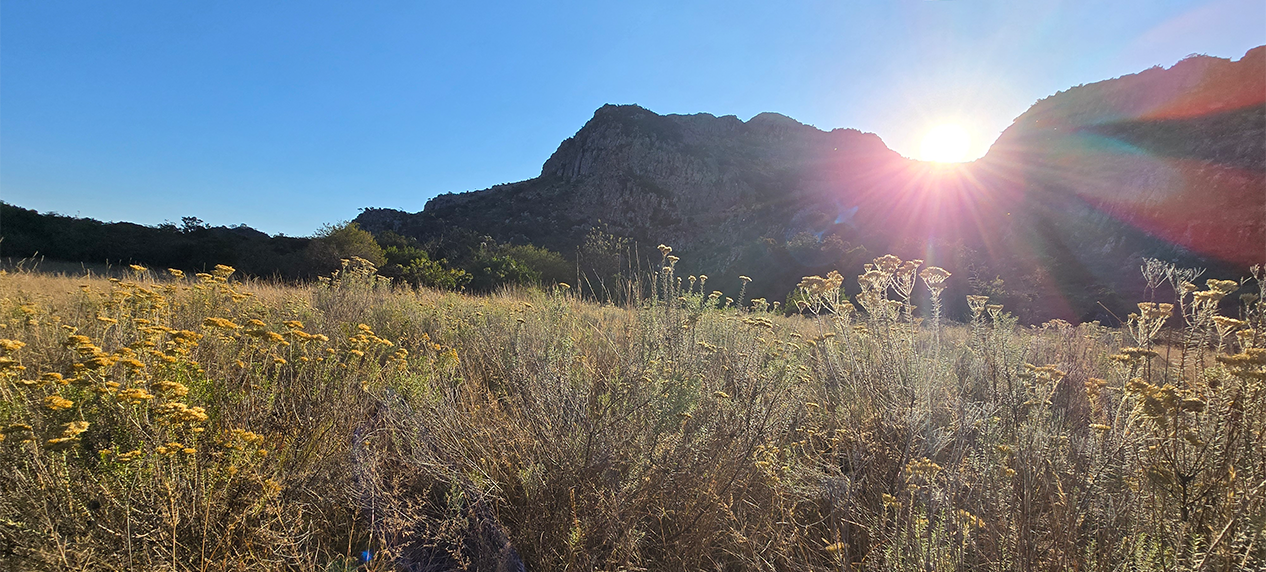
 

Sunset view from the Old Salt Trail Soutpansberg

Day 3: Mt. Lajuma

Conservation, Cricket and Youth Development

Conservation, Cricket and Youth Development

Conservation, Cricket and Youth Development

By Joseph Razwinani, Medike Nature Reserve and Hospitality Manager


Community upliftment through cricket and conservation at Medike Nature Reserve

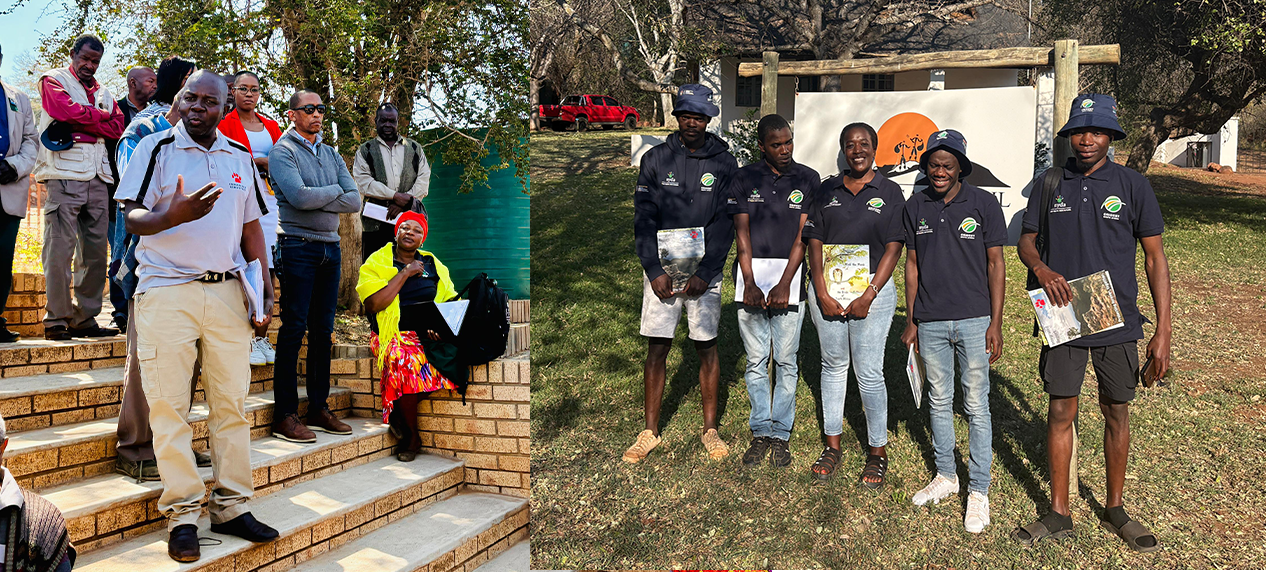
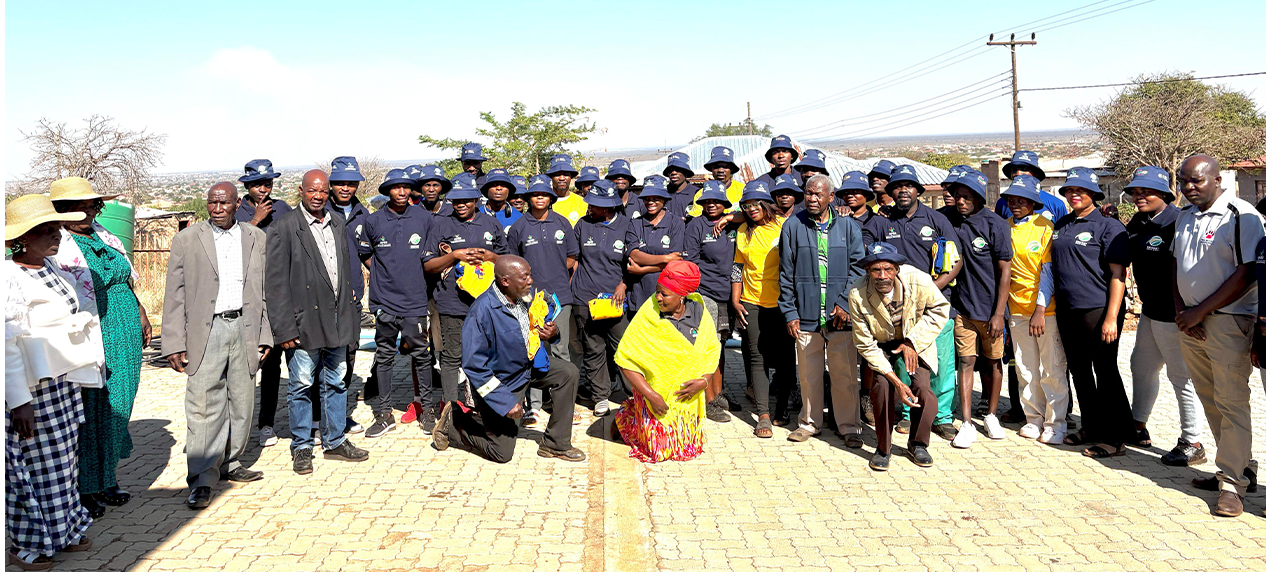
Left: Joseph addressing members of the local leadership, community and future cricketers. Right: cricket beneficiaries


At the end of August, a significant cricket development initiative was officially launched for underprivileged rural communities located adjacent to the Medike nature reserve.

This landmark programme is a collaborative effort between Cricket South Africa (CSA), the National Youth Development Agency (NYDA), and the Endangered Wildlife Trust’s Medike Nature Reserve. The initiative directly helps to reduce poverty, develop skills, and empower young people. This fits well with the EWT community outreach programme and government aims for service delivery, social unity, and giving youth valuable job skills.

The core objectives extend beyond cricket. It also aims to link sports development with conservation, eco-tourism, and broader community upliftment. Beyond job skills, it tackles unemployment directly and offers ways to avoid social problems like substance abuse and crime, while we get to expose the youth to an alternate, healthy environment on Medike.

Cricket SA has established 70 hubs countrywide, and one of its hubs is in the three villages adjoining the Medike nature reserve—Midoroni, Maebani, and Tshikhwarani.  CSA has committed R630,000 in stipends for the EWT hub over a six-month period. Each of the 75 beneficiaries, who are unemployed youth between the ages of 18 and 35, receives a monthly stipend of R1,400.00.

The beneficiaries will be trained in umpiring and scoring alongside additional skills like administration, computer literacy, electronic reporting, payroll management, event organisation, and problem-solving.

The EWT and CSA will continue identifying training needs for beneficiaries and educate them about the importance and value of the biodiversity in the Soutpansberg region.

Interestingly, three beneficiaries, Andani Mahanelo, Dungelo Maliaga and Portia Maliaga, who had earlier been trained by PIC as Health and Safety representatives, have been absorbed into the cricket initiative as first aiders, helping to develop their skills as they give back to the local community.  Another five beneficiaries who have shown an interest in eco-tourism joined Catherine Vise, Soutpansberg Protected Area manager, on a training hike during the weekend.

During the launch, the EWT highlighted the significance of linking cricket and the youth with conservation, positioning the initiative as a unique model for rural development.

The local ward councillor, Ishmael Madimabi, commended the programme’s potential in combating unemployment and substance abuse among young people. He also acknowledged the role of the EWT in attracting partners such as CSA to uplift local communities, and pledged his support to work with Medike Nature Reserve to improve the access road to the reserve to further enhance tourism potential. Traditional leaders endorsed the initiative and committed to overseeing its implementation at the village level.

CSA has undertaken to build modern cricket facilities at Midoroni village next year. This will allow them to host inter-provincial matches, which will bring visitors and help expand the local tourism economy. CSA aims to take on 450 beneficiaries from across the country to become trainers for new participants in this programme. This will create lasting jobs and ensure the continued use of the skills learnt.

This all-round approach, which relies on strong teamwork between CSA, local traditional leaders and the EWT, uses sport development not just for fun; it is a powerful way to improve the communities economically while conserving the environment, making it a unique model for transforming rural areas.

Conservation and youth development project linking cricket with biodiversity education

Cricket Initiative Group

World Ranger Day celebrated at the EWTs Medike Nature Reserve

World Ranger Day celebrated at the EWTs Medike Nature Reserve

In the field

World Ranger Day celebrated at the EWTs Medike Nature Reserve

By Joe Razwinani, Medike Reserve & Hospitality Manager
 

World Ranger Day braai celebration with rangers and families


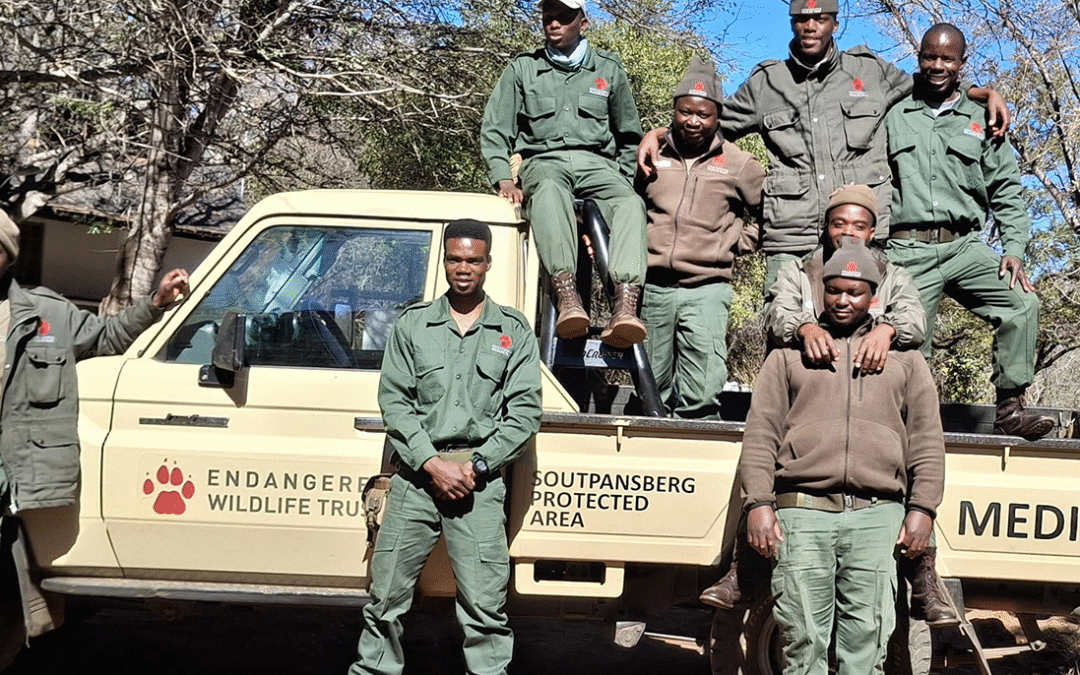
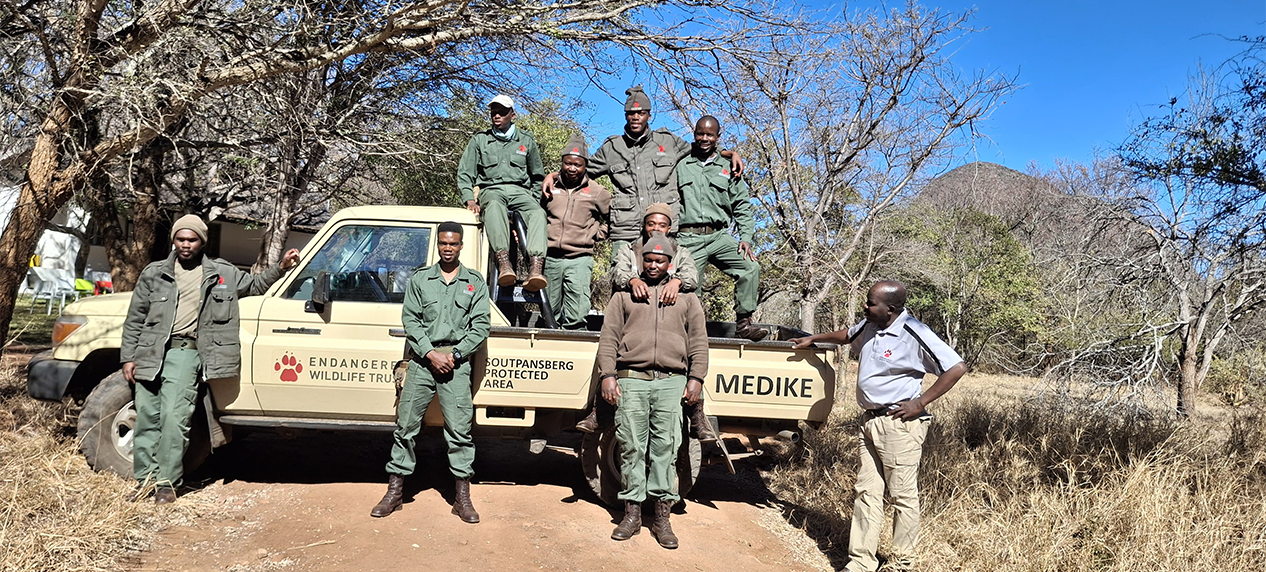
Rangers and support staff at the EWTs Medike Game Reserve in the Soutpansberg marked World Ranger Day on 31 July by demonstrating their abilities and versatility of their work, and sharing insights about their experiences.

World Ranger Day, this year held under the theme “Rangers Powering Transformation”, annually commemorates rangers who have died in the line of duty, honours the hard work and dedication of rangers, and fosters greater understanding and appreciation for the work they do among staff, their families, and local community members.

At Medike as short programme was designed to address ranger’s families and community members with the aim of educating them about the multifaceted role of a ranger. The programme aimed to shed light on daily ranger duties, promote professional growth, and strengthen the connection between conservation efforts and local communities.

The 2025 Ranger Day celebration began with a ranger drilling demonstration to showcase the discipline, coordination, and teamwork required in field operations. This was followed by individual presentations from rangers, each addressing specific topics. such as anti-poaching strategies, Veld Fire Control, Veld Restoration. Alien Invasive Species Removals, Eco-Tourism and Community Involvement. These presentations not only served as educational tools but also helped build the rangers’ confidence in public speaking. The presentations sparked meaningful dialogue and shifted long-standing perceptions regarding the work of rangers.

Visitors extended their gratitude to the EWT team at Medike for safeguarding the Soutpansberg Mountain. Many were surprised to learn that the mountain is the source of their drinking water. This discovery underscored the vital link between environmental conservation and everyday life. It also inspired greater respect for natural resources and reinforced the importance of environmental stewardship among community members.

One of the community representatives expressed his readiness to alert the EWT about the presence of poachers in nearby villages making a significant step towards integrated conservation efforts, where local residents play an active role in protecting wildlife against the illegal trade.

At the end rangers and their families enjoyed a braai courtesy of the EWTs Support Services who provided vouchers for the social gathering.

This celebration served as a powerful reminder of the transformative potential of conservation when communities are informed, engaged, and empowered.

Medike Nature Reserve has a new radio communication system

Medike Nature Reserve has a new radio communication system

In the field

Medike Nature Reserve has a new radio communication system


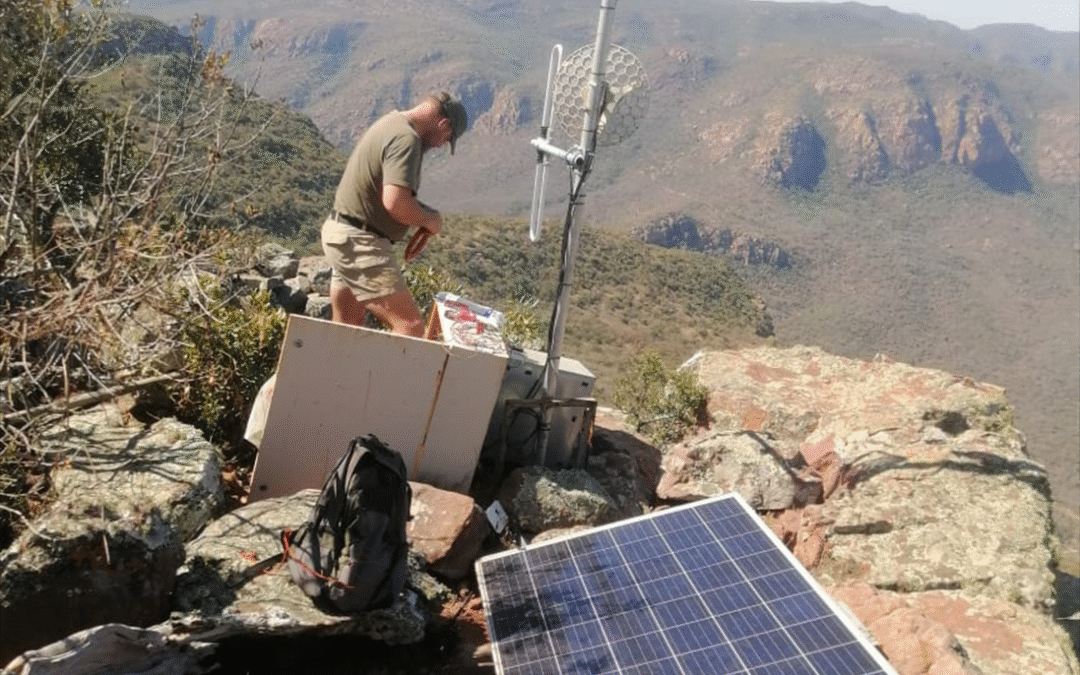
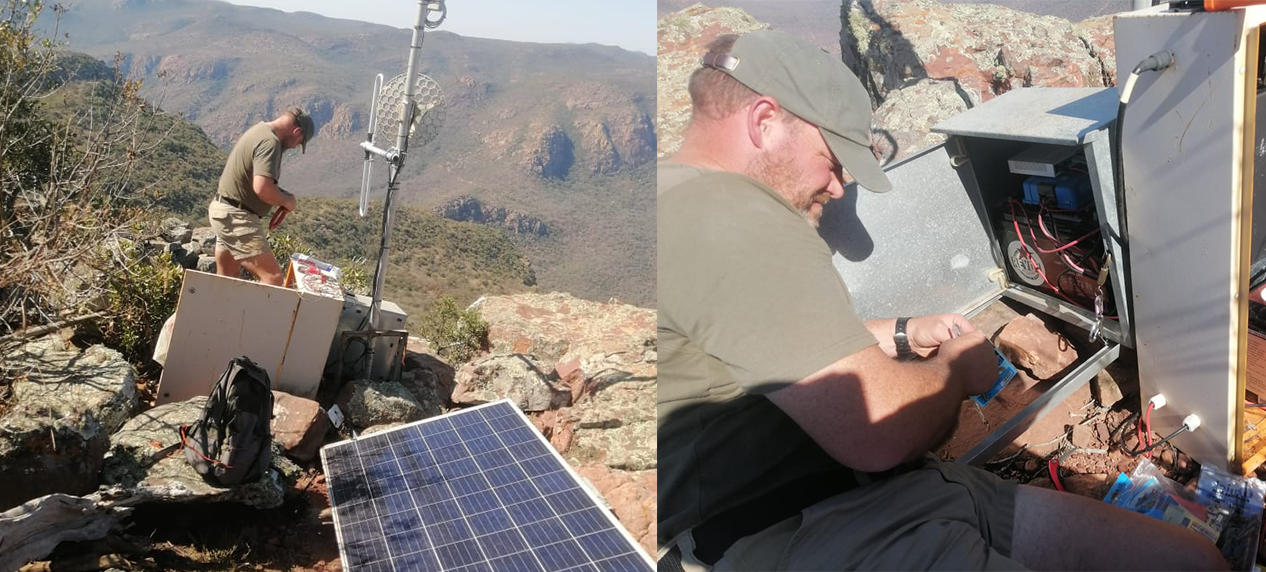
Radio repeater installed at Medike Nature Reserve to improve communication coverage across the Soutpansberg

Radio repeater installed at Medike Nature Reserve to improve communication coverage across the Soutpansberg


The EWTs Conservation Campus Manager, Werner Pretorius last month visited the Medike Nature Reserve in the Soutpansberg to conduct communication tests and assess possible locations for the installation of additional repeaters. These repeaters, both analogue and digital, will improve the coverage and reliability of radio communication across the reserve.

Radio communication is a vital tool for operations within the Medike Nature Reserve. It enhances coordination, improves response times, and increases overall safety for both staff and guests. Radios also play a crucial role in communicating with neighbouring reserves during emergencies, including responding to poaching incidents and coordinating fire response. This saves time and reduces fuel wastage through more efficient communication.

During his visit, Werner inspected the existing repeater system. He rewired the box, replaced old cables, and properly insulated them to protect against Sun damage. The installation and upgrading of the communications infrastructure at the reserve is to happen in phases.  These include upgrading communication within the Medike Nature Reserve and expanding the network to connect with neighbouring reserves and the broader Soutpansberg area.