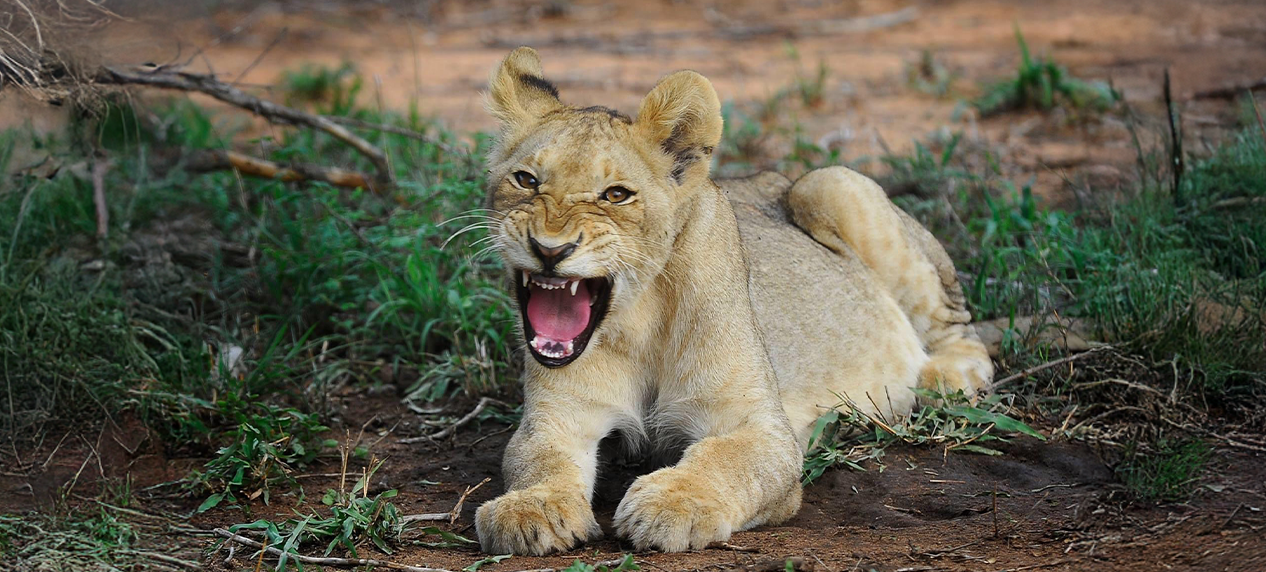
Despite their iconic status, lions are threatened across much of their African range. Today, they occupy only a fraction of their historical distribution, and many populations are in decline. The continuing reduction in both lion numbers and range reflects a combination of recent losses and improved understanding of their status and has been severe enough for lions to be listed as Vulnerable on the IUCN Red List of Threatened Species.
Expanding human populations have transformed much of Africa’s savannah into farmland, settlements, and infrastructure, shrinking and fragmenting wildlife habitat. As a result, lions increasingly come into contact with people and livestock, heightening the risk of conflict. This is further compounded by prey depletion, as widespread bushmeat hunting reduces the availability of wild prey and pushes lions to target livestock. In response, lions are often killed in retaliation, while many others are inadvertently caught in snares set for other species. These combined pressures continue to threaten populations and remain as key challenges for lion conservation.
In recent years, however, researchers and practitioners have become increasingly concerned about another, less visible threat; one that has the potential to undermine conservation gains if left unaddressed.
An Emerging Threat: Targeted Poaching for Body Parts
Alongside these long-standing pressures, a more targeted form of poaching has begun to occur with increasing frequency in several parts of Africa: the deliberate killing of lions for their body parts for the illegal wildlife trade.
Unlike conflict-related killings or accidental snaring, targeted poaching involves lions being intentionally killed to harvest specific body parts (such as bones, teeth, claws, skins, or fat) for the illegal wildlife trade. These parts are used for a range of purposes, including traditional medicine, spiritual practices, cultural rituals, and, in some cases, personal adornment. Demand originates both within Africa and from international markets, particularly in parts of Asia.
The use of lion body parts is not new. For centuries, lions have held cultural and spiritual significance in many societies. Historically, however, most use relied on opportunistic sources, such as lions that died naturally or were killed during conflict incidents. What is changing is the scale, organisation, and intent behind the trade.
In several countries, lions are now being actively targeted. Poachers may use poisoned carcasses to attract entire prides, killing multiple lions in a single event. In other cases, lions are caught in strategically placed snares or lured to baited sites.
There is also growing evidence that some of this trade is becoming more organised. Seizures of large quantities of lion body parts, sometimes alongside products from other trafficked species such as elephants or pangolins, suggest involvement by criminal networks operating across borders. These networks are often difficult to detect and disrupt, particularly in regions with limited law enforcement capacity.
Importantly, this threat does not replace existing pressures on lions – it compounds them. If targeted poaching becomes entrenched before effective responses are in place, it could spread rapidly across the species’ range and reverse recent conservation gains.
The threat is widespread
Mozambique has emerged as the epicentre of targeted lion poaching in southern Africa, with 426 human-related lion mortalities recorded between 2010 and 2023. Notably, incidents of targeted poaching for body parts increased sharply after 2017, rising from approximately one documented case per year to around seven annually. The involvement of organised criminal networks is underscored by large-scale seizures, including the interception of 300 kg of lion parts in Maputo in 2023 alongside other illicit wildlife products.
This pressure is now spilling across borders, with severe consequences for neighbouring populations. In South Africa’s Kruger National Park, lion numbers in the northern 20% of the park have declined by up to 63% over the past 18 years, largely attributed to targeted poaching for body parts and incidental snaring. Reports describe increasingly sophisticated methods, including the use of meat lures and poisoned carcasses to kill and harvest parts from multiple lions simultaneously.
Similarly, in Gonarezhou National Park, targeted lion poaching has become an escalating threat, characterised by poisoning and the selective removal of body parts rather than opportunistic killing. These incidents are particularly alarming because they are occurring within a well-managed transboundary conservation landscape, demonstrating that even flagship protected areas are vulnerable to organised, trade-driven poaching.
Reports of incidents where lions have been targeted for parts are now being shared from across the species African range.
Preventing Entrenchment: Proposed Responses
Recognising the seriousness of this emerging threat, several priority areas for action have been identified. Together, these complementary strategies aim to reduce targeted poaching of lions for body parts and disrupt trade networks along the entire supply chain, from poaching to consumption.
- Strengthening Protection and Monitoring on the Ground
Effective lion conservation depends on well-managed, adequately resourced protected areas that can prevent poaching and respond rapidly to emerging threats. Focused monitoring of lion populations, combined with systematic recording of mortalities, enables early detection of emerging hotspots and supports proactive rather than reactive responses. A centralised database, such as the IUCN SSC Cat Specialist Group’s African Lion Database (an initiative funded by the Lion Recovery Fund), allows trends to be tracked across landscapes and support evidence-based conservation action.
- Working More Closely with Local Communities
Communities living alongside lions play a decisive role in conservation outcomes, particularly where livestock losses and safety concerns are high. Addressing human–lion conflict, sharing benefits, and directly involving communities in conservation efforts reduces incentives for poaching and builds long-term support for lion persistence.
- Improving Understanding of the Trade
The trade in lion body parts remains poorly understood, limiting the effectiveness of interventions. Targeted research, including the use of genetic and forensic tools, can help clarify supply chains, identify source populations, and inform more strategic enforcement responses.
- Disrupting Trafficking Networks
Intelligence-led law enforcement and improved coordination among agencies are essential for interrupting trafficking routes. Targeting intermediaries and higher-level traffickers reduces profitability and weakens organised trade networks.
- Strengthening Legal Frameworks and Justice Systems
Robust legal frameworks, consistently applied, are critical for deterring wildlife crime. Effective investigations, well-prepared prosecutions, and the use of forensic evidence increase the likelihood of successful convictions and meaningful penalties.
- Reducing Demand for Lion Body Parts
Ultimately, poaching persists because demand exists. Carefully designed, culturally sensitive demand-reduction initiatives are essential to reduce pressure on wild lion populations and complement enforcement efforts.
Cautious Optimism
Lion conservation has never been simple, and the emergence of targeted poaching for body parts adds another layer of complexity. Yet there are reasons for cautious optimism.
Across Africa, governments, conservation organisations, researchers, and communities have demonstrated that lions can recover when threats are addressed and resources are invested strategically. Large areas of suitable habitat remain, and many protected areas could support substantially larger lion populations than they currently do.
It is imperative to act early and decisively. If targeted poaching is recognised as a serious, yet manageable threat and addressed through coordinated, evidence-based action, there remains a realistic opportunity to prevent it from becoming entrenched. Lions have coexisted with people for millennia, and with informed, collaborative action they can continue to do so, thus securing a resilient future for the species across much of its remaining range.
Lindsey P, Nicholson SK, Coals PG, Taylor WA, Becker MS, Rademeyer K, Briers‐Louw WD, Almeida J, Chase M, Dore A, Henschel P. Increasing Targeted Poaching of Lions for Trade Has the Potential to Pose an Existential Threat to the Species in Africa. Conservation Letters. 2026 Jan;19(1):e70014.Available at: https://conbio.onlinelibrary.wiley.com/doi/pdf/10.1111/con4.70014