Help protect Africa's 

Welgevonden Facility Expands for Cheetah Success

Welgevonden Facility Expands for Cheetah Success


Welgevonden Facility Expands for Cheetah Success


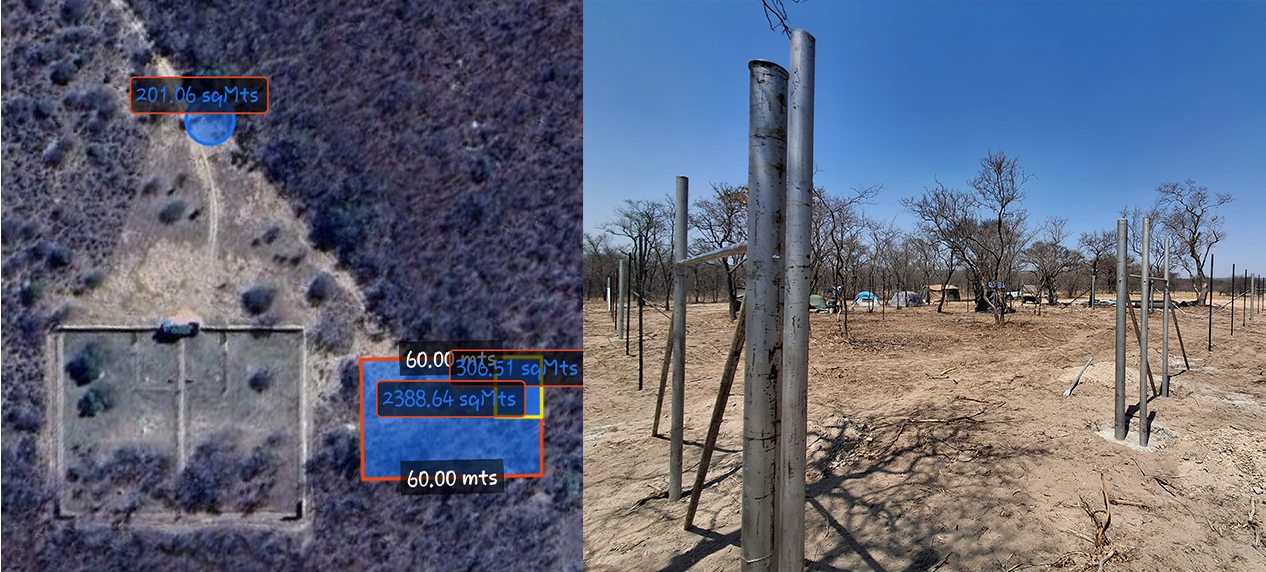
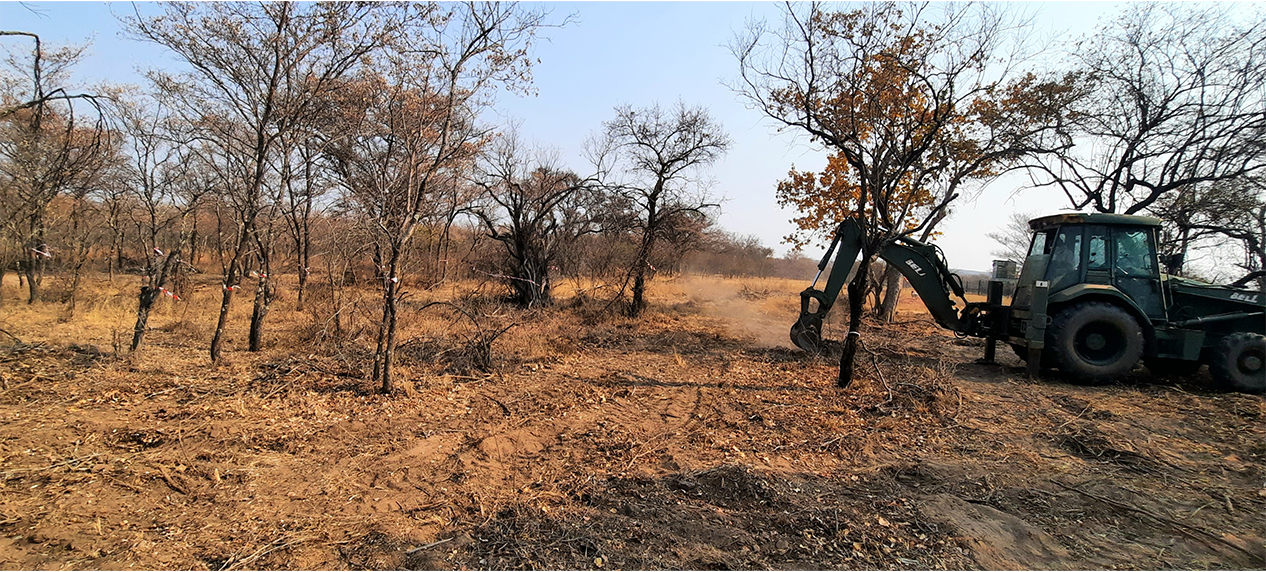
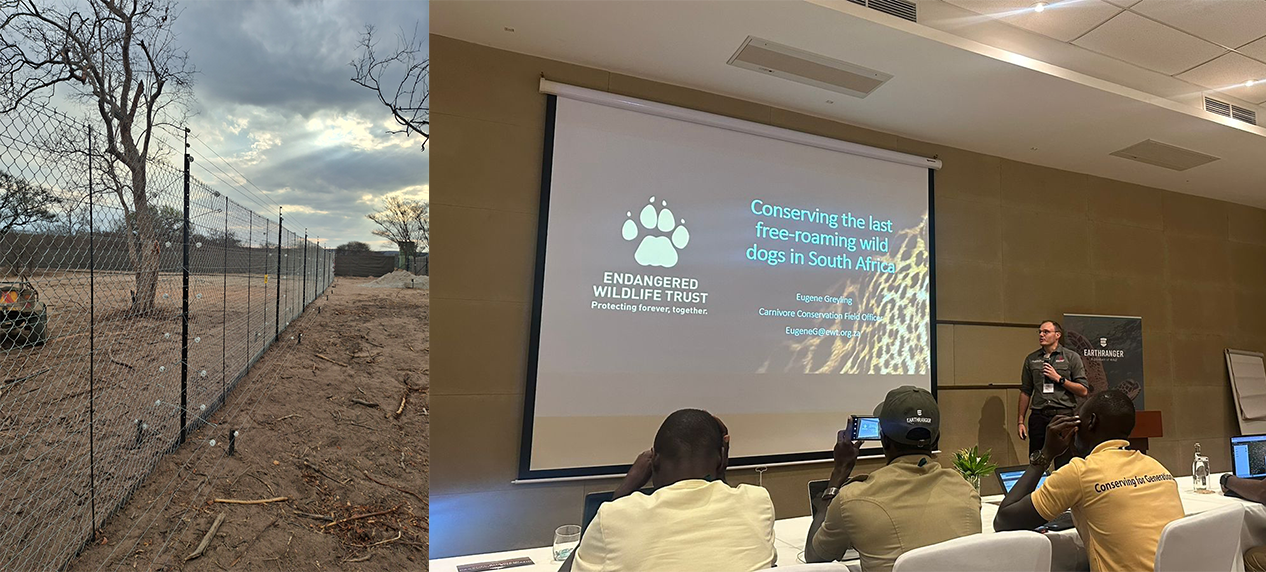
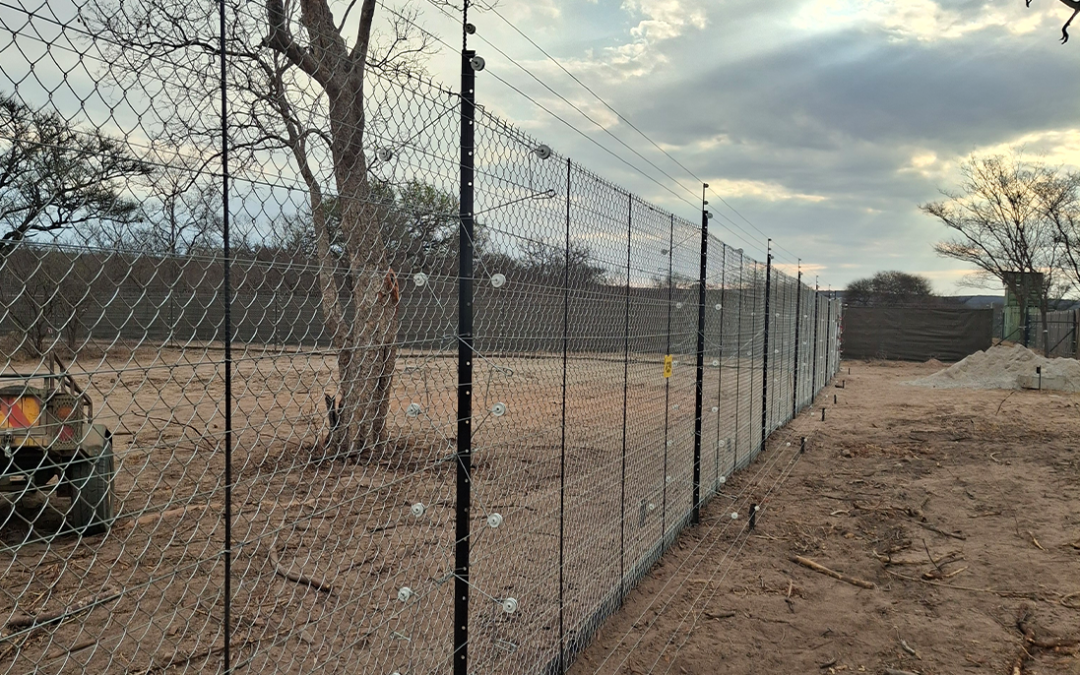
In 2021 the Carnivore Range Expansion Project in partnership with Welgevonden Game Reserve developed a state-of-the-art Wild Dog holding facility. This facility has since been the temporary home for 40 Wild Dogs during relocations within southern Africa. It has also facilitated the international export of 22 Wild Dogs and the international import of 12, thus enabling the reestablishment of the species to five protected areas. Based on this success we’ve been kindly granted funds from Paul L King to expand this facility to create an additional holding camp – this one more specifically geared towards cheetahs.

Field Officer, Eugene Greyling, worked meticulously in recent months managing the building team onsite to ensure that the facility met the highest possible standard. While the holding process is an integral part of both Cheetah and Wild Dog relocations, we strive to ensure that we can provide the best possible care and reduce stress as much as possible for each animal. The recently-completed Cheetah holding facility will do just that.

Flood Brings Frogs to Life at Medike

Flood Brings Frogs to Life at Medike


Flood Brings Frogs to Life at Medike

By Darren Pieterse, Medike Nature Reserve and Ecology Manager: Soutpansberg Protected Area

Following the recent good rains on the EWT Medike Reserve and the Soutpansberg in general, the Sand River came down in flood for the first time in two years. Almost instantly, a cacophony of amphibian calls accompanied the rising water level. Amphibians are well-known to rapidly take advantage of suitable conditions for breeding, as they never know when the next opportunity may occur, and most species’ eggs and tadpoles are reliant on water to complete their initial life stage (until they metamorphosise into terrestrial froglets that are less reliant on water). Calls are useful for researchers as each species’ call is unique, although some species, such as Tandy’s, Tremolo and Cryptic Sand Frogs, cannot be reliably told apart based on external characteristics. This means that calls or DNA are required to make a positive identification.

Amphibians play a critical role in the ecosystem. They mostly prey on insects such as the flying ants, which abounded during our survey. They, in turn, are eaten by a variety of mammals, birds and snakes. Amphibians are also a good indicator of ecosystem health. Because frog skin is very porous to allow water to be absorbed and carbon dioxide to be released (the skin of toads is less porous), frogs are sensitive to chemicals such as industrial pollutants. As such, frogs are rarely found in areas with chemical pollution.

The recent onset of frog activity was an ideal opportunity for us to assess what species occur on Medike Reserve, and to get an indication of ecosystem health. During our survey, we recorded 14 different species (although the reserve’s list currently stands at 23 species). None of the species recorded are threatened, although the relatively high species diversity does suggest that the freshwater system is still healthy. Two threatened species are expected to occur on Medike Reserve, one of which is only found on the Soutpansberg and nowhere else on earth. We will continue looking for these and additional species.

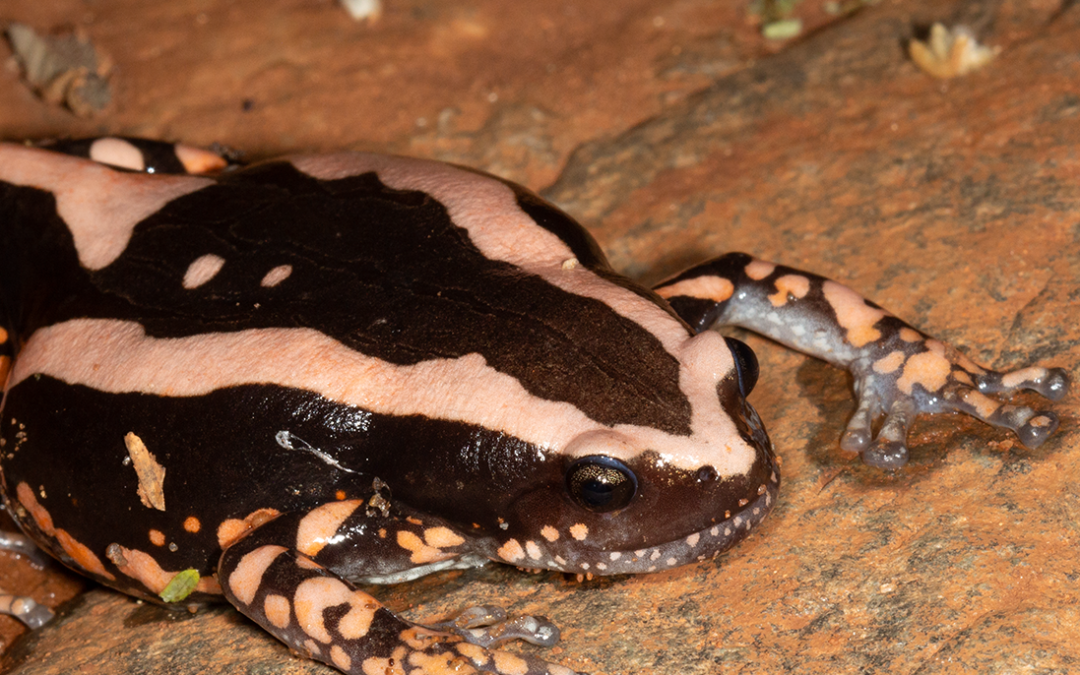
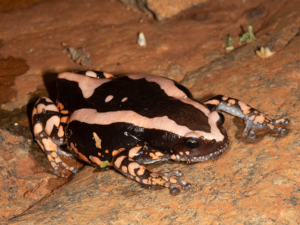
Of the species recorded, the Red-banded Rubber Frog is the most interesting, as it exudes toxins from its skin to dissuade predators from eating it. It advertises its toxic state through its bright black-and-red colouration, known as aposematic colouration. This frog exudes cardiotoxins (toxins that affect the heart) from its skin, so if you’re going to kiss a frog in the hopes that it will become a prince (or princess), it’s probably best not to kiss this frog.

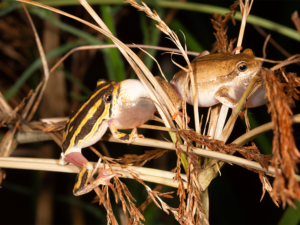
Painted Reed Frog – Hyperolius marmoratus

African Bullfrog – Pyxicephalus edulis

Banded Rubber Frog- Phrynomantis bifasciatus

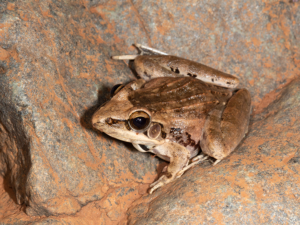
Plain Grass Frog – Ptychadena anchietae

Bubbling Kassina – Kassina senegalensis

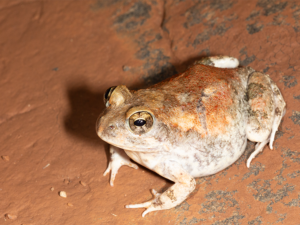
Russet-backed Sand Frog – Tomopterna marmorata

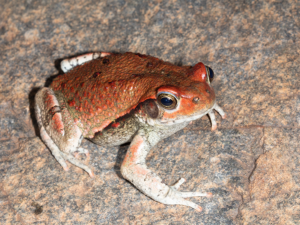
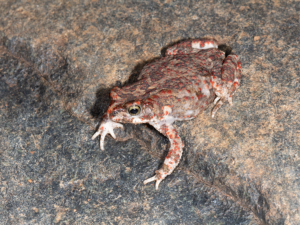
Eastern Red Toad – Schismaderma carens

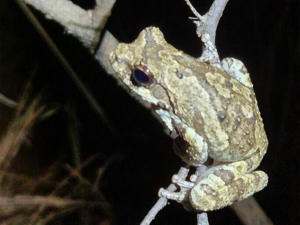
Southern Foam-nest Frog – Chiromantis xerampelina

Northern Pygmy Toad – Poyntonophrynus fenoulheti

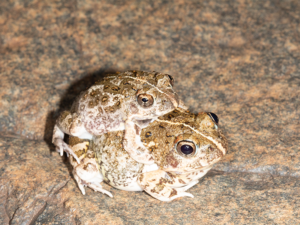
Tremolo Sand Frog – Tomopterna adiastola – Pair in amplexus

Driving half a million kilometres for EWT

Driving half a million kilometres for EWT


Driving half a million kilometres for EWT

By Ronelle Visagie, Field Officer: Birds of Prey Programme & Wildlife & Energy Programme

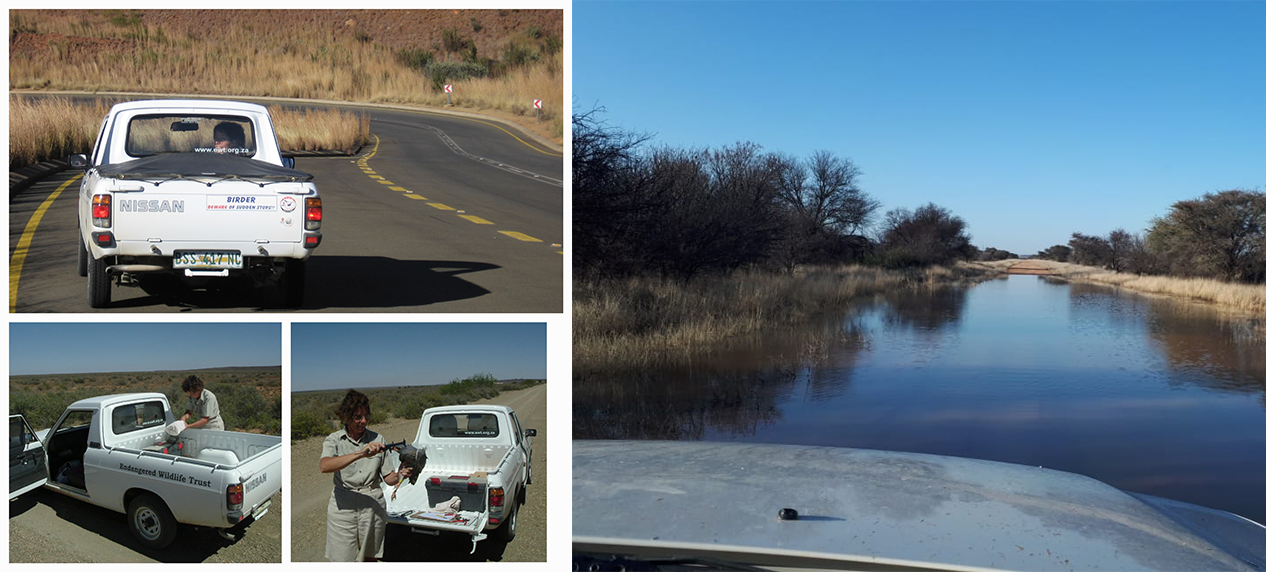
During September 2005 I started working for the EWT’s Birds of Prey Programme in the Karoo. It was in these beginning years that I drove a Nissan 1400 bakkie for nearly 3 years. The main purpose of the Project at that time was to engage with the farmers regarding the raptors at their farms. It was also expected of field officers to do all power line investigations in our area. I used to drive to a farm and then the farmer had to take me to where I had to work.


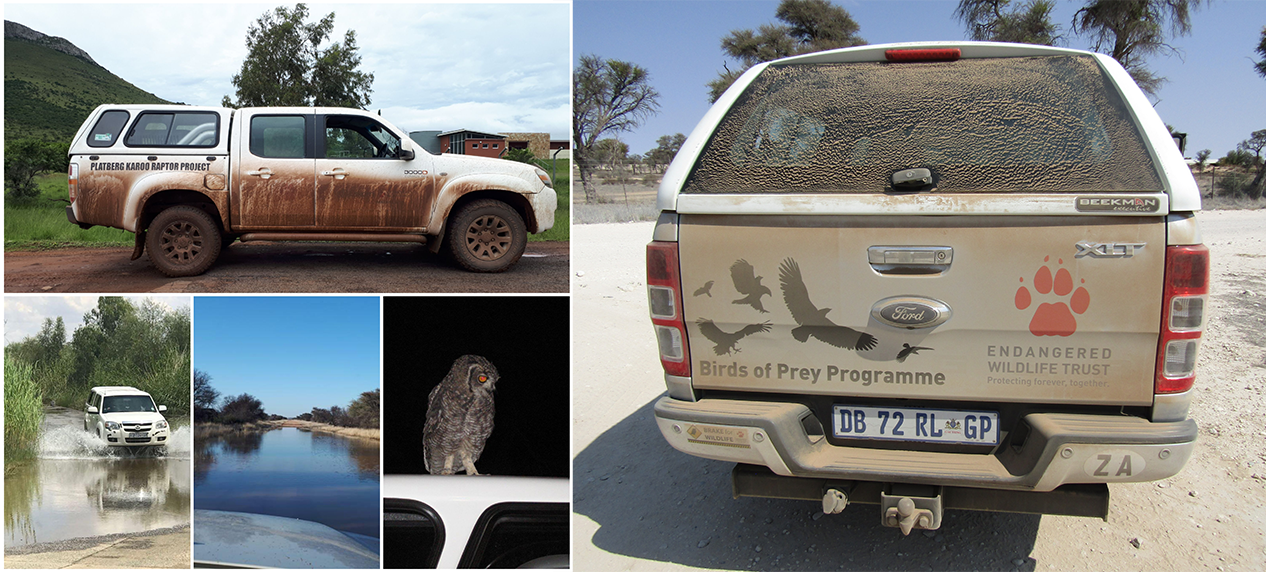
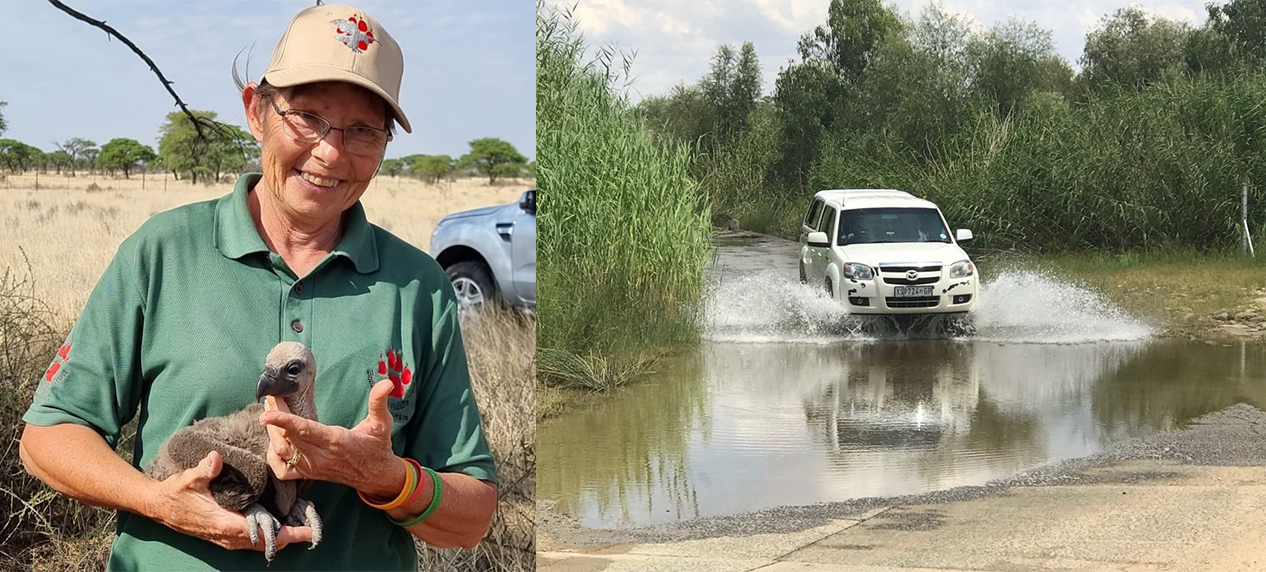
During February 2008 I did the first raptor monitoring with the support of the Nissan 1400 in Mokala National Park near Kimberley. The vehicle was too low and too small for driving off-road, but somehow, I managed. Returning from a trip to the Kgalagadi National Park the same month, I collided with a kudu on the gravel road between Prieska and Strydenburg. Fortunately, I sustained no injuries, but there was R22,000 damage to the Nissan. I had driven 27 126 km with the Nissan before the EWT supplied with a Mazda BT50 sponsored by Mazda with 37 805 km on the clock. The very reliable Mazda retired at 431 886 km after many memory-making adventures in the Karoo and Kalahari as we crossed the landscape for 15 years. Just imagine doing vulture nest monitoring in the Kalahari sand with a 2 x 4 and getting stuck on each and every survey.


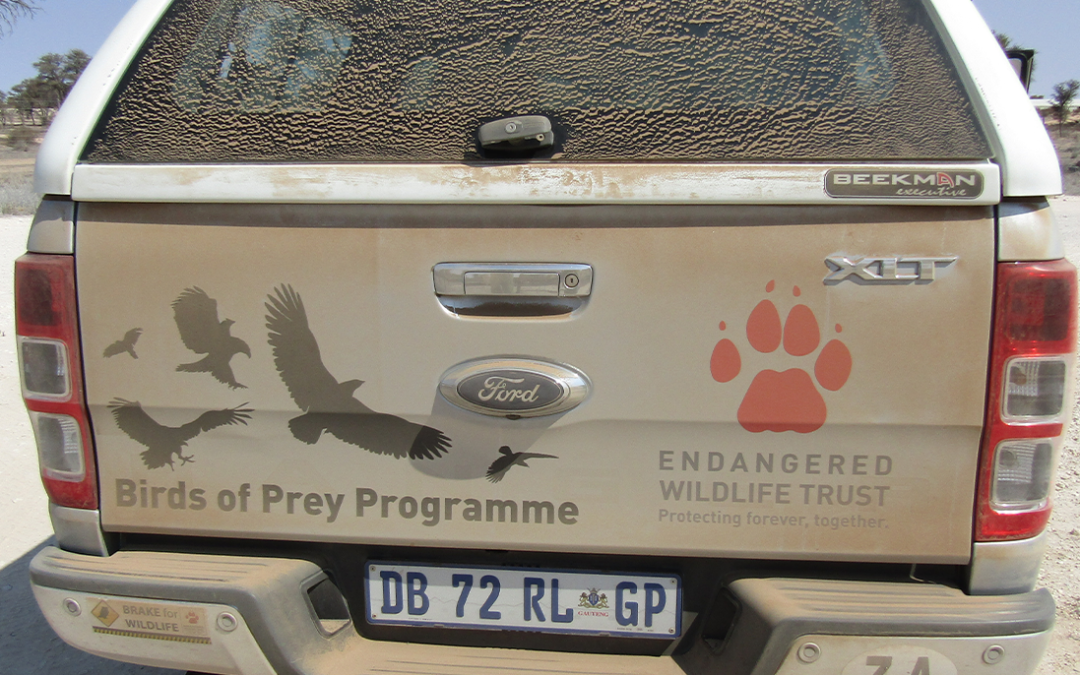
During November 2022 I received the Ford Ranger 4 X 4 and the adventures continued. At least I do not get stuck in the Kalahari sand anymore! During July 2023 a small rhino calf that was deserted by its mother hit the left back door – in case you wondered why there is a picture of a rhino alongside a vulture and an eagle on the left back door.

The 500 000 km mark was reached during the vulture ringing week in the larger Kimberley area in October 2024. As I do a lot of field work for the Birds of Prey and Wildlife and Energy Programmes, I do travel a lot in the Northern and Eastern Cape and also in the Orange Free State. Now the challenge is on for one of my colleagues at the EWT to reach half a million km!


Determining how Elephant impact on Vulture breeding sites in the Limpopo River valley: new research

Determining how Elephant impact on Vulture breeding sites in the Limpopo River valley: new research

Determining how Elephant impact on Vulture breeding sites in the Limpopo River valley: new research

By John Davies, Birds of Prey Programme project coordinator: Raptor Conservation Project


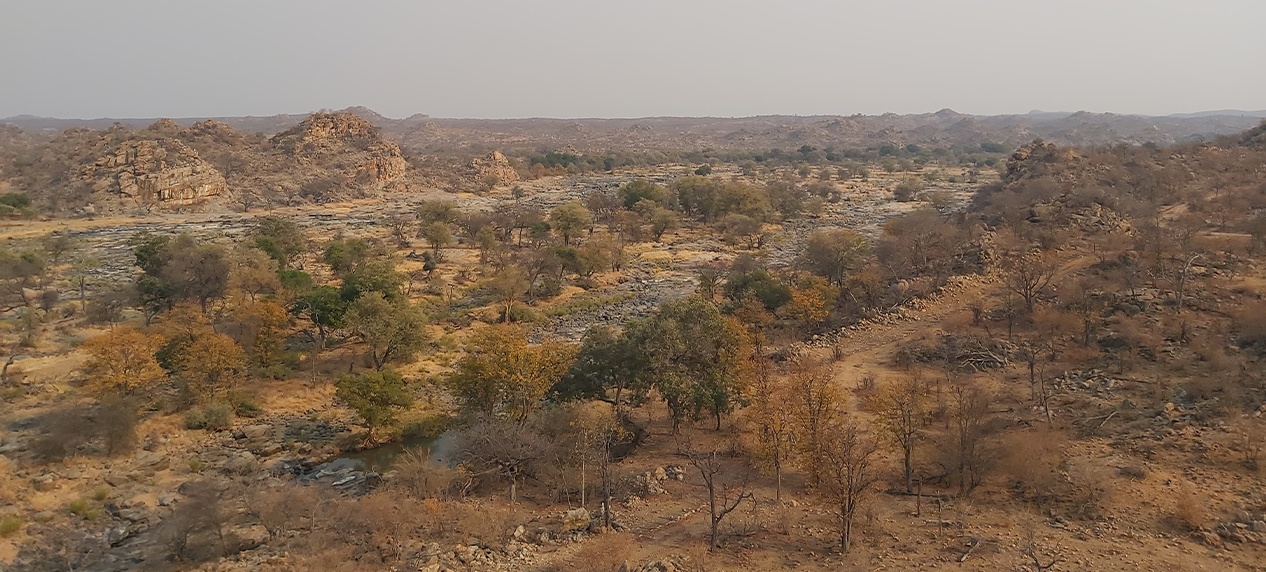
“Go to the banks of the great grey-green, greasy Limpopo River, all set about with fever trees, and find out.” These iconic words, published over 120 prior, are always in the back of my mind when travelling to this incredible part of South Africa.

It is in some ways a surprise that the Limpopo Valley, particulary the region lying to the west of the world-renowned Greater Mapungubwe Transfrontier Conservation Area, is still so poorly known. Perhaps this has been one of the saving graces for many of the species that call it home, resulting in little disturbance throughout certain areas.

A standout feature here are the large tracts of Ana trees dotting the islands and the banks of the Limpopo River, forming ancient forests that form an important habitat for breeding White-backed Vultures, Pel’s Fishing Owls, and is even one of the only breeding sites for Marabou Stalks in the country.

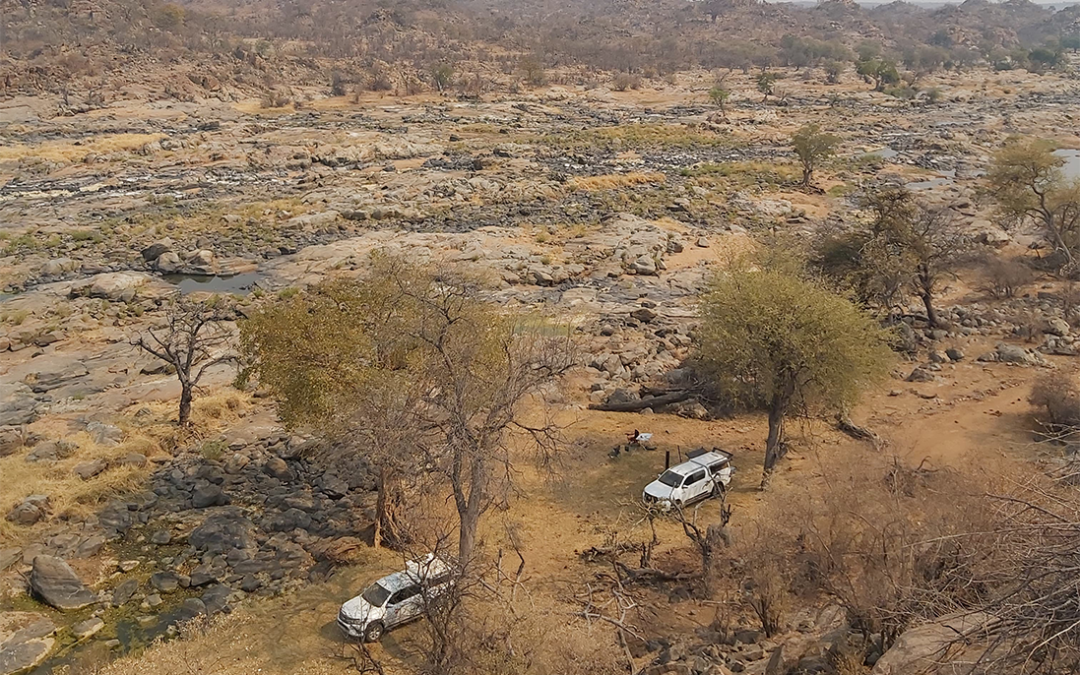
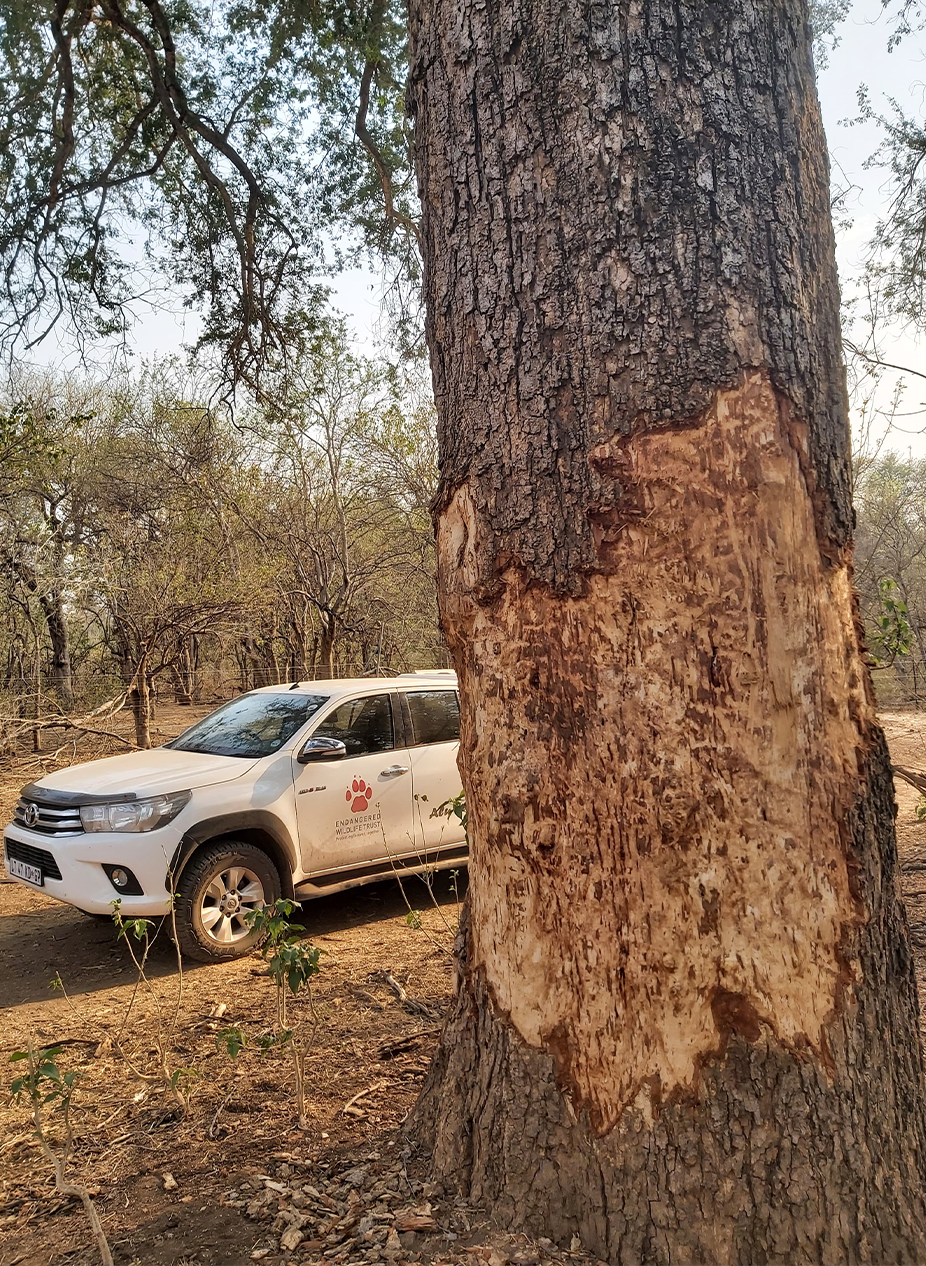
Recently, I had the opportunity to spend time with Dr Sarah Venter from the Baobab Foundation to do a preliminary investigation on the impacts that Elephant populations are having on these trees. I travelled up to meet Dr Venter in the Soutpansberg, before driving down to Ratho Bush camp. Following our arrival, we immediately spent the last part of the day searching for any Vulture nest trees, looking at whether the nest is active or not, and how much bark has been stripped from the trunk. Fortunately, many of the trees here, and a few on other properties, have had mesh wrapped around their trunks to protect them, and although this is an effective way of reducing bark stripping, it is of course not possible to do this for every tree. The recent drought in Botswana appears to have exacerbated the situation, and a similar trend has started to emerge throughout the area we visited, with landowners also expressing concern about this.

Over the next few days were spent our time walking significant tracts of river, and although it was an amazing experience, it was incredibly alarming to see how serious the situation is, with a large proportion of un-meshed trees having either large parts of their trunks debarked, or completely ring-barked. This is an inevitable precursor to these river giants’ eventual demise.

Considering the threats that species such as White-backed Vultures face at present, particularly with wildlife poisoning taking its toll on the population at a continental level, the risk of losing significant tracts of suitable breeding habitat is not something that can easily be ignored. Although this visit opens the conversation around the next steps to mitigate the loss of riparian forest in the region, there is still a significant amount of work lying ahead before we can start to restore this fragile habitat to its former glory.


The resilience of a Wattled Crane chick

The resilience of a Wattled Crane chick


The resilience of a Wattled Crane chick

By:Jacquie van der Westhuizen – Field Officer | African Crane Conservation Proramme – Drakensberg 


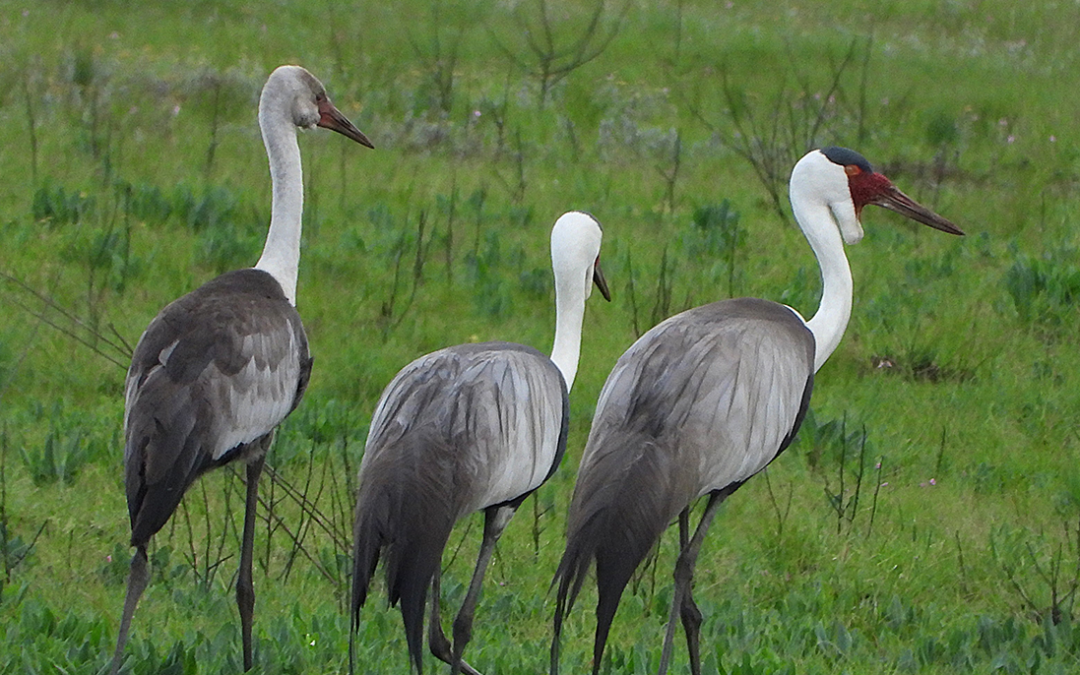
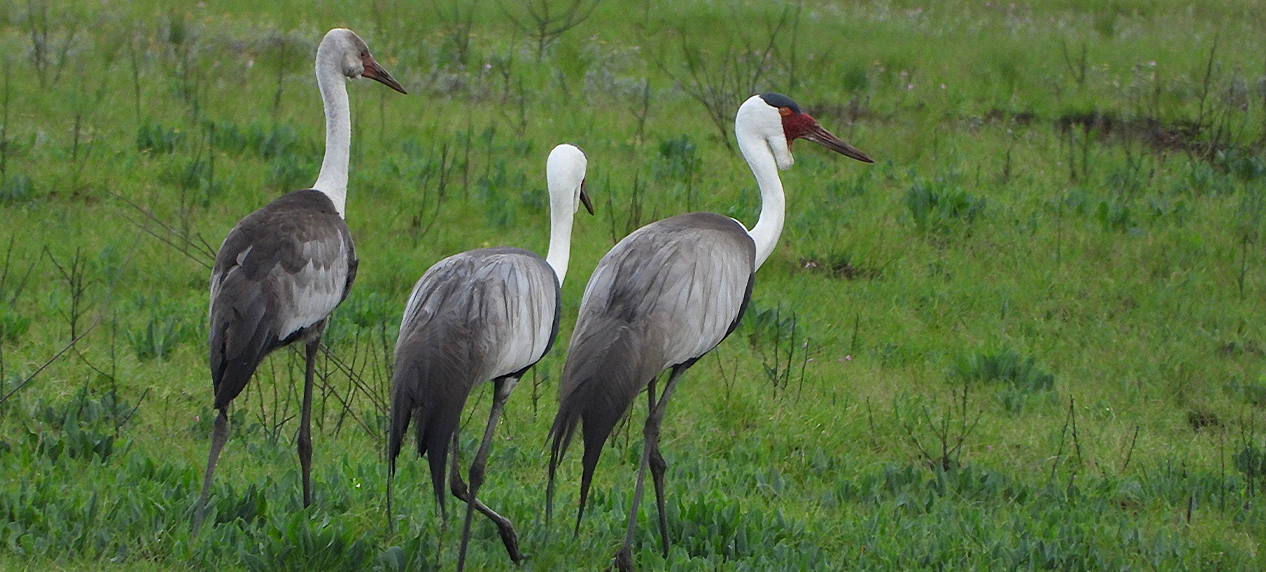
Above: The Crane family just after the chick had flown across the wetland, all big and grown up and the wetland looking beautiful and green.

Have you ever wondered what happens to a tiny, approximately three-week-old Wattled Crane chick in the event of a fire destroying the very wetland that it lives in?

This is a question that the EWT / International Crane Foundation team have been pondering for some time.

Wattled cranes are winter breeders, breeding from April to October, which also happens to coincide with fire season.

On 7 July, a runaway fire destroyed huge portions of timber plantations and wetlands on Mount Gilboa in the Karkloof, KZN Midlands. According to farmers who were fighting the fires, the fire swept through the wetlands at an alarming speed due to them being drier than usual. The devastation was huge – lives were lost, grazing was lost, animals were burnt and had to be euthanised and hundreds of hectares of forest completely destroyed. Every single wetland on Mount Gilboa was completely burnt, except for a small area of reeds about a metre wide around each pond in the wetland where Wattled Cranes were nesting.

I went up to check on the cranes a week after the fire and was totally shocked at what I saw.

At the first nest site I checked, the adults had been sitting on eggs due to hatch on about 26 June, but with the wetland being burnt, I honestly did not think a chick could have survived the fire. I found the adults foraging in the burnt wetland close to their nest site. I just sat a watched hoping to see a chick, but sadly nothing. Ever the optimist, I sat and started videoing the pair, hoping to see something on the video that I couldn’t see through my binoculars and to my utter joy, I saw this tiny little grey blob running from the one adult to the other. I’ve never watched a video so many times to get confirmation that it really was a little chick, dirty from the soot and blending in with the burnt grasses.

There have been a few theories tossed around as to how it survived the fire. One is that the adults walked it out the fire, but according to the farmers, the fire went through the wetlands too fast and they would never have got it out in time. It was definitely too small to fly out. Another theory is that the parents took it into the water, left it there hidden near the edge of the pond, maybe under some grass, while they flew to safety and returned once the fire had gone. I am going with the last theory as it is the only one that makes sense to me. We have nicknamed the crane chick Snorkel!

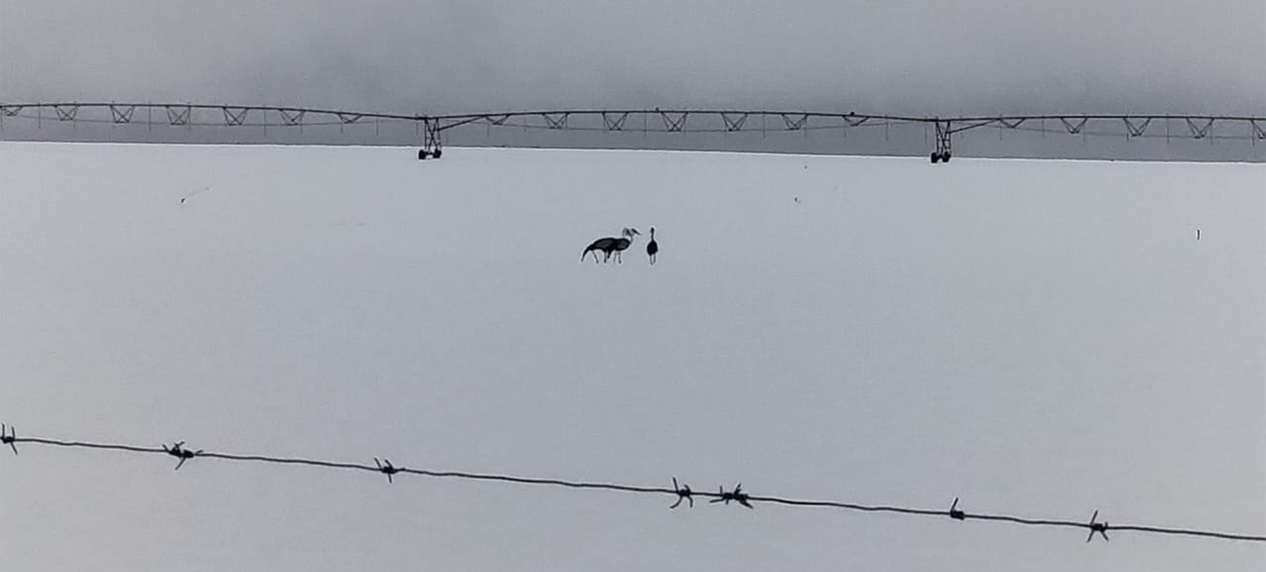
On the 21 September, a huge cold front hit the KZN region and we experienced heavy rain and the worst snow storms in many years. It also snowed up on Mount Gilboa – the snow was up to half a metre deep in places and freezing. Not being able to get up there myself, I was absolutely delighted to get a beautiful photo of our special crane family walking in a snow-covered pasture from a farmer friend that lives on Mount Gilboa.

This little chick had survived a devastating fire and now one of the worst snow storms in years. Can you imagine my delight when I saw it a few weeks ago, almost the same size as its parents, clumsily flapping its wings and then taking flight across the wetlands.

The knowledge that this Wattled Crane chick had survived a fire and a snow storm and had now fledged is absolutely amasing and truly heartwarming!

 

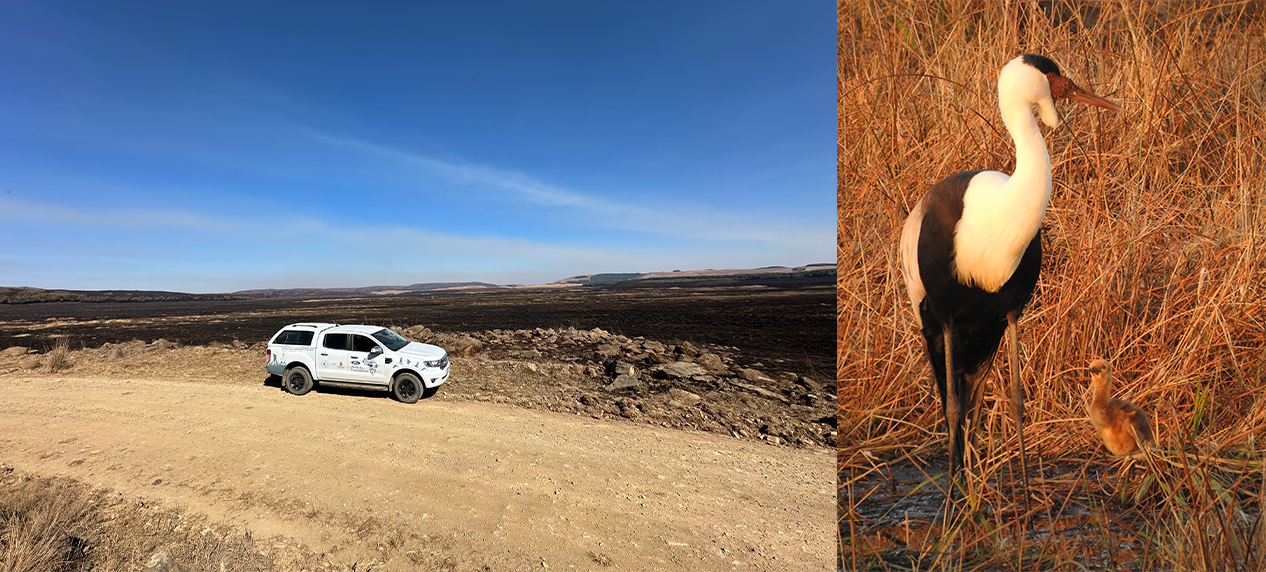
Above left: Burnt wetlands a week after the fire with bakkie in the foreground.

Above right: two week old chick so one can see how big the chick was when the fire came through.


Above: Wattled Crane family in the snow