EWT Drylands Conservation team participates in 2024 Fynbos Forum

EWT Drylands Conservation team participates in 2024 Fynbos Forum


EWT Drylands Conservation team participates in 2024 Fynbos Forum

By Dr Samantha Mynhardt and Insauf De Vries
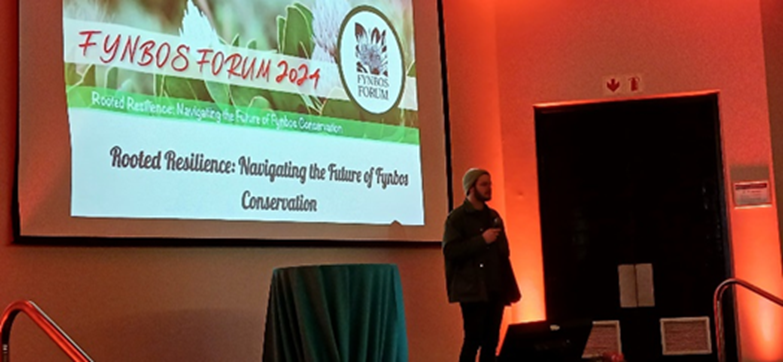
Renier Basson speaking about insects and fynbos conservation

Members of the EWT’s Drylands Conservation Programme (DCP) participated in this year’s Fynbos Forum in Stellenbosch earlier this month, sharing information about efforts to conserve golden moles and insects, and the partnership with communities to promote tourism in areas rich with Fynbos.

The forum, first held in 2020, is an affiliation of natural scientists, researchers, planners, managers, landowners and stakeholders that meet annually to discuss the collaborative production of knowledge that underpins regional conservation efforts in the Fynbos biome in South Africa. As a transdisciplinary regional learning network, the forum supports discussions on management issues and research results, and formulates priorities for future research and conservation management actions required to ensure the conservation and sustainability of Fynbos ecosystems.

Notable keynote speakers included Dr. Jasper Slingsby from the University of Cape Town, who spoke about BioSCape – The Biodiversity Survey of the Cape, and Rupert Barnard and Michelle de Bruyn from non-profit, Wild Restoration. They spoke about the collaborative action network for invasive clearing groups in the Greater Cape Floristic Region and the power of partnerships in conservation.

From the EWT’s DCP team, Dr Samantha Mynhardt presented a talk on golden moles entitled “Conserving the Golden Moles of the South African West Coast”. Golden moles are subterranean mammals that are endemic to sub-Saharan Africa, many with restricted ranges due to poor dispersal ability. These moles are highly vulnerable to population fragmentation and isolation and continue to face ongoing threats, such as habitat transformation, mining, and agriculture. Of the 21 species, ten are listed as either Critically Endangered, Endangered or Vulnerable on the IUCN Red List. A total of 6 occur in the Drylands of South Africa, some of which overlap with the Fynbos biome. Dr Mynhardt spoke about how the EWT has been working towards the conservation of the De Winton’s- (Cryptochloris wintoni) and Van Zyl’s- (Cryptochloris zyli) Golden Moles, by developing methods to track them down in the wild, better understand their distribution, and protect their habitat. Including how, after trialing various detection methods such as thermal imaging drones, scent detection dogs and environmental DNA (eDNA), we were able to rediscover the De Winton’s golden mole in 2023 – a species that had been lost to science for over 80 years. We are using eDNA to map golden mole species distributions; an approach that has the potential to revolutionise the field of conservation science.
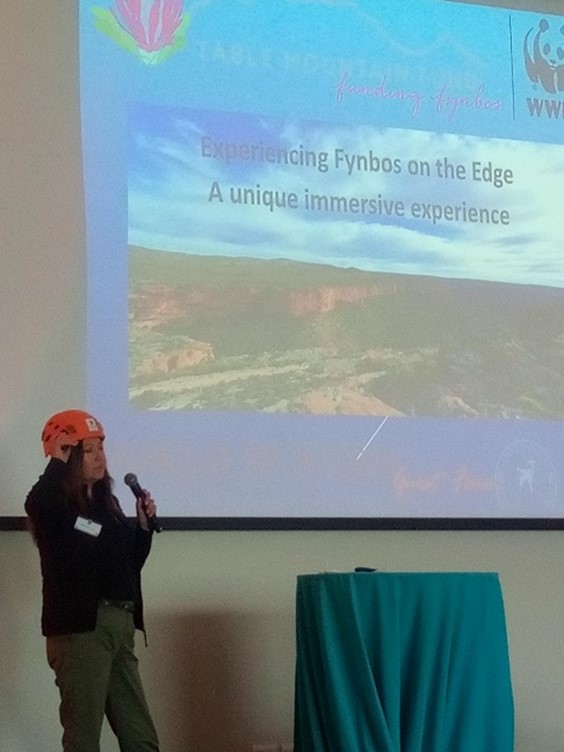
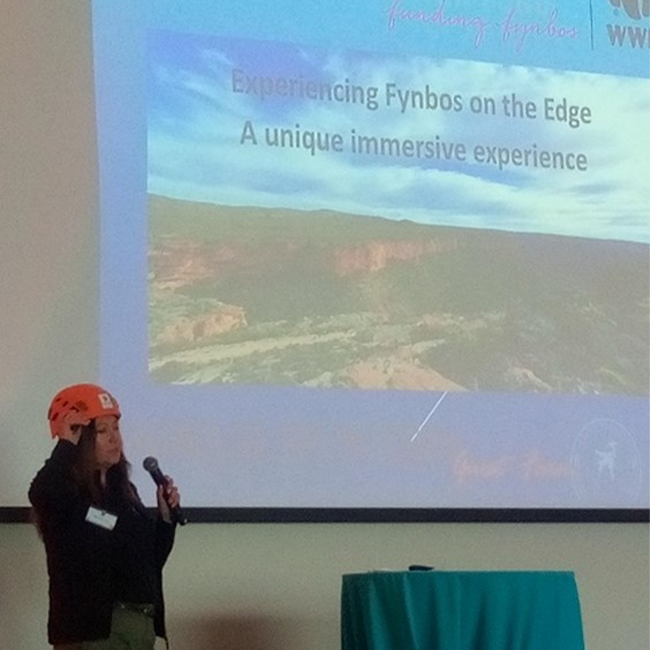
Alrie van Wyk presenting about the Papkuilsfontein initiatives
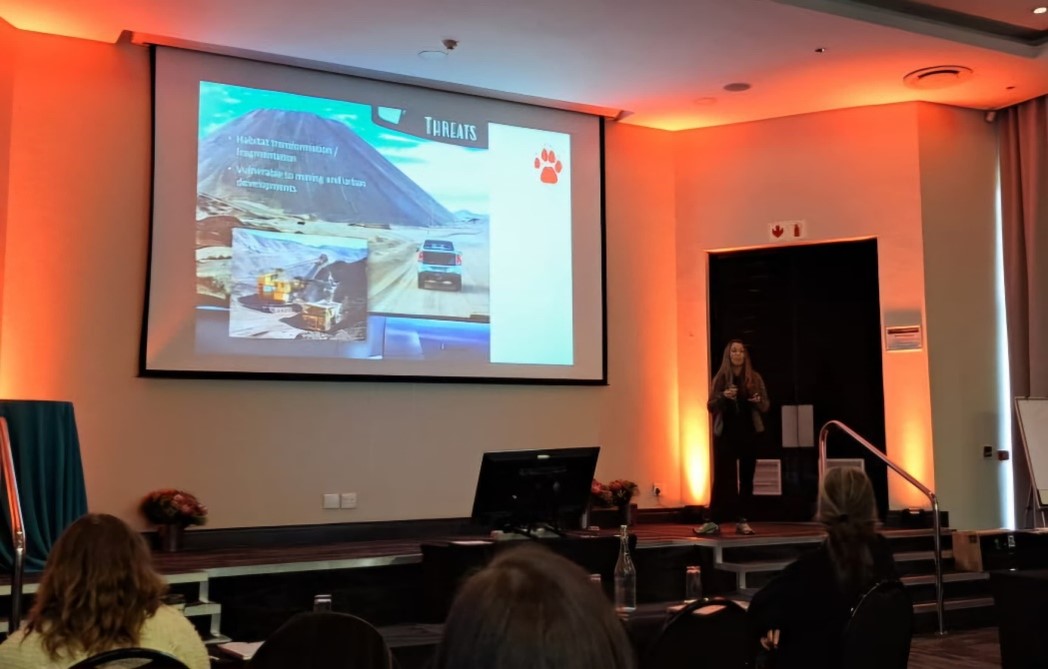
Dr Samantha Mynhardt speaks about the conservation of golden moles on South Africa’s West Coast

Team member Renier Basson presented a talk on the endemic and Endangered insects of the Fynbos highlighting unique species that are adapted to the Fynbos biome, and species that are of conservation concern. The aim of his talk was to inform the audience about the elusive biology of endemic insects , the ecological role they play, their threat status, and why they are threatened. There are approximately 9,000 Fynbos species and roughly 70% of those are endemic. Discussing threatened taxonomic groups such as Restio Grasshoppers (Betiscoides spp.), butterflies in the genera Chrysoritis, Thestor, Orachrysops and Trida, and Cape Stag Beetles (Colophon spp.), he mentioned that the biology of many of these threatened groups remain unknown, which makes decision-making in terms of conservation very challenging.

Alrie van Wyk, one of the DCP stewardship landowners, spoke about the EWT’s Via Ferrata initiative at Papkuilsfontein Guest Farm in a talk entitled “Experiencing Fynbos on the Edge”. The Via Ferrata roughly translates to iron trail – in reference to an iron cable installed along the cliffs of the Oorlogskloof Gorge at the farm. Situated on the Bokkeveld Plateau, near Nieuwoudtville, the farm contains unique Fynbos and Succulent biomes, which are both biodiversity hotspots, as well as the Nama Karoo Biome. The convergence of the various biomes results in exceptionally high biodiversity. Nieuwoudtville is known as the bulb capital of the world and is thus a popular tourist destination during the flower season. But, this season is short and, in some years, less financially beneficial due to poor flower displays. To make tourism an inclusive and sustainable future economic contributor in support of sustainable land management, partners are working together to reimagine this approach. As such the EWT-DCP team introduced the van Wyks to adventure tourism as a means to provide a much-needed opportunity to develop a sustainable income stream based on an immersive and uniquely tailored experience. This includes a Via Ferrata – a safe, guided rock-climbing experience within the Papkuilsfontein protected environment that showcases the unique Fynbos biodiversity found on the edges of the Oorlogskloof Gorge. Alrie’s presentation highlighted how this project became a pathway to community upliftment, contributed to resilience of the landscape, and allowed for financial returns to flow back into the conservation of the biodiversity on the farm. Her talk won the prize for the Best Presentation. We are extremely proud of her!

Overall, the Fynbos Forum presented a great opportunity for our team to connect with one another, and to network with the broader Western Cape conservation community. We walked away with renewed enthusiasm to contribute to future research and conservation management actions required to ensure the conservation and sustainability of Fynbos ecosystems.

The EWT projects and attendance of the event were made possible by Table Mountain Fund and Mohamed bin Zayed Species Conservation Fund.


News from the Field – Translocation Tales: The Carnivore Range Expansion Project

News from the Field – Translocation Tales: The Carnivore Range Expansion Project

News from the Field

Translocation Tales: The Carnivore Range Expansion Project

By Eugene Greyling, Carnivore Conservation Field Officer

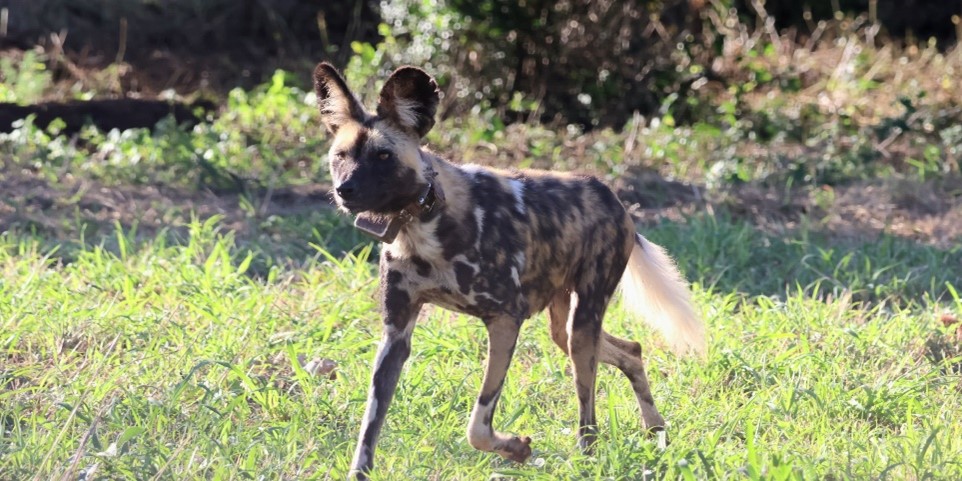
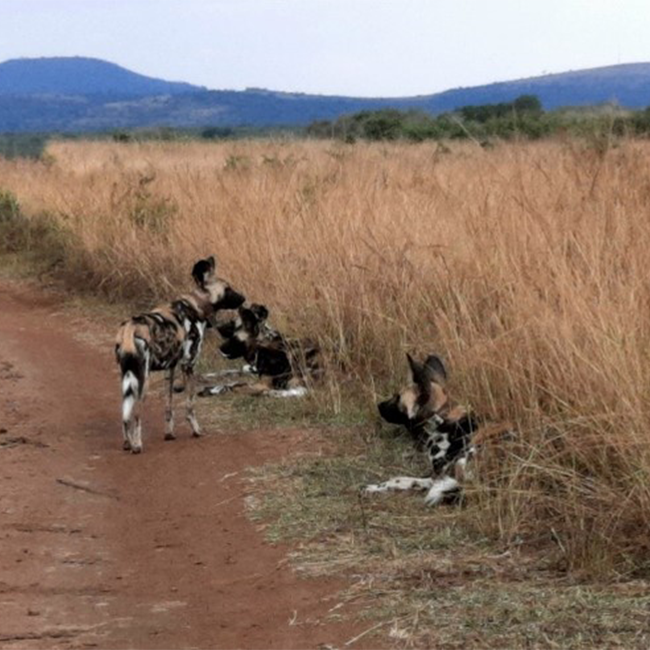
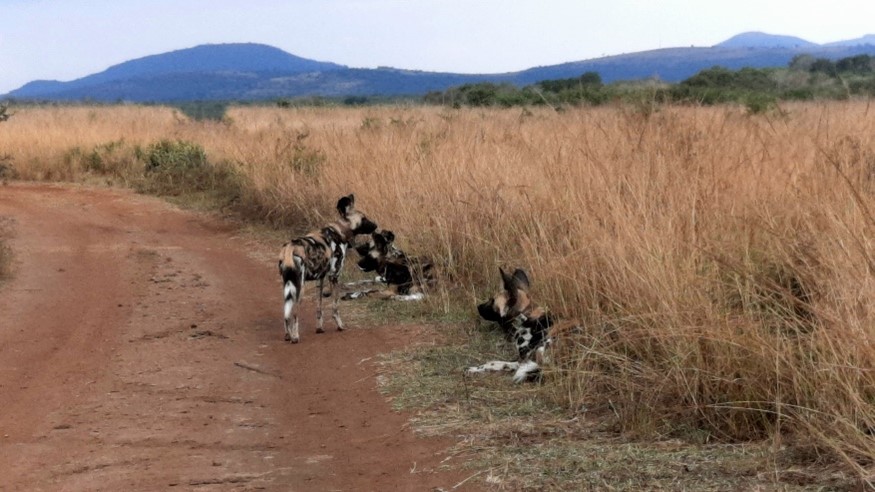
Wild dogs relaxing after being released at Mpilo Game Reserve

The general aim of the Endangered Wildlife Trust’s Carnivore Range Expansion Project, operating within the Carnivore Conservation Programme, not only includes the conservation of current carnivore populations and the maintenance of genetic integrity in areas where a lack of sufficient ecological connectivity hinders natural dispersal, but also extends to the expansion of geographical range for focal species (with a primary focus on African wild dogs Lycaon pictus and cheetahs Acinonyx jubatus).

Restoring previously extirpated or locally extinct populations, thereby recovering lost range, and securing safe space across the African continent is thus an important priority for us.

“Translocation” refers to the action of purposefully taking an organism from a suitable habitat in one area to a suitable habitat in another area. This is done to encourage threatened species to repopulate in a new area to improve the conservation status of the species and restore the functioning of the ecosystem through population restoration.

Most recently, several translocations have been undertaken by our wild dog range expansion team to reintroduce wild dogs to additional safe spaces in South Africa.

For the first time, founder packs have been introduced into Mpilo Private Game Reserve and Nambiti Private Game Reserve, in collaboration with Ezemvelo KZN Wildlife and Wildlife ACT. All introduced individuals have been fitted with tracking collars to enable daily monitoring of their movements, population and behavioural dynamics, and ecological influences and to help prevent human-wildlife conflict. The information gathered allows for informed decision-making – both at the reserve and the species level.

The pack at Mpilo PGR established well, birthing a litter of pups and curiously exploring their new environment, whilst the pack at Nambiti PGR is still adjusting and acclimatising to their new home in a boma before being released onto the reserve.

With less than 600 wild dogs found in South Africa, of only an estimated 6,600 that remain in the wild globally, every individual counts and we are immensely grateful for the commitment of these reserves to the conservation of the African Wild Dog.

Sometimes, we also need to get creative in the field, as was the case when we executed another successful wild dog translocation to Makalali Private Game Reserve in Limpopo recently.

Due to challenges faced with non-ideal weather conditions as temperatures plummeted to -3°C on the day of relocation, we opted to transport this small pack of four together in a single-compartment lion crate instead of the specially-designed wild dog crates we would generally use. By simulating a den-like environment within the crate, the wild dogs were able to keep each other warm and at rest, minimising stress throughout the journey.

If one thing is certain, it is that no day in the field is quite the same, and by being continuously challenged we continue to explore, innovate, learn, and adapt with every operation.


One of the collared female wild dogs released at Nambiti Game Reserve

The unfinished journey:  capturing Wattled Cranes for conservation

The unfinished journey: capturing Wattled Cranes for conservation


The unfinished journey: capturing Wattled Cranes for conservation

By Dr. Lara Fuller, Drakensberg Project Coordinator, South Africa for the African Crane Conservation Programme

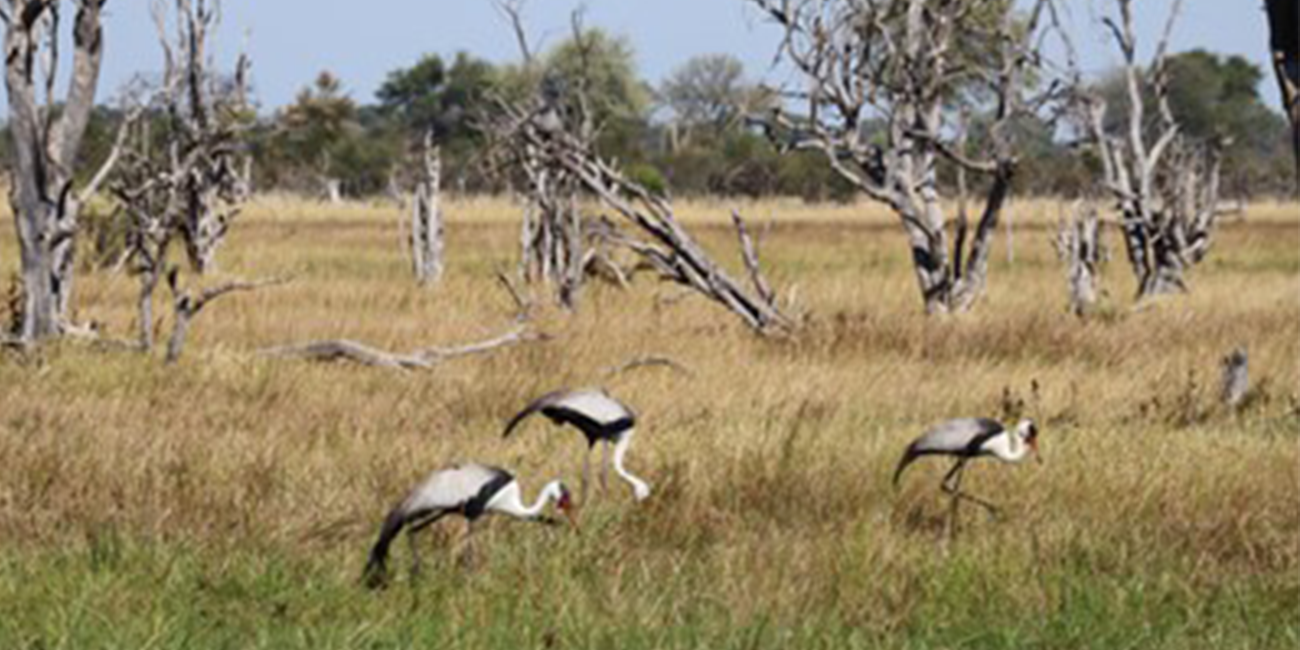
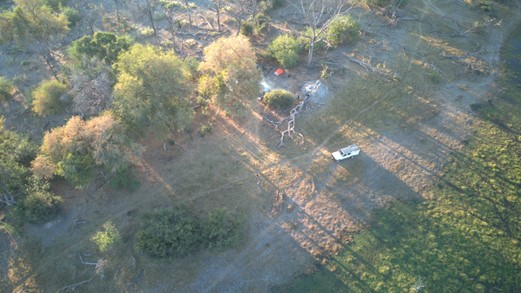
Wattled Cranes close to the camp site

Wattled Cranes are globally Vulnerable. They move with the available waters in large floodplains across south-central Africa through several countries including Botswana, Zambia, Angola, Zimbabwe, Tanzania and Malawi. It is this movement that is vital for conservationists to understand so that conservation goals can be impactful.

Wattled Cranes are notoriously difficult to catch as they have excellent vision and they are not easily coerced into an area, which most capture techniques rely on.

Charles Mpofu of Botswana Wild Bird Trust (WBT)/Okavango Wilderness Project recently approached the EWT for assistance in capturing and handling cranes. Given the synergies between our work, we accepted and I travelled to Botswana to start work on a project that will take some time to complete.

Our first step on the journey was to test the transmitter and harness design by trialling them on captive Wattled Cranes. Out of this work some modifications were made to the transmitter by its developer SpoorTrack to design the dimension specifically for the species. The second step was to understand the best technique to capture Wattled cranes in the Okavango Delta. As the environment is a wilderness with multiple natural dangers, we spoke to the only people who had attempted to catch the species in the Delta — Pete Hancock and Ralph Bousefield in Maun, and Kevin Mcann who had joined the team based in South Africa.

After much discussion the main technique advised was light trapping at a roost site. This approach allows for opportunistic capture in a dynamic and changing environment and allows a capture team to avoid predatory dangers. We had not previously used this technique and learning a new procedure in the wilderness was never going to be easy.

The third step was to find the birds in the vast flood plains of the delta. Charles narrowed this down with aerial surveys to identify a flock in accessible reach, and he spoke to lodge owners and field guides in that area.

On 13 May we started a two-week expedition on the Gomoti River, amply equipped with two Mokoros (a traditional canoe for traveling on the shallow flood plains), two Landcruisers, solar charging battery and remote camping equipment. The first two days were spent ground surveying for Wattled Cranes and learning from a local NPO ‘Connect Trust’ where the accessible roads and river crossings were. Travelling from base camp to the capture site took three to four hours a day due to the difficulty of sandy roads. Understanding where the cranes roosted was vital, and because we were losing important hours on the road, we moved to a new camp in the bush from where we could easily monitor the cranes dawn to dusk. Despite the campsite move the Wattled Cranes were incredibly elusive in sharing details of their roost sites. Flying in and out of foraging grounds in the dark, a mechanism to protect them from predators.

After a few days of 6am mornings and 9pm evenings we had identified a daylight foraging space to which the birds returned to every day. This site had recently been burned and would mark our capture attempts for the remaining expedition. Establishing safe passage across the river for night capture we set up a system using the mokoros so that we could reach the grounds safely. At this site we made numerous attempts to capture the cranes using bird hides, toe noose matts, and using the flashlight technique. Although we came within a few meters of the cranes, numerous difficulties were encountered. Lechwe hampered our attempts to capture during daylight hours by threatening to beat the cranes into the traps.

Wattled Cranes close to the camp site

During the night hours hippos were out foraging, and lions could be heard hunting. Not an ideal scenario when you’re travelling on foot. Other aspects obstructing capture was the unhelpful moon cycle, and although there were numerous breeding elephant herds they were very regimented in their movements and were easily avoided.

With a lot of experience and lessons learned we attempted our second expedition on the Boro River from 7 July 2024 for 10 days. This time we armed ourselves with some camouflaged toe noose traps, some very bright flashlights and a FLIR. One of the most difficult aspects we found during the night captures was that we could only see as far as a flashlight. This is a little discouraging when running into the night after a crane. The FLIR proved to be a valued member of the team and was excellently designed for its purpose.

The second expedition was supported by the prestigious game lodge Xigera in the heart of the Okavango permanent wetland. As we explored the reserve we were delighted to find over 20 pairs of Wattled Cranes, enabling a number of capture attempts on the same night at different sites. We were hopeful. However, although we were spending up to 19 hours in the field, observing where the pairs moved to during the day and attempting captures at night, we found that there were only four pairs that had steady territories. This was because these birds were starting to breed. Despite this the expedition attempted eight night captures. We came as close as four meters to one crane before the mud tied up Charles and the Landcruiser. We even came within couple of meters of capturing with toe noose matts, until the Buffalo and Impala decided to race the cranes to the traps.

It was T.S. Elliot who said: “It is the journey not the arrival that matters”.

As we reflect on these expeditions and consider the way forward, Charles will be joining us in South Africa along with colleagues in the African Crane Conservation Programme (ACCP) from Uganda, Kenya and Zambia, an American colleague from the International Crane Foundation and a number of South African colleagues from ACCP and Wildlife Energy Programme, to attempt to capture Grey Crowned and Blue Cranes in Mpumalanga. This will form a part of a workshop where we will share our knowledge and experience in Crane and other bird captures to create more innovative approaches to captures in especially the difficult flood plains of the south-central Africa. These will include questionnaires that will draw out the why, when, where and how Crane captures are performed across the globe. This will be compiled under the auspicious IUCN Crane Specialist Group to develop best practice guidelines for captures. In addition, we have through this process bridged a gap between generations of experienced crane catches enabling us to build on the knowledge of the past and not reinventing old new techniques. Conservation relies on collaboration and working together, and these attempts are creating a stronger team of skilled conservationist across Africa for the benefit of crane species. What better example could we have of conservation in action!


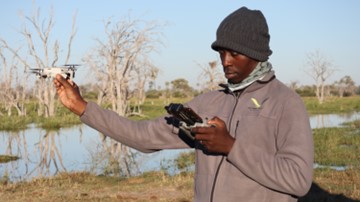
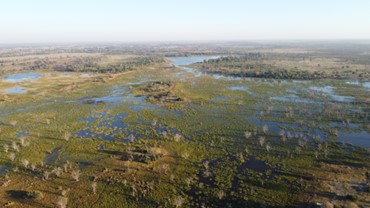
Chales Mpofu of the Wild Bird Trust Okavango Wilderness Project using a drone to survey the vast area of the Delta.

Johannesburg City Park and Zoo team with Charles Mpofu of the Botswana Wild Bird Trust and Matt Pretorious EWT who assisted with training on applying a harness.

The remote campsite adjacent to the capture site.

Capture site where 10 Wattled Cranes were inhabiting

African Canines in Conservation Conference

African Canines in Conservation Conference

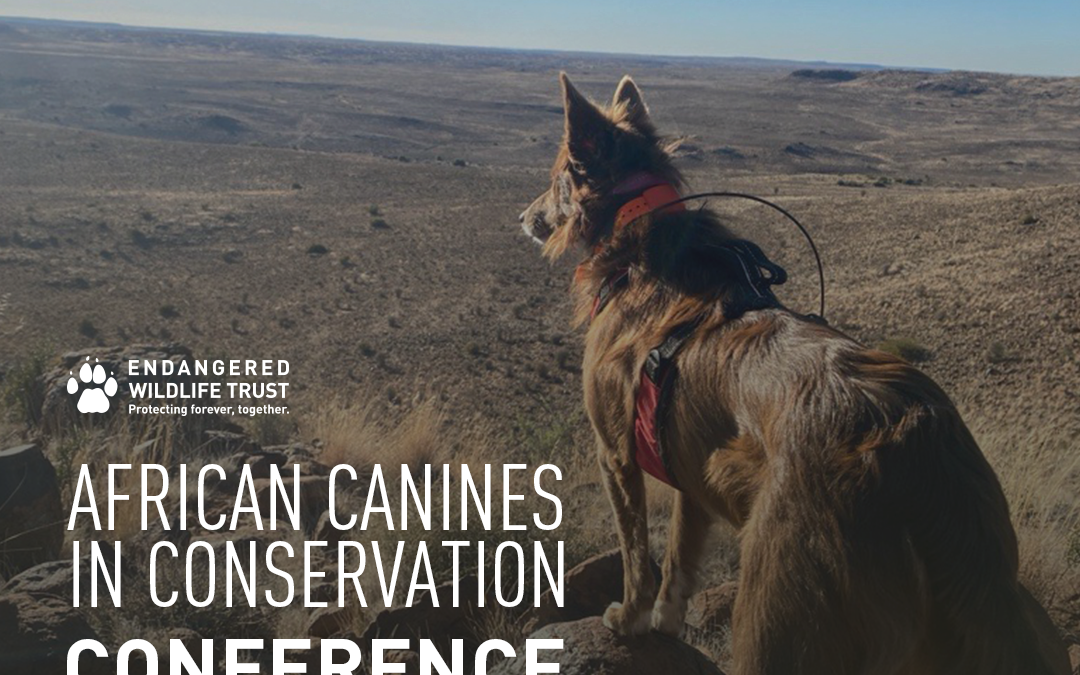
The Endangered Wildlife trust and partners are excited to reveal that we are planning our first African Canines in Conservation Conference for March 2025. The event will be hosted at the EWT’s conservation campus in Midrand (Gauteng) and will have a predominant focus on the use of dogs for conservation research projects, and all the other aspects associated with it. There will also be one session aimed at other applications for scent detection dogs, that will allow for speakers outside of the conservation field. The preliminary dates for the conference are 18 and 19 March, where the aim of the conference is to bring around 100 people from different backgrounds together to share experiences and knowledge, and to allow for networking and establish collaboration opportunities.


We are pleased to announce our keynote speakers for the event:

Full event programme at bottom of page


Kayla Fratt

Kayla Fratt is the co-founder of K9 Conservationists, a non-profit organization in the United States, and the host of a podcast by the same name. The organization aims to unite highly trained conservation detection dog teams with researchers to collect scientific data and to provide mentorship, education, and foster collaboration among scientists, novice handlers, and local communities. Kayla is currently a PhD student and NSF-GRFP Fellow at Oregon State University in Taal Levi’s lab. Her research there focuses on the combination of scat detection dogs and genetic methods to answer questions regarding diet and movement of sea wolves in southeast Alaska and the recolonization of pumas in El Salvador. In the past, Kayla has also worked in Kenya with cheetah scat detection dog teams and searched for jaguar and other felid scat in Guatemala. She is a Certified Dog Behavior Consultant and is committed to methods maximizes the welfare and efficacy of working dogs.


Esther Matthew

Esther completed her M.Sc. in Environmental Science. As part of her study that started in 2014, she successfully raised and trained a scent detection dog to locate Giant African Bullfrogs (Pyxicephalus adspersus) underground. Subsequently, she joined the EWT team and as the Specialist Conservation Officer has been using dogs to located elusive and Endangered species focusing on in situ conservation. She obtained national and international qualifications, and due to her work and research with detection dogs, Esther became a National Geographic Society Explorer. Focal species that she has worked on include the Critically Endangered Riverine Rabbit and De Winton’s Golden mole, as well as three of South Africa’s most rare tortoise species. Furthermore, she was also part of the EWT team who trained the first three succulent plant detection dogs for anti-poaching purposes, which already resulted in a few successful operations.


Louise Wilson
 

With over 20 years of international experience, Louise Wilson is a trailblazer for conservation detection dogs in the UK. As Managing Director of Conservation K9 Consultancy, she has trained canines to detect everything from cheetahs and hedgehogs, to water voles and invasive beetles. At the conference, she’ll share her expertise in ethical, efficient, and non-invasive wildlife surveys, drawing from her groundbreaking work across the globe.


Will Powell

Will Powell, CEO of KURU – the Conservation Dog, brings nearly 30 years of expertise in training over 3,500 dogs for humanitarian and conservation missions. Since 2014, his programs in seven African countries have fought wildlife trafficking, reduced poaching, and safeguarded endangered species. At the conference, he’ll discuss the tangible impact of canine units in protecting Africa’s wildlife, and the lessons he has learned along the way.


We are already excited about the experience and knowledge these speakers will bring to the event and will be announcing the other keynote speakers over the next few months.

It is important to note that participants living in Africa will get reduced fees (compared to international participants), and selected speakers of the event will also get discount. We also hope to have a few scholarships available for which participants can apply. We aim to make the event hybrid, where virtual participants can listen into talks, however in-person attendees will benefit through additional live demonstrations and panel discussions. So watch this space for more information and we hope to see many of you at the event in March!

Proudly sponsored by

How to count lions in Africa

How to count lions in Africa

Science Snippet:

How to count lions in Africa

By Lizanne Roxburgh and Erin Adams

Knowing how many individuals of a species exist in the wild is important for managing that species. It is also important to know the trend in the number of individuals in a population. Whether the number is increasing, stable or declining will have implications for what management interventions should be used to conserve that population. There are currently many methods that can be used to estimate population size, however, each have their own strengths and weaknesses.

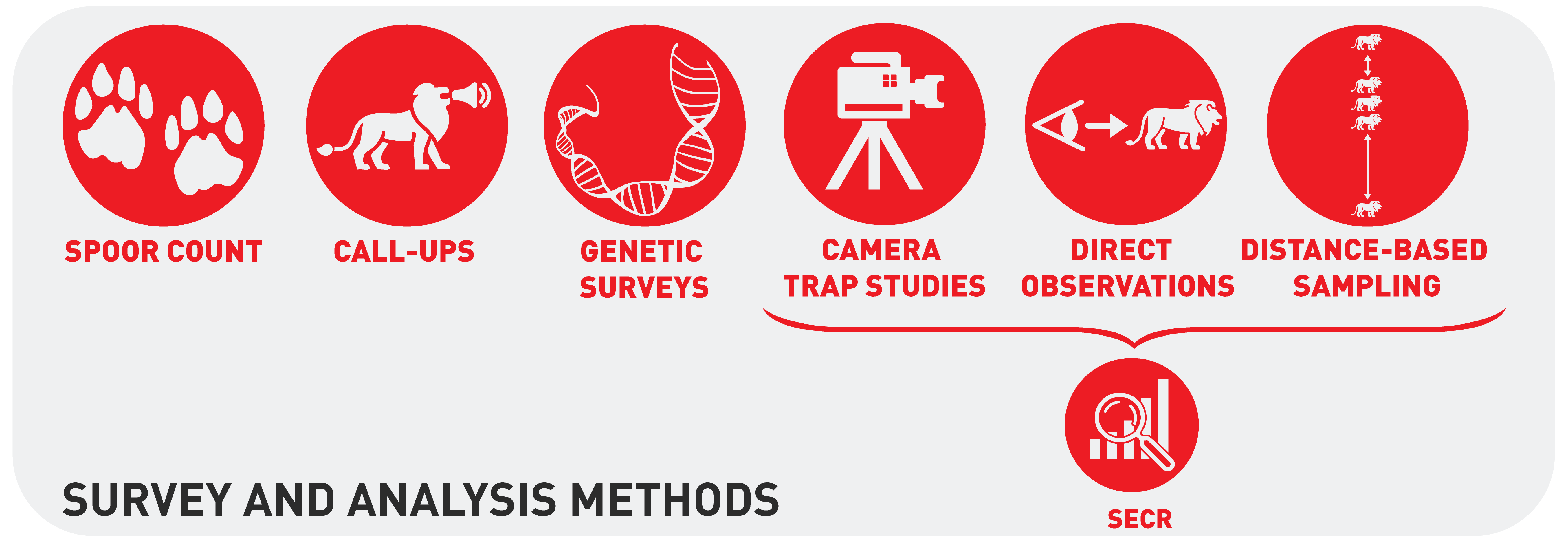
In a recent study*, scientists from the EWT, in collaboration with researchers from other institutions, reviewed all of the methods that are used to survey lion populations across Africa. They looked at 93 different studies from 1991 to 2022. Seven broad survey methods were identified. These included spoor counts, call-ups, genetic surveys, direct observations, camera trap studies, spatially-explicit capture-recapture (SECR) for both direct observations as well as camera traps, and distance-based sampling.

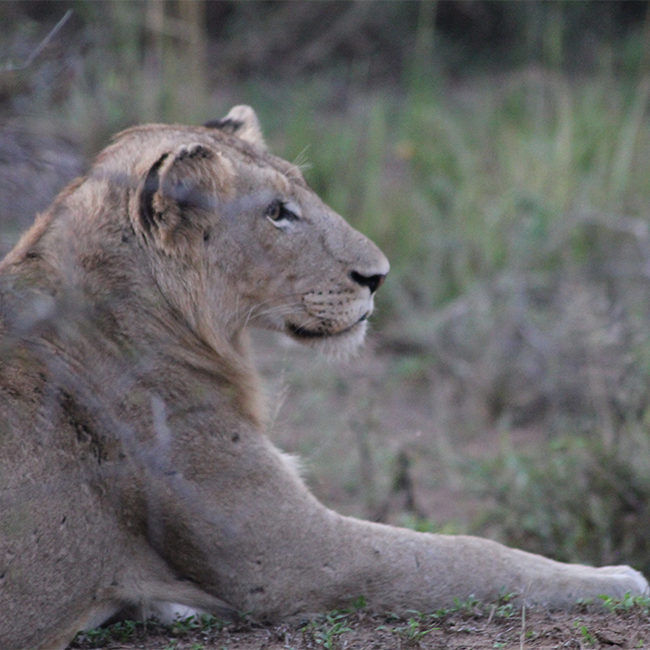
Pic: Eleanor Momberg

The scientists found that the most reliable methods for estimating lion population in Africa were those that included spatially-explicit capture-recapture (SECR) analysis. SECR is a method used to model animal capture-recapture data collected with a network of “detectors.” SECR takes into account both where the individual lions were captured by the detectors (such as camera traps or through direct observations) and where they were not captured. It’s like solving a puzzle where you piece together information about where animals were detected to estimate their overall population density. Sampling techniques such as spoor counts and call-ups were found to be less reliable, as they tended to over-estimate population size.

The scientists strongly recommended that standardized methods be developed that can produce comparable estimates of the number of lions, both within and between sites and years. These methods can then be used to survey lion populations in areas where gaps in our knowledge of lion populations exist.

*Samantha K. Nicholson, David R. Mills, Erin C. Adams, David G. Marneweck, Hans Bauer, Lizanne Roxburgh, Rob Slotow. 2024. Towards effective and harmonized lion survey methodologies: A systematic review of practice across Africa. Global Ecology and Conservation.  https://doi.org/10.1016/j.gecco.2024.e02908