
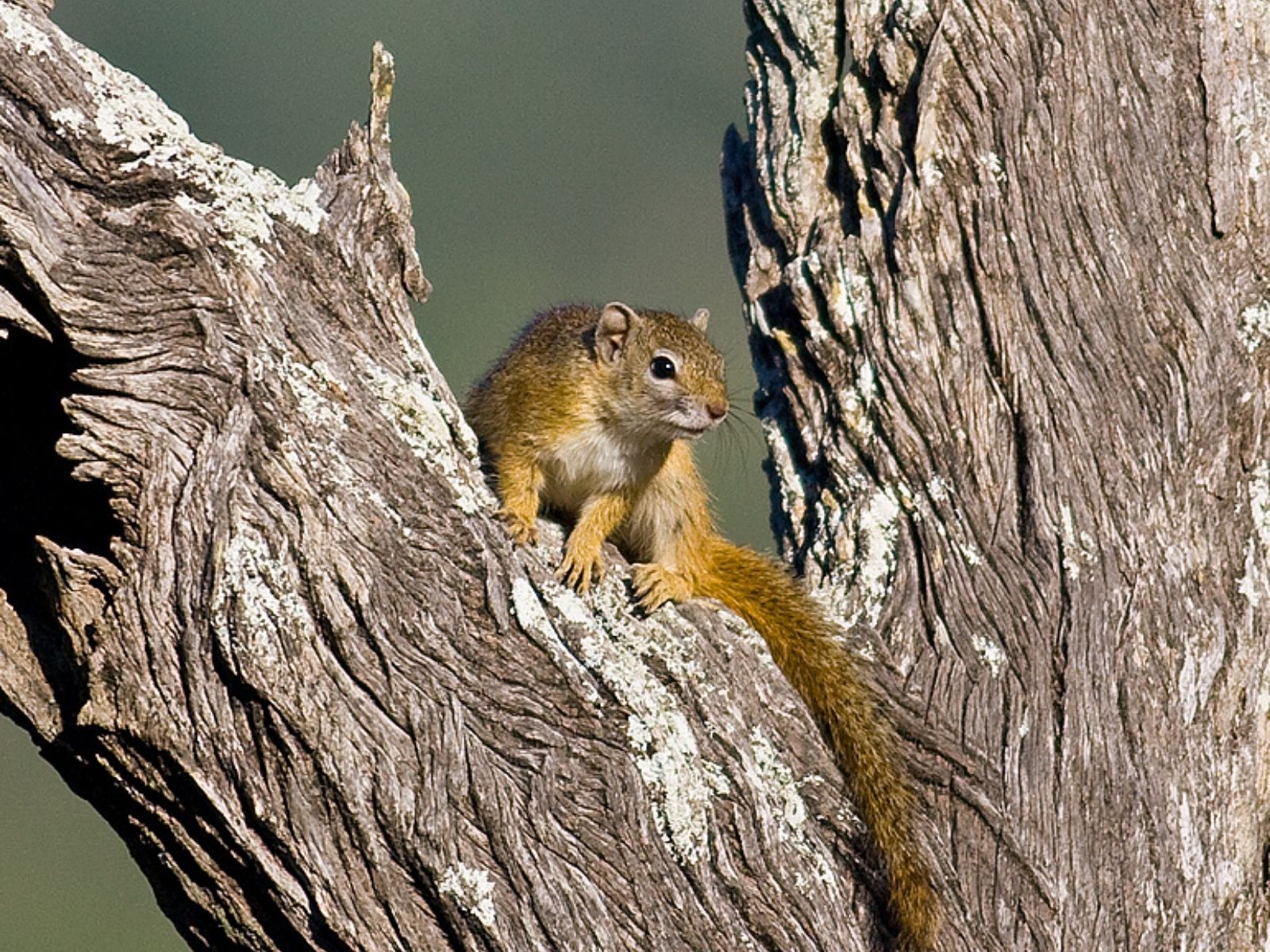
Tree Squirrel
Paraxerus cepapi

2025 Red list status
Least Concern

Regional Population Trend
Stable

Change compared
to 2016
No Change
Overview
Paraxerus cepapi – (A. Smith, 1836)
ANIMALIA – CHORDATA – MAMMALIA – RODENTIA – SCIURIDAE – Paraxerus – cepapi
Common Names: Smith’s Bush Squirrel, Tree Squirrel, Mopane Squirrel, Yellow-footed Squirrel (English), Boomeekhoring (Afrikaans), uBusinti, uBuhlula, isiKhale (Ndebele), Sehlora (Sepedi), Setlhora, Sepêpê (Setswana), Tsindi (Shona), Xindzi, Maxidyani, Sindyane (Tsonga), Tshithura (Venda), Unomatse (Xhosa), Intshidane, Ingwejeje, Yasezihlahleni (Zulu)
Synonyms: No Synonyms
Taxonomic Note: Ten subspecies are currently recognised (Thorington et al. 2012; Burgin et al. 2020), differentiated on body size and pelage colour, but their phylogenetic relationships are poorly understood (Monadjem et al. 2015). Only the nominate P. c. cepapi occurs within the assessment region and it further occurs also in southern Mozambique, Zimbabwe and southeastern Botswana. Molecular research is needed to resolve the taxonomy.
Red List Status: LC – Least Concern
Assessment Information
Assessors: Patel, T.1 & da Silva, J.M.2
Reviewer: Power, J.3
Institutions: 1Endangered Wildlife Trust,2South African National Biodiversity Institute, 3North West Provincial Government
Previous Assessors & Reviewers: Power, J. & Child, M.F.
Previous Contributor(s): Avenant, N., Avery, M., Baxter, R., MacFadyen, D., Mondajem, A., Palmer, G., Taylor, P. & Wilson, B.
Assessment Rationale
This species remains Least Concern in view of its wide distribution within the northern savanna regions of South Africa, its local abundance in certain areas, its occurrence in a number of protected areas (including Kruger National Park), and because there is no evidence for its decline. Although local declines may be caused by ongoing woodland loss from fuel-wood extraction (for example, in the Soutpansberg and Bushbuckridge regions in Limpopo and Mpumalanga provinces respectively), overall, the Savanna Biome is not threatened and projected to increase in extent with climate change. The primary intervention is to incentivise or regulate sustainable fuel-wood extraction. The species is thriving and is showing no signs of concern in terms of its conservation status.
Regional population effects: The habitat is connected across regions, and this species is similarly common in Zimbabwe, Botswana, Namibia and Mozambique. Thus, dispersal across countries is an almost certainty.
Reasons for Change
Reason(s) for Change in Red List Category from the Previous Assessment: No change
Red List Index
Red List Index: No change
Recommended citation: Patel T & da Silva JM. 2025. A conservation assessment of Paraxerus cepapi. In Patel T, Smith C, Roxburgh L, da Silva JM & Raimondo D, editors. The Red List of Mammals of South Africa, Eswatini and Lesotho. South African National Biodiversity Institute and Endangered Wildlife Trust, South Africa.
Regional Distribution and occurrence
Geographic Range
This species is widely distributed in the savannas of southern Africa, extending north into Central and East Africa (Monadjem et al. 2015). It ranges from Tanzania to southern Mozambique and westwards to southeastern Angola, southern Democratic Republic of the Congo, northeastern Namibia, northeastern Botswana and northeastern South Africa. Within the assessment region, it occurs in the savanna woodlands in Limpopo, Mpumalanga, northern Gauteng and North West provinces (Power et al. 2019). It is absent from the Nama-Karoo, Succulent Karoo and forest biomes (Skinner & Chimimba 2005). It does not occur in either Lesotho or the highlands of Eswatini (Lynch 1994; Monadjem 1998) but may marginally occur in the lowlands of Eswatini. It seems the 26 degrees south parallel is still the southern boundary for the species distribution (Skinner & Chimimba 2005). There have been a few additional records obtained since the last assessment on the periphery of the species range, though it is uncertain whether this proof of range expansion. Extra-limital occurrence is possible as it is sometimes kept as a pet and escapees can establish local subpopulations. In fact, there was one individual that was confiscated from a home in Stella – outside the distribution range.
Elevation / Depth / Depth Zones
Elevation Lower Limit (in metres above sea level): (Not specified)
Elevation Upper Limit (in metres above sea level): (Not specified)
Depth Lower Limit (in metres below sea level): (Not specified)
Depth Upper Limit (in metres below sea level): (Not specified)
Depth Zone: (Not specified)
Map
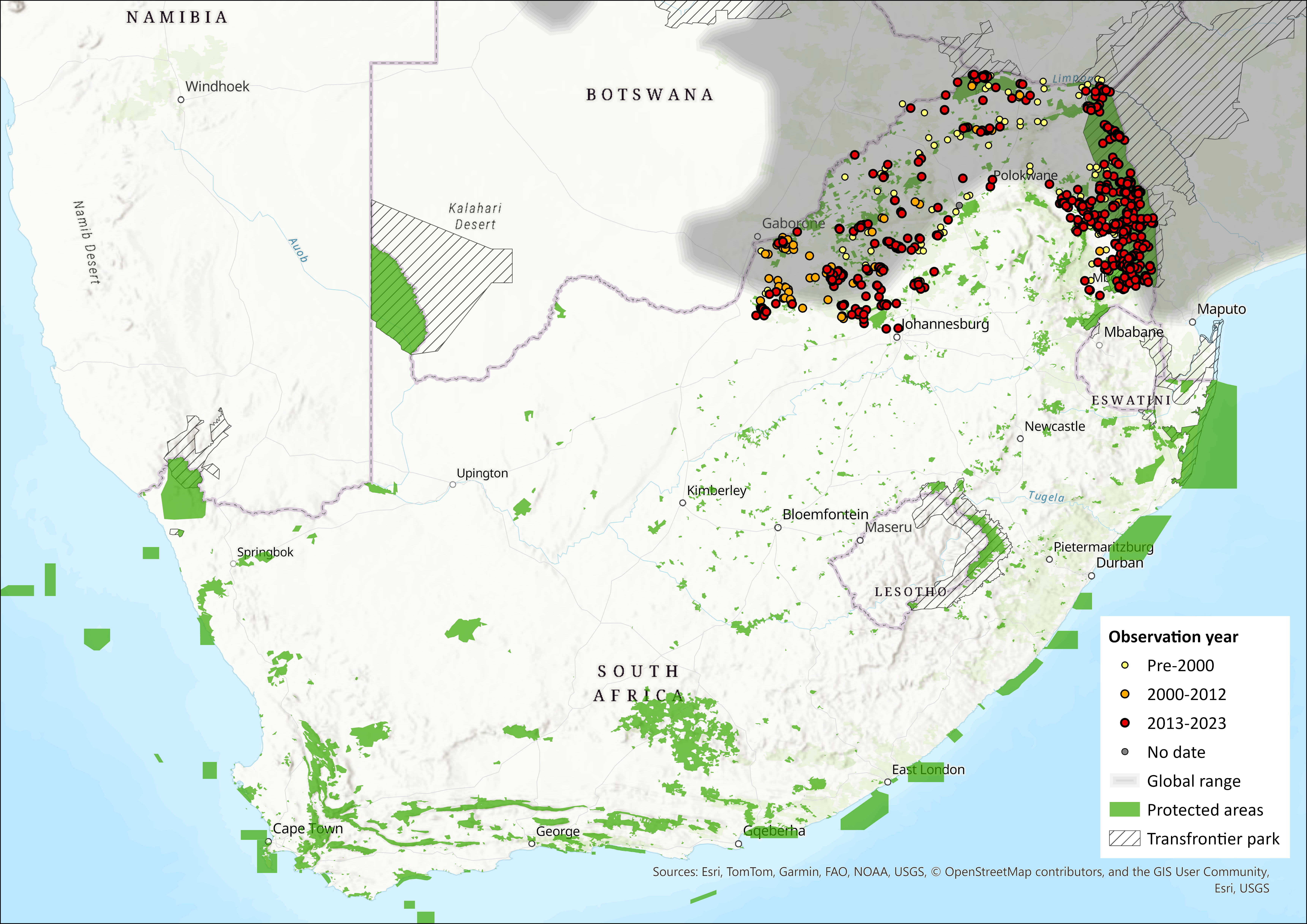
Figure 1. Distribution records for Tree Squirrel (Paraxerus cepapi) within the assessment region (South Africa, Eswatini and Lesotho). Note that distribution data is obtained from multiple sources and records have not all been individually verified.
Biogeographic Realms
Biogeographic Realm: Afrotropical
Occurrence
Countries of Occurrence
| Country | Presence | Origin | Formerly Bred | Seasonality |
| Angola | Extant | Native | – | – |
| Botswana | Extant | Native | – | – |
| Congo, The Democratic Republic of the | Extant | Native | – | – |
| Malawi | Extant | Native | – | – |
| Mozambique | Extant | Native | – | – |
| Namibia | Extant | Native | – | – |
| South Africa | Extant | Native | – | – |
| Tanzania, United Republic of | Extant | Native | – | – |
| Zambia | Extant | Native | – | – |
| Zimbabwe | Extant | Native | – | – |
Large Marine Ecosystems (LME) Occurrence
Large Marine Ecosystems: (Not specified)
FAO Area Occurrence
FAO Marine Areas: (Not specified)
Climate change
There is a lack of information available on the effect of environmental factors on the behaviour of the Tree Squirrel. In a study conducted in a Zambezian bioregion, it was found that canopy coverage and tree height influences biological and population responses of the Tree squirrel (Nyirenda et al. 2021). The understanding of environmental factors can guide Tree Squirrel conservation planning and management in the assessment region. A study in the North West suggested a few species had expanded their ranges in response to what appeared to have been climate-change induced woodland expansion (Power et al. 2019), including this species (Power, 2014). It may be that the species will benefit from climate change as savannas are projected to expand (for example, Kgope et al. 2010).
Population
It is a common species in suitable habitat. For example, it occurs at densities of 280–258 squirrels / km2 in sandveld woodlands to 498 / km2 in termitaria thicket habitat, which equates to a biomass of 45–111 kg / km2 (Viljoen 1986; Fleming and Loveridge 2003).
Population Information
Current population trend: Stable and possibly increasing with the advancement of savanna habitat.
Continuing decline in mature individuals: Unknown
Number of mature individuals in population: Unknown
Number of mature individuals in largest subpopulation: Unknown
Number of subpopulations: Unknown
Severely fragmented: No
Quantitative Analysis
Probability of extinction in the wild within 3 generations or 10 years, whichever is longer, maximum 100 years: (Not specified)
Probability of extinction in the wild within 5 generations or 20 years, whichever is longer, maximum 100 years: (Not specified)
Probability of extinction in the wild within 100 years: (Not specified)
Population Genetics
While some phylogenetic investigations have been undertaken on this species (Grubb 1978; Mercer and Roth 2003; Steppan et al. 2004; Herron et al. 2004; Pappas and Thorington 2013), taxonomic uncertainty remains, likely because this species represents a superspecies or a ring species along with the other 10 southern and central African species in the genus (Grubb 1978; Burgin et al. 2020). To help resolve the phylogenetic relationships, it is recommended that a finer scale population genetic study be undertaken.
Based on the available information on this species, it is believed to exist as a single metapopulation within the assessment region, which likely extends into neighbouring countries due to the absence of barriers and their ability to occupy a wide variety of wooded habitats. Consequently, the Convention on Biological Diversity’s Global Biodiversity Framework’s complementary genetic indicator – proportion of populations maintained (PM) – would receive a value of 1.0 (1/1 population remaining).
Because the species is considered common with a wide distribution extending beyond the assessment region, it is assumed to number in excess of 5 000 individuals throughout its range (given the high potential densities mentioned), hence exceeding the Ne 500 threshold stipulated by the CBD’s headline genetic diversity indicator (assuming a 0.1-0.3 conversion ratio of effective population size [Ne] to census size). While the 5 000 value is not an actual census count, the quantity can still be used as a proxy for quantifying the proportion of populations with an Ne > 500 indicator, which is valued at 1.0 (1/1 subpopulation with Ne > 500). These proxy metrics would benefit from validation against actual DNA-based genetic diversity metrics to ensure the genetic health of the species is sufficiently accounted for.
Habitats and ecology
This is a savanna woodland species that does not depend on any particular type of woodland and occurs in a broad variety of habitats, particularly in Mopane woodland, Acacia woodland and mixed associations such as Acacia/Terminalia and Acacia/Combretum (Skinner & Chimimba 2005). Beyond South Africa, it is less common in Brachystegia/Julbernardia and Baikiaea woodland probably because these do not provide tree holes necessary for resting and breeding sites. Older Mopane Trees are especially favoured as nesting sites as the branches are often hollow and thus full of cavities (Skinner & Chimimba 2005). It avoids forests, where it is replaced by the Red Squirrel (Paraxerus palliatus) and cannot exist in arid or grassland areas as there are no trees for shelter or food. It has been encountered on rocky outcrops and mountain faces with woodland cover (Rautenbach 1982) and prefers ground cover that is not too dense (Viljoen 1977). It is common throughout the northern bushveld vegetation types of South Africa (Skinner & Chimimba 2005; Power 2014), and it appears not to be a habitat specialist.
It is occasionally solitary but lives mainly in groups. Pairs or small family groups comprising a female with two or three young are often seen or else one or two adult males or females with subadults (Skinner & Chimimba 2005). It is territorial with the average size of a territory being 0.43 ha (Viljoen 1975). It is both arboreal, and partly terrestrial. It is diurnal, often basking in the sun before descending the trees to forage. When it is alarmed by a predator, the whole group may join in mobbing it. The Tree Squirrel is both herbivorous (flowers, leaves, seeds, berries, fruits and bark) and insectivorous, feeding both on the ground and in trees (Viljoen 1977), so it is omnivorous.
Ecosystem and cultural services: Presumably this species plays a role in seed and fungal dispersal. However, a recent study suggests that Tree Squirrels do not possess jaws strong enough to loosen the opercula of Marula Tree (Sclerocarya birrea) fruits and that only African Elephants (Loxodonta africana) are effective dispersers of Marula seeds, however they do bury seeds, which can then germinate (Midgley et al. 2012). Further research is needed on various aspects related to this.
The species also contributes to ecosystem functioning through seed predation and as prey for predators such as birds, monkey and canids (Mendes et al. 2019).
In the private game lodge industry, this species is an important indicator of predators, especially sought after species such as leopard (Panthera pardus), and their alarm chattering calls can be used to visually pinpoint the animal and thus facilitate the viewing of the species.
IUCN Habitats Classification Scheme
| Habitat | Season | Suitability | Major Importance? |
| 2.1. Savanna -> Savanna – Dry | – | Suitable | – |
| 2.2. Savanna -> Savanna – Moist | – | Suitable | – |
| 3.5. Shrubland -> Shrubland – Subtropical/Tropical Dry | – | Suitable | – |
Life History
Generation Length: (Not specified)
Age at maturity: female or unspecified: (Not specified)
Age at Maturity: Male: (Not specified)
Size at Maturity (in cms): Female: (Not specified)
Size at Maturity (in cms): Male: (Not specified)
Longevity: (Not specified)
Average Reproductive Age: (Not specified)
Maximum Size (in cms): (Not specified)
Size at Birth (in cms): (Not specified)
Gestation Time: (Not specified)
Reproductive Periodicity: (Not specified)
Average Annual Fecundity or Litter Size: (Not specified)
Natural Mortality: (Not specified)
Does the species lay eggs? (Not specified)
Does the species give birth to live young: (Not specified)
Does the species exhibit parthenogenesis: (Not specified)
Does the species have a free-living larval stage? (Not specified)
Does the species require water for breeding? (Not specified)
Movement Patterns
Movement Patterns: (Not specified)
Congregatory: (Not specified)
Systems
System: Terrestrial
General Use and Trade Information
This species is not utilised extensively. It is sometimes removed from the wild to be kept as a pet, but this is not on any widespread commercial scale. Since the last assessment, there was only one case of a confiscation in a joint NSPCA and provincial department action, and this was in 2023. This is surprisingly low, as the species is endearing, one would expect more interest in captive keeping of them. There are however some that are kept in captivity, and being an indigenous species, permits are still required to keep them. For instance, in the North West Province, there are three captive facilities that keep them. There are 39 of them across these facilities and the number ranges between 3-32 in these facilities. Compared to other species, this is a low prevalence.
Local Livelihood: (Not specified)
National Commercial Value: (Not specified)
International Commercial Value: (Not specified)
End Use: (Not specified)
Is there harvest from captive/cultivated sources of this species? (Not specified)
Harvest Trend Comments: (Not specified)
Threats
There are no major threats to the species. The only local threat is woodland cover loss from fuelwood harvesting by local communities. The MM-SEZ development could significantly impact woodland habitats in the Limpopo Basin north of the Soutpansberg.
Habitat trend: Stable. As this is a savanna species, it does not suffer as much from habitat loss as grassland or forest specialist species, as savanna remains relatively intact within the assessment region (Driver et al. 2012). Similarly, climate change is not predicted to become a major threat for this species as savannas are projected to expand (for example, Kgope et al. 2010). The expansion of wildlife ranches across the country has probably provided more habitat protection for this species. However, local declines are expected where human settlement expansion puts pressure on natural resources: there has been a 10.5–14.9% and 6.5–8.8% urban and rural settlement expansion in Limpopo, Mpumalanga and North West provinces between 2000 and 2013 (GeoTerraImage 2015). Similarly, a recent landcover analysis demonstrated that 20% of forest and woodland cover was lost from 1990 to 2006 in the Soutpansberg region due to residential expansion and pine/eucalyptus plantations (Munyati & Kabanda 2009). Wessels et al. (2013) show that there is an unsustainable rate of fuelwood consumption in the Bushbuckridge Municipality of Mpumalanga Province.
Conservation
The species occurs in a number of large and well managed protected areas throughout the assessment region, the most notable being the Kruger National Park. While no specific interventions are necessary at present, protection of suitable woodland habitat through conservancy formation and the management or regulation of fuelwood harvesting would benefit this species. Both interventions should aim to protect large, old trees necessary for nesting, such as Mopane or Acacia trees. Protecting clusters of termitaria woodlands will also benefit this species.
Recommendations for land managers and practitioners:
- Protect large trees from being harvested.
Research priorities:
- Molecular research is necessary to resolve the taxonomy of this potential species complex.
- Research to gather evidence on the effects of different land uses on the distribution and abundance of the species.
- Research on the impact of environmental factors/climate change on the species
Encouraged citizen actions:
- Report sightings of this species, especially outside protected areas, on virtual museum platforms (for example, iNaturalist and MammalMAP).
Bibliography
Burgin C.J., Wilson D.E., Mittermeier R.A., Rylands A.B., Lacher T.E., Sechrist W. 2020. Illustrated checklist of the mammals of the world. Volume 1, Monotremata to Rodentia. Lynx Edicions, Barcelona, Spain.
Driver, A., Sink, K.J., Nel, J.N., Holness, S., Van Niekerk, L., Daniels, F., Jonas, Z., Majiedt, P.A., Harris, L. and Maze, K. 2012. National Biodiversity Assessment 2011: An assessment of South Africa’s biodiversity and ecosystems. Synthesis Report. South African National Biodiversity Institute and Department of Environmental Affairs, Pretoria, South Africa.
Fleming PA, Loveridge JP. 2003. Miombo woodland termite mounds: resource islands for small vertebrates? Journal of Zoology 259: 161–168.
GeoTerraImage. 2015. Quantifying settlement and built-up land use change in South Africa. Pretoria.
Kgope BS, Bond WJ, Midgley GF. 2010. Growth responses of African savanna trees implicate atmospheric [CO2] as a driver of past and current changes in savanna tree cover. Austral Ecology 35: 451-463.
Lynch, C.D. 1994. The mammals of Lesotho. Navorsinge van die Nasionale Museum Bloemfontein 10(4): 177-241.
Meester, J.A.J., Rautenbach, I.L., Dippenaar, N.J. and Baker, C.M. 1986. Classification of Southern African Mammals. Monograph number 5. Transvaal Museum , Pretoria, South Africa.
Mendes C.P., Koprowski J.L., Galetti M. 2019. NEOSQUIRREL: a data set of ecological knowledge on Neotropical squirrels. Mammal Review 49:210–225.
Midgley JJ, Gallaher K, Kruger LM. 2012. The role of the elephant (Loxodonta africana) and the tree squirrel (Paraxerus cepapi) in marula (Sclerocarya birrea) seed predation, dispersal and germination. Journal of Tropical Ecology 28: 227–231.
Monadjem A. 1998. The mammals of Swaziland. Conservation Trust of Swaziland and Big Games Parks, Mbabane, Swaziland.
Monadjem, A., Taylor, P.J., Denys, C. and Cotterill, F.P.D. 2015. Rodents of Sub-Saharan Africa: A Biogeographic and Taxonomic Synthesis. . De Gruyter, Berlin, Germany.
Munyati C, Kabanda TA. 2009. Using multitemporal Landsat TM imagery to establish land use pressure induced trends in forest and woodland cover in sections of the Soutpansberg Mountains of Venda region, Limpopo Province, South Africa. Regional Environmental Change 9: 41–56.
Nyirenda, V.R., Sakala, S., Simwanda,M., Phiri, D., Murayama, Y., Ranagalage, M. 2021. Effects of environmental factors on the behaviour and nest group sizes of Smith’s bush squirrels, Paraxerus cepapi, in a Zambezian bioregion. Mammalian Biology 101: 555-566. https://doi.org/10.1007/s42991-021-00159-6.
Power, R.J. 2014. The distribution and status of mammals in the North West Province. Department of Economic Development, Environment, Conservation & Tourism, North West Provincial Government, Mahikeng.
Power, R.J., Van Straaten, A., Schaller, R., Mooke, M., Boshoff, T. and Nel, H.P. 2019. An inventory of mammals of the North West province, South Africa. Annals of the Ditsong National Museum of Natural History 8(1): 6-29.
Rautenbach, I. L. 1982. Mammals of the Transvaal. Ecoplan monograph, N.S. Supplemento 1: 111-211.
Skinner, J.D. and Chimimba, C.T. (eds). 2005. The Mammals of the Southern African Subregion. Cambridge University Press, United Kingdom, Cambridge.
Thorington R.W. Jr., Koprowski, J.L., Steele M.A., Whatton J.F. 2012. Squirrels of the world. The Johns Hopkins University Press, Baltimore, Maryland, USA.
Viljoen S. 1975. Aspects of the ecology, reproductive physiology and ethology of the bush squirrel, i>Paraxerus cepapi cepapi (A. Smith, 1836). M.Sc. Thesis. University of Pretoria.
Viljoen S. 1977. Feeding Habits of the Bush Squirrel Paraxerus cepapi cepapi (Rodentia : Sciuridae. Zoologica Africana 12: 459–467.
Viljoen S. 1986. Use of space in southern African tree squirrels. Mammalia 50: 293–310.
Wessels KJ, Colgan MS, Erasmus BFN, Asner GP, Twine WC, Mathieu R, Aardt JAN van, Fisher JT, Smit IPJ. 2013. Unsustainable fuelwood extraction from South African savannas. Environmental Research Letters 8: 14007.