
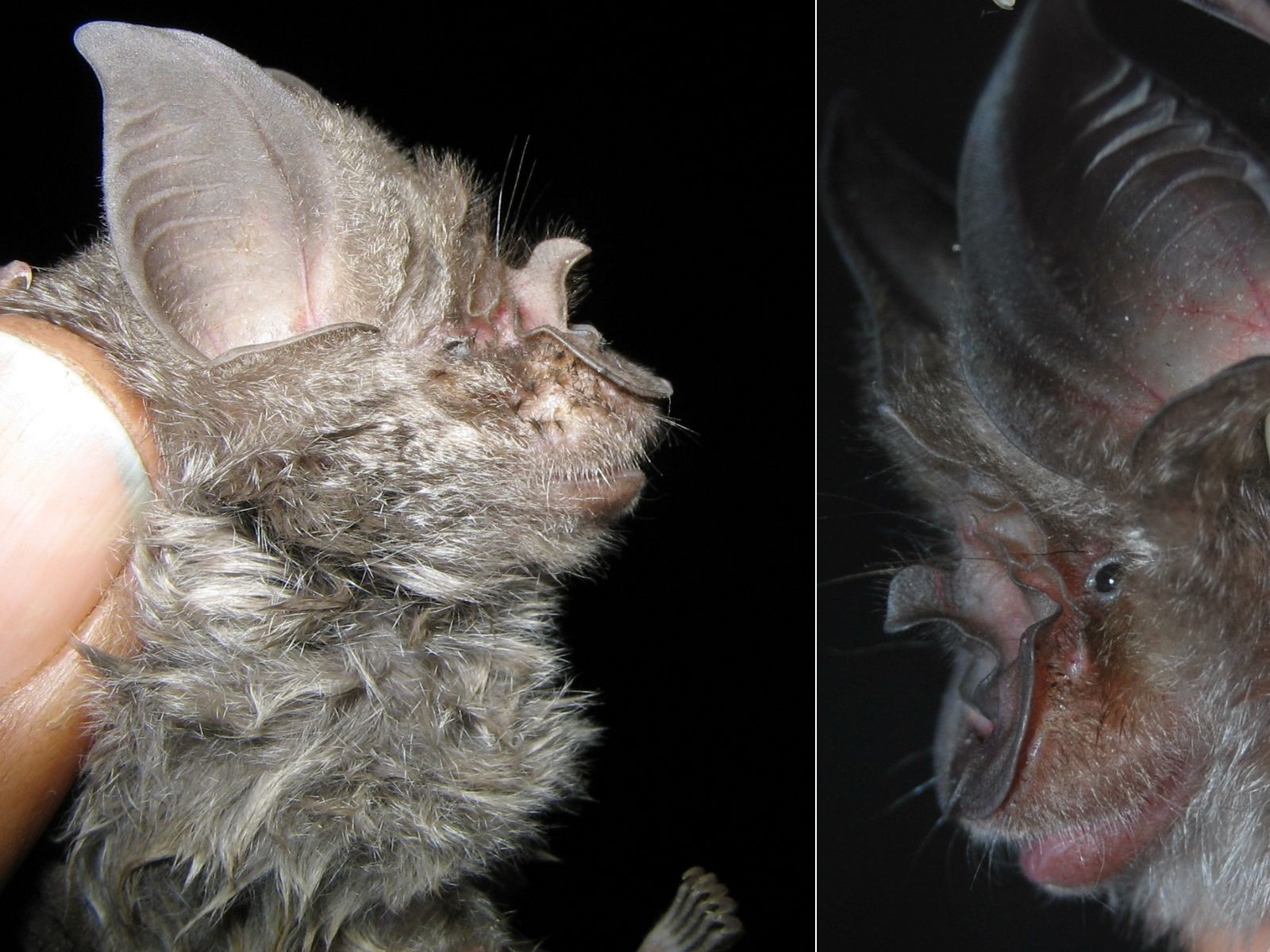
Rüppell’s Horseshoe Bat
Rhinolophus fumigatus

2025 Red list status
Least Concern

Regional Population Trend
Stable

Change compared
to 2016
No Change
Overview
Rhinolophus fumigatus – Rüppell, 1842
ANIMALIA – CHORDATA – MAMMALIA – CHIROPTERA – RHINOLOPHIDAE – Rhinolophus – fumigatus
Common Names: Rüppell’s Horseshoe Bat (English), Rüppell se Saalneusvlermuis (Afrikaans)
Synonyms: abae, acrotis G. M. Allen 1914, aethiops, antinorii, diversus, exsul, foxi, macrocephalus
Taxonomic Note:
Six subspecies have been listed, but the status and geographic distribution of some of these remain uncertain and taxonomic revision is required (Cotterill & Happold 2013). It is likely that more than one species has been included under Rhinolophus fumigatus (Rosevear 1965; Csorba et al. 2003) and may be as many as four. Only R. f. aethiops Peters, 1869 is known from the assessment region (Meester et al. 1986), with the subspecies’ range extending from southern Angola to central Mozambique and southwards into the extreme northern parts of South Africa (Cotterill & Happold 2013). However, the eastern and western populations are geographically isolated (separated by at least 750 km) and differ in size and pelage colour (Monadjem et al. 2010) as well as genetically (Dool et al. 2016). Future research may confirm that these two populations of R. f. aethiops are distinct species (Cotterill & Happold 2013; ACR 2015).
Red List Status: LC – Least Concern (IUCN version 3.1)
Assessment Information
Assessors: Balona, J.1, Taylor, P.2 & da Silva, J.M.3
Reviewers: Howard, A.1 & Bastian, A.4
Institutions: 1Gauteng and Northern Regions Bat Interest Group, 2University of the Free State, 3South African National Biodiversity Institute, 4University of KwaZulu-Natal
Previous Assessors and Reviewers: Jacobs, D., Taylor, P., Cohen, L., MacEwan, K., Richards, L, Schoeman, C., Sethusa, T. & Monadjem, A.
Previous Contributors: Relton, C., Child, M.F. & Raimondo, D.
Assessment Rationale
Rüppell’s Horseshoe Bat is known from fewer than ten colonies within the assessment region (with an estimated extent of occurrence of 50,211 km²). However, there is no documented evidence of decline or any plausible threats that could cause continuing decline. It occurs predominantly in Great Limpopo Transfrontier Park (GLTP) and Greater Mapungubwe Transfrontier Conservation Area (GMTCA), and savannah habitats are well protected within the assessment region. It is plausible that the mature population is < 1,500 mature individuals, qualifying it as Near Threatened D1. However, its habitat is connected across regions, and it is common and widespread outside of the assessment region, so rescue effects are possible and we downlist to Least Concern. If colonies are discovered outside protected areas within the assessment region, reassessment may be necessary as such colonies may be threatened. Taxonomic resolution is also required.
Regional population effects: Wing morphology indicates it is not a fast, long-distance flying species (Aldridge & Rautenbach 1987; Norberg & Rayner 1987; Schoeman & Jacobs 2008), but habitat is connected with populations in Zimbabwe through the GLTP and GMTCA. Thus, we assume rescue effects are possible.
Reasons for Change
Reason(s) for Change in Red List Category from the Previous Assessment: No change
Red List Index
Red List Index: No change
Recommended citation: Balona J, Taylor P & da Silva JM. 2025. A conservation assessment of Rhinolophus fumigatus. In Patel T, Smith C, Roxburgh L, da Silva JM & Raimondo D, editors. The Red List of Mammals of South Africa, Eswatini and Lesotho. South African National Biodiversity Institute and Endangered Wildlife Trust, South Africa.
Regional Distribution and occurrence
Geographic Range
This species has a broad, yet patchy distribution across sub-Saharan Africa, ranging from Senegal and The Gambia in West Africa to Ethiopia and Eritrea in the east, and then through East and southern Africa southwards as far as Namibia and the northeastern reaches of South Africa (Monadjem et al. 2010; Cotterill & Happold 2013; ACR 2015). Its distribution is likely to be more expansive than current records suggest (Cotterill & Happold 2013). For example, it has not yet been recorded from northeastern Botswana but is likely to occur there (Cotterill & Happold 2013). Two geographically isolated populations occur in the east and west of southern Africa:
In the east, it occurs from northern South Africa through Zimbabwe, southern and eastern Zambia, southern Malawi, southern Democratic Republic of the Congo and central and northern Mozambique; while the western population occurs widely in central and northern Namibia and southwestern Angola (Monadjem et al. 2010). These two populations may be shown to be distinct species (Monadjem et al. 2010; Cotterill & Happold 2013; Dool et al. 2016).
Within the assessment region, it is restricted to the very northern region of the Limpopo Province. Based on known recorded colonies, extent of occurrence is estimated to be 50,211 km², and area of occupancy is 104 km² (based on occupied 2 by 2 km grid cells). There are unverified reports that this species might also occur in the Northern Cape Province from specimens collected at Klipfontein in Namaqualand (Herselman & Norton 1985), but these records need to be substantiated (Monadjem et al. 2010).
Elevation / Depth / Depth Zones
Elevation Lower Limit (in metres above sea level): (Not specified)
Elevation Upper Limit (in metres above sea level): (Not specified)
Depth Lower Limit (in metres below sea level): (Not specified)
Depth Upper Limit (in metres below sea level): (Not specified)
Depth Zone: (Not specified)
Map
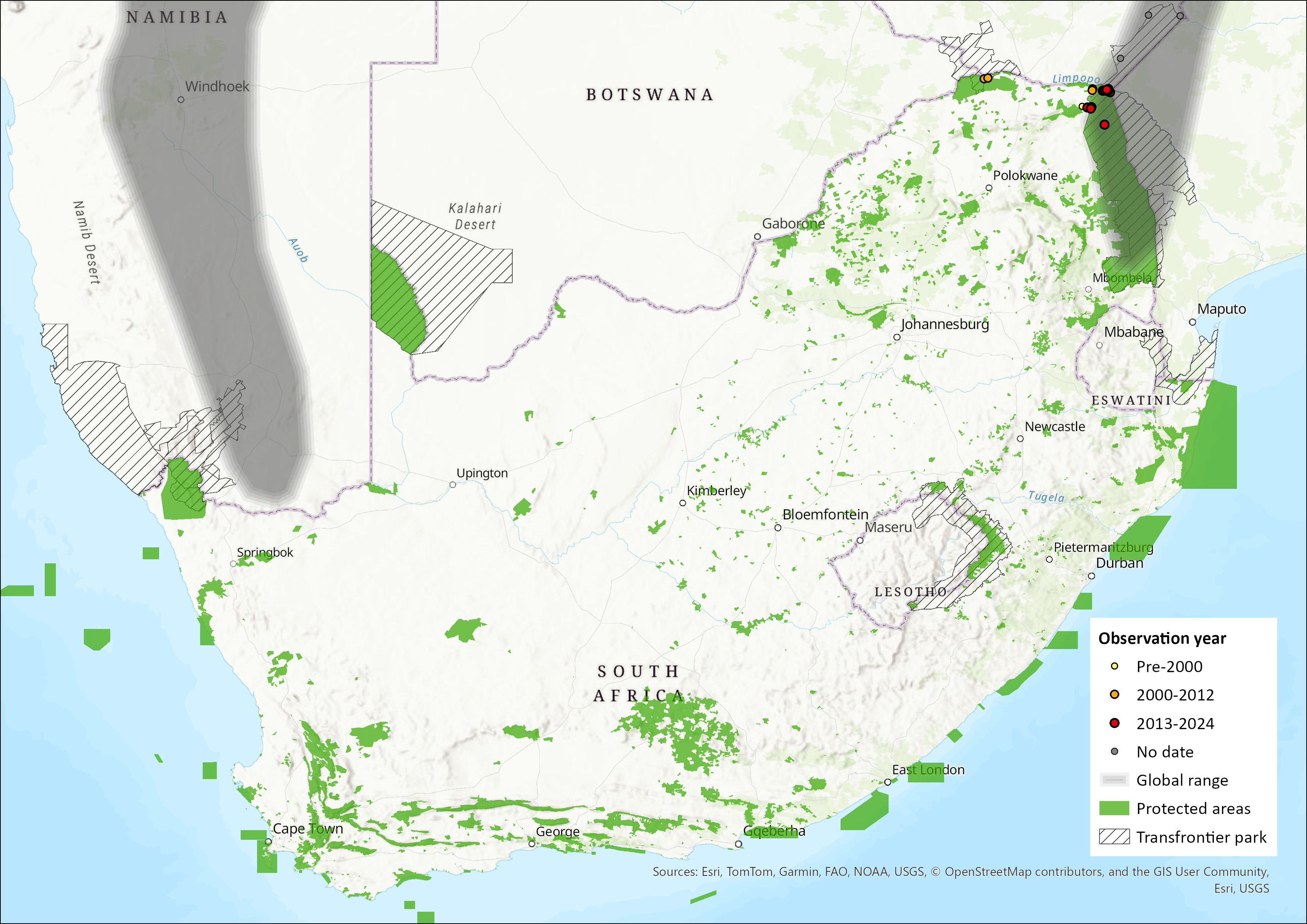 Figure 1. Distribution records for Rüppell’s Horseshoe Bat (Rhinolophus fumigatus) within the assessment region (South Africa, Eswatini and Lesotho). Note that distribution data is obtained from multiple sources and records have not all been individually verified.
Biogeographic Realms
Biogeographic Realm: Afrotropical
Occurrence
Countries of Occurrence
| Country | Presence | Origin | Formerly Bred | Seasonality |
| Angola | Extant | Native | – | – |
| Benin | Extant | Native | – | – |
| Burkina Faso | Extant | Native | – | – |
| Cameroon | Extant | Native | – | – |
| Central African Republic | Extant | Native | – | – |
| Chad | Extant | Native | – | – |
| Congo, The Democratic Republic of the | Extant | Native | – | – |
| Côte d’Ivoire | Extant | Native | – | – |
| Eritrea | Extant | Native | – | – |
| Ethiopia | Extant | Native | – | – |
| Gabon | Extant | Native | – | – |
| Gambia | Extant | Native | – | – |
| Ghana | Extant | Native | – | – |
| Guinea | Extant | Native | – | – |
| Kenya | Extant | Native | – | – |
| Liberia | Extant | Native | – | – |
| Malawi | Extant | Native | – | – |
| Mali | Extant | Native | – | – |
| Mauritania | Extant | Native | – | – |
| Mozambique | Extant | Native | – | – |
| Namibia | Extant | Native | – | – |
| Niger | Extant | Native | – | – |
| Nigeria | Extant | Native | – | – |
| Rwanda | Extant | Native | – | – |
| Senegal | Extant | Native | – | – |
| Sierra Leone | Extant | Native | – | – |
| Somalia | Extant | Native | – | – |
| South Africa | Extant | Native | – | – |
| Sudan | Extant | Native | – | – |
| Tanzania, United Republic of | Extant | Native | – | – |
| Togo | Extant | Native | – | – |
| Uganda | Extant | Native | – | – |
| Zambia | Extant | Native | – | – |
| Zimbabwe | Extant | Native | – | – |
Large Marine Ecosystems (LME) Occurrence
Large Marine Ecosystems: (Not specified)
FAO Area Occurrence
FAO Marine Areas: (Not specified)
Climate change
There is no to little information available on the effects of climate change on this species. Most studies on the effects of climate change on bats are based on predictive species distribution modelling, thus there is a lack of empirical studies measuring behavioural, physiological, phenological or genetic responses to extreme and seasonal climatic changes, especially in the Global South (Festa et al. 2023; Pio et al. 2014). Globally, there have been documented declines in bat populations, species richness and distributions in relation to water availability with increasing global aridity which may become a growing concern as heat waves and maximum temperatures are expected to increase over much of South Africa (become a growing concern as heat waves and maximum temperatures are expected to increase over much of South Africa (Adams & Hayes 2021; Mbokodo et al. 2020).
Population Information
In parts of its range, this species is locally common and has been reported occurring in large colonies. For example, colonies consisting of 500 individuals were documented in caves in Namibia (Churchill et al. 1997). It is considered locally common in West Africa and Malawi but rarer in southern Africa (Cotterill & Happold 2013). It is relatively well represented in museums, with over 90 specimens examined in Monadjem et al. (2010). Generally, colonies encountered in the western population are larger whereas those from the eastern population, including South Africa and Zimbabwe, tend to be smaller (Monadjem et al. 2010; Cotterill & Happold 2013). For example, Rautenbach (1982) collected two specimens from the Limpopo Province that were solitary. It has been recorded in fewer than ten localities within the assessment region with subpopulations recorded within the northern parts of the Kruger National Park, Soutpansberg and in Mapungubwe.
Current population trend: Stable
Number of subpopulations: 4 (colonies)
Continuing decline in mature individuals? (Not specified)
Extreme fluctuations in the number of subpopulations: (Not specified)
Continuing decline in number of subpopulations: (Not specified)
All individuals in one subpopulation: (Not specified)
Number of mature individuals in largest subpopulation: (Not specified)
Quantitative Analysis
Probability of extinction in the wild within 3 generations or 10 years, whichever is longer, maximum 100 years: (Not specified)
Probability of extinction in the wild within 5 generations or 20 years, whichever is longer, maximum 100 years: (Not specified)
Probability of extinction in the wild within 100 years: (Not specified)
Population Genetics
No population genetic studies exist on this species, and overall data is limited making inferences difficult. Given the species has only been recorded from a few protected areas, it is possible each represent isolated subpopulations; however, it is also possible they are capable of dispersing between them. This will need to be verified through more detailed surveys and a population genetic assessment.
Habitats and ecology
Rüppell’s Horseshoe Bat favours savannah woodland habitats (for example, miombo and mopane woodlands) and dry forests where appropriate roosting sites are available (Cotterill & Happold 2013). Specifically, it is associated with arid savannah in the west and savannah woodland in the east (Monadjem et al. 2010). It does not range into desert, semi-desert or true moist forest regions (Skinner & Chimimba 2005; Cotterill & Happold 2013). Within Limpopo Province, it has been recorded from the Lowveld and Mopane Bioregion. It is gregarious, usually roosting close together in caves, mine adits, rock boulders and cavities, hollow Baobab (Adansonia digitata) trees and culverts under roads (Skinner & Chimimba 2005).
This species has broad and short wings with a low aspect ratio and intermediate wing loading (Aldridge & Rautenbach 1987; Norberg & Rayner 1987; Schoeman & Jacobs 2008). It is an insectivorous clutter forager, feeding mainly on Coleoptera, and, to a lesser extent, Lepidoptera (Aldridge & Rautenbach 1987). In southern Africa, females pregnant with a single foetus were collected in September and October, suggesting that young are born between October and December (Smithers 1983).
Ecosystem and cultural services: As this species is insectivorous, it may contribute to controlling insect populations that damage crops (Boyles et al. 2011; Kunz et al. 2011). Ensuring a healthy population of insectivorous bats can thus decrease the need for pesticides.
IUCN Habitats Classification Scheme
| Habitat | Season | Suitability | Major Importance? |
| 1.5. Forest -> Forest – Subtropical/Tropical Dry | – | Suitable | – |
| 2.1. Savanna -> Savanna – Dry | – | Suitable | – |
| 2.2. Savanna -> Savanna – Moist | – | Suitable | – |
| 7.1. Caves and Subterranean Habitats (non-aquatic) -> Caves and Subterranean Habitats (non-aquatic) – Caves | – | Suitable | – |
| 7.2. Caves and Subterranean Habitats (non-aquatic) -> Caves and Subterranean Habitats (non-aquatic) – Other Subterranean Habitats | – | Suitable | – |
Life History
Generation Length: (Not specified)
Age at Maturity: Female or unspecified: (Not specified)
Age at Maturity: Male: (Not specified)
Size at Maturity (in cms): Female: (Not specified)
Size at Maturity (in cms): Male: (Not specified)
Longevity: (Not specified)
Average Reproductive Age: (Not specified)
Maximum Size (in cms): (Not specified)
Size at Birth (in cms): (Not specified)
Gestation Time: (Not specified)
Reproductive Periodicity: (Not specified)
Average Annual Fecundity or Litter Size: (Not specified)
Natural Mortality: (Not specified)
Does the species lay eggs? (Not specified)
Does the species give birth to live young: (Not specified)
Does the species exhibit parthenogenesis: (Not specified)
Does the species have a free-living larval stage? (Not specified)
Does the species require water for breeding? (Not specified)
Movement Patterns
Movement Patterns: (Not specified)
Congregatory: (Not specified)
Systems
System: Terrestrial
General Use and Trade Information
There is no evidence to suggest that this species is traded or utilised in any form.
Local Livelihood: (Not specified)
National Commercial Value: (Not specified)
International Commercial Value: (Not specified)
End Use: (Not specified)
Is there harvest from captive/cultivated sources of this species? (Not specified)
Harvest Trend Comments: (Not specified)
Threats
Globally and nationally, no major threats have been identified for this species. Within the assessment region, the species is known from two major transfrontier protected areas where threat severity is presumably very low. However, if colonies are discovered outside protected areas, more research will be needed to identify and quantify the potential severity of threats.
Conservation
No specific conservation interventions are currently necessary as this is an edge of range species occurring within Kruger and Mapungubwe National Parks, and its range is continuous into Zimbabwe through transfontier conservation areas.
Recommendations for land managers and practitioners:
- Field surveys to discover new roost sites and confirm occupancy of existing roost sites.
Research priorities:
- Systematic monitoring to estimate population size and trends.
- Taxonomic research is necessary to clarify the status of this species complex and delineate relationships between subspecies throughout the rest of its range.
- Substantiating the prospect of the species occurring in the Northern Cape Province.
Encouraged citizen actions:
- Citizens can assist in the conservation of the species by reporting sightings on virtual museum platforms (for example, iNaturalist and MammalMAP) and therefore contribute to an understanding of the species distribution. This is especially important outside protected areas.
Bibliography
ACR. 2015. African Chiroptera Report 2015. Pretoria, South Africa.
Adams, R.A. and Hayes, M.A. 2021. The importance of water availability to bats: climate warming and increasing global aridity. 50 years of bat research: foundations and new frontiers, pp.105-120.
Aldridge, H.D.J.N. and Rautenbach, I.L. 1987. Morphology, echolocation and resource partitioning in insectivorous bats. The Journal of Animal Ecology 56: 763–778.
Boyles, J.G., Cryan, P.M., McCracken, G.F. and Kunz, T.H. 2011. Economic importance of bats in agriculture. Science 332: 41–42.
Churchill, S., Draper, R. and Marais, E. 1997. Cave utilisation by Namibian bats: population, microclimate and roost selection. South African Journal of Wildlife Research 27: 44–50.
Cotterill, F.P.D. and Happold, M. 2013. Rhinolophus fumigatus Rüppell’s Horseshoe Bat. Pages 329–331 in Happold M, Happold DCD, editors. Mammals of Africa. Volume IV: Hedgehogs, Shrews and Bats. Bloomsbury Publishing, London, UK.
Csorba, G.P., Ujhelyi, P. and Thomas, N. 2003. Horseshoe Bats of the World. Alana Books, Shropshire, England.
Dool, S. E., S. J. Puechmaille, N. M. Foley, B. Allegrini, A. Bastian, G. L. Mutumi, T. G. Maluleke, L. J. Odendaal, E. C. Teeling, and D. S. Jacobs. 2016. Nuclear introns outperform mitochondrial DNA in inter-specific phylogenetic reconstruction: Lessons from horseshoe bats (Rhinolophidae: Chiroptera). Molecular Phylogenetics and Evolution 97:196-212.
Driver, A., Sink, K.J., Nel, J.N., Holness, S., van Niekerk, L., Daniels, F., Jonas, Z., Majiedt, P.A., Harris, L. and Maze, K. 2012. National Biodiversity Assessment 2011: An Assessment of South Africa’s Biodiversity and Ecosystems. Synthesis Report. South African National Biodiversity Institute and Department of Environmental Affairs, Pretoria, South Africa.
Festa, F., Ancillotto, L., Santini, L., Pacifici, M., Rocha, R., Toshkova, N., Amorim, F., Benítez‐López, A., Domer, A., Hamidović, D. and Kramer‐Schadt, S. 2023. Bat responses to climate change: a systematic review. Biological Reviews, 98(1), pp.19-33.
Herselman, J.C. and Norton, P.M. 1985. The distribution and status of bats (Mammalia: Chiroptera) in the Cape Province. Annals of the Cape Provincial Museums (Natural History) 16: 73–126.
Kunz, T.H., Braun de Torrez, E., Bauer, D., Lobova, T. and Fleming, T.H. 2011. Ecosystem services provided by bats. Annals of the New York Academy of Sciences 1223: 1–38.
Mbokodo, I., Bopape, M.J., Chikoore, H., Engelbrecht, F. and Nethengwe, N. 2020. Heatwaves in the future warmer climate of South Africa. Atmosphere, 11(7), p.712.
Meester, J.A.J., Rautenbach, I.L., Dippenaar, N.J. and Baker, C.M. 1986. Classification of southern African mammals. Transvaal Museum Monographs 5: 1–359.
Monadjem, A., Taylor, P.J., Cotterill, F.P.D. and Schoeman M.C. 2010. Bats of Southern and Central Africa: a biogeographic and taxonomic synthesis. University of Witwatersrand Press, Johannesburg.
Norberg, U.M. and Rayner, J.M. 1987. Ecological morphology and flight in bats (Mammalia; Chiroptera): wing adaptations, flight performance, foraging strategy and echolocation. Philosophical Transactions of the Royal Society B: Biological Sciences 316: 335–427.
Pio, D.V., Engler, R., Linder, H.P., Monadjem, A., Cotterill, F.P., Taylor, P.J., Schoeman, M.C., Price, B.W., Villet, M.H., Eick, G. and Salamin, N. 2014. Climate change effects on animal and plant phylogenetic diversity in southern Africa. Global Change Biology, 20(5), pp.1538-1549.
Rautenbach, I.L. 1982. Mammals of the Transvaal. No. 1, Ecoplan Monograph, Pretoria, South Africa.
Rosevear, D.R. 1965. The Bats of West Africa. British Museum (Natural History), London, UK.
Schoeman, M.C, and Jacobs, D.S. 2008. The relative influence of competition and prey defenses on the phenotypic structure of insectivorous bat ensembles in southern Africa. PLoS One 3: e3715.
Skinner, J.D. and Chimimba, C.T. 2005. The Mammals of the Southern African Subregion. Cambridge University Press, Cambridge, UK.
Smithers, R.H.N. 1983. The Mammals of the Southern African Subregion. University of Pretoria, Pretoria, South Africa.