
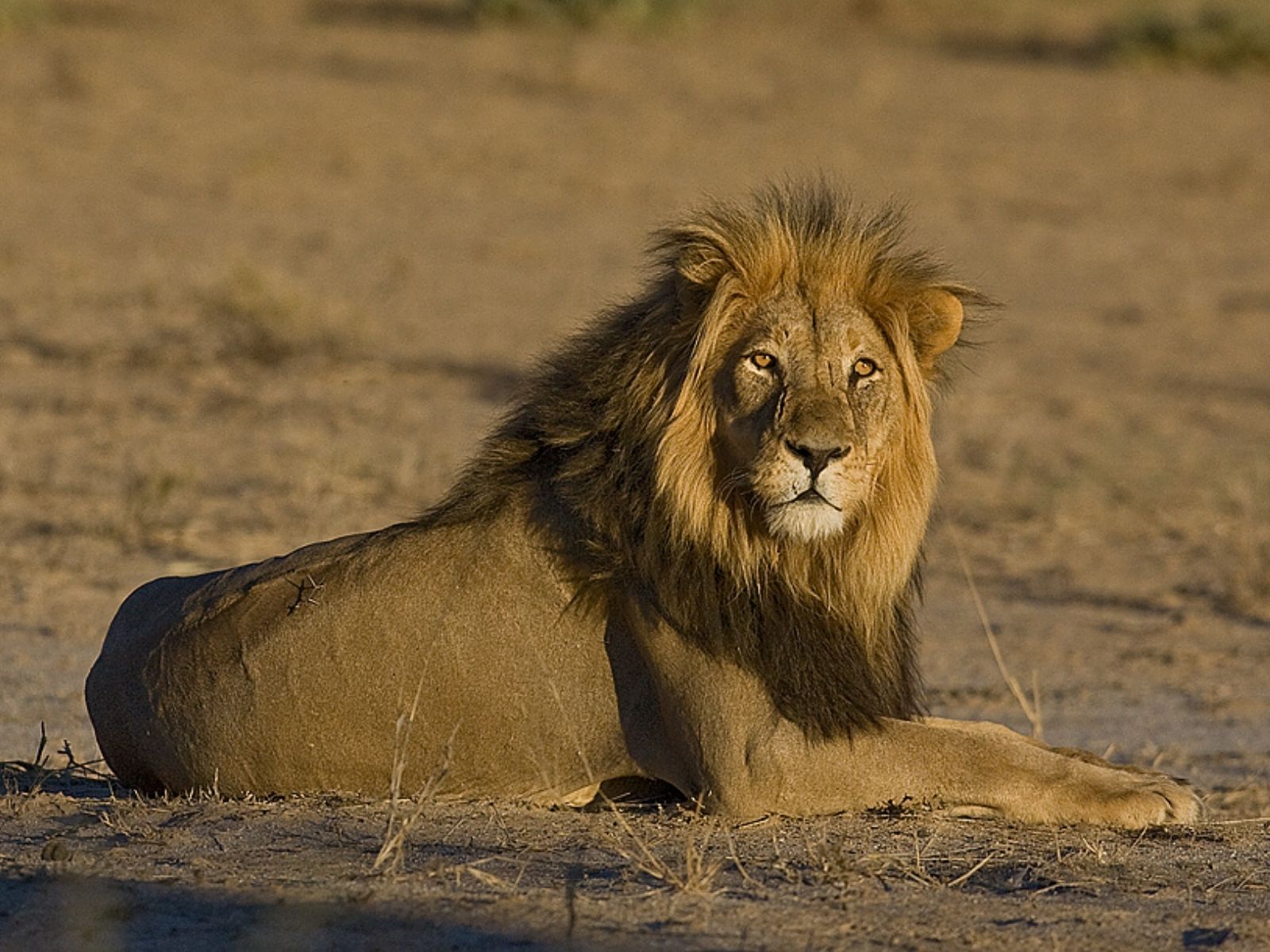
Lion
Panthera leo

2025 Red list status

Regional Population Trend

Change compared
to 2016
No Change
ANIMALIA – CHORDATA – MAMMALIA – CARNIVORA – FELIDAE – Panthera – leo
Common Names: Lion, African Lion (English), Leeu (Afrikaans), Ndau (Venda), Shumba (Shona), Simba (Swahili), Tau (Sotho, Southern), iNgwenyama (Xhosa, SiSwati), iBhubhesi (Zulu), iMbube (Zulu), isilwane (Ndebele), Mkango (Chichewa; Chewa; Nyanja), Ambessa (Amharic), Leao (Portuguese), León (Spanish; Castilian)
Synonyms: Felis leo Linnaeus, 1758 (Wilson & Cole 2000).
Taxonomic Note:
Taxonomy currently used by the IUCN SSC Cat Specialist Group (see Kitchener et al. 2017):
Panthera leo leo—Central Africa, West Africa
Asia Panthera leo melanochaita—Southern and East Africa
There are two recognised subspecies of Lion: Panthera leo leo, found in Central and West Africa as well as India, and P. l. melanochaita, found in southern and East Africa (Bertola et al. 2016, 2022). This subspecies distribution is likely the result of a retraction in Lion distributional range, with Lions being restricted to two local refugia during the more recent part of the Pleistocene climatic cycles (Bertola et al. 2011, 2016). Divergence times estimated from genetic data suggest that changes in habitat, including the expansion and contraction of forested areas, during this period likely reduced connectivity between refugia, resulting in isolated sub-populations and consequent divergence (Bertola et al. 2016). Historical connectivity between lion populations in West or Central African and populations in India explain the close evolutionary relationships between these populations, even though a series of bottlenecks have led the Indian population to differentiate quickly as a result of increased genetic drift (Bertola et al. 2016). Based on recent genetic studies, the two subspecies of lions overlap in a contact zone in Ethiopia which possibly extends into Sudan and South Sudan (Bertola et al. 2016, 2022).
Red List Status: LC – Least Concern, (IUCN version 3.1)
Assessment Information
Assessors: Miller, S.M.1, Ferreira, S.2,3,8, Selier, J.3,4, Williams, V.5, Nicholson, S.6, Minnie, L.7,9
Reviewers: Marnewick, K.10& Naude, V.11
Contributors: Jason Riggio, Paul Funston, John Power, Matthew Child
Institutions: 1University of Cape Town, 2South African National Parks, 3Faculty of Law, North West University, 4South National Biodiversity Institute, 5University of the Witwatersrand, 6Endangered Wildlife Trust, 7Ecological Research Group, School of Biology and Environmental Sciences, University of Mpumalanga, 8 Cape Peninsula University of Technology, 9Centre for African Conservation Ecology, Department of Zoology, Nelson Mandela University, 10Tshwane University of Technology, 11African Parks
Assessment Rationale
The Lion population in South Africa declined substantially in the 19th century but has been stable or increasing over the past 30 years. In the 2016 Regional Red List assessment, Lions were downlisted from Vulnerable to Least Concern. This downlisting was based on total counts of free-roaming mature Lions in large, protected areas (including transfrontier parks) combined with an increase in population sizes across small reserves, resulting in an estimated national population of 1,775 mature Lions (Miller et al. 2016). All of the smaller fenced reserve subpopulations allow Lions to display their full range of natural behaviours (e.g., social dynamics and hunting), thus fulfilling their ecological role in these reserves. Since this assessment, no new census data is available for the large, protected areas in South Africa. However, we do not have any evidence that these populations are in decline and thus we are using these data as a proxy for the current expected population sizes. In addition, these smaller reserves function as a metapopulation (Selier et al. 2024), including 889 (427 mature) Lions in the 2023 census (almost double the 2013 data). Further, the Lion population on private properties in the Greater Kruger Region have increased from 300 (160 mature) in 2013 to 483 (~240 mature) Lions at the end of 2023. The total mature wild (i.e., all Lions excluding captive individuals) Lion population size in South Africa is estimated at 2,007 individuals. Therefore, Lion numbers in the assessment region continue to comfortably exceed the threshold for D1 and the species does not qualify as Threatened using the A or C criteria, because the two major wild subpopulations (i.e., Kgalagadi Transfrontier Park and Great Limpopo Transfrontier Conservation Area) have not declined over the past 21 years (three generations) and the smaller subpopulations continue to increase (Selier et al. 2024). As such, the species remains as Least Concern.
While there are currently no major threats to Lions across the assessment region, an increase in Lion poaching, via bycatch in snares set for bushmeat and targeted poaching for the medicinal trade, in northern Kruger National Park (hereafter Kruger NP) has been observed. Additionally, the poisoning of Lions in northern Kruger NP may be linked to the removal of Lions that could prey on livestock illegally grazed in Kruger NP and/or to competition for meat, where Lions feed on carcasses from bushmeat snaring before the poachers can collect the meat (Pers. Comm., Frikkie Russouw, SANParks Environmental Crime Investigation 2025).
The legal trade in captive Lion bones to East–Southeast Asia was highlighted as a potential threat to Lions in South Africa in the previous Red List assessment (Miller et al. 2016). While this trade is still legal in South Africa, no export quota has been gazetted since 2019 and thus should have no impact on the Lion population. A recently gazetted policy in South Africa aims to close the commercial captive breeding of Lion in South Africa and thus seeks to formally end the legal trade in Lion bone from captive Lions (DFFE 2024). The situation needs to be closely monitored (especially elsewhere in Africa where the scale of the bone trade is largely unknown) for any positive or negative impacts.
An under-explored and under- reported plausible threat to wild Lion populations is the use of Lion parts for cultural purposes. This could be contributing to recent increases in poaching in the region, as the types of body parts used and preferred by traditional users and practitioners often match the body parts removed from poached Lions (Williams et al. 2017a; Coals et al. 2022). Lion body parts, including skin (full or pieces), fat, teeth, claws, and bones from paws, are sought for various traditional practices (Coals et al. 2022). These uses range from incorporation of carpels and tarsals in the divination sets of traditional healers to the use of fat by patients seeking zootherapeutic remedies. Additionally, Lion skins are incorporated into the traditional attire of certain individuals (especially royalty) within the ethnonymous Nguni/Ngoni Kingdoms across Southern and Eastern Africa (Williams et al. 2025). This cultural demand adds a layer of complexity, highlighting the need to address both ecological and socio-cultural dimensions in Lion management strategies. Like the Lion bone trade, the cultural use requires monitoring and evaluation.
Regional population effects: Although the range is mostly fragmented within the assessment region, there is connectivity and dispersal between the larger subpopulations within Kgalagadi Transfrontier Park (TP) and Great Limpopo Transfrontier Conservation Area (TFCA). There is also limited dispersal across the Botswana and South African border at the Greater Mapungubwe TFCA. Finally, the smaller reserves are functioning as subpopulations within the South African metapopulation and thus are connected via management actions (Selier et al. 2024).
Reasons for Change
Reason(s) for Change in Red List Category from the Previous Assessment: No change
Red List Index
Red List Index: No change
Recommended citation: Miller SM, Ferreira S, Selier J, Williams V, Nicholson S & Minnie L. 2025. A conservation assessment of Panthera leo. In Patel T, Smith C, Roxburgh L, da Silva JM & Raimondo D, editors. The Red List of Mammals of South Africa, Eswatini and Lesotho. South African National Biodiversity Institute and Endangered Wildlife Trust, South Africa.
Regional Distribution and Occurrence
Geographic Range
Lions originally roamed freely across most of South Africa but hunting and changes in land use (particularly farming) decreased Lion distribution and population size between the late 1800s and early 1900s and restricted them to large national parks by the middle of the 20th century (Nowell & Jackson 1996). For example, Lions became regionally extinct in the Eastern Cape by 1879 (Skead 2007). The fate of Lions in the Northern Cape is typical of many parts of the country: based on the average pride size of 11 individuals recorded in the dune-savannah of Kgalagadi TP (Funston 2011), at least 1,492 Lions may have resided in the Northern Cape before the species was hunted to near local extinction in the 1800s. Lions disappeared from regions such as Namaqualand, Bushmanland, Karoo, Tankwa-Karoo, the Kimberley region and North of the Orange River. At one point, Lions survived only in the national park that now forms part of the Kgalagadi TP (viz Kalahari Gemsbok National Park), where they have been protected since 1931. Since the 1990s, however, Lion prides have been established on three private properties in the Kalahari region of the Northern Cape (North of the Orange River). Lions have also been reintroduced into Eswatini (Swaziland): Eswatini’s last resident Lion was reputedly seen by King Sobhuza II in the late 1950s at Hunter’s Rock in Hlane National Park (Monadjem 1998). Four Lions were reintroduced into a fenced area in Hlane National Park and their growth rate is managed (Pers. Comm. Mick Reilly). These Lions have not been included in the assessment.
This species still occupies only a small part of its former range in South Africa (occurring across most of the 1.22 million km2 country), now persisting on c. 45,000 km2. Lions in South Africa are found in varying management regimes: the two large transfrontier conservation areas (Great Limpopo TFCA and Kgalagadi TP) are only partially fenced on the South African side with no fencing in neighbouring countries; Greater Mapungubwe TFCA, which borders Botswana and Zimbabwe is not fully fenced and consequently there is a very small free-roaming subpopulation in northern Limpopo – this probably accounts for fewer than 20 animals in <1,000 km2; (total area of these areas: 33,205 km2, c. 73% of the total area) and the rest are in small, fully fenced reserves (60 properties totalling 12,455 km2).
Generally, the expansion of private game reserves, especially since the early 1990s, has reclaimed previously extirpated range for Lions and they currently occur in isolated subpopulations in all provinces of South Africa, except for the Free State (Hayward et al. 2007; Hunter et al. 2007; Slotow & Hunter 2009; Miller et al. 2013; Williams et al. 2015; Selier et al. 2024). However, these subpopulations are highly fragmented, with 60 (< 1,000 km2) reserves having reintroduced Lion (Selier et al. 2024; Miller et al. 2025). A metapopulation management plan as well as guidelines for best practice have been developed as part of the Biodiversity Management Plan (BMP) for Lions to reduce the effects of fragmentation (Levendal & Funston, 2015; Miller et al. 2013; Selier et al. 2024). Although the subpopulations on private reserves occur in fenced areas, some of which are smaller than the average home range that would be required under natural conditions (but see Hayward et al. 2009), these subpopulations are all considered wild and have access to large and varied prey populations (e.g., Power 2002, 2003; Slotow & Hunter 2009). Fifty-two (88%) of these small reserves comply to metapopulation criteria and function as a collective conservation unit (unpublished data – 2023 annual reserve assessments as per the BMP; Selier et al. 2024). As such, these reserves contribute to global Lion conservation and have expanded the area of occupancy for lions within South Africa. They comprise over 25% of lion habitat in South Africa compared to 20% in the 2015 Red List assessment.
Elevation / Depth / Depth Zones
Elevation Lower Limit (in metres above sea level): 0
Elevation Upper Limit (in metres above sea level): 4200
Depth Lower Limit (in metres below sea level): (Not specified)
Depth Upper Limit (in metres below sea level): (Not specified)
Depth Zone: (Not specified)
Map
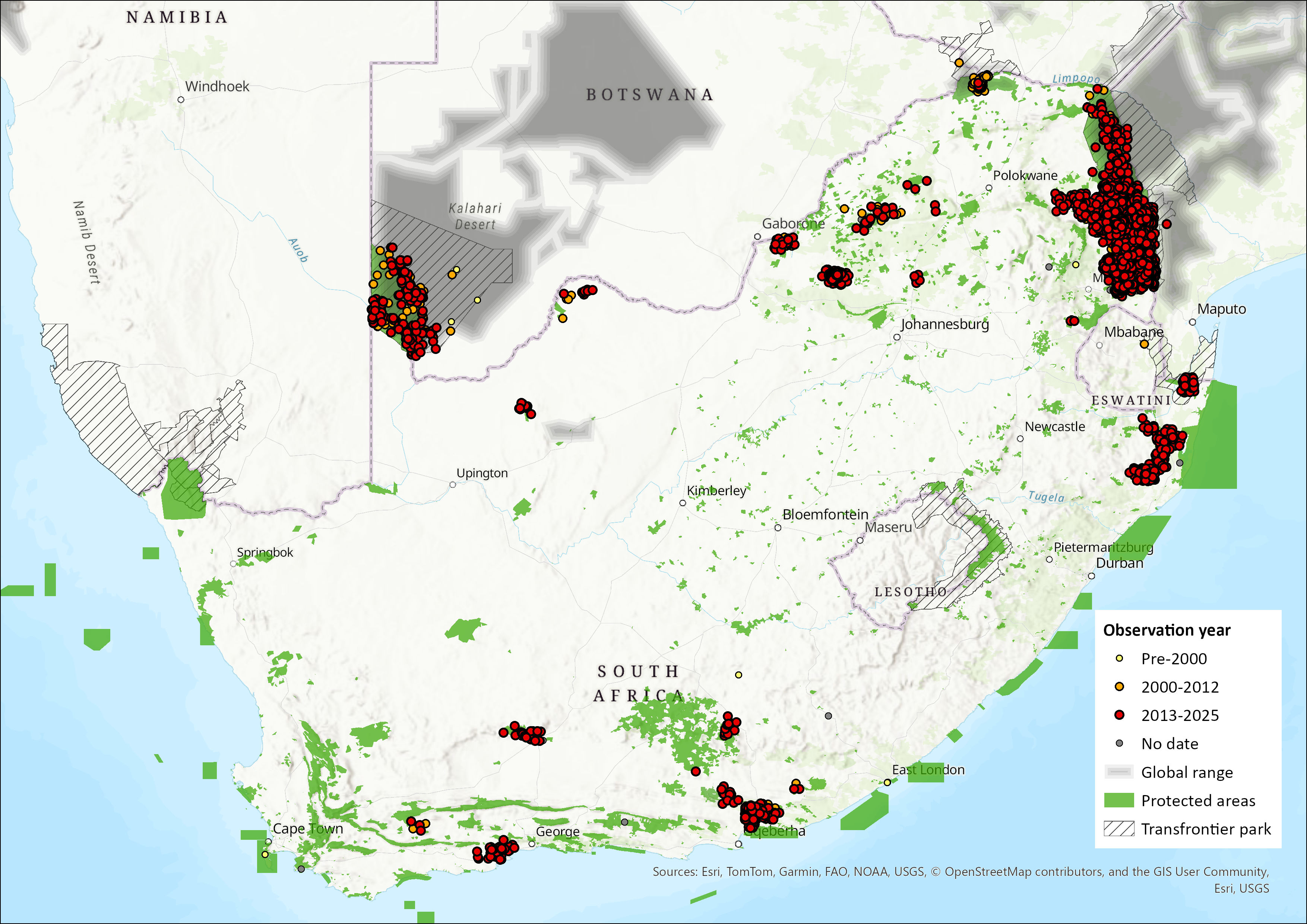
Figure 1. Distribution records for Lion (Panthera leo) within the assessment region (South Africa, Eswatini and Lesotho). Note that distribution data is obtained from multiple sources and records have not all been individually verified.
Biogeographic Realms
Biogeographic Realm: Afrotropical
Occurrence
Countries of Occurrence
| Country | Presence | Origin | Formerly Bred | Seasonality |
| Afghanistan | Extinct Post-1500 | Native | – | – |
| Algeria | Extinct Post-1500 | Native | – | – |
| Angola | Extant | Native | – | – |
| Benin | Extant | Native | – | – |
| Botswana | Extant | Native | – | – |
| Burkina Faso | Extant | Native | – | – |
| Burundi | Extinct Post-1500 | Native | – | – |
| Cameroon | Extant | Native | – | – |
| Central African Republic | Extant | Native | – | – |
| Chad | Extant | Native | – | – |
| Congo | Presence Uncertain | Native | – | – |
| Congo, The Democratic Republic of the | Extant | Native | – | – |
| Côte d’Ivoire | Extant | Native | – | – |
| Djibouti | Extinct Post-1500 | Native | – | – |
| Egypt | Extinct Post-1500 | Native | – | – |
| Eritrea | Extinct Post-1500 | Native | – | – |
| Eswatini | Extant | Reintroduced | – | – |
| Ethiopia | Extant | Native | – | – |
| Gabon | Possibly Extant | Native | – | – |
| Gambia | Extinct Post-1500 | Native | – | – |
| Ghana | Extant | Native | – | – |
| Guinea | Extant | Native | – | – |
| Guinea-Bissau | Extant | Native | – | – |
| India | Extant | Native | – | – |
| Iran, Islamic Republic of | Extinct Post-1500 | Native | – | – |
| Iraq | Extinct Post-1500 | Native | – | – |
| Israel | Extinct Post-1500 | Native | – | – |
| Jordan | Extinct Post-1500 | Native | – | – |
| Kenya | Extant | Native | – | – |
| Kuwait | Extinct Post-1500 | Native | – | – |
| Lebanon | Extinct Post-1500 | Native | – | – |
| Lesotho | Extinct Post-1500 | Native | – | – |
| Libya | Extinct Post-1500 | Native | – | – |
| Malawi | Extant | Native | – | – |
| Mali | Extant | Native | – | – |
| Mauritania | Extinct Post-1500 | Native | – | – |
| Morocco | Extinct Post-1500 | Native | – | – |
| Mozambique | Extant | Native | – | – |
| Namibia | Extant | Native | – | – |
| Niger | Extant | Native | – | – |
| Nigeria | Extant | Native | – | – |
| Pakistan | Extinct Post-1500 | Native | – | – |
| Rwanda | Extant | Reintroduced | – | – |
| Saudi Arabia | Extinct Post-1500 | Native | – | – |
| Senegal | Extant | Native | – | – |
| Sierra Leone | Extinct Post-1500 | Native | – | – |
| Somalia | Extant | Native | – | – |
| South Africa | Extant | Native | – | – |
| South Sudan | Extant | Native | ||
| Sudan | Extant | Native | – | – |
| Syrian Arab Republic | Extinct Post-1500 | Native | – | – |
| Tanzania, United Republic of | Extant | Native | – | – |
| Togo | Possibly Extinct | Native | – | – |
| Tunisia | Extinct Post-1500 | Native | – | – |
| Türkiye | Extinct Post-1500 | Native | – | – |
| Uganda | Extant | Native | – | – |
| Western Sahara | Extinct Post-1500 | Native | – | – |
| Zambia | Extant | Native | – | – |
| Zimbabwe | Extant | Native | – | – |
Large Marine Ecosystems (LME) Occurrence
Large Marine Ecosystems: (Not specified)
FAO Area Occurrence
FAO Marine Areas: (Not specified)
Climate Change
Climate change has not been identified as a major threat to Lions (Bauer et al. 2022, Nicholson et al. 2024) and the potential impact of climate change on Lions in South Africa has not been scientifically assessed. However, climate change is likely to have at least three possible impacts on Lions in the region: (1) uncertain consequences on prey dynamics, which could have consequences on Lion population persistence. For example, a recent drought in Kruger NP increased survival of young male Lions which resulted in more males dispersing outside the park boundaries and consequently more interactions with people outside protected areas (Ferreira & Viljoen 2022); (2) uncertain consequences on prey– and human distribution, which could lead to changes in where and how Lions and people interact – this may have positive consequences for revenue generation via tourism and trophy hunting; (3) negative human-Lion interactions that may cause damage when the expectations of conservationists and farmers are in conflict.
Population
Lion population sizes have decreased dramatically across the African continent and continue to decline across much of their range. Southern Africa is an exception where the Lion population is stable (Nicholson et al. 2024) or increasing. Unfortunately, there have not been any formal counts of the large, protected areas in South Africa (Kruger NP and Kalahari Gemsbok NP) since the last regional Red List assessment in 2015. In southern Kruger NP, however, Lion numbers were stable during a drought (Ferreira & Viljoen 2022). This suggests that there are no indications that either of these populations are in decline (see details below and Nicholson et al. 2023), indicating minimal risk of decline over the next three Lion generations (21 years). Therefore, we have used the estimates from 2015 as a proxy for the number of Lions in large, protected areas in South Africa. The anthropogenic threat to Lions in Limpopo NP, Mozambique, part of the Great Limpopo TFCA, is high, with Lions reducing occupancy in habitats where pastoralism and bushmeat poaching are high (Everatt et al. 2019). As such, this population is predicted to decline over three Lion generations (Nicholson et al. 2023; Everatt, Andresen & Somers 2014; Everatt, Moore & Kerley 2019). More optimistically, the Lion population in the Northern Tuli Block appears to be steadily increasing (Nicholson et al. 2024; latest count ~50 individuals in 2018). Small reserve subpopulations continue to grow both in number of reserves (and therefore expanding Lion habitat) and number of Lions (Figure 2).
Based on the data limitations outlined above, there are an estimated 3,431 Lions in South African conservation areas (excluding transfrontier areas). Of these, there are 1,745 mature Lions, using a 50% mature population structure evident in large reserves where data on age classes was available (Smuts 1976; Mills et al. 1978). The total formally protected mature population of Lions (1,745) represents 7.5% of the estimated global mature population of 23,000 Lions (Nicholson et al. 2024). This is an underestimate as Lions estimated in the IUCN Global Red List include all Lions older than one year (Nicholson et al. 2024) while our definition is age four and older.
Table 1: Total estimated number of Lion within South Africa broken down into key populations. Numbers in parentheses indicate totals of Lion including those in transfrontier areas.
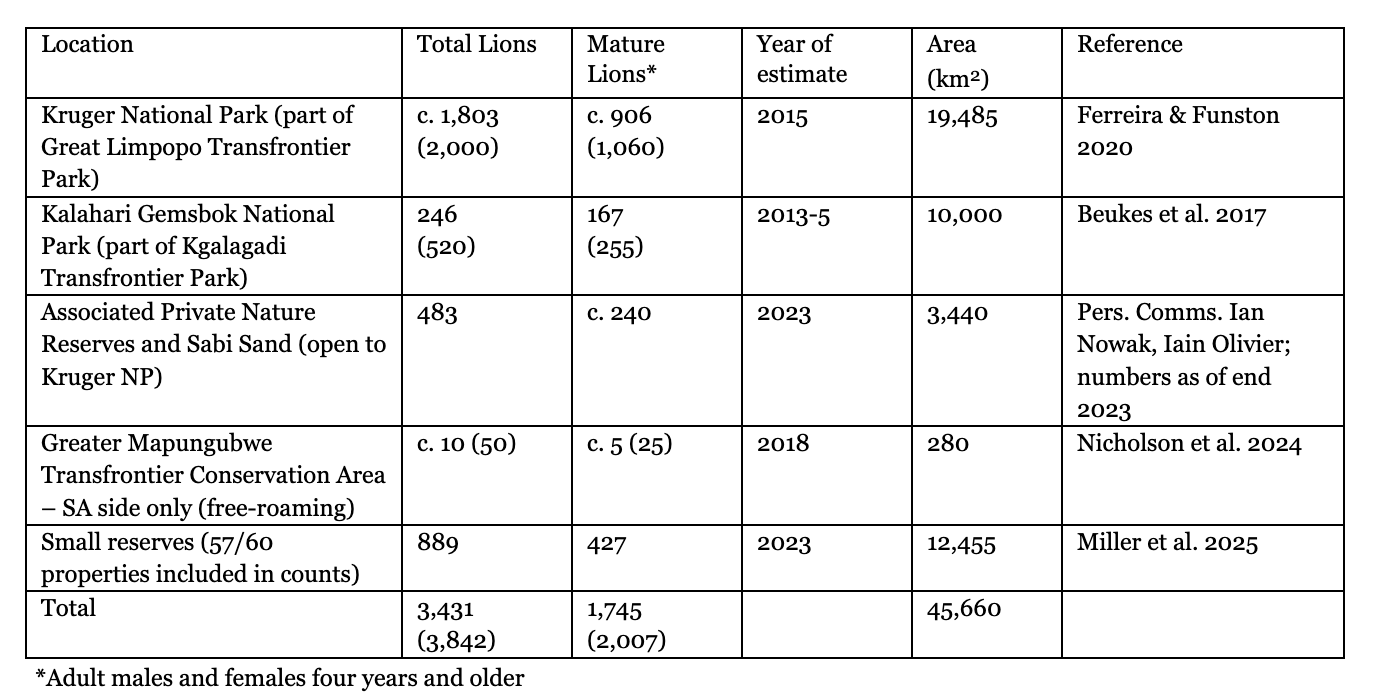
*Adult males and females four years and older
The conservation success of the formally protected population is due largely to the transfrontier parks (established in the early 2000s) that have created resilient and self-sustaining Lion populations. The Great Limpopo TFCA population (estimated at c. 2,000 – 2,500 individuals in 2013, dependent on the inclusion of private conservancies open to western Kruger NP) remained stable or slightly increased from the 1980s to 2010 (Ferreira & Funston 2010). Based on 240 random call-up stations in Kruger NP in 2015, the Kruger NP population increased from 1,684 (95% CI: 1,617–1,751) in 2005 to 1,803 (95% CI: 1,715–1,891) individuals in 2015 and, for adult females specifically, from 415 (95% CI: 380–450) to 604 (95% CI: 515–693; Ferreira & Funston 2020). While no full park census has been undertaken since 2015, census data from the South and observation by SANParks staff suggests that Lions in the South of Kruger NP continue to do well and have likely reached a population size resilient to stochastic events such as droughts (Ferreira & Viljoen 2022). In contrast, Lions in the North of Kruger NP are not doing as well, likely due to the more arid and marginal nature of habitats in conjunction with increased poisoning and snaring along the Zimbabwean border (Roodbol et al. 2024; Walker 2024). A camera trap survey conducted in the Pafuri region in 2019 – 2022 did not detect any Lions (Walker 2024), but this study site was localised and likely does not reflect a complete absence of Lions, but rather the transient/ephemeral nature of the relatively small Lion population in this region. Several prides (two comprising of seven and six Lions as well as one male coalition of two from the South; one comprising 4 Lions from close to Phalaborwa) have been translocated to the North of Kruger NP to aid in dispersal from the South and to augment the population in the North (Pers. Comm. Sam Ferreira). Efforts to understand and reduce poisoning and snaring in the North are ongoing. Although Roodbol et al. (2024) raised local concerns, the population in the far North appears to be relatively stable in the past decade partly because of the translocation interventions in 2024, despite the threats to this population. Overall, the Lion population in Kruger NP is not under threat.
Similarly, the South African side of the Kgalagadi TP was fairly stable since the first population estimate of 140 individuals (range: 108 – 181) in 1976 (Funston 2001; 2011), 131 individuals (range: 106 – 156) in 1996 – 97, 120 individuals (range: 113 – 131) in 1998 – 2001, and 130 individuals (range: 91-169) in 2010 (Ferreira et al. 2013). The most recent mark-recapture estimates may indicate an increasing population, where the total number of individuals was ~246 (95% CI: 238–256), and the number of mature individuals was ~167 in 2013 – 2015 (95% CI: 160–177; Beukes et al. 2017). There are no signs of a major change in the population over the past decade, but a census is being planned by SANParks (Pers. Comm. Sam Ferreira). According to the two estimates of the whole Kgalagadi TP, the Lion population included 458 individuals (range: 428 – 478) in 1998 – 2001 and 517 individuals (range: 340 – 698) in 2010 (Ferreira et al. 2013).
The population in the Greater Mapungubwe TFCA contains some Lions on several fenced reserves, which thus require active management. The rest of the Lions in the GMTFCA are part of an open system (not contained by fences) and not managed, Lions thus roam freely across the area. Although no data exists, anecdotal reports suggest that the major threat to the free-roaming Lion is human–wildlife conflict.
Lions have also been extensively reintroduced onto other fenced reserves (including national, provincial and private protected areas), increasing from one reserve and 10 Lions in 1990 to 60 reserves and 889 Lions in 2023 (Selier et al. 2024; Miller et al. 2025). Around 47% (415 individuals) of these Lions are mature, as opposed to over 50% (1,300 individuals) of Lion populations in open systems being mature. Given that these subpopulations continue to grow, management is necessary (Power 2003; Hayward et al. 2009; Slotow & Hunter 2009). In these cases, management actions include 1) contraception to reduce population growth; 2) translocation to mimic migration (and reduce numbers locally); 3) culling to reduce population growth; 4) supplementation of prey populations to sustain the Lion populations (Power 2002, 2003; Hayward et al. 2007; Miller et al. 2013).
Although these subpopulations are currently managed as part of the South African metapopulation, ideally smaller fenced reserves will be consolidated into larger conservancies thus creating larger, more ecologically resilient populations, similar to Kruger NP (Di Minin et al. 2013). Many reserves have expanded the space available to Lions over the years and there is currently an effort to link conservation areas in the Eastern Cape. If successful, this would result in an area similar in size to Kruger NP (Pers. Comm. Declan Hofmeyr). However, given that this area represents a multiuse landscape including conservation areas, game farms, livestock farms and conservancies, Lions within these reserves will likely encounter hostile habitat outside the reserves and would still be effectively isolated from each other as fragmented populations, albeit larger than the current areas. Using a metapopulation approach to manage these subpopulations mimics natural systems and helps Lions persist in fragmented landscapes while ensuring no threat to their genetic integrity (Ferreira & Hofmeyr 2014; Miller et al. 2013; Miller et al. 2015; Selier et al. 2024). New metapopulation and translocation guidelines embrace the spectrum of Lion populations persisting across the continuum of large open areas (for example, Kruger NP or Kgalagadi TP) to small, fenced reserves that can be managed as an integrated metapopulation (Selier et al. 2024).
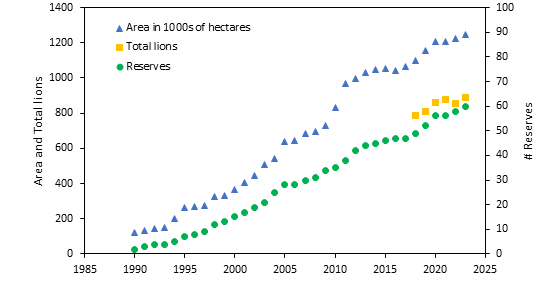
Figure 2: Temporal trend in the change of Lion population size and conservation area across small reserves (< 1,000 km2) in South African (Miller et al. 2025).
The current (2023) mature population size of wild Lions in South Africa, inclusive of the smaller reserves managed as one unit, is estimated at 1,745 without the inclusion of the entire transfrontier conservation area (2,007 with those areas included). Generation length of Lions is 6.98 years (Nicholson et al. 2024), and the core population in the largest protected areas have remained stable or have increased over three generations. In southern Africa overall (Botswana, Namibia, South Africa and Zimbabwe), the population is inferred to be stable or slightly increasing over the next three generations (λ = 1.02 ± 0.17; Nicholson et al. 2024). In contrast, outside these countries the population has declined in West and Central Africa and is stable in East Africa (Nicholson et al. 2024). The strongholds for Lions (Great Limpopo TFCA and Kgalagadi TP) alone provide enough mature individuals to exceed the D threshold.
According to Williams et al. (2015), in 2013 there were close to 6,000 Lions in captivity in nearly 150 breeding facilities. By the end of 2016, however, according to ToPS records, the number of Lions of all ages in South African captive breeding and hunting facilities (excluding keeping-only facilities with smaller numbers of Lions) had risen to more than 8,437 in 321 facilities (Williams & ’t Sas-Rolfes, 2019). A Ministerial Task Team (MTT) report (Chetty et al. 2024), reported 7,838 Lions in 342 facilities at the end of September 2023. Captive Lions are not included in the numbers for this Red List assessment.
Over a five-year period (2015 and 2020) approximately 165 Lions were poached in captive facilities and 91% had body parts removed. However, in recent years (2021-2024), there have been no further reported targeted poaching incidents (African Lion Database, Unpublished Data, 2024).
South Africa’s policy is to phase out captive bred Lions in South Africa (DFFE 2024). Viable voluntary exit strategies were identified and detailed in the MTT report (Chetty et al. 2024).
Population Information
Continuing decline in mature individuals: No
Extreme fluctuations in the number of subpopulations: No
Continuing decline in number of subpopulations: No
All individuals in one subpopulation: No
Number of mature individuals in largest subpopulation: 906
Number of subpopulations: 63
Quantitative Analysis
Probability of extinction in the wild within 3 generations or 10 years, whichever is longer, maximum 100 years: (Not specified)
Probability of extinction in the wild within 5 generations or 20 years, whichever is longer, maximum 100 years: (Not specified)
Probability of extinction in the wild within 100 years: (Not specified)
Population Genetics
Genetic studies indicate that the southern African Lion would originally have constituted one large panmictic population (Barnett et al. 2006). Over time, regional genetic differences have emerged and there are currently two recognised subspecies (P. leo leo and P. leo melanochaita). Within P. leo melanochaita there are further regional differences which should not be ignored. Guidelines on the translocation of lions across their range have been published which should be used to inform translocations from and to the South African population (Bertola et al. 2022).
Genetic diversity of the small reserves was assessed in the early 2010s and found to be similar to that of more open systems (Miller et al. 2015). Historic mixing of genetic origins – Kruger NP, Kgalagadi TP, Etosha NP and Greater Mapungubwe TFCA – has occurred (Miller et al. 2015) and continues to occur, although no new genetics have been introduced from Etosha NP since the first Lions were translocated in the mid-1990s. Genetic testing can be used to determine the success of the managed metapopulation and should be regularly evaluated as indicated in the BMP for Lions (Levendal & Funston, 2015).
A pilot study of a subset of the captive Lion population found that their genetics were similar to wild Lions in South Africa, similar to those of Kruger NP and/or Kgalagadi TP origin (Miller et al. 2023). The sampled animals did not add any additional genetic diversity and showed lower effective population sizes (Ne) compared to the Lion population in South Africa (Miller et al. 2023). They were also very closely related to one another, indicating much movement between facilities and a risk of inbreeding going forward (Miller et al. 2023). Broad genetic translocation guidelines have been developed for all Lions (Bertola et al. 2022). South Africa has recently developed meta-population guidelines and these should result in reduced genetic risks (Selier & Ferreira 2025).
While measures of Ne have not been quantified for the South Africa population as a whole, Ne for Kruger NP was found to be 151.1 (95% CI 78.3–769.9) (Miller et al. 2023); and hence estimates for the entire population in the region are likely to exceed this. Based on census data (1,745-2,007; see Population section) and applying a 0.1-0.3 Ne/Nc conversion ratio, the Ne for the national population is estimated between 174 and 602, cradling the Ne=500 threshold.
Habitats and Ecology
Lions have a broad habitat tolerance and are only absent from tropical rainforest and the interior of the Sahara Desert (Nowell & Jackson 1996). They once lived across Eurasia, but now only a remnant population of a different subspecies (Panthera leo persica) survives in India. Lions are largely found in the savannah biome of Africa, which is broadly defined as those areas that receive between 300 and 1,500 mm of rain annually, and encompass a wide variety of habitats including grasslands, wetlands, dry woodlands and mosaics of all of these (Riggio et al. 2013). They also occur in the Namib Desert in Namibia (Bauer & van Der Merwe 2004), and in the subtropical thicket biome of the Eastern Cape in South Africa (Hayward et al. 2007).
Although Lions drink regularly when water is available, they are capable of obtaining their moisture requirements from their prey and even plants (such as the tsama melon in the Kalahari Desert), and thus can survive in very arid environments as they are water-independent (Green et al. 1984). Medium- to large-sized ungulates (190–550 kg, including antelopes, Zebra (Equus sp.) and Wildebeest (Connochaetes sp.) are the bulk of their prey (Hayward & Kerley 2005), but depending on circumstances, potential prey species also include smaller antelope such as Warthogs to much larger animals such as a Rhinoceros (Hayward & Kerley 2005).
Historically, prey preference models have used ¾ adult female body mass to predict prey preferences of Lions (Hayward and Kerley 2005). This, to account for the presence of adults, sub-adults, juveniles, and neonates in the prey population. Most of these studies lacked the resolution to estimate demographic-specific predation. However, recent research has refined these crude models by incorporating seasonal variation in the availability of prey demographic classes (Andrew 2022; Annear 2022; Annear et al. 2023; Dreyer 2024). Specifically, Lions select adult prey (Power 2002), with only a fraction of their prey consisting of neonates and juveniles of large species (e.g., Blue Wildebeest, Plains Zebra, Cape Buffalo, and Giraffe; Andrew 2022; Annear 2022; Annear et al. 2023; Dreyer 2024). This preference for large-bodied prey likely reflects the social nature of Lions, as such prey offer the highest energetic benefit.
Lions may show either a seasonal shift in preference for the demographic classes within certain species (e.g., buffalo; Dreyer 2024) or may consume more non-adult demographic classes in the wet season, but in accordance with abundance (Annear 2022; Annear et al. 2023). This dietary opportunism is also reflected in reintroduced Lions, with long-term data showing that Lions shift from a selective to generalist prey selection strategy three years post-reintroduction (Andrew 2022). Short-term shifts in prey selection also exist, with Lions being more selective in the wet season (Andrew 2022), reflecting an increased consumption of non-adult prey (Annear, 2022; Annear et al. 2023; Dreyer 2024). This highlights the plasticity of Lion prey selection, with variation in prey preferences occurring at the short-term, seasonal level, as well as the long-term. Although existing Lion carrying capacity estimates based on ¾ adult female body mass may be adequate (Dreyer 2024), both the short- and long-term plasticity in lion prey preferences suggests that these models may have to be revised to include seasonal shifts in demographic-specific prey biomass. Further, the impact of seasonal shifts in demographic-specific predation on prey populations have only been studied once (Dreyer 2024) and showed that a preference for adult prey has a greater impact on prey populations than a preference for non-adult prey. Specifically, Lions significantly reduced the population growth rates of preferred prey species such as Eland, Wildebeest and Buffalo (Dreyer 2024). This highlights the potential for the top-down limitation of prey populations by Lions, particularly for larger, preferred prey species.
Lions also scavenge, displacing other predators (such as the Spotted Hyaena Crocuta crocuta) from their kills (Hayward 2006). Lions can only exist in areas with sufficient wild prey, and seldom co-exist closely with man without conflict (Everatt et al. 2019). Within their home ranges, Lions require habitats or locations that are suitable for hunting, resting, and breeding. They readily adapt to hunting in varied habitats generally having greater success when hunting in areas with longer grass or cover (Funston et al. 2001). Although landscape features may vary from area to area, Lions tend to select areas where prey is easier to catch, rather than areas where prey densities are highest.
Lions are the most social of the cats, with related females remaining together in prides, and related and unrelated males forming coalitions competing for tenure over prides (West & Packer 2013). Average pride size (including males and females) is four to six adults; prides generally break into smaller groups when hunting (Smuts 1976). Lions tend to live at higher densities than most other felids, but with a wide variation from 1.5 adults / 100 km² in southern African semi-desert to 55 adults / 100 km² in parts of the Serengeti. Small, fenced reserves in South Africa have average densities below 10 adults / 100 km² (Miller & Funston 2014). Pride home ranges can vary widely even in the same region: for example, from 266 to 4,532 km² in the South African part of the Kgalagadi TP (Funston 2001), and 45 km² in the Ngorongoro Crater, Tanzania (Hanby et al. 1995). Home ranges also vary widely within South Africa and do not appear to be linked to reserve size (Lehmann et al. 2008). For example, home ranges can vary hugely within a reserve, as evidenced on the Greater Makalali Private Nature Reserve, where lions had home ranges from 25 km² to 107 km² (Druce et al. 2004).
Key habitat for Lions is directly driven by the presence or density of preferred prey species rather than any particular vegetation types – other than those associated with their preferred prey. As such, the vegetation communities that support the preferred prey of Lions range from semi-desert (Kalahari) through savannah (Kruger NP/Okavango) and subtropical thicket (Addo Elephant NP). In South Africa, however, the subpopulations with the largest populations all occur within the savannah biome in the northern parts of the country.
Ecosystem and cultural services:
Lions are both a keystone species and an apex predator, playing a critical role in maintaining the structure and function of savanna ecosystems. As apex predators, Lions exert top-down regulation on both prey populations and mesocarnivores such as Cheetahs, thereby influencing species composition and ecosystem stability. In addition, Lions provide an important ecological service by provisioning carcasses that sustain a variety of scavenger species. These include facultative scavengers like Spotted Hyaenas and Jackals, as well as obligate scavengers such as Brown Hyaenas (Curveira-Santos et al. 2021).
In certain landscapes, lions have also been deliberately reintroduced to restore ecosystem function. For example, Lions were reintroduced to Addo Elephant NP partly to substitute the need for culling overabundant herbivores, thus performing a vital ecosystem service of population control (Hayward et al. 2007).
Beyond their ecological role, Lions are of high socio-economic value. They are a cornerstone of ecotourism and form part of the iconic “Big Five”, attracting large numbers of local and international visitors (Di Minin et al. 2012; Maciejewski & Kerley 2014). Additionally, Lions hold considerable commercial importance within the trophy hunting industry, contributing to wildlife-based economies and conservation financing (Snyman et al. 2021; Saayman, van der Merwe & Saayman 2018).
IUCN Habitats Classification Scheme
| Habitat | Season | Suitability | Major Importance? |
| 1.5. Forest -> Forest – Subtropical/Tropical Dry | – | Suitable | – |
| 2.1. Savanna -> Savanna – Dry | – | Suitable | – |
| 3.5. Shrubland -> Shrubland – Subtropical/Tropical Dry | – | Suitable | – |
| 3.7. Shrubland -> Shrubland – Subtropical/Tropical High Altitude | – | Marginal | – |
| 4.5. Grassland -> Grassland – Subtropical/Tropical Dry | – | Suitable | – |
| 4.7. Grassland -> Grassland – Subtropical/Tropical High Altitude | – | Marginal | – |
| 8.1. Desert -> Desert – Hot | – | Unknown | – |
Life History
| Generation Length | Justification | Data Quality |
| 6.98 | – | – |
Age at Maturity: Female or unspecified: 3.5 years
Age at Maturity: Male: 3.5 years
Size at Maturity (in cms): Female: 160-184
Size at Maturity (in cms): Male: 184-208
Longevity: 15 years
Average Reproductive Age: 3.5 years
Maximum Size (in cms): 160-184 cm (females); 184-208 cm (males)
Size at Birth (in cms): (Not specified)
Gestation Time: 105-111 days
Reproductive Periodicity: (Not specified)
Average Annual Fecundity or Litter Size: 3
Natural Mortality: (Not specified)
Breeding Strategy
Does the species lay eggs? No
Does the species give birth to live young: Yes
Does the species exhibit parthenogenesis: No
Does the species have a free-living larval stage? No
Does the species require water for breeding? No
Movement Patterns
Movement Patterns: (Not specified)
Congregatory: (Not specified)
Systems
System: Terrestrial
General Use and Trade Information
South Africa’s international trade in Lion products is sizeable. Besides trophies and live Lion sales, South Africa has issued CITES permits to export 22 categories of Lion products since 1977 ranging from hair to handbags, feet, leather items and tails (Williams et al. 2017b). Between 1977 and 2010, an estimated 5,000–6,200 Lions were trophy hunted in South Africa, including 3,600–4,900 between 2000 and 2010 and 1,400–2,500 in just 2008–2010 (Williams et al. 2015). Over a similar period (1977–2011), permits were reportedly issued for the export of 7,014 Lion trophies to 100 countries (UNEP-WCMC CITES Trade Database), with numbers rising markedly after c. 2006. [These figures are, however, not directly comparable, as lower estimates of hunting offtake for 2004–2010 derive from national statistics (DEA) and higher estimates from CITES export permits (Williams et al. 2015), the latter of which overstates actual annual legal exports because permit holders do not typically export all of what they apply for, or the permit is not used in the year it was issued.] The DFFE Professional Hunting Registers further indicates that between 2010–2022, approximately 638 Lion trophies were exported per annum, primarily derived from legally hunted captive-bred Lions, and that approximately 86% of all trophy hunts occurred in North West province. The USA suspension on imports of captive-bred Lion trophies from early 2016 (followed by similar measures in other countries) led to a marked decline in the international market for Lion hunts in South Africa (and a corresponding drop in trophies exported), while the domestic market allegedly expanded (Williams et al. 2017b; Williams & ‘t Sas-Rolfes 2019).
Despite the sizeable trade of Lions in South Africa, trophy hunting and trade is a negligible threat to wild Lions as utilisation appears to be sustainable and wild populations are either stable or increasing. No hunting is allowed in national or provincial parks, which collectively represent > 75% of the total wild Lion population. Furthermore, less than 5% of trophy hunts are sourced from wild populations (CITES Scientific Authority South Africa 2013; Williams et al. 2015). For example, Lindsey et al. (2012) reported that the South African hunting operators estimated the proportion of wild Lions hunted annually to be only 0.9 and 1.1% of the totals for 2009 and 2010 respectively. This remains the situation with trophy offtakes from the wild population, constituting <0.5% of the total wild population. The majority of trophy hunting is performed on private wildlife ranches (53%) or on properties with captive-breeding facilities (42%), where there were 7,838 Lions kept in captivity in 342 facilities across South Africa in 2023 (Chetty et al. 2024). The situation needs to be closely monitored (especially elsewhere in Africa where the scale of the bone trade is largely unknown) for any positive or negative impacts.
Besides trophies, CITES permits have been issued to export large numbers of live Lions across the world, as well as skeletons and bones to east-southeast Asia. From 1992 to 2012, CITES permits to export almost 1,400 live Lions (predominantly captive origin from the North West Province) were issued, 16% of these were destined for southeast Asia (mostly Thailand), and reached a peak of > 280 lions in 2010 (Williams et al. 2015). From 2013 to 2023, South Africa issued permits for the export of 1,943 live Lions to 72 countries – with the largest shares destined for China (516 lions; 27%), Pakistan (141; 7%), Thailand (129; 7%), and Vietnam (94; 5%) (CITES Trade Database, accessed September 2025). A peak occurred in 2017 when 386 Lions (20%) were listed on permits, followed by 278 (14%) in 2019. Permit numbers dropped during COVID-19 but have since recovered, though at lower levels than the pre-2017 average of ~151 live Lions per year. No permits were issued for wild Lions. Most export permits were for Lions destined for zoos (961; 49%) and for commercial purposes (719; 37%), with smaller proportions for breeding (155; 8%) and other uses such as hunting, reintroduction, personal, or circus (each ≤1%) (CITES Trade Database, accessed September 2025). Exports for hunting were minimal, comprising only 21 Lions (1%) over the decade.
In 2005, the process to develop stricter regulations relating to the hunting of captive-bred Lions was initiated and the provisions came into effect in 2007. These stricter regulations in terms of the National Environmental Management: Biodiversity Act (NEMBA), 2004 (Act No 10 of 2004) and, more specifically, the Threatened or Protected Species (ToPS) regulations, proposed that captive-bred Lions could only be hunted if they were released into an extensive self-sustaining (or ‘wild’) system for a 2-year period. This regulation was challenged twice in court by the South African Predator Breeders Association (SAPBA) and, in 2010, SAPBA were successful in having the two-year period declared invalid for Lions (Williams et al. 2015). Consequently, provinces apply regulations as per their provincial ordinances or guidelines, and this self-sustaining period varies across the provinces (for example, 96 hours in the North West, 30 days in the Eastern Cape, and 24 months in the Limpopo Province) (Williams et al. 2015). Currently captive-bred trophies cannot be imported into many countries. For example, the United States of America will only allow import of trophies from properties that are shown to contribute to the conservation of the species. A list of South African properties is compiled every year by SANBI using evidence-based criteria. Properties with captive-bred Lions do not comply with these criteria.
In 2006, the African Lion Working Group of the IUCN SSC Cat Specialist Group cautioned against legalising Lion bone trade, fearing it would not meet China’s demand for tiger bone substitutes in traditional medicine. Despite these concerns, legal exports from South Africa started by 2008 (Williams et al. 2015; 2017b). Exports surged from 1,160 skeletons (2008-2011) to 6,058 skeletons (2008-2016), with most going to Laos and Vietnam (Williams et al. 2015; 2017b). These bones came primarily from captive-bred Lions in North West and Free State provinces as byproducts of trophy hunting (Williams et al. 2015). By 2016, exports peaked at 1,771 skeletons annually (Williams et al. 2021). In response, the DFFE set an 800-skeleton annual quota in 2017-2018 following a 2016 CoP17 Decision, though none was established in 2019 due to legal challenges (Williams et al. 2021). Early concerns about consumers preferring wild over captive-bred Lions (Gratwicke et al. 2008) were later addressed by a 2020 study showing no strong preference for wild sources and that Lion bones are unlikely to fully replace Tiger bones in traditional products (Coals et al. 2020).
The Policy Position on the Conservation and Sustainable Use of Elephant, Lion, Leopard and Rhinoceros, an outcome of the recommendations emanating from the High-Level Panel of experts for the review of policies, legislation and practices on matters of Elephant, Lion, Leopard and Rhinoceros management, breeding, hunting, trade and handling, was published for implementation on 24 April 2024 (Gazette no. 50541, vol 706). The policy position included an objective to end the captive keeping of Lions for commercial purposes and close captive Lion facilities, put a halt to the intensive breeding of Lion in controlled environments, and end the commercial exploitation of captive and captive-bred Lions. To give effect to this objective, the DFFE published a draft prohibition notice for public comment, prohibiting the establishment and registration of new captive breeding facilities (Gazette no. 51581, 15 November 2024).
Although there are no specific figures on illegal trade of Lions in South Africa, there are sporadic reports of non-compliance with national regulations (e.g. confiscations at airports, road blocks or in traditional medicine markets). Provincial conservation authorities, however, indicated in 2013 that illegal use or trade in Lion body parts and products was generally negligible or non-existent (CITES Scientific Authority South Africa, 2013). Where it does occur, it usually involves restricted activities for which offenders are not in possession of a permit to breed, keep, hunt, catch, sell or export a live Lion or part thereof (Williams et al. 2015, 2021). Illegal trade in captive-bred Lions within North West Province is suspected to take place, as this province has the most facilities and is quite difficult to regulate. There are no reported records of illegal hunting of Lions in the Northern Cape. Any illegal hunting or trade in wild Lions is only likely to occur along the border between the Northern Cape and Botswana between Askham in the west and McCarthy’s Rest in the east, a stretch of approximately 200 km, while Lions do also enter into the North West Province across the Molopo River (Power 2014).
Lions are used for traditional medicine, and various trade studies conducted in South African urban traditional medicine markets have documented their body parts (usually bones and ‘fat’) for sale, but the quantities are small and the incidences sporadic (Whiting et al. 2011; Williams et al. 2015, 2017a; Coals et al. 2022). The expansion of human settlements on the western boundary of the Kruger NP in Mpumalanga has been cited as a reason for the recent increase in Lion poaching for African traditional medicine (CITES Scientific Authority South Africa 2013). There have been anecdotal reports, however, that traditional healers living in areas adjacent to Kruger NP acquire Lion body parts from healers working for SANParks – especially when dead animals become available (Williams et al. 2015). Furthermore, traders in traditional medicine markets indicated that they tend to source Lion parts from wild poached animals, whereas traditional healers acquire Lion derivatives from these markets and captive Lion farms (Coals et al. 2022).
Overall, the private sector has been positive for the wild population. Some Lions from Kgalagadi TP have been reintroduced into small reserves (for example, 6 in 2003 for Addo Elephant NP), but this was not detrimental to the population. No Lions have been moved from Kruger NP to small reserves. New reserves currently source their Lions from the 60 reserves forming part of the Lion metapopulation management plan. Some excess Lions from these metapopulations have historically been translocated to captive facilities (unpublished data, Lion Management Forum (LiMF) and recently a pride of captive bred Lions was reintroduced into a fenced reserve without any Lions (not included in this assessment as they are not classified as wild based on CITES; Booyens 2021). Thus, the wild Lion population is largely self-contained and there is little leakage between the captive-bred, metapopulation reserves and wild populations. The exception is the Mapungubwe area subpopulation where Lions escape onto managed properties (where legal hunting occurs) and are free-roaming on farmland (where they are occasionally killed by farmers) and cross international borders. There have not been extensive studies on whether this has any impact on the overall subpopulation in that area. The private sector has greatly increased the commercial value of this species through both photographic tourism and trophy hunting.
| Subsistence: | Rationale: | Local Commercial: | Further detail including information on economic value if available: |
| Yes | Low-scale traditional medicine use. | – | Trophy hunting |
National Commercial Value: Yes
International Commercial Value: Yes
| End Use | Subsistence | National | International | Other (please specify) |
| 3. Medicine – human & veterinary | true | true | – | – |
| 10. Wearing apparel, accessories | true | true | true | – |
| 12. Handicrafts, jewellery, etc. | true | true | true | – |
| 15. Sport hunting/specimen collecting | – | true | true | – |
Is there harvest from captive/cultivated sources of this species? Yes
Harvest Trend Comments: Extensive trophy hunting and exportation of parts for international markets.
Threats
There are no major threats to Lions in the assessment region, as reflected in the stable / slightly increasing population trend in South Africa. However, human-wildlife conflict and associated persecution may threaten local subpopulations, especially in the Mapungubwe region, and along protected area edges (sensu Wittemyer et al. 2008). Conflict on the borders of the Kruger NP is relatively minor. For example, over the past 11 years, c. 135 complaints relating to wild animals killing livestock in the Nsikazi district adjacent to Kruger NP have been received by Mpumalanga Tourism and Parks Agency (G. Camacho unpubl. data). As all properties keeping lion require adequate fencing, there have been very few human-Lion conflicts reported across all provinces.
Lions are also accidentally killed in snares laid by bushmeat poachers. This is particularly evident in the northern region of the Kruger NP, as reflected in the distribution of snare hotspots on the border with Zimbabwe (Walker 2024) and on Letaba Ranch (the latter being contiguous with Kruger NP but located on the northwestern boundary (African Lion Database, Unpublished data 2024). Poaching, snaring and poisoning of Lions remain a threat to wild Lions in the Limpopo and Mpumalanga provinces. The illegal killing of problem animals and the illegal hunting of Lion for their skins are thought to be minor threats in KwaZulu-Natal Province.
An increasing threat to Lions that has emerged in recent years is the targeted poaching of Lions for body parts (particularly claws and teeth; Nicholson et al. 2024). While there has historically been some level of illegal trade and use of Lion bones and body parts for traditional medicine and other cultural purposes across the country (Coals et al. 2022; Williams et al. 2017a, 2025), this threat has escalated in recent years in localised areas across the assessment region. Dinokeng Game Reserve (Gauteng Province of South Africa) is the only recorded metapopulation reserve where poaching has occurred. Dinokeng has experienced multiple poaching events of Lions since 2020 and several incidents have occurred where parts were removed (African Lion Database, unpublished data, 2024). In addition, the number of Lions poached in the northern Kruger NP has also increased and concerningly, many of these reported incidents have had parts removed (African Lion Database, unpublished data 2024).
Disease has also been a threat to Lion populations, especially Bovine Tuberculosis in Kruger NP and Hluhluwe-iMfolozi Park (HiP). This is especially prevalent for inbred subpopulations (Trinkel et al. 2011), and is exacerbated by the fragmented and isolated nature of most subpopulations within the region. Bovine Tuberculosis is not spread within Lion subpopulations through intraspecific interactions; it can only be sustained in the population through infected prey, particularly Buffalo (Maruping-Mzileni 2015). The high numbers of domestic and feral dogs and cats associated with the expanding human population bordering the western side of Kruger NP also enhances the possibility of transmission of diseases such as canine distemper and rabies. Within Kruger NP, Bovine Tuberculosis has not had any detectable impacts on the Lion population and disease threats within this national park are minimal (Ferreira & Funston 2010). Research demonstrates that infections of Bovine Tuberculosis and Feline Immunodeficiency Virus do not co-vary (Maas et al. 2012). Future threats to Lions in KwaZulu-Natal Province are speculated to be disease, primarily Bovine Tuberculosis and Canine Distemper Virus. Bovine Tuberculosis is becoming more widespread throughout the country (Pers. Obs. LiMF meetings). However, more research is required to estimate the impact on Lion populations.
Although prey-base depletion and habitat loss is listed as a major threat to the global Lion population (Nicholson et al. 2024), the expansion of small, private protected areas with high prey numbers has counteracted this threat on a local scale in South Africa (Miller et al. 2013; 2015; Selier et al. 2024). Conversely, artificially high Lion numbers negatively impact the abundance of other predators and need to be managed so as not to affect overall diversity.
The popular media emphasises the threat of trophy hunting on Lions in South Africa, but the overwhelming majority of trophy hunts continue to be taken from the captive-bred population. Between 2010 and 2023, approximately 179 wild Lions (average ~13 Lions p.a.) were hunted within the metapopulation. Trophy hunting is well regulated through the permitting system and does not significantly threaten the wild Lion population within South Africa. Lindsey et al. (2012) warned that if the captive-bred Lion industry were to become increasingly regulated, partly due to pressure from animal welfare activists, the demand for wild Lion trophies could increase and thus the management of wild Lions would require increased regulation, stricter penalties and greater enforcement. Thus, the captive-bred population effectively buffered the wild population and reduced the associated conservation costs (Lindsey et al. 2012). Lindsey et al. (2012) further speculates that future major increases in the price of Lion hunts may be undermined by the rapid increase in availability of cheap, high-quality trophies from captive-bred Lions in South Africa (Lindsey et al. unpublished data) which will assumedly undermine the financial value of wild Lions.
Similarly, while the trade in Lion bones to east–southeast Asia was cited as a potential threat in South Africa, evidence suggests it has not adversely impacted wild Lion subpopulations in South Africa because the skeletons were almost all a by-product of the sizeable trophy hunting industry, and Lions hunted in South Africa are almost exclusively captive-bred (Williams et al. 2015; 2017b). With the new regulations preventing the establishment of new captive Lion facilities, and the ongoing efforts to shut down the captive Lion industry, and with no legal exports of Lion skeletons since 2019, this situation requires close monitoring. Existing facilities continue to operate a domestic hunting market, and by-products remain in the system (and may be stockpiled), raising concerns about whether reduced legal availability of captive-sourced trophies and bones could influence illegal trade. To date, there are no systematic data for South Africa showing an increase in poaching for bones for the Asian market, but this remains a concern.
In addition to wild-hunting, there are few records of Lion poaching – especially at a level that could supply the sizeable bone trade (Williams et al. 2015). There were concerns, however, that the trade in Lion bones to China and southeast Asia could stimulate demand for wild Lion bones and other felids (Lindsey et al. 2012). Reports of Asian nationals enquiring about Lion bones in Eastern and Southern African Lion range states, as well as at least one confirmed 116kg consignment exported from Uganda to Laos in 2016, suggest a more organised and deliberate approach to sourcing wild Lion body parts (Williams et al. 2017b). Hence, ongoing proactive monitoring is needed in South Africa and Lion range states where vulnerable wild populations may be adversely affected and the re-evaluation of this assessment if new data become available that indicates that the bone trade is a threat to wild Lions within the assessment region.
Conservation
A BMP was developed for South Africa’s Lions (Levendal & Funston 2015) and is currently being revised. This includes a metapopulation management plan for reintroduced Lions on small reserves (< 1,000 km2). The success of the metapopulation relies on mimicking natural process that fencing prevents. Translocations are a key component, and while these are not centrally organised and somewhat ad hoc, LiMF provides a platform for managers to plan translocations. LiMF was formed in 2010 to improve the management of Lions on small reserves. LiMF members – more than 100 members, representing 50 reserves as well as the large national parks and private areas of Greater Kruger (ecologists and managers), veterinarians, provincial and national government authorities and academics – meet regularly to discuss management interventions and try to mimic natural processes that have broken down in reserves, using proactive rather than reactive methods. LiMF also provides a platform for the exchange of ideas and information surrounding the management of wild Lions in small, fenced areas and has led to the development of guidelines and contributed to several scientific publications (Miller et al. 2013, McEvoy et al. 2019, Miller et al. in review). Given that Lion populations in small reserves have higher growth rates than those in more open systems (Miller & Funston 2014), contraception and unilateral hysterectomies have been used to reduce recruitment, albeit with mixed results to reduce growth rates (McEvoy et al. 2019, Miller 2024). Although contraception works, there are undesirable side effects in many cases and some Lionesses are being repeatedly contracepted and thus never have cubs which no longer mimics natural processes (McEvoy et al. 2019; Miller 2024). New approaches to population reducing growth rates, are needed to ensure that the conservation value of these populations continues.
Disease threats are potentially more significant in small reserves as a disease can spread rapidly through a population and cause a local extinction which requires translocation of new animals to restore the populations. The metapopulation management plan, however, buffers against these catastrophic events as there is a source for a new population readily available and populations can quickly recover (e.g. canine distemper virus; Davidson-Philips et al. 2019).
Translocations continue to be a very successful management tool, but existing guidelines (Hayward et al. 2007) are outdated. As such, a study is underway to develop practical guidelines for translocations between reserves (Miller et al. in review). More general guidelines on when translocations are appropriate were published by Becker et al. (2022), some of which are relevant to the small reserve populations.
Ongoing monitoring of subpopulation responses to the management actions should improve management of Lions on small reserves in South Africa. This approach will provide a template for evidence-based conservation management of other threatened carnivores.
The second most important conservation strategy for all Lions, both within small reserves and those within transfrontier parks or large national parks, is protected area expansion. The expansion of the managed metapopulation is evidence that protected areas for Lions are constantly expanding (Figure 2). While fencing has been shown to be effective in reducing conflict and increasing Lion subpopulation size (Packer et al. 2013), it also increases isolation, and thus, while small fenced reserves are necessary, continued fence-dropping and transfrontier protected area expansion is necessary to create more resilient and self-sustaining subpopulations.
Recommendations for land managers and practitioners:
Guidelines for management of the metapopulation were established (Selier & Ferreira 2017) and Lions in these small reserves have recently been shown to be functioning as a metapopulation (Selier et al. 2024). Landowners and interested stakeholders are encouraged to participate in LiMF, as this forum assists in the effective metapopulation management of small, fenced reserves.
Similarly, the DFFE has developed a BMP for Lions in terms of the National Environmental Management: Biodiversity Act, 2004 (Levendal & Funston 2015) which is currently being revised but still be consulted for the management of Lions in South Africa. The BMP is aimed at ensuring the long-term survival of the species in nature and will contribute towards the achievement of the recommendations of the Eastern and Southern African Lion Conservation Strategy (the regional conservation strategy compiled by the IUCN SSC Cat Specialist Group 2006).
Co-development of interventions to reduce human-Lion conflict with relevant stakeholders are required to ensure that interventions is locally relevant and to improve buy-in from all stakeholders.
Research priorities:
- Quantifying and monitoring the effects of the cessation of the Lion bone trade on the wild Lion population within the assessment region, particularly after the recent policy amendments
- A comprehensive genetic study to review the genetic status of the metapopulations is overdue and initial plans are underway to initiate a follow up study to Miller et al. 2015.
- Updating guidelines for Lion translocation – underway (Miller et al. in review).
- Updating the BMP – underway.
- Revised carrying capacity models for reserves, incorporating the entire large carnivore guild.
- Revised carrying capacity models for reserves, incorporating seasonal shifts in demographic-specific predation.
- Impacts of Lion population growth on prey population recruitment and growth rate, with the aim of reducing prey supplementation in subpopulations.
- Updated Lion census for Kruger NP and the South African side of the Kgalagadi TP are currently (2025) underway
Encouraged citizen actions:
- Contribute to citizen science projects within protected areas (by reporting sightings locations and pride numbers), and report sighting data on virtual museum platforms (for example, iNaturalist and MammalMAP) outside of protected areas.
Bibliography
Andrew KE. 2022. Settling in: Do reintroduced lions and cheetahs exhibit prey choice shifts? MSc Thesis, Department of Zoology, Nelson Mandela University, Gqeberha, pp. 104.
Annear E. 2022. Refining predator-prey preference at the prey demographic level for cheetah and lion. MSc Thesis, Department of Zoology, Nelson Mandela University, Gqeberha, pp. 88.
Annear E, Minnie L, Andrew K, Kerley GIH. 2023. Can smaller predators expand their prey base through killing juveniles? The influence of prey demography and season on prey selection for cheetahs and lions. Oecologia 201: 649-660.
Barnett R, Yamaguchi N, Barnes I, Cooper A. 2006. Lost populations and preserving genetic diversity in the lion Panthera leo: implications for its ex situ conservation. Conservation Genetics 7: 507-514.
Bauer H, Dickman A, Chapron G, Oriol-Cotterill A, Nicholson SK, Sillero-Zubiri C, Hunter L, Lindsey P, Macdonald DW. 2022. Threat analysis for more effective lion conservation. Oryx 56: 108-115. doi:10.1017/S0030605320000253.
Bauer H, van Der Merwe S. 2004. Inventory of free-ranging lions Panthera leo in Africa. Oryx 38: 26-31.
Becker MS, Almeida J, Begg C, et al. 2022. Guidelines for evaluating the conservation value of African lion (Panthera leo) translocations. Frontiers in Conservation Science 3: 963961. https://doi.org/10.3389/FCOSC.2022.963961/BIBTEX.
Bertola LD, Jongbloed H, van der Gaag KJ, et al. 2016. Phylogeographic patterns in Africa and high resolution delineation of genetic clades in the lion (Panthera leo). Scientific Reports 6: 30807. https://doi.org/dx.doi.org/10.1038/srep30807.
Bertola LD, Miller SM, Williams VL, et al. 2022. Genetic guidelines for translocations: Maintaining intraspecific diversity in the lion (Panthera leo). Evolutionary Applications 15: 22–39. https://doi.org/10.1111/eva.13318.
Bertola LD, van Hooft WF, Vrieling K, et al. 2011. Genetic diversity, evolutionary history and implications for conservation of the lion (Panthera leo) in West and Central Africa. Journal of Biogeography 38: 1356–1367. http://dx.doi.org/10.1111/j.1365-2699.2011.02500.x.
Beukes M, Radloff FGT, Ferreira SM. 2017. Estimating African lion abundance in the southwestern Kgalagadi Transfrontier Park. African Journal of Wildlife Research 47(1): 10-23.
Booyens PL. 2021. The introduction of captive bred African lions (Panthera leo) to a private wildlife reserve in the Limpopo Province, South Africa. PhD Thesis, University of the Free State, South Africa.
CITES Scientific Authority South Africa. 2013. Information collated by the South African CITES Scientific Authority in response to a proposal to list African lion on the US Endangered Species Act. Unpublished report, South African National Biodiversity Institute, Pretoria, South Africa.
Chetty K, De Waal L, Katumba O, Marnewick K, Mnisi J, Steyrer C, Van der Vyver C. 2024. The Ministerial Task Team Report, To Identify and Recommend Voluntary Exit Options and Pathways for the Captive Lion Industry. Report to the Minister of Forestry, Fisheries and the Environment, Pretoria, South Africa. https://www.dffe.gov.za/sites/default/files/reports/ministerialtaskteamMTTreport_captivelionindustry.pdf.
Coals P, Burnham D, Johnson PJ, Loveridge A, Macdonald DW, Williams VL, Vucetich JA. 2019. Deep uncertainty, public reason, the conservation of biodiversity and the regulation of markets for lion skeletons. Sustainability 11(18): 5085.
Coals PGR, Mbongwa NS, Naude VN, Williams VL. 2022. Contemporary cultural trade of lion body parts. Animals 12: 3169.
Coals P, Moorhouse TP, D’Cruze NC, Macdonald DW, Loveridge AJ. 2020. Preferences for lion and tiger bone wines amongst the urban public in China and Vietnam. Journal for Nature Conservation 57: 125874.
Curveira-Santos G, Sutherland C, Tenan S, Fernández-Chacón A, Mann GKH, Pitman RT, Swanepoel LH. 2021. Mesocarnivore community structuring in the presence of Africa’s apex predator. Proceedings of the Royal Society B 288: 20202379.
Davidson-Phillips S, Davidson-Phillips P, Canning G, et al. 2019. Canine distemper virus management in lions (Panthera leo) on Welgevonden Game Reserve. African Journal of Wildlife Research 49: 155–166. https://doi.org/10.3957/056.049.0155.
Di Minin E, Fraser I, Slotow R, MacMillan DC. 2012. Understanding heterogeneous preference of tourists for big game species: implications for conservation and management. Animal Conservation 16: 249-258.
Di Minin E, Hunter LT, Balme GA, Smith RJ, Goodman PS, Slotow R. 2013. Creating larger and better connected protected areas enhances the persistence of big game species in the Maputaland–Pondoland–Albany biodiversity hotspot. PloS One 8: e71788.
DFFE. 2024. The Policy Position on the Conservation and Sustainable Use of Elephant, Lion, Leopard and Rhinoceros. Gazette no. 51581 April 2024.
Dreyer NB. 2024. The demographic-specific prey preferences of lions and cheetahs, and potential impacts on prey populations. MSc Thesis, Department of Zoology, Nelson Mandela University, Gqeberha, pp. 89.
Druce D, Genis H, Braak J, Greatwood S, Delsink A, Kettles R, Hunter L, Slotow R. 2004. Population demography and spatial ecology of a reintroduced lion population in the Greater Makalali Conservancy, South Africa. Koedoe 47: 103-118.
Elwin A, Asfaw E, D’Cruze N. 2024. Under the lion’s paw: lion farming in South Africa and the illegal international bone trade. Nature Conservation 56: 1-17.
Everatt KT, Andresen L, Somers MJ. 2014. Trophic scaling and occupancy analysis reveals a lion population limited by top-down anthropogenic pressure in the Limpopo National Park, Mozambique. PLoS One 9: e99389.
Everatt KT, Moore JF, Kerley GIH. 2019. Africa’s apex predator, the lion, is limited by interference and exploitative competition with humans. Global Ecology and Conservation 20: e00758.
Ferreira SM, Funston PJ. 2010. Estimating lion population variables: prey and disease effects in Kruger National Park, South Africa. Wildlife Research 37: 194-206.
Ferreira SM, Funston PJ. 2020. African Lion and Spotted Hyaena Changes in Kruger National Park, South Africa. African Studies Quarterly 19:37–50.
Ferreira SM, Govender D, Herbst M. 2013. Conservation implications of Kalahari lion population dynamics. African Journal of Ecology 51(1): 176-179.
Ferreira SM, Hofmeyr M. 2014. Managing charismatic carnivores in spatially restricted areas: Large felids in South Africa. South African Journal of Wildlife Research 44: 32–42. https://doi.org/10.3957/056.044.0102.
Ferreira SM, Viljoen P. 2022. African large carnivore population changes in response to a drought. African Journal of Wildlife Research 52(1): 1-11.
Funston PJ, Levendal M. 2015. Biodiversity Management Plan for African Lion (Panthera leo). Department of Environmental Affairs, Pretoria, South Africa.
Funston PJ, Mills MGL, Biggs HC. 2001. Factors affecting the hunting success of male and female lions in the Kruger National Park. Journal of Zoology 253: 419-431.
Funston PJ. 2001. Executive summary of the Kalahari Transfrontier Lion Project. Endangered Wildlife Trust, Upington, South Africa.
Funston PJ. 2011. Population characteristics of lions (Panthera leo) in the Kgalagadi Transfrontier Park. South African Journal of Wildlife Research 41: 1-10.
Gratwicke B, Mills J, Dutton A, Gabriel G, Long B, Seidensticker J, Wright B, You W, Zhang L. 2008. Attitudes toward consumption and conservation of tigers in China. PLoS One 3(7): e2544.
Green B, Anderson J, Whateley T. 1984. Water and sodium turnover and estimated food consumption in free-living lions (Panthera leo) and spotted hyaenas (Crocuta crocuta). Journal of Mammalogy 65: 593-599.
Green J, Jakins C, Waal LD, D’Cruze N. 2021. Ending commercial lion farming in South Africa: a gap analysis approach. Animals 11(6): 1717.
Hanby JP, Bygott JD, Packer C. 1995. Ecology, demography, and behaviour of lions in two contrasting habitats: Ngorongoro Crater and the Serengeti Plains. In: Sinclair ARE, Arcese P (eds), Serengeti II: Dynamics, Management, and Conservation of an Ecosystem, pp. 315–331. The University of Chicago Press, Chicago, USA.
Hayward MW. 2006. Prey preferences of the spotted hyaena (Crocuta crocuta) and degree of dietary overlap with the lion (Panthera leo). Journal of Zoology 270: 606-614.
Hayward MW, Adendorff J, Moolman LC, et al. 2007. The reintroduction of large carnivores to the Eastern Cape, South Africa: an assessment. Oryx 41: 205–14. https://doi.org/10.1017/S0030605307001767.
Hayward MW, Hayward GJ, Druce D, Kerley GIH. 2009. Do fences constrain predator movements on an evolutionary scale? Home range, food intake and movement patterns of large predators reintroduced to Addo Elephant National Park, South Africa. Biodiversity and Conservation 18: 887-899.
Hayward MW, Kerley GI. 2005. Prey preferences of the lion (Panthera leo). Journal of Zoology 267: 309-322.
Hunter LTB, Pretorius K, Carlisle LC, Rickelton M, Walker C, Slotow R, Skinner JD. 2007. Restoring lions Panthera leo to northern KwaZulu-Natal, South Africa: short-term biological and technical success but equivocal long-term conservation. Oryx 41: 196-204.
IUCN/SSC Cat Specialist Group 2006.Regional Lion Conservation Strategy for the lion Panthera leo in Eastern and Southern Africa. IUCN – Regional Office of Southern Africa, Gabarone.
Kitchener AC, Breitenmoser-Würsten C, Eizirik E, Gentry A, Werdelin L, Wilting A, Yamaguchi N, Abramov AV, Christiansen P, Driscoll C, Duckworth JW, Johnson W, Luo S-J, Meijaard E, O’Donoghue P, Sanderson J, Seymour K, Bruford M, Groves C, Hoffman M, Nowell K, Timmons Z, Tobe S. 2017. A revised taxonomy of the Felidae. The final report of the Cat Classification Task Force of the IUCN/SSC Cat Specialist Group. Cat News Special Issue 11.
Lehmann MB, Funston PJ, Owen CR, Slotow R. 2008. Home range utilisation and territorial behaviour of lions (Panthera leo) on Karongwe Game Reserve, South Africa. PloS One 3: e3998.
Lindsey PA, Alexander R, Balme G, Midlane N, Craig J. 2012. Possible relationships between the South African captive-bred lion hunting industry and the hunting and conservation of lions elsewhere in Africa. South African Journal of Wildlife Research 42(1): 11-22.
Maas M, Keet DF, Rutten VPMG, Heesterbeek JA, Nielen M. 2012. Assessing the impact of feline immunodeficiency virus and bovine tuberculosis co-infection in African lions. Proceedings of the Royal Society of London B: Biological Sciences 279: 4206-4214.
Maciejewski K, Kerley GI. 2014. Understanding tourists’ preference for mammal species in private protected areas: is there a case for extralimital species for ecotourism? PloS One 9: e88192.
Maruping-Mzileni NT. 2015. Drivers and consequences of bovine tuberculosis in lions (Panthera leo) of the Kruger National Park, South Africa. DTech Thesis. Tshwane University of Technology, Pretoria, South Africa.
McEvoy OK, Miller SM, Beets W, et al. 2019. The use of contraceptive techniques in managed wild African lion (Panthera leo) populations to mimic open system cub recruitment. Wildlife Research 46: 398-408. https://doi.org/10.1071/WR18079
Miller SM. 2024. An update on reducing cub recruitment in small, fenced wild lion populations. African Journal of Wildlife Research 54. https://doi.org/10.3957/056.053.0015
Miller SM, Bissett C, Burger A, Courtenay B, Dickerson T, Druce DJ, Ferreira SM, Funston PJ, Hofmeyr D, Kilian PJ, Matthews W, Naylor S, Parker DM, Slotow R, Toft M, Zimmermann D. 2013. Management of reintroduced lions in small, fenced reserves in South Africa: an assessment and guidelines. South African Journal of Wildlife Research 43(2): 138-154.
Miller SM, Funston PJ. 2014. Rapid growth rates of lion (Panthera leo) populations in small, fenced reserves in South Africa: a management dilemma. South African Journal of Wildlife Research 44: 43-55.
Miller SM, Harper CK, Bloomer P, Hofmeyr J, Funston PJ. 2015. Fenced and fragmented: conservation value of managed metapopulations. PloS One 10: e0144605.
Miller SM, Kotze A, Harper CK, et al. 2023. Genetic diversity and origin of captive lion (Panthera leo) in South Africa: an assessment and comparison to wild populations. Conservation Genetics 24: 721-737. https://doi.org/10.1007/s10592-023-01530-5
Miller SM, Riggio J, Funston PJ, et al. 2016. A conservation assessment of Panthera leo. In: Child MF, Roxburgh L, Do Linh San E, et al. (eds) The Red List of Mammals of South Africa, Swaziland and Lesotho. South African National Biodiversity Institute and Endangered Wildlife Trust, South Africa.
Miller SM, Selier J, Coverdale B, Ferreira S, Kruger J, Parker D. 2025. Roaring success: lion metapopulation management and lessons for conservation in fragmented landscapes. African Journal of Wildlife Research 55: 376-380.
Mills MGL, Wolff P, Le Riche EAN, Meyer IJ. 1978. Some population characteristics of the lion Panthera leo in the Kalahari Gemsbok National Park. Koedoe 21: 163-171.
Monadjem A. 1998. The mammals of Swaziland. Conservation Trust of Swaziland and Big Games Parks, Mbabane, Swaziland.
Nicholson S, Bauer H, Strampelli P, Sogbohossou E, Ikanda D, Tumenta PF, Venktraman M, Chapron G, Loveridge A. 2024. Panthera leo (amended version of 2023 assessment). The IUCN Red List of Threatened Species 2024: e.T15951A259030422. Accessed on 13 September 2024.
Nowell K, Jackson P. 1996. Wild cats: status survey and conservation action plan. IUCN/SSC Cat Specialist Group, Gland, Switzerland and Cambridge, UK.
Packer C, Canney S, Loveridge A, Garnett ST, Zander KK, Balme G, Bauer H, Begg C, Begg K, Bhalla S, Bonham R, Brink H, Burton C, Caro TM, Clegg B, Dloniak S, Frank L, Funston P, Groom R, Heath B, Hill T, Hunter L, DeIongh HH, Joubert D, Kissui B, Knocker W, Leatham B, Lindsey PA, Maclennan SD, MacNutt T, Nicholls K, Patterson B, Plumptre A, Salerno J, Slotow R, Sogbohossou E, Stratford K, Winterbach C, Winterbach H, Polasky S. 2013. Conserving large carnivores: dollars and fence. Ecology Letters 16(5): 635-641. DOI: 10.1111/ele.12091.
Power RJ. 2002. Prey selection of lions Panthera leo in a small, enclosed reserve. Koedoe 45: 67-75.
Power RJ. 2003. Evaluating how many lions a small reserve can sustain. South African Journal of Wildlife Research 33: 3-11.
Power RJ. 2014. The distribution and status of mammals in the North West Province. Department of Economic Development, Environment, Conservation & Tourism, North West Provincial Government, Mahikeng.
Riggio J, Jacobson A, Dollar L, et al. 2013. The size of savannah Africa: a lion’s (Panthera leo) view. Biodiversity and Conservation 22: 17-35. http://dx.doi.org/10.1007/s10531-012-0381-4
Roodbol M, Govaerts A, Roxburgh L, Gopalaswamy AM, Elliot NB. 2024. A population assessment of lions in the Nxanatseni North region of Kruger national park (South Africa): Technical report on a lion survey conducted in 2023.
Saayman M, van der Merwe P, Saayman A. 2018. The economic impact of trophy hunting in the South African wildlife industry. Global Ecology and Conservation 16: e00510.
Selier J, Ferreira S. 2017. Guidelines for the implementation of a meta-population management plan for managed lions in South Africa, with specific reference to trophy hunting. Scientific Authority South Africa.
Selier J, Ferreira S. 2025. National guidelines for the metapopulation management of large mammal species, with specific species guidelines for cheetah (Acinonyx jubatus), elephant (Loxodonta africana) and lion (Panthera leo).
Selier SJ, Miller SM, Coverdale B, et al. 2024. Wild lions in small, fenced reserves in South Africa conform to a meta-population. Ecological Solutions and Evidence e12341. https://doi.org/10.1002/2688-8319.12341
Skead CJ. 2007. Historical incidence of the larger land mammals in the broader Eastern Cape, Second Edition. In: Boshoff AF, Kerley GIH, Lloyd PH (eds.), Centre for African Conservation Ecology, Nelson Mandela Metropolitan University, Port Elizabeth.
Slotow R, Hunter LTB. 2009. Reintroduction decisions taken at the incorrect social scale devalue their conservation contribution: the African lion in South Africa. In: Hayward MW, Somers MJ (eds.), Reintroduction of Top-Order Predators, pp. 41-73. Wiley-Blackwell, Oxford, UK.
Smuts GL. 1976. Population characteristics and recent history of lions in two parts of the Kruger National Park. Koedoe 19: 153-164.
Snyman S, Sumba D, Vorhies F, Gitari E, Enders C, Ahenkan A, Pambo AFK, Bengone N. 2021. State of the wildlife economy in Africa. African Leadership University, School of Wildlife Conservation, Kigali, Rwanda.
South African National Biodiversity Institute. 2012. Information collated by the Scientific Authority in response to the CITES Periodic Review process for lion. South African National Biodiversity Institute, Pretoria.
Trinkel M, Cooper D, Packer C, Slotow R. 2011. Inbreeding depression increases susceptibility to bovine tuberculosis in lions: an experimental test using an inbred-outbred contrast through translocation. Journal of Wildlife Diseases 47: 494-500.
Walker GA. 2024. The impacts of bottom-up and top-down drivers in shaping the herbivore community in Pafuri, Kruger National Park, South Africa. PhD Thesis. Rhodes University, Makhanda. pp. 174.
West PM, Packer C. 2013. Panthera leo. In: Kingdon J, Hoffmann M (eds.), The Mammals of Africa, Volume V: Carnivores, Pangolins, Equids and Rhinoceroses, pp. 149-159. Bloomsbury Publishing, London, UK.
Whiting MJ, Williams VL, Hibbitts TJ. 2011. Animals traded for traditional medicine at the Faraday market in South Africa: species diversity and conservation implications. Journal of Zoology 284: 84-96.
Williams VL, Coals PG, de Bruyn M, Naude VN, Dalton DL, Kotze A (. 2021). Monitoring compliance of CITES lion bone exports from South Africa. PLoS ONE 16(4): e0249306.
Williams VL, Drouilly M, Coals PGR, Whittington-Jones GM. 2025. Pan-African review of cultural uses of carnivores. PLoS ONE 20(3): e0315903.
Williams VL, Loveridge AJ, Newton DJ, Macdonald DW. 2017a. Questionnaire survey of the pan-African trade in lion body parts. PLoS ONE 12(10): e0187060.
Williams VL, Loveridge AJ, Newton DJ, Macdonald DW. 2017b. A roaring trade? The legal trade in Panthera leo bones from Africa to East-Southeast Asia. PLoS ONE 12(10): e0185996.
Williams VL, Newton DJ, Loveridge AJ, Macdonald DW. 2015. Bones of contention: an assessment of the South African trade in African Lion Panthera leo bones and other body parts. TRAFFIC, Cambridge, UK & WildCRU, Oxford, UK.
Williams VL, ‘t’t Sas-Rolfes MJ. 2019. Born captive: a survey of the lion breeding, keeping and hunting industries in South Africa. PLoS ONE 14(5): e0217409.
Wilson DE, Cole FR. 2000. Common names of mammals of the world. Smithsonian Institution Press, Washington and London.
Wittemyer G, Elsen P, Bean WT, Burton ACO, Brashares JS. 2008. Accelerated human population growth at protected area edges. Science 321: 123-126.