
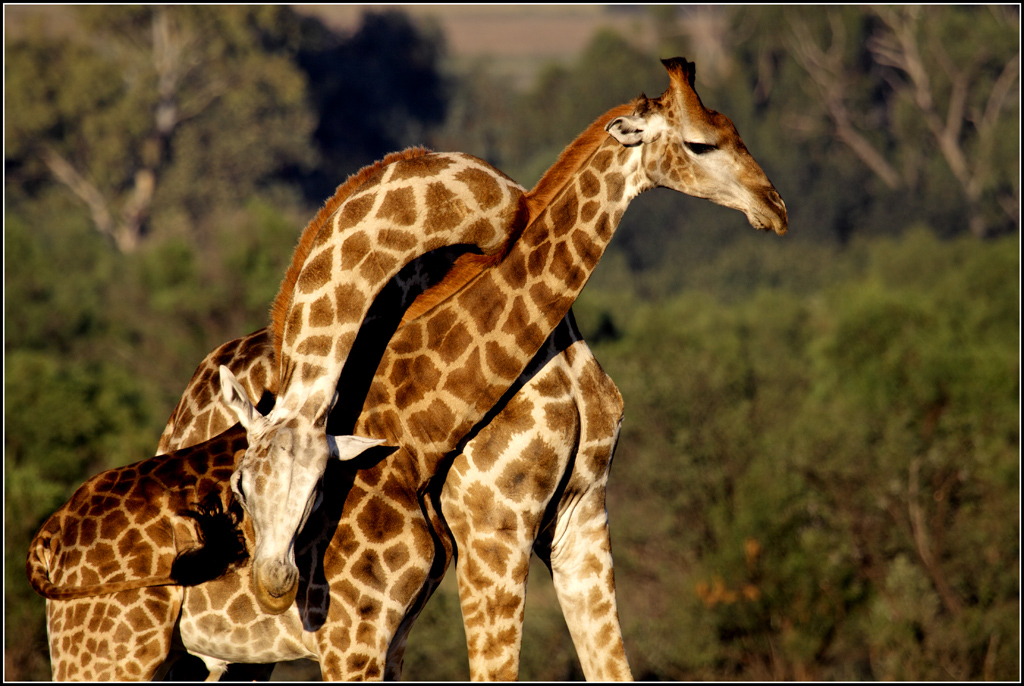
Southern giraffe
Giraffa giraffa

2025 Red list status
Least Concern

Regional Population Trend
Increasing
Change compared
to 2016
No Change
Overview
Giraffa giraffa (Linnaeus, 1758)
ANIMALIA – CHORDATA – MAMMALIA – ARTIODACTYLA – GIRAFFIDAE – Giraffa – giraffa
Common Names: Southern Giraffe (English)
Taxonomic Note: Species
Global
The IUCN SSC Giraffe & Okapi Specialist Group previously recognised a single species, Giraffa camelopardalis. However, detailed genomic and morphological work describes four distinct giraffe species that have been independently recognised by the IUCN, the Catalogue of Life, Integrated Taxonomic Information System, and the Mammal Diversity Database of the American Society of Mammalogists (Bertola et al. 2024; Coimbra et al. 2023, 2021; Fennessy et al. 2016; ITIS 2024; Mammal Diversity Database 2024; Winter et al. 2018): Masai (G. tippelskirchi), northern (G. camelopardalis), southern (G. giraffa), and reticulated (G. reticulata) giraffe.
Regional
The South African giraffe has historically been classified as two different subspecies, G. c. capensis and G. c. giraffa. Detailed genomic-level and morphological analyses have helped to clarify giraffe taxonomy, with the southern giraffe species having two distinct subspecies: Angolan giraffe G. g. angolensis and South African giraffe G. g. giraffa. Genetic work has shown that both subspecies are present in South Africa, and hybridised in areas.
Southern giraffe occur across many countries in southern Africa, more specifically southern Angola, Botswana, Eswatini, southern Mozambique, Namibia, South Africa, southwestern Zambia, and Zimbabwe. Genetic evidence shows that both subspecies of southern giraffe have been introduced into different countries, predominantly from Namibia, South Africa, and Zimbabwe, creating likely hybridised populations between the two subspecies (Coimbra et al. 2021; Van Niekerk et al. 2019). Ongoing genomic work by the Giraffe Conservation Foundation in collaboration with partners including the University of Mpumalanga should provide more detailed information on how widespread the potential hybridisation is in the assessment region and its potential impact on Giraffa biodiversity.
Red List Status: LC – Least Concern (IUCN version 3.1)
Assessment Information
Assessors: Hoffman, R.1, Brown, M.B.1, Marneweck, C.1, & Fennessy, J.1
Reviewers: Venter, J.2, Smith, C.3 & Selier, S.A.J.4
Contributors: Patel, T.3 & Harris, E.5
Institutions: 1Giraffe Conservation Foundation, 2Nelson Mandela University, 3Endangered Wildlife Trust, 4South African National Biodiversity Institute, 5University of East Anglia
Previous Assessors and Reviewers: Deacon, F. & Parker, D.
Previous Contributors: Tutchings, A., Marais, A., Fennessy, J., Selier, J., Relton, C. & Child, M.
Assessment Rationale
The Southern giraffe remains widespread across South Africa and Eswatini, with none occurring in Lesotho. The current minimum estimated population of 29,952 individuals represents an increase from earlier reported figures. Numbers are increasing and range is expanding Likely due to translocations driven by tourism value on public and private land. The natural distribution range for Southern giraffe is an ongoing debate in South Africa, let alone the (extralimital) introduction of the Angolan giraffe subspecies from Namibia. New evidence (early explorer and hunting records and archaeological discoveries) indicates that their natural range is more widespread than previously thought, especially throughout parts of the eastern seaboard and the Eastern and Western Cape.
The latest provincial estimates indicate an increasing population in the Eastern and Western Cape, with the majority (re)introduced and having adapted successfully to local habitats. Like most wildlife in South Africa, private subpopulations constitute a large percentage of the total giraffe estimate and play a vital part in the conservation of the Southern giraffe. However, with more than 9,000 (van der Merwe and Vitoriano Maia 2019) private farms and ranches, a detailed understanding of the population is limited and likely far more than the minimum estimated.
Currently in the South African national parks system, Southern giraffe numbers are estimated at a minimum of 12,726 individuals within Augrabies Falls, Kruger, Mapungubwe, Marakele, and Mokala National Parks. In Eswatini, current population numbers across a combination of private and public lands are 416 individuals.
In general, Southern giraffe have increased across their range outside of the assessment region, with population numbers and range further expanding across their range in Angola, Botswana, Malawi, Mozambique, Namibia, Zambia, and Zimbabwe. Cross-border conservation efforts between countries have allowed for their continued conservation success, especially in transboundary conservation areas such as the Kavango-Zambezi Transfrontier Conservation Area (KAZA), Greater Limpopo (Mozambique-South Africa), Greater Mapungubwe (GMTFCA) (Botswana-South Africa-Zimbabwe), and Kgalagadi (KTP) (Botswana-South Africa) transfrontier conservation parks. Initially, Southern giraffe were introduced into Botswana’s Northern Tuli Game Reserve (NTGR) during the early 1980s and, over time, transboundary movements from NTGR facilitated the establishment of Southern giraffe populations in Mapungubwe National Park (MNP). No additional Southern giraffe have since been introduced into the GMTFCA and this population has since expanded and become widespread throughout the conservation area (Selier pers. comm.). Nevertheless, Southern giraffe populations in both GMTFCA and KTP originated from introductions that were sourced with both Angolan and South African giraffe.
The increasing population size and distribution of Southern giraffe in the assessment region highlights South Africa as a stronghold for the species. For their continued conservation success and management, there is a need to undertake a detailed genetic assessment of populations throughout both Eswatini and South Africa to better understand the level of hybridisation, alongside efforts to further increase and manage available habitat. By expanding viable conservation areas and connecting fragmented and transboundary habitats, southern giraffe populations will have a higher potential to be viable long-term. However, such expansion in South Africa should be carefully managed, especially in areas that potentially only support smaller populations and are fenced and/or fragile ecosystems. The development of provincial and/or national-level giraffe conservation management strategies or action plans are proposed to ensure a coordinated approach across both countries.
A 2022 Non-Detrimental Findings assessment of Southern giraffe in South Africa highlighted no immediate severe threats to their population decline, and as such, based on their increasing numbers and range, their listing as Least Concern should be retained (Creecy 2024). However, as highlighted, the need to understand subspecies hybridisation across the assessment region is critical.
Reasons for Change
Reason(s) for Change in Red List Category from the Previous Assessment: No change
Red List Index
Red List Index: No change
Recommended citation: Hoffman R, Brown MB, Marneweck C & Fennessy J. 2025. A conservation assessment of Giraffa giraffa. In Patel T, Smith C, Roxburgh L, da Silva JM & Raimondo D, editors. The Red List of Mammals of South Africa, Eswatini and Lesotho. South African National Biodiversity Institute and Endangered Wildlife Trust, South Africa.
Regional Distribution and occurrence
Geographic Range
The South African giraffe has a wide distribution throughout Southern Africa, which includes Angola, Botswana, Eswatini, Malawi, Mozambique, Namibia, South Africa, Zambia, and Zimbabwe. South African giraffe have also been (re)introduced to augment and bolster populations in these respective countries and may be deemed extralimital.
South African giraffe are widely distributed throughout South Africa and occur in all nine provinces. Population numbers are higher in the northeast (KwaZulu-Natal, Limpopo, and Mpumalanga) and some parts of the Eastern Cape. The large pockets of Senegalia and Vachellia vegetation in these areas support the larger populations of Southern giraffe with habitat viability decreasing towards the Northern and Western Cape. The vegetation in the Karoo, located in the country’s northwest and western areas can only support relatively small populations of Southern giraffe, however, it is still viable with appropriate management.
Although limited and disparate records of Southern giraffe historical distribution in South Africa exist, knowledge of the country’s historical wildlife distribution in general is derived from fossil records, historical hunting reports, and naturalist literature. By collating these data, we can increase our understanding of where Southern giraffe likely occurred naturally in the past. In KwaZulu-Natal (KZN), Southern giraffe were believed to have been introduced and not naturally occurring due to past climatic conditions (Cramer and Mazel 2007), including a lack of evidence in cultural history, e.g., rock paintings. However, recent discovery of Southern giraffe bones in Middle Stone Age and Early Iron Age deposits in KZN’s KwaGandaganda area (Cramer and Mazel 2007), coupled with past colonial hunting reports dating back to the late 1800’s and early 1900’s (Findlay 1903; Lacy 1899), clearly indicate a historical presence of the mega-herbivores. Southern giraffe have subsequently adapted well to their reintroduction to the east coast vegetation dominated by Senegalia and Vachelia and have established a stronghold across the province.
In contrast, the Limpopo province is well represented by rock paintings illustrating the natural presence of Southern giraffe in the past (Eastwood et al. 2002; Eastwood and Eastwood 2006). Lynch (1983) mentioned the possibility of Southern giraffe occurring naturally in the eastern and western Free State (Harrismith and Hoopstad districts, respectively), but there is limited historical evidence of Southern giraffe presence in the Free State (Setzer and Meester 1971). However, the Free State Provincial Authority initially imported five individuals in 1961 to the central Free State (Griesel 1961). Since then, many Southern giraffe have been brought into the Free State, regardless of their taxonomic status and natural habitat preferences, namely the savannah biome in the lowveld with scattered sweet thorns (V. karroo). This reintroduction of Southern giraffe by Transvaal Nature Conservation (Hirst 1966; Lambrechts 1974) in the 1970s (and beyond) was due to their demand within public and private reserves. Skead (2007) contends that the Eastern Cape vegetation flourished in the absence of browsers like Southern giraffe and browsing by them could negatively influence the indigenous flora. According to Bond and Loffell (2001), the composition and distribution of plant types in the Ithala Game Reserve, KZN, were changed by the presence of Southern giraffe. Recent findings of Southern giraffe footprints in coastal aeolianites east of Still Bay (Helm et al. 2018) significantly shifted the idea that Southern giraffe may not have had a historical presence in the Western Cape. Evidence also suggests that the Breede and Gouritz basins that are currently submerged may have provided Southern giraffe with Vachellia vegetation, further supporting the notion that they historically existed in present-day Western Cape. In the Northern Cape, records of Southern giraffe presence were noted by the early colonists near the Spoeg River, Namaqualand (noted by Van Meerhoff, 28 November 1663; Skead 2011). Rookmaaker (1981) also noted that the hunter and explorer Robert Jacob Gordon reported Southern giraffe sightings in Namaqualand, south of the Namibian border, in 1779. It is likely that the Southern giraffe here may also have been supported by the vegetation (V. karroo) in the Namaqua River basin.
Although most large herbivores in Eswatini were locally extirpated by the early 20th century, the historical presence of Southern giraffe in the country is likely but uncertain (East 1999; Reilly and Reilly 1977). Like areas in South Africa, the natural range of Southern giraffe in Eswatini has been debated for decades, with some deeming them outside of the natural range (Goodman and Tomkinson 1987), but many assuming they were at least vagrants. Nevertheless, any indigenous population went locally extinct, likely due in part to the rinderpest outbreak in the late 1890s, as well as hunting (Reilly and Reilly 1977). In 1965, a pair of Southern giraffe were reintroduced to Eswatini from the Kruger NP, followed by the introduction of Angolan giraffe from Namibia in the 1970s (M. Reilly pers. comm.). Despite challenges such as tick-related diseases, these efforts laid the groundwork for giraffe conservation in the country. Subsequently, additional Southern giraffe from South Africa have been introduced to various reserves and private properties, leading to a steady increase in Southern giraffe populations. By 2000, Eswatini had six Southern giraffe populations in protected areas with an estimated 80 individuals. By 2012, the number had grown to 209 individuals. As of the most recent estimates, Eswatini’s Southern giraffe population has continued to grow, with 416 individuals spread across 11 properties. This increase is largely due to natural recruitment and translocations occurring cross-border or locally between properties (M. Reilly pers. comm.).
Biogeographic Realms
Biogeographic Realm: Afrotropical
Map
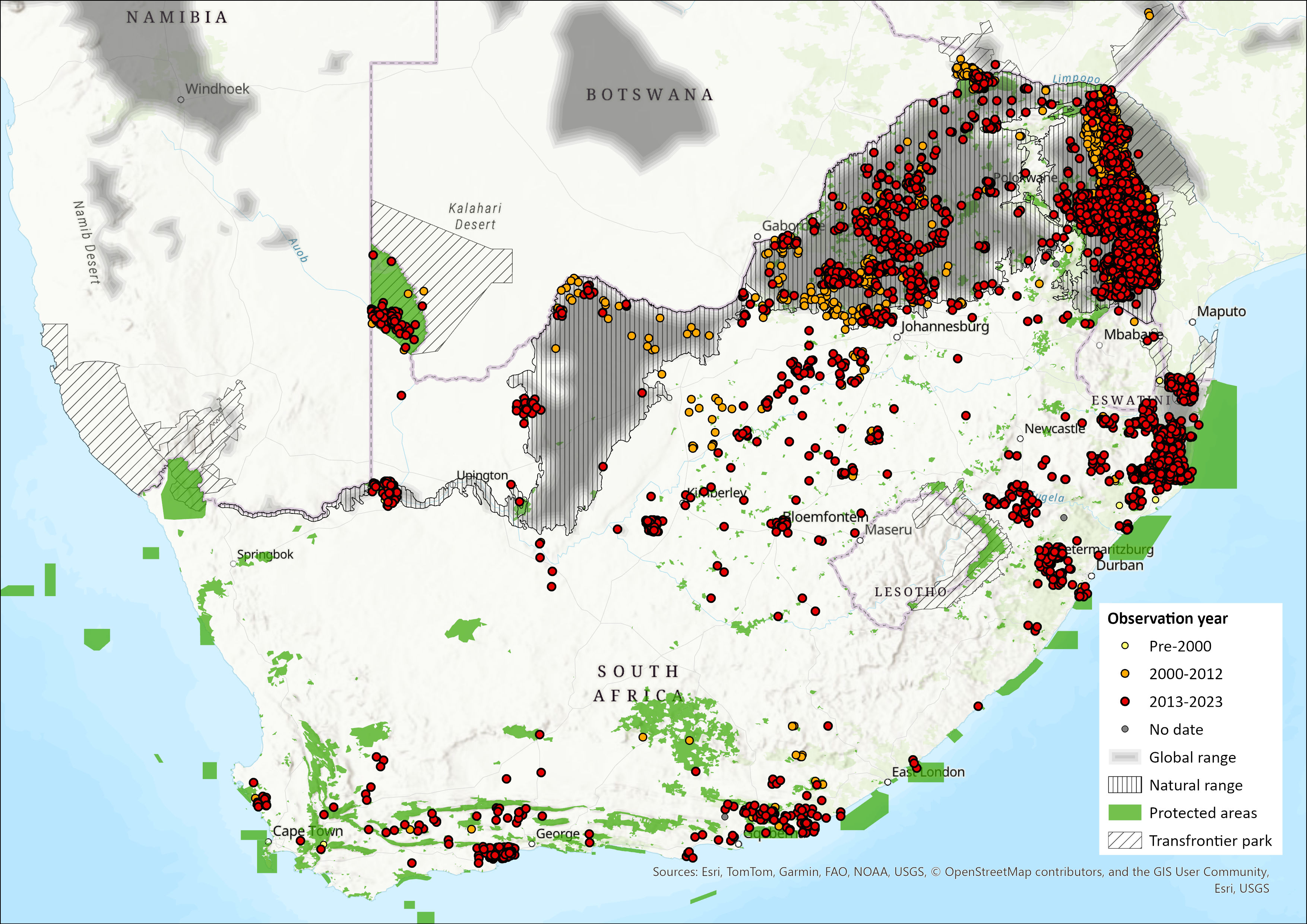
Figure 1. Distribution records for Southern Giraffe (Giraffa giraffa) within the assessment region (South Africa, Eswatini and Lesotho). Note that distribution data is obtained from multiple sources and records have not all been individually verified.
The map above illustrates occurrences recorded through 2023; however, it does not yet incorporate the most recent Red List data from 2025, as detailed in the accompanying text.
Countries of Occurrence
Native, Extant (resident): Angola, Botswana, Eswatini, Malawi, Mozambique, Namibia, South Africa, Zambia, Zimbabwe
Reintroduced (resident), Extant: Angola, Botswana; Malawi, Mozambique, Namibia, South Africa, Zambia, Zimbabwe
Climate change
The ongoing threat of climate change poses significant challenges to wildlife across the globe. Southern giraffe are not exempt, and to understand how future climate conditions may impact this iconic species, climate scientists have utilised multiple species distribution models to predict changes in habitat suitability under varying climate scenarios (Harris et al. In prep). Within South Africa, limited short-term (2021-2040) and medium-term (2041-2060) impacts of climate change are anticipated for the southern giraffe. At these timescales and equivalent warming levels (1.5 and 2 degrees, respectively), most of the southern giraffe range and habitat will remain climatically suitable, especially towards the eastern sections of the country, dominated by a larger abundance of woody vegetation. The notable exceptions to this are the already fragmented populations in the Western and Northern Cape, which will potentially decline as the climate becomes unsuitable. Long-term (2081-2100), under a climate change projection of 3.6 degrees warming, there may be large population declines across the entire assessment region. Within South Africa, range areas bordering Botswana and Mozambique become least suitable as areas of suitable climate move southward towards the Eastern Cape. If connectivity and corridors exist, then southern giraffe populations may be able to survive by tracking these areas of remaining suitable habitat.
Population information
The previous population estimate of all four Southern giraffe species across Africa was approximately 117,000 individuals (Brown et al. 2022), a decline of ~30% from 155,000 since the mid-1990s (East 1995). The southern giraffe remains widespread throughout their range in Southern Africa, inhabiting a range of public, private, and communal land, many of which have been (re)established by translocations. The estimated population numbers of southern giraffe across their entire range (Angola, Botswana, Eswatini, Namibia, Malawi, Mozambique, South Africa, Zambia, and Zimbabwe) were last estimated at over 49,850 individuals (Brown et al. 2021).
In South Africa, the southern giraffe population in national parks alone is estimated at approximately 12,726 individuals. Kruger National Park comprises the bulk of the population, where there are currently an estimated 12,412 (10,345-14,554) individuals (Greaver, et al. 2024). Ferriera and Ellis (2013) estimated the population between 7,427 and 10,876 in 2013, which illustrates an increasing population. Throughout South Africa, private farms, ranches, and nature reserves have randomly translocated southern giraffe, likely both subspecies, into the same properties (Van Niekerk et al. 2019), as well as into formerly assumed extralimital ranges (Parker and Bernard 2005).
The range and number of southern giraffe on private land in South Africa have continued to expand within the assessment region. Currently, a minimum of 14, 578 individuals are estimated to occur on private land throughout South Africa; however, it is suspected that this number to be considerably more as data has only been provided by approximately 10% of private properties in the country, despite not all owning Southern giraffe (van der Merwe and Vitoriano Maia 2019). Of the 913 private properties surveyed, 791 (86.7%) had Southern giraffe present. The mean Southern giraffe density across the 912 private properties surveyed, for which area size is known, is approximately 18.5 Southern giraffe per property (mean Southern giraffe population size).
In Eswatini, the population is significantly smaller; however, it is growing at a steady rate, with 416 individuals according to the latest assessment. Most of the Southern giraffe population is found in Big Game Parks conservation areas, and Southern giraffe introductions have bolstered populations on their flagship properties (Hlane Royal National Park and Mkhaya Game Reserve). Eswatini’s largest Southern giraffe populations are confined to these large conservation areas, which are carefully managed to ensure population growth and genetic diversity. Smaller numbers occur on a few private properties.
Overall, the current 2025 minimum population estimate for southern Southern giraffe in Eswatini and South Africa is 29,952 individuals and includes national parks, provincial nature reserves and reserves, and private land (Table 1). However, it is likely much higher due to the limited ability to count or obtain Southern giraffe numbers across all private land.
| Province | National Park | Provincial nature reserves | Private land | Total |
| South Africa | ||||
| Eastern Cape | 0 | 55 | 4,243 | 4,298 |
| Free State | 0 | 60 | 962 | 1,022 |
| Gauteng | 0 | 0 | 564 | 564 |
| KwaZulu-Natal | 0 | 911 | 2,128 | 3,039 |
| Limpopo | 12,412 | 677 | 4,204 | 17,293 |
| Mpumalanga | 0 | 80 | 338 | 418 |
| North West | 0 | 603 | 593 | 1,196 |
| Northern Cape | 154 | 0 | 748 | 902 |
| Western Cape | 0 | 6 | 798 | 804 |
| Eswatini | 160 | 0 | 256 | 416 |
| Total | 12,726 | 2,392 | 14,834 | 29,952 |
Population genetics
Based on a genomic analysis, four distinct Southern giraffe species with little to no admixture exist (Bertola et al. 2024; Coimbra et al. 2021, 2023; Fennessy et al. 2016; Winter et al. 2018). The four species are: Masai (G. tippelskirchi), northern (G. camelopardalis), reticulated (G. reticulata), and southern (G. giraffa). The reticulated Southern giraffe lineage evolved through admixture with equal contribution from the northern giraffe lineage and an ancient lineage related to the Masai and southern giraffe. Early tree branching patterns were identical to the clustering hierarchy in both PCA and admixture analyses, with a distinct separation between north and south groups of southern giraffe, followed by the split between northern and reticulated, and southern and Masai giraffe (Bertola et al. 2024; Coimbra et al. 2021, 2023; Fennessy et al. 2016; Winter et al. 2018). Interestingly, the South African giraffe is paraphyletic with respect to the Angolan giraffe, and both are deemed subspecies of the southern giraffe. Bertola et al. (2024) highlighted strong differentiation between the southern giraffe species despite gene flow, giving further context for southern giraffe diversity.
As background, modern Giraffa is estimated at approximately 2 million years and expanded around 1 Ma ago after a series of paleoclimatic shifts during the transition from Early to Middle Pleistocene led to increasing aridification across Africa. Subsequently, the genetic drift of southern southern giraffe declined precipitously during the Middle and Late Pleistocene. These time periods coincided with cooler glacial and warmer interglacial periods that are marked by decreasing forest cover and the expansion and shifting of savannah grasslands associated with the increasingly arid climate across the continent. Approximately 30 ka ago, southern giraffe numbers started to slowly recover but coincided with the early expansion of human populations and their activities.
Within the southern giraffe, unexpectedly low levels of heterozygosity and high levels of inbreeding exist. The relatively small numbers and geographic isolation of this population may have contributed to the high inbreeding observed. A denser sampling of southern giraffe is ongoing and will yield deeper insights into the factors contributing to the differences in inbreeding and adaptive potential among subpopulations. Due to widespread translocations, protecting the genetic integrity of both species and subspecies is essential by restricting movements within the same species and ideally the same subpopulation. While southern giraffe in the region are considered part of a single metapopulation, genetic provenance should be confirmed prior to translocations to prevent mixing of distinct lineages.
Please scroll horisontal on mobile to view the tables
Habitats and ecology
Global
Southern giraffe habitat varies throughout their sub-Saharan Africa distribution, from the savanna of eastern Africa to the arid deserts of southern Africa. The wide variety of giraffe populations have adapted to a myriad of different habitats and conditions and are especially linked to the savanna ecosystem. However, a large part of the original giraffe distribution has rapidly decreased due to habitat loss, land degradation, climate change, and poaching (Brown et al. 2021; O’Connor et al. 2019). For example, the Nubian (G. c. camelopardalis) and West African (G. c. peralta) Giraffe, both subspecies of the Northern Giraffe, have undergone a large decrease in population size due to habitat loss, largely caused by climate change (Gašparová et al. 2023; Gathuku et al. 2021). These giraffe have, however, recovered in areas in Niger with the help of giraffe-focused conservation strategies (Gašparová et al. 2023). According to Baisero et al. (2020), 50% of mammal habitat will deteriorate when compared to the 2015 level, including savanna habitat preferred by most giraffe populations across Africa.
Regional
For southern giraffe, Vachellia and Senegalia savannah and woodland landscapes are preferred habitats, especially with an abundant amount of woody vegetation (Berry and Bercovitch 2017; Bond and Loffell 2001; Parker and Bernard 2005). Because they are almost exclusively browsers, southern giraffe differ from most other large mega-herbivores and can have a large impact on the surrounding species composition (Bond and Loffell 2001). Both Vachellia and Senegalia spp. have been shown to be the most frequently browsed species through numerous studies (February et al. 2017; Gitau et al. 2024; Muller and Bercovitch 2016; Parker and Bernard 2005; Pellew 1984; Voeten and Prins 1999), and although preferred, southern giraffe can flourish with a low or non-existent presence of these vegetation types. However, it has been shown that southern giraffe can exert an extreme pressure on this type of vegetation to the point of depletion (February et al. 2017), highlighting the need for pre-translocation assessment before introducing southern giraffe to certain areas or augmenting already existing populations.
Southern giraffe also fair exceptionally well in dry and arid habitats. Food availability in these regions is scarce and can therefore dictate southern giraffe distribution (Berry and Bercovitch 2017; February et al. 2017; Fennessy 2004; Sauer et al. 1977), which can lead to significant seasonal changes in southern giraffe movement (Gordon et al. 2016). Southern giraffe movement in the Karoo landscape, which is dominated by semi-dry climate and succulent Karoo vegetation, illustrated high variability between seasons in comparison to sections of Kwa-Zulu Natal, which has Vachellia and Senegalia browse available throughout most of the year (Bond and Loffell 2001). Home ranges are greatly influenced by resource availability, with drier areas typically leading to larger home ranges when compared to more mesic environments (Brown et al. 2023; Fennessy 2009; Flanagan et al. 2016; Knüsel et al. 2019).
Ecosystem and cultural services: Giraffe are an iconic African savannah mammal and the tallest animal in the world. Giraffe are widely loved symbols of wildness and the beauty of nature, as well as key marketing tools throughout the world.
IUCN Habitats Classification Scheme
| Habitat | Season | Suitability | Major Importance? |
| 1.5. Forest -> Forest – Subtropical/Tropical Dry | – | Suitable | – |
| 2.1. Savanna -> Savanna – Dry | – | Suitable | – |
| 2.2. Savanna -> Savanna – Moist | – | Suitable | – |
| 3.5. Shrubland -> Shrubland – Subtropical/Tropical Dry | – | Suitable | – |
Life History
Generation Length: 10 years
Age at maturity: Female: 3–4 years
Age at Maturity: Male: 4–5 years
Longevity: up to 32 years
Average Reproductive Age: Females: 5 years
Average Reproductive Age: Males: 7 years
Maximum Size (in cms): 550
Size at Birth (in cms): 180
Gestation Time: 14-15 months
Reproductive Periodicity: Two-year average
Systems
System: Terrestrial
General Use and Trade Information
Throughout South Africa, southern giraffe are utilised in both a non-consumptive (tourism) and consumptive (live sales, meat, derivatives, trophy) manner. Whilst not unique to South Africa, the local wildlife ranching industry is a thriving economic business. The private sector has been largely responsible for restoring southern giraffe to many parts of its former natural range in South Africa (Parker and Bernard 2005). With the necessary permits and under regulated conditions, wildlife ranches, private game reserves, and farm owners are allowed to own giraffe on their land for commercial purposes such as tourism, live sales, and hunting.
Live southern giraffe sales occur regularly across South Africa, mostly at designated auctions or sold through registered game dealers. Each province’s nature conservation office regulates this trade, ensuring it aligns with sustainable practices that avoid negative impacts on the overall southern giraffe population. At a national level, legal, sustainable use of wildlife contributes to the economic benefit supported by strict regulatory compliance.
Since the listing of southern giraffe on Appendix II of Convention on International Trade in Endangered Species of Wild Fauna and Flora, the southern giraffe trade has faced challenges. Anecdotal accounts suggest that due to the backlog of obtaining permits, large delays for both local and transboundary southern giraffe translocations exist, resulting in owners culling their animals as a means of population control rather than selling live animals. This issue poses an unintended threat to southern giraffe conservation in South Africa and neighbouring countries, highlighting the need for the permit process to be expedited for the sake of sustainable southern giraffe movement.
According to the African Wildlife Auctions (AWA 2024), in South Africa, an adult bull or cow will cost approximately R20,000, with heifers or young bulls costing R17,000 and R13,000, respectively. Giraffe meat sales have gained momentum, and although there is limited research on the meat quality, it is often used in processed products when sold commercially (Hoffman et al. 2022; Silberbauer et al. 2021). While giraffe meat trade generally results as a byproduct of hunting or culling, anecdotal evidence suggests the practice may be increasing. However, research on the scale and impact of this trade remains limited.
The private sector has been largely responsible for restoring southern giraffe to many parts of its former natural range in South Africa; however, they also introduced them to areas previously assumed to be out of their natural range (Parker and Bernard 2005).
Deacon et al. (2012) documented the damage southern giraffe can cause within small, fenced game farms, and they are especially destructive towards certain Vachellia and Senegalia species (Bond and Loffell 2001; Parker and Bernard 2005). However, there is no factual evidence or peer-reviewed studies conducted on negative effects caused by southern giraffe in the Eastern or Western Cape. Anecdotal reports from parts of the Karoo (Asante Sane near Graaff-Reinet) indicate that there is insufficient food for them during the winter and they require supplemental feeding (D. Parker pers. obs.). Parker (unpubl. data) indicated that certain tree species may be targeted (depending on location), but that southern giraffe numbers were not high enough to result in the same sort of effects that Bond and Loffell (2001) observed in KwaZulu-Natal if overstocked. Thus, a nuanced management approach is required for southern giraffe in different habitat types, depending on southern giraffe density and various other factors. With an increase in the popularity of wildlife ranching in southern Africa has come the introduction of perceived non-native (i.e., extralimital) mammalian herbivores. Financial gain has arguably been at the forefront of these introductions, with little or no assessment of the ecological consequences (Parker and Bernard 2005).
Regulation of translocations is required to enhance the conservation value of current extralimital movement. Permits should be issued on a case-by-case basis following appropriate assessment and used to restore southern giraffe to their historical range (Bernard & Parker 2006). The question that should be addressed is what their historical range was. If historical records in the literature suggest that southern giraffe could have occurred further west in South Africa than previously thought, then should they still be labelled as extralimital in those areas? A big concern is that there are no regulations or guidelines set for minimum habitat requirements for southern giraffe, and currently the literature on the subject is lacking specific scientific information for managing southern giraffe populations nationally and specifically in arid regions with less woody vegetation, which are more prevalent further west in South Africa.
There is limited information on southern giraffe traditional uses in Eswatini and South Africa. However, some accounts indicate the use of giraffe bone and other parts to obtain favour in reaching higher-up corporate positions (Whiting et al. 2013; Williams and Whiting 2016). Additional anecdotal evidence indicates that traditional leaders or tribesmen occasionally employ giraffe tails and genitals, with tails symbolising status and genitals used in certain medicinal practices.
| Subsistence | Yes |
| Rationale | – |
| Local Commercial | Yes |
| Further detail including information on economic value if available | Live sale, meat, derivatives (skin, bone), trophy |
National Commercial Value: Yes. Live sales: adult bull/cow = R20,000; heifer and young bull = R17,000 and R13,000, respectively (AWA, 2024).
International Commercial Value: Yes, but limited
| End use |
1. Food for human consumption 2. Sport hunting / specimen collecting |
| Subsistence |
1. True 2. – |
| National |
1. – 2. True |
| International |
1. – 2. True |
| Other (please specify) |
1.- 2.- |
Is there harvest from captive/cultivated sources of this species? Yes
Harvest Trend Comments: Meat, live animal sales, hunting and trophy
Threats
Across Eswatini and South Africa, the main threats facing southern giraffe are habitat loss, fragmentation, degradation and bushmeat poaching. Giraffe habitat is increasingly fragmented through infrastructure development, urban sprawl, and agricultural intensification. A lack of taxonomic understanding of the country’s southern giraffe population has resulted in hybridisation of its subspecies (Angolan and South African giraffe); however, it is unknown what the level of threat such genetic integrity has on their biodiversity. A detailed threat analysis of all the above factors, and others as appropriate, would be important as part of any further non-detrimental finding assessment.
Conservation
Occurring in many protected areas across the assessment region, and given that it is a key economic value, it is assumed the private sector will continue to stock, trade, and increase southern giraffe numbers. Private landowners should be encouraged to form larger conservation areas, e.g., conservancies, by increasing land, creating corridors, and removing internal fences to reduce the effects of habitat threats, degradation from overstocking, and increasing gene flow between populations (Bond et al. 2013).
Assessing the carrying capacity of southern giraffe, along with other wildlife on a property, is a complex metric and requires intense data collection and analyses per property. Numerous factors, such as property size, climate, habitat availability, security, and inter- and intraspecific competition for resources, are only a few to consider. Large conservation areas may have this information on hand; however, provincial authorities should have (or attain) the skills and knowledge to determine if any current/future property can hold a sustainable/viable population of southern giraffe.
Giraffe spatial ecology is an understudied topic in South Africa, and linked with a greater appreciation of the demographics, more knowledge on habitat requirements in different ecosystems will aid their conservation management.
A country-wide genetic baseline assessment of the southern giraffe populations is essential to understand their current taxonomic status and, importantly, to prevent further hybridising of subspecies. Following such analysis, regulations should be designed to prevent the importation and exportation of subspecies if the taxonomic resolution of such subspecies cannot be confirmed to help protect their diversity. These interventions could be tied together by the drafting and adoption of a giraffe management strategy or action plan at a provincial and/or national level.
Recommendations for land managers and practitioners
- Where feasible, open properties to facilitate wildlife corridors and connect fragmented habitats, allowing for natural migration and genetic exchange.
- Translocation of unknown southern giraffe subspecies (source and sink populations) should be prevented to avoid future hybridisation. Legislation should be in place to prevent the importation or exportation of incongruent giraffe populations.
Research priorities
- Ongoing compilation of a national baseline estimate of southern giraffe numbers on all land in Eswatini and South Africa.
- Whole genome analysis of southern giraffe across their range to resolve subspecies status in Eswatini and South Africa, including detailed geographical distributions, to inform legislation regarding translocations.
Encouraged citizen actions
- Upload sightings of southern giraffe to GiraffeSpotter (www.giraffespotter.org), a researcher and citizen scientist tool engaging people to build a greater understanding of giraffe distribution and status across Africa. This data will help the IUCN SSC Giraffe and Okapi Specialist Group and partners to perform Red List assessments.
- Create awareness opportunities around the conservation status and threats facing southern giraffe including participation in the annual World Giraffe Day (21 June).
- Assess opportunities to increase community and private wildlife conservancies in southern giraffe conservation.
- Encourage landowners to provide detailed information on their southern giraffe population to help assess their status across Eswatini and South Africa. Giraffe population census in South Africa
Bibliography
AWA, 2024. African Wildlife Auctions [WWW Document]. AWA. URL https://awla.co.za/auction-statistics/ (accessed 11.4.24).
Baisero, D., Visconti, P., Pacifici, M., Cimatti, M., Rondinini, C., 2020. Projected Global Loss of Mammal Habitat Due to Land-Use and Climate Change. One Earth 2, 578–585. https://doi.org/10.1016/j.oneear.2020.05.015
Berry, P.S.M., Bercovitch, F.B., 2017. Seasonal and geographical influences on the feeding ecology of giraffes in the Luangwa Valley, Zambia: 1973-2014. Afr. J. Ecol. 55, 80–90. https://doi.org/10.1111/aje.12324
Bertola, L.D., Quinn, L., Hanghøj, K., Garcia-Erill, G., Rasmussen, M.S., Balboa, R.F., Meisner, J., Bøggild, T., Wang, X., Lin, L., Nursyifa, C., Liu, X., Li, Z., Chege, M., Moodley, Y., Brüniche-Olsen, A., Kuja, J., Schubert, M., Agaba, M., Santander, C.G., Sinding, M.-H.S., Muwanika, V., Masembe, C., Siegismund, H.R., Moltke, I., Albrechtsen, A., Heller, R., 2024. Giraffe lineages are shaped by major ancient admixture events. Current Biology S0960982224002343. https://doi.org/10.1016/j.cub.2024.02.051
Bond, I., Child, B., de la Harpe, D., Jones, B., Barnes, J., Anderson, H., 2013. Private land contribution to conservation in South Africa, in: Parks in Transition. Routledge, pp. 29–61.
Bond, W.J., Loffell, D., 2001. Introduction of giraffe changes acacia distribution in a South African savanna. African Journal of Ecology 39, 286–294.
Brown, M., Kulkarni, T., Ferguson, S., Fennessy, S., Muneza, A., Stabach, J., Fennessy, J., 2022. Conservation Status of Giraffe: Evaluating Contemporary Distribution and Abundance with Evolving Taxonomic Perspectives, in: Reference Module in Earth Systems and Environmental Sciences. https://doi.org/10.1016/B978-0-12-821139-7.00139-2
Brown, M.B., Fennessy, J.T., Crego, R.D., Fleming, C.H., Alves, J., Brandlová, K., Fennessy, S., Ferguson, S., Hauptfleisch, M., Hejcmanova, P., 2023. Ranging behaviours across ecological and anthropogenic disturbance gradients: a pan-African perspective of giraffe (Giraffa spp.) space use. Proceedings of the Royal Society B 290, 20230912.
Coimbra, R.T.F., Winter, S., Kumar, V., Koepfli, K.-P., Gooley, R.M., Dobrynin, P., Fennessy, J., Janke, A., 2021. Whole-genome analysis of giraffe supports four distinct species. Current Biology 31, 2929–2938.
Coimbra, R.T.F., Winter, S., Muneza, A., Fennessy, S., Otiende, M., Mijele, D., Masiaine, S., Stacy-Dawes, J., Fennessy, J., Janke, A., 2023. Genomic analysis reveals limited hybridization among three giraffe species in Kenya. BMC Biology 21, 215. https://doi.org/10.1186/s12915-023-01722-y
Cramer, M.D., Mazel, A.D., 2007. The past distribution of giraffe in KwaZulu-Natal. South African Journal of Wildlife Research-24-month delayed open access 37, 197–201.
Creecy, B.D., 2024. Consultation on non-detrimental findings for certain species listed in terms of the Convention On International Trade In Endangered Species Of Wild Fauna And Flora. Department of Forestry, Fisheries and the Environment.
East, R., 1999. African antelope database 1998. IUCN.
Eastwood, E., Schalkwyk, J., Smith, B., 2002. Archaeological and rock art survey of the Makgabeng Plateau, Central Limpopo Basin. South African Archaeological Society 19, 1–3.
Eastwood, E.B., Eastwood, C., 2006. Capturing the spoor: an exploration of southern African rock art. New Africa Books.
February, E., Shadwell, E., Viljoen, S., Hattas, D., 2017. Feeding choices and impacts of extralimital giraffe on two keystone tree species in the Kgalagadi National Park. Koedoe 59. https://doi.org/10.4102/koedoe.v59i1.1454
Fennessy, J., 2009. Home range and seasonal movements of Giraffa camelopardalis angolensis in the northern Namib Desert. African Journal of Ecology 47, 318–327.
Fennessy, J., 2004. Ecology of desert-dwelling giraffe Giraffa camelopardalis angolensis in northwestern Namibia (Ph.D.). University of Sydney, Australia.
Fennessy, J., Bidon, T., Reuss, F., Kumar, V., Elkan, P., Nilsson, M.A., Vamberger, M., Fritz, U., Janke, A., 2016. Multi-locus analyses reveal four giraffe species instead of one. Current Biology 26, 2543–2549.
Ferreira S Ellis G. (2013). Animal abundances in parks 2012/2013. Scientific Services, SANParks.
Findlay, F.R.N., 1903. Big Game Shooting and Travel in South-east Africa: An Account of Shooting Trips in the Cheringoma and Gorongoza Divisions of Portuguese South-east Africa and in Zululand. T.F. Unwin.
Flanagan, S.E., Brown, M.B., Fennessy, J., Bolger, D.T., 2016. Use of home range behaviour to assess establishment in translocated giraffes. African Journal of Ecology 54, 365–374.
Gašparová, K., Blanco, J., Glikman, J.A., Fennessy, J., Moussa Zabeirou, A.R., Azihou, F., Rabeil, T., Brandlová, K., 2023. Social development and biodiversity conservation synergies for the West African giraffe in a human–wildlife landscape. Environmental Conservation 1–8. https://doi.org/10.1017/S0376892923000243
Gathuku, G.N., Gichuki, C., Ngare, I., 2021. A Review of the Status of Rothschild’s Giraffe Sub-Species Population in Africa. JGEESI 12–19. https://doi.org/10.9734/jgeesi/2021/v25i1030311
Gitau, C.G., Mbau, J.S., Ngugi, R.K., Ngumbi, E., Muneza, A.B., 2024. Activity Time Budget and Foraging Patterns of Rothschild’s Giraffes (Giraffa Camelopardalis Rothschildi) in Lake Nakuru National Park, Kenya. Ecology and Evolution 14.
Goodman, P.S., Tomkinson, A.J., 1987. The past distribution of giraffe in Zululand and its implications for reserve management. South African Journal of Wildlife Research-24-month delayed open access 17, 28–32.
Gordon, C.N., Leslie, A.J., Jacobs, S.M., Eichenberger, L., Vorster, P., 2016. Diet and seasonal dispersal of extralimital giraffe at Sanbona Wildlife Reserve, Little Karoo, South Africa. Koedoe: African Protected Area Conservation and Science 58, 1–6.
Greaver, C., Ferreira, S., Simms, C., Botha, J., and Crowhurst E., 2024. Estimates of animal species in the Kruger National Park. Aerial survey report, March 2024.
Griesel, J., 1961. A new game sanctuary for the Orange Free State, The Willem Pretorius Game Reserve. African Wildlife 15, 121–125.
Helm, C., Cawthra, H., Cowling, R., De Vynck, J., Marean, C., McCrea, R., Rust, R., 2018. Palaeoecology of giraffe tracks in Late Pleistocene aeolianites on the Cape south coast. South African Journal of Science 114, 1–8.
Hirst, S.M., 1966. Immobilisation of the Transvaal giraffe (Giraffa camelopardausglraffa) using an oripa vine derivative. Journal of the South African Veterinary Association 37, 85–89.
Hoffman, L.C., Silberbauer, B.L., Needham, T., Bureš, D., Kotrba, R., Strydom, P., 2022. Physical meat quality characteristics of Angolan giraffe (Giraffa giraffa angolensis) as affected by sex and muscle. Meat Science 192, 108911.
ITIS [WWW Document], 2024. URL https://www.itis.gov/ (accessed 11.8.24).
Knüsel, M.A., Lee, D.E., König, B., Bond, M.L., 2019. Correlates of home range sizes of giraffes, Giraffa camelopardalis. Animal Behaviour 149, 143–151. https://doi.org/10.1016/j.anbehav.2019.01.017
Lacy, G., 1899. Pictures of travel, sport, and adventure. London : C. A. Pearson.
Lambrechts, A. von W., 1974. the numerical status of sixteen game species in the Transvaal, excluding the Kruger national Park. South African Journal of Wildlife Research-24-month delayed open access 4, 95–102.
Lynch, C.D., 1983. The mammals of the Orange free state. National Museum.
Mammal Diversity Database, 2024. Mammal Diversity Database. https://doi.org/10.5281/zenodo.10595931
Muller, Z., Bercovitch, F.B., 2016. IUCN Red List Assessment: Giraffa camelopardalis.
O’connor, D., Stacy‐Dawes, J., Muneza, A., Fennessy, J., Gobush, K., Chase, M.J., Brown, M.B., Bracis, C., Elkan, P., Zaberirou, A.R.M., 2019. Updated geographic range maps for giraffe, Giraffa spp., throughout sub‐Saharan Africa, and implications of changing distributions for conservation. Mammal Review 49, 285–299.
Parker, D.M., Bernard, R.T.F., 2005. The diet and ecological role of giraffe (Giraffa camelopardalis) introduced to the Eastern Cape, South Africa. Journal of Zoology 267, 203–210.
Pellew, R.A., 1984. The feeding ecology of a selective browser, the giraffe (Giraffa camelopardalis tippelskirchi). Journal of Zoology 202, 57–81. https://doi.org/10.1111/j.1469-7998.1984.tb04288.x
Reilly, T.E., Reilly, E.A., 1977. The state of nature conservation in Swaziland: Past and present. Koedoe: African Protected Area Conservation and Science 152–170.
Rookmaaker, L.C., 1981. The observations of Robert Jacob Gordon (1743-1795) on giraffes (Giraffa camelopardalis) found in Namaqualand. Journal-SWA Scientific Society 36, 71–90.
SANParks. 2017. Aerial census data. Data request made on 07 June 2023.
Sauer, J.J.C., Theron, G.K., Skinner, J.D., 1977. Food preferences of giraffe Giraffe camelopardalis in the arid bushveld of western Transvaal. South African Journal of Wildlife Research – 24-month delayed open access 7.
Setzer, H.W., Meester, J., 1971. The mammals of Africa: an identification manual. Smithsonian Institution, Washington.
Silberbauer, B.L., Strydom, P.E., Hoffman, L.C., 2021. An exploratory study into the influence of sex on body measurements, carcass weights and meat yields of giraffe (Giraffa camelopardalis angolensis). Foods 10, 2245.
Skead, C.J., 2011. Historical incidence of the larger land mammals in the broader Eastern Cape, 2nd ed. Centre for African Conservation Ecology, Port Elizabeth.
Skead, C.J., 2007. Historical incidence of the larger land mammals in the broader Eastern Cape. Centre for African Conservation Ecology Nelson Mandela Metropolitan University.
Taylor, W., Lindsey, P., Davies-Mostert, H., 2016. An assessment of the economic, social and conservation value of the wildlife ranching industry and its potential to support the green economy in South Africa. https://doi.org/10.13140/RG.2.1.1211.1128
van der Merwe, P., Vitoriano Maia, B.S., 2019. Assessing conservation management practices within South Africa’s private game reserves. Global Ecology and Conservation 20, e00695. https://doi.org/10.1016/j.gecco.2019.e00695
Van Niekerk, M.E., Deacon, F., Grobler, P.J., 2019. The genetic status of the introduced giraffe population in Central South Africa. Koedoe: African Protected Area Conservation and Science 61, 1–7.
Voeten, M., Prins, H., 1999. Resource partitioning between sympatric wild and domestic herbivores in the Tangare Region of Tanzania. Oecologia 120, 287–294. https://doi.org/10.1007/s004420050860
Whiting, M.J., Williams, V.L., Hibbitts, T.J., 2013. Animals Traded for Traditional Medicine at the Faraday Market in South Africa: Species Diversity and Conservation Implications, in: Alves, R.R.N., Rosa, I.L. (Eds.), Animals in Traditional Folk Medicine. Springer Berlin Heidelberg, Berlin, Heidelberg, pp. 421–473. https://doi.org/10.1007/978-3-642-29026-8_19
Williams, V.L., Whiting, M.J., 2016. A picture of health? Animal use and the Faraday traditional medicine market, South Africa. Journal of Ethnopharmacology 179, 265–273.
Winter, S., Fennessy, J., Janke, A., 2018. Limited introgression supports division of giraffe into four species. Ecology and Evolution 8, 10156–10165.