
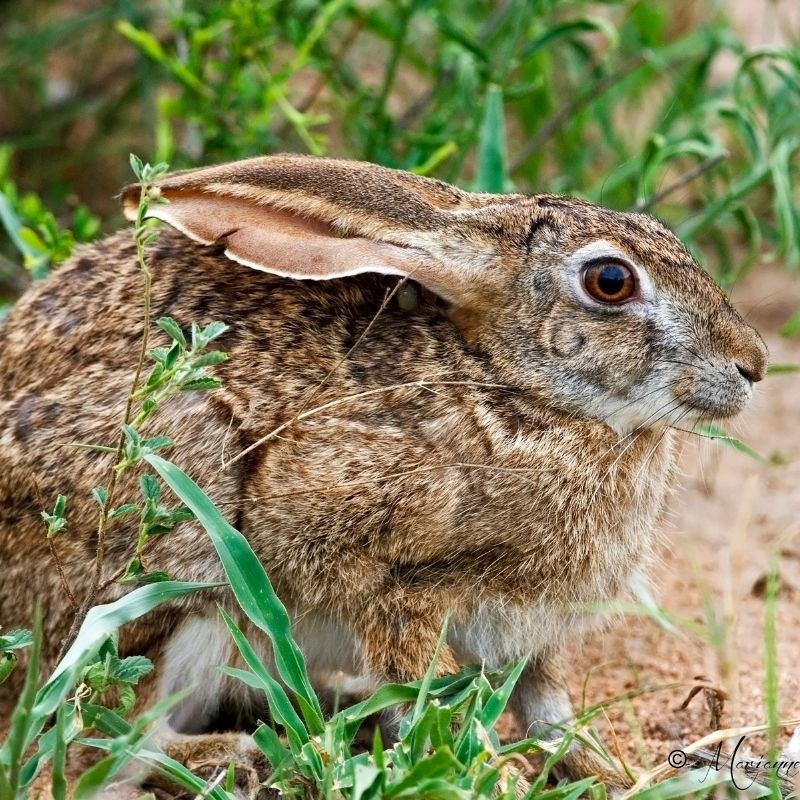
Cape Scrub Hare
Lepus saxatilis

2025 Red list status
Least Concern

Regional Population Trend
Stable

Change compared
to 2016
No Change
Overview
Lepus saxatilis – F. Cuvier, 1823
ANIMALIA – CHORDATA – MAMMALIA – LAGOMORPHA – LEPORIDAE – Lepus – saxatilis
Common Names: Cape Scrub Hare, Savannah Hare (English), Ribbokhaas (Afrikaans), Umvundla (Ndebele, Xhosa), Mofuli (Sesotho), Moduôlô, Modiôlô (Setswana), Logwaja (Swati), Mpfundla (Tsonga), Muvhuda, Khomu (Venda), Unogwaja (Zulu)
Synonyms: 16 listed in (Happold 2013a)
Taxonomic Note: There are currently two recognised subspecies, Lepus saxatilis saxatilis and L. s. subrufus (Hoffmann and Smith 2005). A recent study identified three phylogeographic distributions of Lepus saxatilis, distinguished as southwest, central, and north (Kryger et al. 2004). The southwestern spatial distribution was identified as being unique and lacking gene flow with the other two lineages for more than 45,000 years (Kryger et al. 2004). For this reason, it is suggested, based on the phylogenetic species concept, that this distribution may warrant species status (Kryger et al. 2004). Further molecular research is required to elucidate the status of the southwest spatial distribution, as well as the relationship between L. saxatilis (narrowly defined here) and other closely related variants to the north, which may integrate with L. victoriae (Kryger et al. 2004, Robinson 2018).
| Red List Status |
| LC – Least Concern, (IUCN version 3.1) |
Assessment Information
Assessors: Wilson-Hartmann, B.1 & da Silva, J.2
Reviewer: Moodley, S.3
Institutions: 1McGregor Museum, Kimberley, 2South African National Biodiversity Institute, 3Private
Previous Assessors & Reviewers: Robinson, T.J., Relton, C. & Child, M.F.
Previous Contributors: Roxburgh, L. & Smith, A.
Assessment RationaleÂ
The Lepus species in South Africa occur widely within the assessment region in many habitats that are protected and/or unlikely to be extensively transformed. Ongoing molecular research is urgently required to resolve their taxonomic statuses and relationships to delimit their geographical ranges, and thus threat severity, more accurately. These species may require reassessment when such data are available. L. saxatilis as here defined (sensu stricto) is relatively abundant in the Western and Northern Cape provinces (and in protected areas in these regions) but there is no detailed information available. Although local declines may be occurring due to overhunting for bushmeat in some areas, there is no evidence to suggest a widespread population decline. Additionally, the ongoing conversion from livestock to wildlife ranching is likely providing more suitable habitat for these species in South Africa. However, following the outbreak of Rabbit Haemorrhagic Disease Virus strain 2 (RHDV-2) in November 2022 in the Northern Cape Province, South Africa (DALRRD 2024) this situation has likely changed significantly, and urgent population censoring is needed to correctly ascertain the specie’s conservation status.
Regional population effects: Taxonomic revision is ongoing to substantiate the geographical range limits of Lepus species in southern Africa.
Reasons for Change
Reason(s) for Change in Red List Category from the Previous Assessment: No change
Red List Index
Red List Index: No change
Recommended citation: Wilson-Hartmann B & da Silva JM. 2025. A conservation assessment of Lepus saxatilis. In Patel T, Smith C, Roxburgh L, da Silva JM & Raimondo D, editors. The Red List of Mammals of South Africa, Eswatini and Lesotho. South African National Biodiversity Institute and Endangered Wildlife Trust, South Africa.
Regional Distribution and occurrence
Geographic Range
Lepus saxatilis as here defined (sensu stricto) is relatively abundant in the Western and Northern Cape provinces (and in protected areas in these regions) but there is no detailed information available and since this species is likely to be impacted by RHDV too.
The distribution of L. saxatilis is uncertain but is currently considered almost endemic to South Africa (and more precisely, the extreme western and southwestern regions of the country) (Robinson & Matthee 2005; Robinson. It may extend marginally into southern Namibia (Boitani et al. 1999), but this needs further sampling to be proved. For example, numbers fall off markedly in the vicinity of Springbok northwards towards Namibia (T. Robinson unpubl. data), after which it is most likely replaced by L. capensis. While L. saxatilis (sensu lato) has been reported as occurring in Botswana, Eswatini, Lesotho and the central and northern interior of South Africa (Kryger et al. 2004b; Collins et al. 2008), only the southwestern population (in the Western and Northern Cape provinces) is recognised by Happold (2013a) as belonging to L. saxatilis (sensu stricto). Populations throughout the rest of South Africa, Eswatini and Lesotho are referred to as L. cf. saxatilis (Happold 2013). The uncertain taxonomy undermines geographical delimitation at present. Additionally, many records remain dubious as it is difficult to distinguish between L. saxatilis and L. capensis in the field, making the northern boundary of its range uncertain (Happold 2013). Lepus saxatilis and L. victoriae are conventionally viewed as allopatric (Happold 2013), where L. saxatilis corresponds to the larger southern African form (Flux & Angermann 1990) and L. victoriae refers to the smaller northern forms (Kryger et al. 2004b).
Currently, we assume a sympatric distribution with L. capensis that has a wide distribution in southern Africa.
Taxonomic resolution and vetting of museum records through molecular research is needed urgently to resolve the tentative geographical ranges.
Elevation / Depth / Depth Zones
Elevation Lower Limit (in metres above sea level): 1220m
Elevation Upper Limit (in metres above sea level): 1 830m
Depth Lower Limit (in metres below sea level): (Not specified)
Depth Upper Limit (in metres below sea level): (Not specified)
Depth Zone: (Not specified)
Biogeographic Realms
Biogeographic Realm: Afrotropical
Map
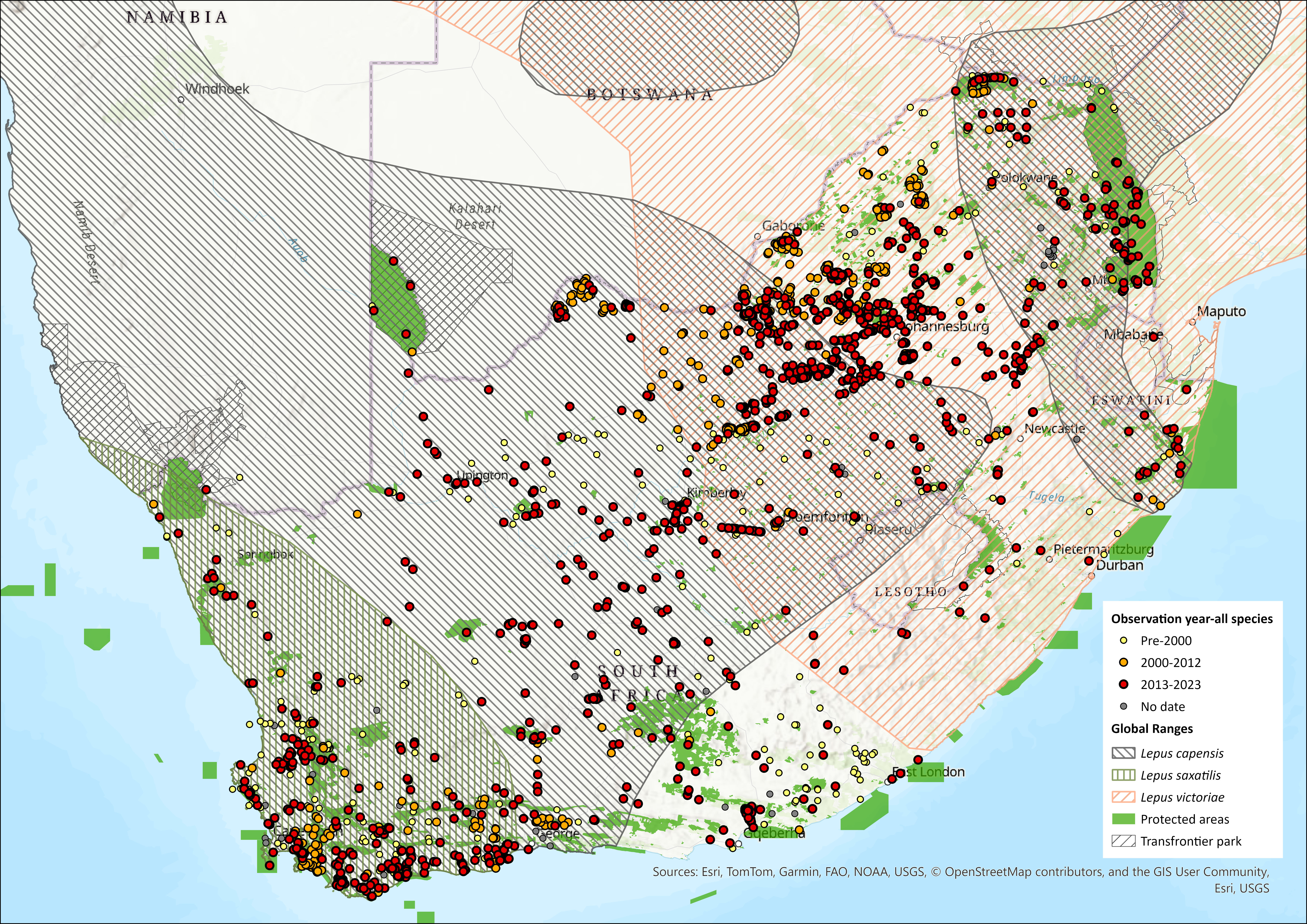
Figure 1. Distribution records for Cape Scrub Hare (Lepus saxatilis) within the assessment region (South Africa, Eswatini and Lesotho). Note that distribution data is obtained from multiple sources and records have not all been individually verified.
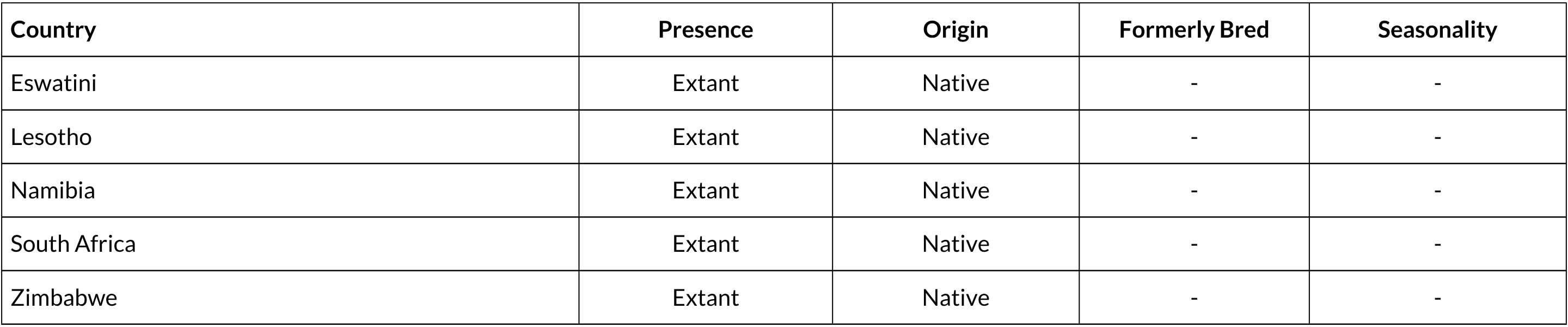
Countries of OccurrenceÂ
Large Marine Ecosystems (LME) OccurrenceÂ
Large Marine Ecosystems: (Not specified)Â
FAO Area OccurrenceÂ
FAO Marine Areas: (Not specified)Â
Climate change
Whilst climate change per se is unlikely to have a dramatic effect on this species during this assessment period, climate change is already affecting the spread of infectious diseases beyond their typical geographic reach. Whilst this may not be the cause of the outbreak of Rabbit Haemorrhagic Disease Virus strain 2 (RHDV-2) in South Africa at the end of 2022, it can assist in the spread of the virus and increase the susceptibility of hares and rabbits to the effects of droughts and periods of flooding. Often, the cross-border spread of infectious diseases is further exacerbated by the lack of global governance (that led to the introduction of this disease into South Africa and allowed it to spread to neighbouring countries), policies or a consensus to mitigate climate change. As a result, the current and future burden on humans, animals and plants is significant, especially if these infectious diseases cause large scale outbreaks such as RHDV-2.
Population information
No detailed population or density estimates are available for L. saxatilis but it is considered common in South Africa (Happold 2013).
Lepus species overall generally exhibit a fast population turnover and a high rate of reproduction (Kryger et al. 2004b). While a slow decline has been predicted due to habitat loss and hunting pressure (Kryger et al. 2004a), it is expected that land conversion from livestock to wildlife may benefit Lepus species and counteract population declines by creating and reconnecting suitable habitat patches. However, the status of scattered subpopulations and isolated subspecies is largely unknown and may be threatened. For example, populations are fragmented in the Western Cape Province due to habitat fragmentation.
Population Information
Continuing decline in mature individuals? Yes
Extreme fluctuations in the number of subpopulations: Yes
Continuing decline in number of subpopulations: Yes
All individuals in one subpopulation: No
Number of mature individuals in largest subpopulation: Unknown
Number of Subpopulations: Unknown
Quantitative Analysis
Probability of extinction in the wild within 3 generations or 10 years, whichever is longer, maximum 100 years: No
Probability of extinction in the wild within 5 generations or 20 years, whichever is longer, maximum 100 years: No
Probability of extinction in the wild within 100 years: Unknown
Population genetics
Kryger et al. (2004) identified three extant mitochondrial clusters within L. saxatilis, possibly indicating evolutionarily significant units; however, additional evidence (or markers) would be beneficial to confirm this. These three clusters did not correspond to the subspecies designations based on coloration that have been identified (Kryger et al. 2004).
Habitats and ecology
Lepus species are attracted to cultivated areas and transformed landscapes such as gardens (Happold 2013). The distributional limits of L. capensis and L. saxatilis overlap somewhat (Skinner & Chimimba 2005). The former extends into arid, open regions while the latter is confined to areas of grass cover within savannah woodland and scrub habitats and adapts easily to agricultural landscapes (Kryger et al. 2004b). Similarly, where L. capensis and L. victoriae co-occur, the latter prefers scrubbier and more montane habitats (Flux & Angermann 1990).
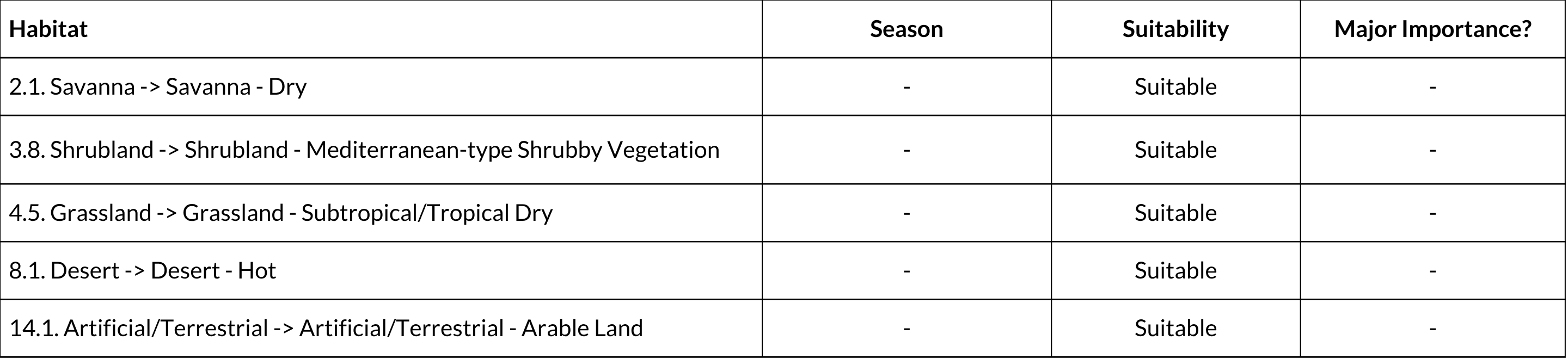
Typically absent from forest, desert and open grassland regions, L. saxatilis prefers savannah woodland and scrub habitats (Rautenbach 1982; Skinner & Chimimba 2005). This species adapts well to modified agricultural areas, occurring commonly in croplands and fallow or dilapidated lands, where some degree of bush encroachment has taken place (Skinner & Chimimba 2005). In some areas, they may reach densities of 20,22/km2. This species is nocturnal, generally emerging at dusk to forage and continuing throughout the night (Flux & Angermann 1990). Although this species is considered solitary, females (who are larger than the males) will accommodate the presence of males while in oestrus (Skinner & Chimimba 2005). Reproduction is considered aseasonal with a peak in contraception occurring during the rainy, summer period when three precocial young are usually born (Smithers 1971; Smithers & Wilson 1979; Taylor 1998a, 1998b). All Lepus species have a preference for green grasses (Skinner & Chimimba 2005).
Ecosystem and cultural services: Lepus species form a valuable prey component for a diverse array of small carnivores, such as Black-backed Jackals (Lupulella mesomelas; Kamler et al. 2012; Bagniewska & Kamler 2014) and Verreaux’s Eagles (Aquila verreauxii; Cruz-Uribe & Klein 1998). Hares were found to be the dominant prey taxon for Martial Eagles (Polemaetus bellicosus) in the Cape region of South Africa, making up 50% of the total diet (Boshoff et al. 1990). Lepus species were also found to constitute a small component of the diet of Cape Foxes (Vulpes chama) in the Free State (Kamler et al. 2012).
IUCN Habitats Classification Scheme
Life History

Age at maturity: female or unspecified: 1 year
Age at Maturity: Male: 1 year
Size at Maturity (in cms): Female: 51cm
Size at Maturity (in cms): Male: -48cm
Longevity: 3-5 years
Average Reproductive Age: (Not specified)
Maximum Size (in cms): 62
Size at Birth (in cms): (Not specified)
Gestation Time: 42 days
Reproductive Periodicity: Year-round
Average Annual Fecundity or Litter Size: 1-3 (3.9 litters/annum)
Natural Mortality: (Not specified)
Breeding Strategy
Does the species lay eggs? No
Does the species give birth to live young? yes
Does the species exhibit parthenogenesis? No
Does the species have a free-living larval stage? No
Does the species require water for breeding? No
Movement Patterns
Movement Patterns: (Not specified)
Congregatory: (Not specified)
Systems
System: Terrestrial
General Use and Trade Information
Lepus species are hunted recreationally for sport, bushmeat and fur at a subsistence level in the assessment region. However, this is not expected to have a substantial effect on the population. Both L. capensis and L. saxatilis were listed as species utilised for traditional medicine in South Africa, as they are believed to have medicinal or curative properties (Maliehe 1993; Ntiamoa-Baidu 1997).

National Commercial Value: No
International Commercial Value: No

Is there harvest from captive/cultivated sources of this species? (Not specified)
Harvest Trend Comments: (Not specified)
Threats
Across their range, as well as within the assessment region, Lepus species are threatened by habitat loss and fragmentation due to urban sprawl, agricultural encroachment, commercial plantations, and infrastructure development for tourism (Drew et al. 2004; Kryger et al. 2004a). Additionally, these species are threatened by hunting pressure through both recreational sport hunting, as well as subsistence hunting for bushmeat and fur (Kryger et al. 2004a). While agricultural and urban expansion may not necessarily cause direct declines, they may increase hunting pressures. Lepus species may also be vulnerable to predation by domestic dogs associated with farming areas.
Additionally, the near-endemic L. saxatilis may be threatened by intensive agricultural expansion and overhunting in the Western Cape (Happold 2013), but monitoring data is required to demonstrate this.
However, a more urgent concern has recently emerged for this restricted population. In October 2022, reports of unusual Lepus deaths were received from the Middelpos, Springbok and Fraserburg areas in the Northern Cape. In November 2022 affected carcasses tested by Onderstepoort Veterinary Research Laboratory, the deaths were confirmed to as the result of the highly contagious and acute fatal hepatitis of Leporids called Rabbit Haemorrhagic Disease Virus 2 strain (RHDV-2). The new variant RHDV-2 affects rabbits, but also causes fatal RHD in various Lepus species, including Sardinian Cape Hares (L. capensis mediterraneus), Italian Hares (L. corsicanus), and Mountain Hares (L. timidus) (Rocchi & Dagleish 2018). This disease, which originated in China in 1984, primarily affects all rabbit and hares. Caused by a calicivirus, it was previously absent in South Africa. Infection typically occurs by the oral route. It spreads very easily, normally through direct contact between individuals but is also carried by insects, birds, scavengers feeding on carcasses, contaminated food or urine and faeces, and by humans on clothes, shoes, tools and car tyres. The virus can persist in infected meat (even if frozen) and for long periods in decomposing carcasses (Gleeson & Petritz 2020). Incubation varies from one to three days, and death usually occurs 12-36 hours after the onset of fever. The main clinical manifestations of the acute infection are nervous and respiratory signs, apathy and anorexia. In RHDV-2, clinical signs and mortality are observed even in young animals from 7 to 15 days of age onwards. Indirect control of the disease is easily achieved by vaccination. RHDV has never been reported in humans and other mammals. Outbreaks tend to be seasonal (typically peak breeding seasons) in wild rabbit and hare populations where adults have survived infection and are immune (Kerr & Donnelly 2013). As young kits grow up and stop nursing, they no longer receive the antibodies in their mother’s milk and become susceptible to infection. Mortality rates are high and up to 90% of infected individuals die (WOAH 2025). Not all rabbits exposed to RHDV-2 become overtly ill. A small proportion of infected rabbits clears the virus without developing signs of disease (Kerr & Donnelly 2013). Asymptomatic carriers also occur, and can continue to shed virus for months, thereby infecting other animals. Surviving rabbits develop a strong immunity to the specific viral variant with which they were infected (Gleeson & Petritz 2020).
This outbreak is of concern for indigenous rabbit and hare species due to their historic naivety to the virus and thus susceptibility to the virus. Whilst a vaccine is available for captive situations overseas, there is no specific treatment for RHDV-2, and management is limited to preventing further spread.
Often, the cross-border spread of infectious diseases is further exacerbated by the lack of global governance, a factor that led to the introduction of this disease into South Africa and allowed it to spread to neighbouring countries.
Conservation
Lepus species are widely distributed across the assessment region, occurring within numerous protected areas, including both formally and privately protected areas (Kryger et al. 2004a). A call for sustainable utilisation of these species is recommended (Kryger et al. 2004a), as they may constitute a low-carbon source of protein and may economically benefit local communities and landowners (Asibey 1974). The development of conservancies to protect appropriate habitats for local subspecies and forms is recommended. Taxonomic resolution at a species and subspecies level is required for the Lepus genus to ensure that localised or isolated populations and subspecies are conserved.
Recommendations for land managers and practitioners:
- This species would benefit from suitable land management: landowners should retain corridors of grassland between grazed areas and decrease stocking rates to avoid overgrazing and the loss of grass cover.
Research priorities:
- Taxonomic revision of the Lepus saxatilis genus, including the identification of isolated populations and localised subspecies.
- Survey studies to effectively document the distributional limits and geographical overlap of species and subspecies.
- Population size and trends.
- Effects of wildlife ranching on Lepus species within the assessment region.
- Determination of the impact of RHDV-2 on the southern African population, particularly at subpopulation level.
Encouraged citizen actions:Â
- Citizens are encouraged to report sightings on virtual museum platforms (for example, iNaturalist and MammalMAP) with photographic confirmation.Â
Bibliography
Angermann, R. 1965. Revision der Palaarkitschen und Athiopischen Arten der Gattung Lepus (Leporidae, Lagomorpha). Humboldt University of Berlin, Germany.
Asibey E.OA. 1974. Wildlife as a source of protein in Africa south of the Sahara. Biological Conservation 6: 32–39.
Bagniewska, J.M., Kamler, J.F. 2014. Do black-backed jackals affect numbers of smaller carnivores and prey? African Journal of Ecology 52: 546–567.
Ben Slimen, H., Suchentrunk, F., Stamatis, C., Mamuris, Z., Sert, H., Alves, P.C., Kryger, U., Shahin, A.B., and Boitani, L., Corsi, F., De Biase, A. 1999. A Databank for the Conservation and Management of the African Mammals. Istituto di Ecologia Applicata, Rome, Italy.
Boshoff, A.F., Palmer, N.G., Avery, G. 1990. Regional variation in the diet of martial eagles in the Cape Province, South Africa. African Journal of Wildlife Research 20: 57–68.
Collins, K., Kryger, U., Matthee, C., Keith, M., van Jaarsveld, A. 2008. Lepus saxatilis.
Department Agriculture, Land Reform and Rural Development. 2024. Rabbit haemorrhagic disease outbreak update report. Directorate Animal Health, 27 February 2024.
Dong, X., Liu, Y., Chen, Y. et al. A chromosome-level genome assembly of Cape hare (Lepus capensis). Sci Data 11, 1081 (2024).
Drew, C., Barcelo, I. and Saji, A. 2004. A Report on the Findings of an Ecological and Environmental Survey of the Sweihan Region. Environmental Research and Wildlife Development Agency, Abu Dhabi, UAE.
Ellerman, J.R. and Morrison-Scott, T.C.S. 1951. Checklist of Palaearctic and Indian Mammals 1758 to 1946. British Museum (Natural History), London, UK.
Ellerman, J.R., Morrison-Scott, T.C.S. and Hayman, R.W. 1953. Southern African Mammals 1758 to 1951: A Reclassification. British Museum (Natural History), London, UK.
Flux, J.C. 1981. Reproductive strategies in the genus Lepus. University of Guelph, Guelph.
Flux, J.E.C. and Angermann, R. 1990. The hares and jackrabbits. In: J.A. Chapman and J.E.C. Flux (eds), Rabbits, Hares and Pikas: Status Survey and Conservation Action Plan, pp. 61-94. IUCN, Gland, Switzerland.
Gleeson, M. and Petritz, O.A. 2020. Emerging Infectious Diseases of Rabbits. Veterinary Clinics of North America: Exotic Animal Practice. 23 (2): 249–261.
Happold, D.C.D. 2013. Lepus saxatilis Scrub Hare. In: Happold DCD (ed.), Mammals of Africa Volume III: Rodents, Hares and Rabbits, pp. 703–705. Bloomsbury Publishing, London, UK.
Hoffmann, R.S. and Smith, A.T. 2005. Order Lagomorpha. In: D.E. Wilson and D.M. Reeder (eds), Mammal Species of the World, pp. 185-211. Johns Hopkins University Press, Baltimore, Maryland, USA.
Kamler, J. F., Stenkewitz, U., Klare, U. Jacobsen, N. F., and Macdonald, D. W. 2012b. Resource partitioning among cape foxes, bat-eared foxes, and black-backed jackals in South Africa. Journal of Wildlife Management 76: 1241-1253.
Kerley, G.I.H. 1990. Browsing by Lepus capensis in the Karoo. South African Journal of Zoology 25: 199–200.
Kerr, P.J. and Donnelly, T.M. 2013. Viral infections of Rabbits. Veterinary Clinics of North America: Exotic Animal Practice. 16 (2): 437–468.
Kryger, U., Keith, M., Collins, K. and van Jaarsveld, A. 2004. Lepus saxatilis. In: Y. Friedmann ane B. Daly (ed.), Red Data Book of the Mammals of South Africa: A Conservation Assessment, pp. 416-417.
Endangered Wildlife Trust and CBSGCAMP Programme and Database, South Africa.
Kryger, U., Robinson, T. J. and Bloomer, P. 2004. Population structure and history of southern African scrub hares, Lepus saxatilis. Journal of Zoology (London) 263: 121-133.
Lado, S., Alves, P.C., Islam, M.Z. et al. The evolutionary history of the Cape hare (Lepus capensis sensu lato): insights for systematics and biogeography. Heredity 123, 634–646 (2019).
Maliehe, T.M. 1993. Non-wood forest products in South Africa. Paper prepared for the Regional Expert Consultation on non-wood forest products for English-speaking African countries. Commonwealth Science Council, Arusha, Tanzania.
Ntiamoa-Baidu, Y. 1997. Wildlife and food security in Africa. FAO Conservation Guide 33, Food and Agriculture Organization of the United Nations, Rome.
Palacios, F., Angelone, C., Alonso, G., Reig, S. 2008. Morphological evidence of species differentiation within Lepus capensis Linnaeus, 1758 (Leporidae, Lagomorpha) in Cape Province, South Africa. Mammalian Biology-Zeitschrift für Säugetierkunde 73: 358–370.
Petter, F. 1959. Elements d’une revision des lievres africains du sous-genre Lepus. Mammalia 23: 41-67.
Rautenbach, I. L. 1982. Mammals of the Transvaal. Ecoplan monograph, N.S. Supplemento 1: 111-211.
Rocchi, M.S. and Dagleish, M.P. 2018. Diagnosis and prevention of rabbit viral haemorrhagic disease 2. In Practice. 40 (1): 11–16.
Robinson, T. J, Matthee, C.A. 2005. Phylogeny and evolutionary origins of the Leporidae: a review of cytogenetics, molecular analyses and a supermatrix analysis. Mammal Review 35: 231–247.
Robinson, T.J. 1986. Incisor morphology as an aid in the systematics of the South African Leporidae (Mammalia: Lagomorpha). African Zoology 21: 297–302.
Robinson, TJ. 2018. Lepus saxatilis F. Cuvier, 1823. In: Smith, A.T., Johnston, C.H., Alves, P.C., Hackländer, K. (ed.), Lagomorphs: the Pikas, Rabbits and Hares of the World, John Hopkins University Press, Baltimore, Maryland, USA.
Skinner, J.D. and Chimimba, C.T. (eds). 2005. The Mammals of the Southern African Subregion. Cambridge University Press, United Kingdom, Cambridge.
Smithers, R.H.N. 1971. The mammals of Botswana. National Museums of Rhodesia, Museum Memoir 4: 1-340.
Smithers, R.H.N. and Wilson, V.J. 1979. Check List and Atlas of the Mammals of Zimbabwe Rhodesia. Trustees of the National Museums and Monuments of Rhodesia, Salisbury, Rhodesia.
Stenkewitz, U., Herrmann, E., Kamler, J.F. 2010. Distance sampling for estimating springhare, cape hare and steenbok densities in South Africa. South African Journal of Wildlife Research 40: 87-92.
Stewart, D.R.M. 1971. Diet of Lepus capensis and L. crawshayi. African Journal of Ecology 9: 161–162.
Taylor, P.J. 1998. Regional patterns of small mammal abundance and community composition in protected areas in KwaZulu-Natal. Durban Museum Novitates 23: 42–51.
Taylor, P.J. 1998. The Smaller Mammals of KwaZulu-Natal. University of Natal Press, Pietermaritzburg, South Africa.
Wessels, T.C. 1978. Bevolkingsdinamika van die vlakhaas Lepus capensis L., 1758 in die Willem Pretorius-wildtuin. M.Sc. Thesis. University of Pretoria.
World Organisation for Animal Health. Rabbit Haemorrhagic Disease.