
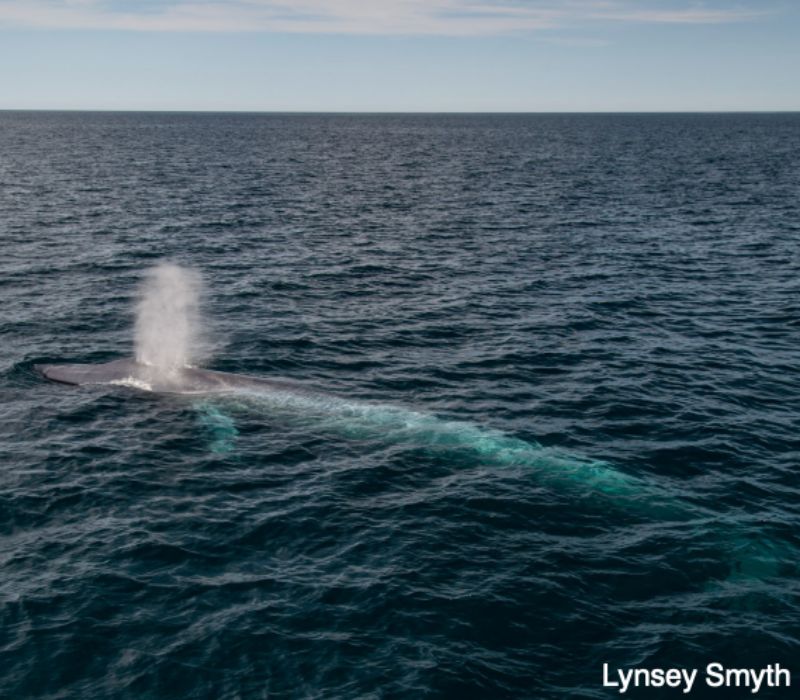
Blue Whale
Balaenoptera musculus

2025 Red list status
B. m. intermedia:
Critically Endangered

2025 Red list status
B. m. brevicauda:
Data Deficient

Regional
Population Trend
Increasing (B. musculus)
Change compared
to 2016
No Change
Overview
Balaenoptera musculus – (Linnaeus, 1758)
ANIMALIA – CHORDATA – MAMMALIA – ARTIODACTYLA – BALAENOPTERIDAE – Balaenoptera – musculus
Common Names: Blue Whale (English), Baleia-azul (Portuguese), Baleine bleue (French), Ballena Azul (Spanish; Castilian), Blauwal (German), Blauwe vinvis (Dutch; Flemish), Blåhval (Danish), Blåkval (Norwegian), Royður (Faroese), Steypireyður (Icelandic)
Synonyms: Balaena musculus Linnaeus, 1758
Taxonomic Note:
The Committee on Taxonomy of the Society for Marine Mammalogy (Committee on Taxonomy 2023) lists the following subspecies: Balaenoptera musculus musculus (Linnaeus, 1758) – Northern Blue Whale (found in the North Atlantic and the North Pacific); B. m. intermedia (Burmeister, 1871) – Antarctic Blue Whale; B. m. indica (Blyth 1859) – Northern Indian Ocean Blue Whale; B. m. brevicauda (Ichihara, 1966) – Pygmy Blue Whale; and B. m. un-named subspecies – Chilean Blue Whale.
The nominate subspecies B. m. musculus refers at least to the North Atlantic Blue Whale which was the basis for the first description of the species by Linnaeus. Animals in the North Pacific are similar in size and morphology to North Atlantic Blue Whales and are also regarded as B. m. musculus, pending a genetic comparison of these populations. The Antarctic form B. m. intermedia is distinguished by its large body size and Antarctic distribution in summer. The Pygmy Blue Whale B. m. brevicauda has a number of morphological characteristics that distinguish it from B. m. intermedia and B. m. musculus. It occurs in the Indian Ocean, excluding the Antarctic, from Africa and Madagascar across to Indonesia and Australia, and in the southwestern Pacific, including Tasmania and New Zealand. Blue Whales in the northern Indian Ocean have been tentatively assigned the name B. m. indica, but a clear distinction between B. m. indica and B. m. brevicauda has not yet been established.
Blue Whales in the southeastern Pacific are intermediate in size between B. m. intermedia and B. m. brevicauda (Branch et al. 2007a) and are genetically differentiated from both groups (LeDuc et al. 2017). They are provisionally designated as an unnamed subspecies with the common name Chilean Blue Whales. Chilean Blue Whales are genetically most similar to Blue Whales in the northeast Pacific (LeDuc et al. 2017; Attard et al. 2024); investigations into the genetic and morphological distinction between these two groups are ongoing. The respective winter ranges of Blue Whales from the eastern South Pacific (Chilean Blue whales) and from the eastern North Pacific may overlap in the eastern equatorial Pacific but their breeding seasons are probably six months out of phase (LeDuc et al. 2017).
Red List Status:
B. m. intermedia: Critically Endangered
B. m. brevicauda: Data Deficient
Assessment Information
Assessors: Shabangu, F.1,2, Vermeulen, E.2 & da Silva, J.M.3
Reviewer: Patel, T.4
Institutions: 1Department of Forestry, Fisheries and the Environment, 2University of Pretoria, 3South African National Biodiversity Institute, 4Endangered Wildlife Trust
Previous Assessors: Findlay, K.
Previous Reviewers: Child, M.F.
Previous Contributors: Elwen, S., Meÿer, M., Oosthuizen, H., Plön, S., Reilly, S.B., Bannister, J.L., Best, P.B., Brownell Jr., R.L., Butterworth, D.S., Clapham, P.J., Cooke, J.G., Donovan, G. & Zerbini, A.N.
Assessment Rationale
There are two Blue Whale subspecies found within the assessment region: the Antarctic Blue Whale B. m. intermedia and the Pygmy Blue Whale B. m. brevicauda. While the former has a circumpolar distribution and more abundant in South African waters in winter, the latter is most abundant in the Indian Ocean with only a few records from Durban and the Prince Edward Islands.
Although the Pygmy Blue Whale was historically less depleted than the Antarctic Blue Whale, the extent to which the population has recovered is unknown. Of particular concern is that more than 8,000 Pygmy Blue Whales were taken illegally by Soviet whalers in the 1960s and 1970s. Current population size is unknown. Although there are no major threats to the subspecies at present, it was previously known only from a few records in the Prince Edward Islands with recent passive acoustic monitoring data providing new information and may be suffering from small population size caused by historical whaling, which may make the subspecies more vulnerable to other threats (for example, climate change). Thus, under a precautionary purview, we list the subspecies as Data Deficient. The subspecies will most likely be listed Least Concern if future surveys and monitoring data show population recovery and illuminate its distribution more comprehensively. It should be reassessed once such data are available.
The majority of the over 17,000 Blue Whales caught off southern Africa were probably Antarctic Blue Whales. The pre-whaling population of B. m. intermedia is estimated at 239,000 and was reduced to 360 individuals in 1973. Although the population has been estimated to be increasing since then, at a mean rate of 7.3% per annum, the current population size is estimated at below 5,000 mature individuals. The current population is thus still less than 3% of its level of three generations ago (at least a 95% decline) (1922–2015) and therefore qualifies for Critically Endangered A1abd based on records of past whaling catches and subsequent estimated population sizes. The population is currently increasing but at a slow rate relative to other whales that have become protected in the same period. Blue Whales exist in localised subpopulations and have call frequency rates at 13–34 Hz, which overlaps seismic survey signals frequency range. Thus, although there are no major threats, increasing marine noise pollution through seismic surveys and marine traffic may interrupt or affect population recovery within the assessment region. Internationally, the area south of South Africa is an important stronghold for this species. Continued monitoring of population recovery and mitigation of potential noise pollution are recommended.
Regional population effects: Blue Whales are highly migratory and wide-ranging. There are no barriers to dispersal, so rescue effects are possible.
Reasons for Change
Reason(s) for Change in Red List Category from the Previous Assessment: No change
Red List Index
Red List Index: No change
Recommended citation: Shabangu F, Vermeulen E & da Silva JM. 2025. A conservation assessment of Balaenoptera musculus. In Patel T, Smith C, Roxburgh L, da Silva JM & Raimondo D, editors. The Red List of Mammals of South Africa, Eswatini and Lesotho. South African National Biodiversity Institute and Endangered Wildlife Trust, South Africa.
Regional Distribution and occurrence
Geographic Range
Antarctic Blue Whales have a continuous circumpolar distribution and dominated (99.2%) pelagic catches south of 52°S, whereas Pygmy Blue Whales dominated (99.9%) north of 52°S (Branch et al. 2007b). During the austral summer feeding season, most Antarctic Blue Whales are found in polar waters and the majority of Pygmy Blue Whales in temperate waters (Attard et al. 2012). Thus, the ranges of the two subspecies overlap slightly in summer but they may significantly overlap in winter if the Antarctic Blue Whale migrates into Pygmy Blue Whale habitat. Overall, the available evidence suggests that Antarctic Blue Whales generally do migrate to northerly locations in winter, although some overwinter in the Antarctic (Branch et al. 2007a). For example, analyses of length frequencies have reinforced the conclusion that Antarctic Blue Whales migrate to South African and Namibian waters in winter (Best 2007; Branch et al. 2007b). Additionally, acoustic data reveal that Antarctic Blue Whales use both the Indian and eastern Pacific Oceans concurrently, indicating that there is not a single migratory destination (Stafford et al. 2004). Pygmy Blue Whales do not migrate as far south in summer as Antarctic Blue Whales, most remaining north of 55°S, especially in the vicinity of Prince Edward and Crozet islands (Best 2007).
Off the west coast of South Africa, Z-calls (19-27 Hertz frequency range, 18-26 seconds long in duration) produced by male of Antarctic Blue Whales were seasonally detected in autumn through spring (May to October) in some years (Shabangu et al. 2019) and year-round in some years (Letsheleha et al. 2022). The year-round or seasonal acoustic presence seemed to be determined by biological productivity such as chlorophyll-a (Shabangu et al. 2019; Letshelaha et al. 2022). No Pygmy Blue Whale calls have been detected off the west coast of South Africa. Similar to the west coast of South Africa, Antarctic Blue Whale calls were detected seasonally (autumn through spring: April to early October) in some years and year-round around the Prince Edward Islands (Shabangu et al. unpublished data). On the other hand, Madagascan Pygmy Blue Whale calls (13-44 Hertz, 15-20 seconds long) are detected purely seasonal from summer to early winter (December to early June) around the Prince Edward Islands (Shabangu et al.2024).
Antarctic Blue Whales have been recorded along bands stretching across entire ocean basins but at lower latitudes they are progressively more clustered, localised and compressed along the continental margins (Branch et al. 2007a), which probably reflects the distribution of krill, with large Antarctic Krill Euphausia superba at the highest latitudes, mid-sized Euphausia species in the mid latitudes and smaller Nyctiphanes species in coastal upwelling systems in the mid and low latitudes. Current sightings are aggregated close to the edge of the pack ice, while past catches extended further north, which may be explained by considering that, when Antarctic Blue Whales were more abundant, they occupied a wider habitat range, but now they are depleted to < 5% of their original abundance and concentrate close to the ice edge where krill is most prevalent (Branch et al. 2007a).
Antarctic Blue Whales occur throughout South Africa’s Economic Exclusion Zone (EEZ) from ice-edge to tropical and sub-tropical waters, excluding nearshore waters. However, very little feeding or breeding was believed to occur in South African waters before recent acoustic evidence (Shabangu et al. 2019) and cow-calf pair sighting (Seakamela et al. 2022) off the west coast of South Africa. Most feeding occurs in high latitudes of the Antarctic, breeding probably occurring in sub-tropical waters. Instead, the regional waters are probably used mainly as migratory corridors. Pygmy Blue Whales are difficult to identify at sea and thus their distribution within the assessment region is largely unknown. They occur across the sub-Antarctic zone of the Indian Ocean (and possibly South East Atlantic and South East Pacific) extending to the equator in winter. They occur throughout the EEZ of South Africa, including nearshore waters. There are only a few records of this subspecies from Durban and the Prince Edward Islands.
They are a wide-ranging and migratory species, especially while in high latitudes (Best 2007). For example, Sremba et al. (2012) documented a female that travelled at least 6,650 km or 131° longitude over four years.
Elevation / Depth / Depth Zones
Elevation Lower Limit (in metres above sea level): (Not specified)
Elevation Upper Limit (in metres above sea level): (Not specified)
Depth Lower Limit (in metres below sea level): 0
Depth Upper Limit (in metres below sea level): ~300 m
Depth Zone: Mesopelagic
Biogeographic Realms
Biogeographic Realm: Afrotropical, Antarctic, Australasian, Indomalayan, Nearctic, Neotropical, Oceanian, Palearctic
Map
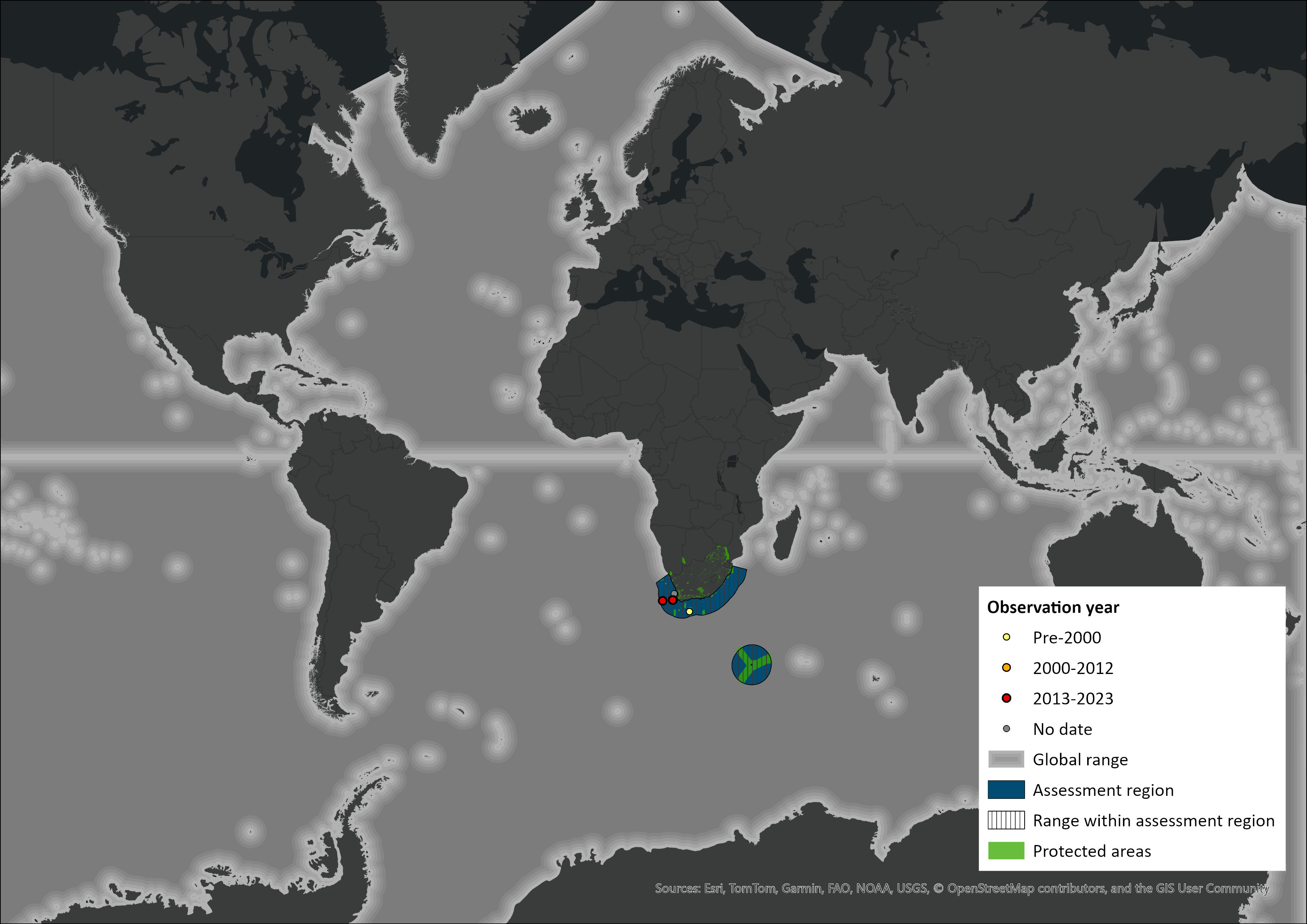
Figure 1: Distribution records for Blue Whale (Balaenoptera musculus) within the assessment region (South Africa, Eswatini and Lesotho). Note that distribution data is obtained from multiple sources and records have not all been individually verified.
Countries of Occurrence
| Country | Presence | Origin | Formerly Bred | Seasonality |
| Angola | Extant | Native | – | – |
| Argentina | Extant | Native | – | – |
| Australia | Extant | Native | – | – |
| Bahamas | Extant | Native | – | – |
| Bangladesh | Extant | Native | – | – |
| Benin | Extant | Native | – | – |
| Bermuda | Extant | Native | – | – |
| Brazil | Extant | Native | – | – |
| Cabo Verde | Extant | Native | – | – |
| Cameroon | Extant | Native | – | – |
| Canada | Extant | Native | – | – |
| Chile | Extant | Native | – | – |
| China | Extant | Native | – | – |
| Cocos (Keeling) Islands | Extant | Native | – | – |
| Colombia | Extant | Native | – | – |
| Comoros | Extant | Native | – | – |
| Cook Islands | Extant | Native | – | – |
| Costa Rica | Extant | Native | – | – |
| Côte d’Ivoire | Extant | Native | – | – |
| Djibouti | Extant | Native | – | – |
| Ecuador | Extant | Native | – | – |
| El Salvador | Extant | Native | – | – |
| Equatorial Guinea | Extant | Native | – | – |
| Eritrea | Extant | Native | – | – |
| Falkland Islands (Malvinas) | Extant | Native | – | – |
| Faroe Islands | Extant | Native | – | – |
| France | Extant | Native | – | – |
| French Southern Territories | Extant | Native | – | – |
| Gabon | Extant | Native | – | – |
| Ghana | Extant | Native | – | – |
| Gibraltar | Extant | Native | – | – |
| Greece | Extant | Native | – | – |
| Greenland | Extant | Native | – | – |
| Grenada | Extant | Native | – | – |
| Guatemala | Extant | Native | – | – |
| Iceland | Extant | Native | – | – |
| India | Extant | Native | – | – |
| Indonesia | Extant | Native | – | – |
| Iran, Islamic Republic of | Extant | Native | – | – |
| Iraq | Extant | Native | – | – |
| Ireland | Extant | Native | – | – |
| Japan | Extant | Native | – | – |
| Kenya | Extant | Native | – | – |
| Madagascar | Extant | Native | – | – |
| Malaysia | Extant | Native | – | – |
| Maldives | Extant | Native | – | – |
| Marshall Islands | Extant | Native | – | – |
| Mauritania | Extant | Native | – | – |
| Mauritius | Extant | Native | – | – |
| Mexico | Extant | Native | – | – |
| Morocco | Extant | Native | – | – |
| Mozambique | Extant | Native | – | – |
| Myanmar | Extant | Native | – | – |
| Namibia | Extant | Native | – | – |
| New Caledonia | Extant | Native | – | – |
| New Zealand | Extant | Native | – | – |
| Nicaragua | Extant | Native | – | – |
| Nigeria | Extant | Native | – | – |
| Northern Mariana Islands | Extant | Native | – | – |
| Norway | Extant | Native | – | – |
| Oman | Extant | Native | – | – |
| Pakistan | Extant | Native | – | – |
| Palau | Extant | Native | – | – |
| Panama | Extant | Native | – | – |
| Peru | Extant | Native | – | – |
| Philippines | Extant | Native | – | – |
| Pitcairn | Extant | Native | – | – |
| Portugal | Extant | Native | – | – |
| Russian Federation | Extant | Native | – | – |
| Réunion | Extant | Native | – | – |
| Saint Helena, Ascension and Tristan da Cunha | Extant | Native | – | – |
| Saint Helena, Ascension and Tristan da Cunha -> Tristan da Cunha | Extant | Native | – | – |
| Saint Pierre and Miquelon | Extant | Native | – | – |
| Sao Tome and Principe | Extant | Native | – | – |
| Senegal | Extant | Native | – | – |
| Seychelles | Extant | Native | – | – |
| Somalia | Extant | Native | – | – |
| South Africa | Extant | Native | – | – |
| South Georgia and the South Sandwich Islands | Extant | Native | – | – |
| Spain | Extant | Native | – | – |
| Sri Lanka | Extant | Native | – | – |
| Taiwan, Province of China | Extant | Native | – | – |
| Tanzania, United Republic of | Extant | Native | – | – |
| Thailand | Extant | Native | – | – |
| Timor-Leste | Extant | Native | – | – |
| Togo | Extant | Native | – | – |
| United Kingdom of Great Britain and Northern Ireland | Extant | Native | – | – |
| United States of America | Extant | Native | – | – |
| Uruguay | Extant | Native | – | – |
| Western Sahara | Extant | Native | – | – |
| Yemen | Extant | Native | – | – |
Large Marine Ecosystems (LME) Occurrence
Large Marine Ecosystems: (Not specified)
FAO Area Occurrence
| Presence | Origin | Formerly Bred | Seasonality | |
| 18. Arctic Sea | Extant | Native | – | – |
| 21. Atlantic – northwest | Extant | Native | – | – |
| 27. Atlantic – northeast | Extant | Native | – | – |
| 31. Atlantic – western central | Extant | Native | – | – |
| 34. Atlantic – eastern central | Extant | Native | – | – |
| 41. Atlantic – southwest | Extant | Native | – | – |
| 47. Atlantic – southeast | Extant | Native | – | – |
| 48. Atlantic – Antarctic | Extant | Native | – | – |
| 51. Indian Ocean – western | Extant | Native | – | – |
| 57. Indian Ocean – eastern | Extant | Native | – | – |
| 58. Indian Ocean – Antarctic | Extant | Native | – | – |
| 61. Pacific – northwest | Extant | Native | – | – |
| 67. Pacific – northeast | Extant | Native | – | – |
| 71. Pacific – western central | Extant | Native | – | – |
| 77. Pacific – eastern central | Extant | Native | – | – |
| 81. Pacific – southwest | Extant | Native | – | – |
| 87. Pacific – southeast | Extant | Native | – | – |
| 88. Pacific – Antarctic | Extant | Native | – | – |
Climate change
At high latitudes, Blue Whales rely almost exclusively on Antarctic krill as a primary food source. However, climate change has strong effects on high latitude marine ecosystems with ramification throughout the food web. Indeed, climate change-induced disruptions to krill availability pose a substantial threat to blue whale populations. Continued monitoring of krill dynamics, protection of critical habitats, and global climate action are essential to mitigate these impacts.
Population information
The Antarctic Blue Whale was extremely abundant in the past. However, whaling from 1928 to 1972 depleted the population from 239,000 (95% CI 202,000–311,000) to 360 (95% CI 150–840) individuals in 1973 (Branch et al. 2004). Sightings remain rare in the Antarctic (0.17–0.52 / 1,000 km) despite considerable effort during dedicated sightings surveys. There are no published population estimates for the assessment region, but 72% of all Antarctic Blue Whale catches were made in the South Atlantic and western Indian Ocean areas, suggesting that the subregion included a significant portion of the entire population (Best 2007). Recorded sightings are also rare (only three since the 1960s) off south-west Africa where large catches were recorded from Saldanha Bay (South Africa) (n = 7,969), Namibia (n = 1,665) and Angola (n = 1,917) (Branch et al. 2007a). Similarly, 2,986 Blue Whales were caught off Durban and 417 from south-east South Africa from 1911 to 1916, which originally comprised Antarctic Blue Whales but by the end of the whaling period most catches and sightings were probably Pygmy Blue Whales (Branch et al. 2007b).
Monitoring subsequent population trends is difficult due to their current scarcity. However, Bayesian models fitted to three sighting series (1968–2001) indicated that the subspecies has been increasing at a mean rate of 7.3% per annum (1.4%–11.6%) (Branch et al. 2004). In 1996, population size was estimated at 1,700 individuals (95% CI 860–2,900), which constitutes 0.7% (0.3%–1.3%) of the pre-exploitation level (Branch et al. 2004). Similarly, the most recent abundance estimate in 1997 is 2,280 individuals (T. Branch unpubl. data), which is only 0.9% (CI 0.7–1.0%) of pre-exploitation levels. Currently, there are fewer than 5,000 mature individuals. Thus, although they have been increasing since illegal whaling ended in 1972, the rate is slow relative to other whales that have gone under protection in the same period, and they still need to be protected as their current population size is still a fraction of the pre-exploitation era.
The status of Pygmy Blue Whales is much more uncertain, but their original abundance was probably an order of magnitude lower than that of Antarctic Blue Whales, and they are likely less depleted at present (Branch et al. 2007a). No precise population estimates are available from the southern Indian Ocean. Best et al. (2003) estimated the population size in a survey area south of Madagascar to be 424 with wide confidence limits (190–930) and suggested, based on the distribution of past catches, that the total population in the southwestern Indian Ocean may be about three times that in the survey area. Catches of this subspecies were much lower than Antarctic Blue Whales, ∼13,000 vs. > 330,000; (Branch et al. 2004), and thus we suspect they are less depleted at present than Antarctic Blue Whales. However, more than 8,000 Pygmy Blue Whales were harvested illegally by Soviet whalers in the 1960s and 1970s (Clapham et al. 2008). Furthermore, as there is little baseline data for this subspecies, it is difficult to evaluate the impact of whaling on current population status.
Models project that Blue Whales will continue to increase, while Minke Whales will decrease (following their historical increase due to over-harvesting of Blue Whales), as Blue Whales are better able to tolerate decreased krill abundance (Mori and Butterworth 2004). Generation length is estimated to be 31 years (Taylor et al. 2007).
Population Information
Current population trend: Increasing
Continuing decline in mature individuals? No
Extreme fluctuations in the number of subpopulations: (Not specified)
Continuing decline in number of subpopulations: (Not specified)
All individuals in one subpopulation: (Not specified)
Number of mature individuals in population: <5,000
Number of mature individuals in largest subpopulation: Unknown
Number of subpopulations: Unknown
Severely fragmented: No
Quantitative Analysis
Probability of extinction in the wild within 3 generations or 10 years, whichever is longer, maximum 100 years: (Not specified)
Probability of extinction in the wild within 5 generations or 20 years, whichever is longer, maximum 100 years: (Not specified)
Probability of extinction in the wild within 100 years: (Not specified)
Population genetics
A recent population genomic study by Attard et al. (2024) identified three high-level genetic groupings within B. musculus – the Antarctic (B. m. intermedia), and eastern Pacific and Indo-western Pacific groups of the pygmy subspecies (B. m. brevicauda). Within the assessment region, only B. m. intermedia and the Indo-western Pacific group of B. m. brevicauda are presumed to exist.
Balaenoptera musculus ssp. intermedia was found to possess the greatest amount of genetic diversity among the three groups. Within B. m. intermedius no further subpopulation structure was observed; however, subpopulation structure may be present B. m. brevicauda, between whales in the western Indian Ocean and Australia (Attard et al. 2024). Sample sizes were too low to make any inferences from the study, so additional research is needed to verify this.
It is estimated that fewer than 5,000 mature individuals exist for B. m. intermedia (see Population section) and no evidence of inbreeding was detected (Attard et al. 2024). Consequently, while the estimated Ne based on census data is approximately between 500-1,500 (assuming Ne/Nc conversion ratio of 0.1-0.3), these are likely to be underestimates given the absence of inbreeding.
No comprehensive population size estimates are available for B. m. brevicauda; therefore, a measure of effective population size it not possible. However, given that subpopulations might exist, the effective population size for the assessment region may be lower than for B. m. intermedius.
Habitats and ecology
The Blue Whale is the largest of the mysticete (baleen) whales, with lengths exceeding 30 m, and is the largest mammal that has ever lived (Skinner and Chimimba 2005). Blue Whales feed on euphausiids and other crustacean meso-zooplankton. Dives are mostly less than 16 m or between 97 and 152 m, up to just over 300 m (Goldbogen et al. 2011). They feed both at the surface and also at depth, following the diurnal vertical migrations of their prey to at least 100 m. Antarctic Blue Whales feed predominantly near the edge of the pack ice zone during summer. However, the presence of foraging associated calls, D-calls, have been recorded off the west coast of South Africa, indicating that some feedings also occur in this region (Shabangu et al. 2019). The year-round acoustic presence of Antarctic Blue Whale off the west coast of South Africa suggest that they must be sufficient prey to sustain whales the whole year (Letsheleha et al. 2022). Pygmy Blue Whales predominantly feed in the sub-Antarctic region such as the Prince Edward Islands (Shabangu et al. 2024). D-calls are produced by all Blue Whale subspecies worldwide, but these were more detected in the presence of Madagascan Pygmy Blue Whales around the Prince Edward Islands (Shabangu et al. unpublished data). Detection distances of Blue Whale calls range from a few tens of kilometres (Shabangu et al. 2019) to almost two thousand kilometres (Shabangu et al. 2020). They generally stay far from the shore (40–60 nautical miles) but occasionally come within a few kilometres, especially in mid-winter (Best 2007).
Antarctic Blue Whales are larger than Pygmy Blue Whales (> 30 m compared to 24 m). Blue Whale songs can be used to determine population structure, as different regions have distinct and temporally stable song types (McDonald et al. 2006; Leroy et al. 2021). This acoustic subspecies classification of Blue Whales also aligns with recent genetic analyses (Attard et al. 2024)
Ecosystem and cultural services: Marine mammals integrate and reflect ecological variation across large spatial and long temporal scales, and therefore they are prime sentinels of marine ecosystem change; migratory mysticete whales may be used to investigate broad-scale shifts in ecosystems (Moore 2008).
IUCN Habitats Classification Scheme
| Habitat | Season | Suitability | Major Importance? |
| 9.1. Marine Neritic -> Marine Neritic – Pelagic | – | Suitable | Yes |
| 10.1. Marine Oceanic -> Marine Oceanic – Epipelagic (0-200m) | – | Suitable | Yes |
Life History
Generation Length: 13
Age at maturity: female or unspecified: 10 years
Age at Maturity: Male: 6-10 years
Size at Maturity (in cms): Female: 1840–1990
Size at Maturity (in cms): Male: 2300
Longevity: 80-90 years
Average Reproductive Age: 10 years
Maximum Size (in cms): 3360
Size at Birth (in cms): 700-800
Gestation Time: 10-12 months
Reproductive Periodicity: 2-3 years
Average Annual Fecundity or Litter Size: 1
Natural Mortality: Uknown
Breeding Strategy
Does the species lay eggs? No
Does the species give birth to live young: Yes
Does the species exhibit parthenogenesis: No
Does the species have a free-living larval stage? No
Does the species require water for breeding? No
Movement Patterns
Movement Patterns: Daily, Monthly and Seasonal
Congregatory: Generally solitary but form groups of up to six whales
Systems
System: Marine
General Use and Trade Information
Blue Whales were exploited on an industrial scale from 1905 to 1973 using deck-mounted harpoon cannons. Harvesting Blue Whales began in South Georgia and spread to Antarctica with the advent of factory-ships in the 1920s, reaching a peak in 1930/31 when more than 30,000 were taken. Southern Hemisphere Blue Whales have been protected under the International Whaling Convention since 1966 but illegal catches from the former USSR continued until 1972, which were primarily Pygmy Blue Whales. Blue Whale blubber and baleen were used for products such as lamp oil, margarine, cooking oil, candles, soaps, cosmetics, corsets, umbrellas and tennis racquets, while whale meat was sold for human consumption, animal feed and fertilizer.
| Subsistence: | Rationale: | Local Commercial: | Further detail including information on economic value if available: |
| No | – | Yes | – |
National Commercial Value: Yes
International Commercial Value: No
End Use: (Not specified)
Is there harvest from captive/cultivated sources of this species? No
Harvest Trend Comments: (Not specified)
Threats
Historical over-harvesting of Blue Whales reduced the population by 99% but ceased in 1972 and the population is currently recovering (Branch et al. 2004). There currently are no major direct anthropogenic threats. However, the small population sizes created by whaling makes Blue Whales susceptible to indirect threats, such as demographic stochasticity, inbreeding depression and density dispensation (Allee effects). Recently, Attard et al. (2012) found evidence for hybridisation between B. m. intermedia and B. m. brevicauda in Antarctica, which may be caused by an increase in the proportion of B. m. brevicauda off Antarctica in recent decades due to past whaling or current patterns of climate change. Despite the bottleneck imposed by whaling, the genetic diversity of B. m. intermedia remains relatively high (Sremba et al. 2012).
Within the assessment region, an emerging threat is marine noise pollution, especially through seismic surveys (Koper and Plön 2012). Frequency range of calls is between 13 and 34 Hertz, which overlaps with major frequencies of seismic surveys, which could mask calls of Blue Whales and disrupt social structure and breeding. Underwater noise associated with marine vessel traffic is another emerging threat that is affecting the acoustic ecology of Antarctic Blue Whales off the west of South Africa (Shabangu et al. 2022) and less so around the Prince Edward Islands (Shabangu et al. unpublished data), and reduction of vessel cruising speed might mitigate this threat as the noise is more prominent at high vessel speed. Ship strike is a raising issue for Pygmy Blue Whales in the Indian Ocean (de Vos et al. 2015).
Climate change may become a threat in the future by altering sheet ice habitats and affect the food supply of this species. Sea surface temperature is one of the important variables determining the acoustic occurrence of Antarctic and Madagascan Pygmy Blue Whales around the Prince Edward Islands (Shabangu et al. 2024), and climate change related warming of the region might render the region unfavourable or unsuitable for these whales and their prey. A profound reduction in the extent of sea ice in the Antarctic is expected, and possibly a complete disappearance in summer, as mean Antarctic temperatures rise faster than the global average (Turner et al. 2006). The implications of this for Blue Whales are unclear but warrant monitoring.
Conservation
Blue Whales are protected worldwide, including in the Antarctic, by the International Whaling Commission, and no hunting currently occurs. Catch limits for all commercial whaling have been set at zero since 1986. The species is on Appendix I of both the Convention on International Trade in Endangered Species of Wild Fauna and Flora (CITES) and the Convention on Migratory Species (CMS). Within the assessment region, they are also fully protected within the EEZ and Prince Edward Islands. The cessation of harvesting has allowed the population to recover (Branch et al. 2004), and it is recommended that ship-based surveys be conducted in South African waters to assist in determining the population size, distribution and seasonality for this species.
Additionally, careful management, regulation and enforcement of seismic survey practices will also benefit this species. Current mitigation measures include geographic and temporal restrictions (activity restricted to specific areas or times of year), source-based mitigation (sound containment and improvement or replacement of current equipment used), and operational mitigation (to follow a protocol of operation), which will help to simultaneously conserve South Africa’s coastal biodiversity and allow industrial developments (Koper and Plön 2012).
Recommendations for managers and practitioners:
- Systematic monitoring: design and implement a monitoring programme (acoustic and sightings) that can detect population size and trends.
- Develop best practice guidelines for seismic surveys and marine traffic and enforce regulations.
- Implement seasonal protection or closure of important Blue Whale habitats.
Research priorities:
- Winter survey off Namibia and South Africa might reveal a breeding ground (Best 1998).
- Continued genetic research to resolve subspecies taxonomy and population structure, which is needed to design an effective monitoring programme.
- Continued long-term passive acoustic monitoring in South African waters to establish decadal occurrence in the assessment region.
Encouraged citizen actions:
- Reduce boat speed in bays and harbours.
- When participating in whale/dolphin watching tours, ensure regulations are followed.
- Reduce/stop marine pollution.
- Reduce carbon footprint to combat sea ice decrease in the Antarctic.
Bibliography
Attard, C.R.M., Beheregaray, L.B., Jenner, K.C.S., Gill, P.C., Jenner, M.-N., Morrice, M.G., Robertson, K.M., and Moller, L.M. 2012. Hybridization of Southern Hemisphere blue whale subspecies and a sympatric area off Antarctica: impacts of whaling or climate change? Molecular Ecology 21: 5715-5727.
Attard, CRM., Sandoval-Castillo, J., Lang, AR., Vernazzani, BG., Torres, LG., Baldwin, R., Jenner, KCS., Gill, PC., Burton, CLK., Barceló, A., Sironi, M., Jenner, M-NM., Morrice, MG., Beheregaray, LB. & Möller, L. M. 2024. Global conservation genomics of blue whales calls into question subspecies taxonomy and refines knowledge of population structure. Animal Conservation. https://doi.org/10.1111/acv.12935
Best, P. B. 1998. Blue whales off Namibia – a possible wintering ground for the Antarctic population. Reports of the International Whaling Commission.
Best, P.B. 2007. Whales and Dolphins of the Southern African Subregion. Cambridge University Press, Cape Town, South Africa.
Best, P.B., Rademeyer, R.A., Burton, C., Ljungblad, D., Sekiguchi, K., Shimada, H., Thiele, D., Reeb, D. and Butterworth, D.S. 2003. The abundance of blue whales on the Madagascar Plateau, December 1996. Journal of Cetacean Research and Management 5(3): 253-260.
Branch, T. A., Abubaker, E. M. N., Mkango, S. and Butterworth, D. S. 2007b. Separating southern blue whale subspecies based on length frequencies of sexually mature females. Marine Mammal Science 23(4): 803–833. doi:10.1111/j.1748-7692.2007.00137.x.
Branch, T. A., Matsuoka, K. and Miyashita, T. 2004. Evidence for increases in Antarctic blue whales based on Bayesian modelling. Marine Mammal Science 20(4): 726-754.
Branch, T., Stafford, K.M., Palacios, D.M., Allison, C., Bannister, J.L., Burton, C.L.K., Cabrera, E., Carlson, C.A., Galletti Vernazzani, B., Gill, P.C., Hucke-Gaete, R., Jenner, K.C.S., Jenner, M-N.M., Matsuoka, K., Mikhalev, Y.A., Miyashita, T., Morrice, M.G., Nishiwaki, S., Sturrock, V.J., Tormosov, D., Anderson, R.C., Baker, A.N., Best, P.B., Borsa, P., Brownell Jr., R.L., Childerhouse, S., Findlay, K.P., Gerrodette, T., Ilangakoon, A.D., Joergensen, M., Kahn, B.,. Ljungblad, D.K, Maughan, B., Mccauley, R.D., Mckay, S., Norris, T.F., Rankin, S., Samaran, F., Thiele, D., Van Waerebeek, K. and Warneke, R.M. 2007a. Past and present distribution, densities and movements of blue whales Balaenoptera musculus in the Southern Hemisphere and northern Indian Ocean. Mammal Review 37: 117-175.
Clapham, P. J., Aguilar, A. and Hatch, L. T. 2008. Determining spatial and temporal scales for the management of cetaceans: lessons from whaling. Marine Mammal Science 24: 183-201.
Committee on Taxonomy. 2023. List of marine mammal species and subspecies. Society for Marine Mammalogy, https://marinemammalscience.org/science-and-publications/list-marine-mammal-species-subspecies/, consulted on 16 June 2024.
Goldbogen, JA., Calambokidis, J., Oleson, E., Potvin, J., Pyenson, N. D., Schorr, G. & Shadwick, RE. 2011. Mechanics, hydrodynamics and energetics of blue whale lunge feeding: Efficiency dependence on krill density. Journal of Experimental Biology. 214 (1): 131–46. doi:10.1242/jeb.048157.
IUCN (International Union for Conservation of Nature). 2012. Balaenoptera musculus. Available at: http://www.iucnredlist.org. (Accessed: 21 February 2016).
Kato, H., Honno, Y., Yoshida, H., Kojima, E., Nomura, A. and Okamura, H. 2002. Further developments on morphological and behavioral key for sub-species discrimination of southern blue whales, analyses from data through 1995/96 to 2001/02 SOWER cruises. International Whaling Commission Scientific Committee.
Koper RP, Plön S. 2012. The potential impacts of anthropogenic noise on marine animals and recommendations for research in South Africa. EWT Research & Technical Paper No. 1. Endangered Wildlife Trust, South Africa.
Leduc, R.G., Dizon, A.E., Goto, M., Pastene, L.A., Kato, H., Nishiwaki, S. and Brownell Jr., R.L. 2007. Patterns of genetic variation in southern hemisphere blue whales, and the use of assignment test to detect mixing on the feeding grounds. Journal of Cetacean Research and Management 9(1): 73-80.
Leroy, EC., Royer, J-Y., Alling, A., Maslen, B. & Rogers, T. L. 2021. Multiple pygmy blue whale acoustic populations in the Indian Ocean: whale song identifies a possible new population. Scientific Reports, 11, 8762. https://doi.org/10.1038/s41598-021-88062-5
Letsheleha, IS., Shabangu, FW., Farrell, D., Andrew, RK., la Grange, PL. & Findlay KP. 2022. Year-round acoustic monitoring of Antarctic blue and fin whales in relation to environmental conditions off the west coast of South Africa. Mar Biol 169:41. https//doi.org/10.1007/s00227-022-04026-x
McDonald, M. A., Mesnick, S. L. and Hildebrand, J. A. 2006. Biogeographic characterization of blue whale song worldwide: Using song to identify populations. Journal of Cetacean Research and Management 8(1): 55-66.
Moore SE. 2008. Marine mammals as ecosystem sentinels. Journal of Mammalogy 89: 534-540.
Mori M, Butterworth DS. 2004. Consideration of multispecies interactions in the Antarctic: a preliminary model of the minke whale – blue whale – krill interaction. African Journal of Marine Science 26: 245–259.
Reilly, S. B., Bannister, J. L., Best, P. B., Brown, M., Brownell Jr., R. L., Butterworth, D. S., Clapham, P. J., Cooke, J., Donovan, G. P., Urbán, J. and Zerbini, A. N. 2008. Balaenoptera musculus. In ‘The IUCN Red List of Threatened Species’. Version 2008. Available at: www.iucnredlist.org. (Accessed: 8 January 2009).
Seakamela, SM., Kotze, PGH., Gumede, NC. et al. 2022. Finally seen: a rare sighting of Antarctic blue whale cow–calf pair off the west coast of South Africa. Polar Biol 45, 1715–1721. https://doi.org/10.1007/s00300-022-03089-2
Shabangu, FW., Findlay, KP., Yemane, D., Stafford, KM., van den Berg, M., Blows, B. & Andrew, R. K. 2019. Seasonal occurrence and diel calling behaviour of Antarctic blue whales and fin whales in relation to environmental conditions off the west coast of South Africa. Journal of Marine Systems, 190, 25-39. https://doi.org/10.1016/j.jmarsys.2018.11.002
Shabangu, FW., Andrew, RK., Yemane, D. & Findlay, KP. 2020. Acoustic Seasonality, Behaviour and Detection Ranges of Antarctic Blue and Fin Whales Under Different Sea Ice Conditions Off Antarctica. Endang. Species Res. 43, 21–37. doi: 10.3354/esr01050.
Shabangu FW., Yemane D., Best G. & Estabrook BJ. 2022. Acoustic detectability of whales amidst underwater noise off the west coast of South Africa. Mar. Pollut. Bull. 184, 114122. doi:10.1016/j.marpolbul.2022.114122.
Shabangu, FW., Munoz, T., Van Uffelen, L., Estabrook, BJ., Yemane, D., Stafford, KM., Branch, TA., Vermeulen, E., van den Berg, MA. & Lamont, T. 2024. Diverse baleen whale acoustic occurrence around two sub-Antarctic Islands: A tale of residents and visitors. Scientific Reports 14: 21663. https://doi.org/10.1038/s41598-024-72696-2
Skinner, J.D. and Chimimba, C.T. (eds). 2005. The Mammals of the Southern African Subregion. Cambridge University Press, United Kingdom, Cambridge.
Sremba, A. L., Hancock-Hanser, B., Branch, T. A., LeDuc, R. L., and Baker, C. S. 2012. Circumpolar diversity and geographic differentiation of mtDNA in the critically endangered Antarctic blue whale (Balaenoptera musculus intermedia). PLoS ONE 7: e32579.
Stafford, K.M., Bohnenstiehl, D.R., Tolstoy, M., Chapp, E., Mellinger, D.K. and Moore, S.E. 2004. Antarctic-type blue whale calls recorded at low latitudes in theIndian and eastern Pacific Oceans. Deep-Sea Research I 51: 1337–1346.
Taylor, B.L., Chivers, S.J., Larese, J. and Perrin, W.F. 2007. Generation length and percent mature estimates for IUCN assessments of cetaceans. NOAA, Southwest Fisheries Science Center Administrative Report LJ-07-01. La Jolla, California.
Turner, J., Lachlan-Cope, T. A., Colwell, S., Marshall, G. J. and Connolley, M. 2006. Significant warming of the Antarctic winter troposphere. Science 311(5769): 1914-1917.
Vos, AD., Brownell, R., & Wu, T. 2015. Recent Blue Whale Deaths Due to Ship Strikes around Sri Lanka. International Whaling Commission Scientific Committee.