WILD DOGS ARE BACK IN TEMBE ELEPHANT PARZK

Cole du Plessis, KZN Regional Carnivore Coordinator & Wild Dog Range Expansion Project Coordinator, EWT Carnivore Conservation Programme
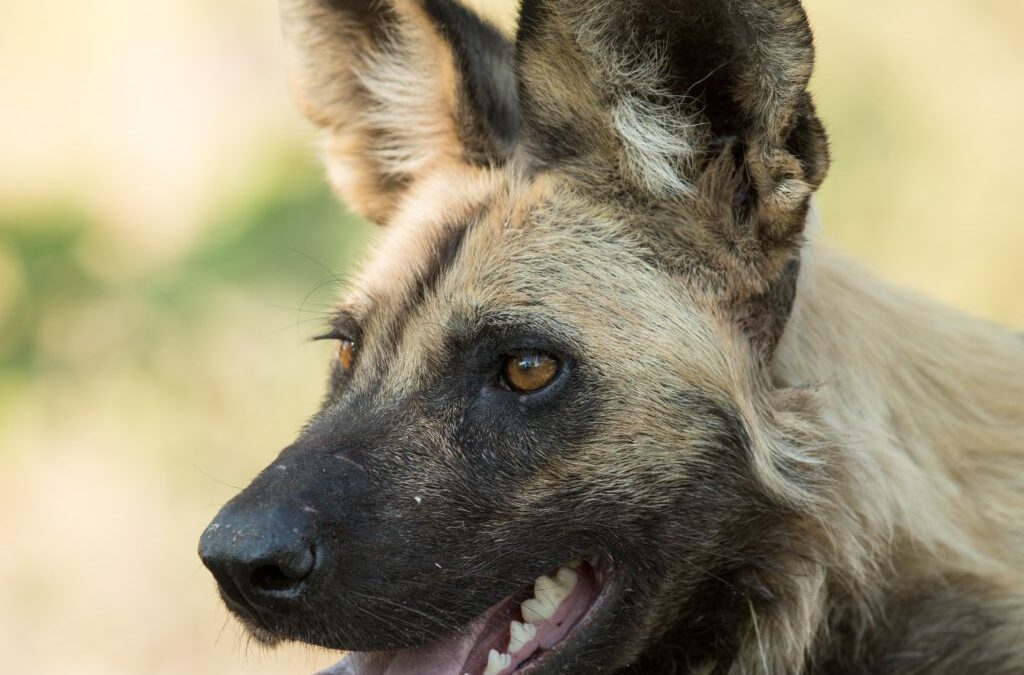
coled@ewt.org.zaThe greatest threat to the African Wild Dog is habitat loss. Twenty-five years ago, the Kruger National Park was the only safe space for the species in South Africa. Most of the population outside of this protected area had become locally extinct and the species was proclaimed the most endangered carnivore in South Africa.
In 1997, a strategy meeting was held to revive African Wild Dog conservation in South Africa by undertaking a Population and Habitat Viability Assessment (PHVA). This recommended reintroducing the species into feasible, protected sites outside of the Kruger National Park. KwaZulu-Natal, under the leadership of Ezemvelo KZN Wildlife, and with the support of the EWT and Wildlife ACT, became the frontrunners in restoring African Wild Dog populations and managing the species. Tembe Elephant Park was one of these testing grounds for range expansion.
However, the Wild Dog Range Expansion Project came with challenges. African Wild Dogs face numerous threats from people: persecution, snaring, poisoning, roadkill and disease. A further concerning challenge is that our protected areas are limited in size. As African Wild Dogs require a large amount of space, this situation can increase the risk of human-animal conflict.
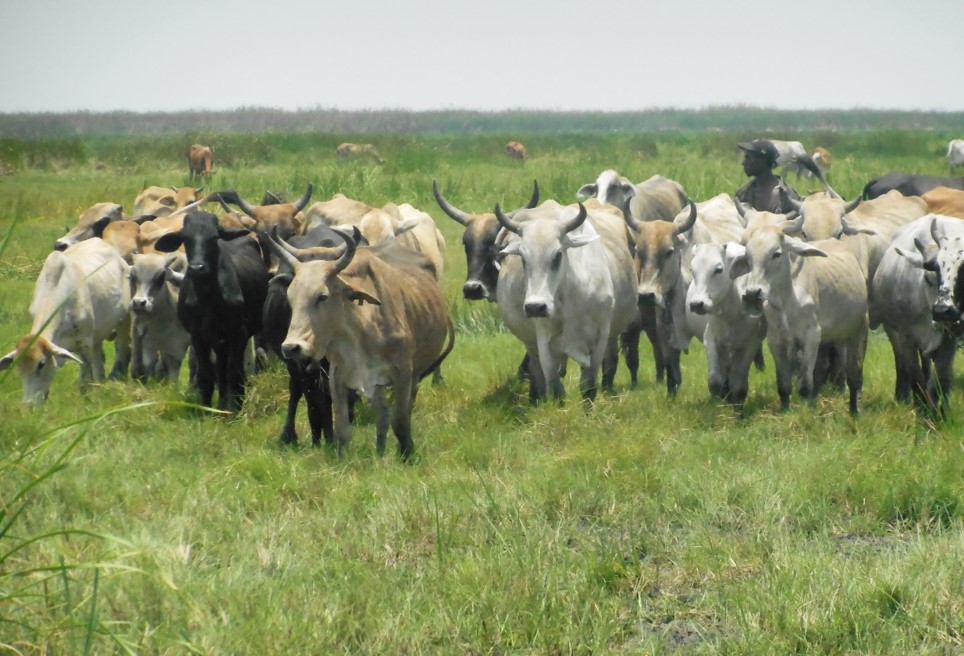
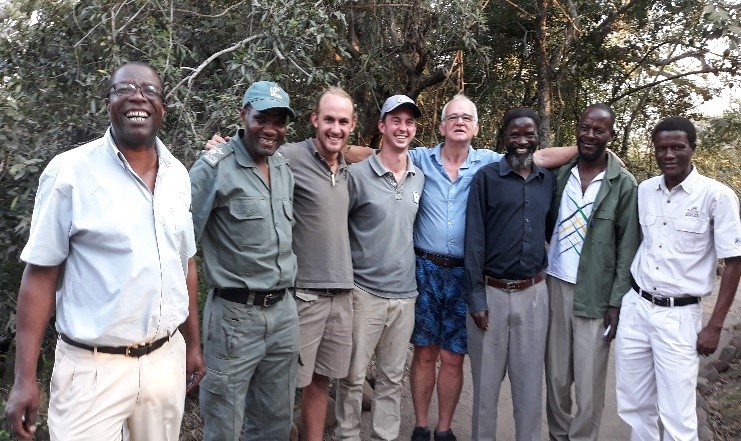
Two years ago, Tembe Elephant Park came close to losing their African Wild Dog population for this reason. The resident pack at the time continued to exit the park over a prolonged period and caused livestock losses within the community, which in turn led to extreme conflict between Tembe Elephant Park and its neighbours. The resolution lay in a gathering of all stakeholders – comprising Ezemvelo KZN Wildlife, the Tembe Community Trust, the EWT, Tembe Safaris and Wildlife ACT – to collectively find a way forward.
Together the parties were able to delegate responsibilities and put their best effort forward to sustain African Wild Dogs in the 30,000 ha of Tembe Elephant Park. A robust Memorandum of Agreement between the parties now incorporates breakout and compensation protocols, GPS collars, monitoring, research, and management tools. This document paves the way for a more modern approach to African Wild Dog conservation and will ensure that all parties will ultimately benefit by having the species present.
In South Africa, there are only 590 African Wild Dogs that are spread between 14 protected areas, and a handful of free roaming African Wild Dogs in the Waterberg region. In Africa, Wild Dogs are extinct in 25 of the 39 countries that they once roamed. As the only country with a stable population on the continent, South Africa is in a unique position to provide a source of Wild Dog packs for protected areas elsewhere in Wild Dog range, where in some cases, populations have been gone for decades. In the context of biodiversity conservation, this team victory is of the highest value to Tembe Elephant Park, South Africa and the African continent.
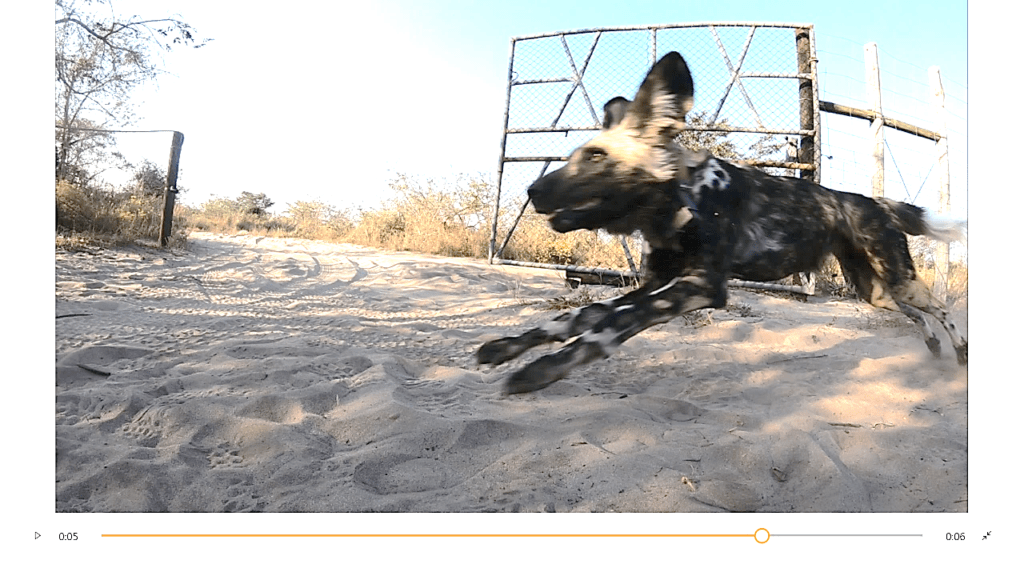
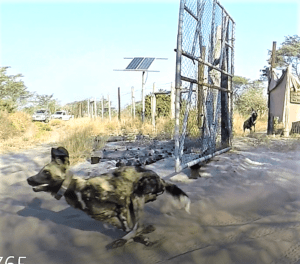
In August 2019, a newly formed pack comprising two males from Tembe Elephant Park and two females from the Kalahari were released into Tembe Elephant Park. This pack has settled well since the release and there is hope that a new generation of Tembe pups will make its appearance before year end.
This work was undertaken in partnership with Ezemvelo KZN Wildlife, Wildlife ACT, Tembe Community Trust, Tembe Safaris, and iNkosi Tembe, and with assistance from the Centre for Environmental Rights. It is made possible by Painted Wolf Wines and GCCL2 Management Services.
THE EASE OF OBTAINING DEADLY PESTICIDES
– A Zambian snap-assessment
André Botha, Manager, EWT Vultures for Africa
AndreB@ewt.org.za[/vc_column_text][vc_column_text]A two-week field trip to Zambia during August 2019 provided the EWT’s Vultures for Africa Programme an opportunity to conduct the first Wildlife Poisoning Response Training workshop in the North Luangwa National Park to train rangers and other staff of the Park to effectively identify and respond to wildlife poisoning incidents when they happen in this part of the Luangwa Valley. The area has been identified as a wildlife poisoning hotspot following a number of wildlife poisoning events since 2013. The largest of these events happened when a poached elephant carcass was poisoned and killed 302 vultures in October 2013. The workshop also provided an opportunity to initiate the training of three BirdWatch Zambia staff members Chaona Phiri, Mary Malasa and Kelvin Mkandawire as facilitators of possible future workshops in Zambia as part of the EWT-Hawk Conservancy-University of Reading partnership’s project supported by the US-FWS.
In the week preceding the training at North Luangwa, BirdWatch staff decided to do an assessment of the availability and accessibility of the range of pesticides commonly used in wildlife poisoning on the streets of Lusaka. A few hours of shopping confirmed that there are many dealers stocking these products and that purchasing any product is as simple as asking for it and handing over the cash. Dealers seldom bothered to enquire what the pesticides were being purchased for and no record was kept of the transactions that were concluded. Within no time, they were able to purchase substantial quantities of highly toxic chemicals such as Carbofuran (one of the most widely used pesticides in wildlife poisoning globally), Monocrotophos and Endosulfan (both banned in South Africa since the early 2010s) at very affordable prices. One kilogramme of Carbofuran was bought for a mere ZMW76,00 or R88,00.[/vc_column_text][vc_single_image image=”4267″ img_size=”large” add_caption=”yes” alignment=”center”][vc_single_image image=”4268″ img_size=”large” add_caption=”yes” alignment=”center”][vc_column_text]We were able to repeat this assessment in the eastern Zambian city of Chipata when travelling back from North Luangwa National Park a few days after training. It was hardly surprising that we were able to acquire a similar range of substances from various suppliers at affordable prices, again with little or no questions asked about our intended use thereof. Substances easily acquired included Chlorpyrifos, another pesticide banned in South Africa in 2011. It was noticeable that people of varying ages, including children, were able to walk into a store, ask for and purchase a range of chemicals and veterinary medicines in Chipata without much scrutiny or any record-keeping processes as required by law being followed. It is hardly surprising that these substances are often used in the killing of wildlife.[/vc_column_text][vc_single_image image=”4270″ img_size=”large” add_caption=”yes” alignment=”center”][vc_column_text]From Chipata we travelled to the Munyamadzi Game Reserve passing villages such as Chiabala and Chilye where we noticed small groups of young males selling large quantities of roasted rodents on sticks to passing travellers. This reminded me of a conversation during a training workshop in nearby Malawi the year before when one of the rangers shared the fact that the preferred method of killing rodents in the area was the use of Aldicarb (Temik) which killed large numbers of these animals during outbreaks. Another “advantage” associated with the use of this highly toxic pesticide was that the rodents died at or near the poisoned baits, something which does not occur with commercially available rodenticides that normally take longer to kill animals that consume them and whose victims are seldom found near where the baits have placed. The use of Aldicarb therefor makes animals killed by this means easier to collect, cook and sell to consumers as a source of protein. Consumers of animals killed in this manner seem to be oblivious to the potential risk of this practice.
The situation in Zambia is certainly not unique and we have encountered similar circumstances in most SADC and east African countries over the last few years where, even if adequate legislation and guidelines with regard to the use of highly toxic pesticides are in place, enforcement of laws and control of these substances are often poor or non-existent. This also applies to South Africa where pesticides such as Aldicarb (Temik) are the most widely used substances in the illegal poisoning of wildlife and domestic animals and can be easily obtained at minimal cost and effort in many informal markets across the country, despite being withdrawn from formal trade in 2011 and being banned since 2014.
UPCOMING EVENT
HIDE AND SEEK CHAMPIONS
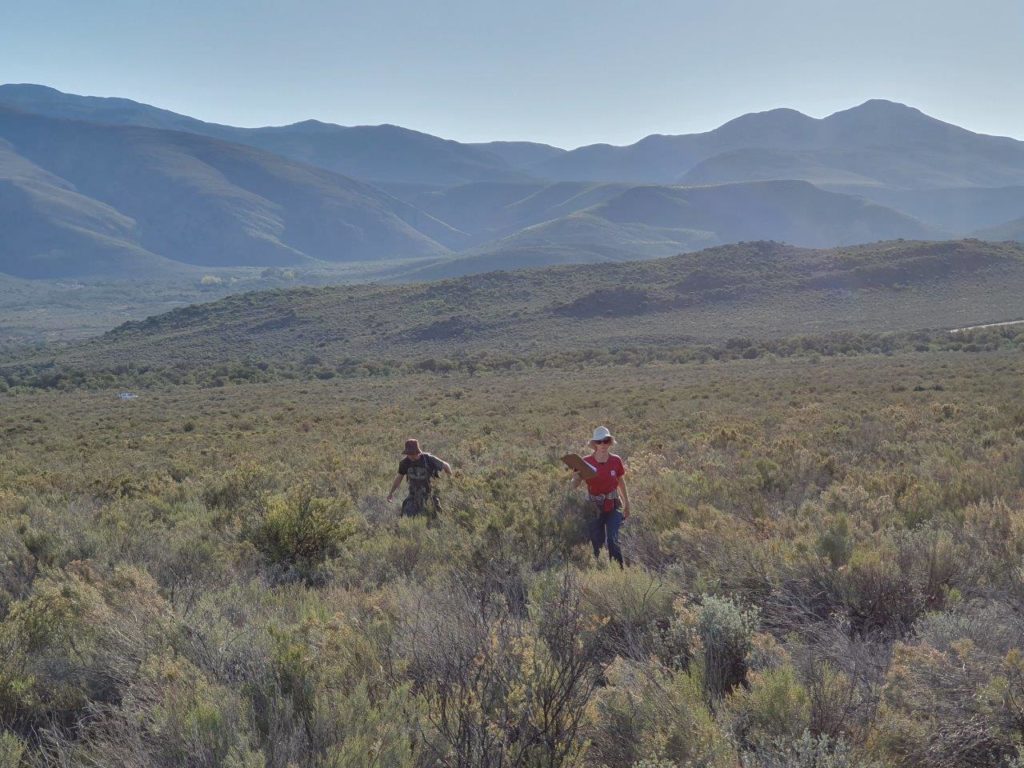
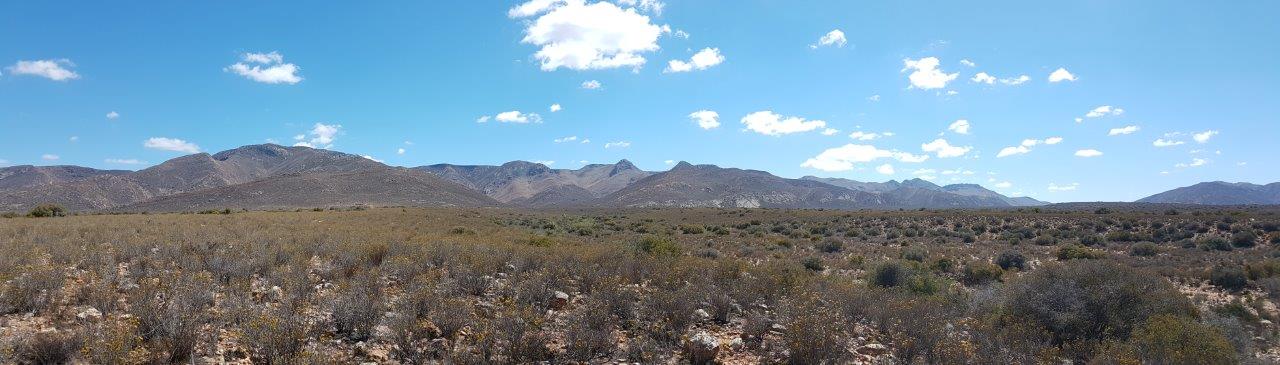
Cobus Theron, Manager, EWT Drylands Conservation ProgrammeThe Karoo is a vast and inspiring landscape. The extensive “rantjies” and “vlaktes” remind us that once there was a time when most of the earth was free of noise, pollution and human infrastructure. This seemingly harsh environment does however provide a home for many unique mammals, birds and reptiles. More often than not, the threatened and Endangered species of the Karoo are solitary, elusive and difficult to research and conserve.
The EWT’s Drylands Conservation Programme (DCP) is committed to researching and conserving some of these ‘hide and seek champions.’ “Developing and exploring new techniques to find, locate and study some of our target species is one of the major drivers of our work, and makes what we do innovative, exciting and pioneering,” says Este Matthew, the DCP’s Specialist Conservation Officer.
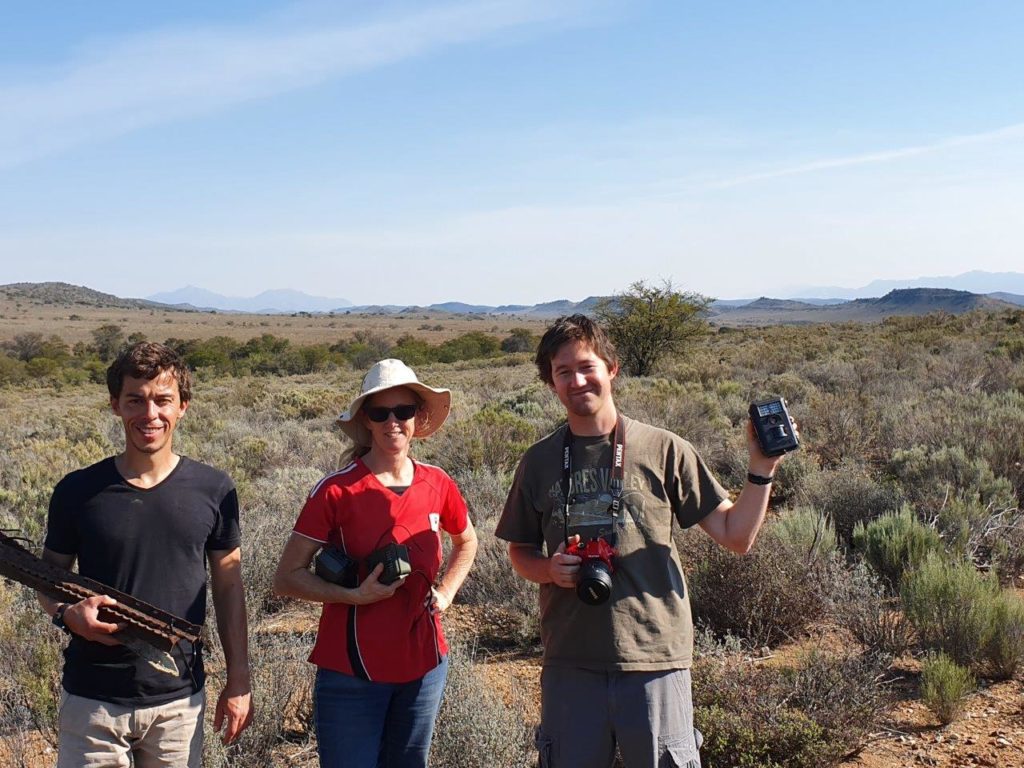
One of the most effective and reliable tools in the DCP’s arsenal of approaches is the use of camera traps. When searching for the presence of elusive species such as the Riverine Rabbit, the DCP uses up to 40 cameras arranged in clusters of up to five cameras. Cameras are kept in position for at least 40 days. Setting up cameras can be hard work as cameras, batteries, Y standards and a big hammer are often carried long distances from the vehicle. The correct orientation and placement of the cameras is important.While cameras need to be set up facing south (to avoid morning and evening glare from the sun), knowing where to place them is even more importan.
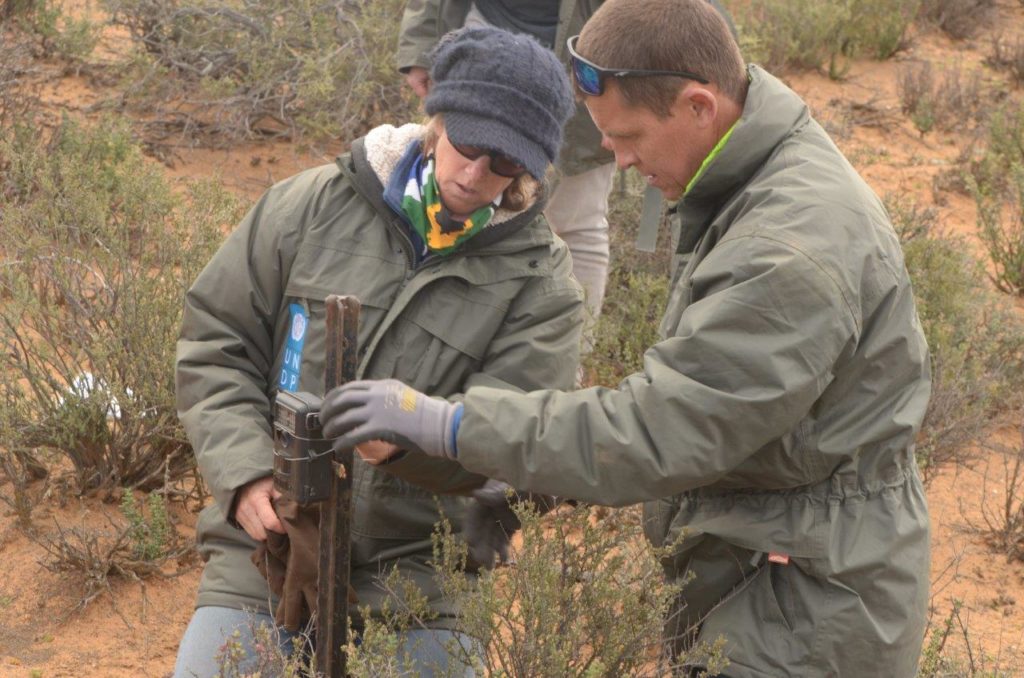
tFew people are better than our own Karoo expert, Bonnie Schumann, in placing these cameras in places most likely to capture secretive Karoo species. Observing Bonnie setting up cameras immediately reveals that science, observation and a highly focused intuition is key to Bonnie’s unrivalled success in setting cameras for Riverine Rabbits.
While cameras need to be set up facing south (to avoid morning and evening glare from the sun), knowing where to place them is even more importantFew people are better than our own Karoo expert, Bonnie Schumann, in placing these cameras in places most likely to capture secretive Karoo species. Observing Bonnie setting up cameras immediately reveals that science, observation and a highly focused intuition is key to Bonnie’s unrivalled success in setting cameras for Riverine Rabbits.
The cameras once again proved their worth In March 2019. After a reported Riverine Rabbit roadkill in the Baviaanskloof the DCP set out to determine if the roadkill was an unusual event or if in fact the western parts of the Baivaanskloof had an active Riverine Rabbit population.
Over the course of two days the team set 12 clusters of between three and four cameras each. Each cluster was more than a kilometre apart (significant enough that a single Rabbit would not trigger cameras in two clusters). All the clusters are planned on a map in advance and situated on private land with the permission of the owners. The cameras were then left for 50 days.
The team returned in May to collect the cameras and review the footage. Excitement was high as we were hopeful for positive results. Supper plans were postponed as memory cards were copied onto laptops and footage reviewed. All expectations were surpassed as more than eight of the 12 clusters had footage of Riverine Rabbits on them. Huge celebrations followed as the team confirmed a brand new population in a new geographic area for the Riverine Rabbit .
Collecting images is however only the first step in using camera trap data. Due to the fact that cameras are triggered by movement, each camera may take hundreds of pictures, often including wind or sheep triggered pictures. Sorting these pictures can be very time consuming. The EWT is currently collaborating with the Liverpool University John Moores to develop a machine learning programme capable of identifying and sorting pictures according to species. Once this machine learning software is perfected, we hope to get to a point where individuals of a species like Riverine Rabbits can be uniquely identified.
Camera trap information can also be used to calculate the density and area of occupation of species. Due to the additional information captured by the cameras – date, time, temperature; it is also possible to develop a better understanding of the activity patterns of certain species.
ALL’S WELL THAT ENDS WELL FOR BREEDING CORMORANTS
Lourens Leeuwner, Manager, EWT Wildlife and Energy Programme
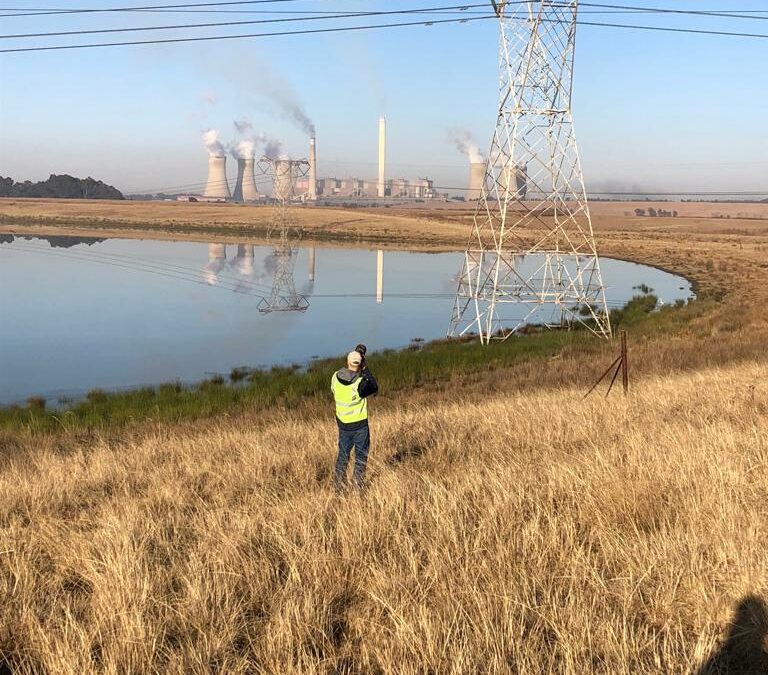
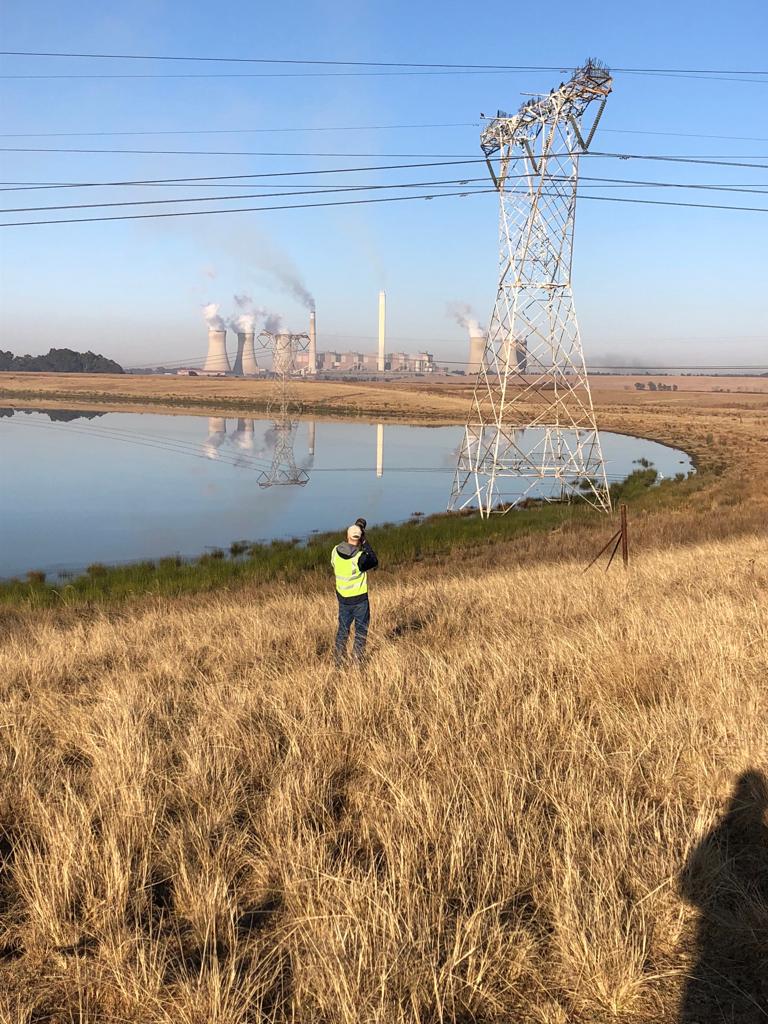
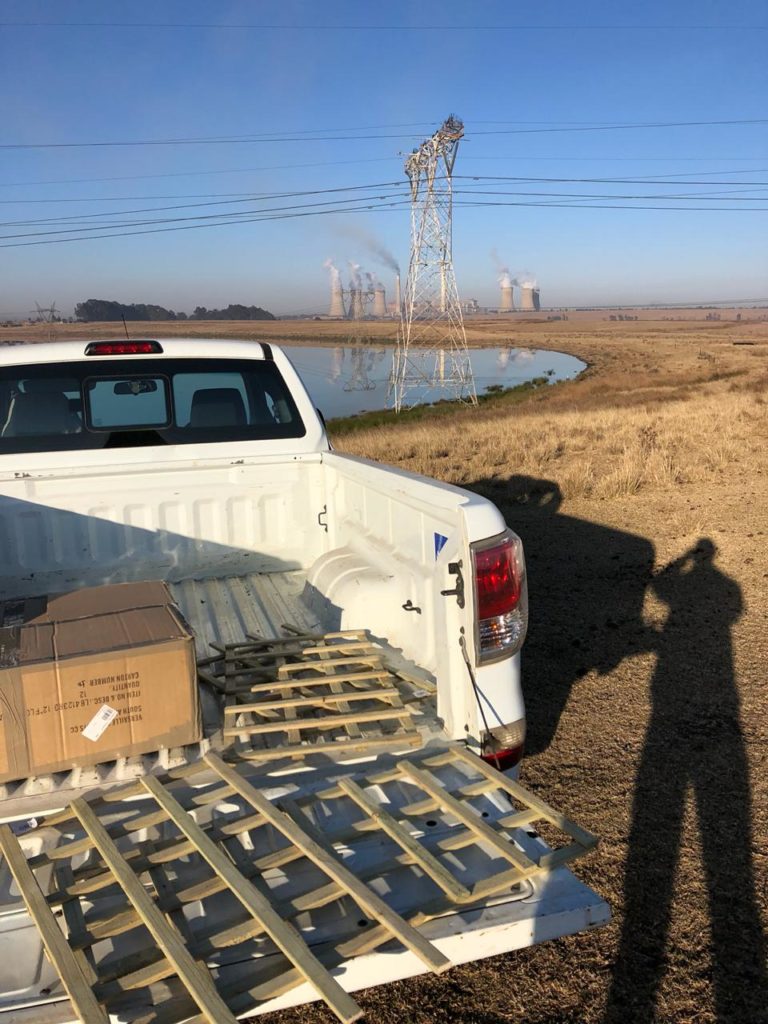
LourensL@ewt.org.zaRecently the EWT’s Wildlife and Energy Programme (WEP) received a request for urgent action from Eskom Transmission’s North-East Grid to help deal with nesting cormorants causing problems for Kriel Power Station. When the grid’s linemen inspected the source of the faults, several White-breasted Cormorants were found to be nesting on steel lattice towers of the Hendrina-Kriel 400 kV transmission line. Some of the birds were nesting directly above the insulator strings and their continued presence resulted in heavy pollution in the form of a coating of faeces on these critical components. Initial remediation to clean the insulators was only a temporary solution; when WEP was called to action on Thursday, 27 June, the line had again tripped the transformer at Kriel Power Station, which in turn resulted in a significant loss of supply. A quick solution would be to simply remove the nests immediately, but the North-East Grid’s environmental manager, Tovhowani Tshikomba, correctly asked for assistance in doing so responsibly and within the constraints of their ordinal permit to manage bird nests on their infrastructure.
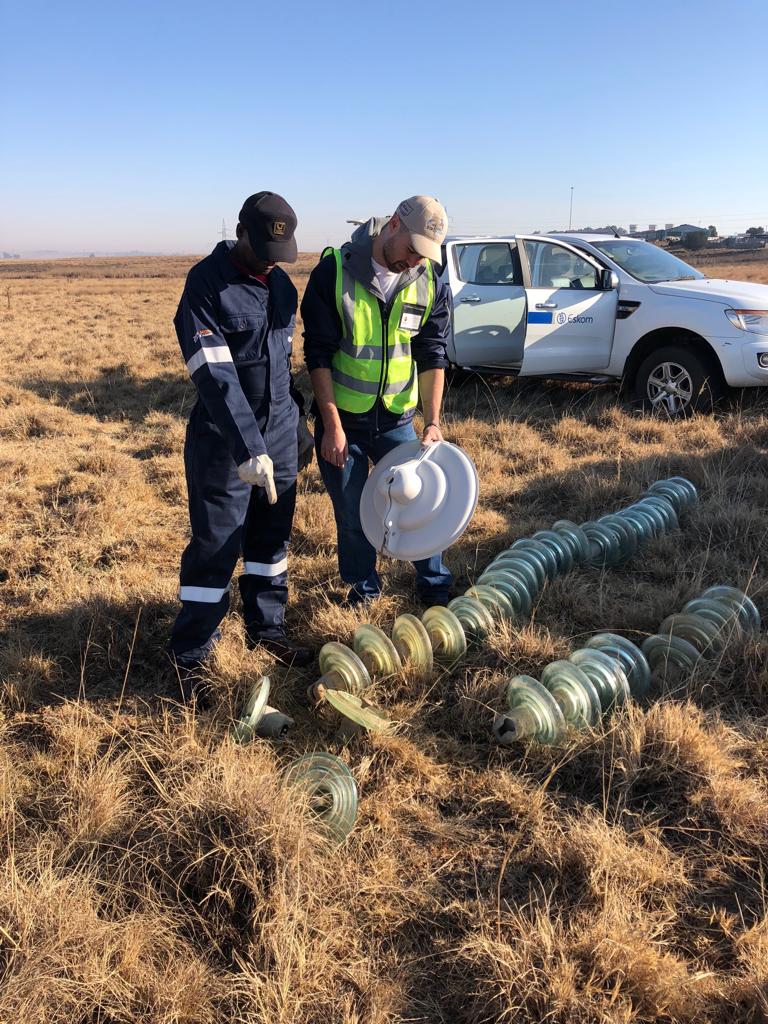
A decision was initially made to move the nests lower down the tower, however when a senior field officer from WEP was dispatched to investigate the situation, he found that only one of the nests contained nestlings that had not yet fledged. Fortunately, this particular nest was not situated directly above the insulators, and thus posed no serious threat in causing additional faults. The soiled insulators and bird guards still had to be replaced, however, and Eskom linemen were hoisted up to the top of the tower by helicopter that Saturday morning. The adults and fledglings left the tower when disturbed, leaving the last nest with its nestlings too young to fly. The team from Eskom took care when working close to the nest, and WEP monitored the nest from a distance once the work was completed. Everyone was relieved to see the parents return soon after the helicopter had left.
This has been a good example of how wildlife can have an impact on electrical infrastructure, and of how the Eskom/EWT Strategic Partnership strives to solve such problems responsibly and with no negative impact to our wildlife residents.
WATER UNDER THE BRIDGE?
Innocent Buthelezi, Field Officer, EWT Wildlife and Transport Programme
InnocentB@ewt.org.zaWe live in an incredibly complicated and interconnected world. Transportation networks stretching across land, sea and air, and other linear infrastructure (such as power lines, canals, pipelines and fences) extend across large swathes of the globe. These are a visible representation of how cultures use the landscape, enabling us to travel and share goods and ideas. In addition to providing access to remote areas, networks of roads, highways, railways and utility lines have a variety of, both positive and negative impacts on natural systems that range both spatially and over time.
Traffic, particularly when reckless driving is involved, can have a direct negative impact on wildlife, with many species at risk from wildlife-vehicle-collisions, often resulting in an animal’s death, or ‘roadkill’. The ongoing collection and submission of data by road users and road management agencies is making a substantial contribution to our understanding of these negative impacts particularly on specific species, habitats and road sections.
The EWT’s Wildlife and Transport Programme (WTP) works with toll concessionaire companies such as Bakwena N4N1, TracN4 and N3TC, through training their route patrollers to gather roadkill data. The database we hold with N3TC is substantial, and we are starting to identify species and sections of the route where there is most, and least, roadkill.
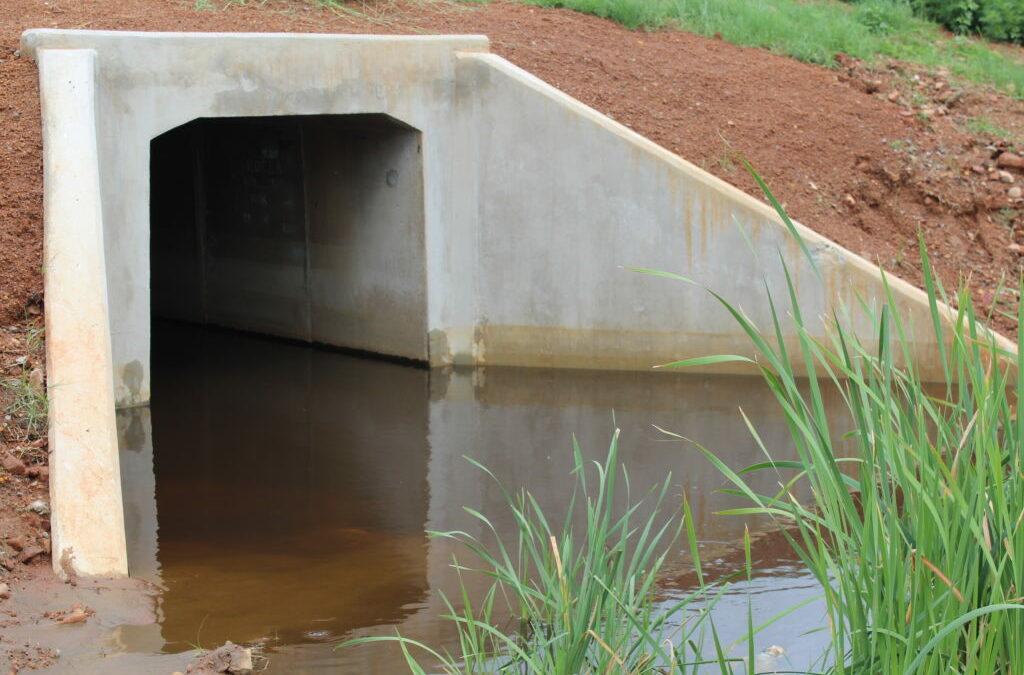
Reports from sections 9, 10 and 11, between Heidelberg and Villiers, have consistently shown high levels of animal road mortality since 2014, and consequently, have been identified as a potential roadkill hotspot (Figure 1). It is logical, then, to assume that animals are unsuccessfully attempting to cross the highway; however, evidence from site visits in 2017, demonstrates that some animals are utilising existing structures such as culverts and underpasses to successfully cross beneath the road.
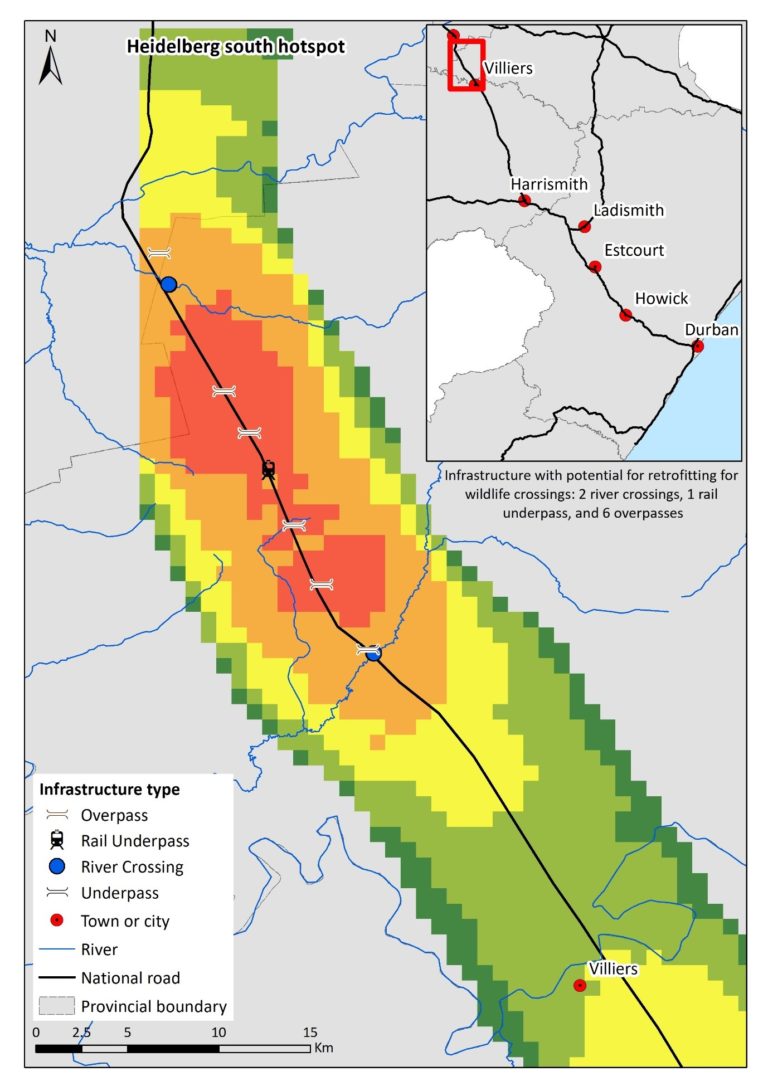
These structures were mostly not built or erected for the express purpose of being wildlife passages, but the thinking is that some structures will still fulfil this function. Currently there are little data available on the benefits of existing structures in South Africa that highlight areas where wildlife utilises crossings. Therefore, surveys offer a quick and cost-effective method of gaining a greater understanding of these benefits and proposing appropriate recommendations to existing structures to address the threat of roads to wildlife.
We are in the process of using camera traps to determine what species (if any), are using the culverts and underpasses. The structures were selected based on a site visit undertaken in August 2017, on Section 10 (Villiers) of the N3 highway. The aim of this project is to conduct a survey of existing road structures and determine how they benefit wildlife. In consultation with N3TC, the EWT proposed to install six cameras rotated between 10 different culverts / tunnels under the N3 to determine which species occurred in the vicinity of, and which species actually used, the crossing structures to move from one side of the road to the other.
To allow comparison between the sites, the structure-type was standardised (in this case, large underpasses) as was the fence-type adjacent to the structure (a livestock fence on both sides of the road). Adjacent habitat types and/or land use was variable, for example, wetland, agriculture, and grassland, which will allow an assessment of why animals may prefer one underpass over another. Six of these structures were single passages, with the remaining four being double passages .
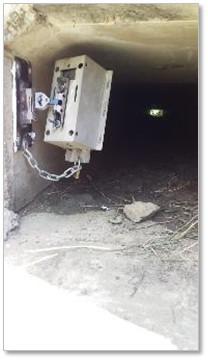
One camera was placed at one end of the structure, attached to the sidewall through the use of solid bond adhesive, approximately 4 metres above the ground, on a pivotal arm. This enabled the camera to be angled down towards the ground, as well as in line with animal movement. The cameras were further encased in a padlocked steel box which was attached to the pivotal arm by a metal chain. The installation of cameras is a first for the country and will guide mitigation measures in 2020.
The six cameras were deployed from 21 February this year and have been getting some fantastic data. The data were analysed up to 27 April, although the cameras were deployed until 27 May, before some of the cameras were sadly stolen, and we had to remove the rest to prevent further theft.
A total of 109 observations was captured on the camera traps between 21 February-27 April 2019. The majority of these were mammals, followed by birds, and reptiles. It should be noted that the bird was a Helmeted Guineafowl, and typically terrestrial, residing in flocks during the non-breeding period, whilst a lizard species was unidentified.
Of the 106 mammals, seven species were identified, with Cape Porcupine being the most common, followed by unidentified rodents (i.e. mice). Three species of mongoose were identified (Water, Large Grey, and Slender).
One observation of a Serval was detected, which is very exciting given the large number of Serval road mortalities in the N3 database. If Serval are naturally opting to use the structures, how many of them are utilising them successfully, and why are some electing to still cross the highway?
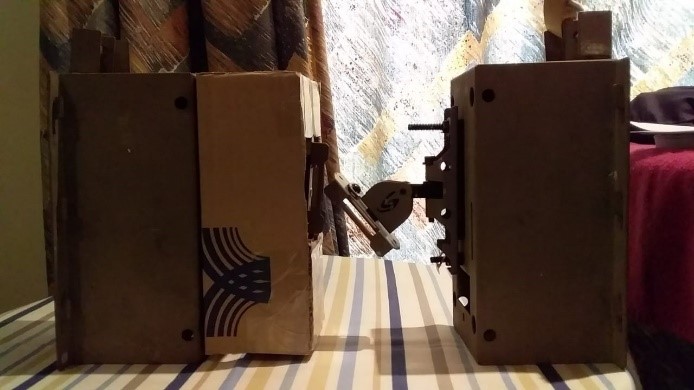
N3TC and the EWT have decided to discuss redeployment and measures to reduce future theft. To counter the theft of further cameras, WTP’s Field Officer, Innocent Buthelezi came up with a plan to make the cameras theft-proof and had to raid his dad’s workshop to modify the four remaining cameras. Innocent’s new design (the ‘ButheBox’) started as cardboard to build a template for the casing. The final design of the ‘ButheBox’ has three padlocks attached the box, which will hopefully make it more difficult to access.
MAKE IT RAIN
 Catherine Vise, EWT Soutpansberg Protected Area Water Conservation Project Coordinator CatherineV@ewt.org.zaWe are proud to announce an investment from The Coca-Cola Foundation (TCCF) into the EWT’s Soutpansberg Water Conservation Project, through their Replenish Africa Initiative (RAIN). TCCF’s investment is part of their ongoing support of watershed protection programs across the continent and demonstrates their commitment to driving progress on the sustainability development goals on the African continent. The Soutpansberg Water Conservation Project identified a large area of alien trees in Limpopo, which, once removed, will significantly contribute to the region’s bulk water security. RAIN is the flagship programme under which TCCF implements its community water projects in Africa. To date, RAIN has reached more than 2.8 million people with improved water access, sanitation and hygiene (WASH) across 41 countries. By the end of 2020, RAIN aims to measurably improve the lives of at least six (6) million people in Africa through sustainable WASH interventions. The EWT is very pleased to be working with The Coca-Cola Foundation, through the RAIN programme, as the funding will expand our current work removing IAPs from upper catchment areas in the Soutpansberg, while at the same time empowering local people through the creation of jobs.
  What are IAPs? Invasive alien plants (IAPs) are plants introduced to a new location from elsewhere in the world. These introductions can occur purposefully, such as exotic plants introduced for garden plants or forestry and agriculture, or sometimes these introductions happen accidentally. Once introduced, IAPs are a species that naturalise, adapt and spread quickly in their new environment. With no natural predators the IAPs increase, which can lead to mass invasions of habitats. Consequences of this can be dire – from direct impacts on biodiversity through habitat displacement, to impacts on human livelihoods. Invasive alien species are globally recognised as the second largest threat to biodiversity, after direct habitat destruction.
  How do IAPs affect our water resources? IAPs also have a very high impact on water resources. Some species (e.g. Eucalyptus and Black Wattle) extract large amounts of water from both groundwater and river systems due to their much higher use of water than the indigenous vegetation. It is estimated that IAPs can lower water availability by up to 4% across the country, and if left unchecked this impact could increase to 16%. Dense stands of Black Wattle on river systems can also exclude indigenous vegetation (such as grasses and sedges) from growing on the riverbanks leaving the soil exposed and dried out. This can lead to soil erosion when it rains, further degrading the system.
  How have IAPs affected our Soutpansberg mountain region? The Soutpansberg Mountain range is a unique set of mountains in the far north of Limpopo, South Africa. This area offers a wide range of habitats, hosts incredible biodiversity, and is a known centre of endemism in the country. Some habitats high up on the mountain include grasslands and wetlands. These host a number of species and are important sources of water, particularly for the recharging of groundwater sources for downstream users. However, the relatively pristine Western Soutpansberg is threatened by the presence of IAPs. Dense stands of Black Wattle and Eucalyptus are invading wetland and riverine systems. There are also other isolated stands of Eucalyptus trees across the mountain, associated with river systems and impacting on water resources coming off the mountain. This is of particular importance as downstream the Limpopo Valley has important agricultural significance. Farmers are dependent on these ground and surface water sources for irrigation and rural communities rely on natural water sources for their livelihoods. The EWT initiated the Soutpansberg Protected Area Water Conservation Project in 2018. The project focuses on the removal of IAPs and has a dedicated team of Water Rangers recruited from local communities. In a country where water scarcity’s importance has increased on the national agenda, it is vital that we preserve our water resources to the best of our ability. Investing in clearing of IAPs has been recognised by Department of Environmental Affairs’ Natural Resource Management as a key priority area – for water security, as well as the jobs that are created through this investment. In addition to removal of alien trees, the project will also work within the larger Soutpansberg Protected Area Programme on protected area expansion, targeting 4,000 ha of upper catchment mountain habitats for protection. In this area, we will work with landowners to commit their land to becoming a Nature Reserve through the Biodiversity Stewardship Programme. Our partnership with RAIN will include engagement with communities in the wider Soutpansberg area on water related issues, and especially water stewardship towards reduced consumption. This will be implemented by workshops on water, sanitation and hygiene to local people, fulfilling RAIN objectives of education on this important topic. We are looking forward to forging ahead with this project and making a real difference to conservation in the Soutpansberg Mountains.
FARMING FOR THE FUTURE
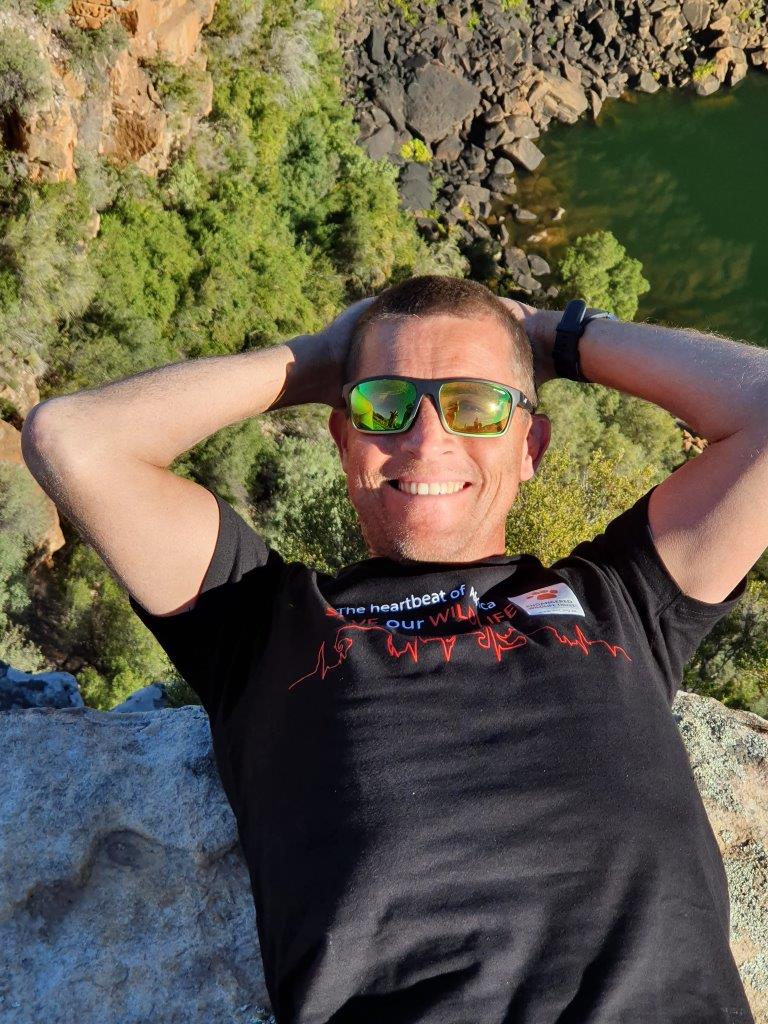
Bonnie Schumann, Nama Karoo Coordinator, EWT Drylands Conservation Programme
Tourism in the Bokkeveld Plateau, near Nieuwoudtville in the Northern Cape, is currently almost exclusively confined to the spring flower season. This incredible floral display is largely attributed to the flowering of geophytes, which has resulted in the area claiming the as yet undisputed title of “bulb capital of the world”. There are, however, untapped opportunities to attract a year-round flow of visitors to enjoy nature-based activities in this unique part of the Northern Cape. This could help stabilise the tourism-centred economy and could lead to some great conservation spin-offs.
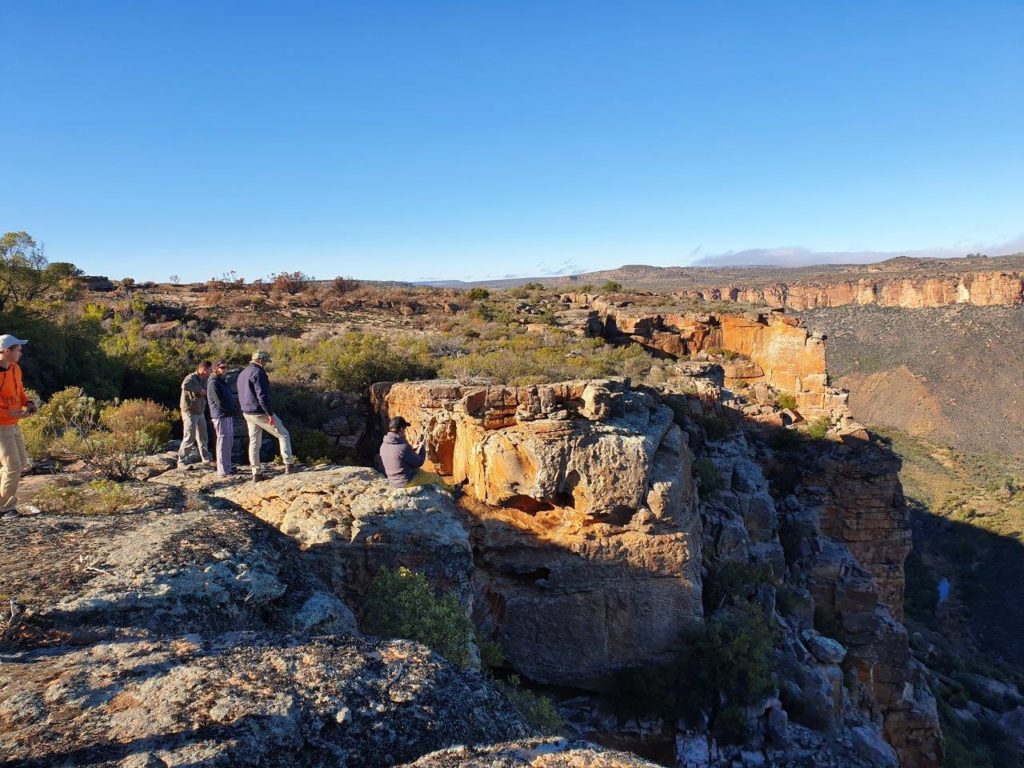
The EWT’s Drylands Conservation Programme team recently visited this biodiversity hotspot, with the aim of exploring some innovative ideas for expanding nature-based tourism with local landowners and the Oorlogskloof Nature Reserve staff.
We spent time with the Van Wyk family, owners of the farm Papkuilsfontein, who have, for the past ten years, partnered with the Northern Cape Department of Environment and Nature Conservation as part of the Department’s Biodiversity Stewardship Programme.
This programme has a unique connection to their farm as their vision is for each generation to leave the property in a better condition than what it was when they started farming. Willem van Wyk and his wife Mariette practiced this ethos, and their son Jaco and his wife Alrie are following in their footsteps.
This is a commercial sheep farm with conservation being part of this living working landscape, an approach which lies at the heart of the Stewardship Programme. Besides the incredible plant biodiversity, for which the region is famous, Papkuilsfontein is truly a birder’s paradise with 145 species encountered here at various times throughout the year. Raptors include the Martial and Verreauxs’ Eagles, kestrels, and the rare and Endangered Black Harrier, which nests on the property. The property is spectacular both in and out of the flowering season.
In recognition of the commitment of the Van Wyks to conservation, the EWT’s Drylands Conservation Programme has selected Jaco and Alrie as Sustainable Land Management Champions. These champions form part of the EWT’s Karoo Forever Project which promotes sustainable land management (SLM) in drylands. Our aim is to identify champions who are flying the SLM flag in their communities and work with them to promote sustainable land management.
By identifying and harnessing champions’ “institutional knowledge” and encouraging peer-to-peer learning, the project promotes dialogue and action to improve sustainable land management in drylands. This is especially critical as these arid landscapes are typically vulnerable to degradation, especially in the face of the predicted detrimental impacts of climate change.
On Papkuilsfontein, farming income and activities are complemented through successful diversification into tourism. Diversification into non-agricultural activities can build resilience and reduce risk by developing alternative income streams. The tourism infrastructure on Papkuilsfontein incorporates guest accommodation, a restaurant and hiking trails.
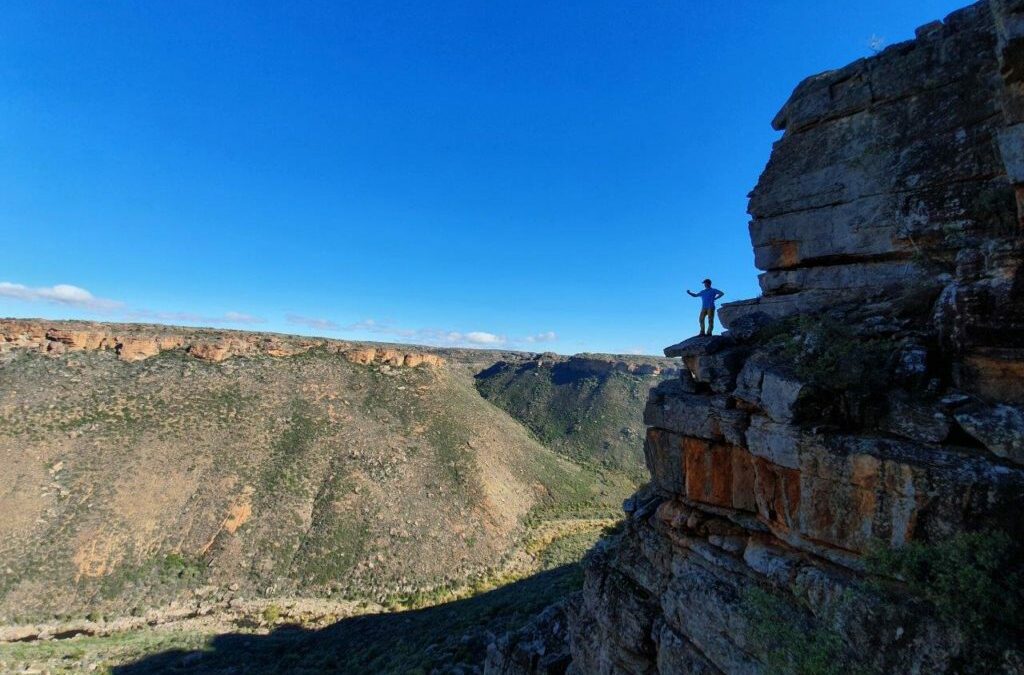
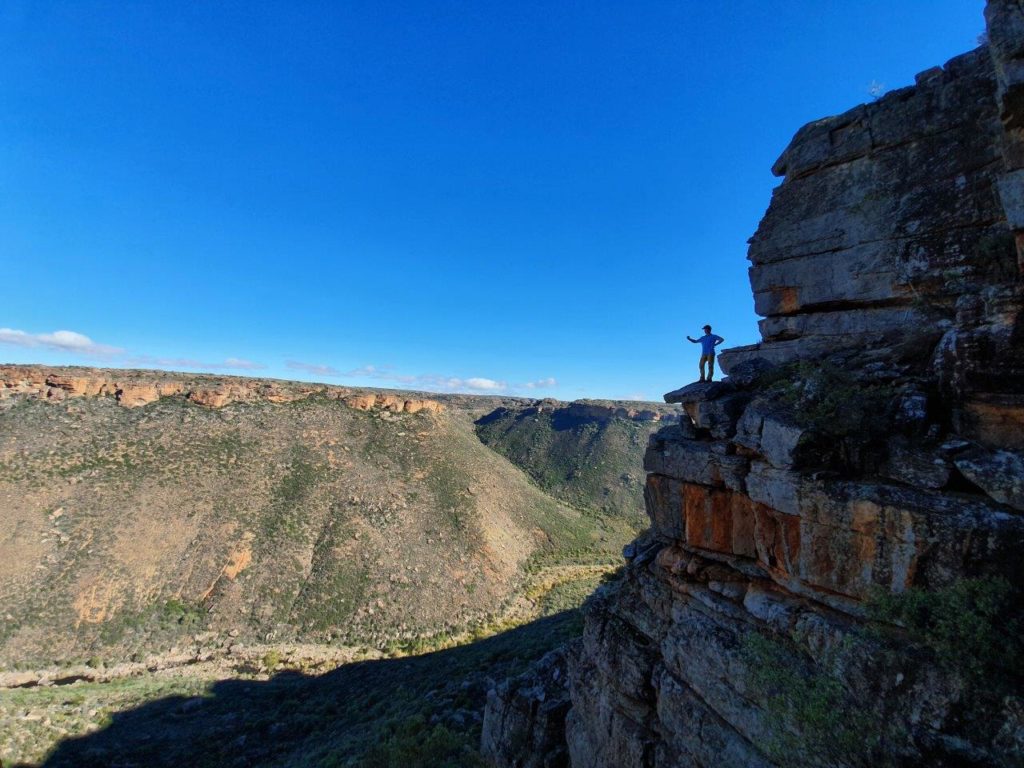
Plans are afoot to repurpose the old 4×4 route into a mountain bike route, an activity which has less impact on the environment and gets people out of their vehicles to enjoy the spectacular surroundings. Visitors to this unique area have the opportunity to learn about rock art, view the Oorlogskloof canyon, the waterfall and its geology, birds, the diversity of veld types, farming and conservation, and, of course, flowers during the spring season. Biodiversity, conservation and the integration of conservation into a farming landscape are discussed with visitors; this is a suite of topics that makes for lively discussion and highlights the critical role of conservation of natural resources outside formally protected areas. The landscape is truly unique and inspiring.
Our plans with the Van Wyk family are centred around options for the expansion of nature-based activities offered at Papkuilsfontein, as well as options for linking tourism initiatives with surrounding land owners and the nearby Oorlogskloof Nature Reserve.
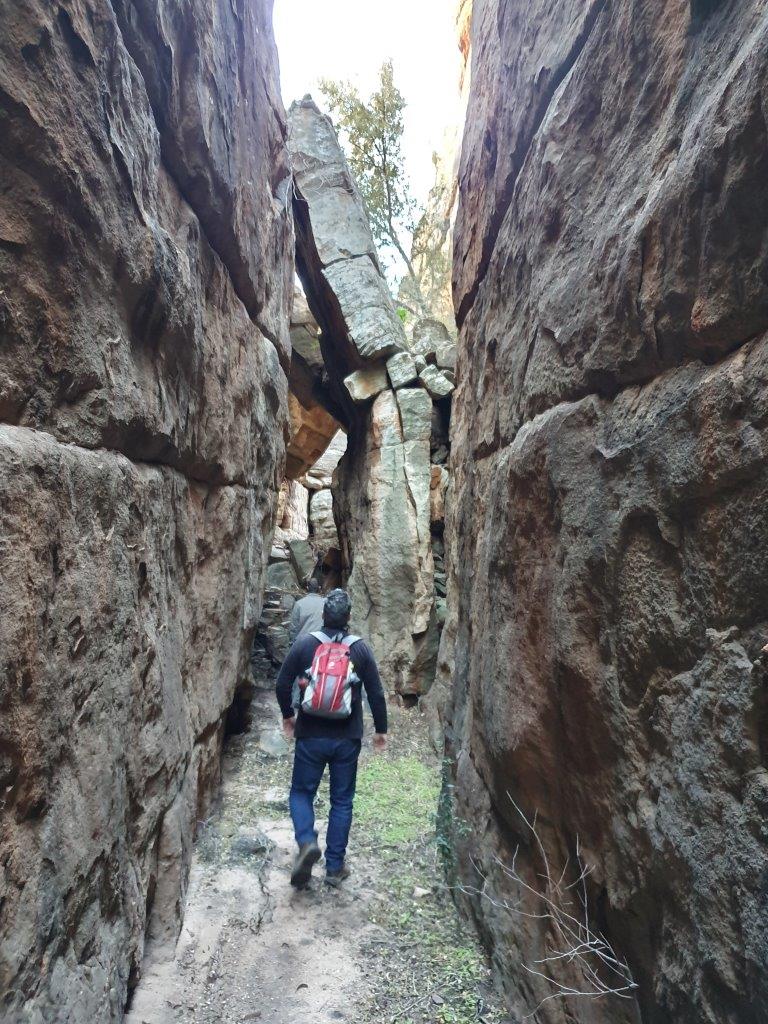
“One product idea being explored, is the creation of a Via Ferrata (a way of softening technical rock climbs through the introduction of safety points and rails) from Papkuilsfontein’s magnificent sandstone cliff-tops down onto the steep, densely vegetated slopes which lead to the Oorlogskloof River some 200 metres below. And if this is possible, it would create a link to existing trails on neighbouring properties, thus opening up an important eco-tourism corridor and boosting the Green Economy in the region,” noted Nick Yell (a journalist who joined us on our visit to Papkuilsfontein) in his recent article that appeared in Sunday Times Travel Weekly.
With this in mind, the EWT’s Cobus Theron invited seasoned rock-climbing guide, Justin Lawson, (ClimbZA) along to assess the property to explore this as a novel tourism option and search for possible routes. The entire plateau, from individual properties to activities linked across the landscape from the North to the South Bokkeveld, offers exciting options for expanding nature-based and adventure tourism; low-impact, high income activities that can operate independently of the temperamental flower season. Besides the spectacular biodiversity, a great deal of the appeal of the Bokkeveld is to be found in its remoteness and tranquil environment. Expansion of nature-based tourism will be based on maintaining the integrity of these qualities, in addition to creating a greater awareness and appreciation of the biodiversity of this unique area.
This initiative forms part of the EWT’s Karoo Forever project and is funded by the Global Environment Facility through the Department of Environmental Affairs and the United Nations Development Programme.
For more information on the Karoo Forever project, contact:
Bonnie Schumann, Endangered Wildlife Trust, Drylands Conservation Programme, Cell: 072 122 4232, email: bonnies@ewt.org.za
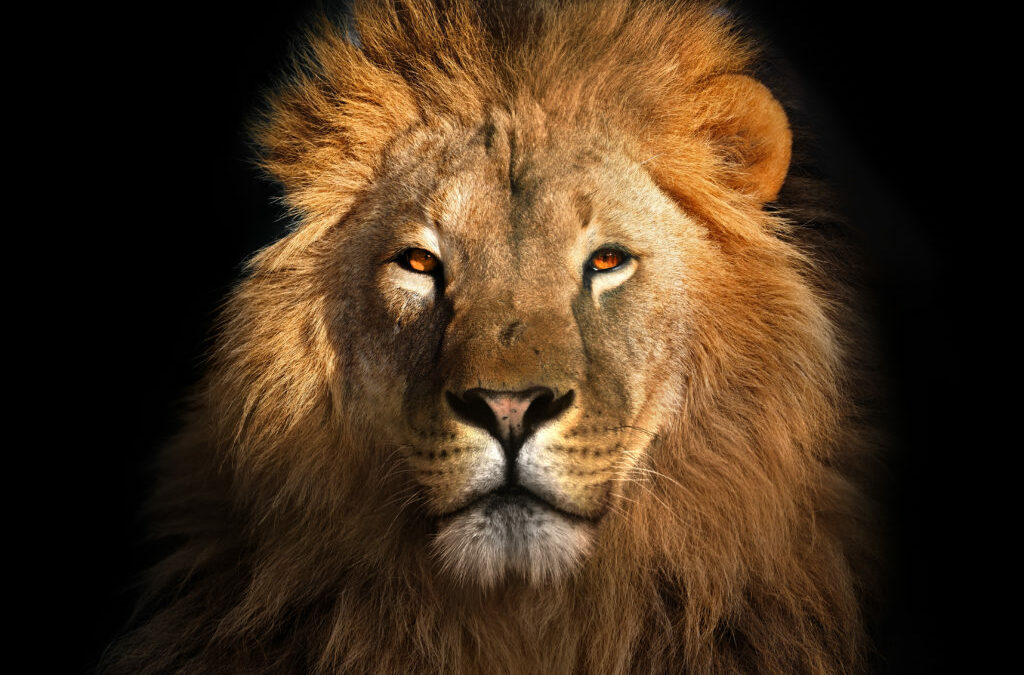
HEAR THEM ROAR!
Belinda Glenn, EWT Marketing and Communications Manager
BelindaG@ewt.org.za World Lion Day is celebrated in August each year, and we’ve certainly had something to roar about in 2019.
On 6 August, the Pretoria High Court set aside the 2017 and 2018 lion bone quotas, stating that these were both unlawful and unconstitutional, and that due process was not followed in the setting of these quotas. This precedent-setting judgement has much broader implications beyond the lion bone trade, and could have a significant impact on the breeding, slaughter, and selling of parts of all captive wild animals.
The EWT has been vocal in its opposition to the lion bone trade, and the setting of these quotas, as the captive breeding of wild animals for their parts offers no demonstrated conservation value for the species. We do not support the commercial captive breeding of carnivores because it does not contribute to the sustainable, responsible use of our wildlife resources and, in some cases, may have negative impacts on the conservation of these species in the wild.
Instead, we support the conservation of wild and free ranging carnivores, including but not limited to lions, in their natural habitat, where they contribute to biodiversity conservation as keystone and flagship species. The EWT therefore welcomed this landmark judgement, and applauded the NSPCA and all other parties who have persisted in their efforts to secure this victory for lions.
Just a little later that same week, the EWT officially launched its lion conservation knowledge hub, the African Lion Database, with the exciting news that new records of these charismatic cats have been captured in locations where they were previously thought to have gone extinct.
The database is hosted by the EWT on behalf of the broader conservation community, under the auspices of the IUCN’s Cat Specialist Group, and will be used to compile, analyse, and store data on African Lion distribution, abundance, and population trends, and support the continuous assessment of the status of lions across the continent. This is significant because the more we know about a species the better we can protect it, by guiding conservation action and directing funding resources to where they are most needed.
This project has been collating existing data from reserve management, researchers, existing data platforms, and from governments for the last six months and already offers some exciting new insights into the distribution of lions in Africa. For example, the presence of a resident male lion in Nyika National Park, Malawi, was recently confirmed by Central African Wilderness Safaris. Months after the initial report, the EWT received photos to confirm his presence. Another exciting record comes from Angola, where a sighting of a male and female with their two cubs was recorded in Luando Special Reserve. These are the first female and cubs to be seen in more than a decade in this area and this new information offers hope that lions may be re-establishing a presence where they were thought to have disappeared. A recent Born Free expedition recorded a small pride of lions for the first time at Mpem and Djim National Park in southern Cameroon – again, in an area where lions were considered to be locally extinct. These records provide some hope that lion populations are beginning to establish and increase in areas where hope was lost.
This project is made possible with the financial support of the Lion Recovery Fund and National Geographic Society.
LATEST STORIES
Keep our lions where they belong, in the wild! Take the pledge to keep our lions #wildnfree and join the fight against keeping carnivores in captivity for petting, walking-with, photo-tourism, captive hunting and the trade in their body parts. There is no conservation requirement or recommendation for any captive breeding or keeping of carnivores in South Africa. Captive breeding does not address the key threats faced by carnivores in the wild, and captive bred lions have no role to play in reintroductions and restorations of wild lion populations. The proliferation of captive carnivore facilities in South Africa is primarily for commercial gain, and at significant cost to human safety and animal wellbeing.
A WORD FROM THE CEO
Yolan Friedmann, EWT CEO
yolanf@ewt.org.zaSocial media has been abuzz lately with posts that dramatically depict the horrors of Brazil’s flaming Amazon forests, with blazes reaching to the skies and smoke choking the horizon, darkening skies in cities like São Paulo nearly 1,500 miles away. On the upside, the environmental crisis facing our planet has become topical and for a while at least, humanity’s rampant destruction of the earth is absorbing some of our attention. On the downside, people all over the world are responding mostly with anger at the lack of political appetite to save our forests. And that’s all. It’s the downside because once again, we see how human beings deflect the blame and cannot accept that change can only come about with changing everything that we are doing that contributes to this destruction. Activism absolves us from having to change ourselves and vocal calls for “others” to fix the planet make eco-heroes of us all. Let’s consider the following:
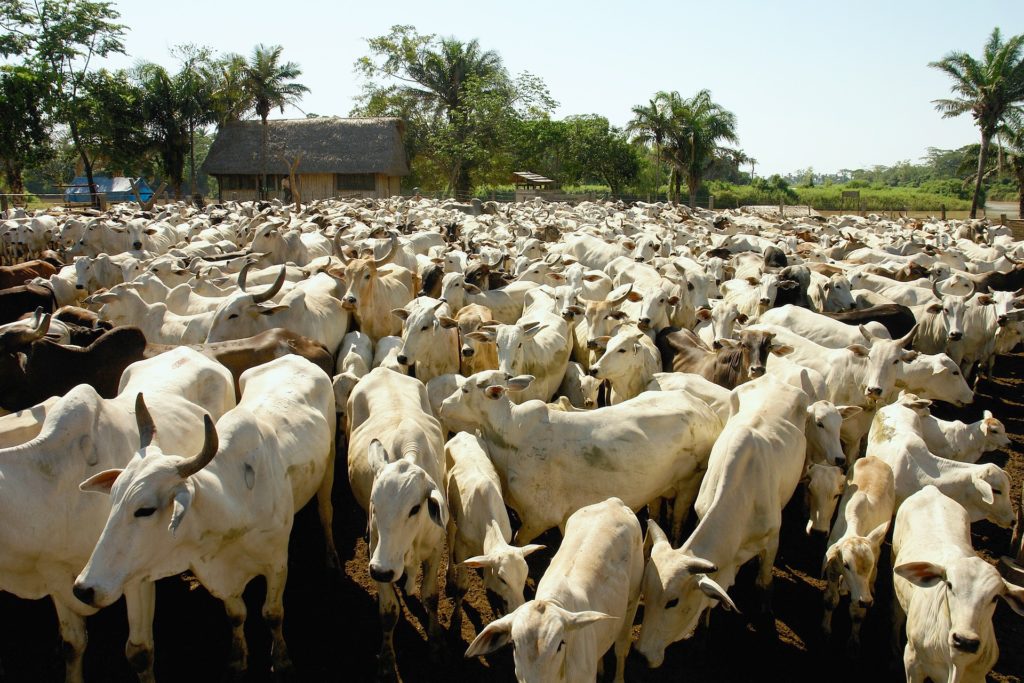
Brazil is home to the majority of the Amazon forest and whilst the forest has experienced fires for decades, the scale and number of wildfires this year is the highest ever recorded. Brazil’s National Institute for Space Research notes an 80% increase in forest fires with more than 72,000 being recorded between January and August 2019. With this being Brazil’s wet season, these fires have been directly attributed to increased human activity in the forests with the Guardian reporting a 300% increase in deforestation in July 2019 compared to July 2018. The primary cause of these wildfires is the ongoing deforestation of the Amazon over decades and with its rampant escalation in just the past year. It is estimated that more than three football fields of forest are being cleared every minute, to, mostly, make way for livestock ranching as well as soy and palm production, both commonly used for livestock feed. It is estimated that the livestock farming sector in the Brazilian Amazon is responsible for about 80% of all deforestation in the region, making it the world’s largest single driver of deforestation. But they are not alone in their guilt. The products of this industry find their way onto your dining room table in the form of pies, frozen meals and canned meat, and the by-products are linked to items manufactured by Nike, Adidas, Timberland and Clarks Shoes who, according to Greenpeace use leather linked to Amazon deforestation. And the consequences? In 2012 it was reported in Science that at least 38 species, including 10 mammal species, 20 bird species and eight amphibian species have gone extinct directly due to deforestation with more heading towards extinction unless forest clearing is not halted. There is no way of accounting for the true figure of reptiles, insects or plant life lost. And with more than 33% of the Amazon belonging to more than 3,344 indigenous groups, it is not ours to destroy and certainly not for our insatiable appetite for cheap meat.
Philip Lymbery, author of The Dead Zone – Where the Wild Things Were, sums it up: “few people are aware that their own daily food choices also have a huge impact on other wildlife thousands of miles away. Every time people choose intensively reared meat over pasture fed, organic or free-range they’re helping to fuel the destruction of forests and causing the loss of wildlife, such as the Sumatran elephant and the African penguin as well as wildlife closer to home such as hedgehogs and farmland birds. Factory farming is a major driver in the decline of the world’s wildlife and thereby ecosystem collapse, which is why to preserve the natural world and future food supplies governments globally need to act and act fast before it’s too late.”
Industrial-scale meat production has been mooted as an efficient way to feed billions of people but in fact, modern technological, monoculture agriculture has become the primary driver of habitat destruction, biodiversity loss and greenhouse gas production. This is largely due to the millions of hectares cleared annually to produce fodder for the over 1 billion (and increasing) heads of cattle that exist on this planet. The impact of vast numbers of industrially farmed animals is not more land available for wildlife, but in fact less, as these animals consume more grain produced globally than all the humans on earth combined. The UN estimates that there is already enough food produced on Earth to feed 16 billion people yet most of it goes to feeding farmed livestock, and with more than a quarter of that being wasted in the production process. The FAO of the United Nations reported as far back as 2006, that “the livestock sector … is one of the largest sources of greenhouse gases and one of the leading causal factors in the loss of biodiversity, while in developed and emerging countries it is perhaps the leading source of water pollution.” For a planet running out of fresh water, we cannot afford to pollute our water sources with nutrients (nitrogen and phosphorus from fertilisers and animal excreta), pesticides, sediment, organic matter, pathogens, metals and emerging pollutants (drug residues, hormones and feed additives) from livestock farms. With finite limits to the terrestrial surface of our planet, we cannot afford to dedicate 80% of agricultural land to livestock or feedcrop-production. For a forest running out of time, Brazil’s Amazon cannot survive with over 70 million heads of cattle living in it.
Livestock farming, along with the impacts of feedcrop production and farming waste, is estimated to produce more GHG than all the forms of transport on Earth and a 2017 study published by GRAIN, IATP and Heinrich Böll Foundation demonstrated that just “three meat companies – JBS, Cargill and Tyson – emitted more greenhouse gases last year than all of France and nearly as much as some of the biggest oil companies like Exxon, BP and Shell”. Should this trend continue, the industrial meat and dairy production sectors alone will undermine our ability to keep temperatures from rising despite changes in the transport and energy sectors. Our industrial scale livestock farming methods have not become more efficient, only more destructive.
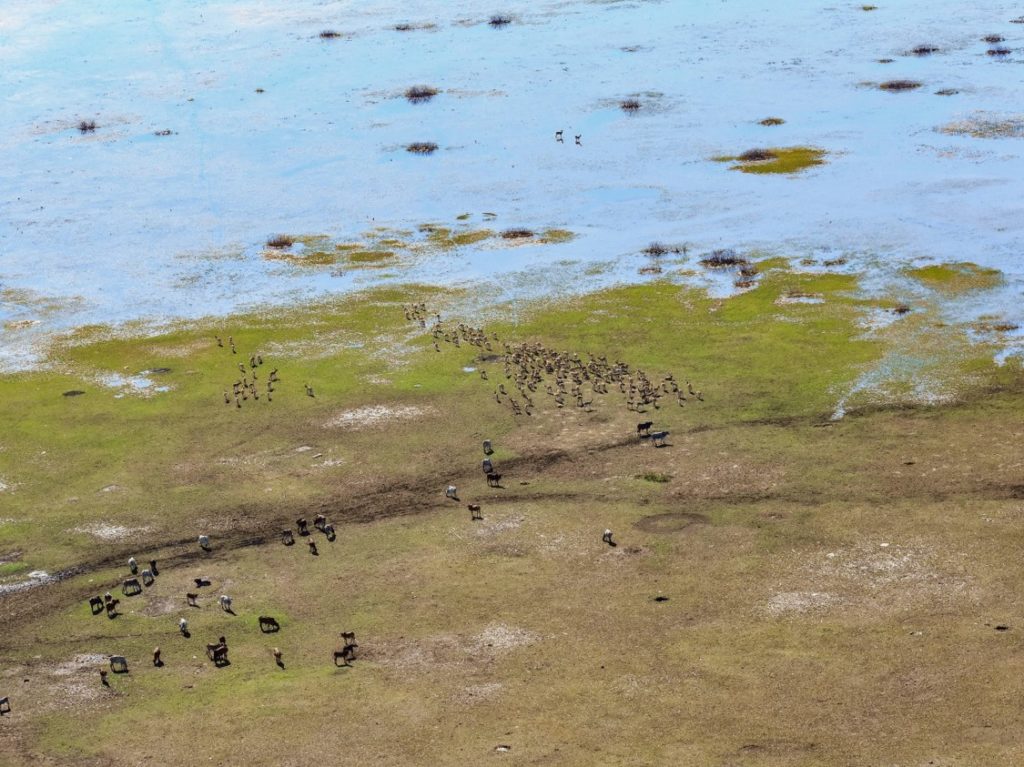
Whilst these trends are largely based on meat production practices in non-African countries, similar trends are emerging in places like Zambia’s Kafue Flats, one of the most important wetland systems in Africa. Recent surveys reveal the presence of more than 100,000 heads of cattle and a diminishing herd of Kafue Lechwe, numbering less than 23,000. Mankind’s insatiable appetite for cheap meat is driving wildlife to extinction, poisoning our water, sterilising the land and choking the air. Not to mention the myriad health impacts of unnaturally produced meat on the human body.
But challenge people to reconsider what they eat, and you dive straight into a tornado of fervent opinion covering cultural practice, religion, human rights, evolutionary biology, health claims and more. Meat eating is perhaps even more taboo than the question of human population. Yet both must be tackled head on, and comfort zones must be challenged, if our forests are to be saved and indeed, ourselves. As we watch the Amazon burning in horror, don’t feel hopeless and helpless. Start today by owning up to what we are all doing wrong and what we can do to change that.
This is not a recommendation to drop all meat from human diets, but at the very least, to reduce your consumption of it and to change the source of the meat you buy, by staying away from cheap, mass produced meat products. There are better agricultural models, such as biodynamic farming, permaculture and farming practices that combine meat production with environmental principles in the form of managed grazing, agroforestry and regenerative agriculture which supports carbon sequestration, high biodiversity and animal welfare. Mixed crop and mixed practice farms with rotational grazing and free ranging animals can actually support biodiversity conservation and improve crop and animal performance. It takes a bit of effort to find food produced in this way and will cost you more, but is a small price to pay for a sustainable future.
So back to the Amazon: keep social media abuzz, but keep the issue alive with stories of how we can be the change we want to see. Support small scale farmers that use labour intensive, natural and diversified farming practices. Challenge others to do the same, take control over what you can change and make that change today. Change your diet. Save a forest. Save the planet.