THE SHINING STARS OF THE EWT
Belinda Glenn, EWT Marketing and Communications Manager
BelindaG@ewt.org.za
The EWT annual award ceremony is an opportunity to recognise those team members who have excelled in various ways each year. The 2019 edition took place on 27 November, and we are extremely proud of the following well-deserving winners:
- CEO Award: Constant Hoogstad (Senior Manager: Industry Partnerships)
- Programme of the Year: Soutpansberg Protected Area
- Programme Manager of the Year: Lourens Leeuwner (Wildlife and Energy Programme)
- Conservation Achiever: Amos Letsoalo (Wildlife and Energy Programme)
- Conservation Supporter: Claire Relton (Conservation Science Unit/African Crane Conservation Programme), Cynthia Chigangaidze (African Crane Conservation Programme), and Thembi Mlimi (Support Services)
- Outstanding Media Coverage: Drylands Conservation Programme
- Pawprint Brand Ambassador: Cole du Plessis (Carnivore Conservation Programme) and his dog, Lihle
- Newcomer of the Year: Khanya Peacock (Communications)
- Honey Badger Award (Fiercest Field Officer): Oscar Mohale (Wildlife and Energy Programme)
- Maloti Award (Best Conflict Resolution): Ashleigh Dore (Wildlife in Trade Programme)
- Special Recognition: Richard Berridge (Support Services)
- Long Service – 20 Years: Harriet Davies-Mostert (Head of Conservation)
- Long Service – 10 Years: Emma Chisare (Human Resources) and Grant Beverley (Carnivore Conservation Programme)
Congratulations!
A huge thank you to Trappers and Faithful to Nature who donated prizes for our worthy winners.
HAPPY HOLIDAYS FROM THE ENDANGERED WILDLIFE TRUST
Wishing you a restful holiday season and a happy New Year! Thank you for your wonderful support during 2019.
The EWT has achieved many fantastic conservation successes this year, and this would not have been possible without your contribution.
Please note that our offices close at 14:00 on 19 December 2019, and reopen on 6 January 2020.
FODDER GROWING PUTS A SMILE ON THE FACES OF WOMEN, SAVES RUGEZI MARSH IN RWANDA
Adalbert Aine-omucunguzi, East Africa Regional Manager, and Daniel Munana, Rwanda Field Coordinator, EWT African Crane Conservation Programme (EWT/ICF Partnership)
AldabertA@ewt.org.za and DanielM@ewt.org.za
In Rwanda, like many other developing countries, women are predominantly responsible for management and conservation of resources for their families. They spend vast amounts of time collecting water, fuel wood, food and fodder, and managing crop fields and livestock. Women are also the primary caregivers to children, the elderly and the sick, in addition to ensuring a clean environment around homes. Their traditional and generational knowledge of biodiversity supplies communities with medicines and nutritional balance. As a result of this relationship with nature, women have, over time, acquired knowledge of the land/soil conditions, water, wetlands, and forest resources as well as other environmental features.
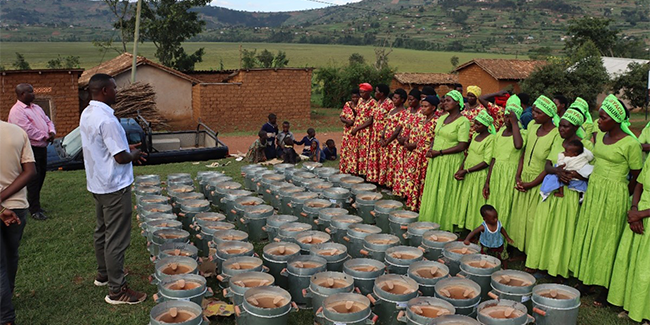
Our project in Rwanda has taken advantage of women’s relationship with nature to empower them to grow fodder and reduce vegetation harvesting pressure on Rugezi Marsh. This followed a realisation that women and children were walking long distances on steep slopes and spending many hours harvesting vegetation from Rugezi Marsh to feed livestock. This was in addition to their routine heavy domestic chores. To address this plight of women, as well as reduce pressure on Rugezi Marsh, our project promoted the growing of Napier Grass to provide fodder. We conducted sensitisation campaigns that targeted both men and women, but in the end, women showed a greater interest in the programme. Most of the men confessed that they had allowed or asked their wives to engage in the fodder growing programme. This was not surprising because fodder collection and livestock feeding under a zero grazing system is the responsibility of women.
We provided Napier Grass seedlings to 559 households and provided training on its management. Two years down the road, women from some of these households could not hide their delight when asked how fodder growing has helped them. Below are examples of what they had to say:
Uwiragiye Chantal from Rusarabuye Sector: “Fodder growing saved my time. I used to spend two to three hours in the marsh harvesting grass, but for now, I have it at the comfort of my home. Our animals are well fed because we have enough fodder for them. Rugezi Marsh will recover because we have stopped harvesting grass from it.”
Uzabakiriho Jeannette from Butaro Sector: “I am very happy that the project gave us fodder. My life and that of my family has changed since we started producing fodder on our farm. Feeding my animals has become easy and less time consuming. As a result of feeding animals well, we have more milk for our children and a surplus for sale. We now have more income from milk compared to when we had to gather grass from Rugezi.”
Nyambere Celine from Rusarabuye Sector: “My family is no longer in conflict with neighbours and local leaders. In the past we used to illegally harvest grass from Rugezi, and the local leaders would run after us. At times our hungry animals would escape into our neighbours’ gardens. All this used to generate conflict, but now we are free and my animals feed well. The whole community has benefited because we are giving planting materials to other community members. Some people come to visit our gardens to learn how to grow Napier Grass.”
Ngendahimana Dative from Ruhunde sector: “My children and I no longer move long distances to harvest grass from Rugezi Marsh. We are able to feed our animals using home grown fodder and they are healthy. They are giving more milk, some of which we sell. “
These testimonies are evidence that fodder growing has relieved women of the burden of walking long distances to harvest it from Rugezi Marsh. It has reduced their daily workload and put a smile on their faces.
This work is made possible by the MacArthur Foundation and the Critical Ecosystem Partnership Fund (CEPF).
WINNING THE RACE AGAINST EXTINCTION
Belinda Glenn, EWT Marketing and Communications Manager, BelindaG@ewt.org.za
We were pleased to be part of a very special evening on 4 December 2019, aimed at celebrating International Cheetah Day, which takes place each year on that date, where we showcased the work being done by the EWT’s Cheetah Conservation Project. This event was generously hosted by PwC South Africa, one of the primary sponsors of this work.
The EWT launched its Cheetah Conservation Project in 2011, with the aim of increasing Cheetah numbers, and maintaining their welfare and genetic integrity across southern Africa and beyond. Working hand-in-hand with reserves across the country, we are proud to report that the project has yielded great success. Over the past eight years, the Cheetah population has grown from 217 wild Cheetahs on 41 reserves, to 380 Cheetahs on 60 reserves. We have also reintroduced Cheetahs to Malawi, where they had become extinct. In fact, South Africa and Malawi are the only African countries with increasing Cheetah populations, thanks to these efforts.
The event was well attended by PwC staff and stakeholders, as well as EWT supporters, who all enjoyed EWT Cheetah expert, Vincent van der Merwe’s presentation on these charismatic cats. Further thanks must go to PwC for not only supporting the project and providing the venue for the event, but for laying on a delicious spread for the guests. Painted Wolf Wines was on hand to ensure that the perfect wines accompanied the food.
A rare blend
We were also excited to launch a new coffee at this event, in partnership with Outliers Coffee Roasters. The Cheetah-themed RARE blend is coffee for a cause, with a percentage of proceeds being donated towards the EWT’s work to save these embattled big cats. Outliers Coffee Roasters are passionate about bringing you coffee with a conscience, and making a difference to various causes. The EWT is proud to be one of those causes, and International Cheetah Day was the perfect opportunity to launch this blend. Watch the launch video here.
For more information on Outliers Coffee, and to get your claws into a packet of RARE blend, please visit their website. Every sip an adventure.
A WORD FROM THE CEO
Yolan Friedmann, EWT CEO
yolanf@ewt.org.za What a way to end an incredible year! A year filled with challenges and frustrations yes, but many highs and successes and at the EWT, we tend to focus on those. Uncovering the secrets of Riverine Rabbit breeding biology; saving Wild Dogs from snares; seeing reintroduced Cheetah breed and expand their ranges; conserving over 10,000 hectares of biodiversity land in Gauteng, a province in desperate need of conservation; expanding our conservation footprint in the Soutpansberg with an additional property purchase, and more… the list is long and we are proud of the great strides we have taken, using YOUR support, to conserve our natural world.
These, and many more conservation wins, are detailed in the EWT’s 2018/19 Integrated Report, which can be found here. The report is evidence of what can happen when the right people work with the right partners, and get the right support. We may not always win every time, but we can achieve great things with your support, and we will always keep trying!
It therefore stands to reason that a fitting end-of-year gift to our staff and our stakeholders was relocating to the new Conservation Campus, the EWT’s forever home! The timing was perhaps not ideal, given that a move of this scale was severely hampered by the persistent rain and loadshedding that seemed to have been perfectly timed with the transfer of boxes and furniture in large trucks and trailers! But team spirit prevailed and mud and address certainly can’t keep the EWT down! Trenches were dug, streams were cleared, drains were opened up, and gumboots were regularly emptied – most of all, the joy of owning our little piece of conservation heaven in the heart of Joburg, never faded and finally, the EWT is home…
We will formally launch the Gauteng Conservation Camps in the New Year and for now, we are unpacking and settling in, followed by taking a much-needed break over the festive season. We wish each and every person that contributes to conservation, and keeps the EWT at the forefront of saving species, habitats and people, a peaceful, happy and safe summer holiday. We look forward to hosting you at our new home and doing even more in 2020 to protect forever, together.
TACKLING THE RHINO PEAK CHALLENGE
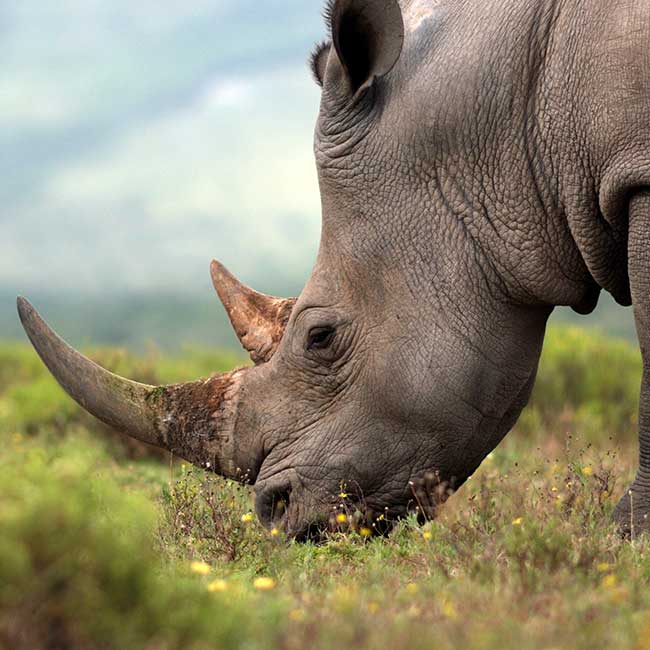
On Saturday, 5 October, a small group of intrepid adventurers tackled the Rhino Peak Challenge, ascending the iconic Rhino Peak in the Southern Drakensberg to raise funds for rhinos, cranes and vultures.
This unique conservation fundraiser supports three beneficiaries – the EWT, Wildlife ACT, and Ezemvelo KZN Wildlife – all of whom are working tirelessly to protect the futures of these incredible species. This year, the event raised a whopping R834,000 in pledges! That’s double what was raised in 2018 (R383,938) and 2017 (R303,788).
Our heartfelt thanks go to Spurgeon Flemington and the team from Running Man Adventures for their commitment to conservation and organising this event each year, to the runners for their willingness to take on this challenge, and to the people who made pledges in support of this wonderful fundraiser.
Thanks also to Cape Union Mart and K-Way, who sponsored gear for our CEO, Yolan Friedmann. A special mention must also go to EWT field officer, Thabo Madlala, who was the first non-elite athlete home, with an impressive time of 3 hrs 27 minutes!
FARM PLANNING PRIORITISED IN PRIESKA
Bonnie Schumann, Nama Karoo Coordinator, EWT Drylands Conservation Programme
BonnieS@ewt.org.za
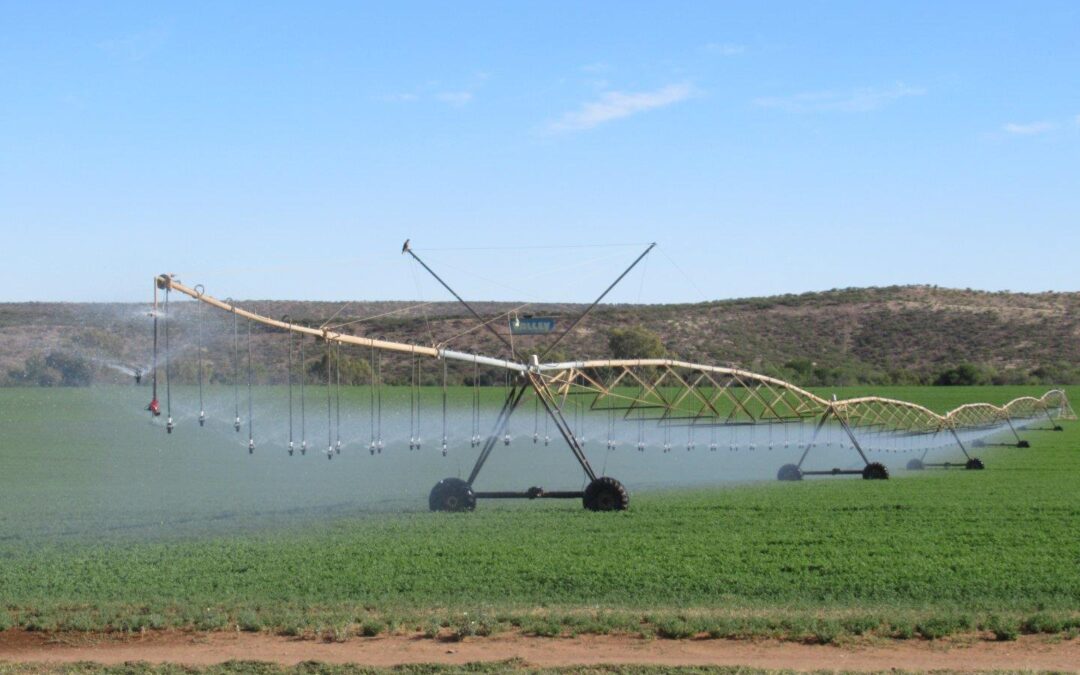
The EWT and the Department of Agriculture, Land Reform and Rural Development (DALRRD) combined forces to bring Integrated Farm Planning and Management training to emerging farmers in the Prieska area. This is the second time the course is being presented in the Northern Cape; the first one was held in Loxton in February this year.
Sedrick Visser, Agricultural Advisor with the DALRRD, was instrumental in bringing the course to Prieska. “Sedrick is dynamic, energetic and very passionate about the work he does, this was clearly demonstrated as Sedrick shouldered the majority of the presentations in Prieska,” said the EWT’s Bonnie Schumann. This is a great example of the train the trainers concept bearing fruit given that Visser and three other advisors attended the first course as part of the EWT’s train the trainer approach. “Sedrick has set a very high benchmark for his fellow advisors to follow”, said Loraine van den Berg, from the Grootfontein Agricultural College, who played a mentoring role and also lectured during the course.
Altogether 17 participants attended the course, including four agricultural advisors. Farmers who attended the course provided very positive feedback regarding the contents and value of the course to their farming moving forward. Several farmers who attended the course have undertaken to work closely with Visser to complete their farm plan and implement key objectives they identified during the week to address sustainable land management issues on their farms.
The course focus is on key principles of sustainable land management and is a great example of how collaboration between agriculture and conservation can help achieve common goals by combining resources and knowledge, with farmers, and ultimately the Karoo environment benefitting.
This initiative forms part of the EWT’s Karoo Forever project and is funded by the Global Environment Facility through the Department of Environmental Affairs and the United Nations Development Programme.

SIGNITURE LUX BY ONOMO HOTEL SANDTON
– a supporter of conservation
The month of June marked two years since Signature Lux by ONOMO Sandton began to support the Endangered Wildlife Trust’s (EWT) critical conservation work. So far, this unique relationship has generated just over half a million rand in support of the EWT.
Due to a demand for flexible travel and accommodation, Signature Lux by ONOMO Hotel Sandton’s brand was developed. Similar to the low-cost airline model, Signature Lux has removed all the unnecessary items and hidden costs, in order to provide guests with consistent service with a luxury feel at an affordable price.
Catering to the millennial and business traveller, Signature Lux by ONOMO Hotel Sandton offers smart technology; free unshaped, uncapped Wi-Fi, an integrated app, which offers more than just a booking function, 24-hour self-service check-in, guests can use their smartphones as their room key and in-room Wi-Fi calling. Signature Lux by ONOMO Hotels has created a technologically advanced room space using specialised ambient mood lighting and installed a fully integrated 40-inch SMART Samsung TV, which allows guests to live stream from Netflix or Showmax, in each room. Every room has a built in Wi-Fi router, allowing a seamless high-speed internet experience.
Guests can expect an unsurpassed sleep experience with the oversized queen beds that have a 3 cm mattress topper and 300-thread count linen. The app integrates housekeeping, which automates guests’ valet and laundry service.
Signature Lux by ONOMO Hotel Sandton General Manager, Christine Swanepoel, shares her thoughts on embracing what the new age traveller has been demanding: affordability, freedom, and quality. One of the key and totally unique strategic offerings is a half day room rate, offering business travellers and those in transit the option of a half day stay or a guaranteed early check-in or late departure at a highly discounted rate. Business day visitors no longer need to worry about finding a café with Wi-Fi and spending exorbitant amounts on a coffee and sandwich. They too can take advantage of the transit rates, which allow guests the luxury of utilising the room to freshen up and work, free parking, high-speed, uncapped Wi-Fi, free coffee and easy access to the Gautrain station, which is only a 15-minute train ride to OR Tambo International Airport.
Signature Lux by ONOMO Hotels have delivered a modern, chic, trendy, creative and eco-friendly hotel product. Christine and the Signature Lux team strive to be environmentally friendly and focus on reducing their carbon footprint. Signature Lux by ONOMO Hotel Sandton has its own water filtration plant onsite to reduce the need for harmful plastics, and reducing water consumption, all the hotel products and consumables are environmentally friendly and biodegradable.
Through our contributions to the EWT, Signature Lux by ONOMO Hotel Sandton is proud to be a part of protecting the environment for future generations.
A BRILLIANT APPROACH TO CONSERVATION
Talifhani Brilliant Mashao is a Master’s student undertaking a study with the EWT’s Wildlife and Transport Programme (WTP). Brilliant started with the WTP in 2018 and is due to graduate next year. Below he talks about how his passion for conservation began, and where he would like to be in the future.
“I grew up in a dusty but green and mountainous village called Mulima in Makhado, Limpopo. This area inspired my love of the environment and I enjoyed learning about nature from an early age. My passion for the environment stayed with me and I am currently studying for a Master of Science (MSc) degree in Environmental Sciences at the University of Venda in collaboration with the Endangered Wildlife Trust and the University of Mpumalanga. I am also a GreenMatter Fellow and supported by Trans African Concessions (TRAC N4).
Tourism is one of South Africa’s biggest revenue earners, with almost two million people visiting the Kruger National Park each year. Clearly, with this number of visitors, traffic volumes will increase in the park, with the outcome often impacting negatively upon wildlife. In my study, I am focusing on one of these negative impacts, namely wildlife-vehicle collisions, more commonly known as roadkill. Despite numerous reports on social media about roadkill incidents in protected areas, very little has been done, to date, to quantify the extent of the problem. My two-year study will undertake a spatial and temporal assessment of roadkill in the southern section of the Kruger National Park, on both paved and unpaved roads. For each roadkill detected, factors such as, the surrounding habitat and proximity to a water source will be recorded as well as traffic volumes and vehicle speeds on the study roads. These data will provide us with an understanding of where roadkill is most likely to happen – effectively producing a predictive map of roadkill occurrence. This ‘Roadkill Risk Map’. can then be applied to other protected areas, not only assisting in identifying roadkill hotspot areas, but ultimately producing a cost-and time effect model of roadkill predictions.
Once we have predicted roadkill occurrence, we can then determine what is the most appropriate roadkill-reduction measure to apply, resulting in a reduction of roadkill incidences in protected areas and protecting biodiversity.
I believe that one of my most important roles, not only for this study, but for the future of conservation, is to engage with visitors to parks as well as the communities adjacent to protected areas; more awareness needs to be raised about the impacts of reckless driving on wildlife, particularly when speeding, and seek implementation of effective solutions to minimise these negative impacts.
One of my proudest moments with the EWT, was receiving the Conservation Achiever Award. This is presented each month, and I felt incredibly honoured when Yolan Friedmann, the CEO of the EWT presented me with the award; it really is great to see our work as students being recognised. Working with the EWT has inspired me to continue in the conservation industry and I would, one day, like to see myself as a director of one of the conservation bodies in South Africa.
I am incredibly grateful for the opportunities and support provided me by my supervisors at the University of Venda, University of Mpumalanga and the EWT, as well as the logistical support provided by South African National Parks (SANParks – Kruger National Park). None of my research would have been possible without the financial support provided by TRAC N4, National Research Foundation (NRF) and GreenMatter.
GOING THE EXTRA MILE
Frank Jackson, EWT Business Development Officer
FrankJ@ewt.org.za
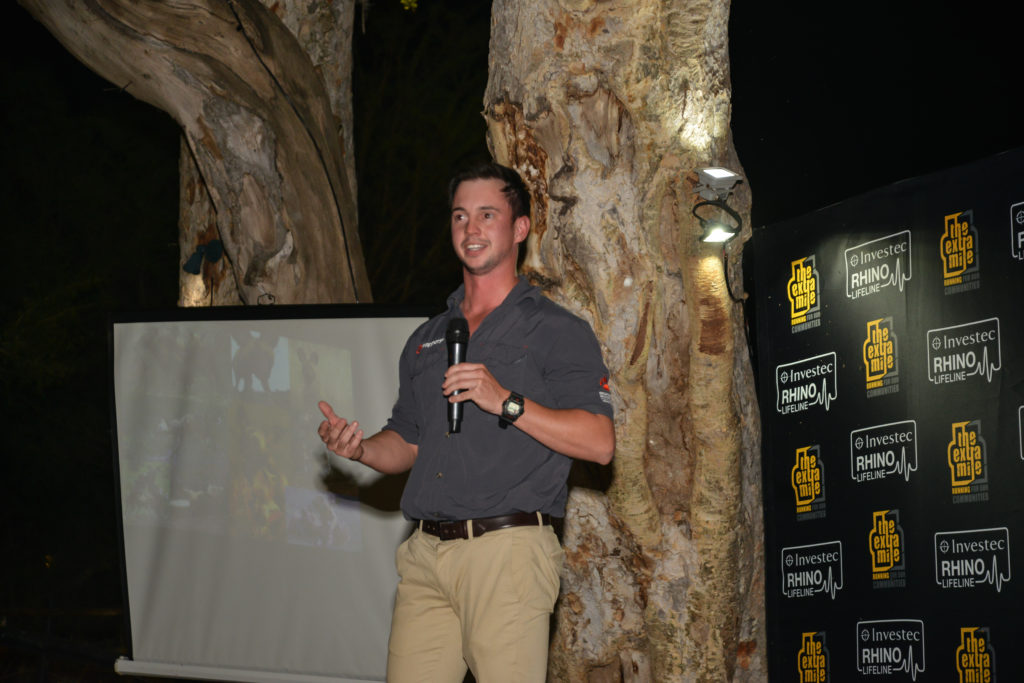
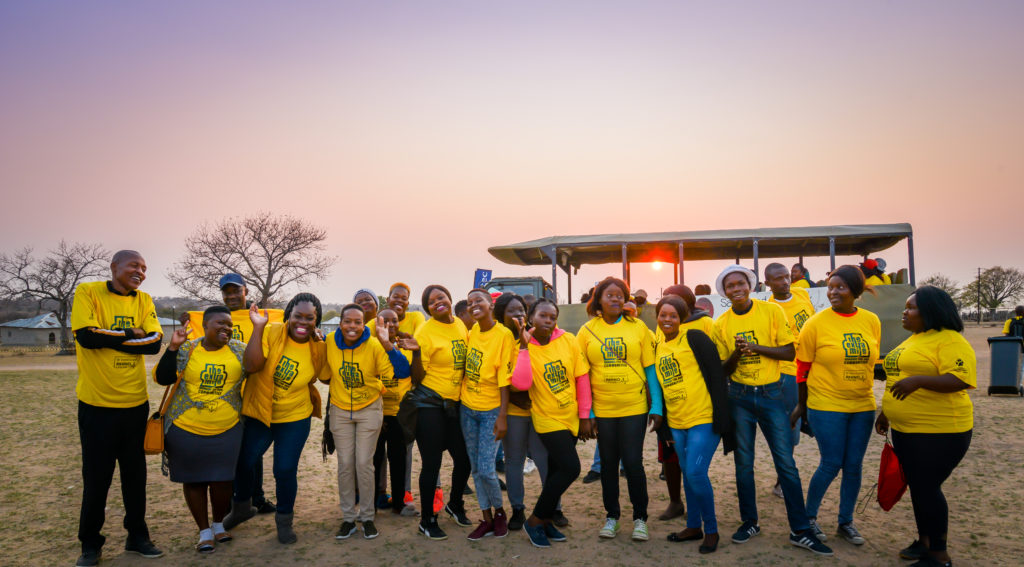
On 21 September, the More Community Trust hosted the Extra Mile, the trail run with heart, sponsored by Investec Rhino Lifeline. This incredible event was conceptualised in 2018 to raise awareness of communities’ needs for basic services as well as the importance of conservation, and has grown in 2019 to an event with purpose, joining people from all walks of life and connecting communities and conservation meaningfully.
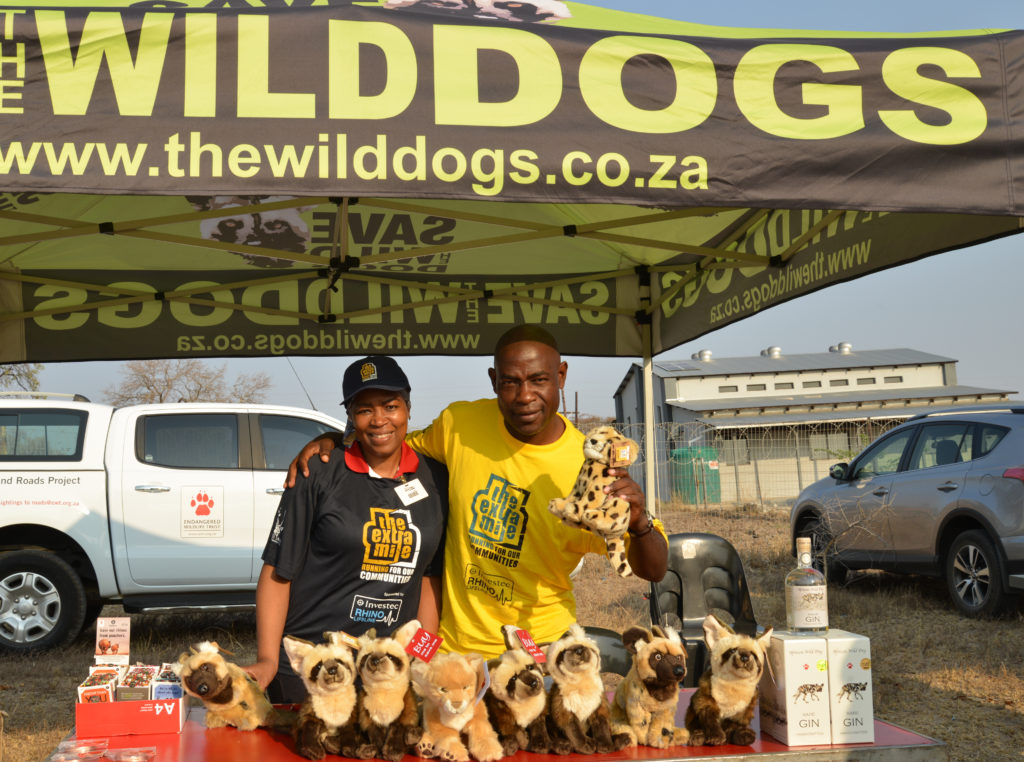
The 2019 event consisted of four sub-events: a community education day and trail run pre-registration on 20 September and the trail run and fundraising dinner on 21 September. Investec Rhino Lifeline covered all costs, enabling all the fundraising to go to the beneficiaries of the event: More Community Trust’s Rural Water Project, Good Work Foundation’s Huntington Digital Learning Campus and the EWT’s Wild Dog Project.
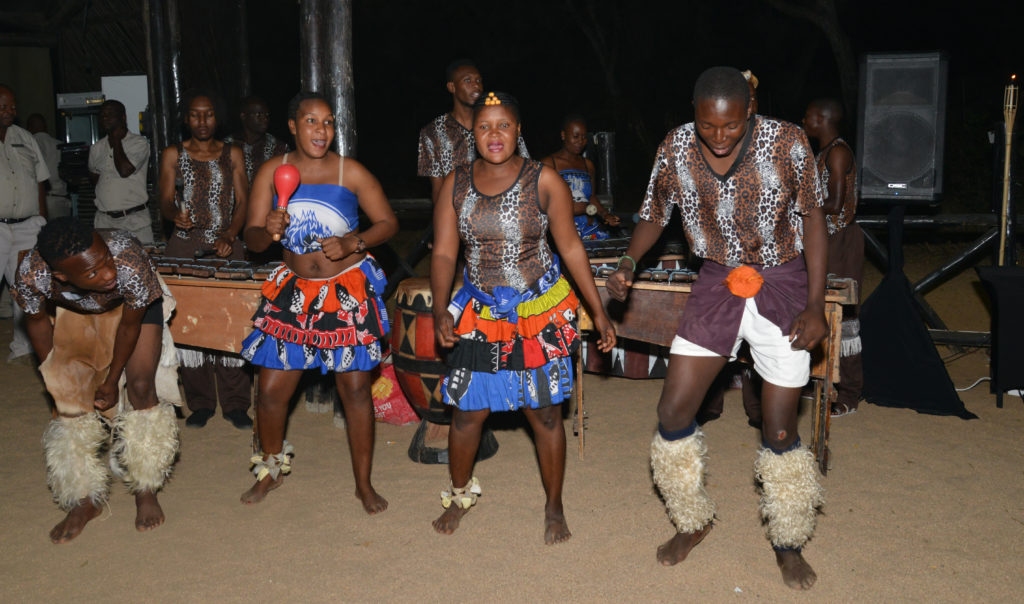
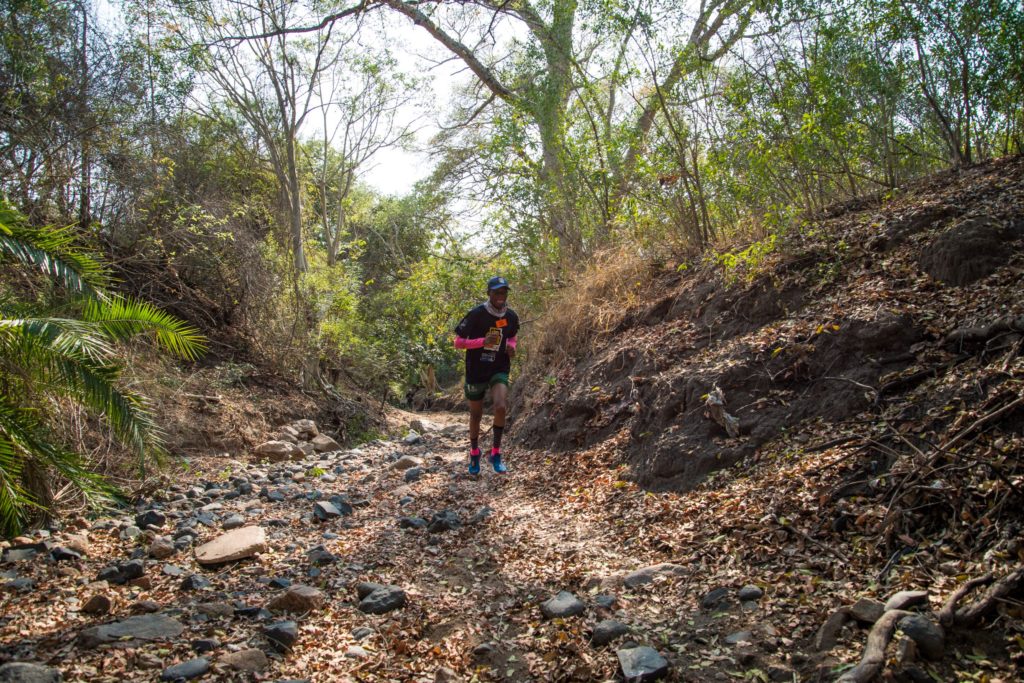
The day was a huge success, with runners joining from all corners of South Africa to partake in a gruelling 10 km and 21 km trail run through Sabi Sands’ neighbouring rural villages and the area’s natural rangelands. Runners crossed the finish line to the motivating voice of our MC Warrior Ric. The day ended on the banks of the Sabie River, at Protea Hotel Paul Kruger Gate for our fundraising dinner and auction, under the stars with the hippos and frogs filling in as musicians.