
Careers in Conservation – Bringing conservation to life through storytelling
Kedibone Chauchau, the EWT’s Communications and Marketing Department
My name is Kedibone Jacqueline Chauchau. I am the last of five kids, born and bred in the West of Johannesburg. My mom owned an Early Childhood Development Centre that she operated from our garage at home. My dad started as an educator in rural Limpopo, about 5 km from the Kruger National Park’s Punda Maria gate and later became a truck driver at Spoornet (now known as Transet). They are both retired now and living in Malamulele, Saselamani.
I grew up in a bilingual household with a Pedi mom and a Tsonga dad. We have conversations in both languages, sometimes using them in a single sentence. Outside my household was a community speaking Tswana, Sotho, Zulu, Xhosa, and Venda, and I absorbed all of them, developing a passion for languages and now fluent in seven.
However, while I can speak in many tongues, I was a very quiet child in school, adopted by a group of extroverts, and surrounded by loud, outgoing friends who love the spotlight – I still am.
I first realised that I was terrible with numbers in high school, so when I finished my matric, I explored career paths aligned with my strengths and passion for writing and creativity. It took a while. I studied graphic design for a year at Damelin, then transferred to the Vaal University of Technology the following year. Though it was a good fit, it didn’t feel quite right. So, I took a gap year and applied for the BA (Media Studies) Degree at the University of Limpopo.
I started my career at an ad agency three months after completing my qualification. Having majored in several things, I had the opportunity to explore and enhance my skills without limitations before becoming a conservationist, which I hadn’t dreamed was even possible with my qualifications. But a while later, I stumbled upon a job advert for a communications position with the Endangered Wildlife Trust (EWT). I applied because I want my work (and life) to make a difference by effectively communicating the important conservation work of the EWT. None of the work conservationists do matters if it remains within their circles. I want to use my curiosity and the will to make sense of everything to tell complex conservation stories and show what people are doing to conserve our planet.
Conservation storytelling is most powerful when combining words and powerful visuals of our remarkable wildlife and ecosystems. I hope to build on my communication knowledge and experience by mastering the art of visual storytelling for conservation. Studies have shown that our brains retain and transmit much more information — and process it more quickly — when delivered visually. The human brain processes visuals 60,000 times faster than text. Visuals are important because people remember only 20% of what they read and 10% of what they hear. However, people remember about 80% of what they see and do. It’s one thing to tell people why Wild Dogs are also known as Painted Wolves and another to show them the vivid coat of a Wild Dog.
Another reason visual storytelling is important is that it breaks down complex ideas. Seeing something instead of reading about it enables the audience to connect to or relate to that thing or person on a deeper level and become invested in it. Visual storytelling conveys emotions and realities more effectively and inspires people to support and participate in conservation initiatives.
Too often, we work to benefit ourselves and show little interest in working to ensure the future of the planet and others. I urge the youth to explore a fulfilling career avenue that will secure our collective future.
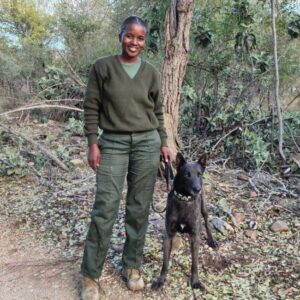
Hot on the heels of strong women working in conservation
Precious Malapane, Conservation K9 handler and anti-poaching ranger
The South African government’s theme in celebration of Women’s Day/month 2022 is “Women’s Socio-Economic Rights and Empowerment: Building Back Better for Women’s Improved Resilience”. The theme focused on strategically advancing women’s socio-economic empowerment agenda towards achieving gender equality by 2030.
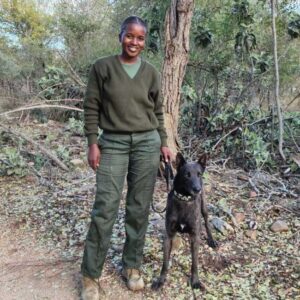
Precious and EWT Conservation K9 Ruger
The resilience of South African women has been recognised throughout our country’s history but assigned social and professional roles have often hindered women from raising their social and economic status. I am one of many women who have not let anything stand in their way. My name is Precious and I am a Conservation K9 Handler working with Ruger and Bekha, the Endangered Wildlife Trust’s Conservation K9s and strong females themselves. I am the only woman in a team of 12 rangers. I am also the only Dog Handler in the team. You might be wondering how I ended up here. This is my tale.
I grew up in a remote village off the north-eastern border of the Kruger National Park border. I was a very quiet and rather shy child. I came out of my shell when I joined a girl’s traditional dancing group at age ten, where I learned to be confident and comfortable in my skin. Attending practice every day and dancing in front of people helped me build my confidence.
I sadly lost my mother when I was just two years shy of matriculating. She was our only parent, and when we lost her, my three siblings and I started doing odd jobs around the village to survive. However, we did not let our situation get in the way of our education. I matriculated in 2014 and enrolled in the Southern African Wildlife College, where I trained as a field ranger. I was lucky enough to get an internship in the college’s K9 unit. I started working with Conservation K9s under the guidance of renowned Dog Master – Johan van Straaten, from whom I learned much. I know everything I know today because of his teachings.
My love for dogs began at a very young age when my family got one as a pet. I knew then how great dogs are. I didn’t know that they could do so much!
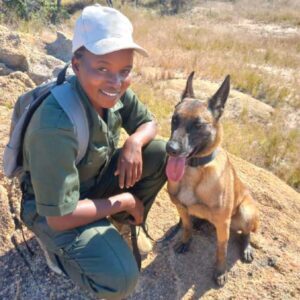
Precious with EWT Conservation K9 Bekah
I love working with dogs because they are always eager to go out and work. With them, there is no politics, social roles, or discrimination. I am just their beloved handler and trainer. I also love how they are not biased or easily swayed by external forces. Their job is to help their handler find what they are looking for, and they will not stop until they find it. And when they do, they will not leave it until the handler arrives. They have taught me to be honest and dedicated in my work.
Although I am mostly surrounded by men in my line of work, I have been fortunate to know and learn from strong women who have shaped my life and career. They have empowered me and improved my resilience both socially and economically. These are some of them:
My mother: That woman is my hero, my pillar and strength, even now in her absence. She played a huge role and did a great job as a single parent. I really love how she raised me and my siblings. I am where I am today because of her.
Theresa Sowry: The CEO of the Southern African Wildlife College. I love how involved she is on every level. You can tell she is passionate about conservation from her interaction with all students and the team at the college.
Shadi Henrico: Shadi is the Conservation Canine Project Coordinator at the Endangered Wildlife Trust. She assisted me in qualifying as a Dog Handler and trained Ruger – the dog I work with at the reserve. She also shared with me this great life I get to live now because of her willingness to help me whenever I reach out to her.
Anitjie Mkhansi: She is also a Conservation Canine handler at another private reserve. I always go to her when I face work-related challenges, and she is always keen to sit down with me and come up with solutions. Navigating work and inspiring each other as young women of the same age and in the same field makes everything easier.
Having come across all these amazing women, and in celebration of women’s month in South Africa, I encourage other women and young girls to pursue careers in conservation and dog handling because why not?
I personally believe that, as women, we can do anything we put our minds to. We are all human, after all.
With all that being said, I hope we find ways to continue liberating women from cycles of poverty and assigned social roles and giving them the resources to improve their social and economic opportunities.
We will play out of this with my favourite song – Master KG’s I am a superstar.
Keep your eyes on the Endangered Wildlife Trust’s Wild Diaries for my and Ruger’s tracking adventures.
Ruger has been sponsored by IUCN Save Our Species and co-funded by the European Union and Bekah by Global Conservation Force
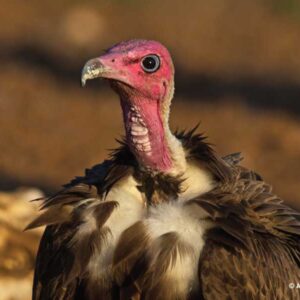
Science Snippets
Using an Ethogram as a guide to understanding Hooded Vulture breeding behaviour
Lindy Thompson, the EWT’s Birds of Prey Programme
Most vulture species are highly threatened, and their populations are declining. Researchers have been focusing more on vultures in recent years, and certain topics, such as their movements, are becoming well studied. However, other topics, such as how diseases affect vultures, and behavioural studies on vultures, have not been as popular. These areas need more attention because understanding all aspects of a species’ behaviour can help inform conservation efforts.
Studies on an animal’s behaviour can be enhanced using an ‘ethogram’. An ethogram clearly defines, describes, and classifies distinct behaviours commonly exhibited by a species. Researchers use ethograms as templates to record and understand the species’ behaviour. Importantly, ethograms can help to standardise data collection across different studies, which increases objectivity, and allows comparisons of results from different researcher teams.
Researchers from the Endangered Wildlife Trust and the University of KwaZulu-Natal recently produced the first ethogram describing the nesting and breeding behaviours of the Critically Endangered Hooded Vulture (Necrosyrtes monachus). They gleaned information from 14 Hooded Vulture nests in South Africa’s Lowveld region, from direct observations and over 400,000 camera photographs. The team described 28 behaviours exhibited by Hooded Vultures at their nests, and they grouped these behaviours into five categories: ‘Body Care’, ‘Movement’, ‘Nesting’, ‘Resting’ and ‘Social’. In their ethogram, the researchers also provided photographic records of each behaviour for researchers to use as references. Many of the behaviours exhibited by Hooded Vultures may be common to other tree-nesting vulture species, so this ethogram should be helpful for other research teams studying the breeding of other vulture species globally. It will also be used for further investigating the behaviour of Hooded Vultures in South Africa, and the next step is to look at activity budgets.
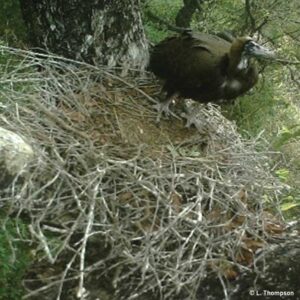
A juvenile Hooded Vulture on its nest in a Jackalberry tree. © L. Thompson/UKZN
The research team comprised the EWT’s Dr Lindy Thompson (the camera trap photos we used were collected during Lindy’s postdoctoral studies on Hooded Vultures), Prof. Colleen Downs (who supervised Lindy’s postdoc from the University of KwaZulu-Natal), and Fiona Fern, who is soon to start her PhD on raptor health with the EWT’s Birds of Prey Programme.
The study was funded by the Rufford Small Grants Foundation, GreenMatter, and the National Research Foundation (ZA).
The study was titled ‘An ethogram for the nesting and breeding behaviour of the Hooded Vulture Necrosyrtes monachus’, and you can access it here: https://doi.org/10.2989/00306525.2022.2072965
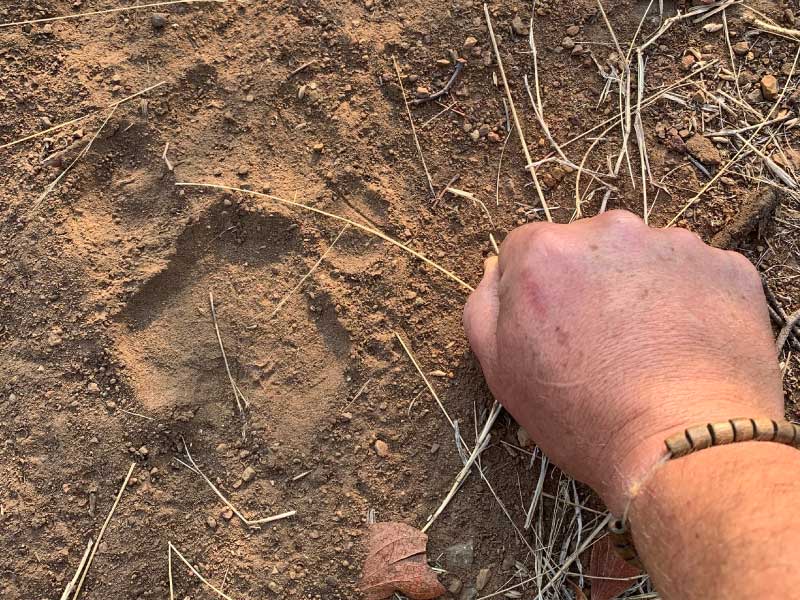
Looking for Lions
Marnus Roodbol, EWT Carnivore Conservation Programme, Lion Project Coordinator
There aren’t many people who truly know how difficult it is to locate and sedate WILD Lions. The Endangered Wildlife Trust (EWT), SANParks, the National Administration of Conservation Areas in Mozambique, the Mozambique Wildlife Alliance, and Peace Parks Foundation are monitoring the distribution and movement of Lion prides across the Great Limpopo Transfrontier Conservation Area (GLTFCA) using GPS satellite collars. By monitoring prides over time, we can identify priority areas where Lions are likely to be at certain times, informing anti-poaching teams where to go to protect the Lions under their care. But to collar them, we need to find and sedate them. Not so hard, right? We are the most intelligent species, after all…
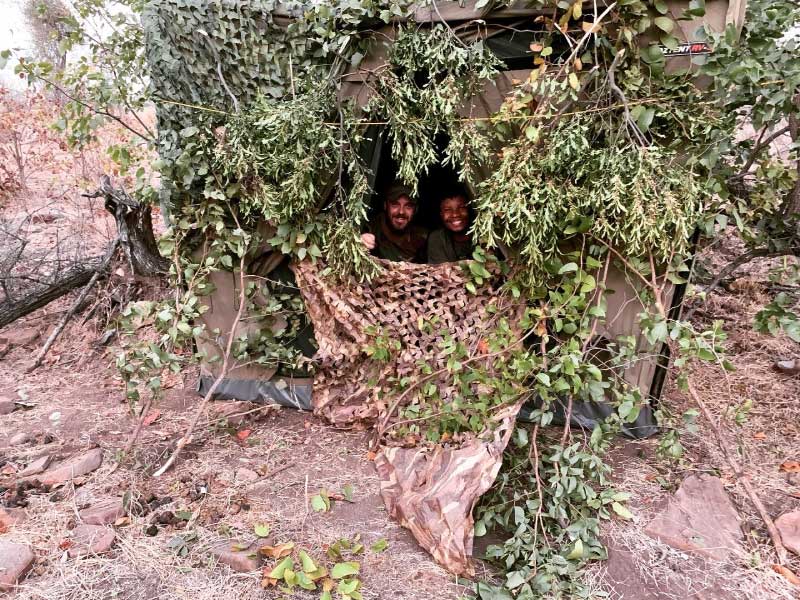
We’ve tried everything – including hiding and hoping the Lions wouldn’t know we were there so we could study them.
Alas, we have spent countless hours setting up the “perfect” trap, but these clever cats show us time after time just how intelligent they are. We searched on foot, by air, and yes – found a spoor here and there – but barely catch sight of them. My colleagues and I decided to set some bait for them, call them in using prey distress calls on a loudspeaker, and see if they were willing to participate in a feast.
We heard a Lion calling back softly, letting us know they were in the area, and we decided to head back to camp, shut off all the lights, and get an early one, so we could find them at the bait first thing. We did this so they wouldn’t feel threatened by our presence and leave the area before the vet arrived the following day. Plus, they’re always a little lazy after a meal, and we had set out a nice buffet for them.
I was woken up at 2 am by a roar near the camp. I was more excited than scared that this magnificent beast was so close by, not to mention relieved that they were indeed heading towards the bait…or so we assumed, not silly enough to leave the “safety” of my tent to check.
Early the next morning, we rose full of hope and energy and with a spring in our steps, knowing the Lions were close. We had no idea how close. We grabbed some hot coffee before sunrise and, at first light, decided to take a walk to the bait to see what transpired during the night. We took several steps, and then what had happened during the night hit us like a freight train.
These lions came to visit US before going to the bait. One got to within 3 m of my little tent, with two others approaching from the other side. We didn’t hear their footsteps. We didn’t smell them. We had no idea they were so close! With my knees a little shaky, I was truly humbled. But, it was an experience I will treasure forever – coming so close to the species I have dedicated my life to conserving.
How long will it take us to collar one? Find out in the next instalment of this epic tale.
Donate to save Lions here
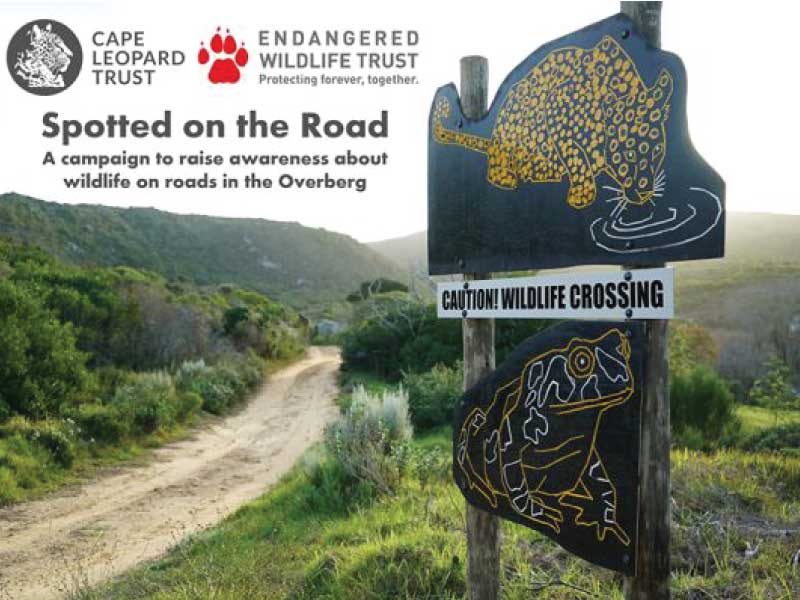
A campaign to raise awareness about wildlife on roads in the Overberg
Most people are familiar with the sad sight of dead animals on the side of the road, and many vehicle accidents in South Africa involve a collision with wildlife. Insurance claims suggest that approximately R82.5 million is paid each year in damages as a result of wildlife associated vehicle collisions. While actual collisions are the most obvious impact of roads on wildlife, other negative consequences include reduced air quality due to vehicle emissions, noise interference, and physical barriers to animal movement caused by the position of the road itself. Temporary road closures, wildlife crossings and bridges are means of improving safety for wildlife near roads, but the most common method is the use of roadside signs to warn motorists and mitigate wildlife-vehicle collisions. Signs installed in areas of high animal activity can help make drivers more aware of wildlife presence and ideally modify driving behaviour. With this in mind, the Cape Leopard Trust (CLT) and the Endangered Wildlife Trust (EWT) have launched the ‘Spotted on the Road’ campaign to raise awareness about wildlife on roads in the Overberg. The campaign is part of the collaborative Tale of Two Leopards project (see links at the end of this document to read more), which focuses on two iconic species found in the Overberg region – the leopard and the Western Leopard Toad (WLT). Leopards and WLTs find themselves in an increasingly urbanised environment and must navigate through this transformed landscape, including crossing roads. The Endangered toads move en masse during their breeding season from July – September and when juveniles disperse in October. It is during these times that they are most vulnerable on roads. Leopards in the Cape have huge home ranges that are intersected by many roads, and leopards often cross roads in mountainous and natural areas, especially at night, putting them at risk of collisions with vehicles. The Tale of Two Leopards Spotted on the Road campaign worked with Cape Town-based artist Bryan Little to create reflective road signs of WLTs and leopards in an innovative move to alert motorists to slow down for these, and other animals on the roads, especially at night. The signs have been installed at five strategic locations in the Overberg, based on where WLT mortality by vehicles has been recorded previously and areas where camera traps have confirmed leopard movement. The locations vary between public and private land and tarred and dirt roads to maximise their reach. The signs were introduced to the public at an informal evening event held at Ou Meul Bakery and Café in Stanford on Saturday,16 July 2022. The Spotted on the Road evening featured an informative presentation, the unveiling of the signs, and an outdoor frogging experience at the Willem Appelsdam in Stanford. Contrary to the usual wet and windy weather that accompanies the Cape’s winters, the evening turned out to be calm, sunny and warm – perfect conditions for a nature walk to view the new reflective signs while listening out for different toad and frog calls around the dam. The CLT and the EWT sincerely thank the various landowners and the Overstrand Municipality who granted permission to host the new signs, as well Ou Meul Stanford for hosting the event, and Mountain Falls Spring Water for sponsoring its locally bottled water. The reflective road signs now join the interpretive Tale of Two Leopards information signboards to remind residents and travellers of the Overberg region’s amazing biodiversity. Please join us in our mission to protect it by making the roads of the Overberg safer for all wildlife!
Spotted on the Road Call to Action – How Can You Help?
- Drive slowly, especially at night
- Be on the lookout for animals on the roads
- Don’t swerve, but avoid collisions by reducing speed
- Help a toad cross a road (in the same direction in which it is travelling)
Be a citizen scientist and submit information!
- Contribute to leopard research by submitting photos of leopard sightings, signs like spoor or droppings, and threats to leopards to the CLT Western Cape leopard database: app.capeleopard.org.za
- As we move deeper into winter, the Western Leopard Toad breeding season is in full swing. This is an amazing time in the Overberg to see and hear this Endangered toad. Please share your WLT sightings with the EWT: inaturalist.org/projects/leopard-toads-of-the-overberg
Tale of Two Leopards news links:
Introducing the Tale of Two Leopards at the Tip of Africa Camera trapping for Overberg leopards in full swing! Overberg camera survey – success & highlights! Camera trapping in the Overberg – hefty hippos, baby birds & spotted cats! The Tale of Two Leopards in the Overberg – information signs & wildlife wines Released by the Cape Leopard Trust and the Endangered Wildlife Trust
For general / media information, contact:
Jeannie Hayward, CLT Communications and Media Manager, communications@capeleopard.org.za Emily Taylor, EWT Communications and Marketing Manager, emilyt@ewt.org.za
For research information, contact
Dr Katy Williams, CLT Research & Conservation Director, rcdirector@capeleopard.org.za Dr Jeanne Tarrant, EWT Threatened Amphibian Programme Manager, jeannet@ewt.org.za
Combatting climate change and crane-crop damage
Sarah Kugonza, ACCP Uganda Conservation Intern
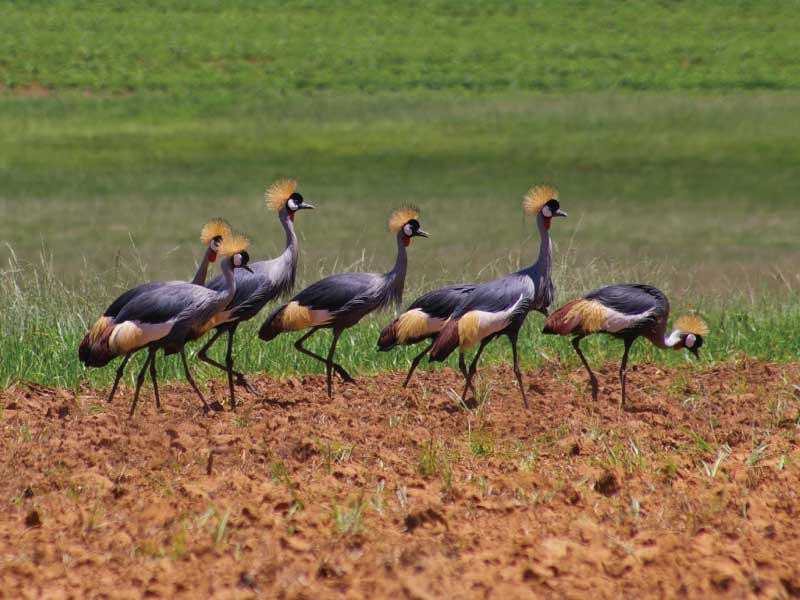
Climate change has manifested in erratic weather patterns and significantly prolonged drought seasons in Southcentral Uganda. The drought hit the Lwengo region in one of Uganda’s cattle corridors particularly hard. Farmers in Lwengo have suffered serious losses over the dry season; their crops dried up and withered over the harvest period. Maise, beans, peas, and other cash crops have also done poorly during the dry planting season. The water sources in most villages and part of the Kiyanja-Kaku wetland (a precious wetland conserved by the ICF/EWT projects) have dried up, and animals and households no longer have enough water to drink and use for domestic purposes. The dry season also affected irrigation projects, rendering irrigation impossible at the household level and reduced food security and the general well-being of the communities. The Kiyanja-Kaku wetland and its catchment also provide breeding and flocking habitat for the Endangered Grey Crowned Crane – one of Uganda’s iconic wetland species.
Unfortunately, cranes are eating more of the crops due to shortages in natural food sources, feeding on germinating seedlings and mature crops, eating all the corn, and leaving empty combs. The most affected crops in the area included maize, beans, and ground nuts. On top of the drought and deflating market prices, this has caused significant losses to the farmers, and they have resorted to poisoning cranes – 118 poisoned to date this season.
What are we doing to help communities weather the storm?
The ICF/EWT’s crane and wetlands conservation project supports some communities in establishing crane deterrent measures in various homesteads to address food insecurity caused by cranes and climate change. The measures range from the erection of human-mimicking scarecrows to the use of reflective materials, usually from non-recyclable waste products, around the crops. The measures have proven successful as there have since been no crane sightings in these areas, and crop damage has reduced to some extent.
Next steps
Since the project has established an integrated approach of deterrent measures, effectively preventing cranes from damaging crops, we need to upscale the deterrent measures and extend the approach to all affected villages. This way, we will keep crops and cranes safe. The project continues to engage farmers in establishing interventions that can also address the impacts of climate change on food security.
Science Snippets: Where Frogs Flourish
Comparing frogs and habitats in KwaZulu Natal
Cherise Acker, EWT’s Threatened Amphibian Programme, Cherisea@ewt.org.za
Wetlands are important ecosystems that supply essential ecological goods and services (EGS) for wildlife and people. They supply clean water and fertile soil for plants, filter water from upstream, regulate water flow to prevent flooding, store water to ease drought periods, and reduce the effects of climate change, improving ecological and social resilience. Protection and conservation of wetlands are essential to support communities through environmental disasters caused by climate change.
Wetland health and ecological goods and service quality assessments are valuable in determining the ecological state of wetlands to inform conservation management actions. The Endangered Wildlife Trust’s (EWT) Threatened Amphibian Programme (TAP) aims to show the link between amphibian diversity (i.e. healthy amphibian populations) and wetland habitat health. In other words, if wetlands are in a poor ecological state, amphibian diversity decreases and vice versa. Indirectly, better species and ecological health also support healthy human populations. To this end, we started long-term monitoring protocols in 2016 to determine habitat health and identify amphibian species diversity at four project sites in eThekwini Municipality, KwaZulu-Natal, where the threatened Pickersgill’s Reed Frog (Hyperolius pickersgilli) occurs.
These sites included Adams Mission, Mt Moreland’s Froggy Pond, Widenham, and Isipingo. Wetland health scores, EGS scores, and amphibian diversity from each site were compared to determine whether amphibian species richness increases or decreases under different habitat conditions.

Figure 1: Diagram illustrating the correlation between amphibian species diversity and wetland health.
The data showed a significant positive relationship between the amphibian species diversity and Wetland Health assessment scores between the four sites (P-Value 0.04077) (Social Statistics, 2022), as illustrated in Figure 1.
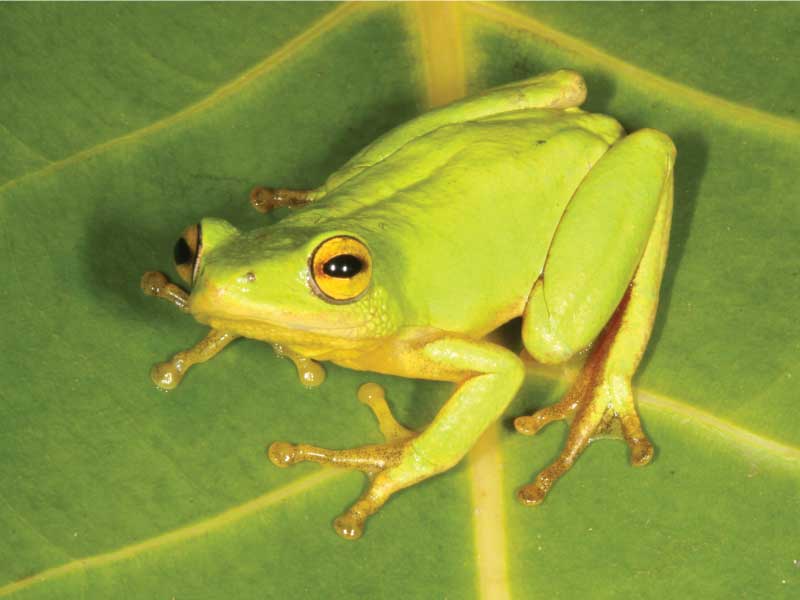
Species composition for each site showed that some species were found across all sites (Figure 2). These included Hyperolius tuberlinguis, Hyperolius marmoratus, Leptopelis natalensis (Figure 3), and Hyperolius pickersgilli was also present at all four sites, but Hyperolius pickersgilli was one of the site selection criteria and as such, expected to be present at all the sites.

Figure 2: Species present according to the number of sites, i.e. Hyperolius tuberilenguis occurs in all four sites while Natalobatractus bonebergi, only occurs in one site.

Figure 4: Hyperolius tuberlinguis (top left), Hyperolius pickersgilli (top right), Leptopelis natalensis (bottom left) Hyperolius marmoratus (bottom right)
The study’s results indicate a statistically significant positive relationship between these two variables, demonstrating that amphibian species diversity will decrease as wetland health decreases and vice versa. Reinforcing the value of amphibian species diversity in indicating wetland health. Amphibians may be an effective monitoring tool for managing wetlands within the eThekwini Municipality. Furthermore, the study demonstrates that improving habitat health through restoration or rehabilitation could positively impact amphibian species diversity.
Integrated Farming the missing piece for communal farmers
Samson Phakathi, the EWT’s African Crane Conservation Programme Senior Community Project Officer, Samsonp@ewt.org.za
Integrated farming promotes the responsible use of natural resources and farming practices that use fewer external resources, making farming more sustainable. The concept is particularly well suited to communal land where land degradation and the resultant soil erosion and spread of encroaching plant species tend to be quite prevalent. Moreover, it is becoming evident that there is often an imbalance between livestock ratios and the availability of food and water for the animals in these landscapes. The Integrated Farm Planning (IFP) training thus came at a time when most of the community farmers desperately needed assistance to improve their management practices.
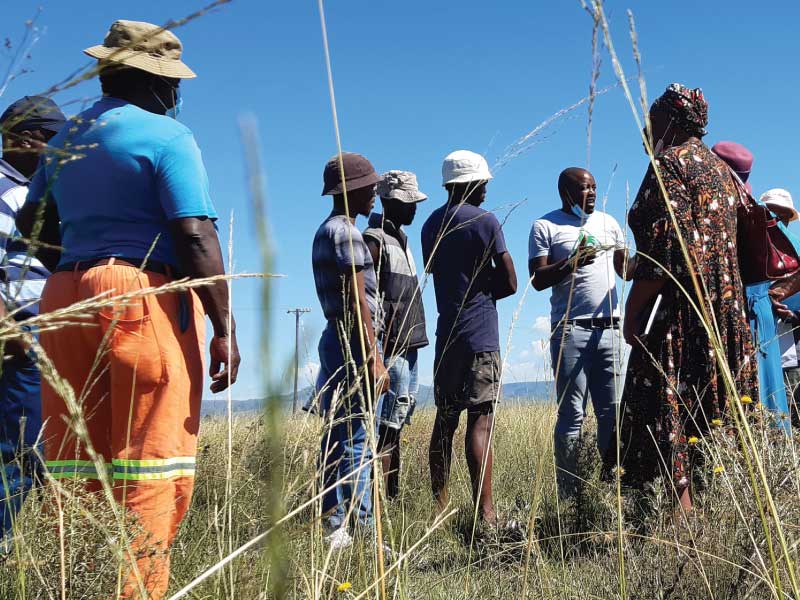
Through the National Lotteries Commission (NLC) funding, the Endangered Wildlife Trust engaged with 35 emerging farmers from the Cedarville area in the Eastern Cape. Our goal was to assist them with implementing integrated farm planning (IFP) by hosting a training day in the field that we published an article on in May 2022.
Through the National Lotteries Commission (NLC) funding, the Endangered Wildlife Trust hosted 35 emerging farmers from the Cedarville area to to discuss integrated farm planning (IFP)
The emerging farmers were carefully selected from areas within hotspots of the distribution of the three threatened crane species. These areas contain wetlands and grasslands required for the Endangered Grey Crowned Cranes, Critically Endangered Wattled Cranes, and Near Threatened Blue Cranes. Unfortunately, these habitats are highly threatened by poor rangeland management. The IFP training was designed to upskill emerging farmers to identify management-related challenges in areas where they graze their livestock. The farmers then formulate practical solutions, incorporating local knowledge and capacity to address issues. The IFP training was eye-opening to emerging farmers, who now appreciate that rangeland management is key to the sustainability of communal lands in terms of grazing, water conservation, and community livelihoods. The training emphasized the importance of species diversity in grazing lands and the need to conserve species through improved grazing management.
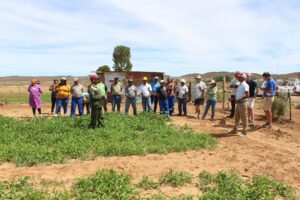
Emerging famers from Cedarville on an Integrated Farm Planning trip visit to learn from the Black Diamond Community in the Ukhahlamba Mountain Range
After successfully organizing and facilitating the well-attended IFP and sustainable grazing management training, the EWT arranged for a community exchange visit for the Cedarville emerging farmers to the Black Diamond Community situated in the Ukhahlamba mountain range. The Black Diamond community is quite progressive regarding practical rangeland management initiatives. The exchange visit was thus key as it allowed the Cedarville emerging farmers to interact with the Black Diamond community and draw lessons on what can be duplicated, adopted, or adapted to the Cedarville context.
The exchange visit ran from 18–19 April 2022, with over 70 people attending. The Cedarville and Black Diamond communities’ engagements and discussions were quite constructive. What stood out was the ability of the Cedarville emerging farmers to interpret the Black Diamond grazing camps using the IFP training concept, showing that the messaging resonated with the emerging farmers. More emphasis was also placed on encouraging the Cedarville emerging farmers to look at their available local capacity and resources as they improve their rangeland management. This is important, especially if self-sustaining communities with local knowledge and capacity can encourage others to address these issues. The exchange visit was also attended by key stakeholders, including a government department, another NGO, the ward councillor, and a local King.
From the project initiation phase, where robust engagements about the community’s vision for their land and how IFP can complement their activities, to the actual training session and the community exchange visit, we observed the communities taking the lead in identifying local issues, formulating intervention measures, mobilizing resources and capacity, and implementing solutions. The IFP training seemed to be the missing piece, providing the solutions for farmers to succeed, especially in highly strained communal lands in the Eastern Cape and KwaZulu-Natal. This paradigm shift to grazing management in communities can only benefit species diversity, livestock, and, more importantly, the stability of soils, vegetation, and the resultant positive spin-offs in the form of community livelihoods.
This training was made possible with funds from the National Lotteries Commission. The NLC relies on funds from the proceeds of the National Lottery. The Lotteries Act and regulations guide the way in which NLC funding may be allocated. The NLC wants the grants to make a difference in the lives of all South Africans, especially those more vulnerable, and to improve the sustainability of the beneficiary organizations. Available funds are distributed to registered and qualifying non-profit organizations in the fields of charities; arts, culture, and national heritage; and sport and recreation. By placing its emphasis on areas of greatest need and potential, the NLC contributes to South Africa’s development.
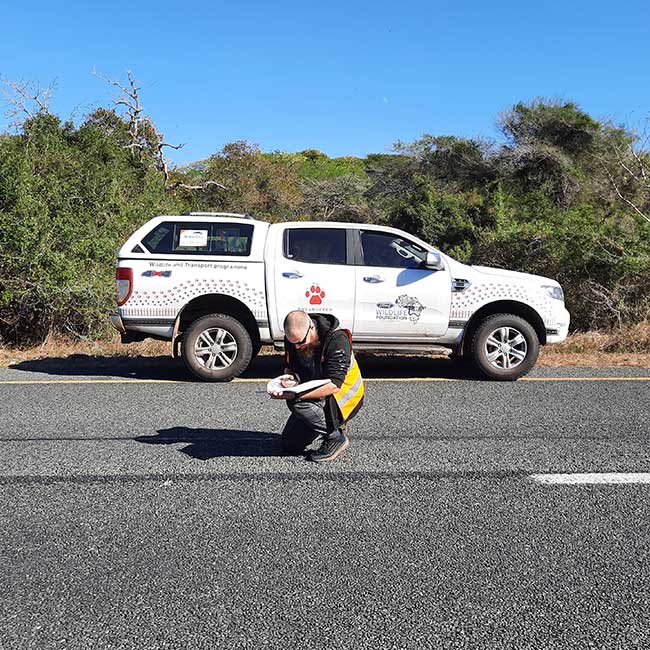
On the road to a career in conservation
Cameron Cormac, PhD Candidate with the EWT’s Wildlife and Transport Programme, ctcormac@gmail.com
I am Cameron Cormac, a PhD candidate in my second year of study at the University of KwaZulu-Natal – on my way to a career in conservation. I work with the EWT’s Wildlife and Transport Programme and Ezemvelo KZN Wildlife, researching the effects of linear infrastructure on vertebrates in Hluhluwe-Imfolozi Park and northern Zululand.
A typical day for me depends on which of the two study sites I am stationed at when I’m not back in Pietermaritzburg doing data analysis, lab work, or writing up my thesis chapters. When in Hluhluwe-Imfolozi Park, I focus on the R618, which bisects the park. My day begins an hour and a half before sunrise in the research camp near Hilltop resort, typically in pitch darkness surrounded by nothing but the sound of nocturnal insects and a light breeze blowing through the trees. A banana and a low-sugar or sugar-free energy drink help me wake up and give me some quick sustenance before I head out for an hour’s drive at 40 km/h through empty park roads. I pass through the gates of Nqumneni ranger camp before taking air and road surface temperature readings at one of three control points.
My morning survey starts after taking the temperatures at the control point on the Hlabisa side of the survey area. I spend two hours driving at 40 km/h looking for carcasses of animals killed along the 18 km survey area. A typical session sees me both trying to find carcasses for my data collection and not wanting to find too many dead animals. I usually find between three and seven carcasses. However, there are times when I don’t find any carcasses and others when there are more than 20. But every day, we are greeted by the fantastic sunrises of Zululand’s Lebombo mountains and often encounter elephants strolling down the road.
Morning sessions end with another hour’s drive back to base camp or a two-hour drive to Hluhluwe town while passing through South Africa’s oldest protected area. We’ll get several sightings of some of South Africa’s iconic animals if we’re lucky.
The rest of my days are spent doing data entry, reading linear infrastructure articles, handling project admin, preparing for nocturnal sessions, and preparing food. Meals usually consist of a light breakfast, yoghurt bowls or eggs and avocado on toast, some form of sandwich at midday and a hearty meal for dinner.

Juvenile Southern African python (Python natalensis) found crossing dirt road near Nqumeni ranger camp
My days end with a nocturnal session, typically after dinner, depending on the time of sunset, which is a rinse and repeat of the morning survey. The only difference is that nocturnal sessions provide exquisite visuals of the setting sun. Nocturnal surveys also usually give us a few very welcome, very much alive herpetofauna (amphibians and reptiles) trying to cross the road. I am a herpetologist, so this gives me great joy. These records fall into another of my data chapters aimed at identifying reptile species likely to cross my survey roads successfully. My favourite kind of bedtime story!
I sincerely thank my sponsor, the Ford Wildlife Foundation, who supplies the vehicle I use to conduct my surveys. Without their generous donation, this project would not be possible.
Earthly Eating
Chickpea and Lentil Curry Chickpea and Lentil Curry Recipe
This month’s Earthly Eating recipe is a quick, easy, eco-friendly, and healthy vegetarian curry from Dr Jeanne Tarrant, our Threatened Amphibian Programme Manager
Preparation time: 15 minutes or less
Serves: 2-3
Ingredients
- 1 onion, finely chopped
- 2 large cloves crushed garlic
- 1 tablespoon oil
- 1 teaspoon chilli powder or salt to taste
- ½ teaspoon salt and black pepper, to taste
- 1 teaspoon turmeric
- 1 teaspoon hot paprika
- 1 tablespoon ground cumin
- 1 tablespoon ground coriander
- 2 x 439 g cans chickpeas, rinsed thoroughly under cold water and drained
- 2 x 440 g cans tomato pieces
- ¼ cup red lentils (optional – spinach also makes a nice addition)
- 1 teaspoon garam masala
Method
- Heat oil in a medium pan
- Add onion and garlic and sauté until onion is transparent, stirring constantly
- Add chilli powder, salt, turmeric, paprika, cumin and coriander and cook for 2-3 minutes
- Add chickpeas, undrained tomatoes, and lentils (optional), and stir until combined
- Simmer, covered, over low heat for 20 minutes, stirring occasionally
- Add garam masala
- Simmer, covered, for ten more minutes
- Garnish with chopped fresh coriander leaves.
