Transporting wildlife? Here’s what you need to know!
Obeid Katumba, the EWT Wildlife in Trade Programme, Wildlife and Law Project Officer
Wildlife (including plants) faces many threats driven by human activities, including habitat loss, degradation, fragmentation, pollution, and the emerging threat posed by climate change. However, Illegal Wildlife Trade (IWT) remains one of the primary drivers of species decline. The consequences of IWT include the following:
- The decline in species populations and species extinctions, as often rare, Endangered, threatened, and protected species are targeted and exploited, pushing them closer to extinction.
- The spread of alien and invasive species (AIS) introduces species into habitats in which they do not naturally occur, and they threaten native species as they encroach on habitat and compete for resources.
- Security concerns and wildlife trafficking have increasingly been linked to organised crime, corruption, money laundering activities, and the general undermining of the legal system.
- Animal welfare concerns as the animals are often kept and transported in conditions that threaten their welfare.
- The spread of Zoonosis, diseases that can be transmitted from animal to human, affects humans, wildlife, and agriculture.
IWT is an international concern and is known to be among the most lucrative criminal operations globally, alongside drug trafficking and human trafficking. As with other organised crime, IWT uses transport networks, both legal and illegal, for the movement of commodities, in this instance, wildlife.
Domestic pet transporters are increasingly used to transport wildlife illegally within South Africa. Sometimes these transporters do this unknowingly without understanding the relevant laws around transporting wildlife. In addition, these transporters might not verify the species of animal being transported, cannot accurately identify species, or might not know whether permits are required for possessing and transporting such species.
The Endangered Wildlife Trust’s Wildlife in Trade Programme aims to raise awareness of wildlife laws in the domestic pet transporting industry and ensure that domestic pet transporters and other operators across South Africa understand the legal requirements for transporting wildlife. To achieve this, we are launching a comprehensive online and social media awareness-raising campaign that will present quick reference guides demonstrating the legal requirements for possessing and transporting wildlife. The campaign will also provide information on the consequences of non-compliance with applicable laws and contact information for the relevant authorities for obtaining permits to possess and transport wildlife. Key information presented through the campaign will include:
- What are the relevant laws to become familiar with?
- How do you know what you are transporting?
- Do you need a permit to transport it?
- How can you get a permit?
- What if you don’t have a permit?
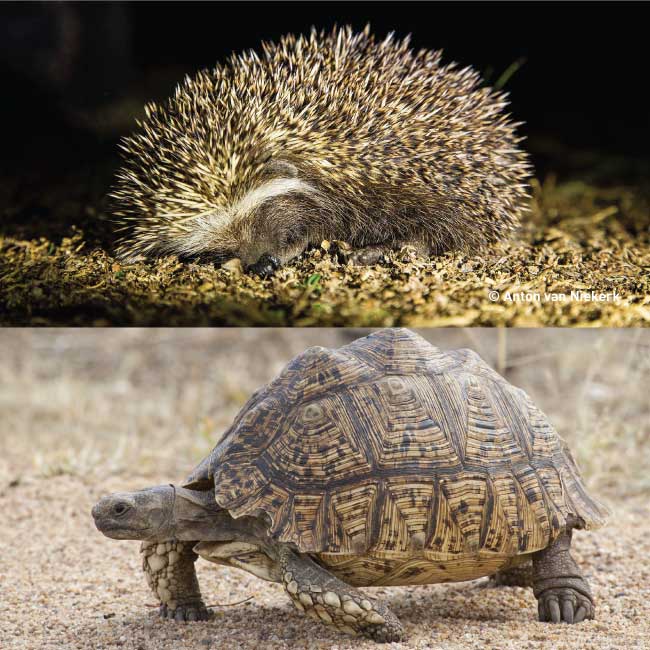
As a starting point, it is important for everyone to know that permits are needed for restricted activities involving living or dead, part or whole, legally protected indigenous species (species that occur naturally in South Africa). Examples of indigenous species include South African Hedgehogs, Leopard Tortoises, African Rock Pythons, Sungazers, and the Cape Parrot.
-
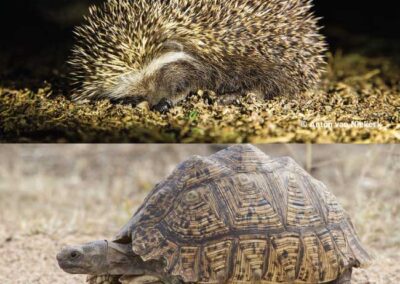
Top: South African Hedgehog (Atelerix frontalis) and bottom: Leopard Tortoise (Stigmochelys pardalis)
-
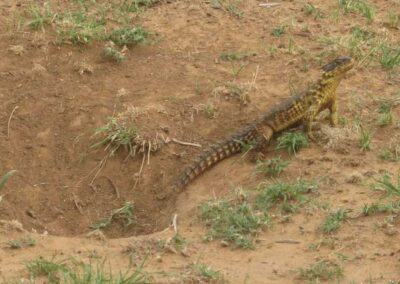
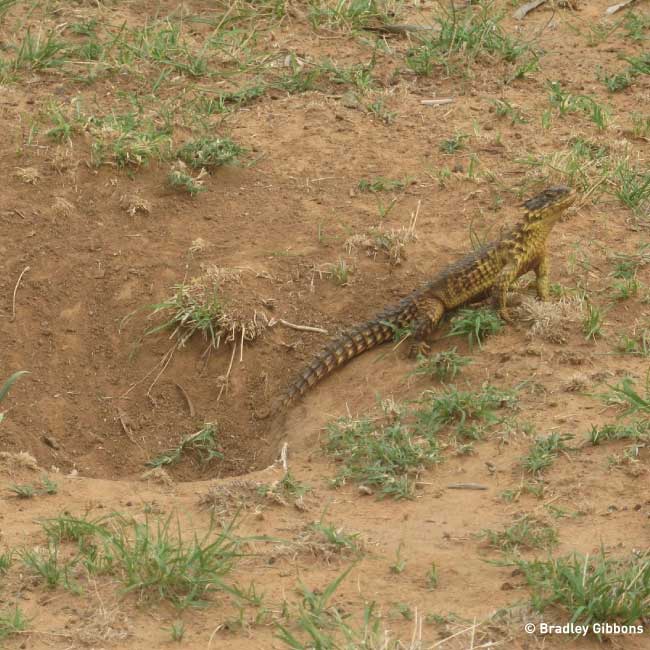
Sungazer Lizard (Smaug giganteus, syn. Cordylus giganteus), also known as the giant girdled lizard, at a burrow
Examples of restricted activities involving protected species include:
- Moving or translocating such species
- Selling, buying, or otherwise trading in these species
- Receiving, giving, donating, or accepting such species
- Having in possession or exercising physical control over such species.
Permits are also required for restricted activities involving listed alien and invasive species (AIS). Examples of AIS include Burmese Python, Mallard Duck, and Rose-ringed Parakeet.
Examples of restricted activities involving Alien and Invasive species include:
- Possessing or exercising physical control over AIS
- Moving or otherwise translocating AIS
- Selling, buying, or otherwise trading in AIS
- Acquiring, receiving, giving, donating, or accepting AIS
Being involved in a restricted activity without a permit means that you have committed an offence, and if found guilty, the penalties can be up to ten years imprisonment, a fine not exceeding 10 million rand, or both per charge. In addition to fines and imprisonment, the guilty person can be held liable for costs associated with any rehabilitation and restoration of the damage to the habitat caused by the release of the AIS.
Permits can be applied for in each of the nine provinces, at designated offices or through the national office for AIS species. If you would like more information on this issue, please contact the EWT, for attention Obeid Katumba.
This campaign is made possible through the generous support of the Lewis Foundation.
TALE FROM THE FIELD
THE FIRST SIGHTING OF AN EGYPTIAN VULTURE IN MALAWI
ANDRÉ BOTHA, EWT’S VULTURES FOR AFRICA PROGRAMME MANAGER
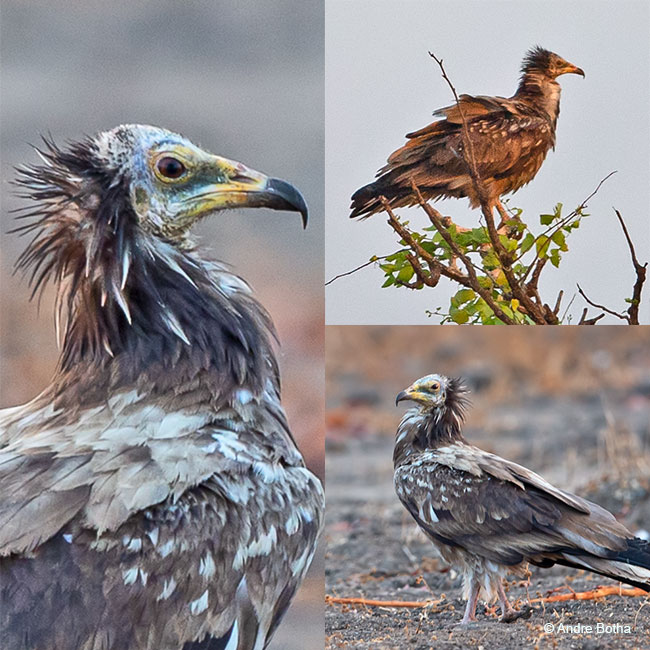
The first sightings of Egyptian Vultures in Malawi were recorded in November 2022
On 5 November 2022, my colleagues from the Lilongwe Wildlife Trust and African Parks and I were on our way to another day of vulture fieldwork in the Liwonde National Park in Malawi. At approximately 05:10 am, the team came across the carcass of an old Waterbuck ram that was one of the many casualties of the late dry season at this time of year. The carcass had attracted the attention of a handful of African White-backed Vultures, an adult Palm-nut Vulture, and another bird, all of whom flew off and out of sight as soon as the vehicle was in sight. Fortunately, this bird flew in a wide circle before returning to the carcass, where it was identified as a three-year-old Egyptian Vulture. Following an extensive literature search and input from various individuals working on the species, it seems this is the first reported record of this species for Malawi. The same bird was subsequently seen in the vicinity for another three days before the team moved their fieldwork site to a different location. Within the same timeframe, two more sightings of different individuals of this species were made in the South Luangwa- and Kafue National Parks in Zambia, indicating a small influx of this species into southern Africa, possibly by over-wintering birds that migrated from Eurasia. The Egyptian Vulture has been considered regionally extinct as a breeding species in southern Africa, and the last breeding record for this Endangered species in South Africa dates back to 1923, almost 100 years ago.
For more information about the Egyptian Vulture, please visit our Vultures for Africa page on the EWT website.
WE HAVE DOGS IN THE FIGHT AGAINST POACHING
DR ANDREW TAYLOR, EWT WILDLIFE IN TRADE PROGRAMME MANAGER

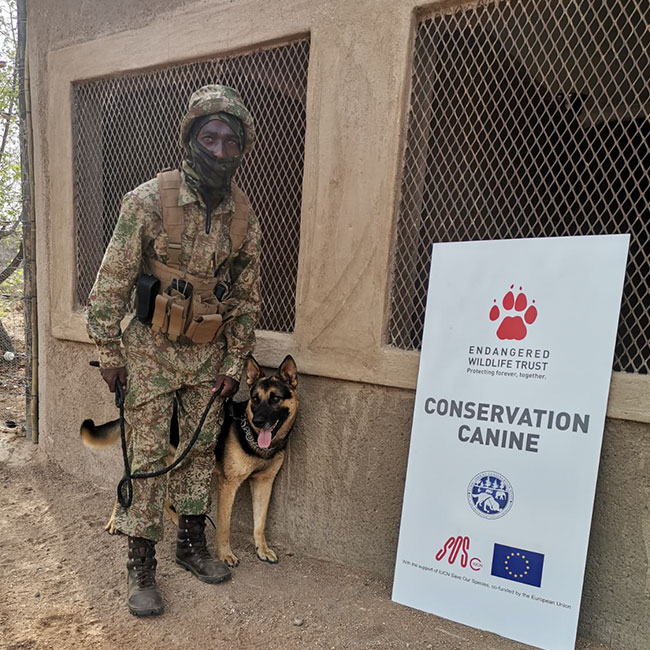
EWT Conservation K9 Bekah and handler Precious
The Endangered Wildlife Trust supports anti-poaching initiatives in game reserves using tracking and detection dogs known as conservation K9s. A project generously funded by the IUCN Save Our Species Rapid Action Grant and the European Union has enabled us to deploy six new dogs over the past year into priority reserves in Limpopo and the Eastern Cape. Although the grant period has ended, the EWT continues to support the reserves to ensure continuity and sustainability of the use of dogs to support their rangers, and our Conservation K9 Project Coordinator, Shadi Henrico, recently visited four of the dogs posted in Limpopo.
Ruger, a male Dutch Shepherd, and Bekah, a female Belgian Malinois sponsored by Global Conservation Force, were deployed to a big five reserve in June 2022. As tracking dogs, Ruger and Bekah walk daily patrols along the fence line with their handler Precious, sniffing out evidence of illegal infiltrations into the reserve that may be related to poaching activity. If someone has entered the reserve through the fence, these dogs will detect their scent and can follow the route they took, allowing Precious to find the trespasser and uncover the intentions behind their incursion.

EWT Conservation K9 Gold and handler Clifford
Gold, a certified detection dog, was deployed to another big five reserve in August 2022, where he is finding his feet and bonding with his newly qualified handler Clifford. Clifford was trained at Genesis K9 with support from the IUCN SOS and the EU, and works with Gold to screen vehicles at entrance gates and other locations to ensure that no contraband is smuggled into or out of the reserve. Gold’s sharp nose can detect firearms, ammunition, rhino horn, elephant ivory, pangolin scales, and lion bones and will immediately alert Clifford if he catches a suspicious whiff so that they can investigate further.
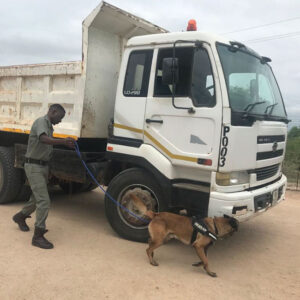
EWT Conservation K9 Juice and handler Kaizer searching vehicles
Juice, a large male Malinois, has been deployed to a reserve in the Associated Private Nature Reserves (APNR) adjacent to Kruger National Park, where he is screening vehicles entering and leaving the reserve. He has been partnered with Kaizer, an experienced dog handler and will be working hard to catch wildlife traffickers. Like Gold, Juice will focus on detecting firearms, ammunition, and threatened wildlife species.
CHOCOLATE-CHIP MANDEL BREAD
Each month, we bring you delicious, nutritious, and eco-friendly recipes that our staff members love! This month’s Earthly Eating recipe is recommended by the EWT’s Head of Marketing, Sizie Modise, and it is her sister in law, Tracey Heldenmuth’s, Chocolate-chip Mandel Bread

Chocolate-chip Mandel Bread fresh out the oven, Photo credit: Tracey Heldenmuth
What is it?
Like biscotti, Mandel bread is crunchy. However, it’s made with more fat than biscotti, so the resulting cookie is a bit richer and less dry. You don’t need to dip it in coffee or tea to enjoy it – it’s delicious all on its own.
Serving: 8–10
Preparation time: 20 minutes
Ingredients
- 2/3 cup of sugar
- 3/4 veg oil
- Mini chocolate chips
- 2 eggs
- 1 tsp vanilla
- 2 cups of flour
- 1 tsp baking powder
Preparation:
Mix ingredients and flatten into a rectangle on a sheet pan lined with parchment paper
Bake at 180 degrees Celcius for 20-25 minutes. Take out for 10 minutes. Slice and turn slices on their sides and cook for another 10 minutes to crisp. Take out and enjoy
SCIENCE SNIPPETS: WHY DID THE WILD DOG CROSS THE FENCE?
ERIN ADAMS AND LIZANNE ROXBURGH, THE EWT’S CONSERVATION PLANNING AND SCIENCE UNIT
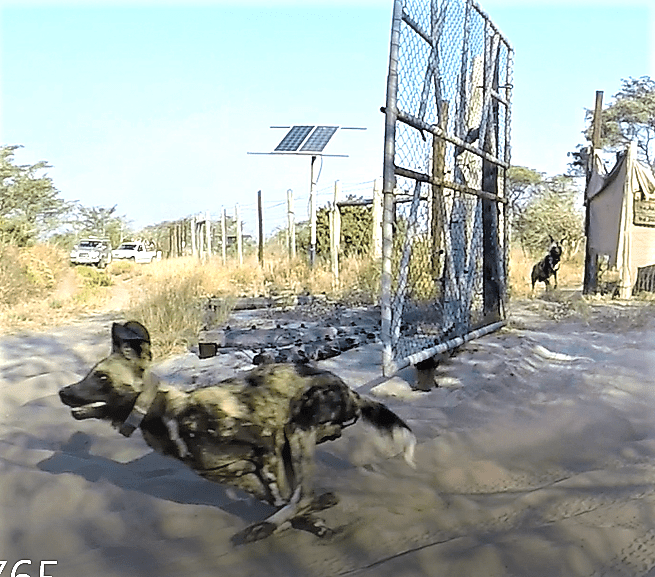
Within South Africa, fences are used to contain wildlife in reserves to protect them, particularly in human-dominated landscapes where they could easily come into conflict with people if they leave the reserve. This is especially true for medium to large-sized carnivores. However, they do cross these fences, and once outside, they are exposed to risks such as snaring, persecution, and collisions with vehicles, and any livestock they kill can incur high costs in the form of retaliatory killings by farmers. However, the reasons why they cross fences are not well understood.
African Wild Dog conservation, especially in southern Africa, often includes the translocation of wild dogs from one or more reserves and the formation of a new pack in a different reserve to ensure that genetic diversity is maintained and that population sizes are appropriate. In a recent publication co-authored by EWT scientists*, the reason behind why African Wild Dog packs cross reserve fences was investigated. Using a long-term dataset, they studied 32 Wild Dog packs across five reserves in the KwaZulu-Natal province in South Africa over 14 years. During this time, they recorded 154 events when Wild Dogs crossed fences. They looked at several factors that could be linked to fence crossings, including prey densities, rainfall, wild dog pack size, and the number of lions in the reserve.

The scientists found that the age of the pack (i.e., whether it was newly formed or well-established) and the fence integrity affected whether or not Wild Dog packs crossed the reserve fence. When fence integrity was poor, the probability of packs crossing the fence was higher, especially with newly established packs. This happens in their exploratory phase when they look for territories to occupy in the new reserve. When fence integrity was average, more established wild dog packs were more likely to escape to increase the size of their territories. When fence integrity was good, the probability of packs crossing fences was very low. Reserve management should ensure that the fence’s integrity is good to prevent these crossings. It is also important to carefully manage packs that reach about 3.5 years old, as this is when they would be more likely to expand their territories and attempt to cross the fence.
*Stone, D. W., Kelly, C., Marneweck, D. G., Druce, D. J., Hopcraft, J. G. C., & Marneweck, C. J. (2022). Fence management and time since pack formation influence African Wild Dog escapes from protected areas in South Africa. Journal for Nature Conservation, 70, 126291.
Secrets of the Soutpansberg
Cyrintha Joubert, the EWT’s Soutpansberg Protected Area, Water Conservation Project Coordinator
There are 18 recognised centres of endemism in southern Africa – localised areas with high species diversity found nowhere else. The Soutpansberg Mountain Range is one of these and has the highest plant diversity of all these centres. Many of the Soutpansberg endemic species are rare and threatened. Around 3,000 vascular plant species occur in the 6,800 km² Soutpansberg Mountains. Six biomes are found in the mountains: forest, thicket, savannah, grassland, fynbos, and wetland.
Not only are the species living in the mountains of high conservation value, but they also hold cultural value and have medicinal properties that are sought-after for traditional healing practices and mainstream pharmaceuticals. The EWT strives to conserve these plants in collaboration with partners in the Soutpansberg, ensuring that those who depend on them for any purpose can legally access the species they need sustainably. Here are a few secrets of the Soutpansberg that you may come across should you be lucky enough to visit the area or hike the recently established Old Salt Trail.
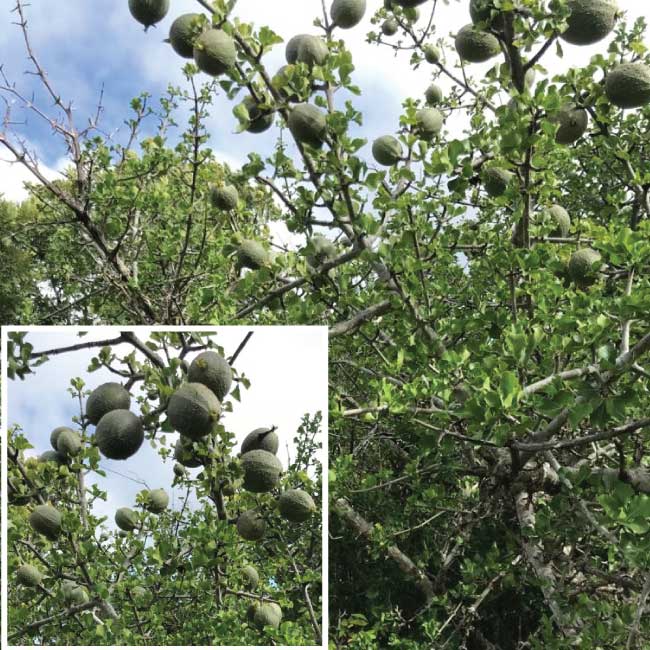
Monkey Orange
Strychnos spinosa
The genus name, Strychnos, is taken from the Greek word for deadly, which refers to poisonous alkaloids contained in the seed integuments. “Spinosa” refers to the spines. The poison strychnine is derived from an Asian species of Strychnos. The seeds should be avoided as they are poisonous or could have purgative effects. The fruit only appears after good rains and has a smooth, hard, yellow look when ripe. Inside the outer ‘shell’ is tightly packed seeds surrounded by a fleshy, edible covering. Most of this plant is used medicinally, with the roots and leaves used to treat certain snake bites. After the seeds have been removed, the dried fruits are used as musical instruments.
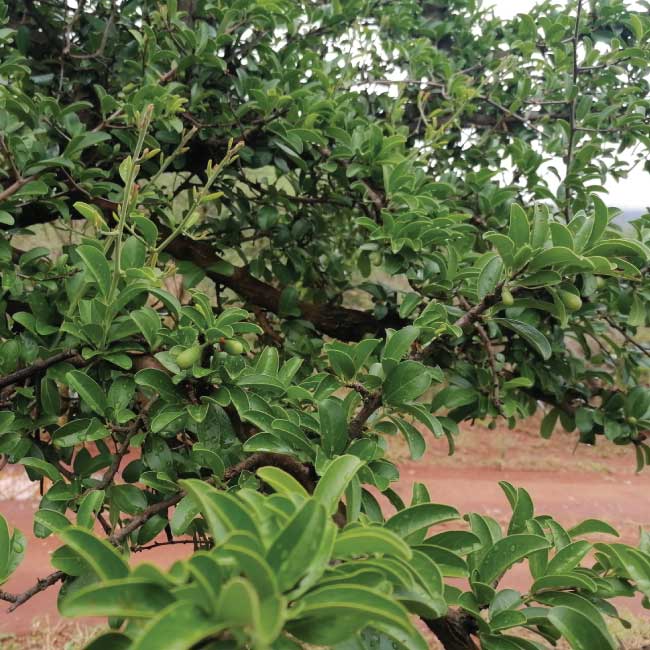
Sour Plum or Monkey Plum
Ximenia caffra
A sour worm with no added sugar! This is an extremely versatile plant, and all parts are used. While the fruit can be eaten fresh, it tastes slightly sour and is often made into jams, desserts, or jellies. As the wood is hard, it is used for making pot handles, firewood, and even for construction purposes. The oil extraction from the seeds has various uses, from cosmetics to the softening of leather. The fruit is high in potassium, and the leaves and roots are used to treat coughs, body pains, and even malaria.
Stem fruit
Englerophytum magalismontanum
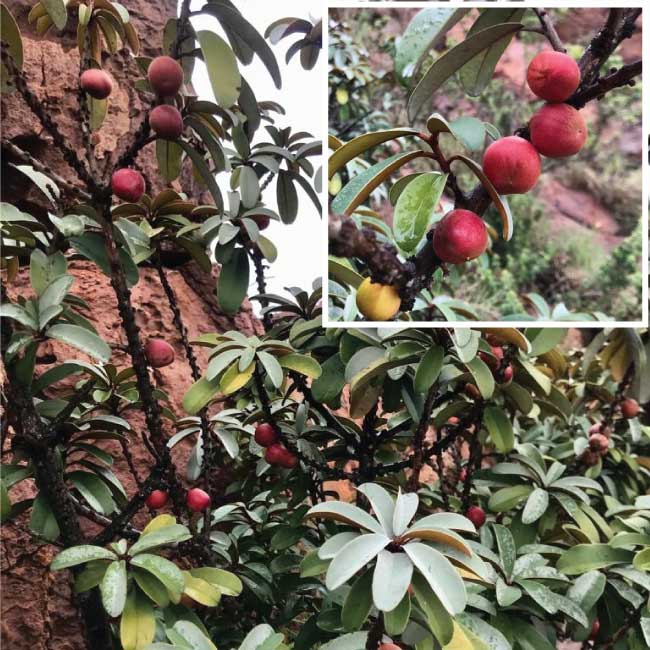
This small to medium-sized evergreen tree has delicious fruits which are extremely high in Vitamin C with a content of 40 mg per 100 g. The fruit is fleshy and contains sticky, milky latex when picked and the skin removed. The tree fruits from December to February. When ripe, the fruit is bright red and can be eaten fresh or used to make jam, wine, and even vinegar. These plants’ roots are also used medicinally to treat rheumatism and abdominal pain. They have beautiful silky golden hairs on the back of the leaves, and the tree has a silvery look from afar.
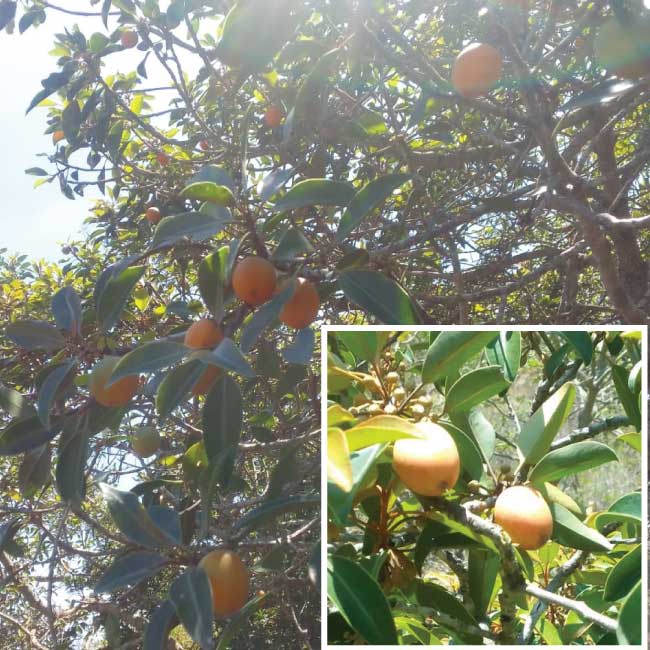
Transvaal Red Milkwood
Mimusops zeyheri
The botanical name is derived from the Greek mimo, meaning ape, and ops, meaning resembling an ape. This might reference the flowers’ colour or the corolla’s shape. This tree is fairly popular amongst humans, birds, and various primates as it has tasty ripe yellow fruit with a high Vitamin C content.
Some more mobile endemic species to find in the Soutpansberg Mountains
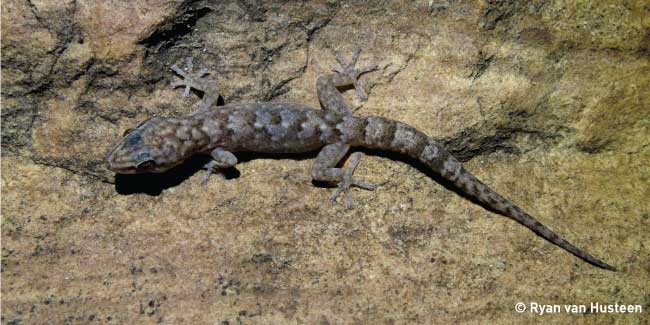
Pienaar's Flat Gecko
Afroedura pienaari
A widespread and abundant gecko that shelters in rock cracks and under loose barks in trees. At night, it forages on rocks, trees, vegetation, and the ground.
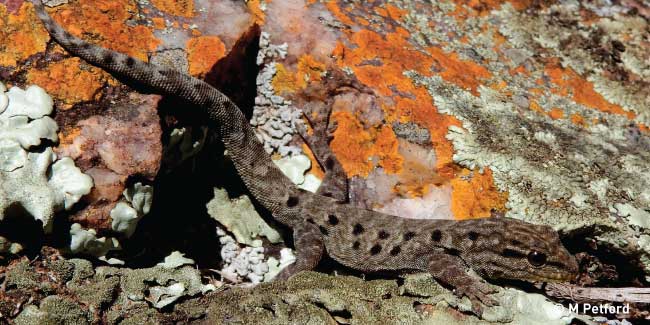
Cryptic Dwarf Gecko
Lygodactylus incognitus
This shy gecko lives on trees and rocks and is restricted to the higher altitudes in the mist belt.
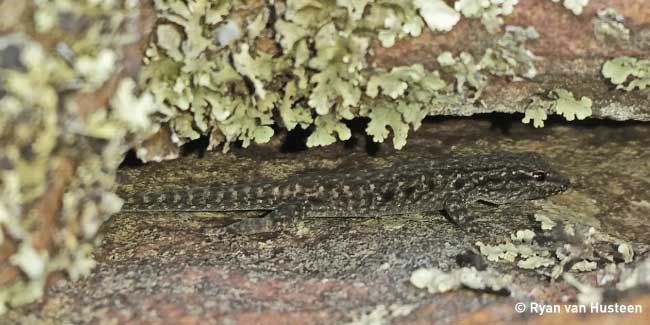
Soutpansberg Dwarf Gecko
Lygodactylus soutpansbergensis
A shy gecko that lives in the rocky areas throughout the Soutpansberg
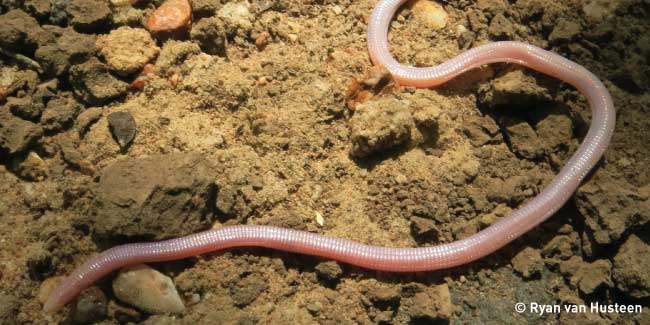
Soutpansberg Worm Lizard
Chirindia langi occidentalis
This lizard is rarely encountered as it spends its life underground. It is locally common in certain areas and absent in others.
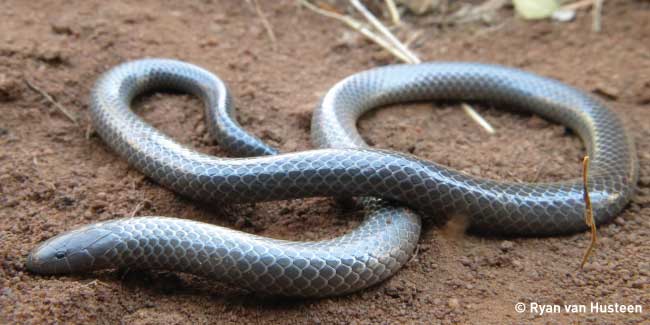
Soutpansberg Purple-glossed Snake
Amblyodipsas microphthalma ssp. nigra
A near-endemic to the Soutpansberg. These snakes spend most of their time underground and occasionally come to the surface to feed and disperse. They can be found in virtually any habitat, from the hot bushveld areas to the montane grassland on top of the Soutpansberg and throughout the mountain range. Limpopo’s only near-endemic snake!
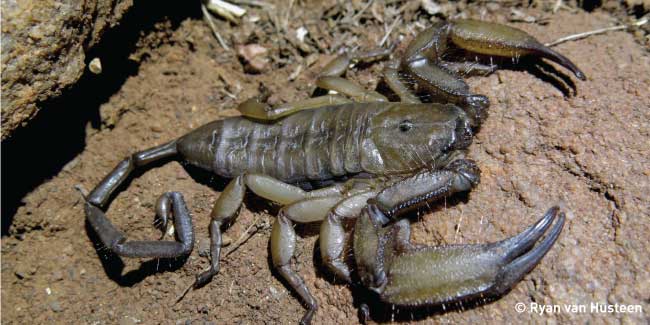
Soutpansberg Hadogenes Scorpion
Hadogenes soutpansbergensis
The only described endemic scorpion in the Soutpansberg. These large flattened scorpions prefer to live in rock cracks and are widespread and abundant in the Western Soutpansberg.
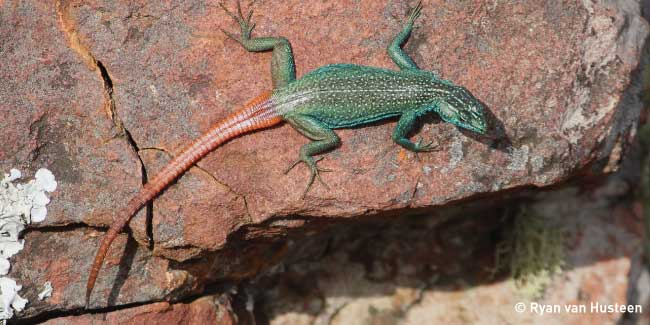
Soutpansberg Flat Lizard
Platysaurus relictus
Endemic to the western Soutpansberg, these colourful lizards live on rocks in warm and hot areas. They live in small colonies and feed on insects, fruits, and plants.

Word from the CEO
Yolan Friedmann
The older I have got – and I have definitely gotten older this year– the more I realise that life is really much simpler than we make it out to be. Within just my career, I can attest to the fact that the conservation/environmental sector follows the same cycle: making simple solutions seem much more technical, complicated, and high-tech than what they actually are: simple.
To demonstrate, our sector is full of jargon and terminology that evolves every few years, mostly in synchrony with the international gatherings of important bodies such as government signatories to multi-lateral agreements, the expiry of international treaties, or the upcoming renewal of same, perhaps all designed to give new impetus to age-old concepts in a way that ensures that they make their way into renewed commitments and invigorated negotiations, but which are simply all about doing the right thing. But why does ‘doing the right thing’ need to have clever new names and technical descriptions to gain traction? Let me demonstrate: At the upcoming Convention on Biological Diversity Conference of the Parties (CoP), as well as the impending United Nations Framework Convention on Climate Change CoP, our leaders will be negotiating our futures around concepts such as “Nature Positive”, “No Nett Loss”, “Net-Zero Standard”, and “Clean Development Mechanism” whilst terms like “future-proofing”, “resilience”, “natural capital”, and “carbon offsetting” will be more common than “hello” and “how are you?”. This is on the back of the evolution of terms like “sustainable use” and hot on the heels of the demise of the term “sustainable development”, which is so last season…
However, underneath it all are some very simple concepts which appear to be beyond human beings to adopt, no matter how you spin it. Live simply, honestly, and fairly; don’t use more than you really need; share; don’t waste; live compassionately and with consideration for others that live on the same planet; do business with minimal impact and maximum benefit to the most for now, and into the future; don’t be greedy; and live with kindness. These are really not complicated concepts; yet, we seem to need complex terms that sound important enough for leaders to shake hands over the documents that espouse them and lock them in as the solutions that will save humanity from destruction. The problem with this is that it alienates ordinary human beings from doing what is right, and changing our lives by ourselves and for our own benefit, along the lines of the concepts above. We stand back and wait for new agreements with complex language and confusing jargon to be adopted and driven by leaders who we know will almost never really take them seriously.
In the run-up to both Conferences of the Parties, we hold out for stronger commitments to more aggressive targets and more effective change that will lead to better futures. But we must remember that the truth is far simpler and more achievable if we all learn that it comes down to some simple truths humans have been hardwired to know for millennia. Don’t hold out for technical agreements and confusing jargon, do what is right and important right now. Make that change today to a diet, a lifestyle, a business and a home that is less impactful and kinder to the planet. Buy local, eat less, waste nothing, repurpose and recycle, consume less, live lighter, be less greedy, love more and want less, share more, destroy less and nurture more, and be more aware of the impact we all have, which can be positive or a blight on the natural world around us. Imagine if all people and all national policies ensured that this is how all people lived worldwide. Life really is sometimes that simple.
As 2022 races towards an end and we all get a little older, may the wisdom we have gained be to live with more kindness and grace and nurture the natural world that gives us all life.
Earthly Eating
Gabi’s Sunchoke Showcase
Each month, we will be bringing you delicious, nutritious, and eco-friendly recipes that our staff members love! This month’s Earthly Eating recipe is Gabi’s Sunchoke Showcase from Gabi Teren, the EWT’s National Biodiversity and Business Network Manager
This recipe, adapted from Jamie Oliver’s Potato and Mushroom Al Forno (in his book Veg!), is the best showcase for the sunflower tuber’s sweet, mushroomy, garlicky taste.
Jerusalem Artichokes. These delicious vegetables are neither artichokes nor from Jerusalem. Rather, they are sunflowers native to North America and historically cultivated by indigenous people of the Americas. They grow like weeds, are easy to harvest and cook, delicious, nutritious, and help bees!
Why are they wildlife friendly?
They make a great sustainable crop for small gardens – and trust me, you want to use a small contained planting space even though they grow into 2-meter tall sunflowers – they send long root runners out that produce the edible tubers you want to harvest, and they can get out of control if not restricted. And you can harvest as many as you want, and the rest can just be left in the soil to grow into plants the next year. They are water-hardy and flower late into the summer season, which helps the bees who visit them when there are very few other flowers around (in the Cape).
They are ready to harvest once finished flowering, and you yank out the main stem and then follow the long roots to get to the tubers. And yes, they are ugly- but delicious! Use as fresh as possible, but they do keep in the fridge for weeks- win!

- Jerusalem Artichoke flower and bee

- Freshly harvested tubers
Serves 4
Ingredients
- Two handfuls Jerusalem artichoke tubers
- 600 g potatoes
- Half a head of broccoli
- 4 garlic cloves
- 2 onions
- 500g mushrooms
- 1 bunch fresh chives
- 3 large free-range eggs
- ½ tub cottage cheese
- Handful (or two) parmesan cheese
- ½ teaspoon truffle oil (worth it!)
- Handful fresh rocket
Preparation
- Preheat the oven to 200 degrees C
- Scrub the artichokes and remove the fine roots
- Roughly chop the potatoes, artichokes, garlic, and onion
- Place in a large roasting pan, throw over 2 tablespoons of olive oil and salt and pepper and roast for 30-40 mins till golden and cooked through.
- Toss in the roughly chopped mushrooms and broccoli and roast for another 10 mins
- Beat eggs till pale and fluffy, add the chopped chives, and fold in the cottage cheese
- Pour over the roasted veg and then grate parmesan over the top
- Continue roasting for another 10-12 mins, or until the egg mixture has set and serve with a few drops of truffle oil and fresh rocket.
It’s a one-pan rustic wonder that offers so much flavour and a protein and iron-packed vegetarian dish. And the Jerusalem artichokes will just keep on producing, year after year.
(Pro-tip = the artichokes contain high amounts of inulin – a really beneficial fibre for gut health, but eat too many, and you may experience some err gassiness as a side-effect!)
(Pro-tip 2: Pairs well with a great Chenin Blanc such as a Ken Forrester Old Vine Chenin or Spier Organic Yellowwood White).

Careers in Conservation Meet the newest member of our pack – Sizie Modise
Hi everybody!
My name is Sizie, and I would like to introduce myself to you all. I just joined EWT as head of Marketing, and I am excited to dive in.

Sizie Modise Head of Marketing for the Endangered Wildlife Trust
I have many years of experience across a variety of challenging, rewarding bucket list-type endeavours, ranging from working alongside international artists to heading up the marketing division for a unique ex situ conservation project in the heart of South Africa. I’ve raised two guide dogs and have a passion for wildlife photography when I get the chance. Music is in my blood, and I must admit my playlists are often an eclectic mix of various artists across genres. Always up for adventure, my mantra is “Great things never come from comfort zones.”
Here is a little bit about my journey to a career in conservation
Job title: Head of Marketing
Location: Johannesburg Head Office
Where did you grow up? I grew up mostly in Johannesburg but lived between Lagos, London, and Dubai for about ten years. I moved back to South Africa in 2014
What are your hobbies/things you like to do in your spare time? Reading, listening to music and horseback riding are big passions of mine, polo in particular, but I haven’t ridden much since the pandemic. Spending time with my loved ones is extremely rewarding as well.
Any pets? I don’t have any pets at present, although I have raised two guide dogs in recent times
Favourite animal and why: This is a difficult one to answer. There are so many incredible animals that exist, and some that unfortunately have been rendered extinct. I have many that I admire for different reasons. For the purposes of fulfilling this answer of giving just one as an answer, I would say the Gorilla because, to me, they personify the earth in terms of temperament, in a way. Gorillas are powerful and strikingly unique, not only for their size and force but also for their gentle demeanour.
Favourite food? Sushi on a hot day, and my favourite comfort winter meal would most likely be Egusi Stew with pounded yam (Nigerian dish)
Pet peeve? Tardiness in all its forms… also people chewing with their mouths open
Why did you want to work for the EWT? I believe that my professional background, combined with my passion for wildlife conservation, is a fantastic fit for joining the EWT team, which I believe is an organisation dedicated to the well-being of human and animal communities. I think I bring something different to the table and feel I can add positively to an already incredible group of incredible individuals that make up the pack.
What excites you about this new position? Literally everything! I am excited to work with some of the most incredible people in the conservation industry on the planet. I am so proud of the work the EWT does, and I’m ready to start climbing up the mountain tops and shouting it to the world!
What are you passionate about? Life. We are all so privileged to be alive and make a difference not only to the animals we are working towards protecting but changing how the world treats and perceives the wonderful wilderness we love and cherish.
What’s the best piece of advice you’ve ever received, and who did it come from? “ Don’t stop believing in yourself, keep going, be kind and help others along the way…” my beautiful mother, who sadly transcended at the end of September this year, was the most gentle, loving person- my cheerleader and counsel for all things. She was always ready to help the next person, so much so that many people who had the privilege of knowing her came to call her mama… I shared her with many.
What is your go-to feel-good song? Calvin Harris – Giant ft Rag n Bone man
Predator Day – Ons praat ‘n jakkals uit ‘n bos
Mandy Schumann, Department of Agriculture, Environmental Affairs, Rural Development and Land Reform, and Bonnie Schumann, the EWT’s Drylands Conservation Programme
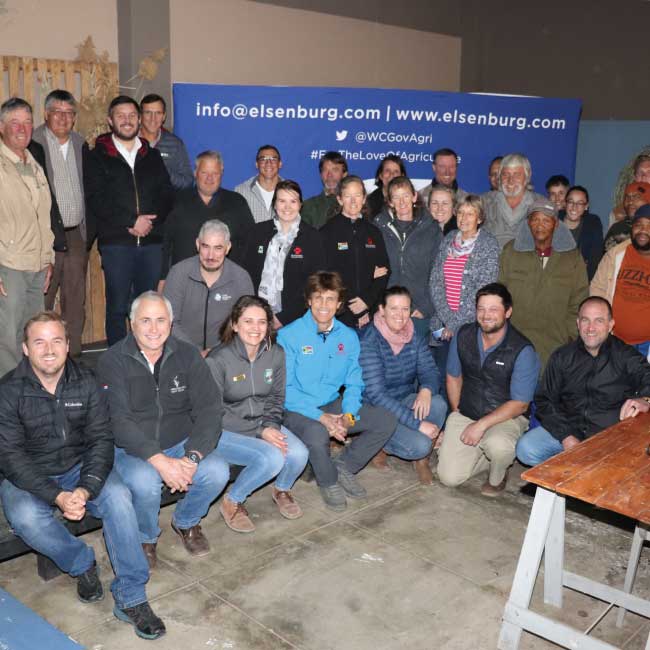
Farmers and conservationists recently got together in Prince Albert to discuss the issues around livestock predation in the Karoo. This event was organised after the Western Cape Department of Agriculture’s stakeholder meeting in May 2022, at which farmers indicated this challenge as one of the most important in the Karoo. In response to this, the Department partnered with the Endangered Wildlife Trust (EWT) to present a one-day workshop to unravel the challenge.
Predators and the problems caused by livestock predation typically produce a witches’ cauldron of emotions, and tensions invariably run high. To survive out there, farmers need to be tough and, as a result, have strong personalities and strong opinions. Conservationists are engaged in an almost impossible struggle to save what is left of our critical biodiversity in the face of an ever-increasing avalanche of threats. As such, conservationists also tend to have strong personalities and no-nonsense attitudes, which can be a recipe for potential conflict between the “greenies” and farmers.
This day, however, proved to be different. The event set the benchmark for addressing a hot topic without needing on-site referees or first aiders. It also highlighted the need for more opportunities to share lessons and to encourage interaction and discussion between conservation bodies, agricultural organisations, and farmers. Farmers are, after all, at the forefront of the efforts to provide food for the nation under ever-increasing challenging climatic and economic conditions. Farmers are out there to make a living from farming. They embrace the solitude and have a deeply ingrained love of the land, the job, and all it encompasses. Farming alongside nature, whether with crops or livestock, brings a host of challenges and almost insurmountable risks. Enter wildlife and predator conflict, the focus of the gathering in Prince Albert.
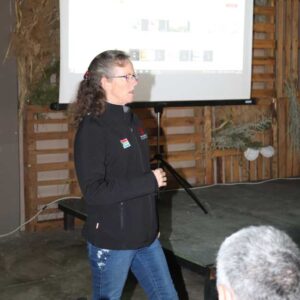
The EWT’s Bonnie Schumann presenting at Predator Day 2022 in Prince Albert
The presenters, a team from the Endangered Wildlife Trust, CapeNature, the Western Cape Department of Agriculture, The Predation Management Forum, the Cape Leopard Trust, and an agent from Virbac, were all exceptionally professional. The attitude from the outset was about sharing information and learning from one another. The farmers attending were engaging while the speakers shared their experiences, and it was a valuable learning exchange with the farmers communicating their valuable insights and opinions. Undoubtedly, participants departed with much food for thought on what could or could not be applied back home on the farm. Contact information was shared so discussions and support could continue following the event. This open approach made it a useful and positive networking experience for all involved. And as always, most people experienced that moment of “why don’t we get together and discuss this more often?”
No farmer wants to arrive at his livestock in the morning and find chaos and destruction, nor spend half of his time playing cat and mouse trying to chase down predators on his farm. The great thing is that the attitude towards wildlife on farms is slowly shifting in a positive direction. The discussions included approaches to sustainable land management and strengthening collaboration between stakeholders to find solutions. Small stock is most vulnerable during lambing season, but even healthy adult sheep can be preyed on by jackal and caracal. Over the years, a diverse toolbox of mitigation measures has been developed, ranging from using livestock guardian animals, including dogs and alpacas (yes, they guard as well as spit), to bells and whistles to protect livestock from predation. Besides protecting livestock, improving management focusing on superior genetic selection, such as selecting for strong maternal instincts and animals adapted to the environment, all of which help to reduce unnecessary losses. In addition, these measures help to make the production system much more resilient to predation and environmental risk factors such as the impacts of climate change. Robust, functioning ecosystems support both agricultural and ecological productivity and, if managed sustainably, will support biodiversity and livelihoods indefinitely. Where key indicator species, such as Riverine Rabbits, are present, farmers can give themselves a pat on the back. Iconic apex predators such as Leopards indicate a healthy intermediate and small mammal prey base, an even bigger pat on the back to farmers conserving them. Leopards can’t change their spots; it is the people that share space with wildlife that must do the changing.
Change takes time, knowledge, and some nudging, and we can celebrate each baby step towards a better, more holistic, and peaceful farming landscape. Livestock predation is not only the farmer’s problem; the problem belongs to us all. As such, we must join forces to find solutions to help support farmers in their role as the real guardians of this country’s spectacular biodiversity. This day was a celebration of cooperation and shared experiences, with a view to finding common ground and real solutions. The day was hosted by the Endangered Wildlife Trust and co-organised and funded by the Western Cape Department of Agriculture. Watch this space. The call for more such events will be heeded!

Predator Day in Prince Albert, 2022