Donate today: support our k9's 
 mission

Searching for rare, threatened beetles on high-altitude mountain peaks

Searching for rare, threatened beetles on high-altitude mountain peaks

In the field

Searching for rare, threatened beetles on high-altitude mountain peaks

By Dr Samantha Theron, Conservation Researcher in the Drylands Strategic Conservation Landscape
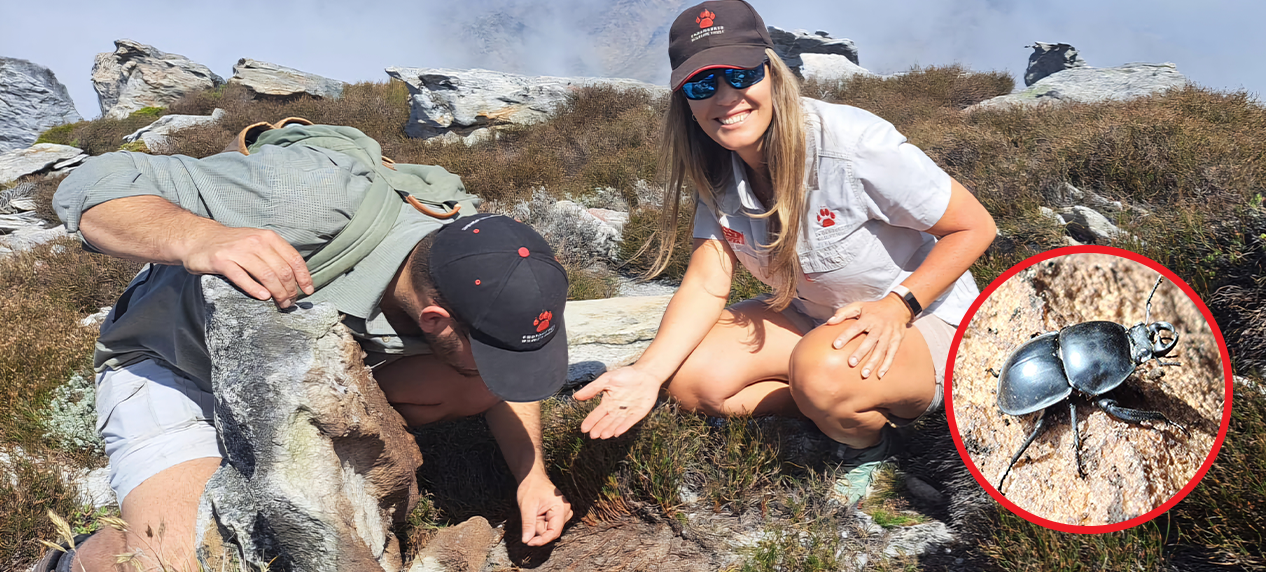
 

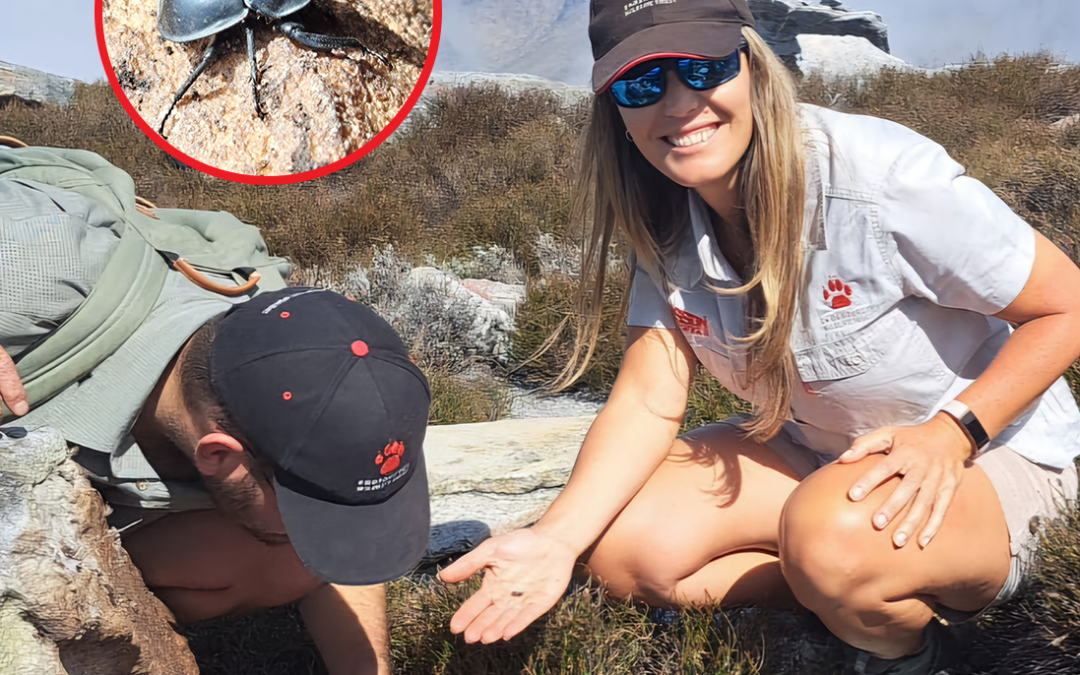
researchers surveying remote Karoo mountain ecosystem

Boarding a helicopter to search for a beetle rarely seen by anyone besides keen mountaineers, has proven helpful in determining whether two species of these extraordinary insects continue to persist in the mountains of the Western Cape.

Last year (2025), the EWT’s Drylands Conservation team, including myself, field officers Handré Basson and Esther Mathew and scent detection dog, Delta, took to several mountain peaks in search of two species of Cape Stag Beetles (Colophon eastmani and C. nagaii) that have become seriously threatened, not only by climate change and wildfires, but also by illegal collection. We undertook numerous field surveys, including two helicopter-assisted survey expeditions, in which pilot Jaco Vermeulen flew us to six previously unsurveyed and otherwise inaccessible mountain peaks, to search for these beetles.

Our survey had four objectives.  The first was to conduct field surveys to gain a better understanding of the species’ distribution and habitat condition. The second, to ensure habitat protection for both species, which included engaging the relevant landowners to establish legally-binding protected areas for the beetles. Thirdly, to ensure steps are taken to protect these species, and that conservation management plans are drawn up and implemented in collaboration with the landowners. The fourth aim was to update the known distribution of the two Colophon species and to conduct IUCN Red List threat assessments for both species.

Conserving these unique insects and their habitat is necessary to ensure their continued survival, and also to support further research on the impacts of climate change on species across the Karoo and Fynbos biomes. Cape Stag Beetles can act as flagship species for high-altitude ecosystems, in which certain species, like these flightless beetles, have been forced to migrate to higher ground in order to survive. With the ongoing effects of climate change, these mountaintop habitats, or “islands in the sky”, could be further reduced, thereby increasing the risk of extinction for these high-altitude specialists.
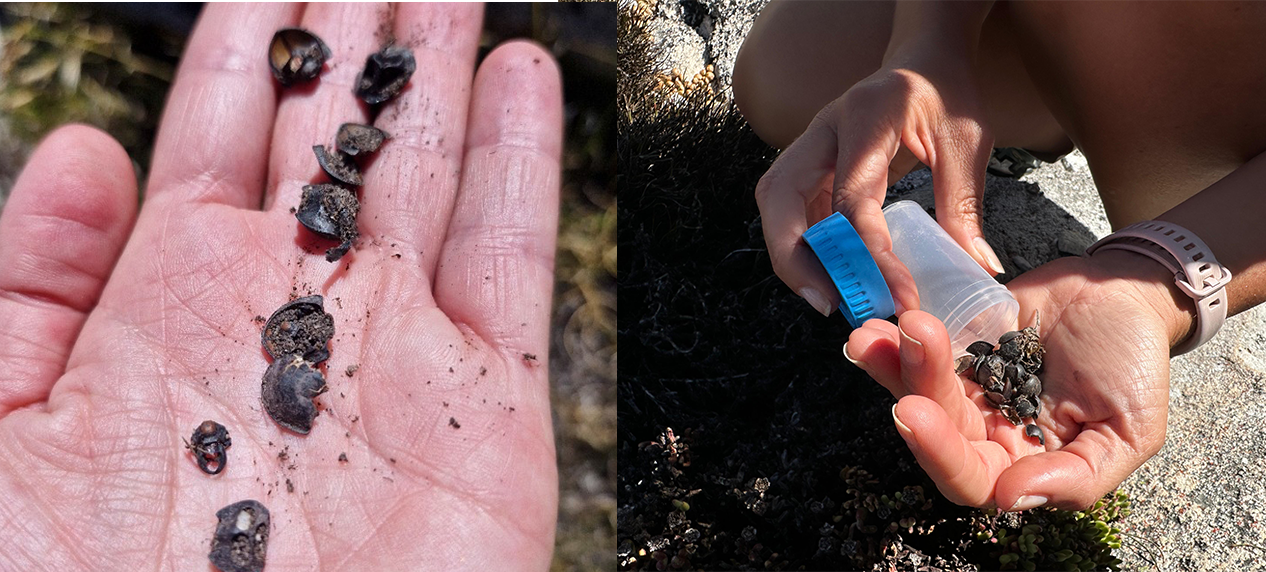
Cape Stag Beetle specimen fragments

Cape Stag Beetle specimen fragments

The surveys

The EWT team was joined by three landowners on the first of the two helicopter-assisted expeditions last year, in which we surveyed three of our six target peaks.

The habitat on the first peak was found to be unsuitable for Colophon, and we quickly moved on to the second peak, where we found evidence of the beetles’ presence in the form of beetle fragments. Because it was only the start of the beetles’ active season, we presumed that the fragments we found were the remains of the previous year’s beetles. Furthermore, a recent intense wildfire, may have had a severely negative impact on the beetle population on the peak.

At the third peak, which is the highest of the six, we immediately started finding lots of beetle fragments – evidence of a healthy population.  We found fragments of roughly 40 individual beetles, and after a few hours of searching, we found two live beetles! We noted the vegetation cover, which was healthier and higher than the previous sites, indicating that the fire had not reached this peak.

During the second helicopter-assisted expedition, we surveyed three peaks, finding the habitat on one unsuitable for the beetles.  A survey of the second peak revealed indications that a fire had ravaged this peak in the last year or two. Only a few fragments of roughly four individual beetles were found during our three-hour survey. The beetles need damp soil to survive, and most of this peak was dry. The heat was also unbearable at times, and with little cover on the exposed mountaintop, we found ourselves seeking shelter from the heat in the shade of the helicopter.

Moving to the last, and second-highest of the six peaks, which had also been affected by a recent fire, we found both old- and fresh fragments of beetles on the peak. Unfortunately, the habitat at this location was noticeably disturbed, with pieces of wood, metal and wires lying around.  There also appeared to have been oil spills. In total, we found fragments of roughly 18 individual beetles on this peak.

Our time on the mountain peaks delivered a number of other interesting finds, including a Skolly Butterfly (Thestor sp.), Hex Protea Chafer (Trichostetha dukei), Tradouw Mountain Toadlet (Capensibufo tradouwi), Creeper Scorpion (Opsitacanthus diremptus), the unusual Arid Rainspider (Paraplystes sp.), Male Firefly (Lampyris sp.) and the Conbush Rainspider (Palystes kreutzmanni).  Several lizard and scorpion species were also recorded.

In addition, Colophon fragments were found on another peak we surveyed on foot, roughly midway between the two species’ known distributions. The species identity of these fragments is unknown, and further surveys will be required to collect genetic material to determine the identity of this population.
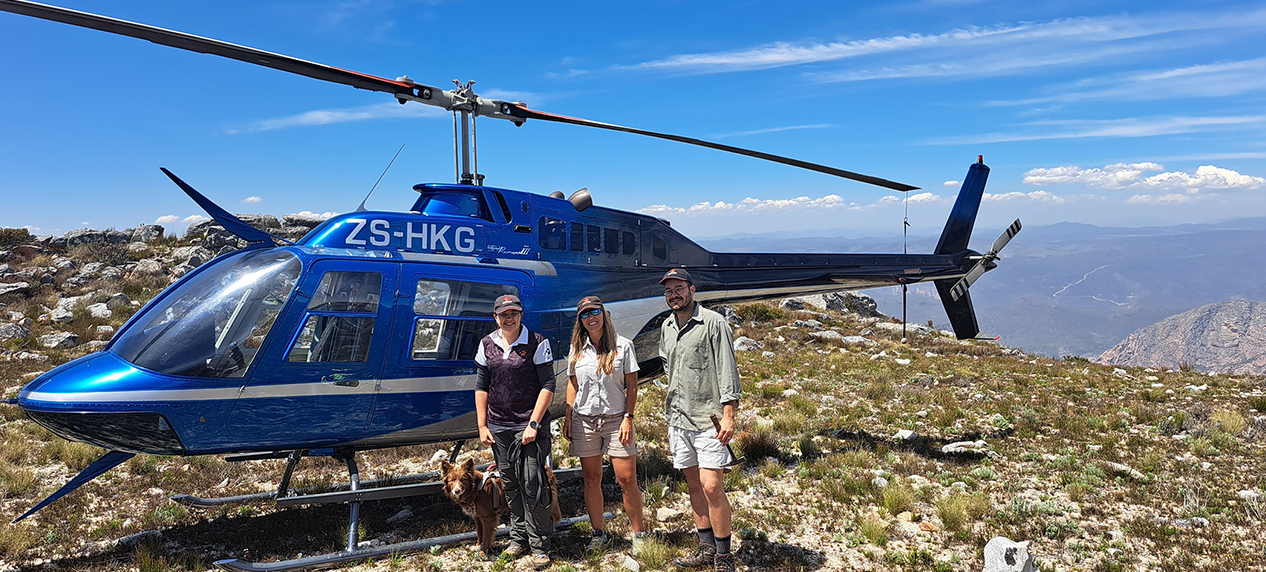
Helicopter landing on Western Cape mountain peak for beetle survey

In summary…

This project revealed multiple new sites for Colophon eastmani, and we were able to update the distribution of the species and conduct a threat assessment for the IUCN Red List, listing this species as Endangered. Conversely, for Colophon nagaii we found nothing but a few beetle remains at the historical site (type locality), confirming that the species is only known from a single location, and may already be extinct. It is possible that a fire which swept over the peak in 2017 may have wiped out this population. We have drafted the first IUCN Red List assessment for Colophon nagaii, listing it as Critically Endangered.

The EWT would like to thank the Mohamed Bin Zayed Species Conservation Fund, Mapula Trust, Ross Air and the landowners for their support in this project. Using a helicopter has proven to be a game-changer for this type of survey.  Without it, we would not have been able to take our scent detection dog, Delta, up to these sites, nor survey so many sites in one day. Two of the landowners have indicated their intention to declare formal protection of Cape Stag Beetles on their properties, and we will be initiating these processes in due course.

Despite increased threats to their survival, Cape Stag Beetles continue to persist.  As soil dwellers, they are able, in some instances, to survive devastating fires, but altered fire regimes, poaching by insect collectors, and habitat reduction resulting from climate change, continue to pose threats to their existence.  This year we are continuing our field surveys and associated research to assess the impacts of altered fire regimes and other threats on these insects, and to implement further long-term conservation measures to protect the species and their habitats.
The Kudu Connection: Surprising Diet Choices of Liwonde’s Carnivores

The Kudu Connection: Surprising Diet Choices of Liwonde’s Carnivores

Science Snippet

The Kudu Connection: Surprising Diet Choices of Liwonde’s Carnivores

By Erin Adams & Lizanne Roxburgh


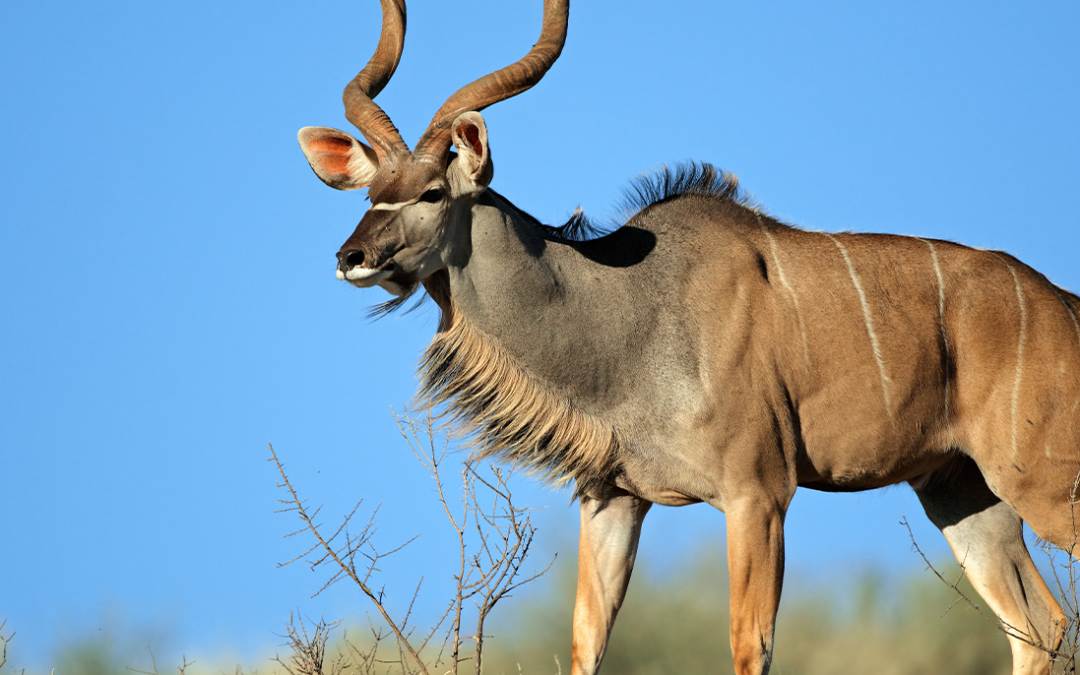
Kudu antelope in Liwonde landscape

Large carnivores are usually able to co‑exist in a landscape by eating different prey species, being active at different times of the day, and inhabiting different habitats. Among these factors, diet is often the main indicator of which carnivore species is present in a particular landscape, as many carnivores have evolved to make the most of their preferred prey. Studying what different carnivores consume therefore provides valuable insight into how best to manage them within a shared environment. In a recent publication co‑authored by EWT scientists*, the diets of lions, spotted hyaenas, and cheetahs were examined in Liwonde National Park, Malawi, to understand how these species overlap in their prey preferences.

The researchers collected scat samples from each predator species and opportunistically photographed direct feeding events whenever they were encountered. The scat samples were processed, and ten hairs from each sample were examined to determine which prey species they belonged to.

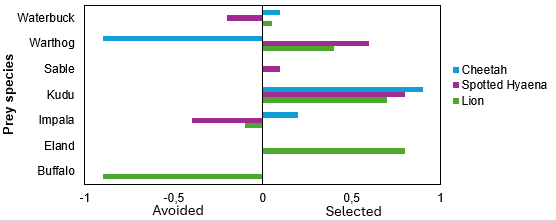
The scientists found a high degree of overlap in the prey species consumed by the three carnivores. Lions and cheetahs were each observed feeding on seven prey species, while spotted hyaenas fed on nine. Although all three species showed a preference for kudu (Tragelaphus strepsiceros) and waterbuck (Kobus ellipsiprymnus), there were notable differences: cheetahs preferred impala (Aepyceros melampus) and waterbuck and avoided warthog (Phacochoerus africanus); lions preferred eland (Taurotragus oryx) and warthog and avoided buffalo (Syncerus caffer); and spotted hyaenas preferred warthog and avoided impala.

Fig. 1: Prey species avoided and selected for by lions, spotted hyaenas and cheetah in Liwonde National Park (figure adapted from the original publication).[

One of the standout findings was that all carnivores strongly preferred kudu, even though kudu were not very abundant in the landscape, indicating a clear selective preference.

Waterbuck were also frequently consumed by lions and cheetah, likely because they were highly abundant during the study period and easier to hunt due to their tendency to travel in small groups. These results highlight the importance of studying both predators and prey when assessing the health and functioning of an ecosystem. Understanding carnivore diet preferences, especially when they target less abundant species, helps conservationists make informed decisions about wildlife management, prey population monitoring, and maintaining balanced predator–prey dynamics within protected areas.

*Kayuni, B., Sievert, O., Davis, R. S., & Mzumara, T. I. (2025). Dietary Composition and Overlap Among Large Carnivores in Liwonde National Park, Malawi. African Journal of Ecology, 63(4), e70061.

Cash, Corruption, and Creatures: The Hidden Economy of Wildlife Crime in South Africa

Cash, Corruption, and Creatures: The Hidden Economy of Wildlife Crime in South Africa

Cash, Corruption, and Creatures: The Hidden Economy of Wildlife Crime in South Africa

By Gerald Byleveld, Volunteer at the Endangered Wildlife Trust’s Wildlife in Trade Unit


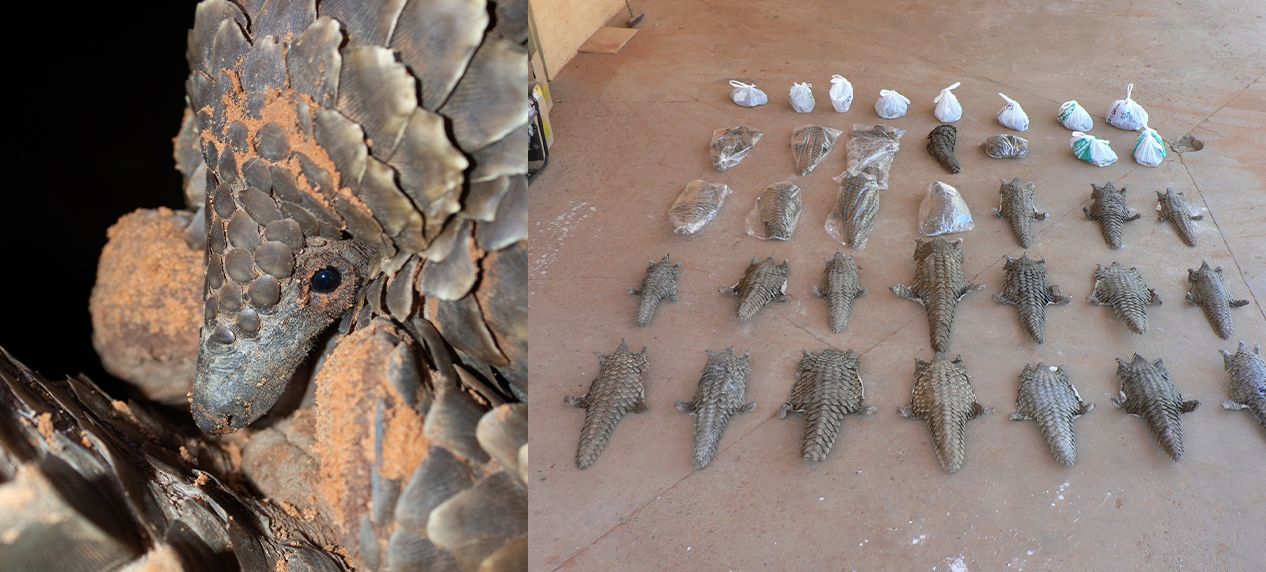
Confiscated wildlife products in South Africa

South Africa’s developed transport infrastructure, sophisticated financial system, and extensive wildlife resources make it both a prime source and a transit point for illegal wildlife trade (IWT).  But poachers and smugglers are only one layer of a multi-billion-rand enterprise.  Behind them are financiers, exporters, lawyers and money managers who ensure that illicit proceeds can circulate undetected through the legitimate economy.  These financial facilitators are the invisible scaffolding of the IWT industry.  Yet only a fraction of such cases result in charges being brought against  financial facilitators.  A 2023 UNODC/Asia–Pacific study found that only 1% of wildlife crime cases involved a money laundering investigation, and only 7% led to prison sentences.

Money laundering – the process of disguising the origins of illegally obtained funds – enables traffickers to convert cash from wildlife products into what appears to be legitimate income.  In wildlife crime, laundering typically occurs through several overlapping techniques.

Cash smuggling and layering are the simplest and most common methods.  Syndicates collect large amounts of physical cash from buyers in Asia or local intermediaries and move it across borders in small increments, often through informal financial systems.  Once split and layered through multiple transactions, the trail becomes difficult to trace.

Front companies and shell businesses also play a central role.  Entities registered as export firms, tourism operators, or hunting outfitters can easily disguise illicit transactions as part of ordinary business operations.  A legitimate game farm, for example, can hide illegal horn sales within a web of legal animal product exports.  Legitimate cash-intensive businesses, such as casinos, knowingly or unknowingly, allow syndicates to launder their ill-got cash into apparently legitimate “winnings” – often in large quantities.

Trade-based money laundering – the manipulation of invoices to hide value transfers – is another favoured method.  A company may overstate or understate the value of goods shipped abroad, effectively moving money under the guise of trade.  This technique exploits weaknesses in customs oversight and is especially effective in sectors such as seafood, leather, and curios, which overlap with wildlife products.

Finally, traffickers invest laundered profits in tangible assets such as real estate, luxury vehicles, or guest lodges.  Once the money is tied to visible property, it appears legitimate.  The result is a criminal economy that seeps into the formal one, distorting local markets and shielding offenders behind layers of ownership and paperwork.

If money laundering cleans dirty profits, bribery ensures the system continues undisturbed.  Bribes lubricate nearly every stage of the wildlife trafficking chain – from poaching in source countries to import into destination countries.

At the source, game and field rangers are often bribed or coerced into turning a blind eye.  Syndicates may offer payment or protection in exchange for information on patrol routes, security gaps, or the locations of high-value animals.  The same pattern extends to customs and border officials, who can falsify documentation or permit consignments to pass unchecked.

Corruption also infects investigative and judicial processes.  There have been repeated instances where charges against traffickers are delayed, evidence is misplaced, or penalties are reduced due to alleged bribery or political interference.  Such manipulation erodes public confidence and signals to criminal groups that enforcement can be negotiated.

Bribery is not limited to the public sector.  Private-sector enablers – freight companies, shipping agents, and financial intermediaries – may also accept payment to mislabel goods or overlook suspicious transactions.  This blend of private complicity and public corruption creates a powerful shield of impunity.

The costs of money laundering and bribery extend well beyond biodiversity loss.  Financially, laundered wildlife proceeds are often reinvested into other illicit markets, including narcotics and human trafficking.  Organised crime groups exploit wildlife trafficking networks as low-risk, high-reward ventures that diversify their revenue streams.

Institutionally, corruption undermines governance.  When the officials tasked with protecting wildlife or enforcing the law are compromised, public trust collapses.  Communities dependent on tourism or sustainable wildlife use lose confidence in the government, while honest businesses face unfair competition from actors funded by criminal capital.

Economically, the influx of illicit money can inflate property prices and distort local economies, particularly in regions adjacent to parks or coastal areas.  The environmental, social, and fiscal consequences are interlinked — weakening the state’s ability to deliver services, conserve biodiversity, and attract ethical investment.

In response to the massive scale of the challenge, South Africa now explicitly recognises wildlife crime as a form of organised financial crime.  The Financial Intelligence Centre Act (FICA) provides a framework for tracking suspicious financial transactions, and inter-agency cooperation between the Financial Intelligence Centre, SARS, DFFE and the Hawks has improved.  The National Integrated Strategy to Combat Wildlife Trafficking (2022–2030) (NISCWT) explicitly calls for the “follow-the-money” approach.

The arrest of Francis Kimpampa in 2023 and subsequent convictions for rhino trafficking and money laundering showcase what can be achieved through inter-agency and private-public collaboration. Internationally, the USA’s Operation Apex dismantled a decade-long wildlife and drug money laundering operation. In Malawi, the Lin-Zang network was convicted in April 2023 for money laundering derived from trafficking rhino horn, ivory and pangolin scales.

Yet formidable challenges remain. Many wildlife transactions occur in cash-heavy rural areas, beyond the reach of formal banking oversight.  Investigations into financial flows require specialised skills and coordination across agencies that often operate in silos.  Prosecutorial capacity to investigate complex financial crimes is limited, and asset forfeiture proceedings can be lengthy and contested.

To dismantle trafficking networks, enforcement must pivot from catching foot soldiers like poachers to targeting financial and institutional enablers.  Priority reforms include strengthening financial-intelligence sharing among banks, regulators, and conservation agencies; building asset-tracing and recovery expertise; improving transparency around company ownership; and investing in communities to reduce the allure of IWT and corruption by creating viable livelihoods and equitable conservation benefits.  Because trafficking is inherently transnational, regional and global collaboration is essential – from harmonising regulations to tracing cross-border financial flows.

The illegal wildlife trade is not only an ecological crisis but a financial and governance one.  Every seized horn or intercepted wildlife shipment represents only a tactical win.  Lasting success depends on making wildlife crime unprofitable by exposing financial trails, prosecuting facilitators, and restoring integrity to the institutions designed to protect society and the natural world.

Until the money stops flowing, the killing will not stop.

Across borders. Across landscapes. Against the odds.

Across borders. Across landscapes. Against the odds.

Across borders. Across landscapes. Against the odds.

Osvaldo Abrao, senior field officer, Carnivore Conservation Unit


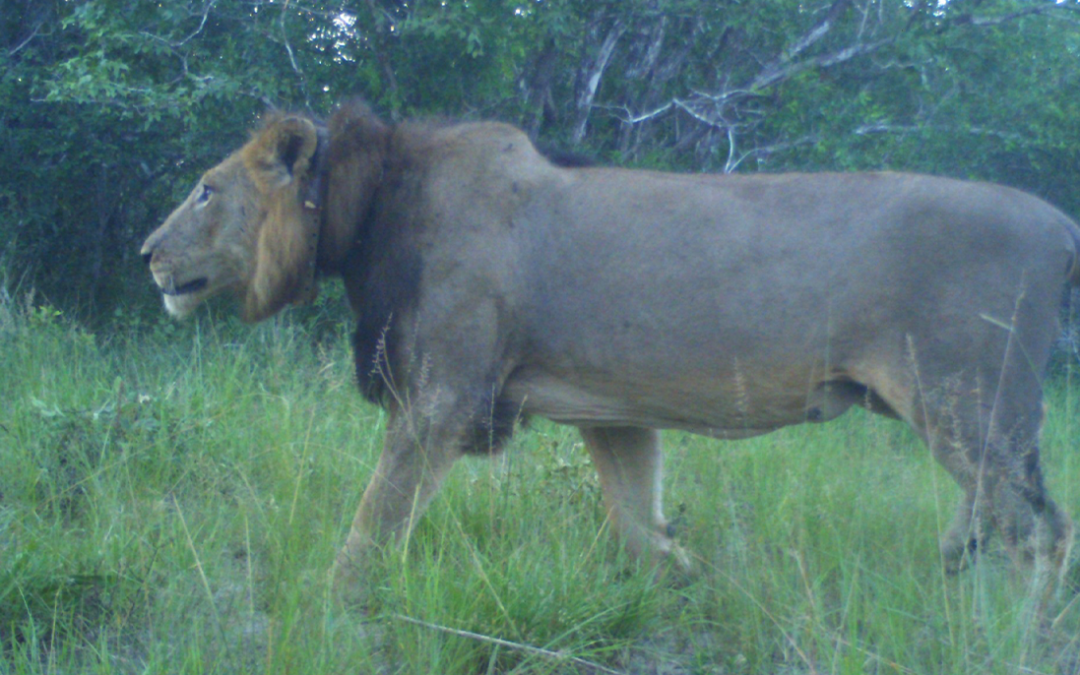
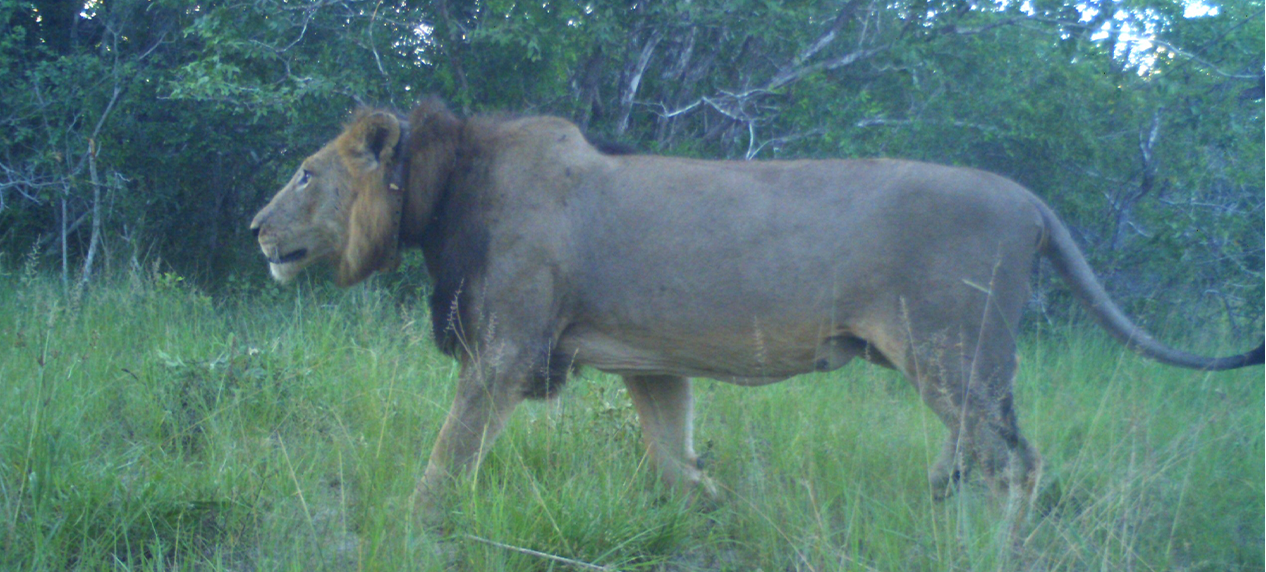
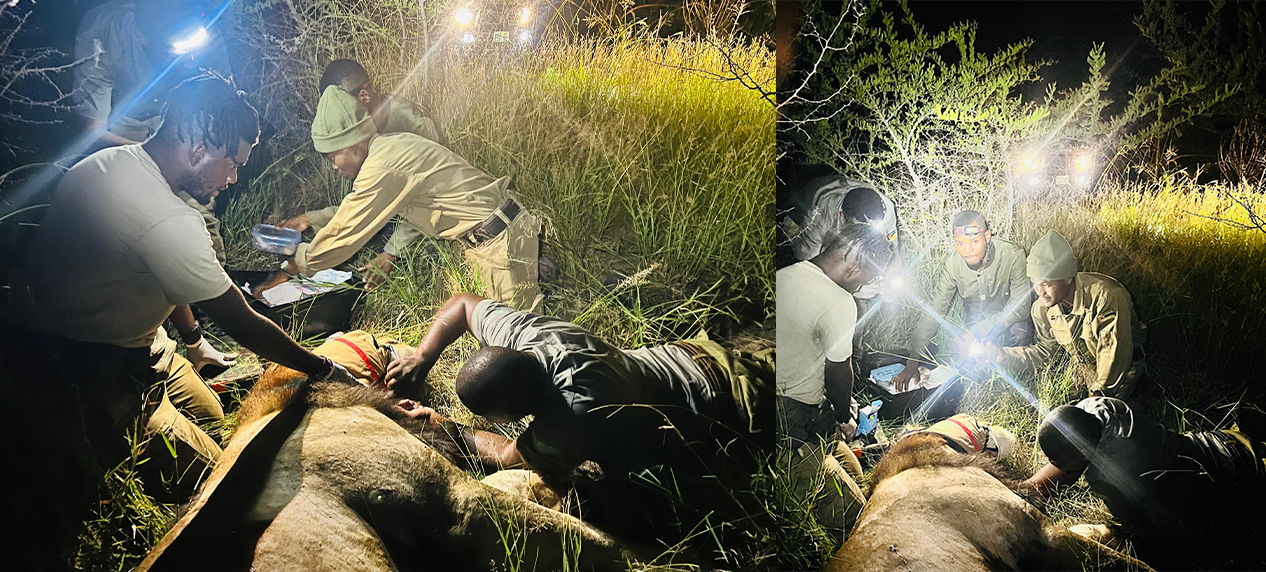
Collared male lion in Gonarezhou landscape

Three months ago, a male lion collared in Gonarezhou, Zimbabwe began moving – leaving the safety of a protected landscape and heading east, across vast stretches of land where people, livestock, and wildlife live side by side.

No one knew how far he would go.

His collar, fitted as part of long-term research in the Gonarezhou landscape, was failing, yet it continued to send signals as he crossed reserves, rivers, roads, and working landscapes, gradually moving toward Mozambique’s Indian Ocean coast. Each step took him further from core protection and deeper into risk.

When his signal appeared in Coutada 5, Mozambique, a game reserve adjacent to Zinave National Park, teams moved quickly to locate him to replace the collar.

What they found was worrying: a wire snare was tightly caught around his neck. It was the kind of injury that, left untreated, would almost certainly have killed him.

The snare was removed in time. The lion was safely re-collared and he continues to survive in the wild.

This intervention didn’t just save one animal – it contributes to years of learning. The data from his journey helps conservation teams understand how lions still move across borders, and how connected these landscapes remain.  A pride of lions currently living in Zinave National Park are believed to have followed a similar route.

In Coutada 5, early signs of recovery are already visible, from lions sited with cubs to the return of elephant, buffalo, and other large herbivores, signifying that natural dispersal is still happening across this region. This is what conservation at a landscape scale looks like: animals moving as they always have, corridors holding, and with protection in place, damaged areas beginning to recover.

This outcome was not the work of one organisation. It was made possible through close cooperation between conservation authorities, scientists, veterinarians, and field teams working across Zimbabwe and Mozambique, including Mozambique’s National Administration for Conservation Areas, Gonarezhou Conservation Trust, the Endangered Wildlife Trust, Peace Parks Foundation, Mozambique Wildlife Alliance, and Akashinga.

veterinary team removing snare from lion

The Quiet Rise of Trade-Driven Poaching of Africa’s Lions

The Quiet Rise of Trade-Driven Poaching of Africa’s Lions

The Quiet Rise of Trade-Driven Poaching of Africa’s Lions

Dr Samantha Nicholson, EWT Senior Carnivore Scientist,  & Dr Peter Lindsey, CEO of the African Lion Recovery Fund


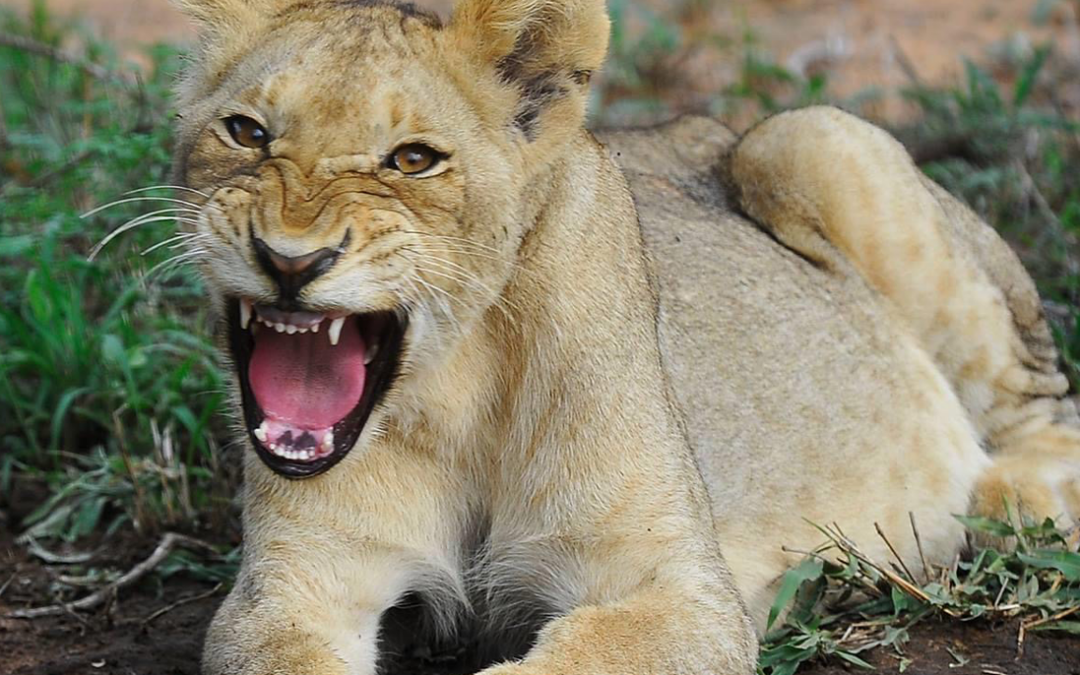
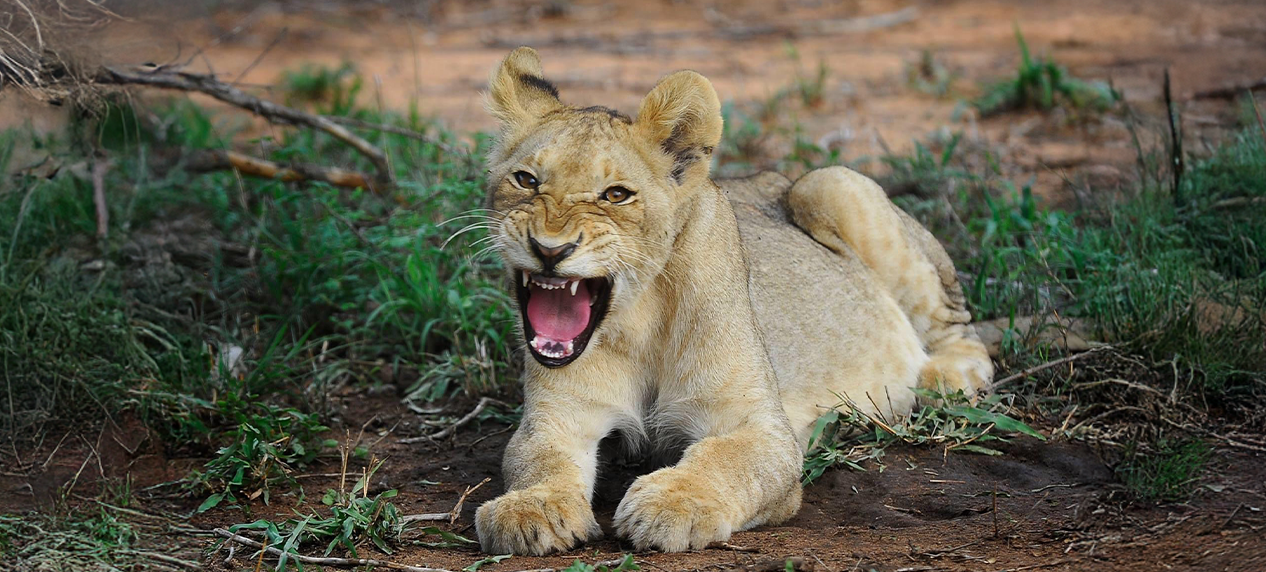
Young in the  Timbavati

Despite their iconic status, lions are threatened across much of their African range. Today, they occupy only a fraction of their historical distribution, and many populations are in decline. The continuing reduction in both lion numbers and range reflects a combination of recent losses and improved understanding of their status and has been severe enough for lions to be listed as Vulnerable on the IUCN Red List of Threatened Species.

Expanding human populations have transformed much of Africa’s savannah into farmland, settlements, and infrastructure, shrinking and fragmenting wildlife habitat. As a result, lions increasingly come into contact with people and livestock, heightening the risk of conflict. This is further compounded by prey depletion, as widespread bushmeat hunting reduces the availability of wild prey and pushes lions to target livestock. In response, lions are often killed in retaliation, while many others are inadvertently caught in snares set for other species. These combined pressures continue to threaten populations and remain as key challenges for lion conservation.

In recent years, however, researchers and practitioners have become increasingly concerned about another, less visible threat; one that has the potential to undermine conservation gains if left unaddressed.

An Emerging Threat: Targeted Poaching for Body Parts

Alongside these long-standing pressures, a more targeted form of poaching has begun to occur with increasing frequency in several parts of Africa: the deliberate killing of lions for their body parts for the illegal wildlife trade.

Unlike conflict-related killings or accidental snaring, targeted poaching involves lions being intentionally killed to harvest specific body parts (such as bones, teeth, claws, skins, or fat) for the illegal wildlife trade. These parts are used for a range of purposes, including traditional medicine, spiritual practices, cultural rituals, and, in some cases, personal adornment. Demand originates both within Africa and from international markets, particularly in parts of Asia.

The use of lion body parts is not new. For centuries, lions have held cultural and spiritual significance in many societies. Historically, however, most use relied on opportunistic sources, such as lions that died naturally or were killed during conflict incidents. What is changing is the scale, organisation, and intent behind the trade.

In several countries, lions are now being actively targeted. Poachers may use poisoned carcasses to attract entire prides, killing multiple lions in a single event. In other cases, lions are caught in strategically placed snares or lured to baited sites.

There is also growing evidence that some of this trade is becoming more organised. Seizures of large quantities of lion body parts, sometimes alongside products from other trafficked species such as elephants or pangolins, suggest involvement by criminal networks operating across borders. These networks are often difficult to detect and disrupt, particularly in regions with limited law enforcement capacity.

Importantly, this threat does not replace existing pressures on lions – it compounds them. If targeted poaching becomes entrenched before effective responses are in place, it could spread rapidly across the species’ range and reverse recent conservation gains.

The threat is widespread

Mozambique has emerged as the epicentre of targeted lion poaching in southern Africa, with 426 human-related lion mortalities recorded between 2010 and 2023. Notably, incidents of targeted poaching for body parts increased sharply after 2017, rising from approximately one documented case per year to around seven annually. The involvement of organised criminal networks is underscored by large-scale seizures, including the interception of 300 kg of lion parts in Maputo in 2023 alongside other illicit wildlife products.

This pressure is now spilling across borders, with severe consequences for neighbouring populations. In South Africa’s Kruger National Park, lion numbers in the northern 20% of the park have declined by up to 63% over the past 18 years, largely attributed to targeted poaching for body parts and incidental snaring. Reports describe increasingly sophisticated methods, including the use of meat lures and poisoned carcasses to kill and harvest parts from multiple lions simultaneously.

Similarly, in Gonarezhou National Park, targeted lion poaching has become an escalating threat, characterised by poisoning and the selective removal of body parts rather than opportunistic killing. These incidents are particularly alarming because they are occurring within a well-managed transboundary conservation landscape, demonstrating that even flagship protected areas are vulnerable to organised, trade-driven poaching.

Reports of incidents where lions have been targeted for parts are now being shared from across the species African range.

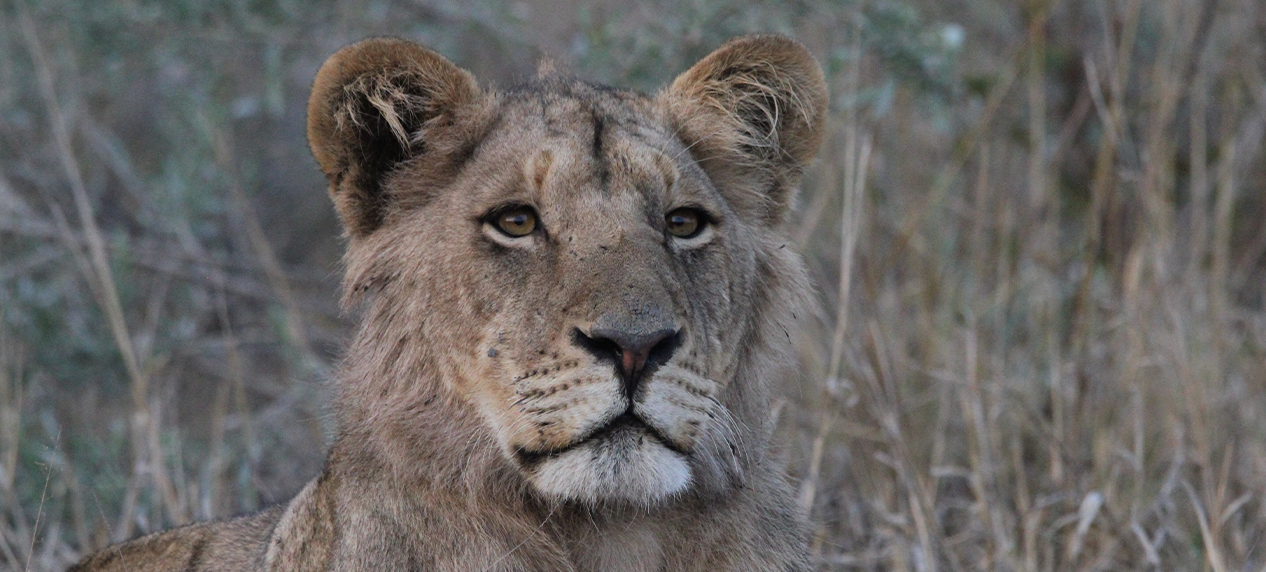
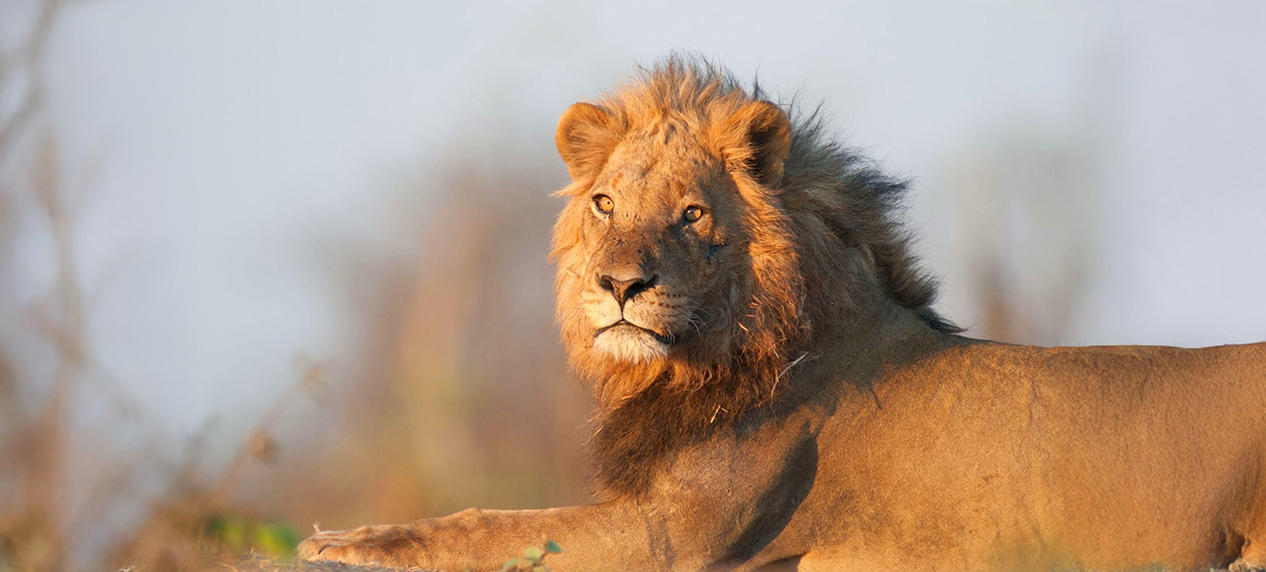
Young male African lion in savannah habitat

Preventing Entrenchment: Proposed Responses

Recognising the seriousness of this emerging threat, several priority areas for action have been identified. Together, these complementary strategies aim to reduce targeted poaching of lions for body parts and disrupt trade networks along the entire supply chain, from poaching to consumption.

  1. Strengthening Protection and Monitoring on the Ground

Effective lion conservation depends on well-managed, adequately resourced protected areas that can prevent poaching and respond rapidly to emerging threats. Focused monitoring of lion populations, combined with systematic recording of mortalities, enables early detection of emerging hotspots and supports proactive rather than reactive responses. A centralised database, such as the IUCN SSC Cat Specialist Group’s African Lion Database (an initiative funded by the Lion Recovery Fund), allows trends to be tracked across landscapes and support evidence-based conservation action.

  1. Working More Closely with Local Communities

Communities living alongside lions play a decisive role in conservation outcomes, particularly where livestock losses and safety concerns are high. Addressing human–lion conflict, sharing benefits, and directly involving communities in conservation efforts reduces incentives for poaching and builds long-term support for lion persistence.

  1. Improving Understanding of the Trade

The trade in lion body parts remains poorly understood, limiting the effectiveness of interventions. Targeted research, including the use of genetic and forensic tools, can help clarify supply chains, identify source populations, and inform more strategic enforcement responses.

  1. Disrupting Trafficking Networks

Intelligence-led law enforcement and improved coordination among agencies are essential for interrupting trafficking routes. Targeting intermediaries and higher-level traffickers reduces profitability and weakens organised trade networks.

  1. Strengthening Legal Frameworks and Justice Systems

Robust legal frameworks, consistently applied, are critical for deterring wildlife crime. Effective investigations, well-prepared prosecutions, and the use of forensic evidence increase the likelihood of successful convictions and meaningful penalties.

  1. Reducing Demand for Lion Body Parts

Ultimately, poaching persists because demand exists. Carefully designed, culturally sensitive demand-reduction initiatives are essential to reduce pressure on wild lion populations and complement enforcement efforts.

Male Lion in Botswana

Cautious Optimism

Lion conservation has never been simple, and the emergence of targeted poaching for body parts adds another layer of complexity. Yet there are reasons for cautious optimism.

Across Africa, governments, conservation organisations, researchers, and communities have demonstrated that lions can recover when threats are addressed and resources are invested strategically. Large areas of suitable habitat remain, and many protected areas could support substantially larger lion populations than they currently do.

It is imperative to act early and decisively. If targeted poaching is recognised as a serious, yet manageable threat and addressed through coordinated, evidence-based action, there remains a realistic opportunity to prevent it from becoming entrenched. Lions have coexisted with people for millennia, and with informed, collaborative action they can continue to do so, thus securing a resilient future for the species across much of its remaining range.

Lindsey P, Nicholson SK, Coals PG, Taylor WA, Becker MS, Rademeyer K, BriersLouw WD, Almeida J, Chase M, Dore A, Henschel P. Increasing Targeted Poaching of Lions for Trade Has the Potential to Pose an Existential Threat to the Species in Africa. Conservation Letters. 2026 Jan;19(1):e70014.Available at: https://conbio.onlinelibrary.wiley.com/doi/pdf/10.1111/con4.70014

Verra VCU Issuance, Agricultural Resilience and Landscape Conservation

Verra VCU Issuance, Agricultural Resilience and Landscape Conservation

Verra VCU Issuance, Agricultural Resilience and Landscape Conservation


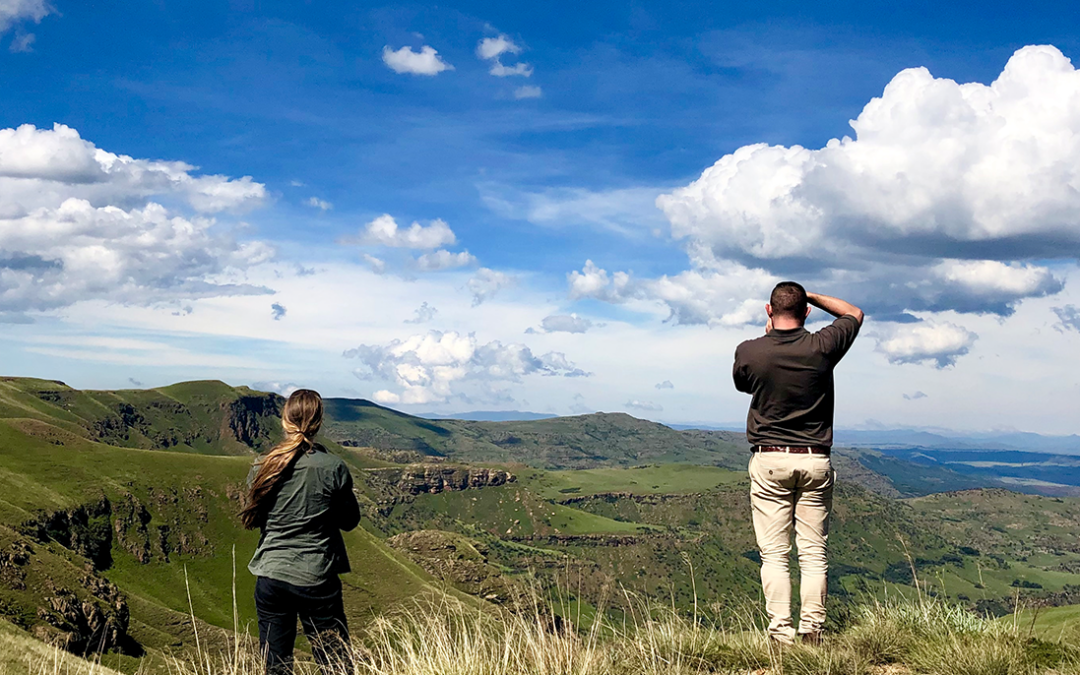
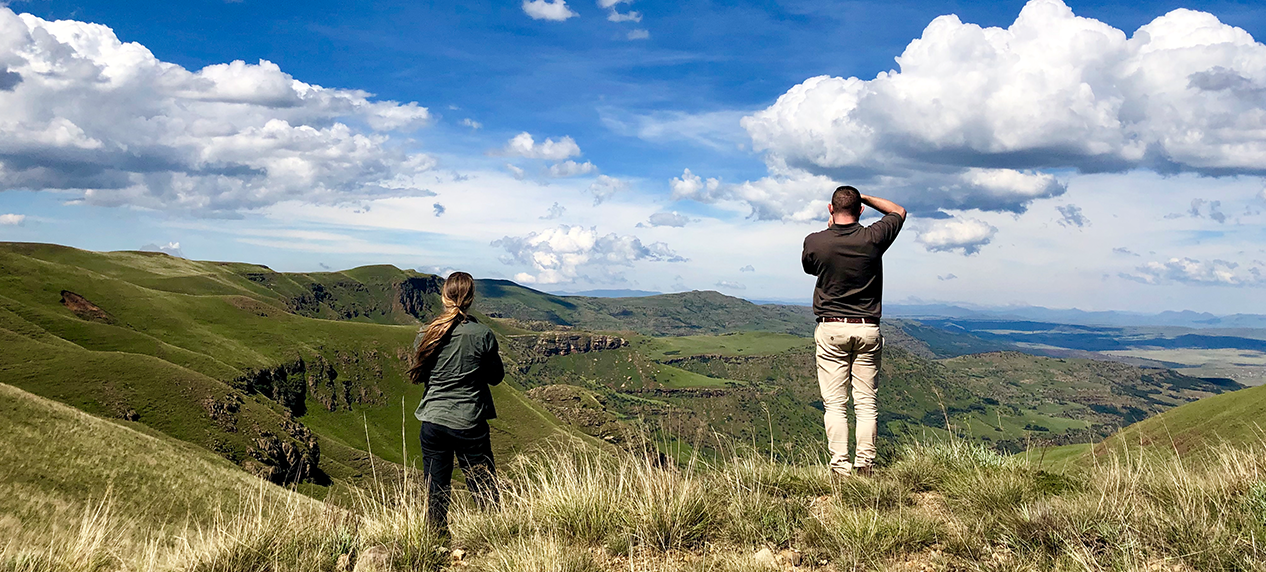
Drakensberg grasslands under sustainable grazing management

More than 90,000 hectares of irreplaceable Grasslands will now be conserved as part of South Africa’s first large-scale, verified soil carbon project. It is one of the world’s first projects applying Verra’s VM0026 Sustainable Grassland Management methodology at this scale.

This important milestone for long-term, sustainable grasslands conservation, is the product of work undertaken by the International Crane Foundation (ICF), in partnership with the Endangered Wildlife Trust (EWT), and is underpinned by a joint commitment to saving crane habitat in the Drakensberg region of South Africa.

The project has received 805,971 Verified Carbon Units (VCUs) from Verra, the world’s leading authority for carbon credit certification.

These VCUs are independently audited and confirmed climate benefits, demonstrating exceptional scientific integrity and accuracy in project design, modelling and implementation.

The project, which started in July 2018, covers land in the Drakensberg range, from Mpumalanga in the north to the Eastern Cape in the south. Most of the land is managed through long-term biodiversity stewardship agreements with private landowners The properties were selected for their ecological importance for Wattled, Blue and Grey Crowned Cranes, their potential for soil carbon sequestration and their landowner’s demonstrated commitment to sustainable grazing and fire management.

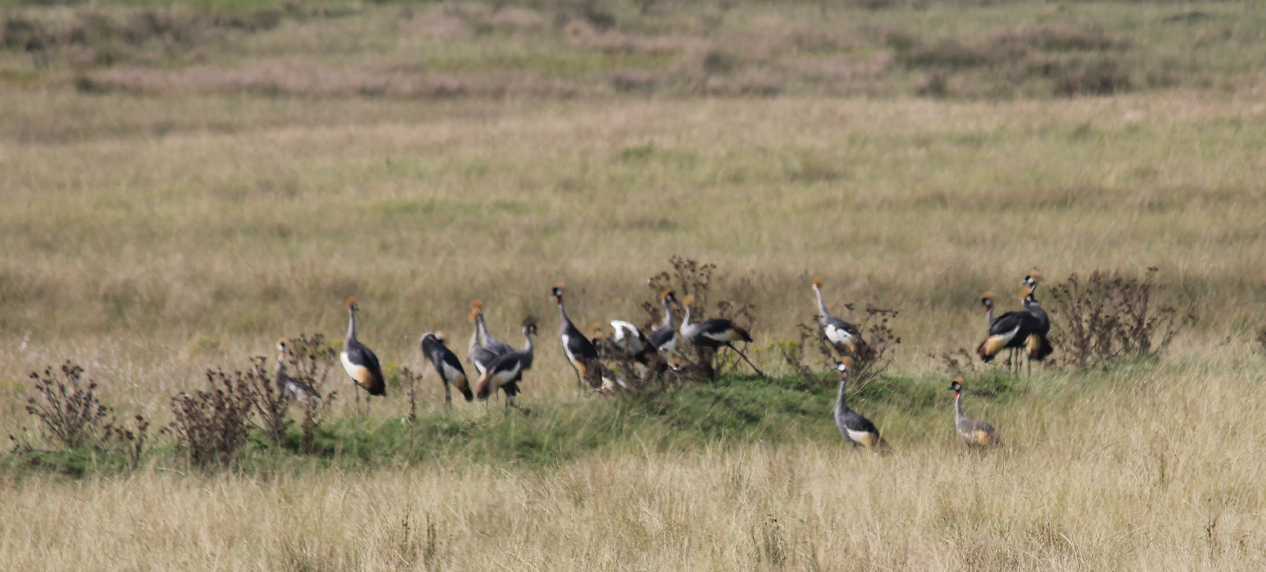
crane species in restored highland grassland habitat

Using Verra’s VM0026 Sustainable Grassland Management methodology, the project delivers benefits for climate and biodiversity, significantly enhances agricultural resilience by improving soil health, water infiltration, and forage productivity. These are critical factors for long-term farming stability in a region increasingly affected by drought and climate variability. Restoring grassland back to health helps commodity producers maintain a viable operation while enabling better functioning biodiversity, benefitting pollinators, raptors, cranes and numerous grassland-dependent species.

Carbon projects like this do not replace the need to reduce emissions or efforts to secure a pathway to net zero, but rather complement them. Nature-based (NBS) climate solutions are an essential part of rebuilding the ecosystem and creating resilience in the landscape. Financial support, in the form of ongoing payments to farmers for these carbon credits, which in turn support ongoing sustainable land management, enables farmers to engage in landuse activities that retain and capture, as a key strategy to support adaptation and resilience in the face of a changing climate.

The International Crane Foundation and the Endangered Wildlife Trust, in partnership with WeAct, have already started the second monitoring period, which will run to December 31, 2027. This next phase of creates an opportunity for like-minded conservation-oriented landowners to join the project as partners and expand the conservation footprint by 54,000 ha (130,000 acres), as well as strengthen ecological and agricultural outcomes across the region.

All participants have committed to a minimum of a 40-year contract horison. This commitment provides a sustainable financing mechanism to reinvest carbon revenue into conservation, creating real long-term agricultural resilience and rural livelihood improvement. The EWT, ICF, and WeAct remain committed to supporting participating landowners and enhancing future monitoring, expansion, and verification efforts.

Communities and indigenous knowledge key to Wetland conservation

Communities and indigenous knowledge key to Wetland conservation

Communities and indigenous knowledge key to Wetland conservation


Community members restoring wetland habitat in South Africa

Wetlands not only sustain biodiversity, but also provide critical resources for surrounding communities.  These include grazing for livestock, a source of building materials, the use of plants for medicinal purposes and cultural uses.

Alongside communal livelihood-related benefits is the importance of wetlands in the conservation of biodiversity, not only the water resource, but also the unique plants and animals that live in these important, environments.

This year the EWT marked World Wetlands Day, which linked wetlands to traditional knowledge by celebrating cultural heritage, by recognising the important role played by communities in the conservation and protection of wetlands.

These water resources are not only part of South Africa’s natural heritage, but are also part of the country’s cultural heritage.   A key example is the iSimangaliso Wetland Park in KwaZulu-Natal, also known as the place of miracle and wonder.   This Ramsar Site (wetland of international importance) is not only an area of biodiversity and archaeological significance; it is important to local Zulu communities who have held a deep connection with both the land and sea. The park also serves as a living landscape where local, traditional, and indigenous practices have been incorporated into modern conservation management practices.

Our project at Adam’s Mission in eThekwini is a prime example of the success of working with local communities to ensure the health of a natural habitat that underpins the life of both species and communities.

Since the inception of our monitoring programmes for selected, critical wetland habitats to support the Endangered Pickersgill’s Reed Frog (Hyperolius pickersgilli),  we have initiated rehabilitation and monitoring at the Widenham Wetland Protected Environment and the Adams Mission wetland—both home to the Endangered frog species and Critically Endangered vegetation types, including the coastal grasslands, Indian Ocean Coastal Belt Wetlands and Swamp forest wetlands.

Through our Threatened Endemic Species Unit, previously known as the Threatened Amphibian Programme, our team has also focused on alien species clearing to and waste management to improve ecosystem health and associated ecosystem services. This has contributed to growing socio-ecological resilience for both the rich biodiversity and strong communities.  It also benefits communities living adjacent to the wetlands through job creation and keeping the environment clean. Fourteen people have been employed as waste collectors and Invasive Alien controllers over a12-month period ending in June 2025.

The success of our education and awareness drive at Adam’s Mission has resulted in a decline in residential development in the buffer zones, agricultural practices and invasive alien plants, as well as a reduction in waste dumping within the wetland zone.

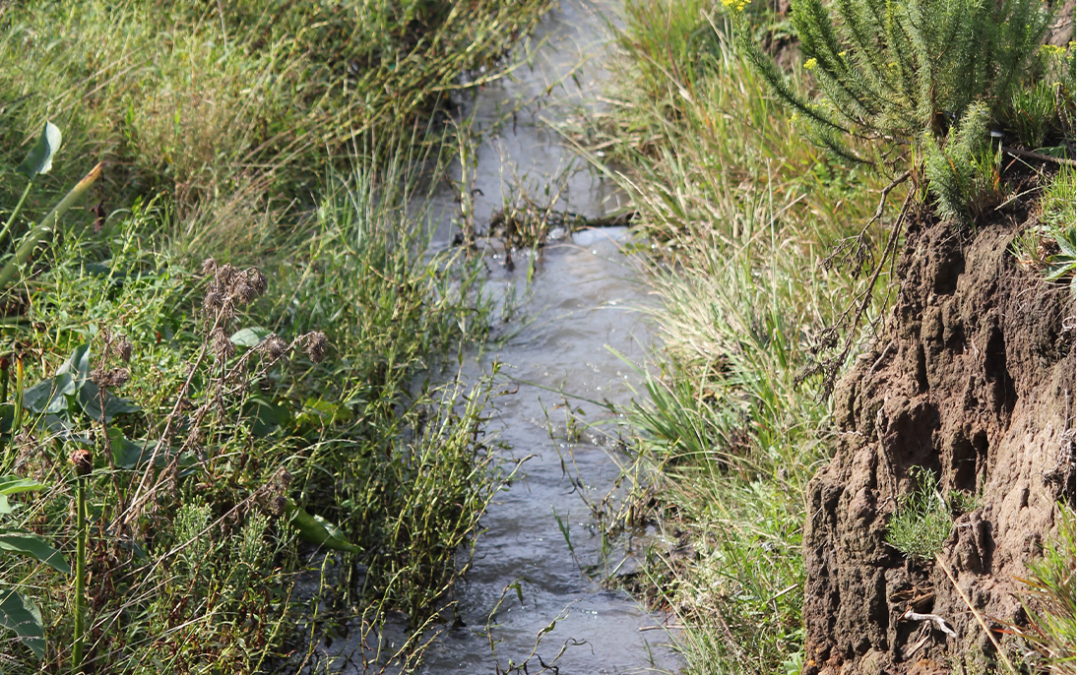
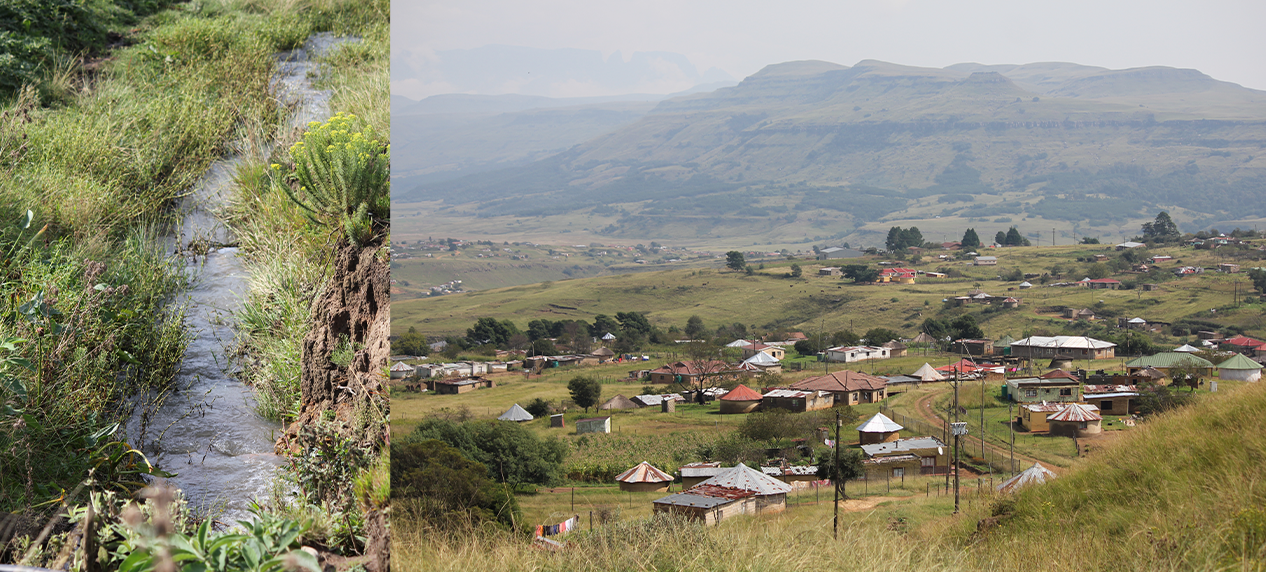
At KwaMkhize in the Drakensberg, the provision of spring water to the community through the EWT/ICF partnership benefits the people the area, ensuring that critical Crane species living in an adjacent wetland are protected.

By helping communities to better support natural resource management helps protect the landscapes in which cranes in South Africa live, primarily wetlands, grasslands and farming landscapes.

Overall, the implementation of the seven spring protection projects has serviced 2 445 individuals across 292 households, two schools and a clinic that services 150 people a day 365 days a year, therefore a total of 54,750 individuals that benefit from potable water at the clinic.  This means the community no longer must rely on the rivers and streams flowing into the wetland for household water, or to water their gardens.

In the catchment of Vaal River near Harrismith in the Free State, we are implementing a restoration project to clear invasive alien plants and restore water to the environment for the benefit of people, wetlands and rivers. The project employed 24 previously unemployed people. Thus far 286 hectares of densely invaded wetland and grassland have been cleared releasing 929 megaliters of water back into the environment.

South Africa boasts 30 Ramsar Sites totalling 574 000 ha.  Many are valued for their cultural heritage and traditional practices, which are incorporated into wetland conservation through initiatives undertaken by the EWT.

We collaborate with the International Crane Foundation through the African Crane Conservation Programme to conservation wetlands for species such as the Endangered Wattled Crane and Grey Crowned Crane, which are among the species that rely of wetlands as breeding sites.   We also work to protect the Critically Endangered Amatola Toad, which is dependent on high altitude wetlands and adjacent moist grasslands.

Habitat transformation and climate change are among the greatest threats to wetlands, elevating the risk of water pollution or eutrophication caused by effluent discharges. In addition, overgrazing or incorrect fire management practices can result in the transformation of wetland ecosystems.  This includes the presence of alien invasive species which reduce water availability and cause wetlands to become drier than anticipated. In some areas, wetlands are perceived as wastelands, resulting in their ecological importance being undervalued.

We recognise the importance of working with communities living within wetland catchments, or near to nature’s water purifiers, to safeguard these critical habitats.  We will continue to support conservation efforts that will ensure our wetlands are healthy and able to withstand the risks posed by unchecked development and climate change.

Sustainable use of wildlife in Africa is not the problem, it’s the way the term is exploited

Sustainable use of wildlife in Africa is not the problem, it’s the way the term is exploited

Sustainable use of wildlife in Africa is not the problem, it’s the way the term is exploited

By Kishaylin Chetty, Executive: head of Sustainability, The Endangered Wildlife Trust


African savanna landscape illustrating sustainable wildlife use debate

Sustainable use can be a powerful conservation tool, but only if it is defined. Few terms in conservation generate as much heat, and as little shared understanding, as sustainable use. Across Africa, it is raised by policymakers, conservationists, traditional healers, hunters, traders, communities and commercial interests alike. Yet too often it is used to mean whatever best suits the speaker’s agenda.

As debates intensify around sustainable use frameworks on the continent, we must confront a difficult but necessary truth: sustainable use itself is not the problem. The real risk lies in how loosely the term is defined, selectively applied and, in some cases, deliberately distorted until it becomes broad enough to justify almost anything. If Africa is serious about securing a future where people and nature coexist, then sustainable use must be recovered as a disciplined, evidence-based concept, not a rhetorical shield for overexploitation.

Why sustainable use matters in an African context

Across Africa, biodiversity is not separate from people’s lives. For many indigenous peoples and local communities, nature underpins culture, spirituality, health, identity and livelihoods. Traditional healers rely on plants and animals to practise their craft, often guided by customary rules, seasonal cycles and deep ecological understanding. In some landscapes, regulated hunting has also historically been positioned as a land-use option linked to wildlife retention and rural income. In principle, sustainable use recognises these realities. When grounded in stewardship, restraint and accountability, it can support conservation outcomes while respecting rights and livelihoods. Communities across the continent have long practised forms of use that maintained ecological balance, and their knowledge systems often contain insights that modern conservation science is still rediscovering.

A strong example comes from Namibia’s communal conservancy model, where community custodianship, rights over wildlife and strict governance frameworks have contributed to the recovery of species such as black rhino, elephants and lions. While not without challenges, the model demonstrates that when rights, incentives and ecological limits are aligned, sustainable use can support conservation rather than undermine it. But respect for these systems cannot mean abandoning ecological limits.

Across Africa, biodiversity loss is accelerating due to habitat destruction, climate change, illegal trade and unsustainable offtake. In this context, not all species and not all forms of use can be sustained, even where they are rooted in tradition or framed as conservation tools. Vultures poisoned or harvested for belief-based use, pangolins trafficked under the guise of ancestral practice, cycads removed faster than they can regenerate, and slow-breeding species hunted in already fragmented landscapes are not hypothetical concerns. They are unfolding across the continent in real time. A stark example is the collapse of vulture populations across southern and eastern Africa, driven by infrastructure development, poisoning, belief-based use and illegal trade. Despite cultural significance and historical use, scientific evidence shows that current levels of offtake are incompatible with species survival. In response, some traditional healer associations have partnered with conservation organisations to promote alternatives and awareness, illustrating that adaptation is possible when information and trust are shared. This highlights a critical point: sustainable use is not guaranteed by tradition, legality or intent alone. It must be continually tested against ecological reality.

Nowhere is the misuse of sustainable use more evident than in parts of the hunting debate. Too often, sustainable use is reduced to a simplistic idea: if an animal can be used without disappearing immediately, the use must be sustainable. This is a dangerous oversimplification. Sustainability is not about whether use can continue for a few years, or whether quotas exist on paper. It is about population trends, ecosystem function, governance quality, enforcement capacity, cumulative impacts and long-term resilience, particularly in the face of climate change. In some African contexts, tightly regulated hunting systems have historically contributed to land retention for wildlife and generated revenue for conservation and communities and ignoring this complexity helps no one. The hunting sector has certainly made more concerted efforts to align more closely with long-term conservation goals in recent times, and change is happening. Albeit slowly.

At the same time, evidence from parts of central and west Africa shows how weak governance, poor monitoring and commercial pressure can turn hunting into a driver of decline, even where it is technically legal. When “sustainable use” becomes shorthand for “use that generates income”, without transparent data and independent oversight, it shifts from a conservation tool to a convenient narrative. Sustainable use cannot be defined by use alone. It must be defined by outcomes.

The greatest risk facing Africa today is not disagreement over sustainable use, it is the way the term is increasingly exploited. Under its banner, we have seen attempts to:

  • Justify the expanded commercialisation of threatened species;
  • Mask illegal harvesting and trade as cultural or subsistence use;
  • Promote hunting or breeding operations without demonstrable conservation benefit;
  • Inflate offtake quotas in data-poor contexts; and
  • Greenwash extractive activities that degrade ecosystems.
  • This is not sustainable use. It is the erosion of credibility, and ultimately, of biodiversity.
A different way forward: collaboration, evidence and mutual respect

From the perspective of the Endangered Wildlife Trust, the path forward is not about choosing between conservation and use, or between science and culture. It is about bringing them into honest conversation. A credible sustainable use framework across Africa must include:

  • Science-based ecological limits, particularly for threatened, slow-breeding and keystone species;
  • Collaboration and mutual learning between conservationists, traditional healers, hunters and community leaders;
  • Clear differentiation between subsistence, cultural and commercial use, recognising that commercialisation dramatically increases pressure on species;
  • Strong governance and enforcement to prevent exploitation and illegal trade; and
  • Fair benefit-sharing and viable alternatives, reducing pressure on biodiversity rather than intensifying it.

Traditional practitioners and local communities are not obstacles to conservation. They are essential partners. Equally, science is not an imposition on culture, but a tool to safeguard the very resources that culture depends on. Africa’s biodiversity is extraordinary, but it is not infinite. Sustainable use can be a powerful conservation tool, but only if it is defined narrowly enough to mean something and applied cautiously enough to work.

This debate is not about ideology. It is about integrity. About resisting convenient narratives. About recognising that conservation, culture, commercialisation and livelihoods are deeply intertwined yet ultimately constrained by ecological reality.

In the end, sustainable use is not measured by how long exploitation can continue, but by whether species, ecosystems and communities remain resilient long after the use has stopped. If we get that right, sustainable use can support Africa’s future. If we get it wrong, it will simply become another name for loss and Africa cannot afford that.


From Red Lists to real action: How science shapes conservation

From Red Lists to real action: How science shapes conservation

From Red Lists to real action: How science shapes conservation

By Dr Tamanna Patel and Dr Lizanne Roxburgh, Conservation Planning and Science Unit


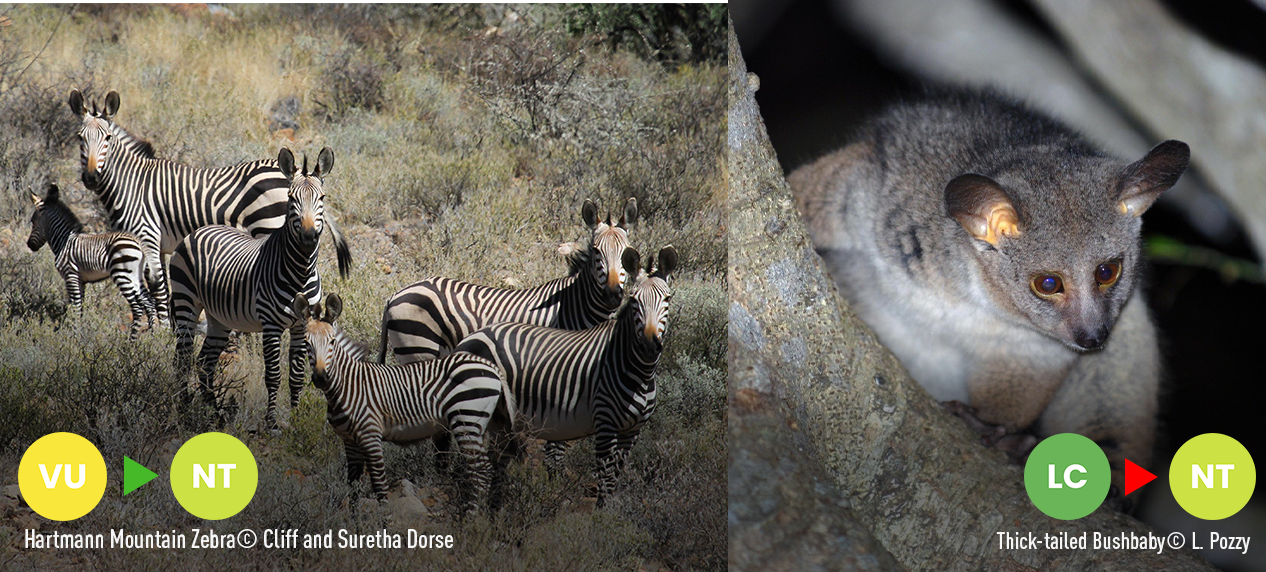
Hartmann’s Mountain Zebra conservation success, Thick-tailed Bushbaby in fragmented habitat

Conservation does not happen in isolation. Every decision about which species to protect, where to invest limited resources, and how to balance development with biodiversity rests on one critical foundation: evidence. When that evidence is outdated or incomplete, conservation action risks becoming ineffective, or worse, misdirected. In the face of an accelerating biodiversity crisis, acting on yesterday’s data can mean losing species forever.

This is why scientific assessments of species’ statuses, are not merely academic exercises, but essential tools for species survival. The IUCN Red List of Threatened Species remains the world’s most authoritative system for assessing extinction risk of animals, fungi, and plants at either a global, regional or a national scale. It classifies species into nine categories, from Least Concern to Extinct, using objective criteria. Beyond labels, Red List assessments provide vital information on threats, habitats, population trends, and conservation needs, shaping policy, land-use planning, environmental impact assessments, and research priorities.

While global assessments provide a big-picture view, conservation action happens locally. This is why national and regional Red Lists are also important. National assessments identify species at risk within a country’s borders, guiding conservation policy, informing development decisions, allocating resources, tracking progress on international biodiversity commitments, and raising public awareness.

But Red Lists are only as powerful as they are current. When assessments lag behind reality, conservation resources, already stretched thin, may fail to reach the species that need urgent intervention. In conservation, timing matters.

This is why the release of the revised 2025 Mammal Red List of South Africa, Eswatini, and Lesotho in mid-January is so significant. Coordinated by the Endangered Wildlife Trust (EWT) and the South African National Biodiversity Institute (SANBI), and informed by the knowledge of 150 mammal experts, the assessments reveal trends that demand attention from policymakers, researchers, and the public alike. They form part of a broader suite of National Red Lists, covering everything from birds and amphibians to spiders and freshwater fishes, which fed into the 2025 National Biodiversity Assessment launched by SANBI in December 2025 – demonstrating how Red Lists translate science into national planning.

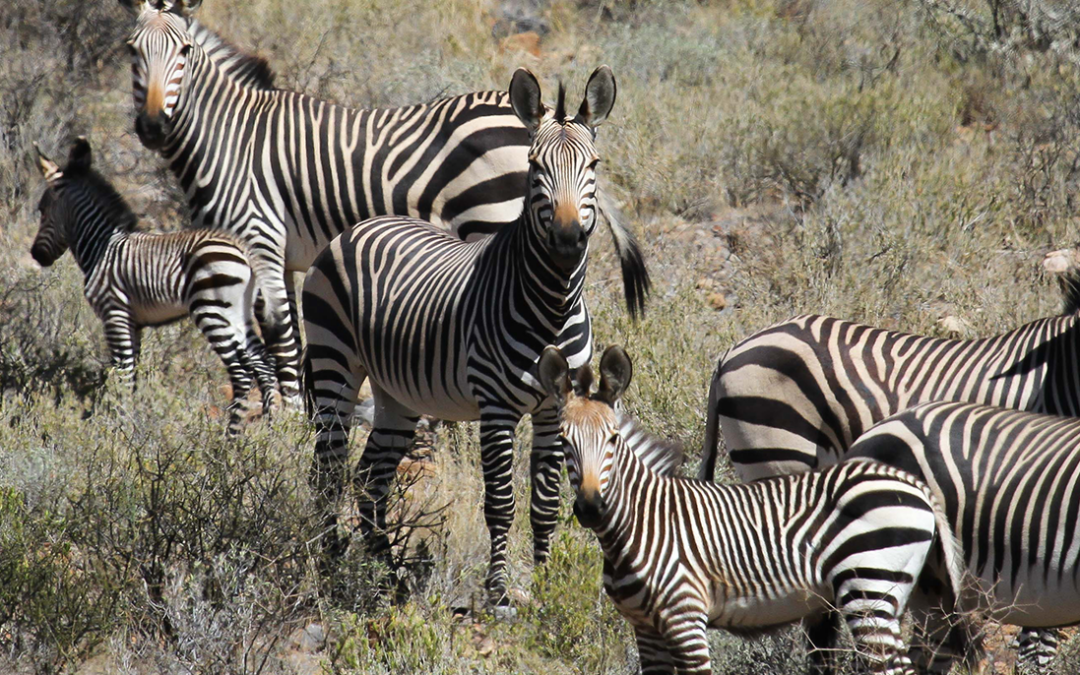
The findings are sobering. Of the 336 mammal species assessed, 20% are now threatened with extinction, while a further 12% are classified as Near Threatened, meaning that they are close to meeting the criteria for threatened, and should be monitored closely. Eleven species were uplisted to a higher risk category, signalling declining conservation status, while only three species showed sufficient improvement to be downlisted. The Thick-tailed Bushbaby, once considered secure, has been uplisted from Least Concern to Near Threatened as agriculture, urban expansion, infrastructure development, and climate change increasingly fragment its habitat. In contrast, Hartmann’s Mountain Zebra offers a rare conservation success story, having been downlisted from Vulnerable to Near Threatened thanks to a real increase in population numbers – clear evidence that well-directed conservation can deliver results.

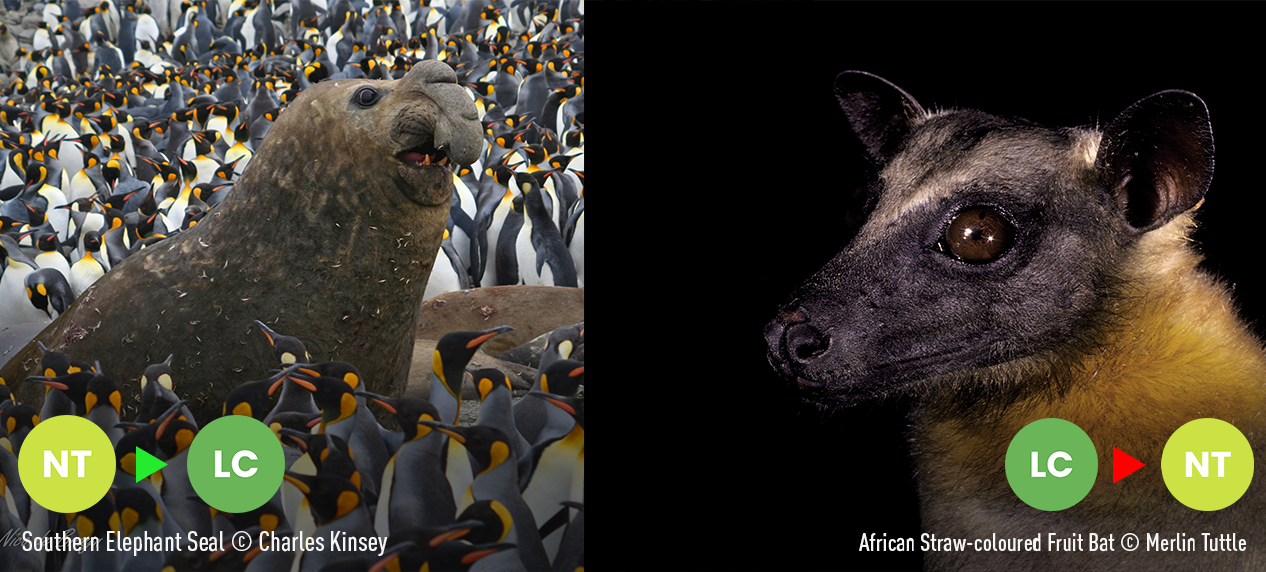
Southern Elephant seal downlisted from Near Threatened to Least Concern, African Straw-coloured Fruit Bat Uplisted from Least Concern to Near Threatened

The region’s responsibility is particularly stark when it comes to endemic species. Sixty-seven mammal species occur nowhere else on Earth, and 42% of them are threatened with extinction. If these species are lost here, they are lost forever. Yet protection remains uneven: while around 76% of mammal species are considered well or moderately protected, nearly a quarter are poorly protected or not protected at all. Habitat loss from agriculture and urban expansion remains the dominant threat, compounded by climate change, extreme weather events, over-exploitation, and poaching.

Importantly, this Red List also marks a step forward in how we assess species. For the first time, genetic health and climate change vulnerability were incorporated into all mammal assessments. Climate modelling was conducted for species already flagged as climate-sensitive in the previous assessment, and genetic indicators were evaluated across all mammals. These advances are critical, but they also expose how much we still do not know. Without targeted research on climate vulnerability and stronger genetic data, conservation planning risks being reactive rather than proactive.

The most significant gap remains basic population data, particularly for small mammals and species within protected areas. Many species continue to be under-studied, limiting our understanding of population size, trends, and genetic diversity. Seven percent of assessed species were classified as Data Deficient, meaning that experts were unable to assign them a Red List status due to insufficient information. Dolphins and whales dominate this group, highlighting an urgent need for baseline surveys and long-term monitoring of these marine species.

The IUCN recommends reassessing species every five to ten years. South Africa’s mammal Red List, first published in 1986, revised in 2004, expanded regionally in 2016, and now updated in 2025, shows the value of this commitment. Each revision not only tracks declines and recoveries but also refines the questions we must ask next.

Red Lists do more than tell us which species are in trouble. They reveal where our knowledge is weakest, where research investment is most urgently needed, and where conservation action can make the biggest difference. In a world of limited resources and growing environmental pressures, evidence-based decision-making is not optional, it is the difference between recovery and irreversible loss.

Mammal species featured in 2025 Mammal Red List South Africa

More than R1.4 million raised for conservation through golf swings in 2025

More than R1.4 million raised for conservation through golf swings in 2025

More than R1.4 million raised for conservation through golf swings in 2025

By Tammy Baker


WT fundraising golf day


In October, the Endangered Wildlife Trust hosted our final golf day for 2025 at the Dainfern Golf Club in Johannesburg.

The event was proudly sponsored by Alexforbes, who not only sponsor, but host a number of their staff and clients at the event. The highveld weather was beautiful, the course immaculate, and all our golfers in good spirits, as one should be at a fundraising golf event.

At Dainfern, we raised over R300,000 for conservation and are extremely grateful to all of our donors for helping to make it a success. These include Alexforbes, Mongena Private Game Lodge, aha hotels, Dream Resorts and Hotels, Ritsako Game Lodge, Indaba Hotel, Fangio’s Restaurant, Seventeen Acacia’s, ReWorx’s, Rhino Sandton and Andy Cab, Ford Fourways, Painted Wolf Wines and many more.

In the past year, we have hosted four golf days across the country. The other three were at the Stellenbosch Golf Course. The Copperleaf Golf Estate in Centurion and Simbithi Golf Estate at Ballito Bay in KwaZulu-Natal.   All the days were hosted for a single cause—conservation—with two dedicated headline sponsors: Alexforbes and The Ford Wildlife Foundation, and more than 100 other sponsors. All-in-all more than 350 golfers teed off raising over R1.4 million raised for conservation.

A special thanks to the MSCTBee team who travelled from Stellenbosch to Pretoria and Ballito to join three out of the four golf days in 2025.   A special thanks also goes to each and every golfer and sponsor for helping us to raise such a meaningful contribution to our conservation work.

We are looking forward to achieving even more in 2026.

Although the game for October 2026 hasn’t been confirmed as yet, we will be teeing off at the following venues in 2026: 

Date

Venue

8 May 2026

Stellenbosch golf club

22 May 2026

Copperleaf Golf Club

16 July 2026

Simbithi Golf Estate