Donate today: support our k9's 
 mission

Help from above: Feathered rangers take to the sky

Help from above: Feathered rangers take to the sky

Help from above: Feathered rangers take to the sky

By Dr Gareth Tate, manager: Birds of Prey Programme


A critical challenge in wildlife conservation is swiftly locating and responding to poisoning events. Early detection and prompt decontamination can dramatically reduce further wildlife loss, save surviving animals, and enable law enforcement to act quickly. To combat this threat in southern and east Africa, the Endangered Wildlife Trust (EWT) has harnessed the natural behavior of vultures and cutting-edge GPS-tracking technology to create a rapid poisoning detection system called Eye in the Sky.

This innovative system monitors the movements of GPS-tracked vultures to remotely detect poison sources and feeding events linked to poached or poison-laced carcasses. By reducing the time between detection and response, we aim to enhance the efficiency of law enforcement and response teams, ultimately protecting more wildlife.

Now in its third official year, the Eye in the Sky project leverages the extraordinary foraging lifestyle of African vultures and state-of-the-art GPS tracking technology to protect these vital scavengers and other threatened species. Our Birds of Prey Programme team monitors over 120 tracked vultures across the Greater Limpopo Transfrontier Conservation Area, using near-real-time alerts to respond to feeding events and immobility alarms. The impact of our feathered rangers has been remarkable.


The capture locations and GPS tracks of the GPS-tagged vultures, deployed as part of our Eye in the sky project, across poisoning hotspots of southern Africa.

Above: A heatmap showcasing the current coverage obtained from our GPS tracked sample of vultures deployed as part of our Eye in the sky project, across poisoning hotspots of southern Africa.

Above: Our Eye in the Sky system has reached a significant milestone with its seamless integration into the EarthRanger platform. Above is a screenshot of the EWT EarthRanger instance shared across partners, with a basic visual and geographic summary of partners set up and using the Eye in the Sky system effectively across our target project sites.


Over the past year, a significant effort has been devoted to detecting poisoning events and poison bait sources using our system’s immobility and feeding alerts. Since May 2023, we have identified 37 poison sources across our project sites. Early detection and prompt decontamination have been crucial in safeguarding many scavenging wildlife species. We have rescued, rehabilitated, and released over 80 vultures back into the wild — birds that would have otherwise succumbed to ingested poisons.

Despite these successes, challenges remain. In early March 2024, over 80 vultures were poisoned in northern Kruger National Park due to delays in response. This tragic event underscores the need for continued improvements in our rapid detection system and response protocols.


Results from follow-ups to alerts generated by our Eye in the Sky system from January 2023 to December 2023 offer compelling evidence of the system’s effectiveness in identifying crucial illegal wildlife activities and points of interest. This includes the detection of 37 poison sources/events,36 poaching camps, as well as the detection and removal of 3,049 snares across our project sites. Notably, 1,937 of these snares were found still set and untriggered, underscoring the potential threat posed to wildlife. The system has proven instrumental in mitigating harm, showcasing its vital role in conservation efforts.


However, the effectiveness of our rapid detection system has been demonstrated by our ability to intercept potential mass poisoning events. At eight vulture alert sites, poison sources were detected before any wildlife fatalities occurred, showcasing the robustness of our monitoring and alert systems in protecting wildlife.

Besides enhancing our ability to detect snare lines so they can be removed, we have in the past year also detected 36 poaching camps where rangers have seized bushmeat, equipment, and poisons, disrupting illegal activities and trade.

At a time when there appears to be an increase in the targeted snaring and poisoning of lions and hyenas for their body parts, used in traditional medicines, the Eye in the Sky system is making a significant impact on lion and hyena conservation efforts, either by augmenting or improving existing initiatives.

Throughout the past year, the Eye in the Sky system has led to the detection and removal of 3,049 snares across our project sites.

Our teams’ persistent presence in landscapes the Greater Kruger has led to a discernible reduction in illegal wildlife activities, marked by fewer instances of poisoning and snaring events. This ongoing commitment reflects our dedication to fostering a safer environment for the region’s wildlife and underscores the positive impact of sustained conservation efforts.

A significant emphasis has been placed on rescuing vultures that survive poisoning events within Kruger National Park. Thanks to a growing network of veterinarians and a partnership with the Moholoholo Animal Rehabilitation Centre in Hoedspruit, we have rescued over 120 vultures since 2017. Over the past year, we achieved a 100% survival rate for vultures rescued from poisoning events, demonstrating marked improvements in our response, treatment protocols, and rehabilitation processes. This success is complemented by our first vulture ambulance, currently deployed in the Greater Kruger.

The Eye in the Sky project is a testament to the power of innovation and collaboration in wildlife conservation, offering hope for the future of southern Africa’s endangered species.


** The EWT would like to thank our donors, the Mohamed bin Zayed Species Conservation Fund, National Geographic Society, Alu-Cab, the Charl van der Merwe Tryst and the Briandez Legacy Trust for your support on this programme.


A white-backed vulture fitted with a tracking unit and deployed as one of our Eye in the Sky feathered rangers.

An adult Cape Vulture fitted with a GPS tracking device, ready to be deployed for the Eye in the Sky system

A white-backed vulture fitted with a tracking unit and deployed as one of our Eye in the Sky feathered rangers.

Collaborative Action to Address South Africa’s Snaring Crisis

Collaborative Action to Address South Africa’s Snaring Crisis


The EWT pledges less talk and more action to address South Africa’s snaring crisis at the inaugural Snare Mitigation Symposium

140 delegates attended the inaugural Snare Mitigation Symposium

Twenty-two speakers presented at the Snare Mitigtation Symposium

One of the Snare Mitigation Symposium panel discussions

WARNING: SENSITIVE IMAGES BELOW


The importance of less talk and more action to address the snaring crisis in South Africa is key to the conservation of all species.

This, and the need for greater collaboration and partnerships to address the negative impacts from the illegal snaring of wildlife, were among the outcomes of the inaugural two-day national Snare Mitigation Symposium in Pretoria.

The meeting of 140 delegates delved into the impacts, drivers and solutions to this increasing threat to wildlife and the economy. Co-led by the Department of Forestry, Fisheries and the Environment (DFFE), the Cape Leopard Trust (CLT), the Endangered Wildlife Trust (EWT), the South African National Biodiversity Institute (SANBI) and South African National Parks (SANParks), the inaugural Snare Mitigation Symposium was held at Environment House on 10 and 11 September 2024.

It brought together leading experts in wildlife crime, government officials and representatives of numerous stakeholders across the sector to examine the multifaceted aspects of the snaring crisis. The purpose was to understand existing and potential new complexities, and to share experiences and knowledge to reduce the problem both inside and outside conservation areas, in order to identify and co-create workable solutions for the benefit of people and the environment.

Snaring is motivated by complex socio-economic and cultural drivers and the symposium explored snaring from a myriad of angles and viewpoints. Information gained highlighted that animals are snared largely for personal or commercial use and is occurring at unsustainable rates across all provinces and in diverse landscapes. Sadly, many species including leopard, lion, hyena and other predators are killed as by-catch in snares originally set for bushmeat.

A key insight from the symposium is that we need more community interaction amongst stakeholders towards achieving positive outcomes for this threat to wildlife. Communities living with wildlife, and those linked to snaring, need to form an integral of the solutions being proposed, and to be undertaken, to address snaring.

No solution will be credible without the involvement of the relevant community voices in co-development of solutions. Solutions need to be diverse, purposely inclusive and tailored to, and by, the people living in the affected areas. Technological advances were showcased to improve snare detection and data collection.

Among the legal solutions highlighted by Ashleigh Dore, the EWT’s Wildlife and Law Project Manager, the need for legal reform to ensure laws applicable to snaring are the same across the country. Ashleigh also introduced a restorative justice approach to respond to snaring. Restorative justice is a holistic, inclusive and problem solving approach to justice that involves all parties involved in or impacted by the crime to (1) identify and respond to harm from the crime and (2) prevent reoffence.

Senior Conservation Manager Lourens Leeuwner, during his presentation on the threats of snaring countrywide, highlighted the results of the EWT’s recent project and proof of concept to determine whether anti-poaching dogs could be used for snare detection. The Canine Conservation Unit had spent several days testing techniques to detect snares in a farming and conservation area in Limpopo. Using two EWT anti-poaching canines, Ruger and Kisha, the team set snares in the veld before sending out rangers to find the items. While rangers only found some of the snares placed for the test, the canines had, in all cases, successfully tracked the scent of the person who had planted the snares and other items, finding most of the snares. As further proof that this technique works, the dogs were taken on a routine patrol of a farm that has problems with poachers using snares to catch wildlife. During this patrol, Ruger discovered a snare that had been planted by a real-life poacher. While there is a lot more work that needs to be done, this is proof that the concept works – an extra tool in the arsenal to combat poaching.


Among the key decisions adopted as outcomes included further research on the drivers and alternative livelihood solutions, more cohesive legislation to address snaring and other wildlife crimes, more centralised reporting and monitoring to ascertain the extent of the problem, and creating a greater understanding of the impact of snaring not only on biodiversity, but also on the economy and well-being of communities.

At a workshop following the event, the host organisations strategised next steps related to key themes and action points identified during the symposium that will include a wide range of stakeholders. Looking to the future, greater teamwork and communication between State, private sector and civil society will be cultivated to find sustainable long-term solutions for both people and wildlife.


A wire snare set to catch animals by the neck. ©Cape Leopard Trust

A snare setup in front of an animal burrow. ©Cape Leopard Trust

A wire snare along a fence line where many animals move. ©Cape Leopard Trust

X-ray photos of a caracal and porcupine killed by snares. ©COGH SPCA

Most snares are made from wire but rope and cable are also used. ©Cape Leopard Trust

An example of a wire snare. ©Cape Leopard Trust

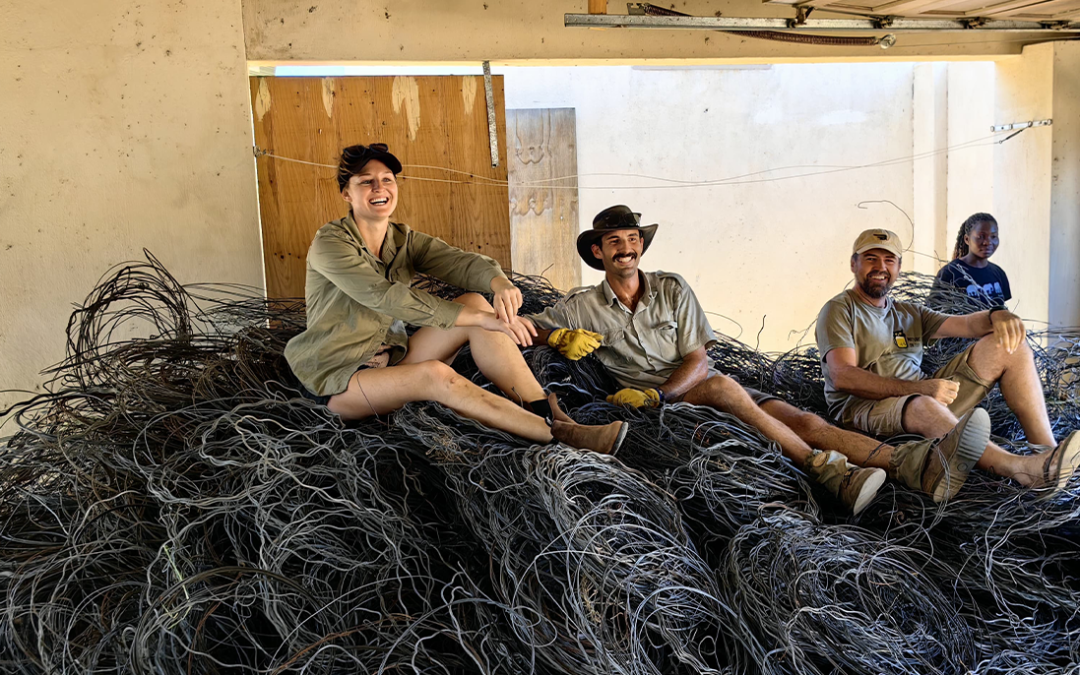
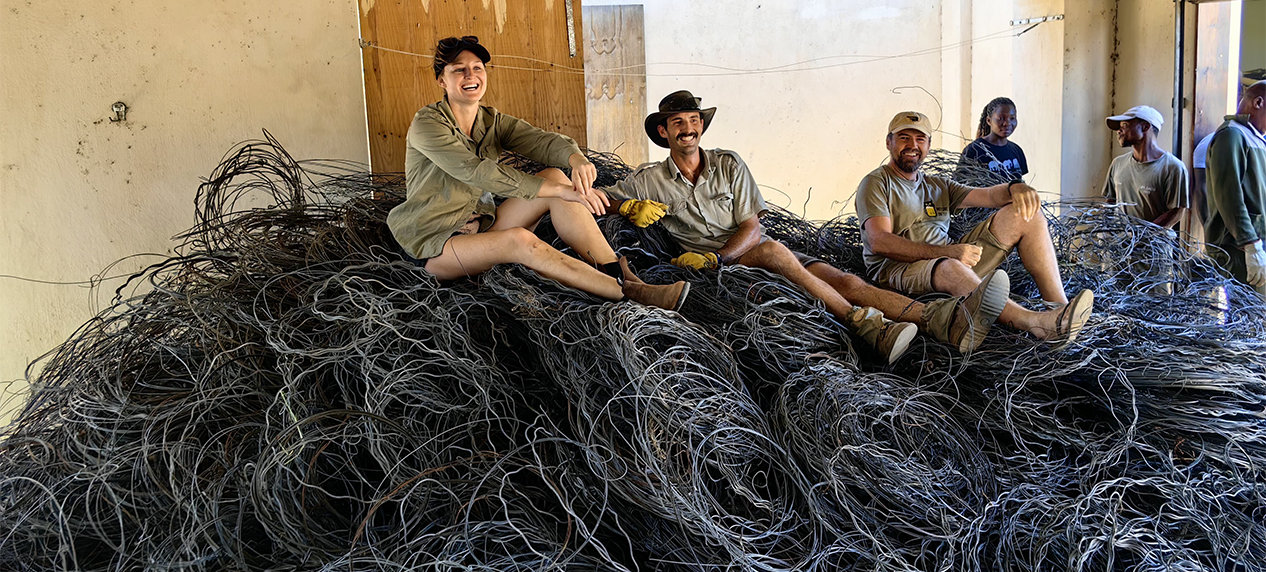
Collected snare material ©Endangered Wildlife Trust

African wild dog found dead in snare ©Endangered Wildlife Trust

Spotted hyena found dead in snare ©Endangered Wildlife Trust

Buffalo found dead in snare ©Endangered Wildlife Trust

EWT Drylands Conservation team participates in 2024 Fynbos Forum

EWT Drylands Conservation team participates in 2024 Fynbos Forum


EWT Drylands Conservation team participates in 2024 Fynbos Forum

By Dr Samantha Mynhardt and Insauf De Vries

Renier Basson speaking about insects and fynbos conservation

Members of the EWT’s Drylands Conservation Programme (DCP) participated in this year’s Fynbos Forum in Stellenbosch earlier this month, sharing information about efforts to conserve golden moles and insects, and the partnership with communities to promote tourism in areas rich with Fynbos.

The forum, first held in 2020, is an affiliation of natural scientists, researchers, planners, managers, landowners and stakeholders that meet annually to discuss the collaborative production of knowledge that underpins regional conservation efforts in the Fynbos biome in South Africa. As a transdisciplinary regional learning network, the forum supports discussions on management issues and research results, and formulates priorities for future research and conservation management actions required to ensure the conservation and sustainability of Fynbos ecosystems.

Notable keynote speakers included Dr. Jasper Slingsby from the University of Cape Town, who spoke about BioSCape – The Biodiversity Survey of the Cape, and Rupert Barnard and Michelle de Bruyn from non-profit, Wild Restoration. They spoke about the collaborative action network for invasive clearing groups in the Greater Cape Floristic Region and the power of partnerships in conservation.

From the EWT’s DCP team, Dr Samantha Mynhardt presented a talk on golden moles entitled “Conserving the Golden Moles of the South African West Coast”. Golden moles are subterranean mammals that are endemic to sub-Saharan Africa, many with restricted ranges due to poor dispersal ability. These moles are highly vulnerable to population fragmentation and isolation and continue to face ongoing threats, such as habitat transformation, mining, and agriculture. Of the 21 species, ten are listed as either Critically Endangered, Endangered or Vulnerable on the IUCN Red List. A total of 6 occur in the Drylands of South Africa, some of which overlap with the Fynbos biome. Dr Mynhardt spoke about how the EWT has been working towards the conservation of the De Winton’s- (Cryptochloris wintoni) and Van Zyl’s- (Cryptochloris zyli) Golden Moles, by developing methods to track them down in the wild, better understand their distribution, and protect their habitat. Including how, after trialing various detection methods such as thermal imaging drones, scent detection dogs and environmental DNA (eDNA), we were able to rediscover the De Winton’s golden mole in 2023 – a species that had been lost to science for over 80 years. We are using eDNA to map golden mole species distributions; an approach that has the potential to revolutionise the field of conservation science.

Alrie van Wyk presenting about the Papkuilsfontein initiatives

Dr Samantha Mynhardt speaks about the conservation of golden moles on South Africa’s West Coast

Team member Renier Basson presented a talk on the endemic and Endangered insects of the Fynbos highlighting unique species that are adapted to the Fynbos biome, and species that are of conservation concern. The aim of his talk was to inform the audience about the elusive biology of endemic insects , the ecological role they play, their threat status, and why they are threatened. There are approximately 9,000 Fynbos species and roughly 70% of those are endemic. Discussing threatened taxonomic groups such as Restio Grasshoppers (Betiscoides spp.), butterflies in the genera Chrysoritis, Thestor, Orachrysops and Trida, and Cape Stag Beetles (Colophon spp.), he mentioned that the biology of many of these threatened groups remain unknown, which makes decision-making in terms of conservation very challenging.

Alrie van Wyk, one of the DCP stewardship landowners, spoke about the EWT’s Via Ferrata initiative at Papkuilsfontein Guest Farm in a talk entitled “Experiencing Fynbos on the Edge”. The Via Ferrata roughly translates to iron trail – in reference to an iron cable installed along the cliffs of the Oorlogskloof Gorge at the farm. Situated on the Bokkeveld Plateau, near Nieuwoudtville, the farm contains unique Fynbos and Succulent biomes, which are both biodiversity hotspots, as well as the Nama Karoo Biome. The convergence of the various biomes results in exceptionally high biodiversity. Nieuwoudtville is known as the bulb capital of the world and is thus a popular tourist destination during the flower season. But, this season is short and, in some years, less financially beneficial due to poor flower displays. To make tourism an inclusive and sustainable future economic contributor in support of sustainable land management, partners are working together to reimagine this approach. As such the EWT-DCP team introduced the van Wyks to adventure tourism as a means to provide a much-needed opportunity to develop a sustainable income stream based on an immersive and uniquely tailored experience. This includes a Via Ferrata – a safe, guided rock-climbing experience within the Papkuilsfontein protected environment that showcases the unique Fynbos biodiversity found on the edges of the Oorlogskloof Gorge. Alrie’s presentation highlighted how this project became a pathway to community upliftment, contributed to resilience of the landscape, and allowed for financial returns to flow back into the conservation of the biodiversity on the farm. Her talk won the prize for the Best Presentation. We are extremely proud of her!

Overall, the Fynbos Forum presented a great opportunity for our team to connect with one another, and to network with the broader Western Cape conservation community. We walked away with renewed enthusiasm to contribute to future research and conservation management actions required to ensure the conservation and sustainability of Fynbos ecosystems.

The EWT projects and attendance of the event were made possible by Table Mountain Fund and Mohamed bin Zayed Species Conservation Fund.


News from the Field – Translocation Tales: The Carnivore Range Expansion Project

News from the Field – Translocation Tales: The Carnivore Range Expansion Project

News from the Field

Translocation Tales: The Carnivore Range Expansion Project

By Eugene Greyling, Carnivore Conservation Field Officer

Wild dogs relaxing after being released at Mpilo Game Reserve

The general aim of the Endangered Wildlife Trust’s Carnivore Range Expansion Project, operating within the Carnivore Conservation Programme, not only includes the conservation of current carnivore populations and the maintenance of genetic integrity in areas where a lack of sufficient ecological connectivity hinders natural dispersal, but also extends to the expansion of geographical range for focal species (with a primary focus on African wild dogs Lycaon pictus and cheetahs Acinonyx jubatus).

Restoring previously extirpated or locally extinct populations, thereby recovering lost range, and securing safe space across the African continent is thus an important priority for us.

“Translocation” refers to the action of purposefully taking an organism from a suitable habitat in one area to a suitable habitat in another area. This is done to encourage threatened species to repopulate in a new area to improve the conservation status of the species and restore the functioning of the ecosystem through population restoration.

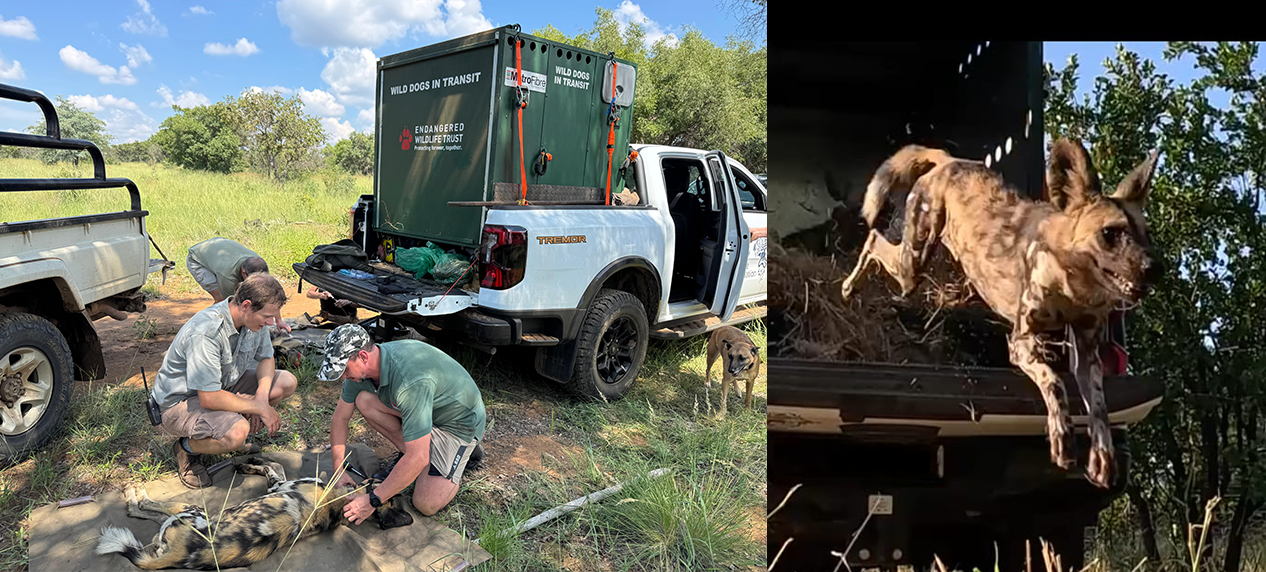
Most recently, several translocations have been undertaken by our wild dog range expansion team to reintroduce wild dogs to additional safe spaces in South Africa.

For the first time, founder packs have been introduced into Mpilo Private Game Reserve and Nambiti Private Game Reserve, in collaboration with Ezemvelo KZN Wildlife and Wildlife ACT. All introduced individuals have been fitted with tracking collars to enable daily monitoring of their movements, population and behavioural dynamics, and ecological influences and to help prevent human-wildlife conflict. The information gathered allows for informed decision-making – both at the reserve and the species level.

The pack at Mpilo PGR established well, birthing a litter of pups and curiously exploring their new environment, whilst the pack at Nambiti PGR is still adjusting and acclimatising to their new home in a boma before being released onto the reserve.

With less than 600 wild dogs found in South Africa, of only an estimated 6,600 that remain in the wild globally, every individual counts and we are immensely grateful for the commitment of these reserves to the conservation of the African Wild Dog.

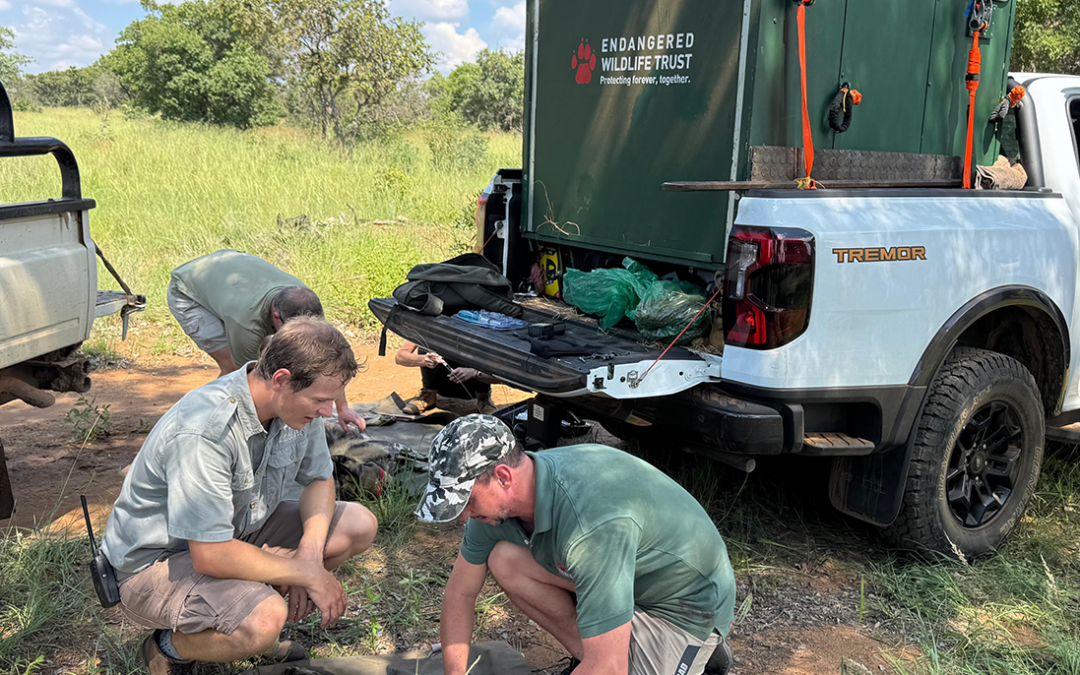
Sometimes, we also need to get creative in the field, as was the case when we executed another successful wild dog translocation to Makalali Private Game Reserve in Limpopo recently.

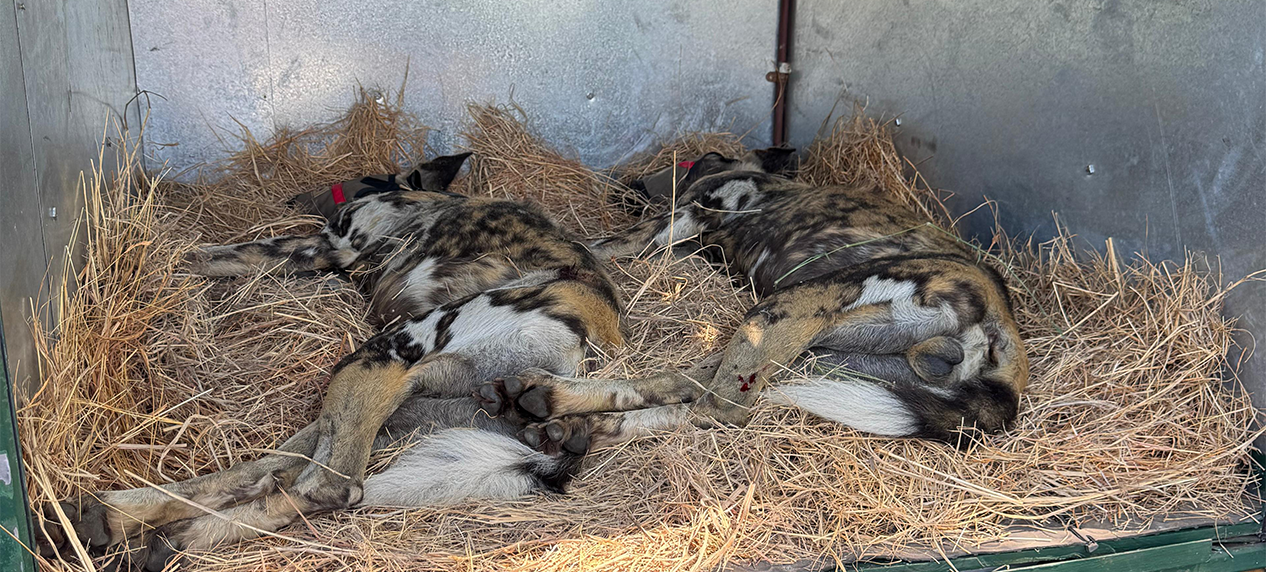
Due to challenges faced with non-ideal weather conditions as temperatures plummeted to -3°C on the day of relocation, we opted to transport this small pack of four together in a single-compartment lion crate instead of the specially-designed wild dog crates we would generally use. By simulating a den-like environment within the crate, the wild dogs were able to keep each other warm and at rest, minimising stress throughout the journey.

If one thing is certain, it is that no day in the field is quite the same, and by being continuously challenged we continue to explore, innovate, learn, and adapt with every operation.


One of the collared female wild dogs released at Nambiti Game Reserve

Ghostly Decline: Unveiling Tadpole Trends in Table Mountain’s Critically Endangered Frog

Ghostly Decline: Unveiling Tadpole Trends in Table Mountain’s Critically Endangered Frog

Science Snippet:

Ghostly Decline: Unveiling Tadpole Trends in Table Mountain’s Critically Endangered Frog

By Erin Adams and Dr Lizanne Roxburgh


Amphibians, which include frogs, toads and salamanders, are one of the most threatened animal groups worldwide, with just under 50% of species nearing extinction. The Table Mountain Ghost Frog (TMGF) is no exception. It is a Critically Endangered frog, with very specific habitat requirements and is restricted to the streams and pools on Table Mountain in Cape Town. While loss of habitat is known to be the primary cause of TMGF declines, information linking fine-scale drivers of declines to specific, localised threats were lacking. Therefore, in a recent study co-authored by EWT scientists* the fine-scale factors influencing where TMGF tadpoles settle and grow were studied.

For three years, the scientists studied multiple pools containing Table Mountain Ghost Frog tadpoles. During this time, they compared pools and recorded fixed features that won’t change, such as height above sea level, the direction of the slope and the angle of the slope. Features that could change depending on the season, such as canopy cover, size and depth of the pool, substrate composition and an index of how intact the habitat is, were also measured. Finally, factors that are constantly changing, such as the amount of oxygen present in the pool, water temperature, flow and the weather were recorded at each visit.


The scientists found that substrate composition of the pools (whether the bottom of the pools had silt, sand or rocks), was the biggest factor in determining where Table Mountain Ghost Frog tadpoles survive and thrive. Pools with more silt were far less likely to contain tadpoles compared to those with less silt. They also found that areas with high foot traffic, such as hiking trails across streams, promote erosion and increase silt and sand in the pools, which changes the physical structure of the stream. Another big threat to the tadpoles’ survival is the reduction of stream flow, which reduces the stream’s ability to flush sediments such as silt and sand downstream, increasing sedimentation and causing loss of tadpole habitat. Stream flow is negatively impacted by the presence of dams and weirs as well as by dense stands of invasive vegetation, which traps the water.

In order to conserve the habitat integrity of these, and other, aquatic species on Table Mountain, the authors recommend that boardwalks be constructed on the hiking trails that cross streams, to reduce sedimentation in the pools. Invasive plant species should also be removed. And weirs should be opened in drier parts of the year, especially in the late summer to allow the first wet season rains to naturally fill the streams.

*Weeber, J., Altwegg, R., Tarrant, J., & Tolley, K. A. (2023). Fine-scale drivers of extinction risk: tadpole occupancy dynamics of the Table Mountain Ghost Frog (Heleophryne rosei). African Zoology, 58(3-4), 106-119. https://doi.org/10.1080/15627020.2023.2282448

Addressing hunger, food insecurity, and under-nutrition through a reduction of food wastage and sustainable agriculture

Addressing hunger, food insecurity, and under-nutrition through a reduction of food wastage and sustainable agriculture


Addressing hunger, food insecurity, and under-nutrition through a reduction of food wastage and sustainable agriculture

By Dr Jenny Botha, People in Conservation Specialist

Globally, about 20% of the food that is produced each year is wasted or lost. This translates into about 1 billion potential meals a day!

At the same time, around 735 million people regularly experience hunger and a third of humanity faces chronic food insecurity. In South Africa, 15% of households did not have sufficient food in 2021, yet 10 million tonnes of food is wasted or lost each year. Furthermore, one third of human-induced greenhouse gas emissions is linked to food and 8—10% of emissions.

In August 2024, NEO (Natural Ethical Organic) Trading donated 1,200 litres of oat milk to families living in Kutama, adjacent to the Endangered Wildlife Trust’s Medike Reserve in the Soutpansberg Mountains. Oat milk is highly nutritious and, particularly if fortified, a good source of vitamin A, B2, B12, and D as well as calcium, phosphorous, iron, and other nutrients. It is particularly suited to vegans and lactose-intolerant individuals.

In addition, the Endangered Wildlife Trust works with local farmers in the Western Soutpansberg to transition to more sustainable agricultural approaches. Through this, we aim to strengthen local food availability and access in the region and contribute to the second Sustainable Development Goal to “…end hunger, achieve food security and improved nutrition, and promote agriculture”.

There has been limited progress in tackling hunger and malnutrition globally, but unfortunately, we still have a long way to go. For instance, before the Covid-19 pandemic, under-nutrition in children under five years of age was reduced by a third (55 million). Unfortunately, efforts to achieve Zero Hunger by 2030 have been severely curtailed since 2019 due to escalating food inflation, drought and other weather-related disasters, the pandemic, reduced production, conflict, civil insecurity, and other factors.

To significantly reduce food hunger and wastage, we need to:

  1. Transform food production and distribution systems to ensure that people across the society are able to afford and access healthy food. We also need to move to more sustainable farming practices that cut greenhouse emissions and other harmful environmental impacts, and develop or implement innovative technologies to maintain or improve water and air quality, soils, biodiversity, and the other vital ecosystem services we depend on.
  2. Reduce environmental and harmful social Impacts across distribution and value chains: Improve food storage, transportation, and retail systems and practices to reduce negative environmental and social impacts, including the exploitation of labour.
  3. Reduce food and water insecurity associated with environmental and humanitarian crises: Develop more effective emergency response systems and international policies and agreements that mimimize food and water insecurity during times of crisis.
  4. Strengthen global collaboration and cooperation across sectors to reduce poverty and inequalities: Collaborate with various stakeholders and ensure policies support food security and nutrition.

Clearly, this is a formidable task but if each of us contributes through the lifestyle choices that we make, the cumulative impact would be substantial.

How can you help?


  1. Sustainable choices when buying food
    • Plan meals, make lists, and buy seasonally available food. Support local markets and buy produce that is available locally. In addition to reducing environmental impacts, this can also decrease food bills.
    • Buy smaller amounts of perishable items to reduce spoilage.
  2. Store food properly
    • Store food in airtight containers and follow recommended refrigeration recommendations to extend the shelf life of produce
    • Try to avoid excess packaging where possible (packaging also prolongs the shelf life of food)
    • Understand Food Expiry Dates: Learn the difference between “use by” and “best before” dates to avoid throwing away still-edible food.
  3. Cooking
    • Prepare and cook appropriately sized portions only using the food that is needed.
    • Use leftover food creatively to avoid wastage.
    • Cook in bulk and freeze portions. Bulk cooking and freezing meals for later use reduces meal prep time and energy costs – a welcome relief for most of us in our fast-paced world.
  4. Adopt more conscious consumption habits
    • Start meals with smaller portions and take more if needed to reduce food wastage.
    • Increase the proportion of plant-based foods in your diet.
    • Understand food labels – understand the difference between “sell by” and “best before” labelling to ensure food safety and reduce waste.
  5. Participate in reducing food waste at a collective level
    • Share non-perishable and unopened foods with local community-based organisations, food banks, shelters or similar outreach programmes.
    • Support food rescue initiatives: Explore opportunities to support organisations that collect surplus food from retailers, restaurants, or the hospitality industry, and distribute it to those in need.
  6. Compost
    • Use vegetable scraps and other food waste to make compost and reduce the volumes of waste that reach landfill.
  7. Raise awareness and advocate
    • Raise awareness of the prevalence of hunger and food insecurity, our contribution to environmental impacts through our lifestyles and choices, and the steps we can take to change this.
    • Encourage corporates to adopt more sustainable approaches to business by buying ethically produced products as far as possible.
    • Support and advocate for policies and programs that promote food security, reduce waste, and reduce socioeconomic inequalities.
A Snaring Concern

A Snaring Concern


A Snaring Concern

By Lourens Leeuwner, Senior Conservation Manager: Business and Wildlife

Snaring for the bushmeat trade has become one of the most prominent threats to wildlife nationwide and is no longer a low-impact subsistence activity but the most common form of illegal hunting.

In other words, snaring is not necessarily driven by hunger but has evolved into a commercial business. To saturate demand, animals up to the size of an elephant are being poached. Usually set along game trails and around water points, these wire traps are set in areas with bountiful game with the intention to catch animals as they pass by. Snares are the silent drivers of extinction.

On 10 and 11 September, the EWT will be co-hosting the inaugural Snare Mitigation Symposium with the Cape Leopard Trust, the Department of Forestry, Fisheries and the Environment, SA National Parks and the SA National Biodiversity Institute in Pretoria to discuss and seek possible solutions to the pervasive threat to wildlife and the economy caused by illegal hunting with snares.

Snaring, which is essentially the use of a trap, is illegal in South Africa. Because of the nature of snaring, it is challenging trying to catch poachers red-handed and to present adequate evidence to link them to the crime and to successfully prosecute them.

Snares can be made from a variety of materials but fencing wire and cable is usually preferred. The materials are easy to obtain and snares are quick to manufacture, easy to set and difficult to detect. Their effectiveness and secret nature make them the perfect hunting tool.

Animals caught in snares experience great suffering caused by stress, injuries and mutilation, usually leading to their demise. Even when the caught animal manages to escape, the snare usually remains on its body and tightens with time. Being increasingly compromised, the animal’s condition tends to deteriorate until it can no longer continue.

Looking at the bigger picture, snaring can contribute significantly to changing the demographics and size of animal populations, ultimately contributing to the loss of biodiversity. Although, it is mostly game animals that are targeted by the poachers, the indiscriminatory nature of snares leads to what is known as bycatch: the capture of non-targeted animals such as snakes and other reptiles, mammals including predators, and even birds – many of which are Endangered.

Most conservationists and land managers find snares in the field on a regular basis and have to deal with the consequences of illegal poaching through the loss of not only valuable game, but also domestic animals along the line.

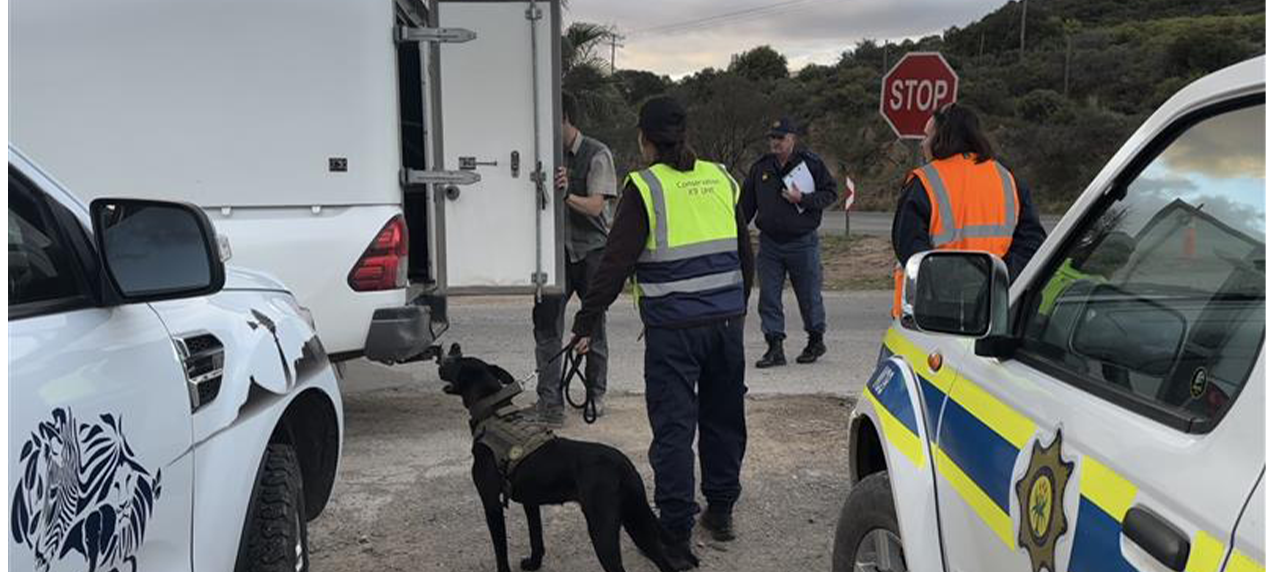
As a means to address snaring, the EWT recently undertook a project and proof of concept to determine to determine whether anti-poaching dogs could be used for snare detection. Thanks to funding from the Taronga Zoological Society in Sydney, Australia, our Canine Conservation Unit spent several days testing techniques to detect snares on Madike nature reserve in Limpopo. Using two EWT anti-poaching canines, Ruger and Kisha, the team set snares in the veld before sending out rangers to find the items. The trial was completed four times in different terrain with rangers only finding some of the snares and items dropped randomly in the veld. To prove this concept works, the rangers were again sent into the veld to find snares and the other items; this time with the dogs. In all cases, the canines successfully tracked the scent of the person who had planted the snares and other items, finding the majority of the snares. As further proof that this technique works, the dogs were taken on a routine patrol of a farm that has problems with poachers using snares to catch wildlife. During this patrol, Ruger discovered a snare that had been planted by a real-life poacher.

While there is a lot more work that needs to be done, this is proof that the concept works – an extra tool in the arsenal to combat poaching.


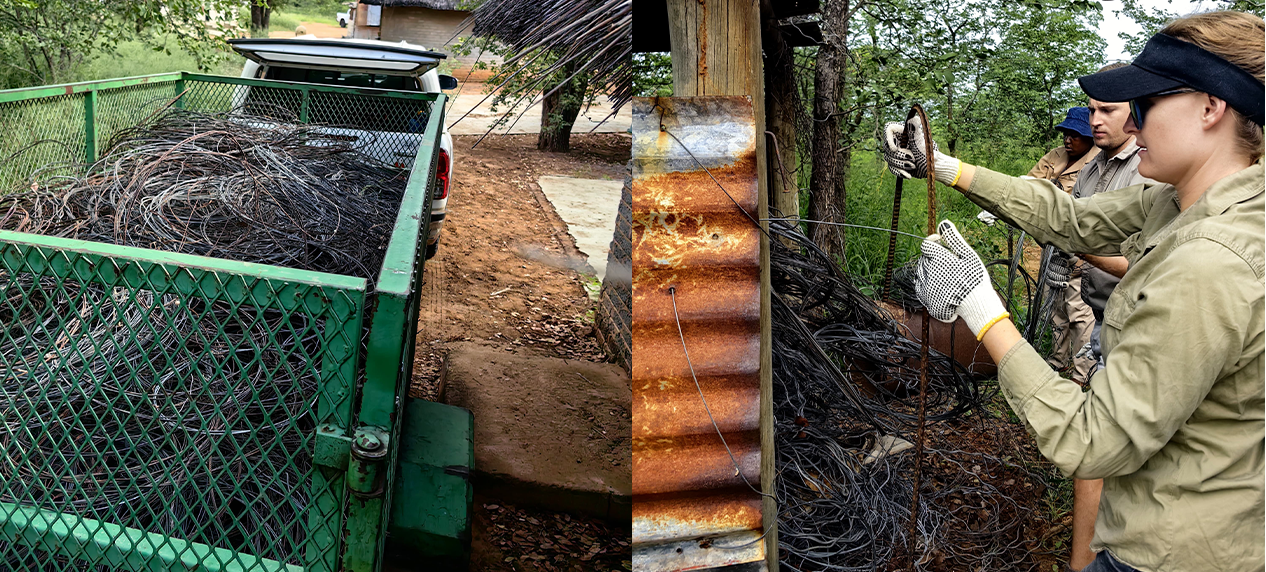
Rangers hold a variety of snares removed from the veld.

Kisha illustrating just how difficult snares are to see in the field

Locating a snare during the test phase of the proof of concept

Ruger and a ranger looking for snares at Medike

First Carbon Offsetting Project for 90,000 Hectares Registered

First Carbon Offsetting Project for 90,000 Hectares Registered

First Carbon Offsetting Project for 90,000 Hectares Registered

By Jodi Legge and Eleanor Momberg

The Endangered Wildlife Trust and the International Crane Foundation have registered carbon offsetting project in the Drakensberg – one of only six registered carbon offsetting projects in the world using Voluntary Carbon Market Methodology and covering the widest geographical footprint in a country.

This is part of the EWT/ICF partnership’s long-term commitment to protect threatened crane habitat in the Drakensberg region. The project extends 90,000 ha, of which 88,500 ha is managed by the EWT/ICF partnership as the Carbon Management Entity with the developer, WeAct, from Australia. Further expansion is planned during the second half of 2024 and will be known as the second instance.

“Landowners are interested in joining at least another 45,000 ha for the second instance,” said Pieter Botha, ICF project manager.

Botha added that the partnership covered several critical areas under biodiversity stewardship agreements with crucial landowners. Information opportunities were created to discuss the project, objectives, and outcomes with our partner landowners.

The primary purpose of carbon trading is to channel finances towards a sustainable transition in limiting greenhouse gas (GHG) emissions and GHG sequestration. The cost associated with the removal of GHG needs to be recovered because the removal cost is potentially much lower than the cost of dealing with the consequences of global warming. Through the voluntary carbon market initiatives linked to the free-market principle are allowed as these achieve an incentive by pursuing the initiatives set out in the Paris Agreement reached at the UN Framework Convention on Climate Change’s talks in 2015.

Carbon offsetting is considered a sustainable financing option by providing investments that reduce or remove emissions, improve livelihoods and protect the environment. Carbon credits are sold on the market with revenue returned to landowners. Landowners are rewarded financially as they implement sustainable and improved land management practices that contribute to a healthier ecosystem, are friendly to cranes, and promote greater biodiversity.

The Drakensberg region is home to three species of threatened cranes – the Wattled, Blue and Grey-Crowned Cranes. It is a region that has been at risk from mining, infrastructure development, invasive species, uncontrolled fire and agricultural expansion. These factors have reduced habitat for cranes and other species, and pose significant challenges to landowners, threatening the livelihoods of thousands of people who live and work in this region.

“We know these are complex problems,” said Botha adding these required innovative solutions. “Exploration of the carbon trading market has been one of our key strategies to reduce greenhouse gas emissions through carbon sequestration, to improve the state of these fragile habitats.”

Botha said the cost associated with the removal of greenhouse gas emissions to improve the soil needs to be recovered as landowners cannot do it on their own. Removing CO2 from the atmosphere is a cheaper alternative than dealing with the consequences of global warming.

“Carbon trading is not frequently discussed among farmers as it is not part of their daily production cycle on the farm.,” said Botha. “For many landowners, this was a foreign idea, and careful negotiation and education is required to explain the complexities of the project. It takes a long time to engage with landowners, explain the benefits of participating in the project, and getting them to commit to an agreement.”

Farmers are custodians of large tracts of land, which is also home to many diverse species. The Foundation understands that farming has many challenges and no state assistance or subsidies are available in South Africa. This project aims to assist farmers by offsetting costs that come with conservation, creating an enabling environment for proactive conservation.

The project implemented a four-year cycle of carbon credit verification and issuance, with a goal to ensure a 30-year commitment to the project. Anticipated revenue is substantive.

“We believe this approach will mitigate the effects of global warming while creating resilient habitats for our crane population,” said Botha. “This pioneering approach will result in increased carbon in the soil, while providing relief to our resilient farmers to protect their livelihoods and create conservationists at the same time.”

The unfinished journey:  capturing Wattled Cranes for conservation

The unfinished journey: capturing Wattled Cranes for conservation


The unfinished journey: capturing Wattled Cranes for conservation

By Dr. Lara Fuller, Drakensberg Project Coordinator, South Africa for the African Crane Conservation Programme

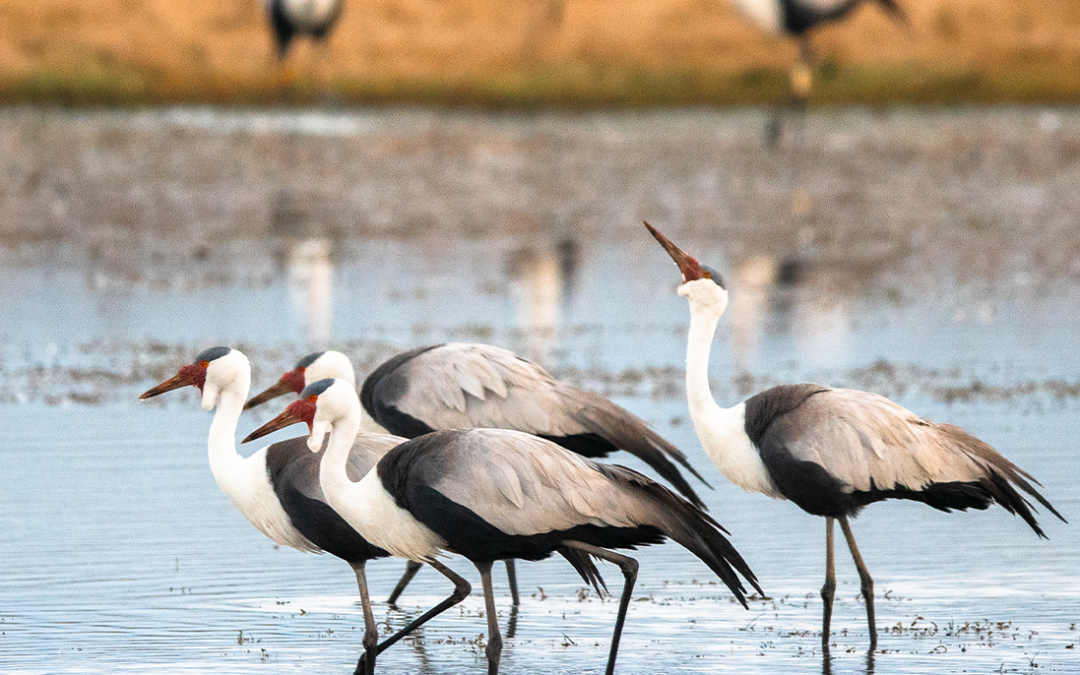
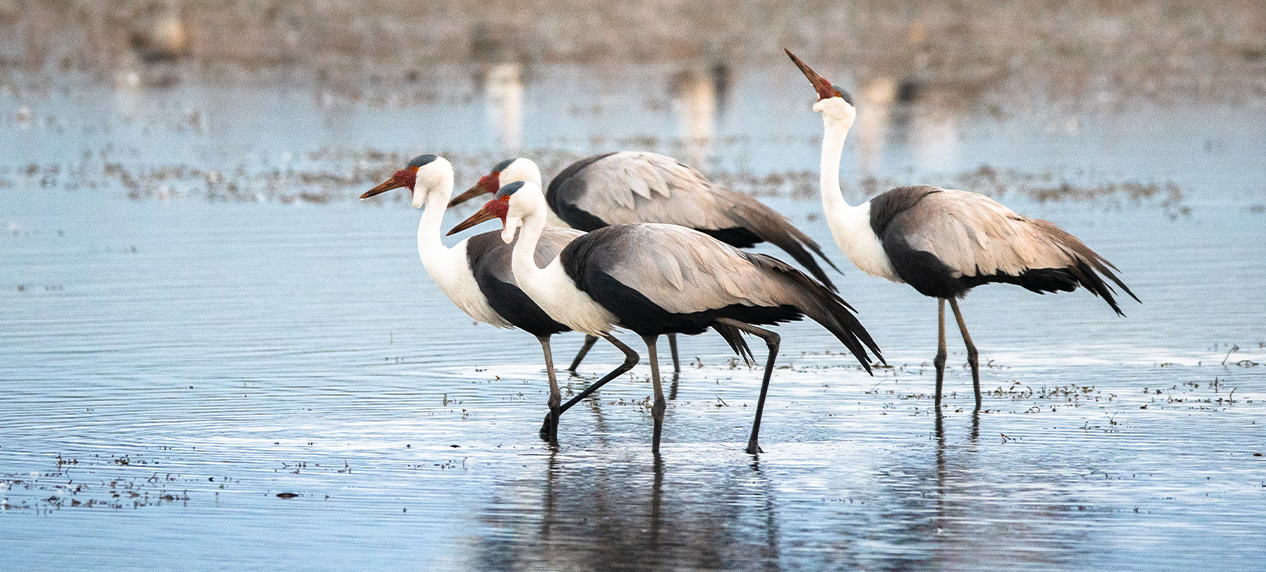
Wattled Cranes close to the camp site

Wattled Cranes are globally Vulnerable. They move with the available waters in large floodplains across south-central Africa through several countries including Botswana, Zambia, Angola, Zimbabwe, Tanzania and Malawi. It is this movement that is vital for conservationists to understand so that conservation goals can be impactful.

Wattled Cranes are notoriously difficult to catch as they have excellent vision and they are not easily coerced into an area, which most capture techniques rely on.

Charles Mpofu of Botswana Wild Bird Trust (WBT)/Okavango Wilderness Project recently approached the EWT for assistance in capturing and handling cranes. Given the synergies between our work, we accepted and I travelled to Botswana to start work on a project that will take some time to complete.

Our first step on the journey was to test the transmitter and harness design by trialling them on captive Wattled Cranes. Out of this work some modifications were made to the transmitter by its developer SpoorTrack to design the dimension specifically for the species. The second step was to understand the best technique to capture Wattled cranes in the Okavango Delta. As the environment is a wilderness with multiple natural dangers, we spoke to the only people who had attempted to catch the species in the Delta — Pete Hancock and Ralph Bousefield in Maun, and Kevin Mcann who had joined the team based in South Africa.

After much discussion the main technique advised was light trapping at a roost site. This approach allows for opportunistic capture in a dynamic and changing environment and allows a capture team to avoid predatory dangers. We had not previously used this technique and learning a new procedure in the wilderness was never going to be easy.

The third step was to find the birds in the vast flood plains of the delta. Charles narrowed this down with aerial surveys to identify a flock in accessible reach, and he spoke to lodge owners and field guides in that area.

On 13 May we started a two-week expedition on the Gomoti River, amply equipped with two Mokoros (a traditional canoe for traveling on the shallow flood plains), two Landcruisers, solar charging battery and remote camping equipment. The first two days were spent ground surveying for Wattled Cranes and learning from a local NPO ‘Connect Trust’ where the accessible roads and river crossings were. Travelling from base camp to the capture site took three to four hours a day due to the difficulty of sandy roads. Understanding where the cranes roosted was vital, and because we were losing important hours on the road, we moved to a new camp in the bush from where we could easily monitor the cranes dawn to dusk. Despite the campsite move the Wattled Cranes were incredibly elusive in sharing details of their roost sites. Flying in and out of foraging grounds in the dark, a mechanism to protect them from predators.

After a few days of 6am mornings and 9pm evenings we had identified a daylight foraging space to which the birds returned to every day. This site had recently been burned and would mark our capture attempts for the remaining expedition. Establishing safe passage across the river for night capture we set up a system using the mokoros so that we could reach the grounds safely. At this site we made numerous attempts to capture the cranes using bird hides, toe noose matts, and using the flashlight technique. Although we came within a few meters of the cranes, numerous difficulties were encountered. Lechwe hampered our attempts to capture during daylight hours by threatening to beat the cranes into the traps.

Wattled Cranes close to the camp site

During the night hours hippos were out foraging, and lions could be heard hunting. Not an ideal scenario when you’re travelling on foot. Other aspects obstructing capture was the unhelpful moon cycle, and although there were numerous breeding elephant herds they were very regimented in their movements and were easily avoided.

With a lot of experience and lessons learned we attempted our second expedition on the Boro River from 7 July 2024 for 10 days. This time we armed ourselves with some camouflaged toe noose traps, some very bright flashlights and a FLIR. One of the most difficult aspects we found during the night captures was that we could only see as far as a flashlight. This is a little discouraging when running into the night after a crane. The FLIR proved to be a valued member of the team and was excellently designed for its purpose.

The second expedition was supported by the prestigious game lodge Xigera in the heart of the Okavango permanent wetland. As we explored the reserve we were delighted to find over 20 pairs of Wattled Cranes, enabling a number of capture attempts on the same night at different sites. We were hopeful. However, although we were spending up to 19 hours in the field, observing where the pairs moved to during the day and attempting captures at night, we found that there were only four pairs that had steady territories. This was because these birds were starting to breed. Despite this the expedition attempted eight night captures. We came as close as four meters to one crane before the mud tied up Charles and the Landcruiser. We even came within couple of meters of capturing with toe noose matts, until the Buffalo and Impala decided to race the cranes to the traps.

It was T.S. Elliot who said: “It is the journey not the arrival that matters”.

As we reflect on these expeditions and consider the way forward, Charles will be joining us in South Africa along with colleagues in the African Crane Conservation Programme (ACCP) from Uganda, Kenya and Zambia, an American colleague from the International Crane Foundation and a number of South African colleagues from ACCP and Wildlife Energy Programme, to attempt to capture Grey Crowned and Blue Cranes in Mpumalanga. This will form a part of a workshop where we will share our knowledge and experience in Crane and other bird captures to create more innovative approaches to captures in especially the difficult flood plains of the south-central Africa. These will include questionnaires that will draw out the why, when, where and how Crane captures are performed across the globe. This will be compiled under the auspicious IUCN Crane Specialist Group to develop best practice guidelines for captures. In addition, we have through this process bridged a gap between generations of experienced crane catches enabling us to build on the knowledge of the past and not reinventing old new techniques. Conservation relies on collaboration and working together, and these attempts are creating a stronger team of skilled conservationist across Africa for the benefit of crane species. What better example could we have of conservation in action!


Chales Mpofu of the Wild Bird Trust Okavango Wilderness Project using a drone to survey the vast area of the Delta.

Johannesburg City Park and Zoo team with Charles Mpofu of the Botswana Wild Bird Trust and Matt Pretorious EWT who assisted with training on applying a harness.

The remote campsite adjacent to the capture site.

Capture site where 10 Wattled Cranes were inhabiting

A word from the CEO July 2024

A word from the CEO July 2024

Word from the CEO

 
Yolan Friedmann, CEO

The 2024 Summer Olympics kicked off last week with grand fanfare and excitement, with millions of fans globally clenching thumbs and gritting their teeth as they watch their favourite sportsmen and women and wait for records to tumble. With around 300 000 spectators expected to attend the games in person, Paris is buzzing with people from across the globe and from all walks of life. Against the backdrop of political upheaval, unrest, ongoing global conflict in almost all corners of the world, economic uncertainty and a range of other manmade threats to our own futures, it fills me with a sense of hope and excitement to see fans draped in their national flags filling stadiums, and walking the streets of Paris, as they laugh, cheer, applaud and fiercely promote their national pride but all in a safe, harmonious and respectful manner. It makes me wonder why the rest of our lives and the rest of the time people cannot be like this: human beings competing as we love to do, and defending our national positions and ideologies, but in a way that inspires new generations to be better and aim higher, instead of sacrificing their futures. Humans are capable of great achievements and the Olympics is the best celebration of what focus, commitment, hard work and sacrifice can do. In a world that increasingly looks like it will implode due to the devastation of human impact, our planet can also thrive and flourish if people just focused on the RIGHT stuff.

Amidst the celebration of our sporting heroes this week, came the celebration of another group of individuals who can be likened to being environmental Olympians: champions of the earth and guardians of the voiceless. World Ranger Day on the 31st of July is always an opportunity to pause and give thanks to the brave women and men who risk their lives and dedicate their hearts, minds and bodies every day, to protecting the natural world for all of us. With Africa losing more than 64 rangers in the line of duty in the past year and with their work increasingly requiring a range of skills that qualifies them for a pentathlon event of their own, our rangers deserve cheers and glory and podiums every day of their lives. Today’s rangers need to have environmental knowledge, technical skills, self-defense and paramilitary knowledge and still be educators, community developers, managers and defenders of the weak. The EWT salutes ALL rangers everywhere for protecting our earth.

Our world is full of heroes and focusing on them inspires us all to become better and to do better. I love the Olympics and global celebratory days for this reason, and knowing that the heroes of tomorrow are still in the making, gives me hope for a future where we will all indeed be better humans.

Yolan Friedmann,

CEO, Endangered Wildlife Trust