Help African Wild Dogs 

Donate today  

Turning Traps into Hope: Poacher’s Snares Repurposed for Conservation

Turning Traps into Hope: Poacher’s Snares Repurposed for Conservation


Turning Traps into Hope: Poacher’s Snares Repurposed for Conservation

By John Davies


Across much of Africa, snaring of wildlife is on the rise, driven by a combination of poverty, bushmeat demand, and organized wildlife crime. With economic hardships pushing more people toward illegal hunting for sustenance or profit, snares have become the weapon of choice—they are cheap, easy to set, and devastatingly effective. However, they do not discriminate, often trapping unintended species, including elephants, lions, and wild dogs. Many animals suffer prolonged, agonising deaths, while those that survive can be left with severe injuries that compromise their ability to hunt or evade predators.

In a significant step toward protecting South Africa’s wildlife, the Endangered Wildlife Trust (EWT) recently removed 3.5 tons of wire snares from a protected area in the Lowveld region of South Africa, forming a critical buffer zone along Kruger National Park’s western boundary. These snares had been stockpiled over the last five years and had been removed during routine patrols by reserve anti-poaching teams.

Instead of being discarded, the snares have been given a second life through a partnership with Down2theWire, a local initiative that transforms confiscated poaching materials into handcrafted jewellery. This innovative project not only raises awareness about the devastating effects of snaring, but also provides funding for conservation efforts generated through the sale of jewellery and other products made from snares. Profits from the jewellery sales will be reinvested into anti-poaching initiatives, supporting rangers, education programs, and community-driven conservation efforts.

This initiative underscores the importance of sustainable solutions in wildlife conservation, proving that even the most destructive tools can be reshaped into symbols of resilience and protection.

As wildlife crime continues to challenge conservationists, creative collaborations like this offer a beacon of hope. Consumers can now play a direct role in the fight against poaching—one bracelet at a time.


Plant poaching: An underestimated threat to biodiversity 

Plant poaching: An underestimated threat to biodiversity 


Plant poaching: An underestimated threat to biodiversity 

By Esther Matthew

Roadblocks for illegally traded wildlife products


Succulent poaching has shown a marked increase in South Africa in recent years. Many of these plants will literally bring you to your knees due to their tiny size. But, once you see the details on them, you are immediately transported to world that many people often walk over without noticing.

Unfortunately, poachers have taken note of this, which has resulted in an incredible increase in the illegal harvesting of these unique plants over the last five years, with approximately half a million plants poached in a year. This is a significant problem, with some plant species already pushed to extinction in the wild.

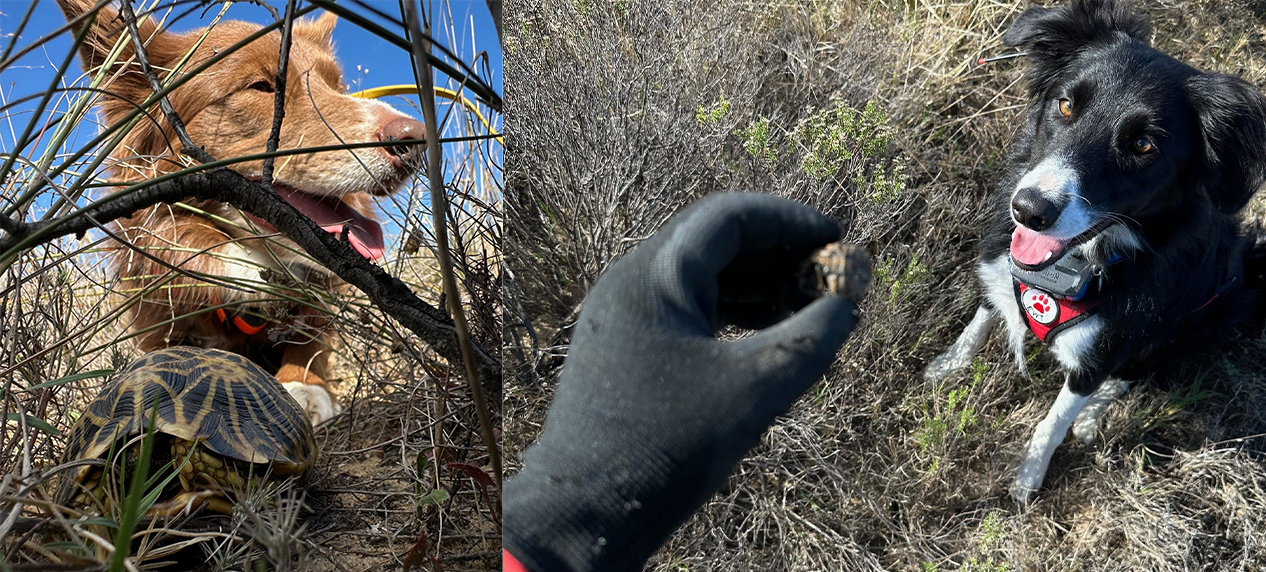
For the EWT Conservation Canine Unit and the Drylands Conservation Programme the solution to most conservation problems is getting nosy, and with that we mean using scent detection dogs to assist us in our conservation work, and in sniffing out any plants being smuggled. Dogs have an remarkable scent ability and are able even find a drop of odour in a waterbody the size two Olympic swimming pools! Keeping that in mind, our two programmes teamed up in 2023 and to train the first three scent detection dogs to help combat the succulent plant poaching problem. In joint operations, our efforts were aimed at screening vehicles at roadblocks and parcels at courier companies. In the first 2 months of working with these dogs we were able to assist the local law enforcement officials supported with four cases, resulting in nine arrests. So, it turns out being nosy is not always a bad thing, and it can even help save our endemic plants.

Thanks to the Dertour Foundation, Endangered Ink and Tourvest, we can continue the work with our dogs to help combat the poaching problem for not only plants but also a variety of other wildlife contraband


Roadblock with Police


Counting Lions: EWT Surveys Decline in Kruger’s Northern Pride

Counting Lions: EWT Surveys Decline in Kruger’s Northern Pride


Counting Lions: EWT Surveys Decline in Kruger’s Northern Pride

By Marnus Roodbol

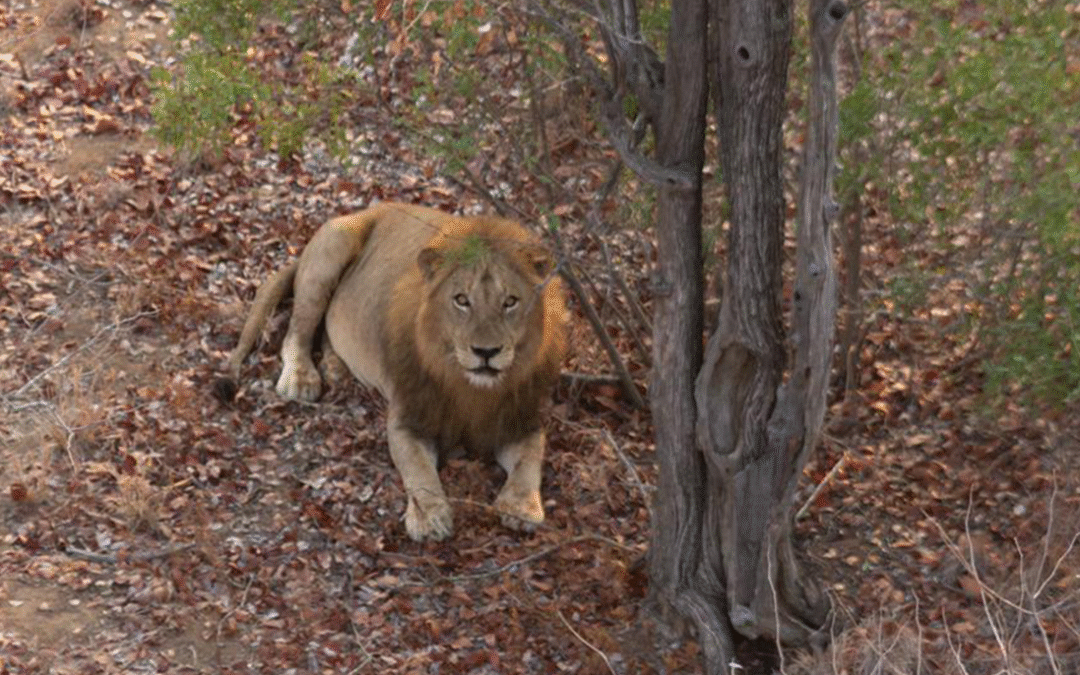
Juvenile Lion – KNP. Image by M Roodbol


The Great Limpopo Transfrontier Conservation Area (GLTFCA), which includes Kruger National Park, in South Africa, and Limpopo National Park, in Mozambique, is one of the last ten Lion strongholds in Africa. While these strongholds occur in formally protected areas and contain a stable or increasing population, indications are that the lion population in the northern reaches of the Kruger National Park are declining because of targeted poisonings and poaching.

In partnership with SANParks and the Lion Recovery Fund, the Endangered Wildlife Trust (EWT) has been monitoring lions across the landscape to understand their movements, habitat use and what measures are needed to alleviate threats to the iconic species.

From 17 September to 1 December 2023, a team from the EWT conducted a lion population survey in the Nxanatseni north region of the Kruger National Park. Spanning 5162 square kilometres, the area spanned the Pafuri, Vlakteplaas, Punda Maria, Shangoni, Woodlands and Shingwedzi sections of the Park.

Two field protocols – search encounter and camera traps – were used to collect data. These were designed to obtain high quality photographs that the team could zoom into and be able to individually identify lions through their unique whisker spots. All photographs taken of lions were inspected to try and identify individuals roaming the area.

Because it is not feasible to find every lion in the landscape, methods were used enabling the team to estimate the number of lions based on a sample of that population. To do this, advanced spatial capture-recapture models that are widely used for large carnivores globally were used. Due to the fact that lions less than one year old tend to suffer high mortality, they were excluded from the analysis.

Results

The EWT team drove 10,006 km and deployed camera traps for 2,684 trap nights over the survey period. Using the combined dataset, it was estimated that there were 105 lions in Nxanatseni North.

Our survey represents the fifth estimate of lions in the Nxanatseni North region of Kruger: In 2005, a call-up survey estimated 283 lions; a 2008 call-up survey with reduced sampling estimated 75 lions; the 2005 survey was replicated in 2015 and estimated a population of 119 lions and in 2023, the estimate was 122 lions. The EWT’s estimate of 105 lions is similar to the latter two surveys.

All were conducted in the same region and are estimates of lions over the age of one year. This represents a possible 63% decline over the 18 years separating the surveys. The precise reasons for this have not been investigated, but anecdotal evidence suggests that there has been an increase in targeted poaching of lions, coupled with increased levels of general bushmeat poaching.

Our results show that lion density is lowest in the Pafuri and Punda Maria sections, areas that are thought to suffer from relatively high levels of snaring, poisoning, and general poaching.

The results also provide a clear signal that distance to water is an important factor explaining the variation in lion density across the landscape. Lion density was highest close to water. In recent times, artificial waterholes have been switched off in Kruger National Park, and this will likely have had an impact on lion numbers in the Nxanatseni North region, which has a semi-arid climate. Worth noting is that while lions are not dependent on water, their primary prey species typically are.

Conservation approaches typically encompass a range of approaches aimed at safeguarding their habitats, mitigating human-lion conflicts, combating poaching and illicit wildlife trade, and fostering harmonious coexistence between lions and local communities.

Identifying trends in lion numbers and demographics remains crucial for their conservation, as is investigating the factors that drive those trends.

We recommend that future conservation efforts are coupled with regular population monitoring in this region to inform conservation actions and assess their effectiveness, taking an adaptive management approach.


** The EWT would like to thank SA National Parks for permission of carry out the survey, AHA Hotels and Lodges for their logistical support and the Lion Recovery Fund for their generous support.

2024 closed with the longest and shortest cheetah relocations of the year

2024 closed with the longest and shortest cheetah relocations of the year


2024 closed with the longest and shortest cheetah relocations of the year

By Olivia Sievert


The Endangered Wildlife Trust’s Cheetah Range Expansion Project closed out 2024 with three relocations of four cheetahs as part of our ongoing efforts to manage the southern Africa Cheetah Metapopulation. And, they were the shortest and longest relocations of the year!

While most of our relocations are within regional or provincial clusters, long-distance moves are occasionally necessary to maintain genetic integrity or promote healthy population demographics. This was the case with our recent relocation of a female cheetah from Amakhala Game Reserve in the Eastern Cape to Babanango Game Reserve in KwaZulu-Natal. This incredible journey covered over 1,140 km, approximately 14 hours of travel for the Cheetah. To ensure the success of this relocation, I covered a roundtrip distance of 2,672 km taking me across six provinces over just three days!

After spending a month acclimatising in the boma, this female cheetah was released into the wider reserve just after the festive season and, we are happy to report that she is doing well.

Babanango Game Reserve, a 20,000 ha landscape undergoing a significant rewilding effort as part of a community agreement conservation project, has made tremendous strides in recent years. Following the reintroduction of two male and two female cheetahs in 2021-2022, the reserve is eager to continue growing its cheetah population and positively contribute to the conservation of species. The addition of this female will strengthen the population, which welcomed five cubs towards the end of the year.

However, to finish off the year we also undertook our shortest relocations. These two “cluster-based” relocations were less than 100 km of travel each. This highlights the importance of our work, enabling dispersal between protected areas that are otherwise isolated from each other, surrounded by a sea of anthropogenically altered landscapes. The two relocations in question took place from Manyoni Game Reserve, one of our long-standing partners in Cheetah conservation.

In recent years, Manyoni’s Cheetah population has flourished, with approximately 11 breeding adults currently thriving on the reserve. But, this success brings with it numerous challenges, including managing genetic diversity, ensuring sufficient prey availability, and preventing sub-adult dispersal beyond the reserve boundaries. To address these challenges in 2024, we worked closely with Manyoni’s Management Team and Wildlife ACT, who assist with monitoring the Cheetah on the reserve, to identify suitable individuals for removal. As such, three dispersing sub-adults were identified as having a high risk of inbreeding and were earmarked for removal.

Searching for new homes for Cheetahs is one of the hardest parts of the relocation process. It involves finding a reserve that ideally has similar habitats, predator dynamics, and unrelated Cheetahs to promote genetic diversity. Fortunately, Manyoni’s cheetahs carry unique genetics, offering an opportunity to strengthen KwaZulu-Natal’s cheetah population.

Partnering with Ezemvelo KZN Wildlife and Wildlife ACT, two ideal reserves were identified to receive these animals: Mkuze Valley Wilderness and Hluhluwe-iMfolozi Park.


Amakhala to Babanango


Mkuze Valley Wilderness

As part of our ongoing efforts to revitalise non-breeding Cheetah populations within South Africa’s Cheetah Metapopulation, we have been collaborating with Mkuze Valley Wilderness on an exciting restoration project. This 14,000 ha reserve comprises two protected areas: Mkuze Falls Game Reserve, which initially reintroduced Cheetahs in 1998, but has seen almost no breeding success in 25 years, and Ven Africa, a former cattle farm now transformed into a pristine Cheetah habitat through an ambitious rewilding project.

When we began the Cheetah restoration work with Mkuze Valley Wilderness in early 2024, only one male Cheetah roamed the reserve. Since then, we’ve introduced a second male, who has adapted remarkably well, and at the end of the year we were able to introduce one of the three Cheetahs that was earmarked for translocation from Manyoni Game Reserve – a two-year-old female now named Naledi. As with the vast majority of Cheetah translocations Naledi was temporarily held in a boma to allow her to acclimatise to her new surrounding and cut her homing instinct to Manyoni. Over the festive season she was released into the reserve and is doing extremely well in her new home – hunting primarily duiker and young wildebeest!


Hluhluwe-iMfolozi Park (HiP)

As one of the largest reserves within South Africa’s Cheetah Metapopulation, this 96,000 ha protected area also hosts one of the Metapopulation’s largest population of Cheetah– roughly 20 breeding adults.

As part of the overall species management in the park the Cheetah are closely monitored to understand the dominant genetic lineages allowing us to adaptively manage the population by relocating individuals at high risk of inbreeding off the property or choosing to bring in new genetics strategically. At present the vast majority of males on the property are singletons. As such, it was decided that the best course of action for the population was to introduce a strong coalition of new genetic lineage to the reserve to ensure more genetically unique breeding opportunities.

We were delighted to finally make this happen at the end of the year when we introduced two of the three Cheetah from Manyoni – a coalition of brothers that are completely unrelated to any Cheetah in the HiP. The males have since been released into the larger reserve and are doing very well.

This relocation highlights the power of collaboration in conservation. The effort brought together Manyoni Game Reserve, EWT, Wildlife ACT, and Ezemvelo KZN Wildlife, ensuring every decision was backed by the best available data.

We extend our heartfelt gratitude to Manyoni Game Reserve for the donation of these Cheetah through the EWT’s Cheetah Range Expansion Project and to all our partners for their roles in planning, capturing, and relocating these Cheetahs. Together, we are securing a brighter future for southern Africa’s Cheetah populations.


** The EWT would like to thank Metrofibre and Ford Wildlife Foundation for making this work possible by funding our Cheetah Range Expansion Project.


Renewed Hope for an iconic Butterfly, the Wolkberg Zulu

Renewed Hope for an iconic Butterfly, the Wolkberg Zulu


Renewed Hope for an iconic Butterfly, the Wolkberg Zulu

By Eleanor Momberg

Make Wolkberg Zulu (Alaena margaritacea) butterfly perching on a tussock stem at its type locality. Image provided by the Lepidopterists’ Society of SA.


A century since its discovery by Margaret Kenway while out walking with her father in 1925, a butterfly on the brink of extinction, the Wolkberg Zulu, will now be protected by law.

Thanks to landowner, Gustav van Veijeren, and in collaboration with the Lepidopterists’ Society of Africa (LSA) and the Endangered Wildlife Trust (EWT), a conservation servitude has been registered on the farm in Limpopo where the Critically Endangered Wolkberg Zulu butterfly (Alaena margaritacea) occurs. Work to establish the servitude was funded by Rand Merchant Bank.

The servitude, a form of Biodiversity Stewardship, is the first its kind to be established for the protection of a threatened butterfly species in South Africa.

”There are few countries in the world with as many threatened and endemic species as South Africa and it is this amazing diversity of life that makes the job of conservationists here so very exciting and challenging, said Ian Little of the EWT. “The formal protection of these unique and isolated habitats for these incredible species are the building blocks towards securing our natural heritage and the life-giving ecosystem services that are provided by these intact landscapes. We are proud to be the custodians of our unique and beautiful wildlife assets”.

The Wolkberg Zulu occurs on only two tiny sites at high altitudes on the slopes of the Wolkberg mountain range in Limpopo. This tiny butterfly, which is no more than 26 mm in size, intriguingly feeds on hard rock lichens that are almost impossible to separate from the rock.

The idea of the conservation servitude was initiated by the Lepidopterists’ Society’s Dr Dave Edge in 2021. After three years of hard work and patience, the Haenertsburg Wolkberg Zulu Conservation Servitude Committee spearheaded by Etienne Terblanche, who is also the LSA Custodian of Rare and Endangered Lepidoptera, worked closely with the landowner and the LSA to see the protective measurement through. The process was guided by a team from the EWT, who also funded the crucial legal support for the registration.

The COREL project, which focuses on Lepidoptera (butterflies and moths) has been running since 2011.

“It is the landowner, Gustav van Veijeren, to whom we are most grateful for this hopeful development,” Terblanche said.

He added that the declaration of the conservation servitude creates a much better chance for future generations to enjoy and research this courageous little creature and its patch of critically endangered vegetation known as Woodbush Granite Grassland.

“We are over the moon,” he added, “and we hope that more landowners will follow in Gustav’s pioneering and big-hearted footsteps.”


Global Risks Report 2025: A Decade of Challenges Ahead

Global Risks Report 2025: A Decade of Challenges Ahead


Global Risks Report 2025:
A Decade of Challenges Ahead

By Eleanor Momberg


The 20th edition of the Global Risks Report 2025 (GRPS) shows an increasingly fractured global landscape where escalating geopolitical, environmental, societal and technological challenges threaten stability and progress.

The report comprises insights from 900 experts worldwide, analysing global risks through three timeframes. It assists decision-makers to only balance existing crises, but also to set their longer-term priorities.

It identifies state-based armed conflict as the most pressing immediate global risk for 2025.

Misinformation and disinformation remain top short-term risks for the second consecutive year, underlining their persistent threat to societal cohesion and governance by eroding trust and exacerbating divisions within and between nations. Other leading short-term risks include extreme weather events, societal polarisation, cyber-espionage and warfare.

Environmental risks dominate the longer-term outlook, with extreme weather events, biodiversity loss and ecosystem collapse, critical change to Earth systems and natural resources shortages leading the 10-year risk rankings. The fifth environmental risk in the top 10 is pollution, which is also perceived as a leading risk in the short term. Its sixth-place ranking in the short term reflects a growing recognition of the serious health and ecosystem impacts of a wide range of pollutants across air, water and land. Overall, extreme weather events were identified prominently as immediate, short-term and long-term risks.

The long-term landscape up to 2035 is also clouded by technological risks related to misinformation, disinformation and adverse outcomes of AI technologies.

The authors point out that the global outlook at the start of 2025 is increasingly fractured across geopolitical, environmental, societal, economic and technological domains. Besides the expansion and escalation of conflicts, there has been a multitude of extreme weather events amplified by climate change, widespread societal and political polarisation, and continued technological advancements accelerating the spread of false or misleading information.

There is clear concern about the urgent reality linked to the rise in environmental risks in the long term.

The report states that the impacts of environmental risks have worsened in intensity and frequency since the Global Risks Report was launched in 2006. The outlook for environmental risks over the next decade is alarming, says the authors. While the 33 identified risks in the GRPS are expected to worsen in severity from the two-year to the 10-year time horizon, environmental risks present the most significant deterioration.

Extreme weather events are anticipated to become even more of a concern, with this risk being top ranked in the 10-year risk list for the second year running. Biodiversity loss and ecosystem collapse ranks #2 over the 10-year horizon, with a significant deterioration compared to its two-year ranking.

The GRPS shows generational divergence when it comes to risk perceptions related to environmental issues, with younger survey respondents being more concerned about this over the next 10 years than older age groups. Take Pollution, for example, which the under 30s rank as the #3 most severe risk in 2035, the highest of any age group surveyed.

As noted in last year’s Global Risks Report, there is also divergence in how Pollution is ranked by stakeholders, with the public sector placing Pollution as a top 10 risk in the 10-year ranking, but not the private sector.

In its call to immediate action, the GRPS questions whether consensus is possible in a world where deepening divisions and increasing fragmentation are reshaping international relations, and calling into question whether existing structures are equipped to tackle the challenges collectively confronting all peoples.

Levels of global cooperation across many areas of geopolitics and humanitarian issues, economic relations, and environmental, societal and technological challenges may reach new lows in the coming years, the report states, adding that key countries appear to be turning inward, focusing on mounting domestic economic or societal concerns, just when they should be seeking to strengthen multilateral ties to confront shared challenges.

The decade ahead will be pivotal as leaders will be confronted with increasingly complex global risks. But to prevent a downward spiral in which citizens worldwide will be worse off than before, ultimately there is no option other than to find avenues for dialogue and collaboration, the report states.


From Climate Risks to Community Resilience: EWT’s Impactful Action

From Climate Risks to Community Resilience: EWT’s Impactful Action


From Climate Risks to Community Resilience: EWT’s Impactful Action

By Jenny Botha and Eleanor Momberg

Climate smart agriculture training in schools


The Endangered Wildlife Trust (EWT) implements a range of initiatives that contribute to mitigating and reducing the impacts of climate change through our programmes across southern and East Africa. Among these are projects to address the impact of climate change on the health of communities.

Human health is inextricably linked to biodiversity and environmental health, with the World Health Organisation (WHO) confirming in a report published in October 2024 that climate change presents a fundamental threat to human health.

Climate change not only affects the physical environment and functioning of vital ecosystems that buffer us from extreme weather events and directly contribute to human health, but its effects on social and economic conditions are increasingly undermining human health and well-being. The WHO report states that climate change is a threat multiplier that is reducing and potentially reversing decades of health progress.

Humanitarian emergencies such as drought, heatwaves, wildfires, floods, tropical storms, and hurricanes are increasing in scale, frequency, and intensity. These weather and climate hazards affect health both directly and indirectly, increasing the risk of deaths, non-communicable diseases, the emergence and spread of infectious diseases, and other health emergencies.

In the past decade, extreme weather events have impacted approximately 1.6 billion people and cost the global economy over USD 2 trillion, according to a recent report released by the International Chamber of Commerce. The WHO reports an average of 489,000 heat-related deaths each year between 2000—2019, with these types of deaths having risen by 70% in people over 65 in two decades. The WHO conservatively projects 250,000 additional yearly deaths by the 2030’s due to climate change impacts, including increases in diseases like malaria.

Climate change is also exacerbating water insecurity globally, particularly as increasing populations and high demand are already stretching water allocations in most countries. Similarly, climate change heightens food insecurity, particularly in areas where people depend on dryland agriculture. In 2020, 98 million more people experienced food insecurity compared to the 1981–2010 average, with 770 million facing hunger, predominantly in Africa and Asia, undermining previous progress in addressing this challenge.

The Intergovernmental Panel on Climate Change’s (IPCC) Sixth Assessment Report (AR6) reveals that 3.6 billion people already live in areas highly susceptible to climate change. Despite contributing minimally to global emissions, low-income countries and small island developing states endure the harshest health and livelihood impacts. In vulnerable regions, the death rate from extreme weather events in the last decade was 15 times higher than in less vulnerable ones.

WHO data further indicates that 2 billion people lack safe drinking water and 600 million suffer from foodborne illnesses annually, with children under 5 bearing 30% of foodborne fatalities. Climate stressors heighten waterborne and foodborne disease risks. Temperature and precipitation changes enhance the spread of vector-borne diseases. Without preventive actions, deaths from such diseases, currently over 700,000 annually, may rise.

Climate change also adds to immediate mental health issues such as anxiety, as well as post-traumatic stress and long-term disorders, and compounds social instability, polarisation, and conflict, particularly in cases of human displacement.

Although no-one is safe from these risks, the people whose health is being harmed first and worst by the climate crisis are those who contribute least to its causes, and who are least able to protect themselves and their families against it: people in low-income communities and vulnerable countries and communities. Capturing risks like drought and migration pressures into climate modelling remains challenging, but there is little doubt that urgent, meaningful action is required at national and international level, focusing on the most vulnerable societies while also addressing the root causes of human-induced climate change.

Addressing climate change’s health burden underscores the equity imperative: those most responsible for emissions should bear the highest mitigation and adaptation costs, emphasising health equity and the priorisation of the vulnerable sectors of society.


What are we doing?

The EWT contributes to addressing climate change through multiple integrated strategies starting with the protection of critical landscapes and ecosystems that, in addition to providing habitats for diverse plant and animal species, also act as carbon sinks and contribute to water, air quality, pollination services, and other vital services that we depend on.

Across our programmes in southern and East Africa, we work with landowners and communities to improve the protection and management of their land, water, and other natural resources. These initiatives include expanding formal protection of areas of high conservation value; clearing of alien and bush encroaching plants; improved rangeland management; rehabilitation of degraded ecosystems; and supporting sustainable land use activities. In 2023-24, we supported landowners and communities to secure formal protection of an additional 180,282 hectares of land of strategic conservation importance across diverse landscapes. In many cases, this enables landowners to access carbon and other sustainable financing markets.

The EWT also contributes extensively to policy, planning, and development, including the energy sector, and implements numerous initiatives to strengthen climate resilience and adaptation. This includes partnering with communities to improve human health and resilience to climate change.

In the Western Soutpansberg, Limpopo Province, we collaborate with landowners, communities, and partners to implement diverse projects to strengthen food security and resilience to climate change, improve water management, and reduce the risk of water-borne diseases and contamination of soil and water.

Water, Hygiene and Sanitation (WASH)

The Soutpansberg mountains are highly biodiverse and play an important role in water security in the region. Less than 2% of the mountains were previously formally protected, leading to the EWT establishing the Medike Reserve in the Western Soutpansberg in 2017, and working extensively with landowners to secure protection and improve the integrity of the natural habitats through the removal of alien plants and other measures. To date, the EWT’s remarkable team of rangers has removed 70 hectares of alien and other encroaching plants from the mountains which, together with ongoing maintenance by the landowners, has led to the improved flow of streams and the restoration of a wetland in the area.

We work with primary and secondary schools to improve sanitation and hygiene through the development of interactive lessons and teaching aids on germ transmission and hand washing. As was instilled in all of us during the Covid-19 pandemic, regular washing with soap prevents diarrhea and the transmission of other diseases. To date, we have reached over 700 learners, but ongoing messaging is vital.

We work with secondary schools to reduce health risks and waste arising through the disposal of one-use sanitary pads. Through our Women’s Health project, we have provided over 800 girls and women from three schools with kits consisting of reusable sanitary pads and cleaning materials that will last them 3—5 years. Apart from the substantial reduction of these products into the environment, the project contributes to women’s dignity and helps reduce the costs of basic necessities for girls in communities where unemployment levels are high. Discussions and presentations on menstruation support the girls to gain access to accurate information and open up conversations with their teachers.

In the words of one of the girls who participated in an anonymous, voluntary evaluation of the project,

“They teach that when we going to monthly period, we shall not cry, and is helpful to us, because they teach us about our body and help us to get pads”.


Climate smart agriculture training in schools


Climate resilient agriculture

In 2023, the EWT held a five-day climate-resilient agricultural training course attended by 23 farmers from Kutama in the Western Soutpansberg. After the training course, 14 participants established the Ndouvhada Organic Farming Cooperative, and are now producing vegetables on the CPA’s land. Through this project, the Cooperative received irrigation material and other equipment as well as seeds and other inputs. The Cooperative has also been able to source funding for funding through a state grant facilitated by the Limpopo Department of Agriculture and Rural Development (LEDET).

We are also supporting a second project started by a group of young agriculture graduates in Kutama to provide Agri-Set accredited training to other community members to enable them to cultivate vegetables and improve animal husbandry. The number of participants has far exceeded our expectations, with 100—150 people regularly attending training every weekday morning over the last seven months. The EWT is supporting the group with equipment and seed packs, repair of water tanks, and other inputs, and we are exploring opportunities to strengthen this initiative in the future.

We are also supporting farmers in Buysdorp to improve the sustainability of their agricultural activities. In June 2024, we collaborated with the University of Johannesburg to hold a workshop to assess the extent of existing farming activities in the area and community members’ visions and future plans. Water security and management emerged as a key theme throughout the workshop, together with the need for training to enable farmers and other community members to reduce harmful agricultural impacts through pesticides and fertilisers, and to develop strategies to reduce loss of crops and livestock through human-wildlife conflict. We are now participating in a follow-up project with the University of Johannesburg and other partners to assess and provide recommendations to improve the sustainability and quality of groundwater in Buysdorp, particularly in light of additional demand to meet increasing urbanisation, agriculture, mining, and other human development needs throughout the region.

Working in partnership with organisations and service providers is vital to the success of all our initiatives. In addition to universities and other Not-for-Profit organisations, we collaborate with the Limpopo department of economic development, environment and tourism (LEDET) to enable us synergise resources and strengthen benefits and support to community partners over time. Building climate resilience is a long-term process and it is important to ensure that small-holder farmers are not left behind.

Word from the CEO: Year-End

Word from the CEO: Year-End

Word from the CEO

 
Yolan Friedmann, CEO

It has been a whirlwind year for the EWT and a pretty good one actually. One could lament the fact that year-on-year our planet has smashed all previous records for the hottest year globally on record, as well as the increase in species under thereat of extinction rising form 68% to 73% according to the latest WWF Living Planet Report. But we choose instead, to celebrate the fact that the EWT significantly increased the protection and status of more than 11 populations of threatened wildlife species; whilst discovering populations of other species thought to be extinct. We directly improved the wellbeing of over 6500 people in rural communities; and ensured the formal (declared) protection of nearly 10 000 ha of critical habitat with another 100 000 ha in the process of being declared.

We also reversed the declining state of nearly 4000 ha of critical habitat through rehabilitation efforts that – at the same time – provided livelihood opportunities for vulnerable people. We know that our natural world continues to suffer from the ravages of unsustainable development, increasing resource use and human population growth, and the EWT Strategy 2025-2050 is a bold and ambitious commitment to revere these trends in some of the most important landscapes across southern and East Africa. We are excited to be embarking on this new growth phase in the years ahead, and look forward to sharing the details of the strategy in the new year.

With the tremendous growth in the EWT over the past calendar year, which saw our pack increasing by 50% and our expenditure on projects and conservation activities by a whopping 12%, the EWT attributes this ability to consistently retain, and increase our positive impact on the status of thousands of vulnerable people, wildlife and the environments that they both share, to the loyalty, ongoing support and passion that our partners, donors and colleagues in the sector all share for our work. Over the past 12 months, our web of impactful partnerships has deepened and widened and now reaches across nearly 20 African countries, ensuring that we share our innovation, skills and knowledge with colleagues far and wide, who are also working to save the wildlife and people that are unique to Africa, to mutual benefit.

As we developed our Future Fit Strategy, we took time out this year to reflect on our journey thus far and benefited from the process of considering what worked for us, what challenges we encountered, what relationships were impactful and where resources could be better applied for maximum benefit. Reflection is a powerful tool that ensures continual learning and entrenches a value system that improves understanding and leads to growth. A key aspect of my own reflection when I look back over 2024, is my deep gratitude to the Board of Trustees of the EWT for their unwavering commitment, support and passion for our work. The leadership of our Chairman Muhammad Seedat and his fellow trustees has steered the ship steadfastly in the right direction, ensuring excellence in our governance, strategy and leadership right from the top. Our Executive Leadership team is a powerful, expert coalition of some of the best conservation minds in the region and we are blessed to be lead and served by them. My heartfelt gratitude goes to every one of them for the individual and collective role that they have played in taking the EWT to great heights this year. The EWT staff: the backbone of the Trust and the energy and innovation behind our tireless work that literally saves wildlife and supports people, right across Africa. You are heroes to many and our secret weapon in the race against extinction.

To all our partners and funders: you are the lifeblood that keeps the EWT at the forefront of conservation excellence. Your continued support and faith in our ability to deliver results keeps us doing what we do best, protecting together forever. Thank-you for the support this past year and always.


As we all head off for the much-needed summer holidays – we look back on a year that yielded tremendous results, and forward to a year that kickstarts our most ambitious strategy yet. We are excited about what the next 12 months will bring. We are Future Fit, we are the EWT. Thankyou for being a part of our story.

Wishing all our friends a safe, joyful and peaceful end to 2024 and may 2025 be a prosperous new year for our planet.

Yolan Friedmann,

CEO, Endangered Wildlife Trust


Small Hands, Big Impact: A Greener Future for Lesotho

Small Hands, Big Impact: A Greener Future for Lesotho


Small Hands, Big Impact: A Greener Future for Lesotho

Children Lead the Charge in Conservation Efforts

By Danielle du Toit, Field Officer: Birds of Prey Programme


A three-day inititiative by the EWT in October brought together 65 young conservationists from grades four to six in Molumong village, Lesotho.

Led by Danielle du Toit (EWT Birds of Prey) and Mapeseka Makaoae (Bearded Vulture Recovery Programme Community Liaison), the children joined a litter cleanup aimed at fostering a cleaner, healthier environment for their community and local wildlife.

Supported by the Lesotho Highlands Development Authority (LHDA), the cleanup was initially planned to focus on rivers and waterways. However, a last-minute cancellation of transport shifted efforts to the school grounds and nearby mountain slopes, areas where litter risks flowing into rivers. Over three days, the children collected an impressive 96 bags of litter—38 on Monday, 20 on Tuesday, and 38 on Wednesday. The waste, primarily plastic packaging and tins, highlights a pressing need for proper refuse management in the village.

To address this, LHDA has committed to providing at least three rubbish bins for the school, with plans for additional bins in the broader community. Efforts are also underway to establish a regular refuse removal service to ensure long-term cleanliness.


Connecting Litter Cleanup to Vulture Conservation


The cleanup is closely tied to the broader conservation efforts for the Endangered Bearded Vulture, a species whose survival depends on the region’s health and cleanliness. In collaboration with Wildlife ACT and the Bearded Vulture Recovery Programme, a feeding site has been established to provide critical food sources for these rare birds whose diet consists largely of bones. The site, designed following strict vulture restaurant guidelines, includes fencing to deter scavengers and camera traps to monitor activity.

To complement this, a vulture hide—a small, unobtrusive structure—has been constructed to promote eco-tourism and provide researchers with a unique opportunity to study the species up close. This hide benefits the community by attracting visitors, creating opportunities for environmental education, and fostering a deeper appreciation for the role vultures play in maintaining ecosystems.


Nature’s Cleanup Crew Meets Future Conservationists


The litter cleanup served a dual purpose: improving community health by reducing waste and emphasising the ecological importance of vultures, often called nature’s “clean-up crew.” Through hands-on participation, children learned about the interconnectedness of their actions, local wildlife, and the environment, fostering a sense of responsibility and pride in protecting their natural heritage.

With such impactful initiatives, the future of conservation in Lesotho looks brighter—and it starts with small hands making a big difference.


Welgevonden Facility Expands for Cheetah Success

Welgevonden Facility Expands for Cheetah Success


Welgevonden Facility Expands for Cheetah Success


In 2021 the Carnivore Range Expansion Project in partnership with Welgevonden Game Reserve developed a state-of-the-art Wild Dog holding facility. This facility has since been the temporary home for 40 Wild Dogs during relocations within southern Africa. It has also facilitated the international export of 22 Wild Dogs and the international import of 12, thus enabling the reestablishment of the species to five protected areas. Based on this success we’ve been kindly granted funds from Paul L King to expand this facility to create an additional holding camp – this one more specifically geared towards cheetahs.

Field Officer, Eugene Greyling, worked meticulously in recent months managing the building team onsite to ensure that the facility met the highest possible standard. While the holding process is an integral part of both Cheetah and Wild Dog relocations, we strive to ensure that we can provide the best possible care and reduce stress as much as possible for each animal. The recently-completed Cheetah holding facility will do just that.