Join the EWT’s Giving Tuesday Online Auction. 1-3 December 2025. 

JOIN THE EWT’S GIVING TUESDAY ONLINE AUCTION.
1-3 DECEMBER 2025.

A Secretary Bird’s flight to recovery

A Secretary Bird’s flight to recovery

A Secretary Bird’s flight to recovery

By Ronelle Visagie, EWT Birds of Prey Programme
 

As most people settled down to enjoy the Easter Weekend this year, my husband, Stoffel, Bateleurs pilot Allan Thomson, co-pilot Nikki Bush, volunteer Abraham van Zyl, and I were watching the weather and embarking on a mission to ensure a juvenile Secretary Bird would receive the rehabilitation it needed.   It was a journey that took this young bird on a flight (by plane) from Orania in the Northern Cape to the Dullstroom Birds of Prey & Rehabilitation Centre in Mpumalanga.

It all started in February when I received a call from Megan Murgatroyd of HawkWatch International, who is doing raptor research on a farm in the Calvinia district.  She informed me about a Secretary Bird nestling that was in a deteriorating state and suffering from starvation. Birdlife SA PhD candidate, Wesley Gush, had installed a camera at the nest, which revealed that the nestling had not been fed for a minimum of nine days and had a weight of only 1.5 kg.

A day later, I retrieved the nestling from De Aar and started caring for it, observing its remarkable improvement and increasing strength with each passing day. The poor bird was so weak initially that it could not stand up or even lift its body.

Because this Secretary Bird would require training from a falconer to ensure it had the best possible opportunity for survival, a decision was made to transfer him to the closest falconer and rehabilitation centre–the Dullstroom Birds of Prey and Rehabilitation Centre.

All parties involved with the bird’s care agreed that this was the most beneficial course of action for its well-being. But, getting this Secretary Bird from the Northern Cape to Mpumalanga proved a large challenge as transporting him by road would take at least two days, and would prove very stressful for the bird, which would have to be kept in a box for the journey.

It was then that the Bataleurs stepped in.  After two months, the permits were in place and the bird was ready to go to a rehabilitation centre.   

On Sunday morning, 20 April, the sky was overcast, and rain was forecast for some time during the day.  Because I live around 70 km from the nearest airfield—in Orania—we had to wait for Allan Thomson to inform us when he would be able to depart from Johannesburg, which was also faced with bad weather.   As soon as we received the go-ahead, we carefully caught the bird and put it in a crate for the trip to Orania.  The first half of the road to Orania is a gravel road that is in poor condition and after the rain it is even worse!

This was Allan’s first ever Bateleur’s mission.   Stoffel and I arrived at the airfield about half an hour before Allan and Nikki arrived.  After a quick cup of tea, we took some pictures before loading the precious cargo on the plane. Finally, the bird was on its way to Dullstroom!

The team and the Secretary Bird were met at Walkerson’s airfield, where Magdali Theron and the team from the Dullstroom Bird of Prey & Rehabilitation Centre welcomed their new charge.

Once he has been trained to hunt and fend for itself, he will be returned to the same Karoo farm where he was rescued and released back into the wild. Before release, he will be fitted with a tracker so we will be able to follow the success of the rehabilitation.

** The EWT would like to thank the Charl van der Merwe Charitable Trust, Puy du Fou the Bateleurs for your support.

Restoring Wetlands, Empowering Communities:  A Resilient Future for Adams Mission

Restoring Wetlands, Empowering Communities: A Resilient Future for Adams Mission

Restoring Wetlands, Empowering Communities: A Resilient Future for Adams Mission

Nonkazimlo Mafa, Urban Ecology Project Manager, Threatened Endemics Programme – EWT
 

Clearing of Alien Invasive Plants in rural areas at Adams Mission, KZN

Wetlands provide invaluable ecosystem services and are often referred to as the “Earth’s kidneys” because of their high, long-term capacity to filter pollutants from the water courses that flow through them. Wetlands also provide critical ecosystem functions to surrounding areas, such as buffering these areas from floods, providing critical resilience against climate change through carbon sequestration, freely performing a vast array of other services and supplying direct resources for human well-being as well as rich biodiversity.

The EWT’s Threatened Endemics Programme (Threatened Amphibian Programme previously) has been working on improving wetland ecosystem function and management in Kwa-Zulu Natal since 2015. One of our focal wetland habitats is Adams Mission, a 400 ha wetland system located in the upper reaches of three river systems on the KZN south coast. This wetland consists of a network of Endangered habitat types characterised by coastal wetland and swamp forest and supports two  Endangered amphibians endemic to South Africa; Pickersgill’s Reed Frog (Hyperolius pickersgilli) and the Kloof Frog (Natalobatrachus bonebergi). It is also home to over 90,000 people, many of whom live near or on the wetland edge. Since 2015, the EWT’s Threatened Endemics Programme has worked to rehabilitate and monitor this system, ultimately striving to partner with the community to secure the long-term management of this important ecosystem through the mechanism of Biodiversity Stewardship.

A key component of this work has been Invasive Alien Plant (IAP) clearing, waste management, and detailed monitoring. Common Invasive Alien Plants include Lantana (Lantana camara), Peanut Butter Cassia (Senna Didymobotrya), Bug Weed (Solanum Mauritianum), American Bramble (Rubus Ceneifoius), Common Lilac (Syringa Vulgaris), Singapore Daisy (Sphagneticola trilobata), Morning Glories (Ipomonea purpuria), Maxican Ageratum (Ageratum houstonianum), Chromolyn and Mexican sunflower (Tithonia diversifolia), Yellow Bells (Tecoma stans) and Indian short (Canna indica).  Lantana make up 50% of the invasive alien species in these wetlands, and American Bramble 25%.

Our monitoring approach is twofold. The Ecological Goods and Services (EGS) assessment toolkit has been developed as a participatory approach to environmental management which encourages local understanding, opens up dialogue in developing local solutions which initiates local action. This assessment is implemented by our Biodiversity Officers, local community members employed to assess EWT’s work using a phone app. We also partner with environmental consultants to undertake detailed habitat health assessments at key wetland areas within Adams Mission. These assessments include detailed baseline habitat information for the purposes of understanding habitat/wetland unit scale impacts that require rehabilitation/management, and to inform ecological monitoring and long-term trends to support conservation intervention. The aim of the monitoring programmes has been to provide appropriate baseline information against which to measure change in the condition of the wetland systems. This will be used to assess improvements associated with rehabilitation interventions and supplement the long-term monitoring of the H. pickersgilli populations at each wetland site. Follow-up assessments are to be undertaken every 2-3 years.

The 2025 assessment report produced by Verdant Environmental shows a 0.8% deterioration in the wetland ecosystem compared to the assessment conducted in 2022. The Verdant Environmental report indicates that the wetland’s resilience towards the pressures around the wetland, an increased number of housing development on the edges of the wetland and within the buffer zones, may contribute to medium degradation in future. This implies the need for continuous and intensified Environmental Education and law enforcement measures within the community to decrease the spread of residential plots. The site has maintained the Class C ecological health status since 2022.  This means the habitat condition is still intact with a very low degradation percentage over the years. The EWT’s initiatives to educate the community is making a huge impact.


Waste Zone Containers


Waste is an ever-growing challenge at this site as local municipal services are often lacking and residents have little choice but to dump waste in or near wetland habitat. 

We have developed a phone application to track and report waste incidents, giving us an indication of the increase in dumping of waste in water courses, and informed our strategy to deal with waste. This approach culminated in our Centralised Waste Disposal Zone project, where we partnered with local communities and the Municipality to install four shipping containers that will act as managed waste disposal sites. Local community members are employed to manage these zones, bagging waste and coordinating with municipal contractors to service these waste zones when needed. This offers community members an alternative to dumping waste into the wetland system.

Within the two weeks since the placement of the containers, the positive impact is already visible.  Community members have been leaving their waste near the container’s door outside the operating hours rather than dumping in the wetland.  This has contributed to growing socio-ecological resilience for the rich biodiversity of the area.  It also benefits communities living adjacent to the wetlands through job creation and keeping the environment clean. Fourteen people have been employed as waste collectors and Invasive Alien controllers over a 12-month period ending in June 2025.


**  The EWT would like to thank the Moodys Foundation, Synchronicity Earth, Anglo American and the Rainforest Trust for their support.


Blue Cranes uplisted to Vulnerable: A wake-up call for conservation

Blue Cranes uplisted to Vulnerable: A wake-up call for conservation

Blue Cranes uplisted to Vulnerable: A wake-up call for conservation


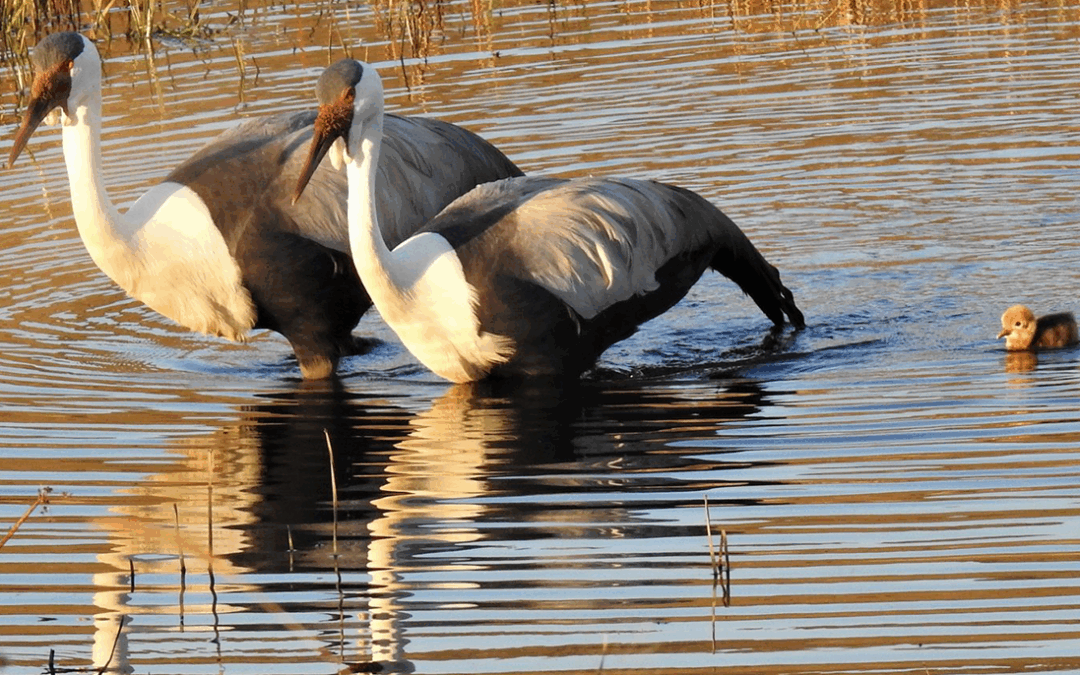
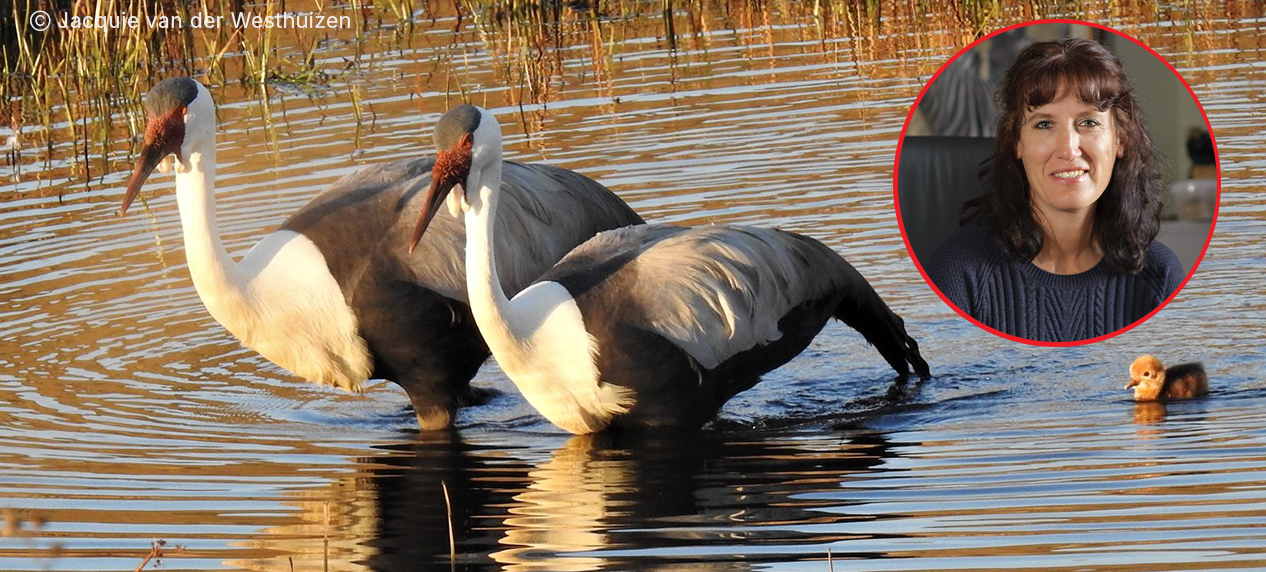
South Africa’s national bird, the iconic Blue Crane, has officially been uplisted from Near Threatened to Vulnerable in the newly published Regional Red Data Book 2025.

The uplisting of the Blue Crane to Vulnerable in South Africa means that it faces a high risk of extinction in the wild in the medium term.

This reflects growing concern about the species’ future. Although the Karoo boasts the highest number of Blue Cranes in South Africa, the species’ decline is of particular concern in the Overberg region of the Western Cape where Blue Cranes occur at higher densities than anywhere else in the country.

Data from the long-running citizen science project, Coordinated Avifaunal Roadcounts (CAR), shows that the Overberg has seen an alarming 44% decline in Blue Crane numbers between 2011 and 2025. These figures are especially concerning given that this region once had a thriving Blue Crane population.  Prior to the decline, CAR accounts indicated that Blue Crane numbers had increased by 261% between 1994 and 2010.

In the Karoo, CAR figures showed that populations had declined prior to 2017. But, this data is dated given that CAR counts are no longer done in this region. To remedy this, BirdlifeSA has formed a CAR working group with the Endangered Wildlife Trust/International Crane Foundation partnership (EWT/ICF), Overberg Crane Group (OCG) and FitzPatrick Institute to reinvigorate the project, particularly in areas like the Karoo.

The citizen science project is conducted twice annually. It relies on dedicated volunteers who count birds along fixed routes creating one of the most robust long-term datasets for large terrestrial birds in the country. This data underpins vital conservation decisions, including the recent uplisting of the Blue Crane.

Why are Blue Cranes declining?

The reasons behind the dramatic decline in the Overberg over the past 14 years are unclear, but research has revealed some clues.  Recent research by EWT Conservation Scientist, Dr Christie Craig, into the species’ long-term viability revealed that breeding success in the Overberg has halved since the last published study 30 years ago. On average, pairs now raise just 0.55 fledglings – far below what’s needed to sustain the population.

MSc student Michelle Bouwer has found that the key drivers of nest failure in the Overberg are disturbance and high temperatures. This is concerning given that climate change models predict significant drying and warming in the Western Cape. Fence entanglement also remains a threat to Blue Crane chicks that can’t fly yet.

Since 1991 the OCG, along with partners such as CapeNature and the EWT/ICF have driven Blue Crane conservation efforts in the Overberg, engaging actively with landowners to raise awareness and ensure that farming and cranes coexist peacefully. Similar programs were initiated in the Karoo and Drakensberg, under the auspices of the South African Crane Working Group. It is because of the success of these interventions that the Blue Crane population increased and was regionally downlisted to Near Threatened in 2015, based on data up until 2010.

Since the Blue Crane population was doing well, conservation efforts for Blue Cranes were reduced in the Western Cape, and Karoo. This can be attributed to the fact that conservation resources are limited, and work needs to be prioritised to species that need it the most.

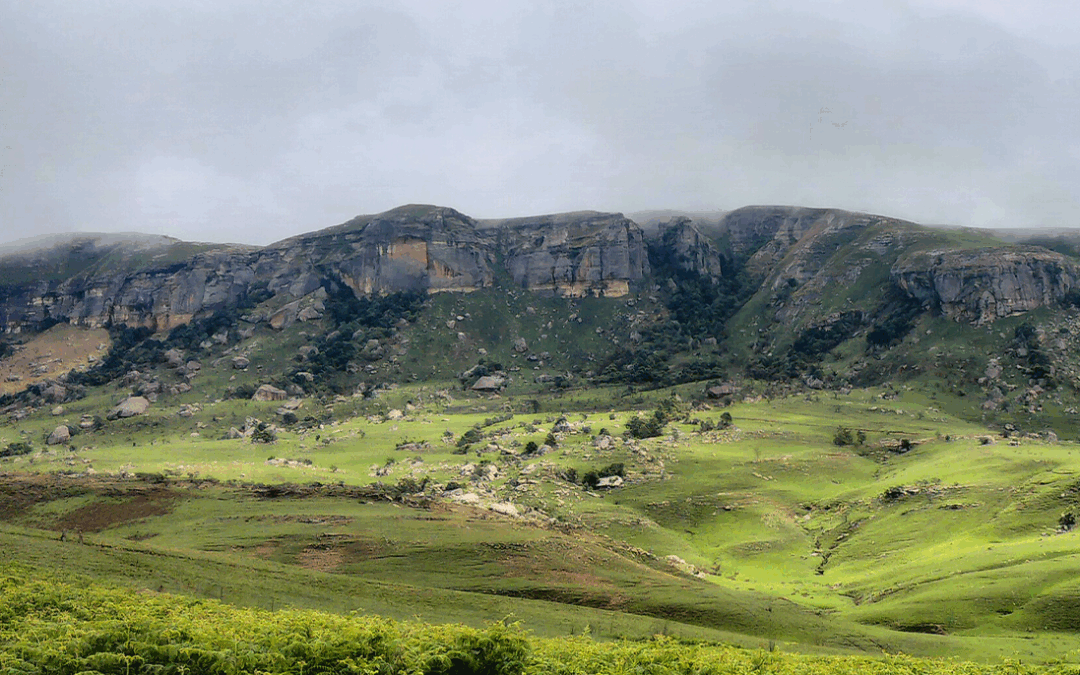
The Drakensberg region features all three crane species in South Africa—the Blue Crane, Wattled Crane and Grey Crowned Crane. Because of ongoing research and conservation efforts, all three species are increasing in KwaZulu-Natal.

The uplisting of Blue Cranes has demonstrated that this species is dependent on ongoing conservation efforts, especially as they occur almost entirely outside of protected areas.

Within the Overberg, Blue Cranes occur primarily in wheatlands. As new technologies are implemented, cultivars are developed and farming methods are adapted, Blue Crane populations are being affected.  Indications are that an increase in the practice of minimum till and increased canola production may have reduced the availability of suitable feeding and breeding areas for cranes. But, more research is needed to confirm this.

Blue Cranes have also become the secondary or unintended victims of poisoning in the Overberg and Swartland regions—often from substances intended for other species, such as geese or rodents. This further highlights the importance of conservation presence in the landscape to ensure that illegal poisonings don’t go undetected, and to make certain that farmers have support to deal with crop damage problems.

Research showing that power line collisions in the Overberg had decreased in the last 15 years may be attributed to concerted efforts through the EWT/Eskom partnership to mark power lines. Nonetheless, collision with power lines remains the main threat to Blue Cranes, and ongoing mitigation is necessary, especially as new power lines are added to connect renewable energy to the grid. This is particularly a threat in the Renewable Energy Development Zones of the Overberg and Karoo.

The vital role of farmers

In order to ensure conservation success collective action including landowners, farmers, local municipalities, researchers, NGOs and community members, is required. Encouragingly, many farmers have already embraced their role as custodians of these birds, showing that agricultural productivity and biodiversity conservation can go hand in hand. Their commitment forms the backbone of South Africa’s Blue Crane conservation efforts.

It is important to note that because Blue Cranes have a strong association with agriculture across their range in South Africa, a variety of conservation expertise is required to conserve the species.

With the help of the IUCN Conservation Planning Specialist Group, the EWT/ICF has coordinated a multi-stakeholder conservation planning process for Blue Crane. The stakeholders also include the OCG, CapeNature, Wool Growers Association, Kogelberg Biosphere Rehabilitation Centre, Ezemvelo KZN Wildlife, Eskom and Birdlife SA.

This conservation plan specifies several actions that will be implemented in the coming years. Among these is mitigating the impacts of power lines and poisoning, working with the agricultural sector to reduce threats, and protecting natural habitats that support Blue Cranes. We are confident that with coordinated, evidence-driven conservation action we can turn around the environmental status of the Blue Crane.

Rediscovering Lost Species: A Key to Conserving South Africa’s Biodiversity

Rediscovering Lost Species: A Key to Conserving South Africa’s Biodiversity

Rediscovering Lost Species: A Key to Conserving South Africa’s Biodiversity

Dr Oliver Cowan, Conservation Scientist – Endangered WIldlife Trust
 

Breviceps branchi | Branch’s Rain Frog


Rediscovering “Lost Species” may sound like a pursuit of idealistic adventurers or a scientific box-ticking exercise but, in reality, it is a vital part of conserving biodiversity in South Africa and giving it a fighting chance.

How do you protect something if you do not know it is still alive? South Africa is home to a rich array of biodiversity with approximately 67,000 animal species and over 20,000 plant species – many of which occur nowhere else on earth. These numbers are not static, however, and increase when new species are discovered and formally described, and decrease should a species be declared extinct. The International Union for the Conservation of Nature (IUCN), through its Red List of Threatened Species, confirms a species’ extinction only when there “is no reasonable doubt that the last individual has died“. This is determined after exhaustive surveys across the species’ known range have failed to find any individuals. But what of those species in limbo? Known as “Lost Species”, they are defined by the re:Wild organisation as species that have not been recorded for ten or more years.

Although South Africa is relatively well surveyed in comparison to many other parts of the world, species occurrence knowledge gaps still exist. This is generally attributable to either geographic reasons – remote and inaccessible areas are hard to get to – or due to a species’ behavioural ecology such that standard survey efforts are ineffective at recording the species. For example, soil-dwelling species can be challenging to find, the most energetic and swift species can be hard to capture or identify from a distance, and morphologically cryptic species can be difficult to separate from similar looking species.

But why is it important to fill these knowledge gaps? Accurate and up-to-date knowledge of where a species occurs is a key component of assessing a species’ risk of extinction which, in turn, informs land-use decision making which enhances the protection of species of conservation concern. For instance, effective spatial planning for protected area expansion and the delineation of critical or key biodiversity areas must account for the distribution of threatened species.

Similarly, legislation intended to protect species of conservation concern from further habitat loss relies heavily on this information. For example, in South Africa the scoping phase of an Environmental Impact Assessment must include a screening report that flags the presence of species of conservation concern within the proposed development footprint. However, the data which informs the screening report’s high sensitivity layer requires occurrence records from the past 20 years. It is thus entirely plausible that knowledge gaps in the form of poorly sampled regions, and/or a lack of robust extinction risk assessments, result in species slipping through the cracks, whereby they lose important habitat simply because we did not know that they were there.

Conservationists know that targeted, species-specific surveys are essential to rediscover Lost Species. Unfortunately, the financial resources, time and effort needed to support these surveys are not insignificant. Nevertheless, in recent years there has been an uptick in the rediscovery of Lost Species. These include the rediscovery of De Winton’s Golden Mole (Cryptochloris wintoni) in 2021 after it was last recorded in 1937; Pennington’s Blue Butterfly (Lepidochrysops penningtoni) – rediscovered in 2021, last recorded in 1968; the Orange-tailed Sandveld Lizard (Nucras aurantiaca) – rediscovered in 2022, last recorded in 2005; Branch’s Rain Frog (Breviceps branchii) – rediscovered in 2023, last recorded in 2008; and the Blyde Rondawel Flat Gecko (Afroedura rondavelica) – rediscovered in 2025 after 33 years.

The Orange-tailed Sandveld Lizard is a prime example of the importance of targeted surveys. This charismatic reptile had miraculously only been captured once, in 2005 near Lambert’s Bay, and subsequently incidentally photographed on a camera trap in 2011. The habitat in which the species is known to occur has undergone substantial historical transformations, mostly due to agriculture, and in more recent years, a slew of mining developments have occurred along the West Coast. Indeed, in 2022, a right to prospect for phosphate ore was granted that encompassed both known localities of the lizard. However, due to the paucity of information on this Lost Species, it was categorised as Data Deficient. The animal’s rediscovery, and the data gathered during the week-long survey, will see the species uplisted to Endangered and it will need to be accounted for during future development proposals.

Although the aforementioned species were rediscovered thanks to expert-led surveys and supported by funding awarded to conservation NGOs, the potential role of citizen scientists should not be underestimated. With just a smartphone, apps such as iNaturalist allow anyone to upload photos and locations of species they encounter to an online database where taxonomic experts or fellow citizen scientists can identify them. In recent years, a hiker posted a picture of the Cream-spotted Mountain Snake (Montaspis gilvomaculata) from the Drakensberg, 22 years after it was last recorded, and two records of the Long-tailed Forest Shrew (Myosorex longicaudatus) were verified after three decades with no sightings.

Not all Lost Species end up being found. Despite a number of targeted surveys to rediscover Eastwood’s Long-tailed Seps (Tetradactylus eastwoodae), the species has not been recorded for over 90 years and is now officially extinct. This is a stark reminder of the pressures facing biodiversity in South Africa. The continued degradation and loss of natural habitat, combined with a rapidly changing climate will undoubtedly see an upsurge in extinctions in the coming decades. Nevertheless, directing the limited resources at our disposal to best conserve our country’s biodiversity requires robust and up-to-date information on species, and the importance of rediscovering Lost Species should not be overlooked. Rediscovering these species is not just about scientific curiosity—it is about ensuring they remain part of our shared natural heritage and whether through structured surveys, bioblitzes, or a well-timed iNaturalist post, we all have a role to play.


Greater awareness and action required to address desertification and restore habitats

Greater awareness and action required to address desertification and restore habitats

Greater awareness and action required to address desertification and restore habitats

By Zanné Brink (Drylands Strategic Conservation Landscape Manager)
 

the Knersvlakte landscape

As a member of the Endangered Wildlife Trust’s Drylands Conservation Programme, I am confronted daily by the harshness of the arid regions in Western and Northern Cape and the vulnerability of the communities that live in this landscape.

It is during my interactions with communities and landowners that I often hear the words: “The land has been transformed”, or “this is degraded land”. 

But what exactly does this mean? 

Degradation, as a noun, refers to destruction or disintegration. When referring to land degradation, we speak to the process where land becomes less healthy and productive, or where the quality of the soil and environment has been reduced, due to a combination of factors, be these human activities, or destruction caused by natural disasters. 

Landscapes such as the Succulent Karoo, the Knersvlakte or the Kalahari regions are South Africa’s drylands. Each landscape holds a special beauty, hides a vast array of plant and animal species, and is a region where the unique and ancient culture of the people is expressed through their love of the land.

South Africa’s second National Action Programme to Combat Desertification, Land Degradation and the Effects of Drought states that desertification affects approximately 70% of drylands, and 73% of Africa’s agricultural lands are degraded.  Our country’s drylands cover approximately 400,000km2 – a landscape characterised by water scarcity, low and erratic rainfall, heatwaves, and occasional floods.

The United Nations Environment Programme (UNEP) states that about 91% of South Africa’s landscape is drylands, making the country susceptible to desertification. This creates several environmental challenges for South Africa in terms of food security, poverty and growing urbanisation, and is intricately linked to climate change and biodiversity loss. 

The Drylands of the northwestern part of the Western Cape and the Northern Cape are characterised by limited natural water resources and large open areas spotted with quiver trees and acacias, and where plants grow relatively low to the ground. The average annual rainfall in the landscape is between 50 to 300 mm per annum, making the arid regions very sensitive to climate variability, seriously impacting endemic plants and animals that have adapted to this environment. For the animals, survival here is dependent on evading drought or harsh periods through migration or endurance. For the plants, it is not only about durability, but also about soil, water and vegetation management.  This is a region that is constantly exposed to extreme weather and climatic occurrences, such as droughts and heatwaves, making it more vulnerable to rapid and devastating environmental change and land degradation.

In arid regions, even mismanagement that occurred 50 years ago remains visible in today’s landscape. This is a region where farming communities and town’s people speak openly about the effects of land degradation and the effects of climate change on their lives and the land, and the need to restore naturally degraded land and areas destroyed by man-made activities. They understand their exposure because of their dependence on the environment and natural resources to survive.

Natural scarring of the land caused by termites


But, it is not all doom and gloom. In this area, community-led conservation actions in collaboration with NGOs like the EWT have become the norm. Willing landowners and land custodians are working towards rehabilitation and changing historical farming practices to ensure the continued functioning of ecosystems. This restores fragile areas alongside the landscape’s cultural heritage.

Through the support of the Table Mountain Fund and the WWF Leslie Hill Succulent Karoo Fund we have been able to focus on biodiversity in areas previously overlooked, and raise awareness about the work being done in these areas as people learn more about the impact of the environment and climate change on their lives.  Through this work we are able to collaborate with the private sector, landowners, government and other NGOs to work towards adaptive management and, to a large degree, conservation through various Biodiversity Stewardship initiatives.

Awareness of endemic species allows greater understanding of the threats to species, habitats and ecosystems, resulting in a willingness to adapt management styles to ensure habitats are conserved. This is evident in areas where farmers have incorporated conservation into their management styles focusing much of their attention on how interconnected a community is with its land.  Through our work with the farming community and the community at large, the EWT has been able to assist in ensuring that unique areas and diverse endemic species are conserved and that the youth are educated about the fragility of the environment.

Best practice management is not an all-round solution for this landscape given the environmental and biological diversity of arid regions.  Examples in this landscape vary.  In some cases, minor changes to farming regimes to incorporate eco-tourism into their operations have shown success, while other properties are only suitable for farming. On the other hand, others may qualify as conservancies or protected areas.

Because a large part of South Africa is classified as semi-arid and will be severely affected by climate change and unsustainable developments and practices, greater attention needs to be given to the increased threats being faced by the Drylands. This is a landscape where the concept ‘survival of the fittest’ rings true—an area where the survival of Drylands species and ecosystems requires urgent and continuous collaborative conservation efforts to mitigate the impacts of drought, desertification and degradation.

The EWT’s efforts in the Drylands Strategic Conservation Landscape aim to promote, sustain, secure and/or restore the ecological integrity of unique Drylands biodiversity by working together with land custodians, communities and other stakeholders to conserve the habitats in which threatened, elusive and endemic species occur.  Our aim is to protect, conserve and restore our greatest heritage – the land. 

Landscape restoration methods to mitigate wind erosion, avoiding further degradation


Fighting for South Africa’s Drylands: Conservation Amid Challenges

Fighting for South Africa’s Drylands: Conservation Amid Challenges

Fighting for South Africa’s Drylands: Conservation Amid Challenges

By Eleanor Momberg (EWT Communications Manager) and Zanné Brink (Drylands Strategic Conservation Landscape manager)
 

Driving north from Cape Town towards Namibia you enter a landscape that looks dry, inhospitable and unforgiving—an area known as the Knersvlakte and Namaqualand, or the Drylands.

This is a sparsely populated region of South Africa, but a landscape that hides an extensive biodiversity and a high number of endemic species.   It is a landscape where drought and low rainfall are part of the people’s lives; an area pock-marked by the destruction of natural habitats by mining along the coast and inland.

The far reaches of the Western Cape bordering on the Northern Cape, stretching from coastal towns such as Doringbaai to north of  Brand-se-Baai inland to areas like Gamoep and Kliprand, you will find  numerous mines. This includes the Steenkampskraal Monazite Mine, an important producer of rare earth minerals, and uranium, as well as South Africa’s Radioactive Waste Disposal Facility at Vaalputs.  Many mines have closed over the years with little rehabilitation, leaving damaged habitats in the landscapes.

It is here that the Endangered Wildlife Trust’s Drylands Strategic Landscape is working closely with farmers, landowners and communities to identify critical biodiversity areas that need to be protected while addressing the existing scars in the landscape due to historical and current prospecting and mining activities.  It is vital to ensure the long-term conservation of the Succulent Karoo, as any scarring or damage to the top layer of soil will result in a form of erosion.   Through continued research and support, the EWT aims to provide landowners with scientifically-based evidence of the unique and endemic species found on their properties.  As the drylands have very little documented information on the unique biota, it will ensure further robust specialist studies can be conducted if prospecting and/or mining applications are encountered. Continued work in the arid lands through rehabilitation will ensure more site specific information is available to implement arid land rehabilitation, and provide accurate rehabilitation costs to be considered.  Because prospecting applications are increasing, it is important to ensure that landowners and land custodians understand the value of the biodiversity found on their properties, as this knowledge could inform the outcome of a prospecting or mining application.

Namaqualand and the Drylands, are landscapes of united communities encompassing people living in small towns, on farms, in shelters and isolated homesteads, all interdependent on each other for continued survival.  The community is dedicated to conserving and maintaining the veld, while also restoring degraded lands because of the dependence on the veld for survival alongside their relationship with the endemic species found here. Landowners understand that decisions made today will have an impact for 50 to 100 years, and that they must farm smart to ensure a life for future generations.

Despite numerous challenges related to the approval of prospecting and mining rights on private properties, farmers in the drylands are adamant that they will not be forgotten or overlooked.

Local farmer Mari Rossouw believes their community is often overlooked because outsiders often question why anyone would want to live in this “unforgiving landscape”. Often applicants for mineral rights further underestimate the local knowledge and the power of the community.

Kliprand farmer Sarel Visser feels the area is being exploited because of its low population density, the assumption that there will be no fight to protect arid lands.  He points out that mines in the landscape have a 10 to 15-year lifespan and are thus not viable.   Farming, tourism and conservation are the future, he argues.

“They are destroying our entire ecosystem and destroying the lives of the people in a community that lives in constant uncertainty. We are already the last generation able to farm with sheep in this area,” he says.


What are the challenges?

Namaqualand and the Knersvlakte are drought-prone, with an annual rainfall of between 150mm and 300mm.

It is a landscape bent under the pressure of prospecting and the threat of further mining that will permanently scar the landscape. Communities living here are not willing to sit back and accept prospecting applications that are either factually incorrect or badly translated into the predominant language spoken in the region—Afrikaans. The community has had to upskill to ensure applications were commented on as part of the public participation process, and then how to appeal mining applications on their farms. Further challenges include prospecting applications being approved despite containing incorrect geographical and environmental information.

Among the community’s concerns is the fact that the Matzikama municipality’s 150km coastline, bar one kilometre, is being mined, or has mining rights allocated; a lack of rehabilitation and restoration of historical mining areas; a lack of adequate rehabilitation funds built into prospecting applications; the removal/destruction of topsoil; and not being able to sustain restoration. Another concern is the lack of financial means available to landowners to create and register a protected area on their properties.

Since 2019, there have been 54 prospecting applications on properties owned by 20 farmers in the Kliprand area alone.  While all have been denied, and three are presently under appeal,  three new applications were received in mid-June 2025.

Landowners become emotional when they speak about how the soil and the micro-organisms found in topsoil die when this is removed.  In an area where plant growth is already vulnerable, the veld never fully recovers as the topsoil becomes sterile when removed.

Chair of the Knersvlakte Conservancy Kobus Visser says that if you drive over or step on a plant you can kill it.  The damage caused to certain plant species is unique to this environment because of its complexity. Rehabilitation can take up to 100 years “or never”.

Seventh generation farmer Christiaan Pool says his farm, on which Vaalputs is situated, is a clear example of this.  Areas damaged in 1974 have still not been restored to their former state.

Sarel says an area last ploughed by his father in 1967 has not fully recovered either, while Magarieta Coetzee says an area on their farm damaged by historical over-grazing more than 60 years ago has also not returned to its original state.

Drought and damaged soil, they say, also affect the feeding value of the Kraalbos (Galenia africana), which has a higher nutritional value for sheep than lucerne.

Farmers, landowners and community members gather together with the EWT to discuss solutions to the challenges facing the Drylands


Solving land degradation

Mari and a team of more than 60 local community members have been working closely with several mines and a State-Owned Enterprise in the last 24 years to rehabilitate degraded areas on the West Coast.

They have transplanted more than 4.5 million plants in degraded areas, in many instances augmenting the work being done by some of the mines. Rehabilitation costs are astronomical.

Once the sand has been stabilised, seeds of cultivars found in that particular area is transplanted, invasive alien species are controlled and rows of netting is installed for wind mitigation stabilisation.

Among these are succulents, a vegetation type largely threatened by illegal trade.  Saving these species is proving to be more difficult than previously thought “because we struggle to get the soil to a point where these plants will be able to survive,” says Mari.

They plant cultivars with strong rooting systems such as the Pelargonium, Wag ‘n Bietjie, Buchu, Papierblom, Pendoring (Pin Thorn) and Kapokbos between the rains in the winter to ensure they grow.  This, in turn, attracts birds and other small mammal species back to the area.

For Mari it is important that the aesthetic value of the environment “must remain for when we are not here anymore, in 30 years”.

Sarel believes that the longer-term employment and economic solution for this region is conservation, tourism and other land rehabilitation projects.

Johan Truter and Christiaan Pool add that conservation is the future, but that they don’t have sufficient funding to have their farms declared protected areas.   This is despite their properties already meeting the criteria for Biodiversity Stewardship in terms of vegetation units and the region’s unique biodiversity.

This community is calling for a moratorium on all prospecting in their landscape so that the EWT and other researchers can undertake a proper study of all the species found here.  In the past two years the De Winton’s Golden Mole, for instance, was rediscovered after an absence of 87 years.  The area is home to the Western (“Namaqualand”) tent tortoise (Psammobates tentorius trimeni), Speckled Dwarf Tortoise (Chersobius signatus)—two of the threatened reptile species in South Africa, the Endangered Black Harriers (Circus maurus), and a variety of Threatened and Endemic succulents and invertebrates.

It is also where the EWT is helping communities and landowners to explore alternative income streams to take the pressure off the natural resource base in terms of agricultural production. This includes the introduction of ecotourism activities that not only create jobs, but bring much-needed income to the region. In 2020 and 2024, we officially launched mountain biking,  trail running and the Via Ferrata routes on Papkuilsfontein, near Nieuwoudtville. These trails help diversify farming income through adventure tourism and balances nature-based income generation and farming activities.

Kobus Visser says to succeed as conservancies or protected areas, the Namaqua and Knersvlakte communities need to know what is on their land, thus the importance of working with NGOs such as the EWT.  It is through science and knowledge that success will be achieved, he says, pointing out that were it not for researchers such as Zanné Brink, or Renier Basson of the EWT they would not know that certain tortoise or insect species live on their farms.

He adds that the farmers have learned to live with global warming, adapting their farming practices to ensure the veld remains resilient to climate change.  The Knersvlakte Conservancy, he says, is an area that showcases this—the will of the community to establish something to ensure like-minded conservation outcomes.

“We have all our plans in place and are busy with a proposal to open an office before the end of the year. Then will be able to concentrate on physical projects to increase our knowledge, like insect surveys with the EWT,” he says.

Zanné, the EWTs Drylands Strategic Landscape manager, says continued efforts are ensured through working with provincial authorities to align provincial and national biodiversity legislation and regulations that would further ensure the safeguarding and extension of protected areas and informing Environmental Impact Assessment (EIA) practices.

“To establish a conservancy, other effective area-based conservation measures (OECMs) or a protected area, it starts with the land and the will to ensure the long-term protection of the environment. Within Namaqualand and the Knersvlakte, the community is ready for this opportunity that cannot be lost,” she says.