Join the EWT’s Giving Tuesday Online Auction. 1-3 December 2025. 

JOIN THE EWT’S GIVING TUESDAY ONLINE AUCTION.
1-3 DECEMBER 2025.

Blue Crane Conservation: Protecting South Africa’s National Bird

Blue Crane Conservation: Protecting South Africa’s National Bird

Blue Crane Conservation: Protecting South Africa’s National Bird

By Dr Christie Craig, Conservation Scientist
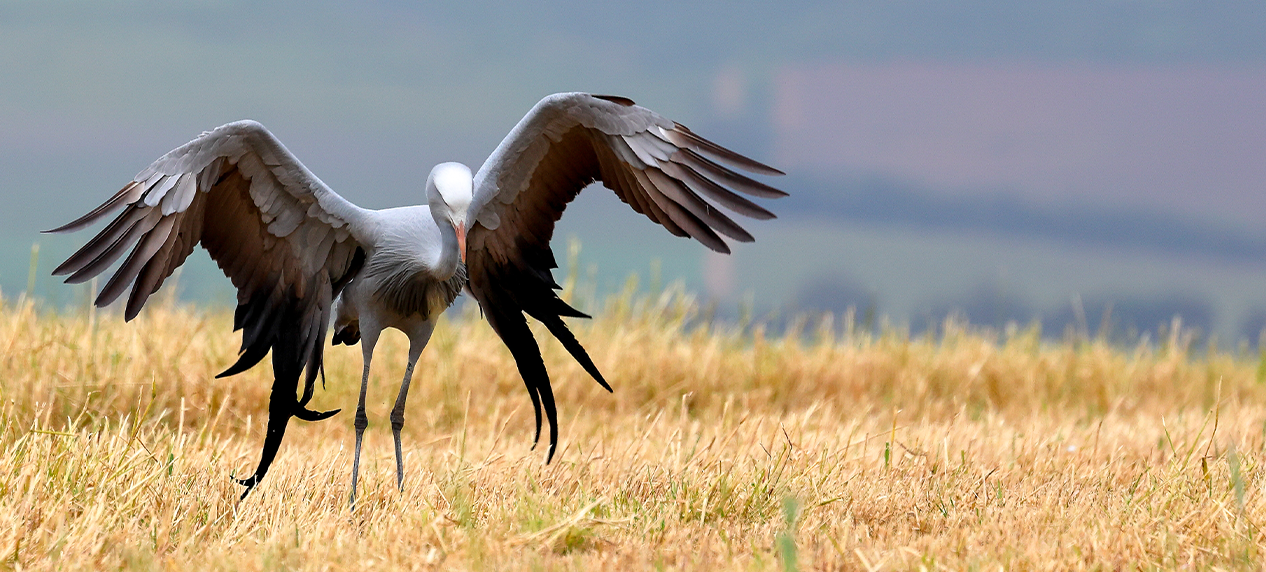


Blue Cranes in Western Cape farmlands as part of conservation efforts

Image Credit: Pieter Botha


September is Heritage Month in South Africa, a time when we focus not only on our cultural, but also natural heritage, most notably our National Bird, the Blue Crane.

To ensure the continued survival of this species, and its growth in areas where it has shown decline in recent years, the Endangered Wildlife Trust (EWT), through our partnership with the International Crane Foundation (ICF), has increased its efforts to conserve the Blue Crane, with a strong focus on the Western Cape and Karoo.

Decades of successful conservation interventions have yielded positive results in KwaZulu-Natal and the Northern Cape, and attention is now being directed to populations in the Western Cape, with the same positive outcomes being targeted.

Blue Cranes are endemic to South Africa, with a small population found in Namibia, making these the world’s most range-restricted crane. There are less than 30,000 of these birds left in the world.

As part of our Heritage Month celebrations, and to mark Heritage Day on 24 September,  the EWT/International Crane Foundation partnership is expanding its existing activities to safeguard the future of Blue Crane populations in the Western Cape, by intensifying our focus on habitat restoration with communities and farmers, and addressing threats posed by energy infrastructure.

The Blue Crane (Anthropoides paradiseus) is an important element of South Africa’s natural heritage, serving as a flagship for conservation in agricultural landscapes, from the rolling grasslands of KwaZulu-Natal to the expansive plains of the Karoo, to the patchwork of crops and renosterveld in the Western Cape. 

Since 1994, the EWT/International Crane Foundation partnership has been committed to Blue Crane conservation in South Africa, running projects in the grasslands, Karoo and Western Cape. Over the last 10 years, the majority of our applied crane conservation work has focused on the Drakensberg region, where Blue Cranes have historically faced steep declines. With consistent conservation action, including natural habitat protection, powerline impact mitigation and community projects, Blue Crane numbers are now slowly increasing, testimony to the success of our conservation activities.

Until 2010, Blue Crane numbers were increasing and healthy in the Karoo and Western Cape. However, a recent PhD study supported by the EWT/ICF Partnership reveals that numbers have subsequently been declining in these areas, especially in the Overberg ,where counts have dropped by 44% between 2011 and 2025. For more info on the reasons for this decline, see our June press release.

This has sparked the need for renewed conservation effort underpinned by a multi-stakeholder conservation plan, which was developed with the help of the Conservation Planning Specialist Group, gathering inputs from NGO, industry, landowners, communities and government.   


The  conservation plan comprises four parts:

1: Habitat protection.

The partnership will continue its commitment to Blue Crane conservation in the Drakensberg through ongoing habitat protection and will expand this work from the Western Cape into the Karoo. 

2:  Addressing energy infrastructure impacts.

Because Blue Cranes are particularly susceptible to colliding with energy infrastructure, the relationship with energy suppliers is being expanded to address this issue through powerline mitigation and improved infrastructure routing.

3:  Crane Friendly Agriculture

Engagement with the agricultural industry is increasing to co-create solutions that allow Blue Cranes and other species using the agricultural matrix to thrive alongside agricultural production. Blue Cranes are especially dependent on agriculture in the Western Cape, but also use agricultural habitats in the Karoo and grasslands. Work in the agricultural sector will focus on addressing threats such as poisoning and breeding disturbance, as well as helping farmers address crop damage issues.

4:  Research and Monitoring:

This is an essential underpinning of any good evidence-driven conservation project. Through monitoring Crane numbers and breeding success, we will be able to gauge our impact. Without research, we wouldn’t have known that Blue Cranes’ numbers were declining or why. Through continued research, we will keep abreast of changes in the Blue Crane population and in the landscapes that they depend on.

The implementation of this four-pronged approach creates certainty for the EWT/ICF that we can reverse the decline in the Blue Cranes populations in the Karoo and Western Cape, as we have done in the Drakensberg region. 

The EWT remains committed through the implementation of its Future Fit Strategy to working with partners throughout Africa to ensure the survival of crane species, particularly the Blue Crane. Grey Crowned Crane and Wattled Cranes.


**  The EWT/ICF projects are generously supported by the Leiden Conservation Foundation, Eskom, Hall Johnson Foundation, Indwe Risk services, Jacksonville Zoo and Gardens Zoo Neuwied, Safari West, Nashville Zoo and the Paul King Foundation
IVAD 2025: Protecting Vultures, Nature’s Clean-Up Crew

IVAD 2025: Protecting Vultures, Nature’s Clean-Up Crew

IVAD 2025: Protecting Vultures, Nature’s Clean-Up Crew

By John Davies, manager of the Birds of Prey Unit


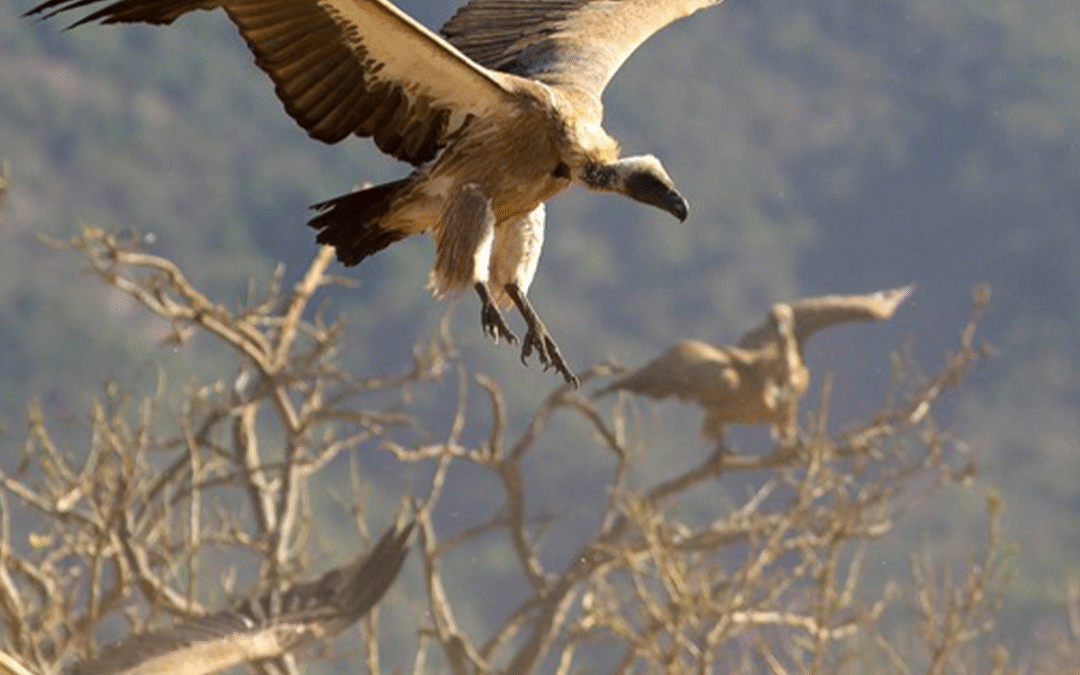
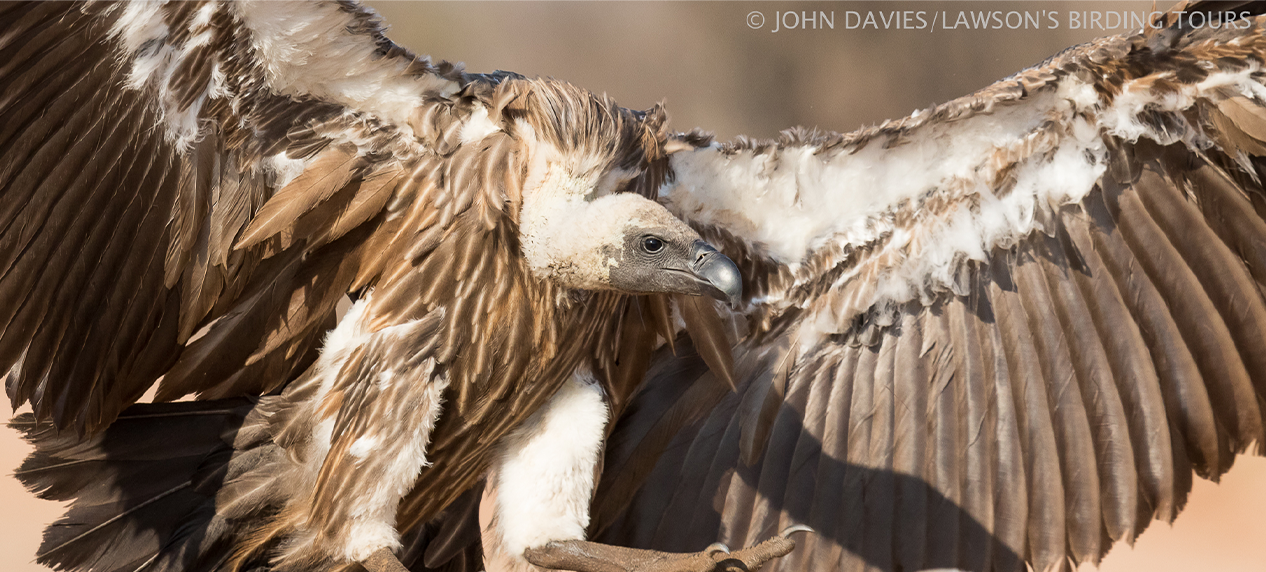
Vulture in flight over African savannah


The protection of vultures is critical for the role they play in our environment, as well as the irreplaceable ecosystem services they provide for all species.

Without vultures, Africa faces a silent crisis. These birds are nature’s most efficient clean-up crew, preventing the spread of deadly diseases that threaten wildlife, livestock, and people. Yet across the continent, vulture populations are collapsing at unprecedented rates, mainly as a result of intentional and unintentional poisoning, as well as the impacts of energy infrastructure. Species that are often thought of as widespread, such as the White-backed Vulture, have undergone population declines of between 63 – 89% over the last three generations, with much of this change having gone mostly unnoticed.

Earlier this month, the Endangered Wildlife Trust (EWT) joined organisations across the globe to mark  International Vulture Awareness Day (IVAD); a day initiated by the EWT in South Africa and the United Kingdom, and which has now grown into a global movement, shining a spotlight on these critically important, yet often misunderstood, birds. The purpose of IVAD is to raise crucial awareness about the plight of vultures and the urgent need to conserve them.

As nature’s clean-up crew, they consume carcasses quickly and efficiently, reducing the spread of deadly diseases to both wildlife and people. The Asian Vulture Crisis, spanning the 1980s and 1990s, saw declines of over 99% in the population of vultures in this landscape. Subsequent research has shown that the loss of these birds resulted in a four percent increase in total human mortality rates. Today, it serves as a warning of what may happen should Africa follow a similar path. Protecting vultures is, therefore, a matter of protecting biodiversity, ecosystems, and people.


The threats vultures face

Vultures are among the most threatened groups of birds in the world. Across Africa, their numbers are declining at alarming rates, driven largely by a range of threats. Although the impact of each of these is variable, wildlife poisoning consistently stands out as the most significant. Beyond the impacts of wildlife poisoning and energy infrastructure, additional contributing factors include:

Vultures are also threatened by: 
  • Persecution due to negative perceptions and belief-based use.
  • Loss of habitat as natural landscapes shrink under pressure from human expansion.
  • Disturbance of nest sites because of increased activity in protected areas.
  • Drowning in unsafe water points such as farm reservoirs.


Without urgent intervention, Africa risks losing these vital species within our lifetimes.

What the EWT is doing

The EWT is at the forefront of efforts to secure the future of vultures and other birds of prey in southern Africa. Our work spans a variety of focal areas, and during the last year has included:

  • Rapid response to poisoning incidents, where, with the assistance of our partner organisation, Moholoholo Wildlife Rehabilitation Centre, we have saved 104 vultures from near-certain death.
  • Through the application of technology, we have detected 20 significant wildlife poisoning incidents that otherwise may have gone unnoticed, as well as 11 poisoned bait sources that were found early enough to not result in further mortality of wildlife.
  • We’ve investigated and mitigated over 80 incidents on energy infrastructure, working towards these sites not remaining a threat within the landscape.
  • Monitoring and research to better understand vulture movements, breeding, and survival.
  • Proactively working towards improved policy and guidelines for vulture conservation, including the development of standard operating procedures for poisoning response, the treatment protocols of poisoned wildlife, and contributing to national implementation of conservation action through the National Vulture Task Force.

In the Karoo and Kalahari, we have worked with farmers to create what is known as Vulture Safe Zones.  The Karoo Vulture Safe Zone, which came into being in 2016 and includes three national parks and a protected environment, presently spans more than 700,000 ha, while the Kalahari Vulture Safe Zone now spans more than 271 204 ha.

However, the conservation of these birds is not something that should be looked at as something done by organisations in isolation. Everyone has a role to play in protecting vultures.

To join the EWT in ensuring a secure future for all vultures, one of the steps members of the public can take is to report any suspected poisoning incidents, injured birds, or wildlife crime to local authorities such as South African National Parks (SANParks), provincial nature conservation authorities or the EWT immediately.

By embarking on small but meaningful actions, members of the public can help ensure that vultures are celebrated, protected, and given the chance to thrive for generations to come.

The EWT calls on the global community to stand with us in celebrating and protecting vultures. Together, we can ensure that these remarkable birds continue to soar across our skies for generations to come.


** The EWT would like to that the Briandez Legacy Trust, Plum Foundation, Charl van der Merwe Charitable Trust, Blue Sky Society, Investec, Mohamed bin Zayed Species Conservation Fund and Global Affairs Canada for your ongoing support of our Vulture projects.

Hooded Vulture Conservation in Benin: New Study on Local Perceptions

Hooded Vulture Conservation in Benin: New Study on Local Perceptions

Hooded Vulture Conservation in Benin: New Study on Local Perceptions

By Dr Lindy Thompson, Birds of Prey Unit


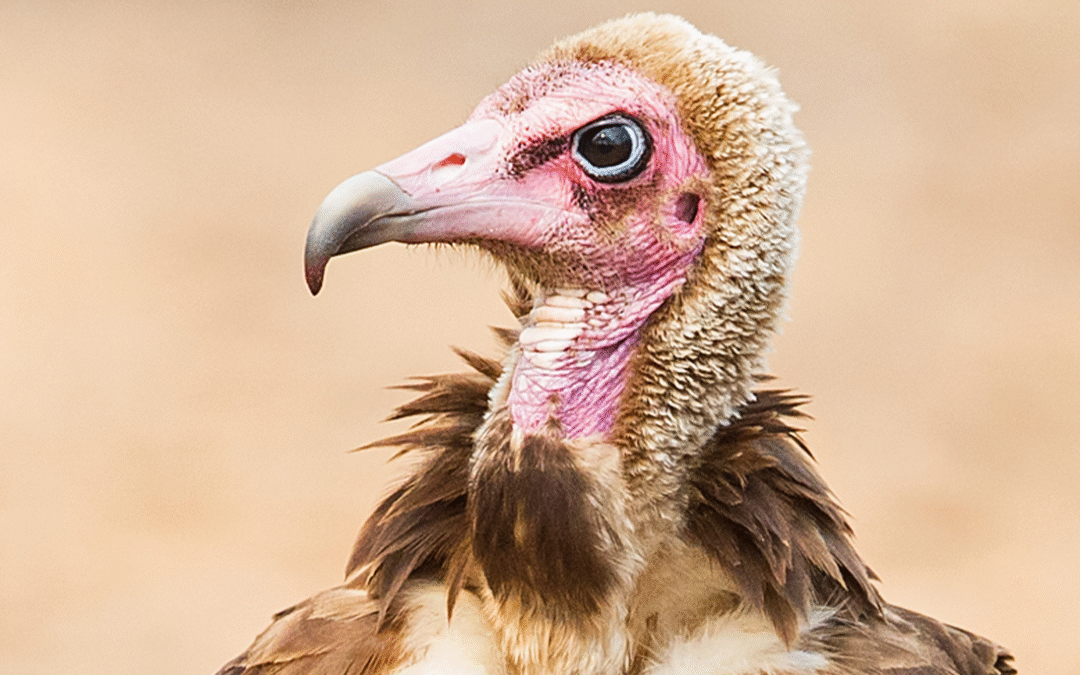
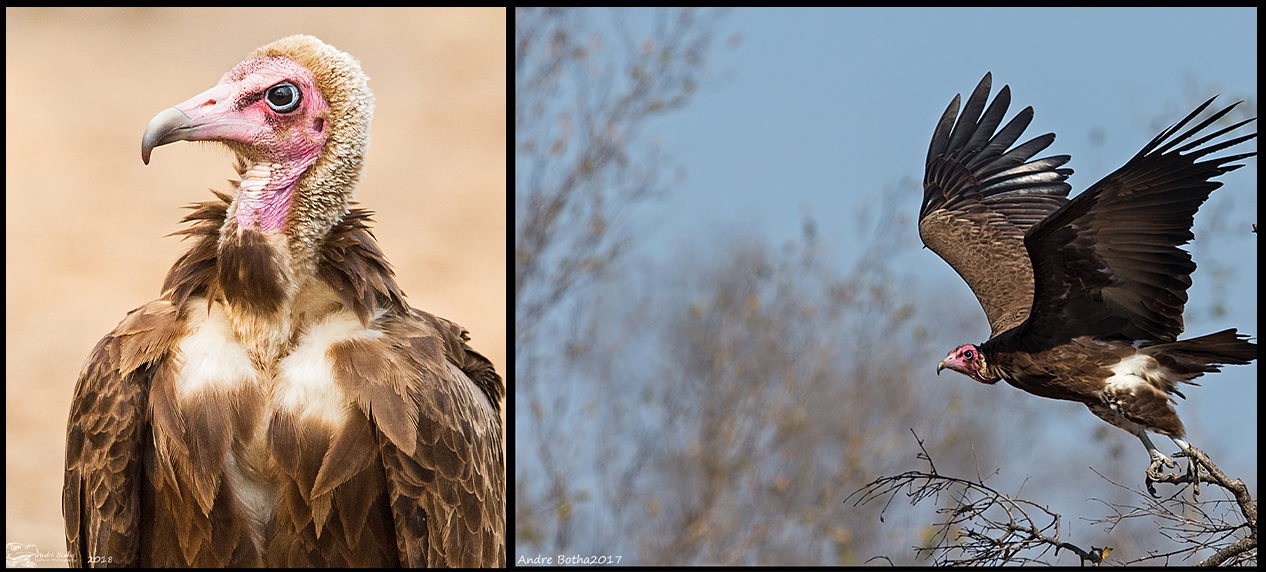
Hooded Vulture perched on a branch in Benin, West Africa


All across Africa, vulture populations are struggling because of various threats caused by people. One of Africa’s most widely distributed vulture species is the Hooded Vulture. This species is found in many countries in South, East and West Africa, although its stronghold is in West Africa.

Sadly, numbers of these birds are declining, mainly because of habitat loss, and because people poison them to get body parts for use in African traditional medicine. We wanted to better understand people’s cultural values and practices relating to Hooded Vultures, and we chose to do this in Benin, a small country in West Africa, where not much is known about people’s attitudes towards Hooded Vultures.

We were especially interested in people living in areas surrounding national parks, where they would presumably have more frequent interactions with vultures, and easier access to the birds. Our hope was that by learning about people’s perceptions, we can better understand their behaviour, which in turn can help to inform conservation policies.

Fidèle Ezechiel Hounnouvi interviewed 450 people living near three protected areas in Benin. He asked them questions about whether they get any benefits from having vultures around, and what are their beliefs about vultures. He also asked questions about why vulture body parts are used, and what might be causing the drop in numbers of vultures.

Fidèle worked with a translator, so the interviews could be done in the local language (Bariba). His results showed that most people (80%) had seen vultures recently, and the most commonly seen vulture species was the Hooded Vultures (with 48% of all vulture sightings), although people also saw White-backed, Lappet-faced and Ruppell’s Vultures. There was a big difference in how men and women viewed vultures; men were more aware of vultures, and more positive about vultures’ roles in carcass disposal and locating missing livestock. Most people (60%) associated vultures with superstition and witchcraft, and 70% had used vulture body parts for medicinal and spiritual purposes. Intentional poisoning was reported as the main cause of vulture population declines. Most people said vultures were valuable, because they remove carcasses from the environment, and they assist farmers with finding lost livestock.

When Fidèle asked people in Benin about conservation measures, they suggested various ways of protecting Hooded Vultures. These included protecting and restoring nesting habitat, raising awareness about threats to vultures, having ‘eco-guards’ to safeguard vulture nests, captive-breeding vultures, and enforcing strict penalties on people who poison them. Younger adults (aged 18–30) were much more supportive of conservation efforts than older adults (over 30), and this gives us hope for the future.

This study was funded by a Rufford Foundation Small Grant, and it was published in the Journal of Ethnobiology and Ethnomedicine. If you would like to read the full article, you can access it here.


** Fidèle Ezechiel Hounnouvi (Naben NGO naben.org), Stanislas Mahussi Gandaho and Jémima Lydie Obandza-Ayessa also contributed to this article.

A quick Cheetah relocation becomes an all-day exercise

A quick Cheetah relocation becomes an all-day exercise

A quick Cheetah relocation becomes an all-day exercise

By Olivia Sievert – Project Coordinator: Cheetah Conservation Project


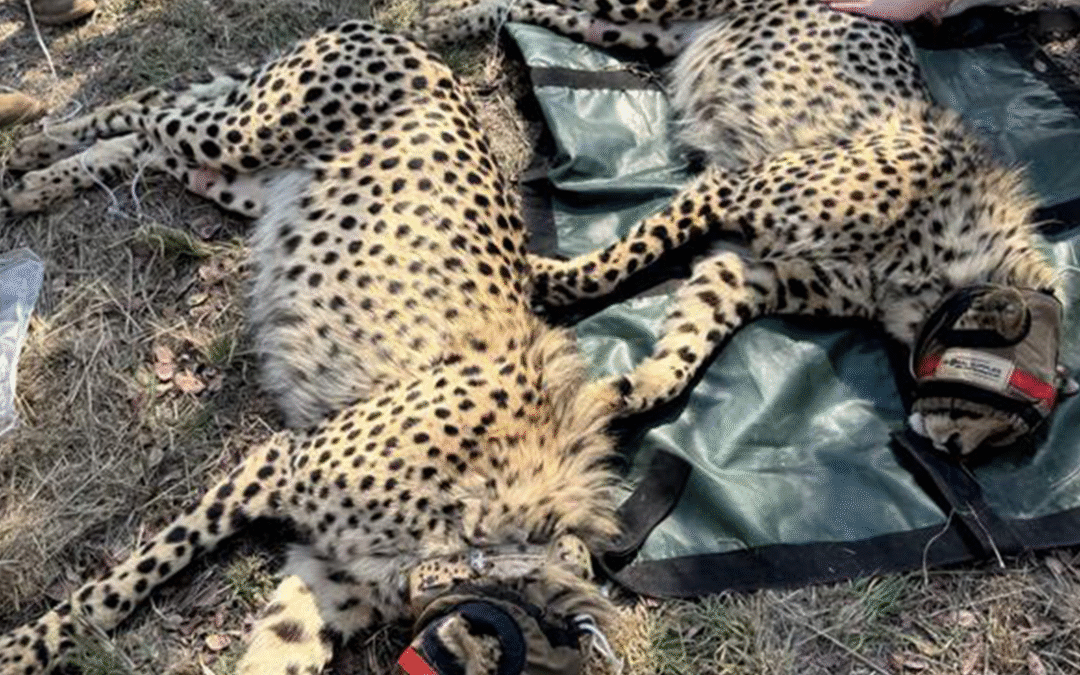
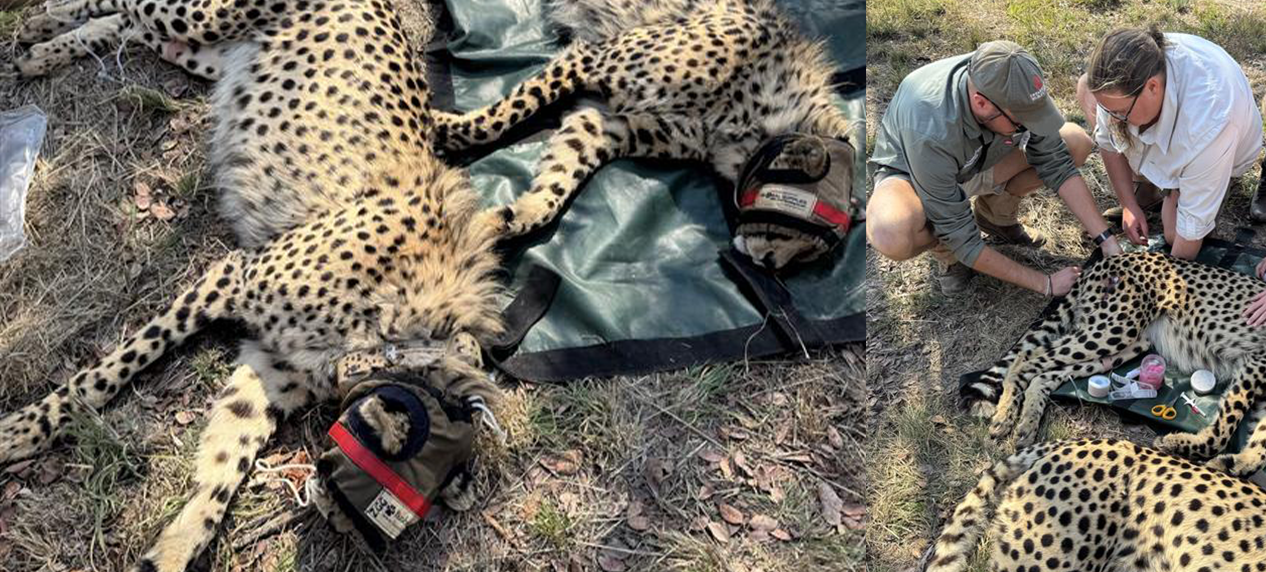
Cheetahs being relocated to Mabula Game Reserve

As a Field Officer, you learn to expect the unexpected! What was meant to be a quick two-hour cheetah relocation from one reserve to another turned into a full-day adventure, thanks to some persistent car troubles.

Now, most field staff are well-versed in the art of vehicle recovery and minor repairs, but these days I spend more time on tar roads than off-road tracks and, given my dislike for vehicle mechanics I have forgotten most of what I had once known. So imagine my surprise when, with two very awake cheetahs in the back, a reserve staff member waved me down to point out that part of the vehicle was hanging off where it really shouldn’t be! Thankfully, the brilliant Shambala team immediately had a bush mechanic’s fix in mind: “We’ll wire it together, just drive carefully”.

Still, before setting off, I had to send a few long voice notes to EWT Senior Conservation Manager Lourens Leeuwner, my ever-patient vehicle guru, for the all-important “yes, you’ll be fine” reassurance. Then, I was  off again. With any relocation it is key to minimise the time the cheetah are in crates, especially with the heat we were experiencing that day, so this was a huge relief.

However, just when I thought we were in the clear at Mabula Game Reserve, the cheetah vehicle gave one last surprise: the back refused to open! Cue a new plan involving teamwork, heavy lifting, and careful crate manoeuvring. At last, the cheetahs were safely released, tucking into an impala meal as if nothing had happened.

After a quick check over from the Mabula mechanic, I limped back into Johannesburg, five hours later than expected, but grateful, safe, and reminded once again that fieldwork is all about teamwork. Huge thanks to the Shambala and Mabula teams for their quick thinking, muscle, and good humour. Without them, this relocation wouldn’t have been possible, and the cheetahs certainly agree!


Celebrating Arbour Week at Madibatlou Middle School with Eskom and EWT

Celebrating Arbour Week at Madibatlou Middle School with Eskom and EWT

Celebrating Arbour Week at Madibatlou Middle School with Eskom and EWT

Ndzalama Chauke, Senior Field Officer – Wildlife and Infrastructure Unit


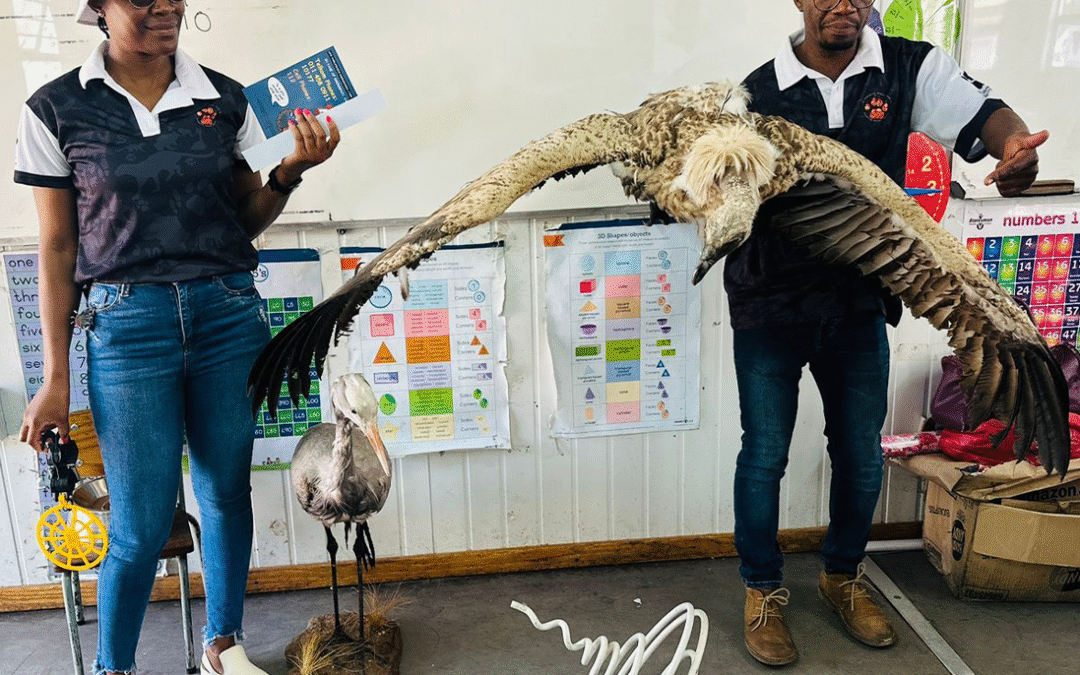
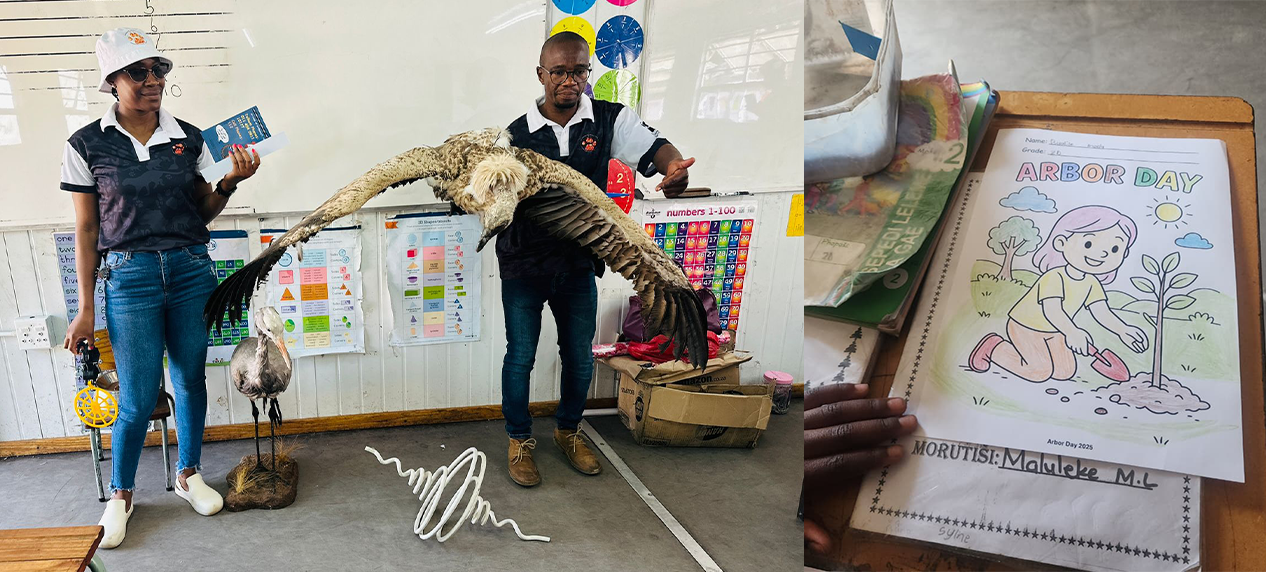
Blue Crane and vulture models used for bird conservation education


To celebrate Arbour Week, the Wildlife and Infrastructure team joined colleagues from Eskom at the Madibatlou Middle School in Olifantfontein, Gauteng, on 5 September, to speak about the importance of planting and conserving trees.

Wildlife and Infrastructure unit head Oscar Mohale and I also spoke to the school’s Grade 2 and 3 learners about birds and power lines, and what we, as the EWT, are doing to reduce the number of bird collisions with power lines. During these talks we showcased a vulture and a Blue Crane, as well as some of the devices we use to mark power lines.

I read a story to the children about Arbour Day so they could understand what this day is about and how, as people, we can conserve trees and, most importantly, plant trees.

After an art competition where the children coloured in pictures of birds, trees and people, the vegetable garden planted at the school earlier in the week was officially opened. The food grown in this garden will assist in feeding the children and the community.


Running for Conservation: Rhino Peak Challenge 2025

Running for Conservation: Rhino Peak Challenge 2025

Running for Conservation: Rhino Peak Challenge 2025 with the EWT

By Eleanor Momberg


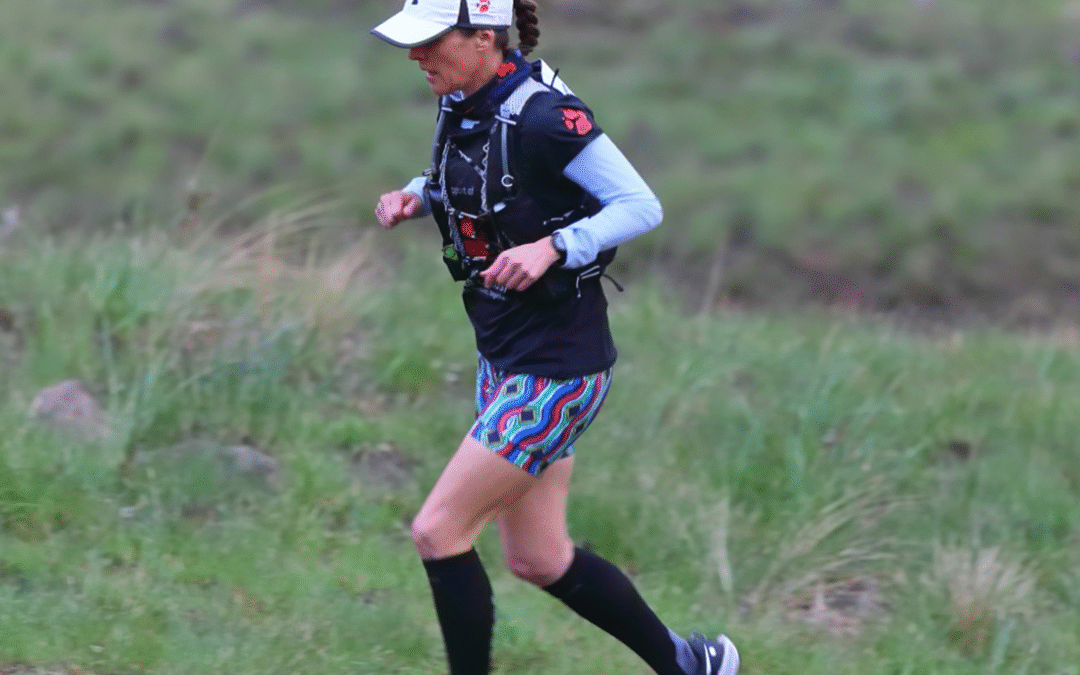
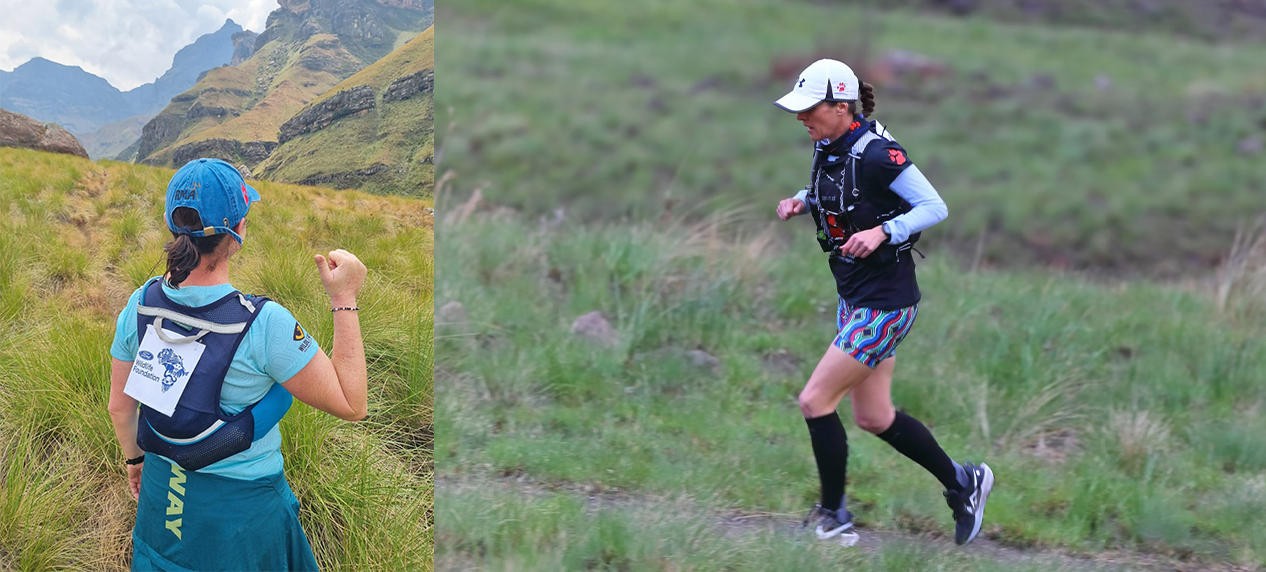
Ambassadors hiking towards Rhino Peak in rain and mist


Saturday, 20 September 2025, will live long in the memories of those who partook in a variety of athletic challenges in support of conservation and rangers.

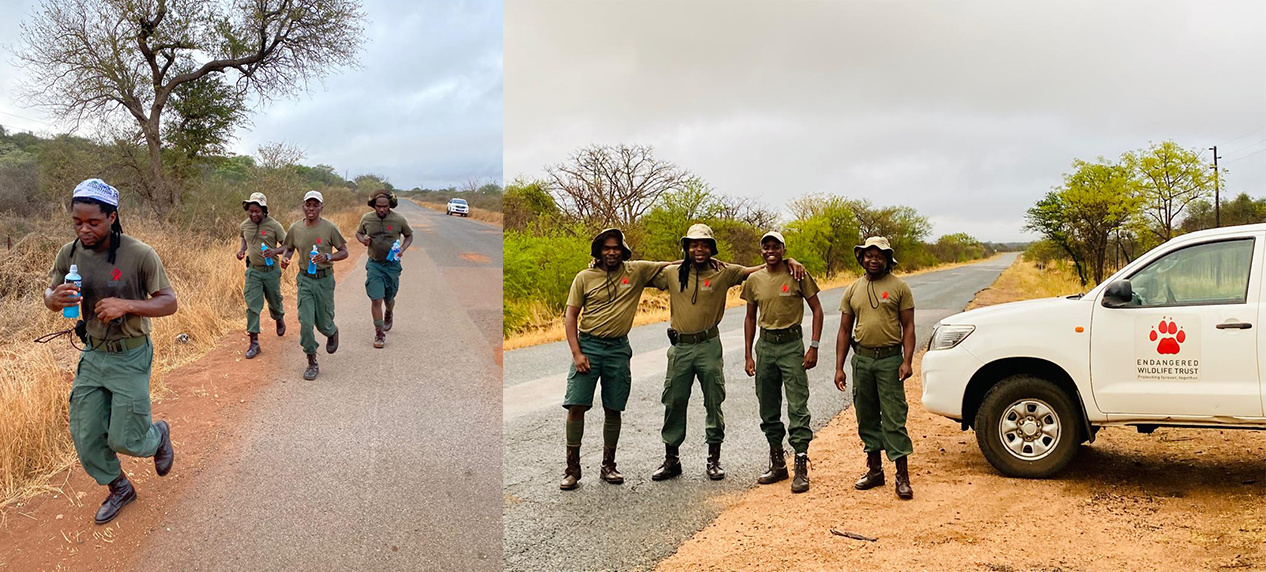
While four Soutpansberg rangers in the EWTs Savanna Conservation Landscape donned their uniforms to complete the 21km Game Rangers Association ranger challenge, the EWTs CEO, Yolan Friedmann participated in the 21km challenge at the Zuka Game Reserve in KwaZulu-Natal in support of rangers everywhere.

The Soutpansberg rangers, based at the EWTs Medike nature reserve, were accompanied by members of the recently formed Mideroni cricket team. Running on a cooler day at only 15 degrees Celsius was a welcome relief as members of the local community joined them to run stretches along the route as they cheered them on.

It was in the Maloti-Drakensberg Park World Heritage Site that the weather played havoc with the Endangered Wildlife Trust and Wildlife ACT ambassadors participating in the 10th annual Rhino Peak Challenge.

On Friday afternoon, when the 48 ambassadors running for conservation gathered on the balcony of the Drak Gooderson hotel in Underberg to prepare for the adventure that lay ahead, their view of Rhino Peak was clear. This challenge is the vision of Spurgeon Flemington, who has been driving the Rhino Peak Challenge since its inception.

It was the EWTs donor relations officer Tammy Baker’s seventh Rhino Peak Challenge, a second for Catherine Vise, and a first for her colleagues, Catherine Kuhn, Ian Little and Dave McCollough.

Spurg’s words during the pre-challenge briefing on Friday included “Watch out for snakes on the path, don’t get lost, it’s windy up there, and for safety reasons, I will be turning ambassadors back who haven’t summited by 11:30 am. If you haven’t reached the rhino horn by then, I’m really sorry.”   Those remarks prompted a few more nervous glances being exchanged amongst the group.

As these remarks sank in amongst nervous participants, he added, “While you are all lying awake tonight, keep pushing for those funds. This is a fundraising event first and foremost.”

The Rhino Peak Challenge (RPC) is a conservation fundraiser aimed at raising funds for the EWT, Wildlife ACT and the Bearded Vulture Recovery Programme for the conservation of vultures, rhinos and cranes. In the past decade, more than R10 million has been raised through the RPC, with some R1.8 million being raised so far this year.

Shortly after the ambassadors gathered to set off in four groups of 12, ten minutes apart, the weather changed.

“As we’re about to start, the wind picked up significantly and the weather turned. We all looked nervously towards the peak where the conditions looked bleak with rain, wind, lightning and thunder raging over the mountain,” said Tammy. “Despite this, we set off, hitting the icy rain almost immediately.”

But there was no reaching the peak for the ambassadors as conditions deteriorated. Tammy says once she reached the seven-kilometre point, she started getting worried about the last 500m to the peak.

“It’s sheer rock and difficult enough on a dry day, never mind when it is wet, slippery and full of mud,” she said.

It was then that some of the sweepers started passing them on the way down, telling them it was “too dangerous” up there, that Spurg had “called it”, and that no one would make the peak this year.

Catherine Kuhn says:  “The safety of the ambassadors came first, and it was indeed a good call. The rain made everyone freeze and soak to the core, and lightning in the Drakensberg is not something you take chances with. Being part of MCSA Mountain Rescue for 13 years, I could well appreciate, respect and understand the extremely difficult call the race organiser had to make”.

Although she knew it was the right safety call, Tammy pushed on to meet up with Spurg, who had been sitting further up the trail in cold and wet conditions for nearly two hours, turning ambassadors back.

On her way back to the finish line, Tammy says she “drank in the mountain with its pristine water and incredible scenery” before being welcomed across the line by Chris Kelly from Wildlife ACT and his team.

Despite the disappointment of not reaching the Rhino Peak on Saturday, Catherine Kuhn and two other ambassadors, Ben Bert and Dave Rose, decided to give it another go on Sunday morning.

“Starting at 5 am on Sunday, the weather was absolutely perfect. By 08:45, we had reached our goal and summited the Rhino!  The view is unbelievable from up there. The hike is a tough one, and not one to be underestimated by any means,” says Catherine. “We had a flight to catch, so we had to Vooma down the mountain – we were all down safely by 11:00 am”.

Tammy says every year, when it’s about halfway into the challenge, she questions why she is doing this.

“But then, when it’s done and dusted, I say to myself that I can’t wait to do that again next year.  That’s what the event does to you. It’s a life-changing experience. I think about the rhino peak every time I run. Once you’ve been there, it never leaves you”.

For those still wanting to donate to the Rhino Peak Challenge, please visit https://ewt.org/rhino-peak-challenge/


**  The EWT would like to thank the Ford Wildlife Foundation for supporting our entire team of RPC ambassadors.


Soutpansberg rangers in uniform running the 21km ranger challenge