Donate today: support our k9's 
 mission

Clive Walker’s Tuli Block memoir a tribute to titans

Clive Walker’s Tuli Block memoir a tribute to titans

Book Review

Clive Walker’s Tuli Block memoir a tribute to titans

By Eleanor Momberg
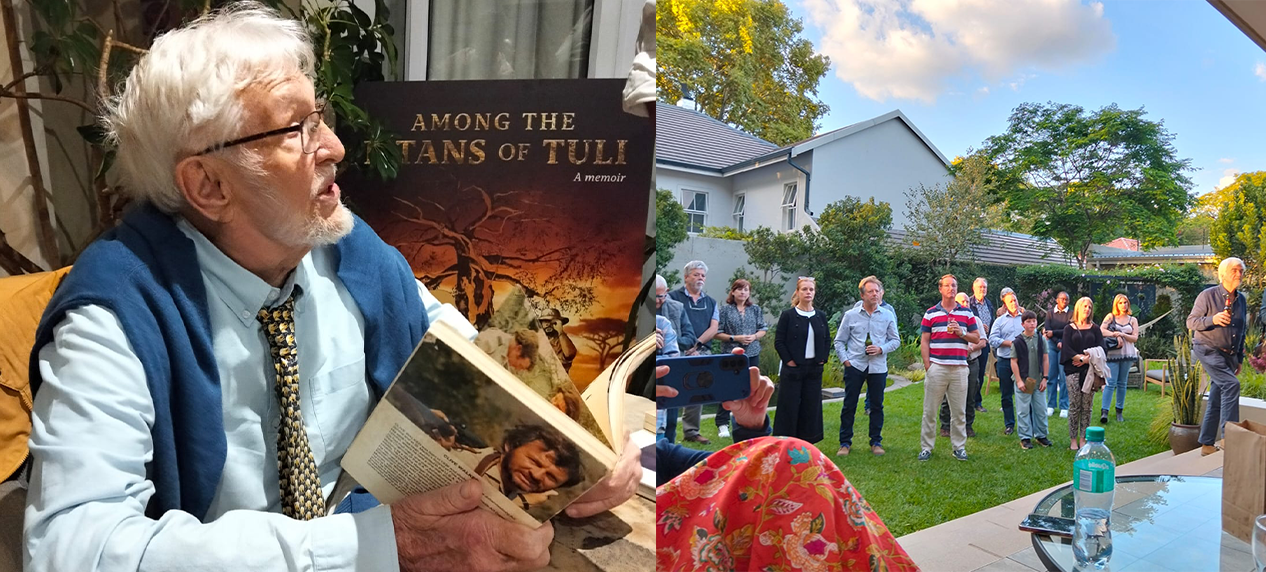
 

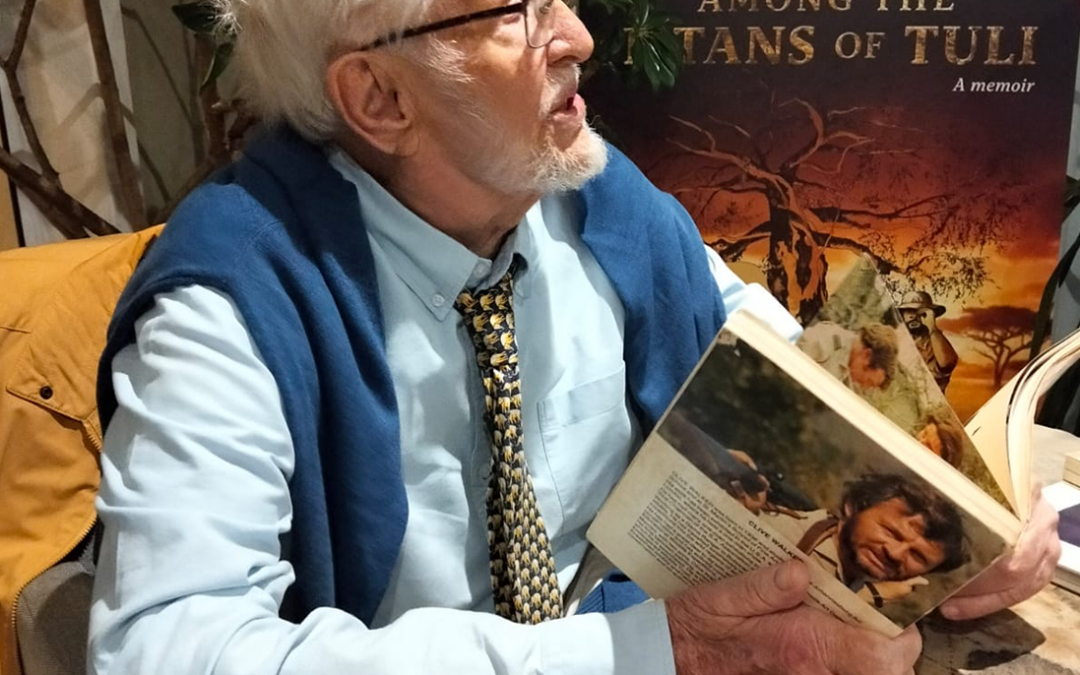
Clive Walker conservation legacy Tuli Block

It took almost 60 years to write a memoir about the extensive work Clive Walker did in the Tuli Block as a trail guide, conservationist and mentor. 

Among the Titans of Tuli is a book which he says could not have been published 20 or 25 years ago.  And, he is correct. 

Clive, a founder of the Endangered Wildlife Trust, describes Among the Titans of Tuli as a memoir.  His friend, fellow conservationist and former EWT CEO John Ledger described it as an autobiography.  Either way, it is a remarkable study of the history of the area known for its elephants and varied biodiversity, the work done to ensure the area is conserved, and a call to action to ensure the species found in this wonderous part of southern Africa is saved for generations to come.

It is memoir in which Clive pays tribute to “all those titans whose efforts, both professionally and as land developers and conservationist, rangers and trail guides, have contributed to making the Tuli the iconic and marvelous place it remains, despite the many challenges confronting it”.

The opening chapters provide a fascinating insight into the events that saw the creation of the Tuli Block in the late 19th century, the Rhodesian conflicts and the Anglo-Boer Wars, all which contributed to changes in the elephant populations in this area, noting that probably the first detailed report of the status of elephant between the Shashe and Limpopo Rivers in the Tuli was undertaken in 1973 by conservationist Jim Freely.  In his report Freely had stated that changes in plant and animal life could be attributed to human activity.   

Three years later, Clive, as Chair of the EWT Board, approached the Botswana government with an offer to assist with further research into the elephant situation in the Tuli to support the development of a sound management policy.

He writes that  he “came with no demands but rather an offer to assist” and that he had provided the assurance that the EWT would fund the necessary recommendations.

“At least I hoped it would, because a number of my board felt my sympathies lay with the elephant who were certainly not endangered, whereas my true intentions were mainly about the habitat,” he said adding this led to the appointment of an EWT-funded botanist to study both elephant and their habitat. This project examined the dynamics and stability of the vegetation in relation to elephant use, making recommendations in regard to carrying capacity.  At the time almost nothing was known about the population dynamics of trees that were elephant food, or about the influence of elephants on these dynamics, the book states,   This was supported by aerial surveys conducted by the EWT and Educational Wildlife Expeditions, an organisation running wildlife trails in the area to determine how many elephants lived in the system.

Clive’s not only provides a glimpse into the lives of the people, and characters, of the Tuli, but also offers a glimpse into the adventures and experiences of those he led on the Ivory Trail.  This includes a number of close encounters with elephant and lion. 

Besides imparting detailed information about elephant behaviour, their habitat, and their role within that environment, the reader is given a glance at how the environment has changed, notably the decline of the riverine forest lining the banks of the Limpopo and other rivers within the system, the damage caused by inappropriate land use, uncontrolled water extractions, the impacts of climate change, and the damage caused to flora by elephant, giraffe and other species of wildlife.

The final chapters offer a sombre reminder of the challenges faced within the region, touching on the complexities and sensitivities around elephant management, the approval of developments in Limpopo that will impact ancient Baobab forests and water systems contributing to continued environmental damage, and the Greater Mapungubwe Transfrontier Conservation Area, incorporating parts of South Africa, Botswana and Zimbabwe which remains “a work in progress”  20 years after its proclamation.  

Speaking at the launch of Among the Titans of Tuli, Clive said the Tuli “is a remarkable place and an area that I have a deep passion for”.  

But, there are pressures there.  “The water extraction is one of probably the most serious factors and if we were to lose most of that riverine it would be tragic, because the only other area comparable to this is the Pafuri region (of the Kruger National Park),” he says in reference to the loss of habitat for the Pel’s Fishing Owl. 

John Ledger pointed to the legacy created by Clive who had started the EWT in 1973 with James Clarke and Neville Anderson.

“Clive has left a really significant footprint and this book is one of the most significant because it is an autobiography – he calls it a memoir – but it documents 60 years of his involvement up in that wonderful corner of the world, the Thuli where the Limpopo, the Sashe and Motloutse Rivers come together, said John.

“What I really liked about the book is the way that Clive has woven the history of the area and the different characters that live in Thuli – the farmers, the poachers, and shares his great love of his game scouts that worked on the trails with him. It is all woven into the book,” he added.

Clive and John pointed out that had the Dongola nature reserve, a transfrontier conservation initiative around the confluence of the Limpopo and Shashe rivers and initiated by General Jan Smuts in the 1940s not been deproclaimed by Hendrik Verwoerd to settle farmers along the river, it would have been an “incredible transfrontier park of note.”   

But, as Clive warns in the final chapter – the approaching storm is upon us.

“In a world of deepening self-interest and greed at the expense of everyone and everything else, (the conservation) community’s role in the protection of the nature world for tomorrow’s children has never been more critical,” Clive concludes.


A full circle moment for African wild dog conservation

A full circle moment for African wild dog conservation

Tales from the Field

A full circle moment for African wild dog conservation

By Eugene Greyling, field officer in the Carnivore Conservation Unit


African wild dog reintroduction South Africa Zimanga pack release

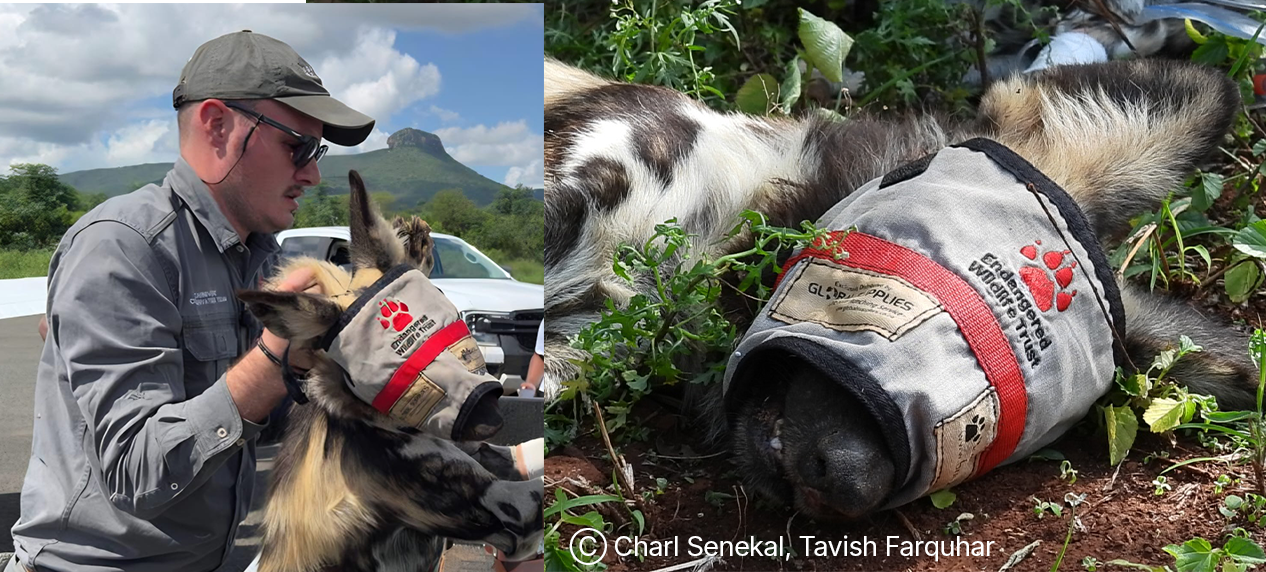
The recent reintroduction of a newly formed African Wild Dog pack into Zimanga Private Game Reserve in KwaZulu-Natal marked far more than another translocation. Coordinated by the Endangered Wildlife Trust through the Wild Dog Range Expansion Project, it represented the return of a species absent from this landscape for a decade, and a reminder of what long-term conservation collaboration can achieve.

What made this release especially meaningful was the story behind the pack itself. The females originated from a lineage tied directly to Zimanga’s past population. More than 10 years ago, their mother formed part of a group moved from this same landscape to Tswalu Kalahari Reserve. There, she and her sister went on to establish an exceptional legacy. Now, the next generation has returned that legacy to where it began.

These are the moments that quietly affirm why metapopulation management matters. Conservation is seldom linear, and successes are often measured over decades rather than days. To witness animals once removed for the sake of persistence now contributing to restoration elsewhere was a genuine full-circle moment.

This reintroduction would not have been possible without the commitment and support of Tswalu Kalahari Reserve, Zimanga Private Game Reserve, The Bateleurs, the Ivan Carter Wildlife Conservation Alliance, Wildlife ACT, and all those involved behind the scenes. Their collective effort once again demonstrates that African wild dog conservation depends on partnership as much as it does on science.

May this new pack go from strength to strength.


Ringing Lesser Kestrels in the Karoo

Ringing Lesser Kestrels in the Karoo

In the field

Ringing Lesser Kestrels in the Karoo

By Ronelle Visagie, Field Officer in the Birds of Prey Unit


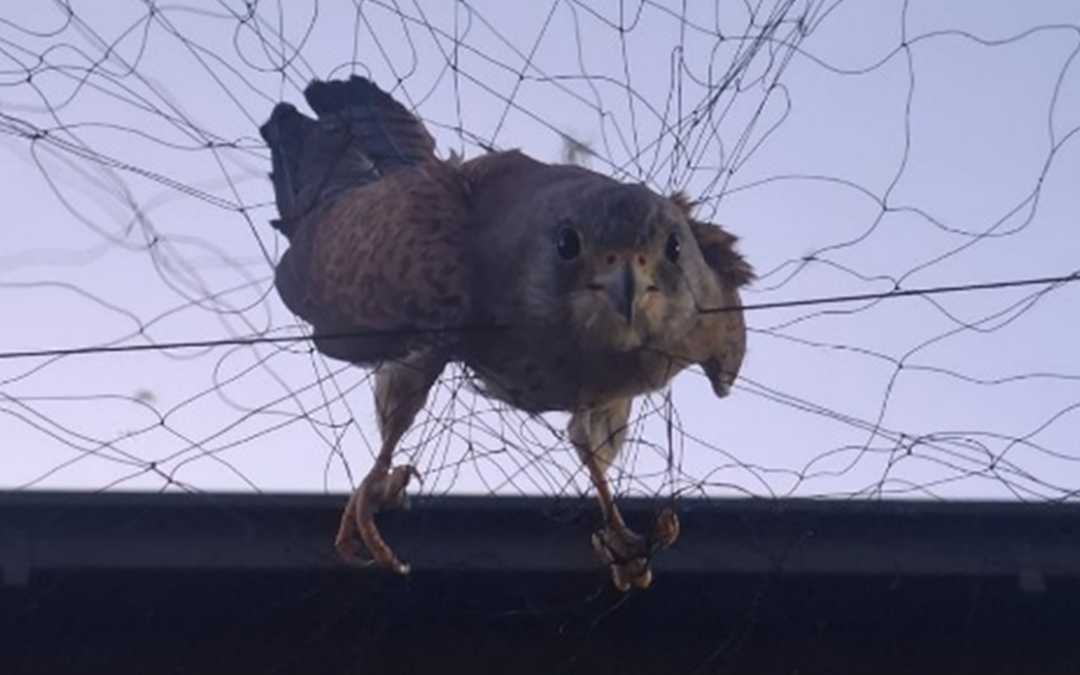
Lesser Kestrels in mist net at De Aar city hall

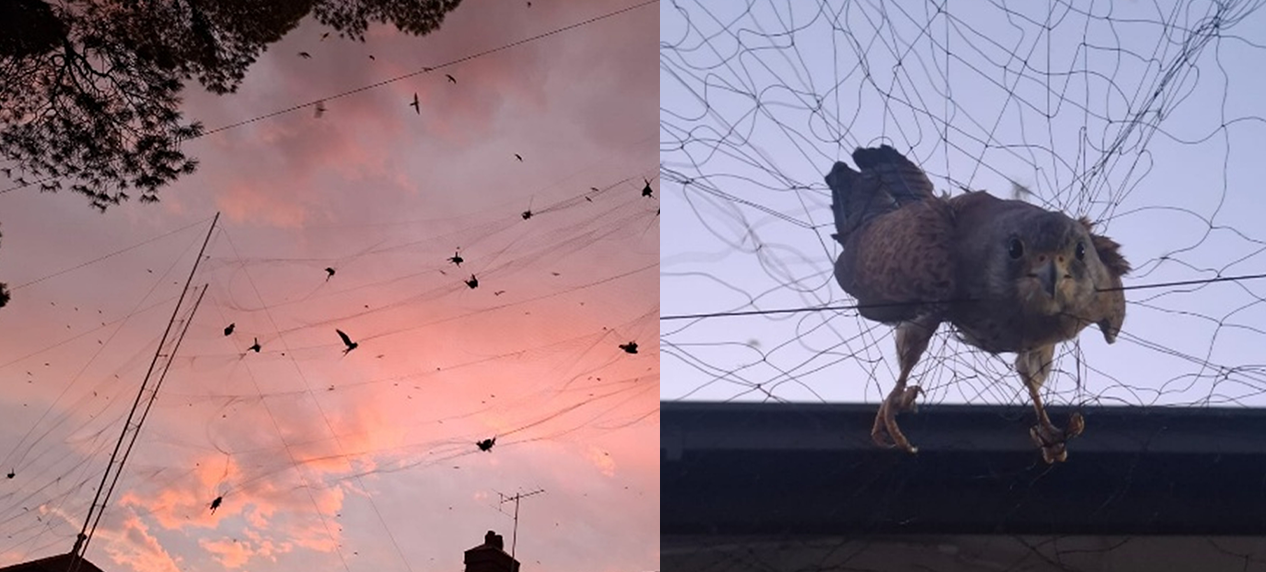
Above: Lesser Kestrels in the mist net.

During January a group of researchers from Italy, Spain and South Africa captured and ringed 90 Lesser Kestrels at the city hall in De Aar. Also captured and ringed were three juvenile Common Kestrels which breed on the roof of the city hall at De Aar.

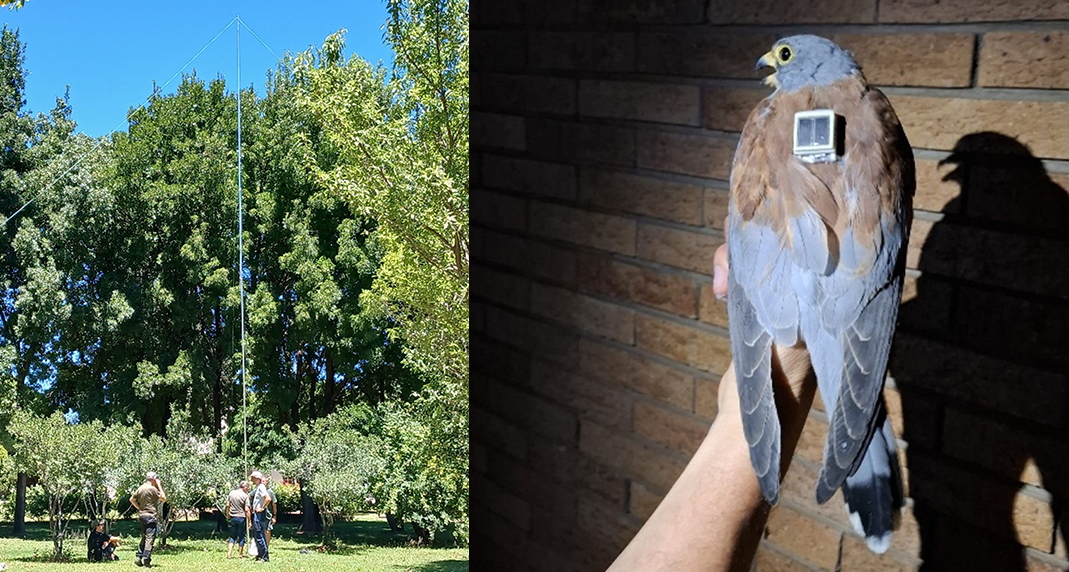
The birds were captured by using a 12 m high system with mist nets that could be hoisted to reach the height of the trees where the kestrels were roosting. As it is quite a difficult system to put up, it took about 2 hours to get everything in place.

international research team ringing kestrels in Northern Cape

Left: The team busy testing the equipment before doing the real thing. The height of the poles is clearly visible. Right: A male Lesser Kestrel with a transmitter.


Once the nets were in place, we waited for the birds to return to their roosts.  When there were 10 or 12 birds in the nets, they were lowered to extract the kestrels and start processing them. As more birds arrived, the nets were raised again and the process repeated.

It should be noted that using this method means the birds are secured in the net and are not injured. If they are not well entangled in the net, they escape. Kestrels are raptors with sharp claws and they are quick to bite. It is not easy to get them out of the net without being bitten or attacked with their claws. Because of this, they sometimes draw blood!

As can be seen in the photos, the work is done in the evening.  Extracting and processing the kestrels took a few hours and we only left in the early mornings.

The 93 birds were measured, weighed and ringed with metal Safring leg rings. A total of 29 birds were fitted with transmitters to track their migration and movements. The very small transmitters weigh only 4 grams and are fitted to the birds with a small harness around the base of their wings.

Once processed, the kestrels were kept overnight to make sure that they are rested and less stressed so that they were able to fly properly the next morning.


map showing Lesser Kestrel migration routes from Karoo

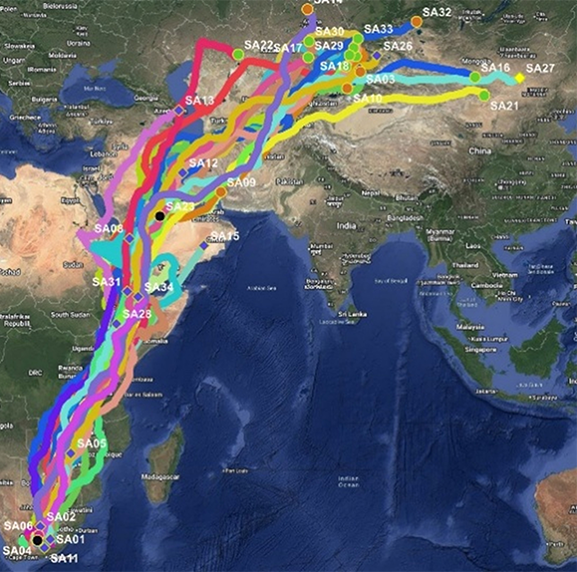
Above: The map shows the migration routes of the birds that were fitted with transmitters in January 2025 at Richmond.

international research team ringing kestrels in Northern Cape

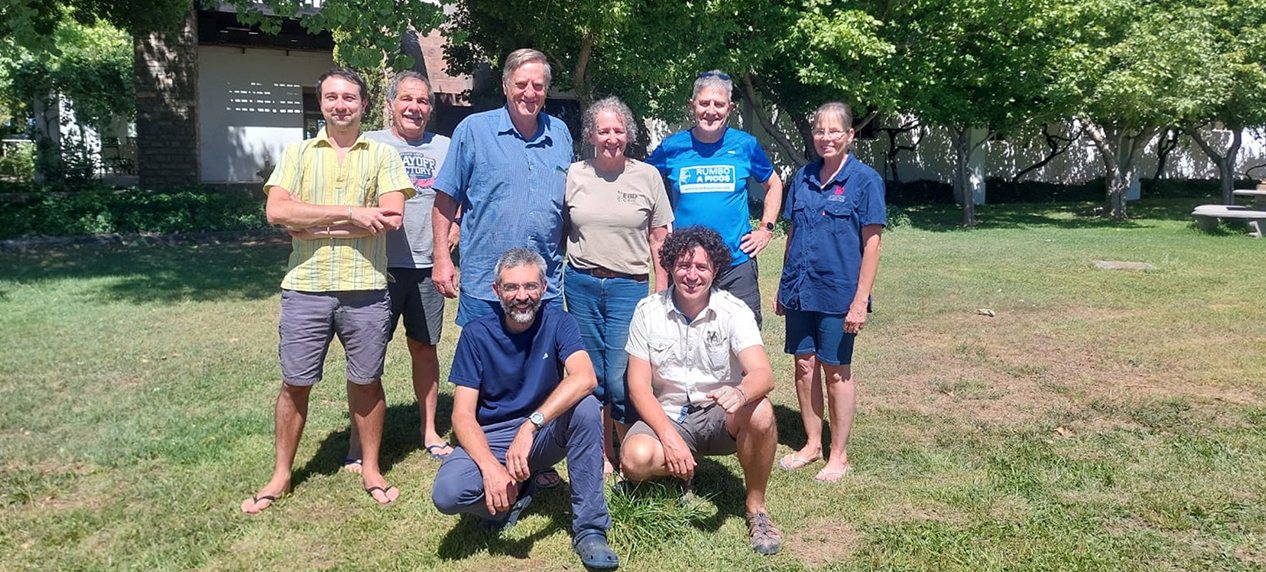
The Team: at the back: Andrea Romano and Maurizio Sará from Italy, Chris and Rina Pretorius from South Africa, Javier Bustamante from Spain, and Ronelle Visagie from South Africa. In front: Diego Rubolini and Michelangelo Morganti of Italy.

Searching for rare, threatened beetles on high-altitude mountain peaks

Searching for rare, threatened beetles on high-altitude mountain peaks

In the field

Searching for rare, threatened beetles on high-altitude mountain peaks

By Dr Samantha Theron, Conservation Researcher in the Drylands Strategic Conservation Landscape


researchers surveying remote Karoo mountain ecosystem

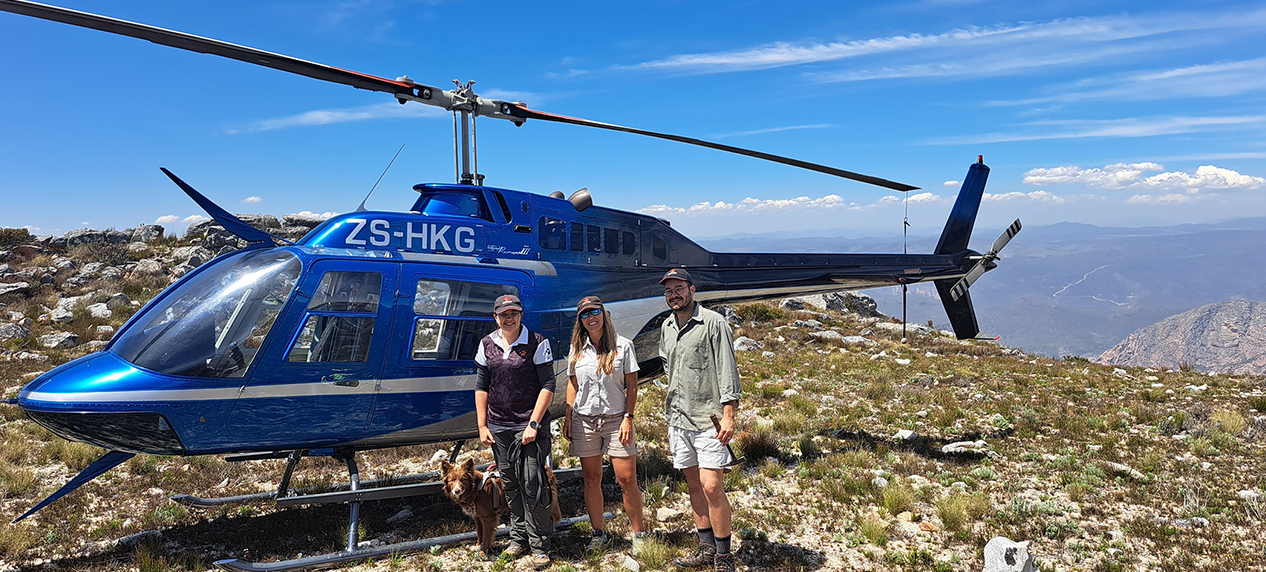
Boarding a helicopter to search for a beetle rarely seen by anyone besides keen mountaineers, has proven helpful in determining whether two species of these extraordinary insects continue to persist in the mountains of the Western Cape.

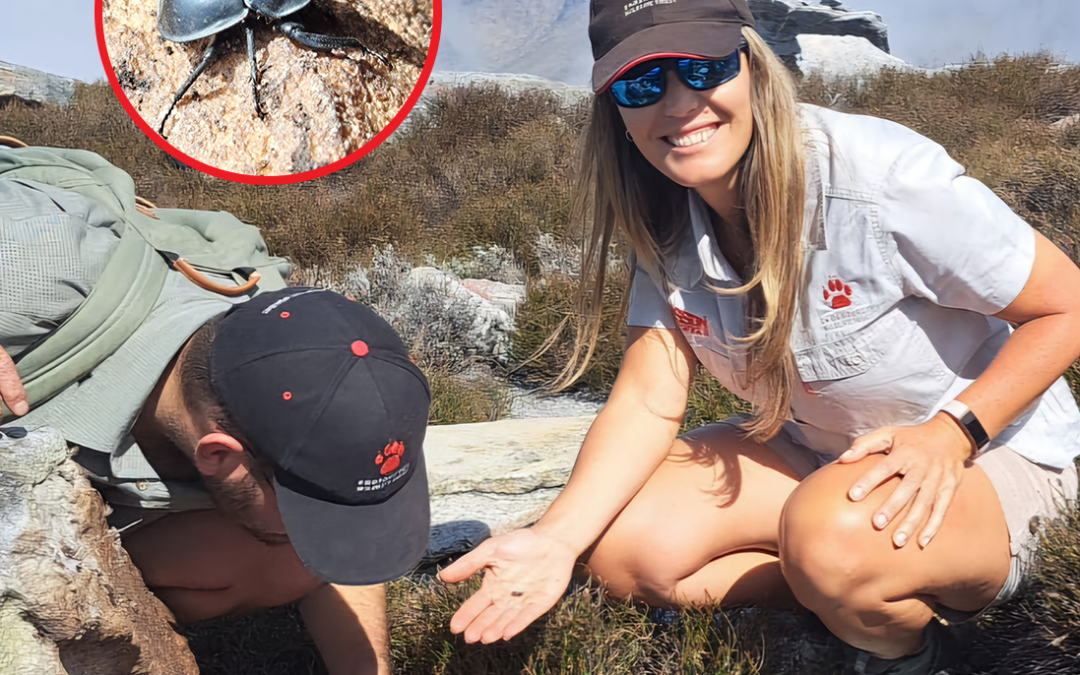
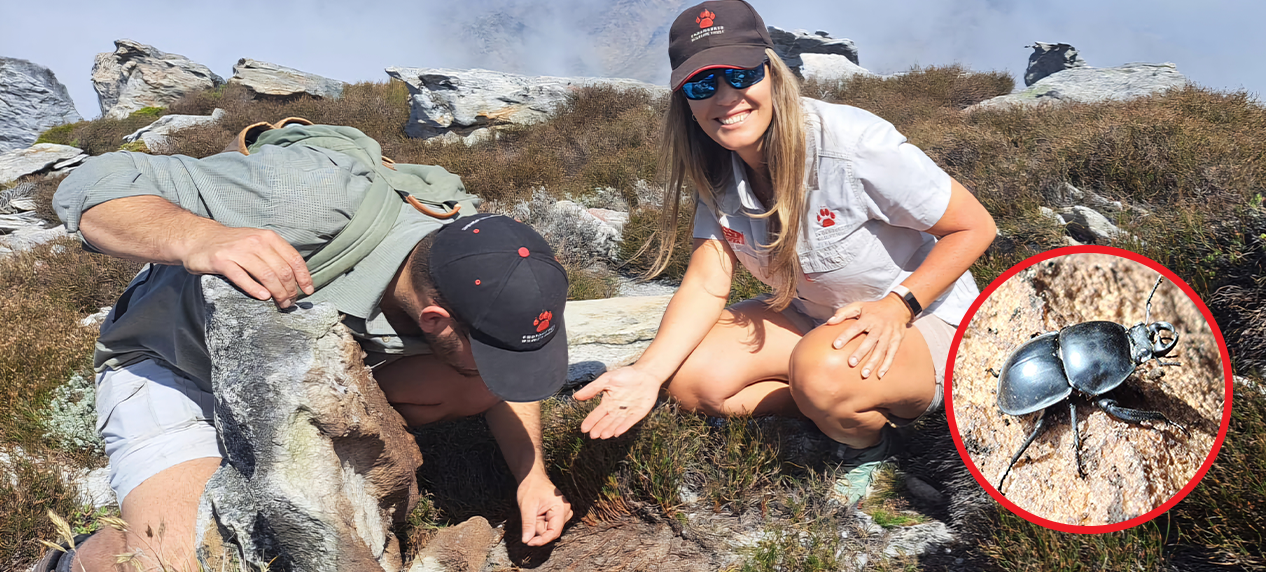
Last year (2025), the EWT’s Drylands Conservation team, including myself, field officers Handré Basson and Esther Mathew and scent detection dog, Delta, took to several mountain peaks in search of two species of Cape Stag Beetles (Colophon eastmani and C. nagaii) that have become seriously threatened, not only by climate change and wildfires, but also by illegal collection. We undertook numerous field surveys, including two helicopter-assisted survey expeditions, in which pilot Jaco Vermeulen flew us to six previously unsurveyed and otherwise inaccessible mountain peaks, to search for these beetles.

Our survey had four objectives.  The first was to conduct field surveys to gain a better understanding of the species’ distribution and habitat condition. The second, to ensure habitat protection for both species, which included engaging the relevant landowners to establish legally-binding protected areas for the beetles. Thirdly, to ensure steps are taken to protect these species, and that conservation management plans are drawn up and implemented in collaboration with the landowners. The fourth aim was to update the known distribution of the two Colophon species and to conduct IUCN Red List threat assessments for both species.

Conserving these unique insects and their habitat is necessary to ensure their continued survival, and also to support further research on the impacts of climate change on species across the Karoo and Fynbos biomes. Cape Stag Beetles can act as flagship species for high-altitude ecosystems, in which certain species, like these flightless beetles, have been forced to migrate to higher ground in order to survive. With the ongoing effects of climate change, these mountaintop habitats, or “islands in the sky”, could be further reduced, thereby increasing the risk of extinction for these high-altitude specialists.

Cape Stag Beetle specimen fragments

Cape Stag Beetle specimen fragments

The surveys

The EWT team was joined by three landowners on the first of the two helicopter-assisted expeditions last year, in which we surveyed three of our six target peaks.

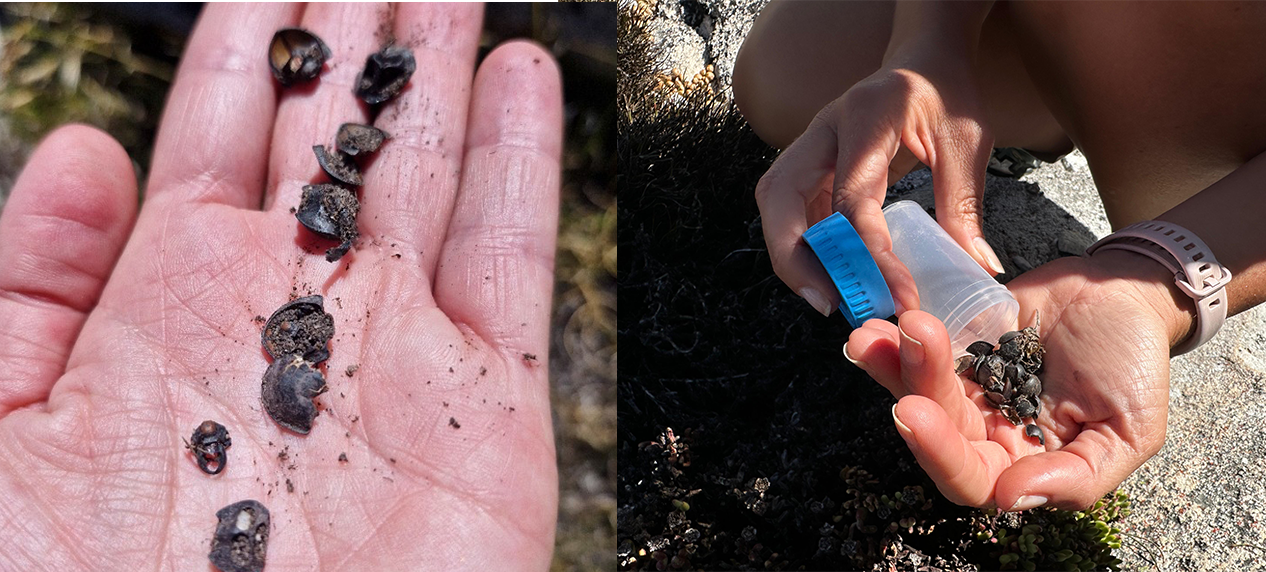
The habitat on the first peak was found to be unsuitable for Colophon, and we quickly moved on to the second peak, where we found evidence of the beetles’ presence in the form of beetle fragments. Because it was only the start of the beetles’ active season, we presumed that the fragments we found were the remains of the previous year’s beetles. Furthermore, a recent intense wildfire, may have had a severely negative impact on the beetle population on the peak.

At the third peak, which is the highest of the six, we immediately started finding lots of beetle fragments – evidence of a healthy population.  We found fragments of roughly 40 individual beetles, and after a few hours of searching, we found two live beetles! We noted the vegetation cover, which was healthier and higher than the previous sites, indicating that the fire had not reached this peak.

During the second helicopter-assisted expedition, we surveyed three peaks, finding the habitat on one unsuitable for the beetles.  A survey of the second peak revealed indications that a fire had ravaged this peak in the last year or two. Only a few fragments of roughly four individual beetles were found during our three-hour survey. The beetles need damp soil to survive, and most of this peak was dry. The heat was also unbearable at times, and with little cover on the exposed mountaintop, we found ourselves seeking shelter from the heat in the shade of the helicopter.

Moving to the last, and second-highest of the six peaks, which had also been affected by a recent fire, we found both old- and fresh fragments of beetles on the peak. Unfortunately, the habitat at this location was noticeably disturbed, with pieces of wood, metal and wires lying around.  There also appeared to have been oil spills. In total, we found fragments of roughly 18 individual beetles on this peak.

Our time on the mountain peaks delivered a number of other interesting finds, including a Skolly Butterfly (Thestor sp.), Hex Protea Chafer (Trichostetha dukei), Tradouw Mountain Toadlet (Capensibufo tradouwi), Creeper Scorpion (Opsitacanthus diremptus), the unusual Arid Rainspider (Paraplystes sp.), Male Firefly (Lampyris sp.) and the Conbush Rainspider (Palystes kreutzmanni).  Several lizard and scorpion species were also recorded.

In addition, Colophon fragments were found on another peak we surveyed on foot, roughly midway between the two species’ known distributions. The species identity of these fragments is unknown, and further surveys will be required to collect genetic material to determine the identity of this population.

Helicopter landing on Western Cape mountain peak for beetle survey

In summary…

This project revealed multiple new sites for Colophon eastmani, and we were able to update the distribution of the species and conduct a threat assessment for the IUCN Red List, listing this species as Endangered. Conversely, for Colophon nagaii we found nothing but a few beetle remains at the historical site (type locality), confirming that the species is only known from a single location, and may already be extinct. It is possible that a fire which swept over the peak in 2017 may have wiped out this population. We have drafted the first IUCN Red List assessment for Colophon nagaii, listing it as Critically Endangered.

The EWT would like to thank the Mohamed Bin Zayed Species Conservation Fund, Mapula Trust, Ross Air and the landowners for their support in this project. Using a helicopter has proven to be a game-changer for this type of survey.  Without it, we would not have been able to take our scent detection dog, Delta, up to these sites, nor survey so many sites in one day. Two of the landowners have indicated their intention to declare formal protection of Cape Stag Beetles on their properties, and we will be initiating these processes in due course.

Despite increased threats to their survival, Cape Stag Beetles continue to persist.  As soil dwellers, they are able, in some instances, to survive devastating fires, but altered fire regimes, poaching by insect collectors, and habitat reduction resulting from climate change, continue to pose threats to their existence.  This year we are continuing our field surveys and associated research to assess the impacts of altered fire regimes and other threats on these insects, and to implement further long-term conservation measures to protect the species and their habitats.

The Kudu Connection: Surprising Diet Choices of Liwonde’s Carnivores

The Kudu Connection: Surprising Diet Choices of Liwonde’s Carnivores

Science Snippet

The Kudu Connection: Surprising Diet Choices of Liwonde’s Carnivores

By Erin Adams & Lizanne Roxburgh


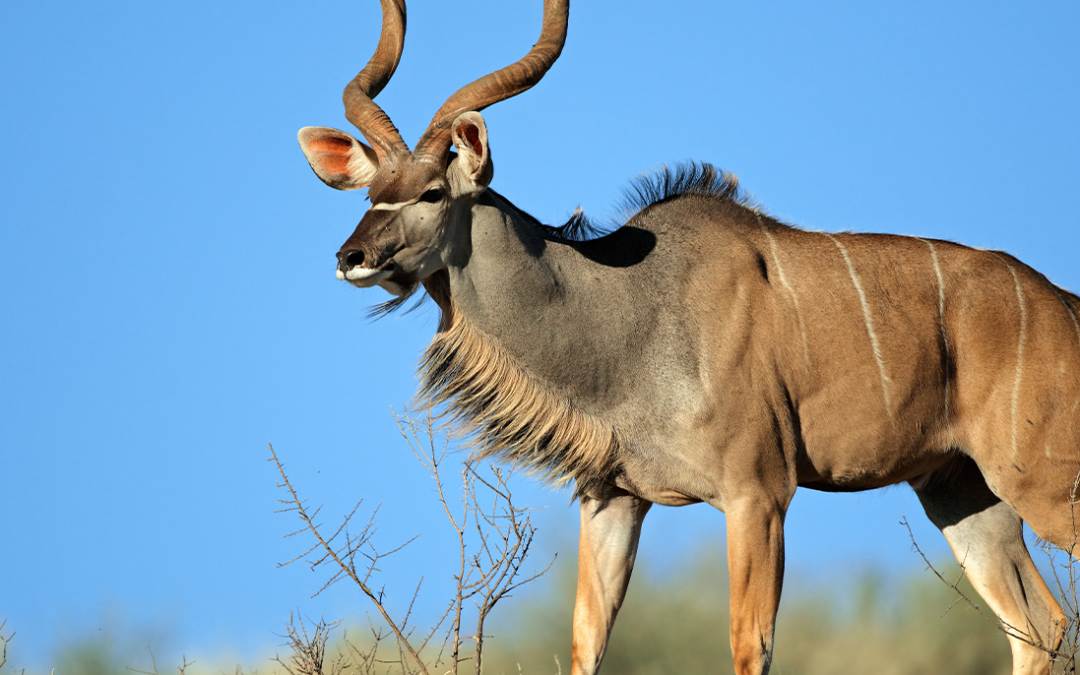
Kudu antelope in Liwonde landscape

Large carnivores are usually able to co‑exist in a landscape by eating different prey species, being active at different times of the day, and inhabiting different habitats. Among these factors, diet is often the main indicator of which carnivore species is present in a particular landscape, as many carnivores have evolved to make the most of their preferred prey. Studying what different carnivores consume therefore provides valuable insight into how best to manage them within a shared environment. In a recent publication co‑authored by EWT scientists*, the diets of lions, spotted hyaenas, and cheetahs were examined in Liwonde National Park, Malawi, to understand how these species overlap in their prey preferences.

The researchers collected scat samples from each predator species and opportunistically photographed direct feeding events whenever they were encountered. The scat samples were processed, and ten hairs from each sample were examined to determine which prey species they belonged to.

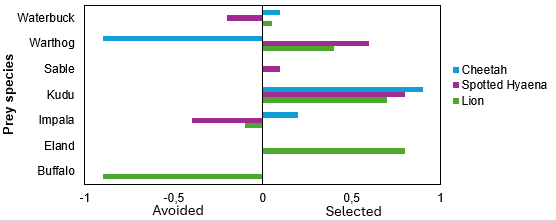
The scientists found a high degree of overlap in the prey species consumed by the three carnivores. Lions and cheetahs were each observed feeding on seven prey species, while spotted hyaenas fed on nine. Although all three species showed a preference for kudu (Tragelaphus strepsiceros) and waterbuck (Kobus ellipsiprymnus), there were notable differences: cheetahs preferred impala (Aepyceros melampus) and waterbuck and avoided warthog (Phacochoerus africanus); lions preferred eland (Taurotragus oryx) and warthog and avoided buffalo (Syncerus caffer); and spotted hyaenas preferred warthog and avoided impala.

Fig. 1: Prey species avoided and selected for by lions, spotted hyaenas and cheetah in Liwonde National Park (figure adapted from the original publication).[

One of the standout findings was that all carnivores strongly preferred kudu, even though kudu were not very abundant in the landscape, indicating a clear selective preference.

Waterbuck were also frequently consumed by lions and cheetah, likely because they were highly abundant during the study period and easier to hunt due to their tendency to travel in small groups. These results highlight the importance of studying both predators and prey when assessing the health and functioning of an ecosystem. Understanding carnivore diet preferences, especially when they target less abundant species, helps conservationists make informed decisions about wildlife management, prey population monitoring, and maintaining balanced predator–prey dynamics within protected areas.

*Kayuni, B., Sievert, O., Davis, R. S., & Mzumara, T. I. (2025). Dietary Composition and Overlap Among Large Carnivores in Liwonde National Park, Malawi. African Journal of Ecology, 63(4), e70061.

Cash, Corruption, and Creatures: The Hidden Economy of Wildlife Crime in South Africa

Cash, Corruption, and Creatures: The Hidden Economy of Wildlife Crime in South Africa

Cash, Corruption, and Creatures: The Hidden Economy of Wildlife Crime in South Africa

By Gerald Byleveld, Volunteer at the Endangered Wildlife Trust’s Wildlife in Trade Unit


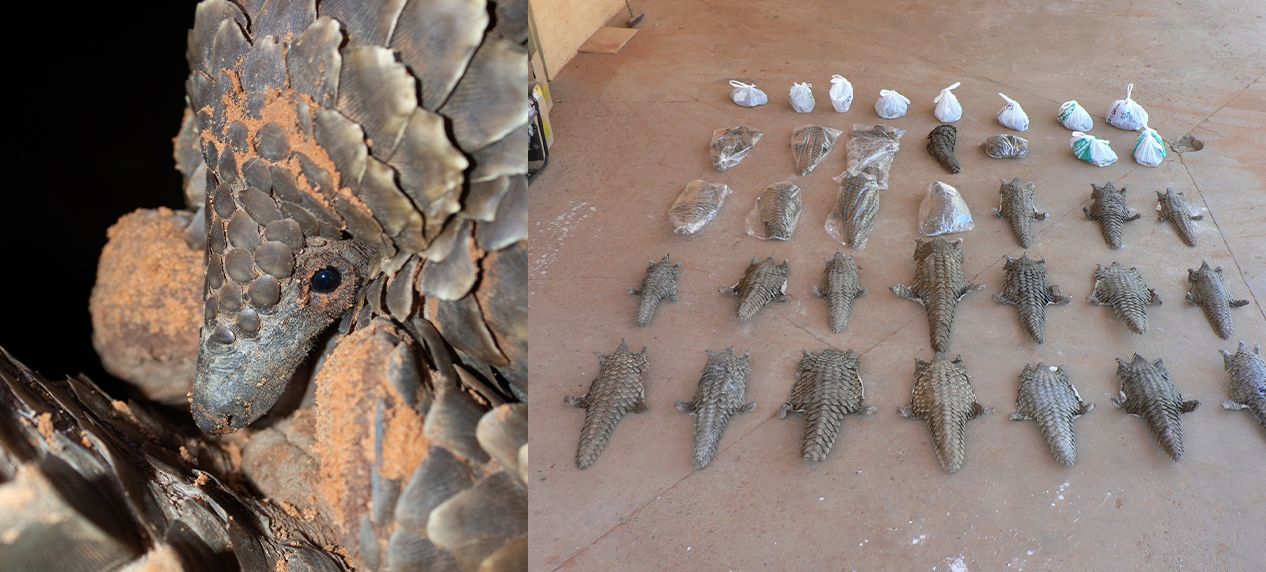
Confiscated wildlife products in South Africa

South Africa’s developed transport infrastructure, sophisticated financial system, and extensive wildlife resources make it both a prime source and a transit point for illegal wildlife trade (IWT).  But poachers and smugglers are only one layer of a multi-billion-rand enterprise.  Behind them are financiers, exporters, lawyers and money managers who ensure that illicit proceeds can circulate undetected through the legitimate economy.  These financial facilitators are the invisible scaffolding of the IWT industry.  Yet only a fraction of such cases result in charges being brought against  financial facilitators.  A 2023 UNODC/Asia–Pacific study found that only 1% of wildlife crime cases involved a money laundering investigation, and only 7% led to prison sentences.

Money laundering – the process of disguising the origins of illegally obtained funds – enables traffickers to convert cash from wildlife products into what appears to be legitimate income.  In wildlife crime, laundering typically occurs through several overlapping techniques.

Cash smuggling and layering are the simplest and most common methods.  Syndicates collect large amounts of physical cash from buyers in Asia or local intermediaries and move it across borders in small increments, often through informal financial systems.  Once split and layered through multiple transactions, the trail becomes difficult to trace.

Front companies and shell businesses also play a central role.  Entities registered as export firms, tourism operators, or hunting outfitters can easily disguise illicit transactions as part of ordinary business operations.  A legitimate game farm, for example, can hide illegal horn sales within a web of legal animal product exports.  Legitimate cash-intensive businesses, such as casinos, knowingly or unknowingly, allow syndicates to launder their ill-got cash into apparently legitimate “winnings” – often in large quantities.

Trade-based money laundering – the manipulation of invoices to hide value transfers – is another favoured method.  A company may overstate or understate the value of goods shipped abroad, effectively moving money under the guise of trade.  This technique exploits weaknesses in customs oversight and is especially effective in sectors such as seafood, leather, and curios, which overlap with wildlife products.

Finally, traffickers invest laundered profits in tangible assets such as real estate, luxury vehicles, or guest lodges.  Once the money is tied to visible property, it appears legitimate.  The result is a criminal economy that seeps into the formal one, distorting local markets and shielding offenders behind layers of ownership and paperwork.

If money laundering cleans dirty profits, bribery ensures the system continues undisturbed.  Bribes lubricate nearly every stage of the wildlife trafficking chain – from poaching in source countries to import into destination countries.

At the source, game and field rangers are often bribed or coerced into turning a blind eye.  Syndicates may offer payment or protection in exchange for information on patrol routes, security gaps, or the locations of high-value animals.  The same pattern extends to customs and border officials, who can falsify documentation or permit consignments to pass unchecked.

Corruption also infects investigative and judicial processes.  There have been repeated instances where charges against traffickers are delayed, evidence is misplaced, or penalties are reduced due to alleged bribery or political interference.  Such manipulation erodes public confidence and signals to criminal groups that enforcement can be negotiated.

Bribery is not limited to the public sector.  Private-sector enablers – freight companies, shipping agents, and financial intermediaries – may also accept payment to mislabel goods or overlook suspicious transactions.  This blend of private complicity and public corruption creates a powerful shield of impunity.

The costs of money laundering and bribery extend well beyond biodiversity loss.  Financially, laundered wildlife proceeds are often reinvested into other illicit markets, including narcotics and human trafficking.  Organised crime groups exploit wildlife trafficking networks as low-risk, high-reward ventures that diversify their revenue streams.

Institutionally, corruption undermines governance.  When the officials tasked with protecting wildlife or enforcing the law are compromised, public trust collapses.  Communities dependent on tourism or sustainable wildlife use lose confidence in the government, while honest businesses face unfair competition from actors funded by criminal capital.

Economically, the influx of illicit money can inflate property prices and distort local economies, particularly in regions adjacent to parks or coastal areas.  The environmental, social, and fiscal consequences are interlinked — weakening the state’s ability to deliver services, conserve biodiversity, and attract ethical investment.

In response to the massive scale of the challenge, South Africa now explicitly recognises wildlife crime as a form of organised financial crime.  The Financial Intelligence Centre Act (FICA) provides a framework for tracking suspicious financial transactions, and inter-agency cooperation between the Financial Intelligence Centre, SARS, DFFE and the Hawks has improved.  The National Integrated Strategy to Combat Wildlife Trafficking (2022–2030) (NISCWT) explicitly calls for the “follow-the-money” approach.

The arrest of Francis Kimpampa in 2023 and subsequent convictions for rhino trafficking and money laundering showcase what can be achieved through inter-agency and private-public collaboration. Internationally, the USA’s Operation Apex dismantled a decade-long wildlife and drug money laundering operation. In Malawi, the Lin-Zang network was convicted in April 2023 for money laundering derived from trafficking rhino horn, ivory and pangolin scales.

Yet formidable challenges remain. Many wildlife transactions occur in cash-heavy rural areas, beyond the reach of formal banking oversight.  Investigations into financial flows require specialised skills and coordination across agencies that often operate in silos.  Prosecutorial capacity to investigate complex financial crimes is limited, and asset forfeiture proceedings can be lengthy and contested.

To dismantle trafficking networks, enforcement must pivot from catching foot soldiers like poachers to targeting financial and institutional enablers.  Priority reforms include strengthening financial-intelligence sharing among banks, regulators, and conservation agencies; building asset-tracing and recovery expertise; improving transparency around company ownership; and investing in communities to reduce the allure of IWT and corruption by creating viable livelihoods and equitable conservation benefits.  Because trafficking is inherently transnational, regional and global collaboration is essential – from harmonising regulations to tracing cross-border financial flows.

The illegal wildlife trade is not only an ecological crisis but a financial and governance one.  Every seized horn or intercepted wildlife shipment represents only a tactical win.  Lasting success depends on making wildlife crime unprofitable by exposing financial trails, prosecuting facilitators, and restoring integrity to the institutions designed to protect society and the natural world.

Until the money stops flowing, the killing will not stop.