IN MEMORY OF BRIAN BRADFORD GOODALL
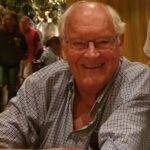
On Sunday 27th June 2021, Brian Goodall, Chair of the Lewis Foundation, loving husband to Lesley, father to Tiffany, Andrew and Peter-John and an adoring grandfather, passed away at the age of 78.
Brian was born on March 27th, 1944. He matriculated from Jeppe High School for Boys with a first-class pass. His leadership skills were already apparent as Head Prefect, Captain of the Rowing, House Athletics and Cricket with a basket of leadership and academic prizes. He attended three universities, graduating with a BA from the University of Natal, a first-class Honours from Wits and an MA from UNISA. He was a life-long learner and always willing to share and teach.
Brian joined Standard Bank in 1966, where his passion for finance and investment was kindled. He moved from there to ESE Financial Services and in 1970, Brian and two colleagues formed their own economics and financial consultancy company. Five years later they sold out to join Syfrets Trust. Alongside his passion for finance and investment, Brian was developing a career in politics. His charm and people skills, combined with an intense aversion to the apartheid regime resulted in him winning the Edenvale Parliamentary seat for the Progressive Federal Party in 1979. This was the first Parliamentary by-election defeat for the National Party. He resigned from Syfrets to pursue a full-time political career and held the seat till 1987 when he lost to Joan Hunter. Undeterred he retook the seat in 1989 and held it until he was elected to the Provincial Parliament of Gauteng as Leader of the DA Caucus and spokesperson on Economic Affairs.
His interest and love for finance could not be ignored however and in 1985 Brian founded Investment Management Services (IMS). Alongside this he wrote and published several articles on investments and tax. He was the author of textbooks on investment planning and co-author of the “Momentum Tax and Investment Easiguide” and the “South African Financial Planning Handbook.”
Brian remained actively involved in his company and his writing until his death. Andrew, his son, joined the company a few years ago and will continue to grow and build on his father’s impressive legacy.
Brian was a man of many facets. He loved wildlife and the bush and would spend time with his family and friends at his game lodge whenever his schedule allowed. So, when the opportunity arose in 2002 to join the Lewis Foundation as a Trustee, he was delighted. He shaped the Foundation’s investment policies resulting in significant growth of the endowment. He took the helm as Chair in 2010, bringing his insight, creativity and lateral thinking to the table and broadened the outlook of the Foundation. His greatest contribution was himself. He was passionate, enthusiastic, positive, forward-thinking, empathetic and committed. No matter what the organisation or the Foundation had to face, with Brian at the helm, we knew he would see the silver lining and there would be a way through, a plan and a strategy to overcome. He served the Lewis Foundation for 20 years and will be sorely missed. But his legacy will live on through the programmes and projects of the Foundation and the many young people it has funded and nurtured. Our thoughts and prayers are with his wife Lesley and the Goodall Family.
The Conservation sector has lost a great champion but his legacy will continue.
Dr Pete Zacharias – Trustee and Chair
Dr Shafika Isaacs – Trustee
Derek Engelbrecht – Trustee
Lindy Rowell van Hasselt – Relationship Director
CONSERVATION CONVERSATIONS
“How well we communicate with each other about nature and environmental affairs will affect how well we address the ecological crisis’’
(Meisner, Environmental Communication: What is it and why it matters, 2015)
We use environmental communication to express our attitude towards the environment or to share information on environmental affairs. Whether it is sharing knowledge through a zoology lecture at university, signing a petition to stop the manufacture of single-use plastics, or even through the act of being a vegetarian, these are all forms of environmental communication. Environmental communication, just as any other form of communication, uses verbal and non-verbal forms, and the selection of these will determine the outcome of the communication process. In an article written by Mark Meisner (2015), he states that communication shapes how we see and value the world. In this light, environmental communication should create meaning for people on environmental and conservation issues, thereby driving actions that enhance more conscious living and mindfulness towards all living things.
The EWT’s Threatened Amphibian Programme has developed an Environmental Communication Strategy to ensure that our conservation messaging regarding the value and importance of frogs and reptiles leads to a positive shift in public attitudes towards these creatures and their habitats. The foundation of this strategy is based on designing “conservation conversations” tailored to the context, culture, and concerns of target communities. An example of a conservation conversation package would be using satellite imagery to show changes in a community over time and relating how these changes impact living conditions. Figure 1, satellite imagery compares the changing landscape in Adams Mission between 2005 (left) and 2020 (right).
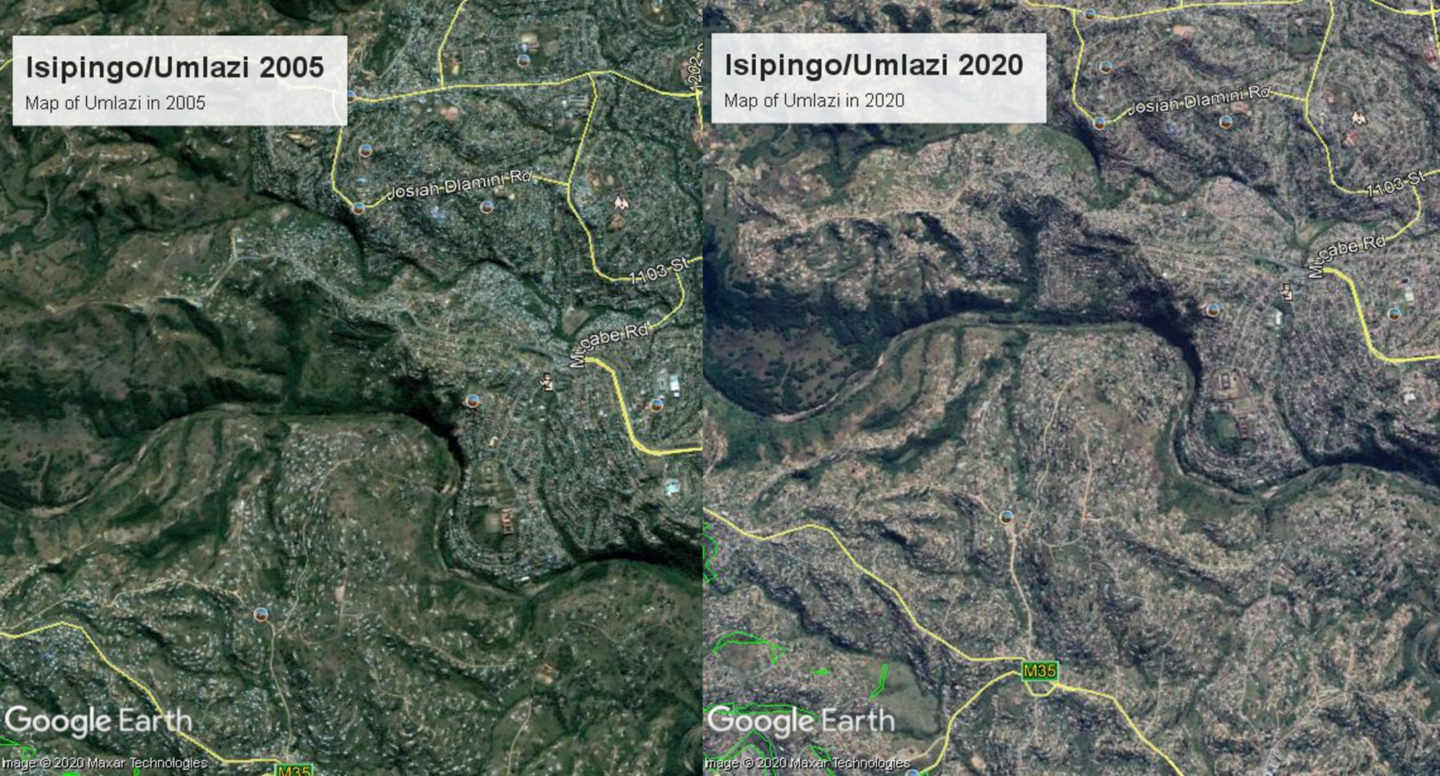 Figure 1:Satellite image comparing the density in Umlazi and Isipingo in 2005 and 2020.
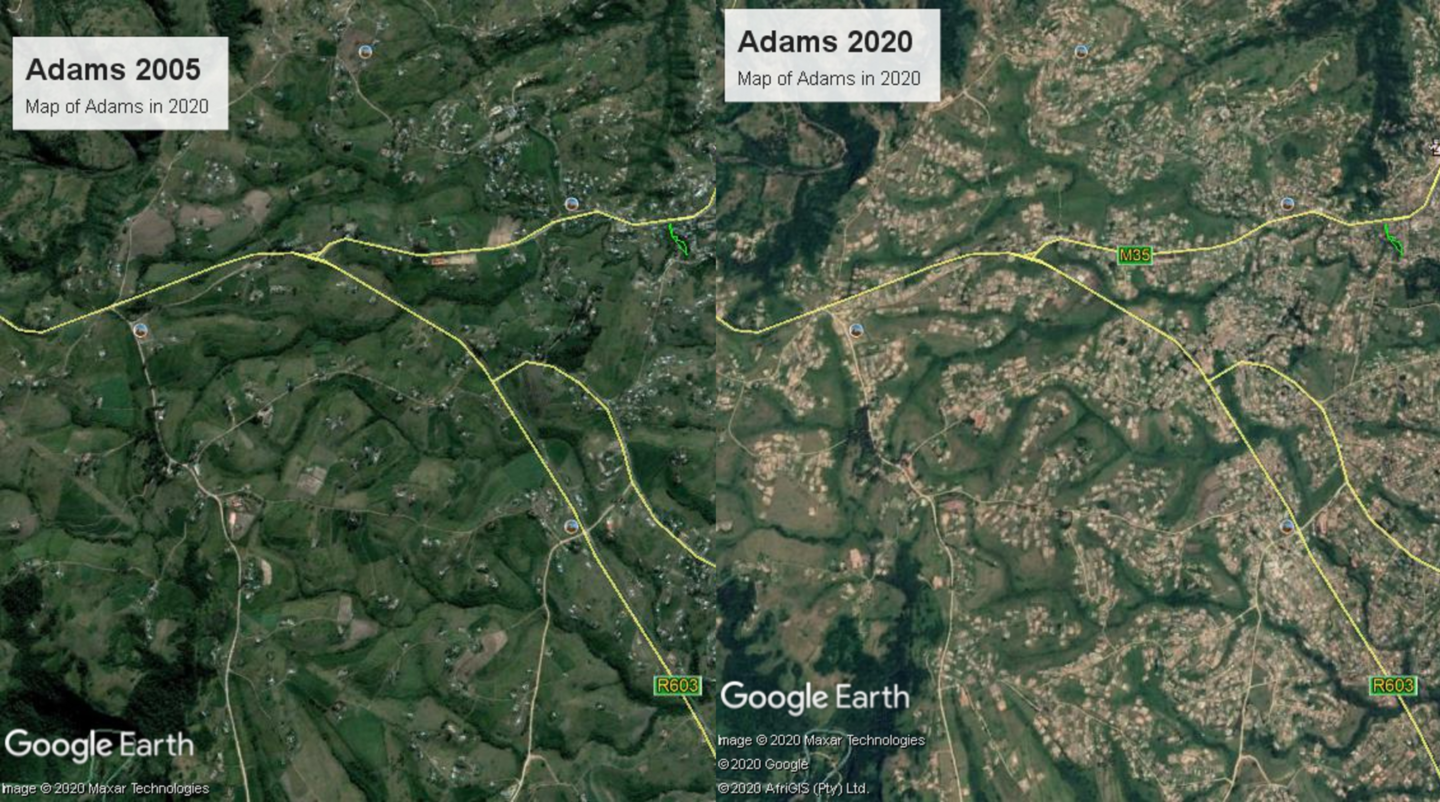 Figure 2: Spatial distribution in 2005 of housing in Adams Mission (Left) which is sparsely distributed as compared to Adams Mission in 2020 on the right which is densely populated.
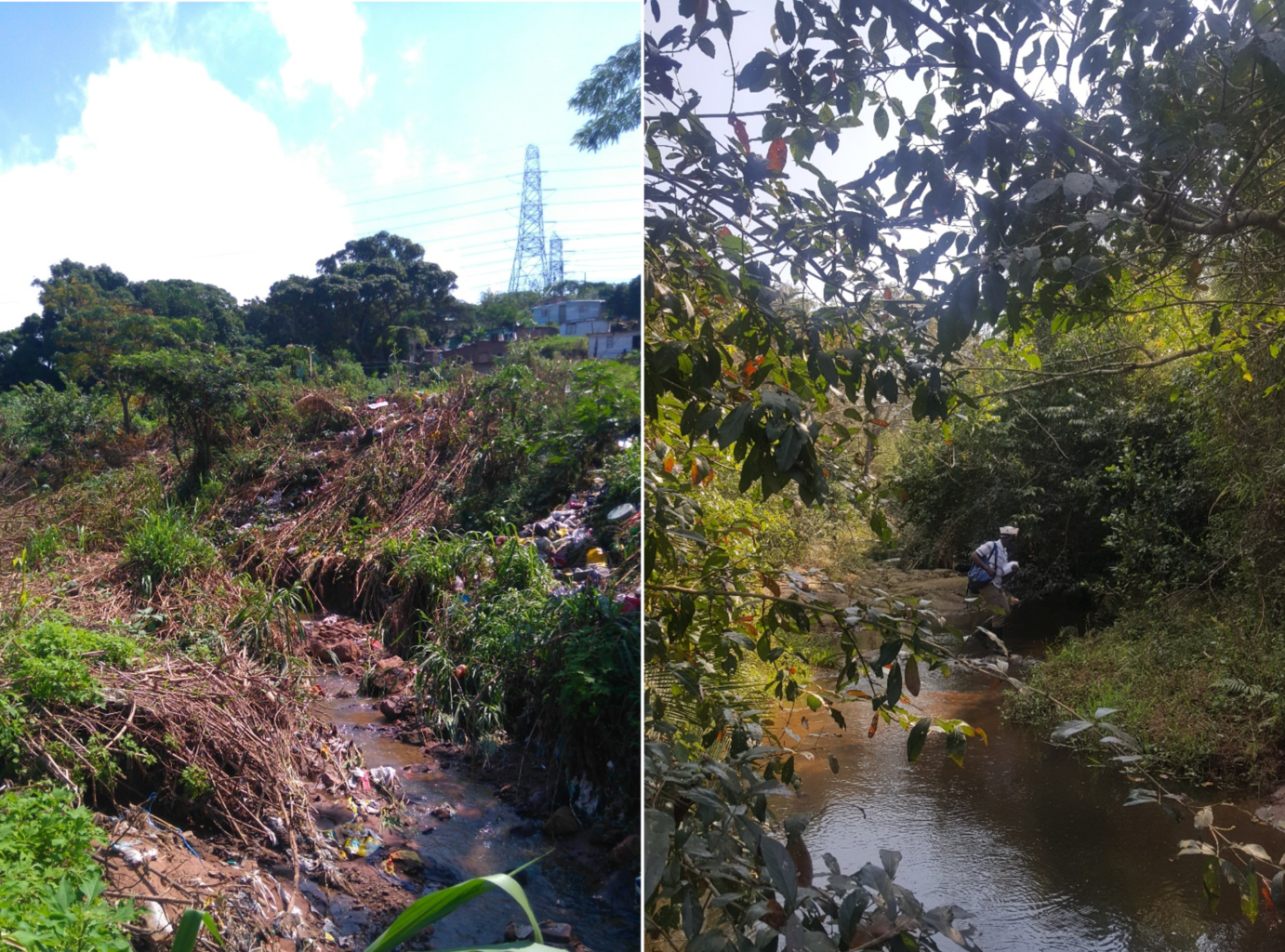
This comparative visual tool promotes dialogue by demonstrating the increase in population size and density over time, and discussions are held on the consequences this may have on living conditions in relation to space availability and quality of resources such as water. Satellite images (Figure 2) and photographs (Figure 3) show the state of living conditions in densely populated neighbouring communities, demonstrating the environmental and social implications of our increasing population. This comparison assists in building a visual reference to the possible future living conditions of the Adams Mission community if unrestricted and unsustainable development continues.
These tools enable dialogue that contextualises environmental impacts such as poor water quality, limited land availability for food security, increased flood risk through wetland destruction, or reduced availability of natural resources such as plants commonly used in medicinal treatments.
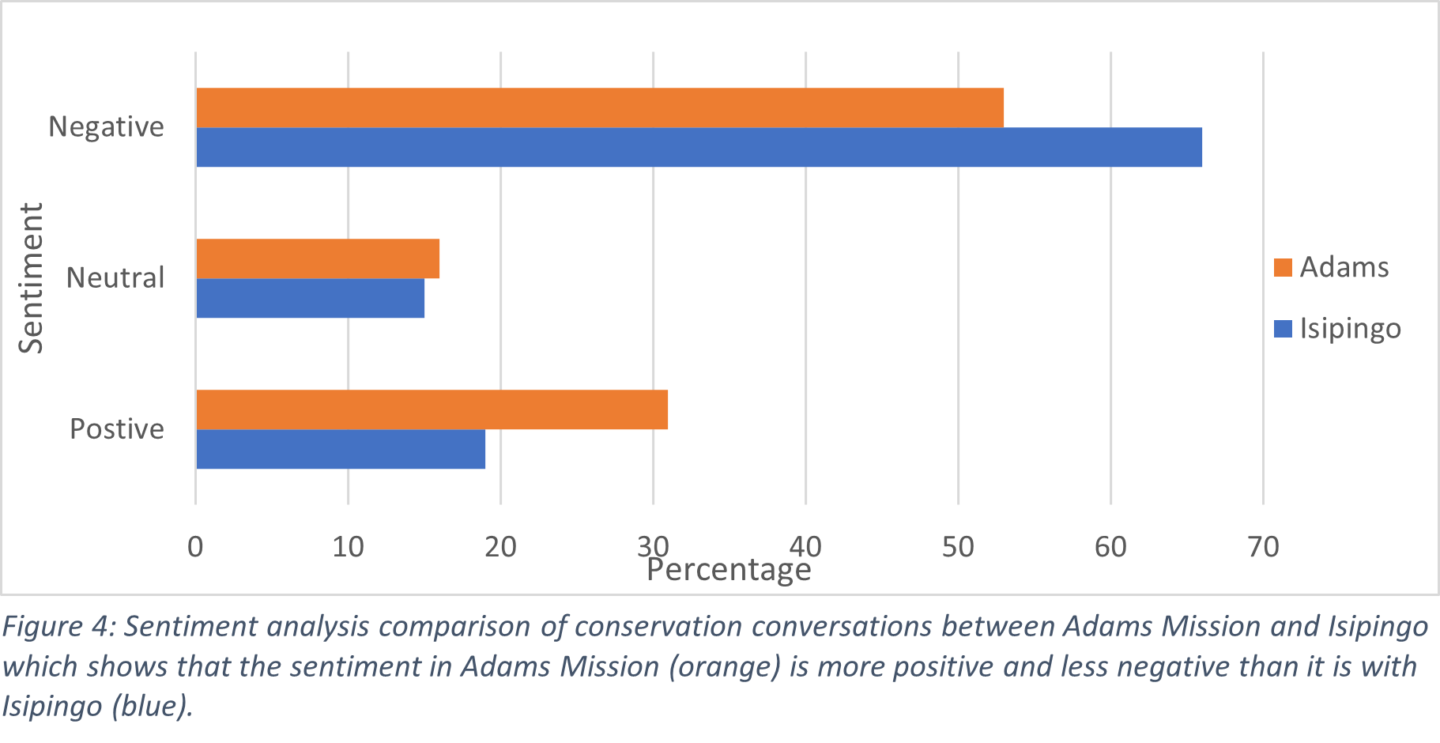
We track the conversations through sentiment analysis to determine how people feel about the context of the conversation, and we have found that in areas where ecological integrity is higher, for example, in Adams Mission, there is a more positive sentiment, as compared to the conversations held in areas with poor ecological integrity, such as in Isipingo (Figure 4).
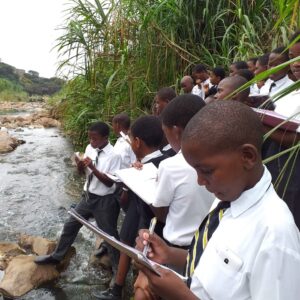
In addition, our knowledge-building strategies within the formal education system incorporate demonstrable concepts based on contextual circumstances. For instance, asking learners from a school to bring in a water sample from their local river to test the quality (Figure 4) builds a greater understanding of the causes of poor water quality than if a person just told learners that the water quality of their local river is in poor condition. This interactive process allows people to feel a part of the outcome and allows for feedback to determine the level of understanding, interpretation and acceptance of a message.
These two examples of our conservation conversations allow for developing a co-constructed message based on contextual evidence by all persons engaged in the conversation.
In today’s world, where there are a host of environmental voices speaking about a huge range of different issues, we must hold productive conservation conversations to ensure that collectively the environmental communication results in a shift in attitude as well as action towards a more sustainable society that embodies consciousness towards and for the world around us and all its inhabitants.
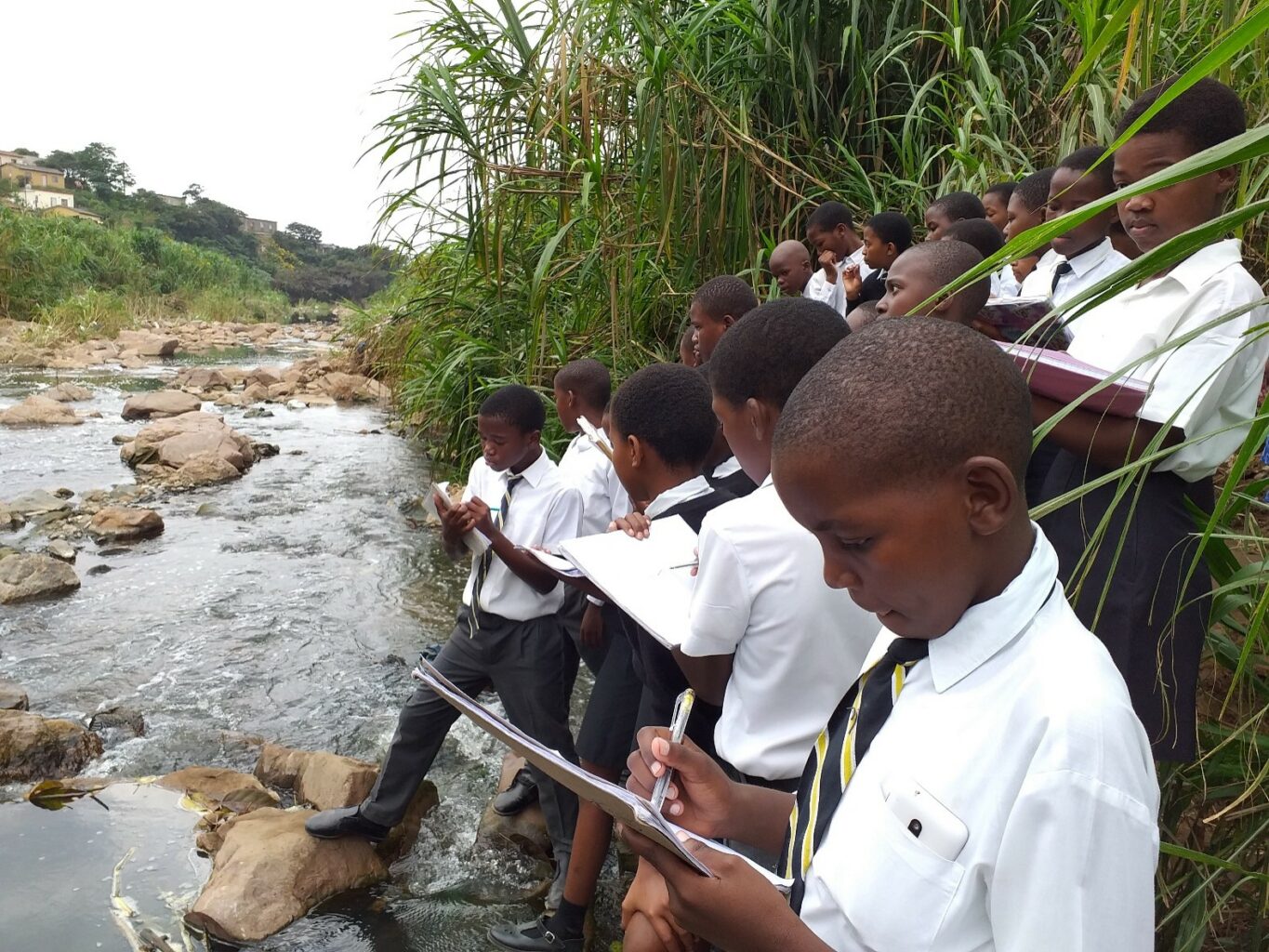 Figure 5: Learners conducting a water quality assessment of the Isipingo River.
References:
Meisner, M. (2015, November). Environmental Communication: What is it and why it matters. Retrieved June 08, 2021, from The International Environmental Communication Association: https://theieca.org/resources/environmental-communication-what-it-and-why-it-matters
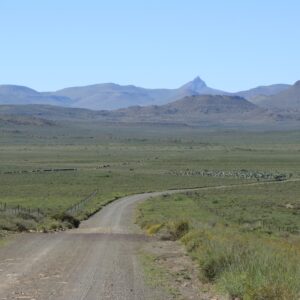
KAROO FOREVER – IN CELEBRATION OF KNOWLEDGE
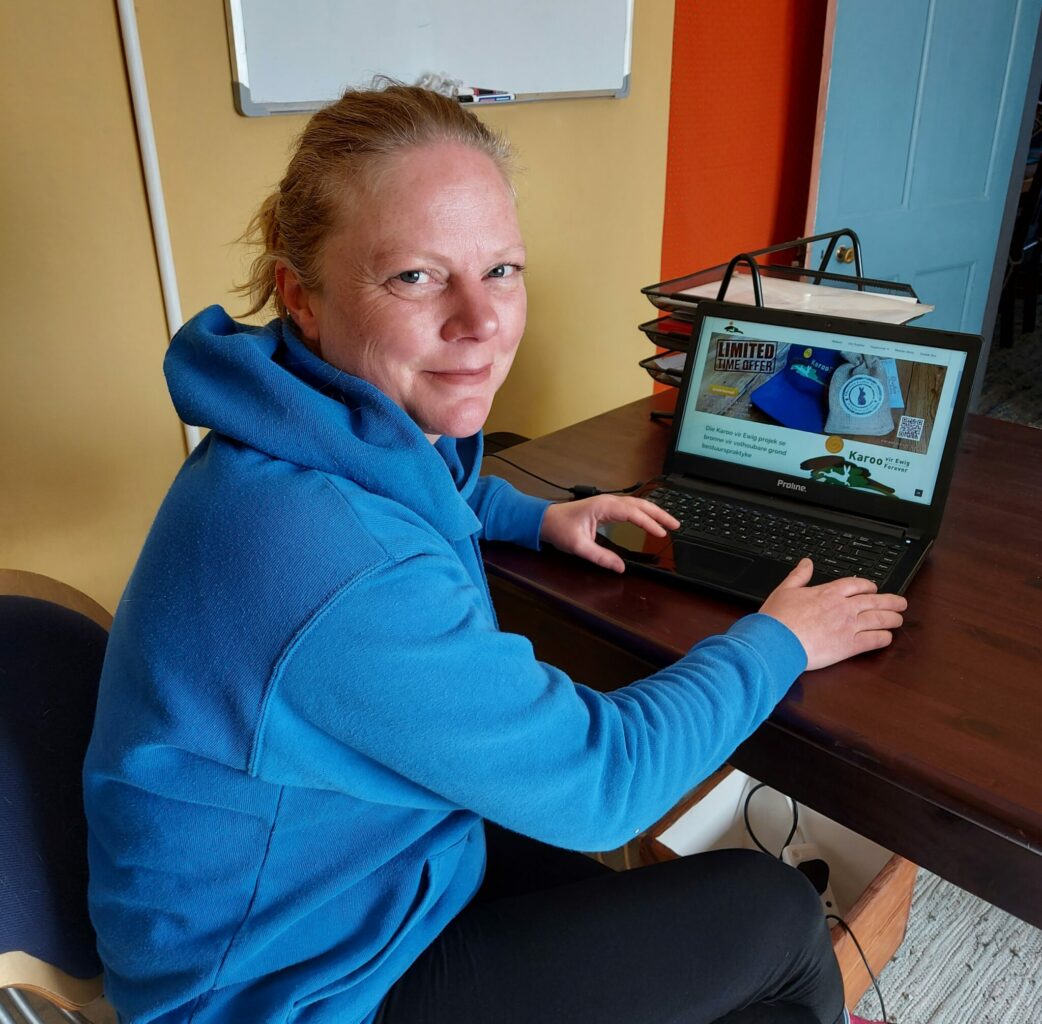
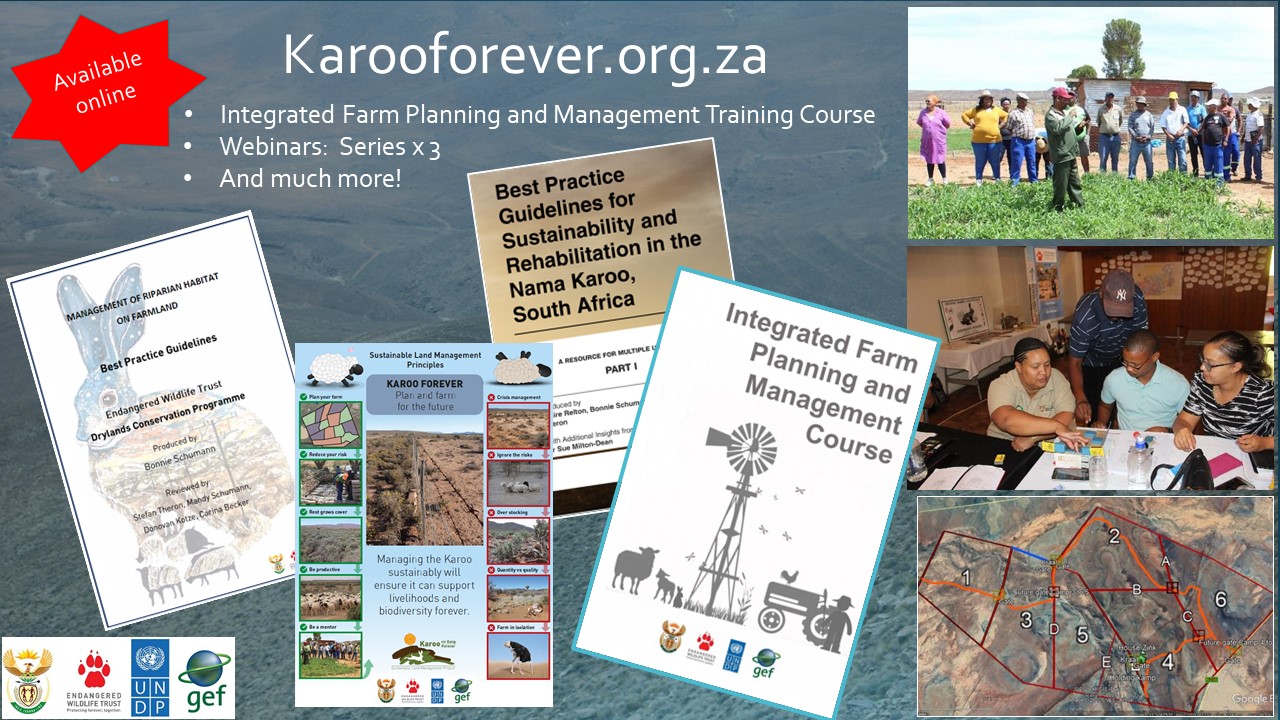
Bonnie Schumann, Nama Karoo Coordinator, EWT Dryland Conservation Programme, bonnies@ewt.org.za Would you like to know about optimising veld recovery after droughts? Or what your rights are in terms of developments near you that you do not support? Did you know about a great new app that focuses specifically on helping you to get to know your Nama-Karoo plants? You can download this app on Android and Apple devices. All this information and many more resources are available on the Karoo Forever website launched by the EWT’s Drylands Conservation Programme last year.
The website is one of the outcomes of the Karoo Forever Sustainable Land Management Project that we initiated four years ago. Throughout this project, we developed a range of resources for farmers. We realised there was a need for a dedicated platform on which to make these resources available to farmers. Sonja Berg of iXOXO – The Idea Factory took up the challenge to develop a user-friendly website providing various resources, ranging from a series of webinars to best practice guidelines for various regenerative approaches to managing Karoo farmland. By developing the digital platform, we have ensured that the great deal of valuable knowledge shared by experts during live and digital events remains available to anyone interested in learning more about sustainable land management in the Drylands. The emphasis is on the Karoo, but the content is relevant to drylands worldwide. During 2018 we developed, in collaboration with agricultural specialists, an Integrated Farm Planning and Management training (IFP) course. The course was presented twice in the Northern Cape in 2019, but due to the COVID-19 related lockdowns imposed in 2020, additional live courses scheduled weren’t presented. Fortunately, we were already well on the way to adapting the FREE course for our online platform, so it went “live” on the website in March 2020.
Interestingly, besides farmers and agricultural extension officers, we have had participants ranging from students to tour guides and conservation officials completing this “farming” course. These include several Western and Northern Cape conservation officials. The conservation officials work with landowners, mainly in a biodiversity stewardship context, and reported to us that the knowledge gained has given them a better understanding of sustainable land management principles and illuminated some of the challenges and solutions faced by farmers who farm in the drylands. This knowledge is helping to inform their approach to farmers with a view to more effectively integrating conservation and agricultural priorities.
When Sir Francis Bacon published in his work, Meditationes Sacrae (1597), the saying: “knowledge itself is power“, he most likely wanted to convey the idea that having and sharing knowledge is the cornerstone of reputation and influence, and therefore power; all achievements emanate from this. More than 400 years later, access to knowledge is merely the click of a button away. However, it is no longer so much about influence and reputation as it is about survival and how we have to start changing the way we are doing things. Sharing knowledge and having discussions around solution-based approaches will empower people to act positively and be the change that is needed. We celebrate the sharing of knowledge on the Karoo Forever website and hope to see many more users visiting the platform, completing the IFP course, and sharing their solutions through the various resources.
The content on the website was made possible through contributions from several specialists whom you will meet through the webinars and other resources. We thank them all for generously sharing their expertise and passion in the interest of promoting sustainable land management in the magnificent drylands of the Karoo.
The Karoo Forever website is brought to you by the EWT’s Drylands Conservation Programme, which focuses on promoting sustainable land management in the Karoo. The project is funded by the Global Environment Facility and managed by the United Nations Development Program in partnership with the Department of Environment, Forestry and Fisheries and Department of Agriculture, Land Reform, and Rural Development.
Links to:
GUEST ARTICLE: INVESTIGATING IMPACTS
Manisha Bhardwaj, Postdoctoral Researcher, Swedish University of Agricultural Sciences, manisha.bhardwaj@slu.se The ecological impacts of roads and railways on wildlife can be far-reaching and detrimental. For example, transportation infrastructure contributes to habitat loss and fragmentation, where animals are impeded from travelling through their environment without avoiding transportation infrastructure or the mortality risks involved in crossing roads and railways. In addition, habitat quality adjacent to roads can be compromised as noise and light from traffic and streetlights spill into the surroundings. These impacts, individually and cumulatively, can have devastating effects on wildlife, reducing their ability to persist in landscapes. These are the types of implications I study.
My name is Manisha Bhardwaj. I am a postdoctoral researcher at the Swedish University of Agricultural Sciences, investigating the impacts of the built environment and human activity on wildlife populations. My interests include understanding how anthropogenic activities impact the ecology and behaviour of animals. I am particularly interested in the roles noise and light pollution play in wildlife populations’ persistence and how animals respond to these stresses behaviourally. In addition, I enjoy exploring human-wildlife interactions and the interconnectedness between our activities as people, the landscapes we occupy, and the landscapes needed for wildlife.
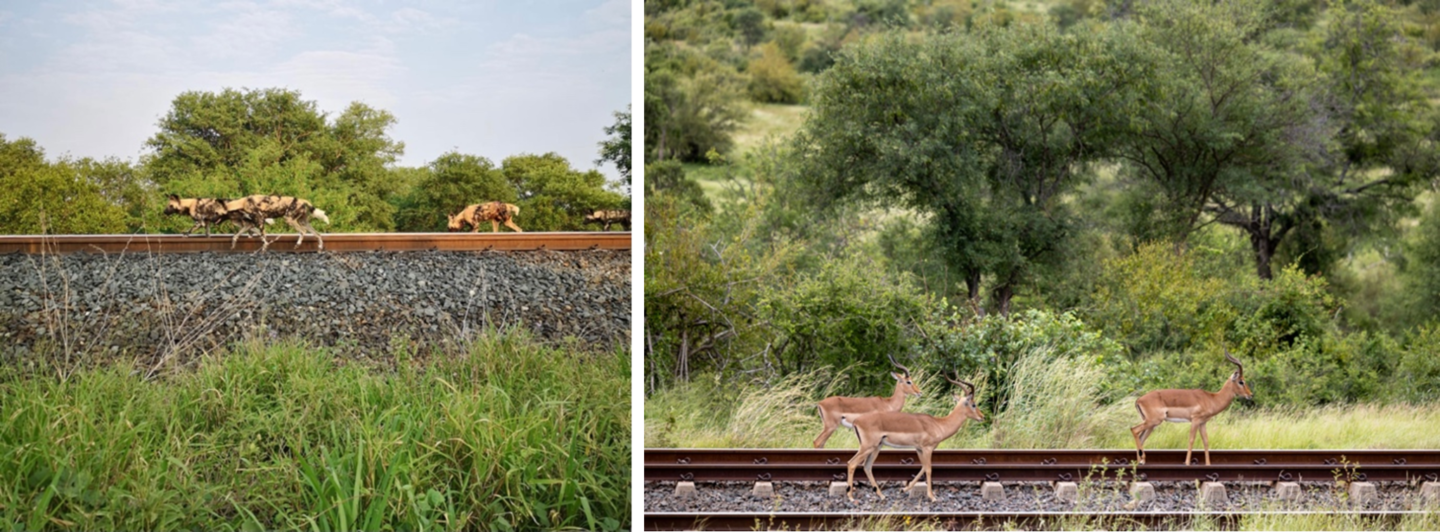
My interest in road and railway ecology has brought me fruitful and fulfilling collaborations with the EWT, particularly with the Wildlife and Transport Programme. Together with Wendy Collinson and Paul Allin from Transfrontier Africa, we are investigating the impacts of railways on wildlife in the Greater-Kruger National Park Region in the first formal South African railway ecology programme. Our project brings together NGOs, researchers, and managers to address the impacts of railways on native fauna such as Elephants, Hyaena, Wild Dogs, and Impalas. We have investigated where and when wildlife cross railways and collisions occur, how effective mitigation strategies can be to reducing the rate of collisions, and how animals react to oncoming trains. With this project, we will provide insights into this issue to reduce the overall impacts on South Africa’s wildlife.
SCIENCE SNIPPETS: THE ELEPHANT IN THE ROAD
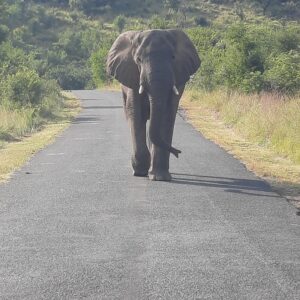
Cameron Cormac, PhD Candidate, Centre for Functional Biodiversity, School of Life Sciences, University of KwaZulu-Natal, downs@ukzn.ac.za For most drivers, it is fairly easy to spot an animal as large as an African Elephant, Cape Buffalo, or rhino on the road. However, despite these animals being highly visible because of their large size, there are still cases of drivers colliding with these large flagship species along roads near or in protected areas. Additionally, with fences being placed around the reserves that South Africa’s most iconic animals call home, aiming to protect both man and animals by keeping animals in and poachers out, the range that these large animals can roam is effectively reduced. But if large animals can be hit by cars and stopped by fences, what effect do roads and fences have on the smaller species that inhabit these protected spaces.
Globally anthropogenic land-use change, including the development of linear infrastructure, impacts species negatively. I am Cameron Cormac, a PhD student from the University of KwaZulu-Natal and working in conjunction with several supervisors, namely: Prof Colleen Downs, Dr Cormac Price (both University of KwaZulu-Natal), Dr Dave Druce, Ezemvelo KZN Wildlife, and Wendy Collinson of the Endangered Wildlife Trust. My project aims to answer questions about the effects of linear infrastructure (roads and fences) on vertebrate fauna in Hluhluwe-Imfolozi Park and the Zululand region of KwaZulu-Natal.
There are five questions that my project aims to answer. Firstly, to find out what vertebrate species are killed by vehicles along the sections of the R618 that separates the Hluhluwe and Imfolozi sections of Hluhluwe-Imfolozi Park and the section of the R22 that runs through the northern section of Isamangaliso Wetland Park. Secondly, to determine what vertebrates are dying along fences within Hluhluwe-Imfolozi Park and Phinda Private Game Reserve because the fence impedes them from entering either park. Additionally, to find out what animals are killed along the R22 that runs through multiple rural communities and compare it with the Isimangaliso section of the R22. I am particularly interested in how reptiles and amphibians in this region are affected by the roads and fences. Finally, to determine what measures can be taken to reduce the number of animals that die along the roads and fences that this project is concerned with.
To answer my project’s questions, I conduct surveys in the morning and evening, collecting information on what animals are killed on roads and fences. I also record the environmental conditions when I locate any dead animals, as weather conditions can increase roadkills,

Cameron Cormac recording roadkill
and I note whether there are traffic calming or alternative structures for use animals to use to avoid the road. The number of cars that pass by during a set time frame, the number of cars that pass through the road sections in a day, and how far from the edge of the road the animal was are also recorded. This information will provide insights into what drives animals to use the road. Information from social media pages is also being used to obtain additional information about roadkills in the study area. Information on what animals are killed along fences is kindly collected by the rangers and park workers who patrol the reserves. All information is then used to determine what measures can be taken to reduce the mortalities along these man-made structures using computer analyses.

Vervet Monkey roadkill found during road surveys
At least 137 animal deaths have been recorded along the R618 and 103 deaths along the R22 over three months so far, including 77 amphibians, 14 reptiles, 21 birds, and 27 mammals in Hluhluwe-Imfolozi Park and 63 amphibians, 14 reptiles, 17 birds, and 12 mammals in Isamangaliso Wetland Park.
You can also assist in the study. Please send pictures of any animals seen dead or alive on these roads to the Hluhluwe-Imfolozi sightings Facebook group or by using the Endangered Wildlife Trust’s road watch application, which can be found in the Google play store, as this will add to our growing understanding of the threat posed by roads in Hluhluwe-Imfolozi and Isamangaliso Wetland parks. In conclusion, please drive carefully and slow down for all animals crossing the road, not just the large iconic species, and help preserve South Africa’s incredible diversity.

Vehicle sponsored for this research project by the Ford Wildlife Foundation
This work would not be possible without the generous loan of a vehicle by the Ford Wildlife Foundation.
HOW DID THE ELEPHANT CROSS THE RAILWAY LINE?
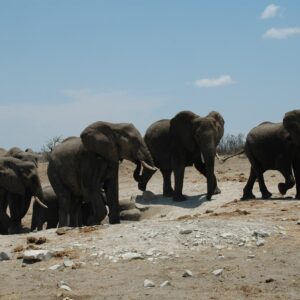
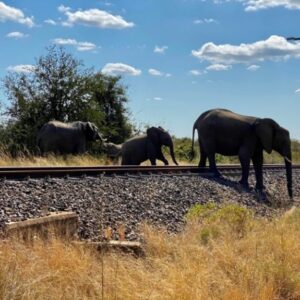
Hannah de Villiers By walking across, of course! Below you can see a breeding herd of elephant in the Balule Nature Reserve (part of the Greater Kruger) casually walking over a railway line.
Transport infrastructure plays a pivotal role in economic and social development through creating improved access to resources and associated livelihood provided. Railways are a critical component of sustainable transportation, having many environmental and economic advantages over other forms of transport, and are therefore seeing massive expansion globally. In Africa, more than 30 massive development corridors, including rail infrastructure, are planned or progressing, with the rail footprint on the continent expected to increase by 85% in the coming years. However, these corridors will pass through hundreds of protected areas containing some of Earth’s most diverse and sensitive ecosystems.
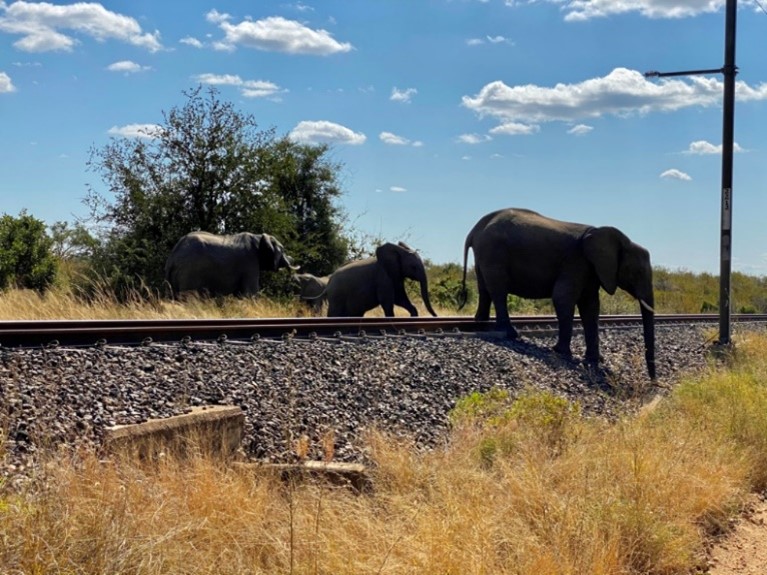
As conservationists, we are concerned about two key ecological impacts of railways: the barrier effects and resultant habitat fragmentation it may cause for local wildlife populations and the mortality it might cause through wildlife-train collisions. For some animals, like the elephants above, the railway does not create a barrier in the landscape, and they are often seen simply walking over it. But this means they are in danger of collisions with trains – which, unlike cars, cannot quickly slow down or swerve to avoid a collision.
But what if animals could find a safe passage across the railway without the risk of collisions, which would increase the permeability of the rail corridor and improve habitat connectivity? Wildlife crossing structures provide just that, and luckily culverts or viaducts are a common design feature of all railways, typically built for drainage and topographical purposes. These pre-existing underpass structures can easily be modified to improve their use by wildlife, which is regarded as the most economical and feasible form of mitigation for wildlife mortality and barrier effects. The economic advantages of this approach do not stop there: train collisions with large mammals can be incredibly expensive, invariably damaging or derailing trains and often resulting in large-scale service disruptions.
Hannah is researching the use of railway underpasses and drainage culverts (such as the one seen on the left in the photo of elephants crossing the railway) by large mammals in the Balule Nature Reserve. She is putting up camera traps at the underpass entrances to understand which species use them (or don’t use them) and see how the structural dimensions, the nature of the habitat close to the structure, the surrounding landscape and mammal characteristics affect usage.
The findings of this study will help inform the design of underpasses along new railways in the African context and aid reserve management in decisions regarding economically feasible modifications to culverts along existing railway lines that would make them more attractive for large mammal use.
This project is supervised by Gabi Teren (from the EWT’s National Business and Biodiversity Network) and Francesca Parrini (University of the Witwatersrand), and advised by Wendy Collinson (EWT Wildlife and Transport Programme), Paul Allin (Transfrontier Africa, Balule), and Dr Manisha Bhardwaj (Swedish University of Agricultural Sciences).



