A boost to law enforcement against poaching rekindles hope in the Kafue Flats
Kelvin Steven Floyd, International Crane Foundation And Endangered Wildlife Trust Partnership, African Crane Conservation Program, Restoration Ecologist, Kafue Flats Restoration Partnership (KFRP), floyds@ewt.org.za
The Kafue Flats in southern Zambia is a wetland of international importance. It is a valuable ecosystem facing extreme pressure. Excessive poaching in and around the Kafue Flats wetlands is driving massive wildlife declines, particularly of large herbivores. One of these, the endemic Kafue Lechwe (Kobus leche kafuensis), was once widespread on the flats, with more than 80,000 individuals recorded during the 1980s. But aerial surveys recorded only 28,000 Kafue Lechwe in 2015 and less than 23,000 in 2018.
Our surveys also show declines in other large mammal populations, including Plains Zebra, African Buffalo, Oribi, and Blue Wildebeest. The latter is actually now locally extinct. But poaching on the Kafue Flats is not restricted to large herbivores. Livestock herders on the flats also poach Endangered cranes and other waterbirds. The poachers hunt the adult birds illegally and collect the eggs for food. But park management faces a major challenge with limited capacity available for wildlife protection.
What’s the problem?
Despite being a wetland of local and international importance, and the most important wetland for Wattled Cranes and Kafue Lechwe in Africa, the number of wildlife police officers (WPOs) available is half what is required to protect the 6,500 km2 Kafue Flats against poaching. The area includes the Lochinvar, Blue Lagoon National Park, and the surrounding buffer zone (the Kafue Flats Game Management Area). Low patrol efforts, low coverage, and ineffective management leave this critical wetland vulnerable to degradation and plunder.
Stepping in to help combat poaching and restore the Kafue Flats
The International Crane Foundation and Endangered Wildlife Trust Partnership (ICF/EWT) is addressing these issues to conserve wildlife populations. To do this, we have committed to five pillars of action. These include law enforcement, community engagement, ecological management, research and monitoring, and advocacy/education. Furthermore, we have entered a 20-year co-management agreement with the Zambian Department of National Parks and Wildlife (DNPW). In 2017, we started a community habitat restoration project to control the alien invasive plant, Mimosa pigra. The plant had taken over and degraded critical wildlife habitat. By 2020, we had cleared and restored about 2,350 ha of wetlands for wildlife.
Why law enforcement?
Strengthening law enforcement to stop poaching on the Kafue Flats is a top priority. And so we must recruit and deploy fully equipped, trained, and motivated personnel for targeted anti-poaching patrols. By supplementing government law enforcement capacity in this way, we will reduce the impact of poaching and reverse the decline of wildlife populations.
We must support law enforcement as well as community livelihoods if we are to save the Lechwe Antelope, buffalo, zebra, hippo, and others from poaching on the Kafue Flats. While this might seem off-mission for a crane conservation organisation, cranes and other threatened species depend on the Kafue Flats for grazing. Unfortunately, without big mammals like the Lechwe, the government won’t support the conservation of the Flats. They will consider them better used for growing crops or grazing cattle. This would be catastrophic for the Flats’ crane populations.
Wildlife heroes in the making
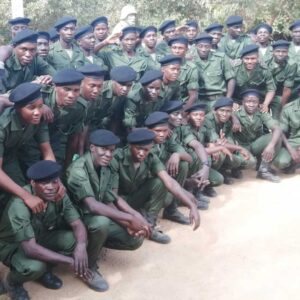
In February 2022, we worked with Community Resource Boards from Lochinvar and Blue Lagoon National Parks to train 55 community scouts. The scouts underwent three months of intense training at the Department of National Parks and Wildlife’s Chunga Training School in the Kafue National Park. On 7 June 2022, the scouts proudly graduated and will be deployed alongside the DNPW Wildlife Police Officers to combat poaching on the Kafue Flats. To complement their training and ensure the effectiveness of patrols, we are giving the scouts access to technology such as the Spatial Monitoring and Reporting Tool (SMART), CYBERTRACKER, and Earth Ranger.
The ICF President and CEO, Rich Beilfuss, represented the partnership and delivered the commencement address to the scouts. The ICF/EWT’s Kim Boardman, Mwape Sichilongo, Kerryn Morrison, Lourens Leeuwner, and other employees attended the colourful graduation ceremony. Two traditional leaders also graced the proceedings to show community support of the project.
The graduating community scouts (above). ICF President and CEO Rich Beilfuss delivering the commencement address (Below right).
The deployment of these scouts is a critical component of our holistic conservation approach to protecting critical habitat for the Endangered Wattled Crane and restoring vital grazing grounds and wildlife habitat while generating local employment and income through community involvement in the scouts programme and alien invasive plant control. The project will increase government capacity to manage and protect Zambian floodplains and advance global understanding of large-scale mimosa control methods and their measurable impact on biodiversity and livelihoods.
Thabo Hlatshwayo, Wildlife and Transport Programme Intern, thaboh@ewt.org.za
The N3 Toll Route (N3) passes through landscapes of grasslands, freshwater ecosystems and wetlands, which attract animals, bringing them close to the road. Land used for cultivating maise and other grain crops closer to the highway also increases bird and small mammal activity in the area, resulting in increased wildlife-vehicle collisions (i.e., roadkill). The N3 Toll Route comprises road features such as road signage, guideposts, safety barriers, boundary fence, and raised road markers. These objects are installed on the road to control traffic and improve road safety. However, numerous owl species use these road structures during the evenings to perch on while hunting for prey, such as rodents and squirrels attracted to crops and food deposited by passing vehicles. Unfortunately, this increases the risk to the birds of being struck by vehicles.
Through the strategic partnership work undertaken by the EWT and the N3TC since 2014, robust data on the incidences of roadkill have been recorded. The existing EWT-N3TC database shows that owls are the most common bird killed by vehicles on specific sections of the highway. To respond to this, the EWT recommended the installation of owl perches within the hotspot areas but away from the road, creating safe perching spots from which owls and other birds of prey can hunt safely.
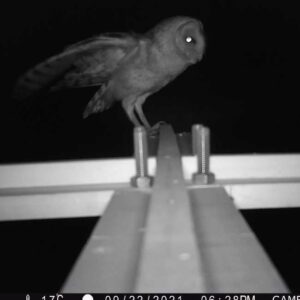
We installed camera traps on the EWT-N3TC owl perch to see if birds would use these perches. Our camera traps revealed increasing birds of prey activity on the perch. Barn Owls, Black-shouldered Kites, and some falcon species have used it as their feeding restaurant. Interestingly, other wading birds like the Black-Headed Heron and passerine bird species (Stonechats and Pied Starling) have also been observed enjoying a rest on the owl perch.
Camera traps such as this are invaluable for increasing our understanding of animals’ interactions with roads – particularly what attracts them to roads. In this case, it is clear that structures similar to these perches erected on roadsides are at least in some part used for resting and feeding purposes and that by providing alternatives, we might be able to reduce the time birds spend on or near roads. We expect to learn more from these camera traps and hope you’ll stay tuned to catch rare glimpses into the daily lives of our raptors.
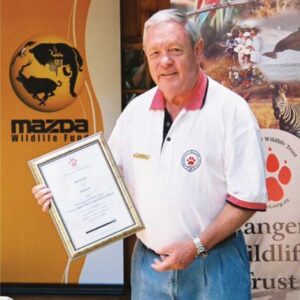
Pat Fletcher, who sadly passed away on 16 June 2022, was a dedicated conservationist who, working behind the scenes, made an indelible mark on the conservation of large carnivores in South Africa. I first met Pat in Johannesburg in April 1999, when I was fresh off the train from Zimbabwe, and on my way to Kruger National Park to start work on the Third Wild Dog Photographic Census. Pat had sourced and kitted out a project vehicle and secured the loan of the palatial Jurgens caravan that was to be my home for the next two years. I quickly came to learn that Pat was the quintessential go-to guy; someone you could always rely on in a bind.
Pat’s passion for nature and enthusiastic commitment to the Endangered Wildlife Trust belied the fact that he only joined the formal conservation sector in his retirement, after a successful career as a high-end motor vehicle salesman. However, it was his business acumen and worldly perspective that set him apart from the rest of us who had come to conservation through the more traditional channels. Pat was always hunting for the best deals and was never afraid to ask for a discount (or push you to ask for one!). This made an enormous contribution to the sustainability of the (then) Carnivore Conservation Group – first under the leadership of Dr Gus Mills, and later when I had the good fortune of managing the programme. Pat also cared deeply about people: he took the time to get know everyone – from the most junior staff to the wealthiest donors – and he was always genuine and authentic. There was always a long line of people outside his office hoping to get some advice; much of the time this had nothing to do with our work!
Pat could also put up a good fight, and I remember several occasions when we would storm off in opposite directions to cool off after an unsettled altercation. But he also moved quickly to reconciliation, citing the maxim: “if two people always agree then one of them is redundant”. I regularly repeat this piece of wisdom to myself – and every time I do, I think of Pat and the lasting legacy he left on myself and so many others.
I am saddened deeply by the fact that Pat is no longer with us.
Wendy Collinson
I first met Pat in 2006 when I interviewed for a volunteer position working on the Venetia Limpopo Wild Dog Project. We sat on a bench by the zebra pen at the old EWT premises at the Joburg Zoo. Pat spent most of the interview chatting about English football. I was amazed that I got the position as I told Pat I didn’t like football. Pat was so welcoming to me when I joined the EWT and I remember him fondly.
From all of us at the EWT, those who knew him and those who have heard the legends, we salute you Pat. Our sincerest condolences to Pat’s friends and family – he will be remembered fondly as someone who left a true legacy for life.
The Endangered Wildlife Trust’s Soutpansberg Protected Area Programme has established a multi-day hiking trail across the Western Soutpansberg. The trail crosses several private properties and the Luvhondo Nature Reserve. Our team has been working with these properties’ owners in a truly collaborative effort to establish a world-class trail within the proposed Western Soutpansberg Nature Reserve.
The trail aims to establish the Soutpansberg as an ecotourism destination and bring in essential sustainable funding to support our conservation efforts. It will also help drive local economic growth and establish training and job opportunities for locals, such as becoming guides on the trail.
During the week of 9 May 2022, our SPA team and managers from the other properties did a final recce of the trail, completing the full five-day slackpacking route. Here is a first-hand account of the trail by our SPA Programme Manager Cath Vise.
This week has possibly been one of my best weeks on the job. We have been dreaming of setting up with trail for the last three years, and with thanks to the F E van Pletzen/L Steynberg Trust for a generous donation towards the project, this dream is now becoming a reality.
The Old Salt Trail Slackpacker’s Deluxe (western loop) is a 75 km, five-day trail starting at our Medike Mountain Reserve. It heads up the mountain to Leshiba, then on to Sigurwana, up to Lajuma, back to Leshiba and finally back down to Medike. It goes from the lowest point of the mountain range as it crosses the Sand River (813 m) up to the highest point of the Soutpansberg, the mighty Mount Lajuma (1,727 m), with an elevation gain of nearly 1 km and a lot of ups and downs in between.
Our hikers for this week included Kathy and Pete Straughan (Leshiba’s Managers), Peter Breedveld (Sigurwana Manager) and our EWT SPA staff Chris Joubert (Medike Manager), Rotondwa Sithagu and Shumani Makwarela (Soutpansberg Rangers and FGASA Guides) and myself. We were supported by Tharollo Mthisi (Soutpansberg Ranger), who transported all our luggage from lodge to lodge throughout the week.
Climbing up out of the Sand River Gorge on Medike
We left Medike on Monday morning and headed up the mountain. This first day really gets the lungs and legs going, as it is a steep climb to get up out of the gorge. The trail then took us into the Duluni Gorge, where we followed a mountain stream up the mountain. Pete had hiked down from Leshiba and met us in the gorge. On our way up, Pete showed us a rock art site on Medike. Pete is an expert in rock art and tree identification and possibly one of the most entertaining walking encyclopaedias out there. Our journey back in time started at this site, with Pete explaining a bit about the different Bushman and their different painting styles. We carried on up the gorge onto Leshiba, where we had to climb through the first Hiker’s Doggy Door – a cunning small swing gate (that looks like a doggy door for humans) that ensures that the gate always stays closed. On Leshiba, we were lucky enough to spot a Narina Trogon, which flew over our heads and landed briefly in a branch above. They are such beautiful birds. The first night was spent at Leshiba’s Luvhondo Camp, with Giraffe walking into the camp and Cape Vultures flying low overhead, making for an amazing end to a beautiful day.
Traversing ‘The Slabs’ in Leshiba’s Hamasha Gorge
Day two’s hike started with another walk back in time as we headed through the Bushman’s Medicine Chest (medicinal trees and shrubs), another rock art site, where the stories of the past inhabitants continued to unfold. The trail then took us through Hamasha Gorge on Leshiba. This is the most difficult and technical day of hiking but is rewarded with incredible dramatic scenery, lots of water in the stream, and great company that made it a spectacular and entertaining day. We had to do a fair amount of rock-hopping along a stream bed, cross the stream a few times, then hike at an angle up ‘The Slabs’, these magnificent red rock slabs in the gorge. After a nice lunch break next to the stream, we headed west out of the gorge on a long rocky path back up the mountain. This path is an old route believed to link back to the salt pans. We then entered Sigurwana. Near the end of the hike, a beautiful Waterberry forest and a small waterfall and rock pool made the perfect place to sit and cool our feet for a while and soak up all the beauty. Liesel and Neil Wright from Sigurwana and their staff made us feel right at home with a very warm welcome and spoilt us with a wonderful evening and boma braai.
Up the mighty Mount Lajuma, looking back at what we have achieved
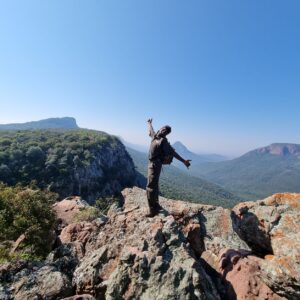
After a very comfortable night’s sleep in Sigurwana’s beautiful and luxurious accommodation, our team continued our journey west towards the mighty Mount Lajuma. After a climb up a rocky slope next to a waterfall, there is a long plateau on the top of Sigurwana, with open grasslands and wetlands. We visited another could rock art site, with new insights into the lives of the Bushman revealed. It was fairly easy, straightforward hiking all the way to Mount Lajuma, along both game trails and jeep tracks. We took a break at the base of Mount Lajuma to gather our strength for the climb to the top. The view from the top and the feeling of pure joy are exhilarating. What a sense of achievement as you look back across the mountain and see how far you have come. Standing on the top of Lajuma, looking back east filled me with pride and joy to see how far our Western Soutpansberg Nature Reserve stretches, with an inspiring group of landowners working together to conserve this precious mountain.
We spent the evening at Lajuma Research Centre’s Wilderness Camp, designed as student accommodation, on the edge of a cliff with beautiful views south. We spent the evening around the fire, reminiscing on the day’s adventures.
A forest wonderland with the giants
Day four was possibly the easiest hiking day, although it was the longest (19 km). We started with a scramble up ‘The Chimneys’, a rocky crevice up a cliff line to get to the plateau above. Once on the plateau, it was a long, easy hike along a trail and then jeep track, requiring us to cross a wetland and get our feet wet. It was a good opportunity to set a good pace, get into a rhythm and make up some ground on a long day. After three days of technical hiking, having this day was easy on the tired legs and a welcome break. After a short break at a stunning view spot, we entered the forest and were rendered speechless. It is an absolute wonderland, and we stared up in awe at the giant ancient Yellowwoods and Strangler Figs weaving their way between hundreds of other plants. We took our time, enjoying every minute of it and listening to the calls of the Turaco. After the forest, we hiked back down a hill on a jeep track to the Leshiba fence line. We said goodbye to Peter (from Sigurwana), who left us at this point. The final hike through Leshiba followed part of the cycling track and was a beautiful way to end a long day on the trail. We sat with our feet in the cool water of the lodge’s pool, with an ice-cold drink to cool us off, watching all the game passing through the plains below. We were spoilt again by the friendly Leshiba staff, who looked after us extremely well. The dinner conversation was full of laughter, reliving entertaining moments on the trail.
Shumi, Chris, and Rotondwa back on home turf at the top of Medike
On our final morning, we bid farewell to Kathy, who sadly had to attend to some business for the day. Pete joined us on our morning hike across Leshiba to the cliffs. We passed by about five incredible viewpoints on the edge of the mountain. We then headed back towards Medike and had to climb through another Hiker’s doggy door. Back on our home turf, the EWT team walked the final stretch. After passing by an old settlement, where we found some old pot shards, we popped out onto a small clearing and looked down into the Sand River Gorge, where our journey began five days prior. Spirits were high, and with great enthusiasm, we descended the long, steep decline to the bottom of the gorge. After a short while back on Medike’s jeep track, we were back home, and our incredible journey had come to an end.
Crossing the finish line of the Old Salt Trail
I absolutely loved this hike because every day has something completely new and different and unexpected about it. No two days are the same. We went through so many different habitats, were lucky enough to see some amazing bird and game sightings and really felt like we stepped back in time as we learnt about the Bushman gatherings on the mountain and felt like we were following their footsteps across this ancient land. Everything about the hike worked well. It is a very challenging and technical hike, requiring a good level of fitness for experienced hikers. However, your efforts on the trail are rewarded with the best hospitality on offer. What an incredible experience. I truly believe that this will become a “Bucket List” trail that you won’t want to miss!
On any given day, one can read the news or articles on the state of the environment and the sheer enormity of the threats, challenges, and losses can be overwhelming. For those of us working in conservation, it can be even harder. The species we have dedicated our lives to protect face extinction, and we see the very worst that humans can do to wildlife. I have often been asked how I work in conservation, “isn’t it depressing” people ask? On some days, yes, but others keep our hope alive, and on 10 May 2022, I had a day of hope.
I joined a colleague, Rebo Rachuene from our Birds of Prey Programme, in the field to monitor a grass owl site. Rebo and his colleagues have been monitoring this site for over ten years. We arrived at a farm situated in the Highveld region of Mpumalanga, the area recently the focus of the deadly air case. The short drive from Johannesburg to the farm showed the severity of air pollution in the area, and while the deadly air case was focused on human health and wellbeing, I couldn’t help but wonder about the effect the air pollution was having on wildlife in the area. The farm is a mix of land uses with agriculture, virgin grasslands, and a new coal mine on its border. The threats associated with human activities began to feel overwhelming.
Grass Owl nesting site in the Highveld region of Mpumalanga, South Africa. Mixed land-use is common in the area – agricultural plots, natural grasslands, and coal mines are sandwiched in between each other
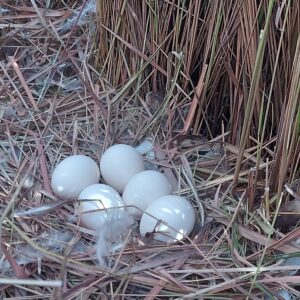
As we were approaching the nest, two birds took off – each on different sides of the wetland area the nest is in. One was a Marsh Owl, and the other, an adult Grass Owl. We found the Grass Owl nest, and instead of the fledglings we expected, we found eggs. Rebo explained that the previous eggs had probably been predated, and the Grass Owls had then laid more. In addition to natural and expected threats like predation, Grass Owls need to contend with human-related threats such as pollution, the threat of invasive species, disturbance and trampling by livestock, and habitat loss. Despite these ever-increasing threats, this species and so many others in South Africa continue to persevere. On our short walk back to the car, we came across a Brown House Snake, Serval footprints, and a Black Winged Kite – all indicators of a functional ecosystem – a safe space made possible through the incredible work of my colleagues and the conservation efforts of landowners. This is how hope is kept alive and how we can continue to promote conservation in South Africa and chip away and reduce threats from human activities. I walked away from that nest excited for the next 35 days when hopefully, the Grass Owl population will increase by five when the eggs hatch. I walked away with hope, committed to doing what I can to protect this safe space and others like it, and more committed than ever to promoting conservation in South Africa.
Grass Owl flushed from its nest. Once its eggs or chicks have been recorded and we move out, it will return to the nest.
On any given day, one can read the news or articles on the state of the environment and the sheer enormity of the threats, challenges, and losses can be overwhelming. For those of us working in conservation, it can be even harder. The species we have dedicated our lives to protect face extinction, and we see the very worst that humans can do to wildlife. I have often been asked how I work in conservation, “isn’t it depressing” people ask? On some days, yes, but others keep our hope alive, and on 10 May 2022, I had a day of hope.
I joined a colleague, Rebo Rachuene from our Birds of Prey Programme, in the field to monitor a grass owl site. Rebo and his colleagues have been monitoring this site for over ten years. We arrived at a farm situated in the Highveld region of Mpumalanga, the area recently the focus of the deadly air case. The short drive from Johannesburg to the farm showed the severity of air pollution in the area, and while the deadly air case was focused on human health and wellbeing, I couldn’t help but wonder about the effect the air pollution was having on wildlife in the area. The farm is a mix of land uses with agriculture, virgin grasslands, and a new coal mine on its border. The threats associated with human activities began to feel overwhelming.
Grass Owl nesting site in the Highveld region of Mpumalanga, South Africa. Mixed land-use is common in the area – agricultural plots, natural grasslands, and coal mines are sandwiched in between each other
As we were approaching the nest, two birds took off – each on different sides of the wetland area the nest is in. One was a Marsh Owl, and the other, an adult Grass Owl. We found the Grass Owl nest, and instead of the fledglings we expected, we found eggs. Rebo explained that the previous eggs had probably been predated, and the Grass Owls had then laid more. In addition to natural and expected threats like predation, Grass Owls need to contend with human-related threats such as pollution, the threat of invasive species, disturbance and trampling by livestock, and habitat loss. Despite these ever-increasing threats, this species and so many others in South Africa continue to persevere. On our short walk back to the car, we came across a Brown House Snake, Serval footprints, and a Black Winged Kite – all indicators of a functional ecosystem – a safe space made possible through the incredible work of my colleagues and the conservation efforts of landowners. This is how hope is kept alive and how we can continue to promote conservation in South Africa and chip away and reduce threats from human activities. I walked away from that nest excited for the next 35 days when hopefully, the Grass Owl population will increase by five when the eggs hatch. I walked away with hope, committed to doing what I can to protect this safe space and others like it, and more committed than ever to promoting conservation in South Africa.
Grass Owl flushed from its nest. Once its eggs or chicks have been recorded and we move out, it will return to the nest.
Harriet Davies-Mostert, EWT’s Head of Conservation
After 23 stimulating and fulfilling years at the Endangered Wildlife Trust, I have made the difficult but exciting decision to spread my wings and leave the EWT to join another conservation NGO, Conserve Global. This organisation works to secure and protect vulnerable conservation landscapes across Africa while bringing benefits to the wildlife and communities whose well-being depends on the integrity of these landscapes. It focuses outside of the existing national park network on landscapes that are home to significant biodiversity and play a significant role in buffering national parks and increasing connectivity between wildlife areas. As Director of Impact, and a member of the senior leadership team, I will concentrate on institutional fundraising, monitoring and evaluation and impact reporting, and driving science-led adaptive project management across our entire portfolio of projects.
The EWT has been my home for most of my professional life: I have learned so much and had so many rich and unique experiences. It has been wonderful to have worked in an organisation that is both strategic and yet quick to respond, is science-led and credible and yet constantly embraces new ideas, and where co-workers quickly become friends. Thank you so much to the many colleagues who have taught me new ways of thinking, inspired me, shown me the true meaning of passion and commitment, and made me laugh (and sometimes cry!). A very special thanks to the EWT’s indomitable CEO, Yolan Friedmann, for her leadership, mentorship, energy, and inspiration. We have travelled a long and rewarding journey together, which has readied me for the challenging steps ahead. Thank you!
Emily Taylor, EWT Communications and Marketing Manager
I met Harriet in 2012 when I started volunteering at the Endangered Wildlife Trust. She was the Head of Conservation Science, larger than life, and a renowned force of change and good in the conservation sector. I wanted nothing more than to work for the EWT, but I had no experience and only a lowly Nature Conservation Diploma behind my name. But I could write, which was one of the requirements when they advertised an intern position. I threw caution to the wind, applied, and somehow became her Conservation Science Intern. We were instant friends – aided by the proximity of our houses and the convenience of lift-sharing. I would look forward to the drives into the office and back each day – an opportunity to pick her brain, gossip, brainstorm, to laugh. She was looking to move closer to work, and I remember looking at houses with her and seeing her face when we saw the one that she and her family moved into not long after and love almost a decade later. I tagged along to meetings, conferences, doctors appointments, and the fireman’s pub or 33 High Street in Modderfontein for drinks after work. I was considering doing a BTech in Nature Conservation, and Harriet was unimpressed and convinced that I should pursue an MSc at WITS, despite not having a science degree. I was sceptical that I would manage it, particularly the really sciency stuff like statistical modelling. But Harriet believed in me. Despite me being her intern, she always valued my opinion and treated me as an equal. And she pushed my boundaries, telling me with conviction that I could achieve things I considered out of my reach. Slowly, I began to believe in myself a little more each day. Nine years later, I am no longer her intern, but she will always be my mentor and very dear friend. Thank you for believing in me, Harriet, and guiding me towards a future I hadn’t dared to dream of. Mine is but one story of how you have touched people’s lives in remarkable ways, and I do not doubt that there will be many more of these to come. Wherever you go, Harriet, we walk with you, and you will always be one of the voices in my head, telling me that I am so much more capable than I think I am and that you believe in me. What a legacy to leave.
Kishaylin Chetty, Eskom
As a scholar having just left high school, I volunteered over the December holidays to monitor, collect fecal samples, look after and learn to track wild dogs in Northern KZN. It was the first time I heard of Harriet. Fast forward 12 years later and I was to meet Dr Harriet in the flesh for business through Eskom. I was in absolute awe, but I played it cool. Here was someone I had heard about, read about and was now in the same room with, able to ask any question. Nerves flowing through the veins, a casual ‘high’ is all I could mutter. The nerves settled when I was appointed in Harriet’s Amazing Race team at my very first EWT Conservation week function I attended. What an event and what an introduction to Harriet. Harriet is one of the world’s great scientific conservation minds – she sees and thinks of things others don’t and has a structured level of thinking second to none. I’ve also been impressed with how Harriet has this intense work side and then this amazing fun side, all whilst being a super mom and wife. Harriet you are an inspiration to many up and coming scientists like myself and I am very grateful to have had the opportunity to have worked with you and learnt from you – even if only through the Eskom EWT Partnership. You have changed my very own thinking on how to be a better scientist, but also on how to enjoy personal life and work. You have been an institution at EWT. You will be sorely missed and I wish you everything of the best in the new adventure. Hoping our paths will cross again.